

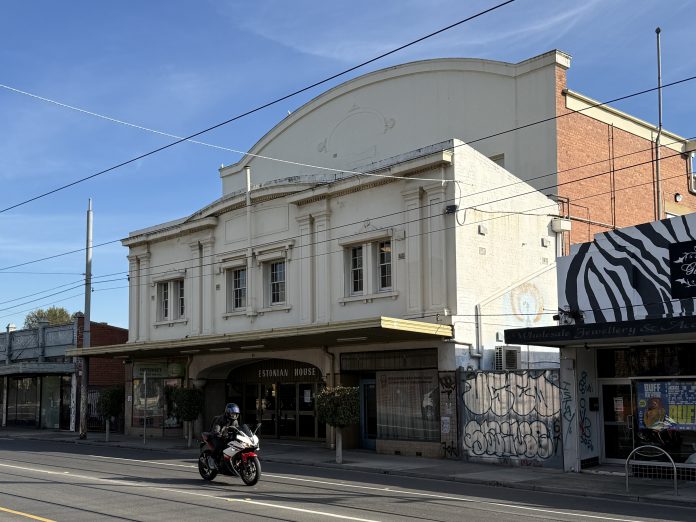
On 13 August 2026, the keys to Melbourne’s Estonian House were handed to its new owner, bringing almost 55 years of Estonian community life at 43 Melville Road, West Brunswick, to an end.
The building has been the scene of festivals and folk dancing, choir rehearsals and language lessons, weddings and funerals, meetings and working bees — and more than a few parties that lasted well into the morning. But the story of Melbourne’s Estonian House began long before anyone walked through the doors in Melville Road.
A home of our own
The Estonian community in Melbourne dates back to 1914, when the first society was officially recognised. In those early years, a small number of families gathered in individual homes to speak their language, sing their songs and maintain their culture.
The community grew considerably following the arrival of Estonian displaced persons in Australia after the Second World War. By 1951, Melbourne Estonians had decided they needed somewhere of their own.
At the Estonian Society Annual General Meeting (AGM) in July that year, it was declared that the community required a home for the preservation of the Estonian language and for social, cultural and other activities. A Community Centre Commission was formed and, because the Estonian Society was not a registered legal entity and could not own real estate itself, the Victoria Co-operative Society Ltd — later the Estonian House Co-operative — came into being.
Money was raised through shares purchased by members of the community and the Estonian Society. At the Co-operative’s first AGM in February 1952, there were 50 registered shareholders. The constitution required 25 per cent of them to attend for the meeting to proceed. Fourteen turned up.
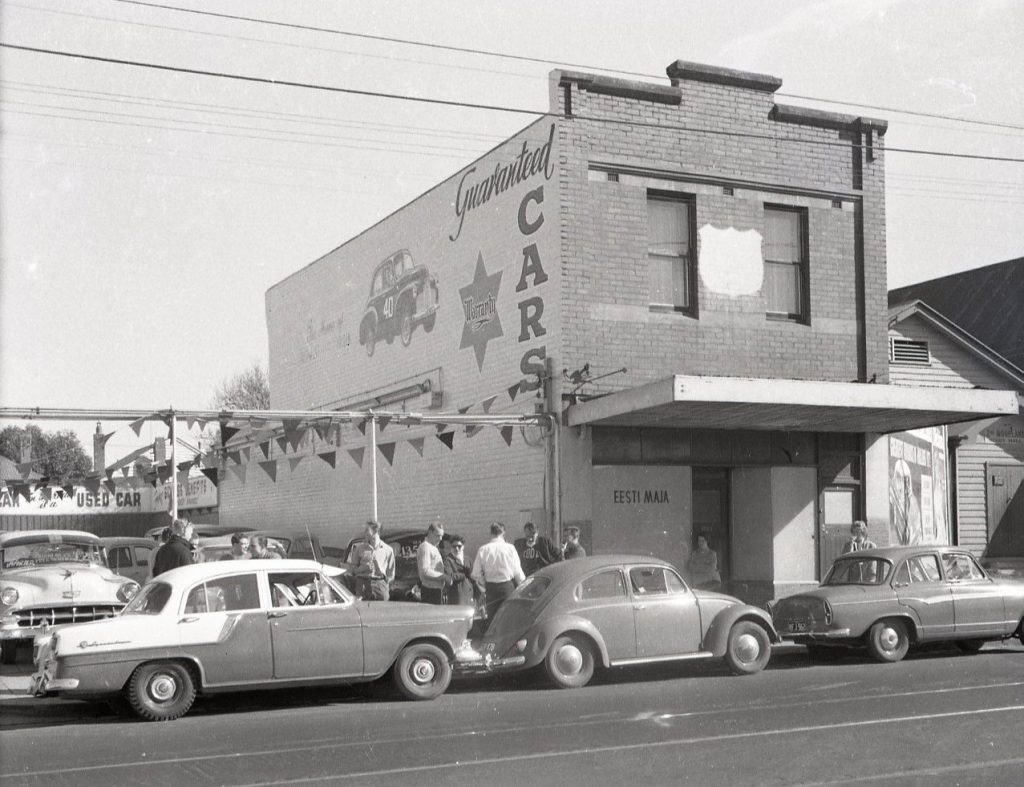
The first Eesti Maja
Finding a building was harder than expected. A former church in South Melbourne was considered, but purchased by the Ukrainian community. Another promising property in Royal Parade went to the University of Melbourne. Land in North Melbourne proved too expensive.
Eventually, in December 1954, a suitable building was found at 67 Sydney Road, Coburg. The Co-operative purchased it in January 1955 and community volunteers went to work transforming it. Under the direction of Robert Jacobson, known as “the boss”, they created a small hall and meeting spaces.
After considerable toil, Melbourne’s first Eesti Maja officially opened on 4 December 1955. It became the headquarters of Melbourne’s Estonian community, hosting choir and folk dance rehearsals, Estonian school, scouts and guides, sporting and women’s groups, meetings and functions.
There was, however, one increasingly obvious problem: the community was outgrowing it. Larger events had to be held in town halls around Melbourne, requiring volunteers to transport everything from crockery and cutlery to theatre props backwards and forwards. By the time Melbourne began preparing to host Eesti Päevad in 1972, it was clear that a bigger home was needed.
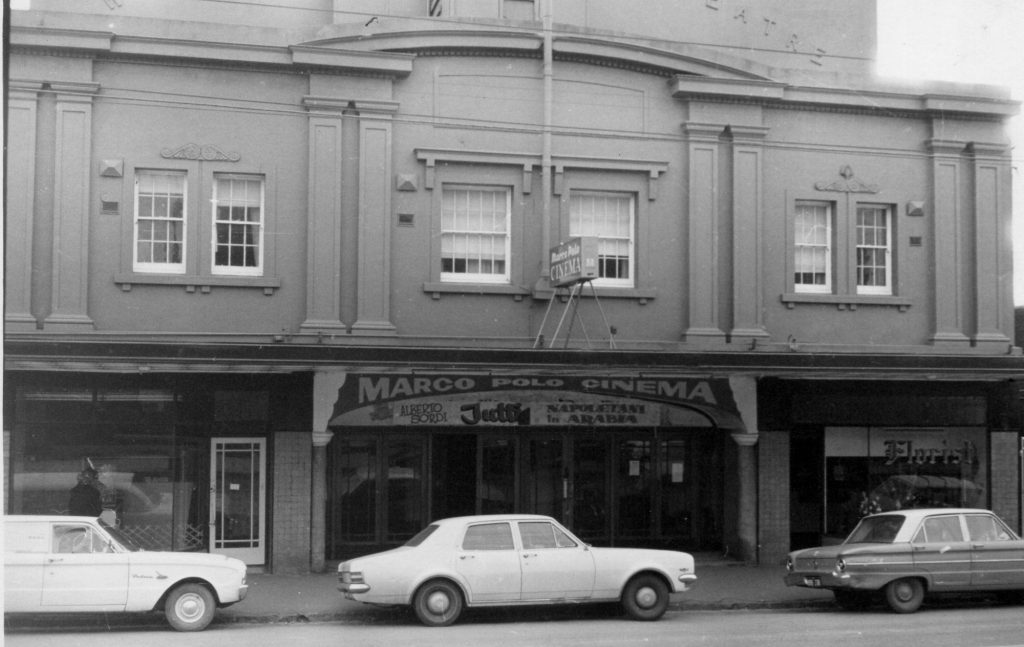
From old cinema to Estonian House
In early 1971, the Estonian House Working Group, chaired by Arnold Mikkor, found an old picture theatre in Melville Road, West Brunswick. It needed work. Quite a lot of work. There were still cinema seats and a sloping floor, but the structure was sound. On 4 July 1971, the Estonian House Co-operative Board unanimously agreed to purchase 41–45 Melville Road for $55,000.
Then the community got busy. Under builder and project manager Arnold Mikkor and architect Heino Raadik, volunteers began transforming the old cinema. A contemporary account described the place as being like a beehive, with around 25 to 30 men working on the renovations each weekend and others giving up days off during the week. Much of what was needed was made or supplied by community members themselves. And the work extended beyond hammers and floorboards — women prepared Sunday lunches, cakes and coffee to keep the workforce going.
It was an extraordinary community effort to create something its members believed Melbourne Estonians needed: a dignified home where Estonian cultural and community life could flourish.
The new Estonian House officially opened on 29 January 1972. More than 400 guests were served a smorgasbord. There were speeches, choirs, ballet, quartets and music. Then the formalities ended, the ball began and, according to the records, dancing and frivolity continued well into the morning. The House was officially open for business.
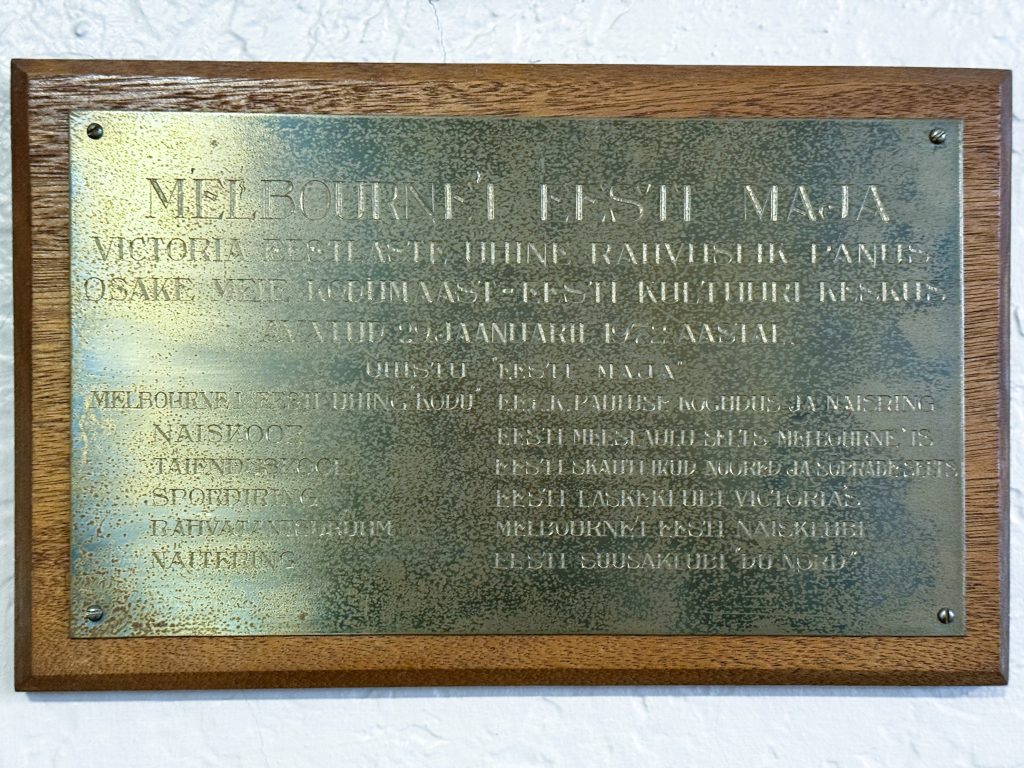
Almost 55 years of community life
From then on, the building rarely stood still. There were choir, folk-dance and theatre rehearsals. Scouts and guides, church committees, chess and bridge clubs, ethnographic groups, women’s groups and many others used its rooms. There were concerts, balls, parties, national celebrations, theatrical performances, Baltic and Estonian festivals. And there were the personal milestones that do not necessarily make it into official histories. Weddings. Funerals. Significant birthdays. Friendships. Children growing up. People arriving in Australia and finding others who spoke their language.
Further improvements were made ahead of ESTO88, when Melbourne hosted Estonians from around the world. The House even witnessed voting connected with the restoration of Estonia’s independence.
By the late 2000s, however, use of such a large building was in decline. In 2019, following a decision supported by shareholders, a working group began examining what kind of Estonian House Melbourne would need in the future. After consultation with the community, it concluded that the Melville Road building had become too large for current needs and recommended options involving its sale and the purchase or lease of a smaller home. Shareholders agreed.
The property was sold in August 2025 for $3.25 million, with settlement allowing the Estonian community another year to farewell the House, pack up decades of community life and prepare for what comes next. That year has now ended. On 13 August 2026, the keys were handed over.
The Estonian community is very fortunate that the new owner has agreed to our continued use of the first-floor hall until the end of the year. This will enable the choir, children’s group, folk dancing and weaving classes to continue on site for a few more months, until a new venue is identified or the renovation program is amended. This access is provided free of charge.
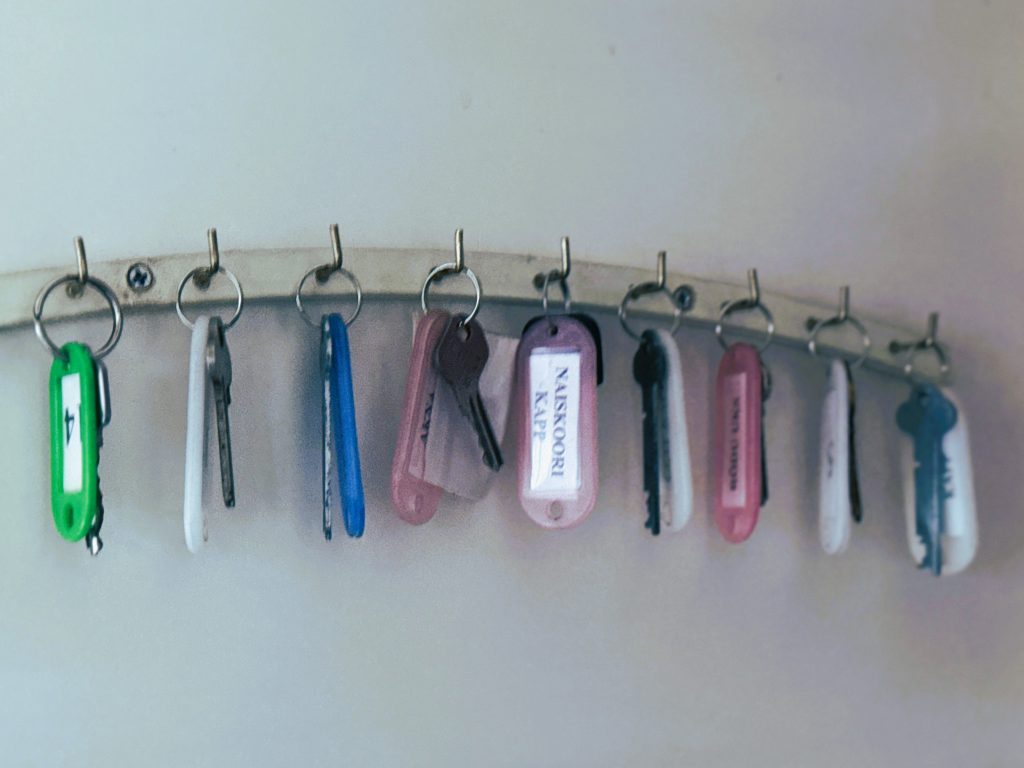
Goodbye, Eesti Maja
We are saying goodbye to a building, but it is impossible to measure its value simply in bricks, floorboards or dollars. Generations of Melbourne Estonians gave their time, money, skills and labour to create and maintain this place. They built it because they believed the Estonian community needed a home. For almost 55 years, it had one at 43 Melville Road.
As long-serving Estonian House chairman Arnold Mikkor once said, without this building, the Estonian community in Melbourne would most likely not be here today. So let us bid this wonderful building goodbye — and remember all the people who built it, worked in it, celebrated in it and kept Estonian community life going within its walls.
Historical documents
This article is adapted from Matti Kiviväli’s history of the Estonian House Co-operative and his speech delivered at the Last Hurrah farewell celebrations at Melbourne Estonian House in May 2026.
Read or download:
- Matti Kiviväli’s full Last Hurrah speech
- The History of the Estonian House Co-operative Ltd — Matti Kiviväli
Read more
The Estonian House in Melbourne has found a buyer | HEIA
Last Hurrah, program drop: three days, one final goodbye | HEIA
Melbourne Estonian archive opens its doors for the Last Hurrah | HEIA
Sirje Rivers: my Estonian House is my people | Global Estonian

