Estonian chef Margit Kirss-Elsayed promised to share a few cooking secrets in Melbourne. She delivered — although not everything behaved quite according to plan. Much like life, things in the kitchen don’t always play along. Luckily, Margit had a few secrets for that too.
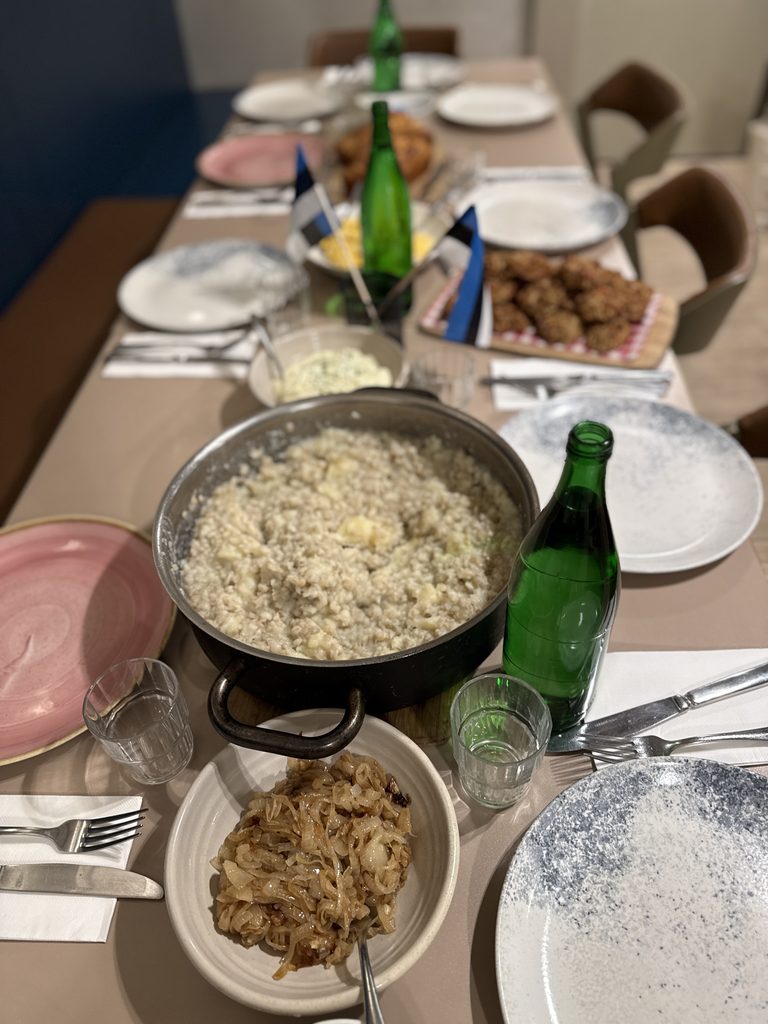
There are cooking classes where you sit politely, watch a professional do clever things and perhaps make notes. And then there are cooking classes where somebody hands you four kilograms of potatoes, the sausage casing stages a rebellion and, four hours later, you are sitting around a table eating mulgipuder and discussing the correct time of day for kohuke. For the record: any time is apparently acceptable.
Estonian chef and Kirsikool founder Margit Kirss-Elsayed brought her “Great-grandmothers’ cooking secrets” workshop to Melbourne this month as part of an Australian tour that also included Sydney and Adelaide. We warned you earlier that Estonian cooking secrets were coming. We can now report that the secrets were indeed disclosed. And HEIA was there taking notes.
Aprons on, please
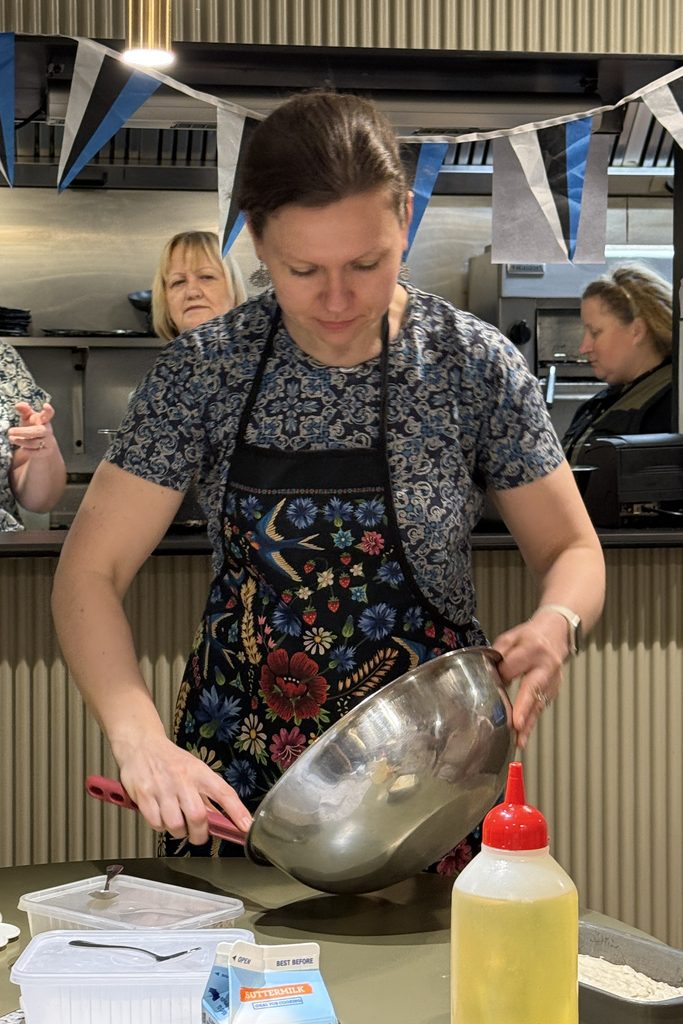
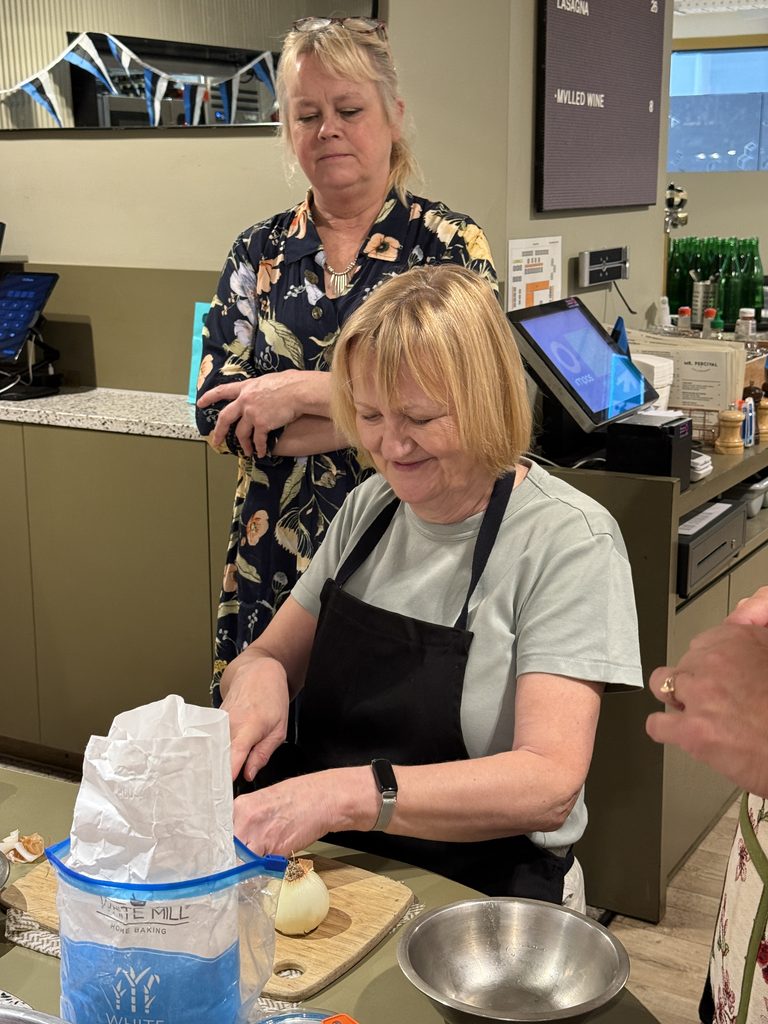
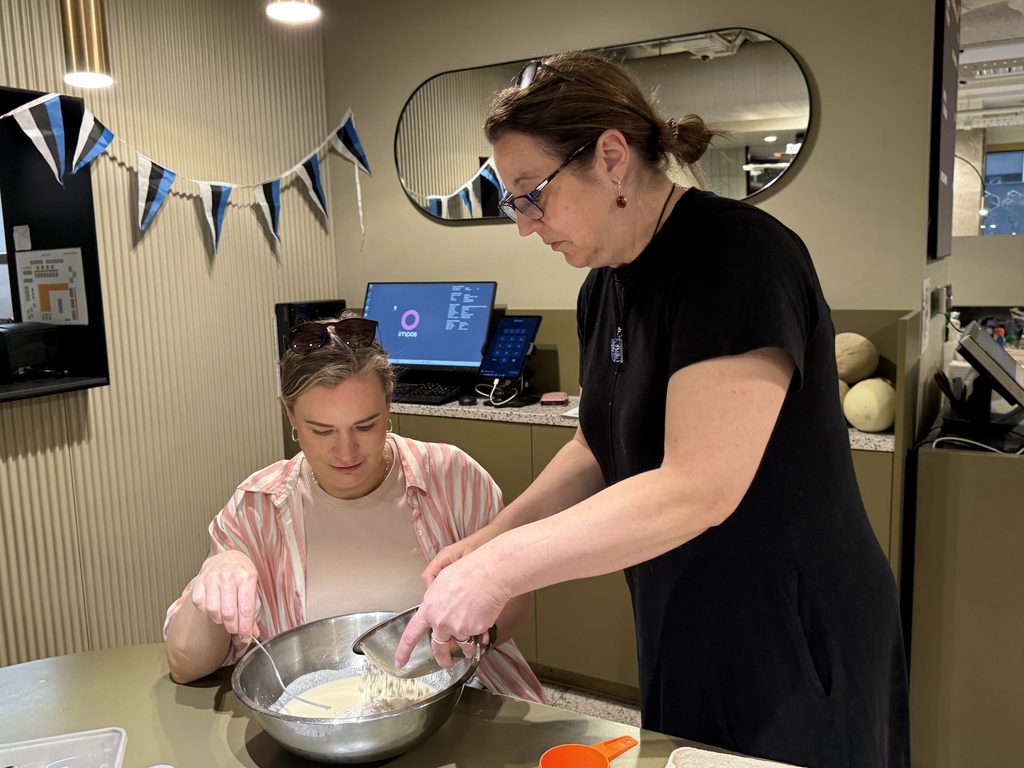
Enthusiastic participants gathered in Melbourne for a hands-on afternoon of Estonian cooking. And “hands-on” really did mean hands on: potatoes were peeled, onions chopped, pans watched, mixtures stirred and various people volunteered for jobs according to their preferences and confidence levels. (Your HEIA correspondent can confirm she is very confident at peeling potatoes. Also taking photographs. We all have our gifts.)
Margit had made her expectations clear from the beginning: “It’s not like I’m going to work and you will watch and listen. No, you will work and I will watch and speak.” Her philosophy was reassuringly democratic: not everybody needed to do everything, but together, she said, “we can probably make good food”. She was right.
On the menu were mulgipuder (potato-and-barley dish), karask (quick bread), white barley sausage and kohuke (sweet curd-cheese treat) — familiar Estonian foods requiring a little creative thinking when the Estonian ingredients stubbornly refuse to relocate to Australia with the rest of us.
Margit explained that rather than sending people on an expedition from specialty shop to specialty shop, she tries to find substitutions available from ordinary Australian supermarkets. Estonia and northern Europe have a vast range of dairy products that can be difficult or expensive to find here, so the answer is sometimes simply to “mix and match”.
Secret number one: recipes are allowed to bend
That turned out to be one of the biggest lessons of the afternoon. I rather love Margit’s teaching philosophy: substitute what you can’t find, don’t panic when something goes wrong, and keep cooking.
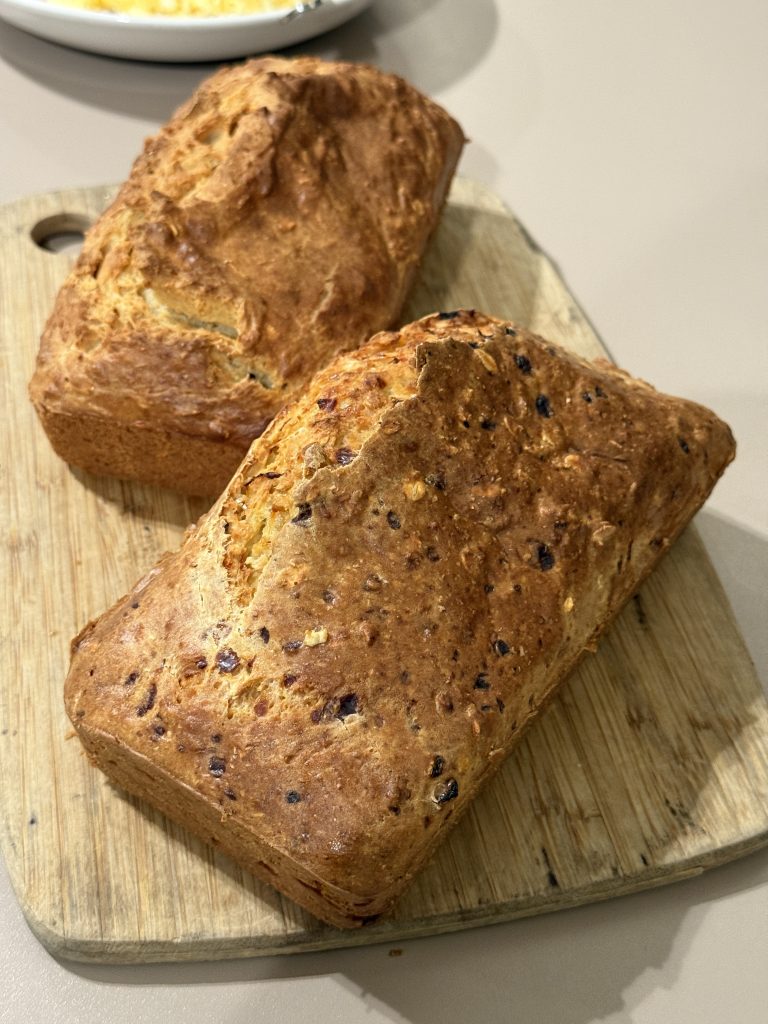
For karask, traditionally made with barley flour, we experimented with different combinations of regular and wholemeal flour and barley flakes. Australian buttermilk stood in for Estonian kefir, while one group used cottage cheese and another ricotta so we could compare the results.
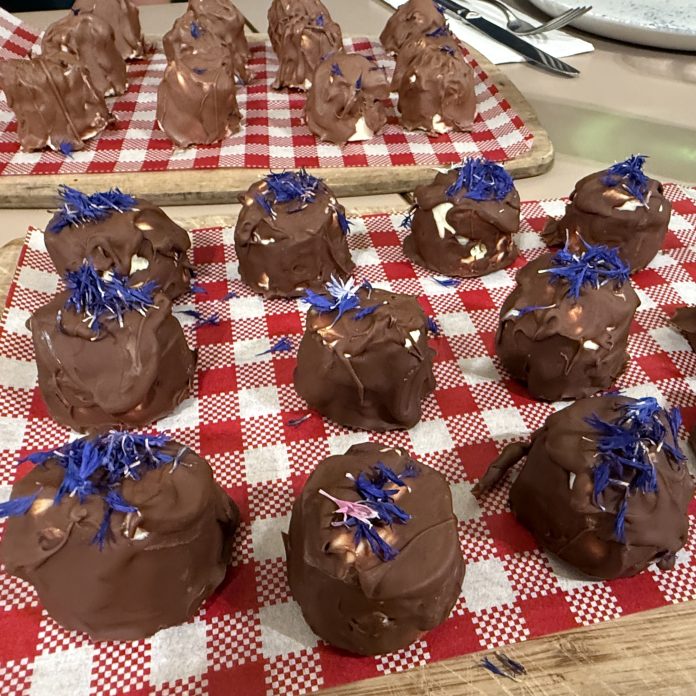
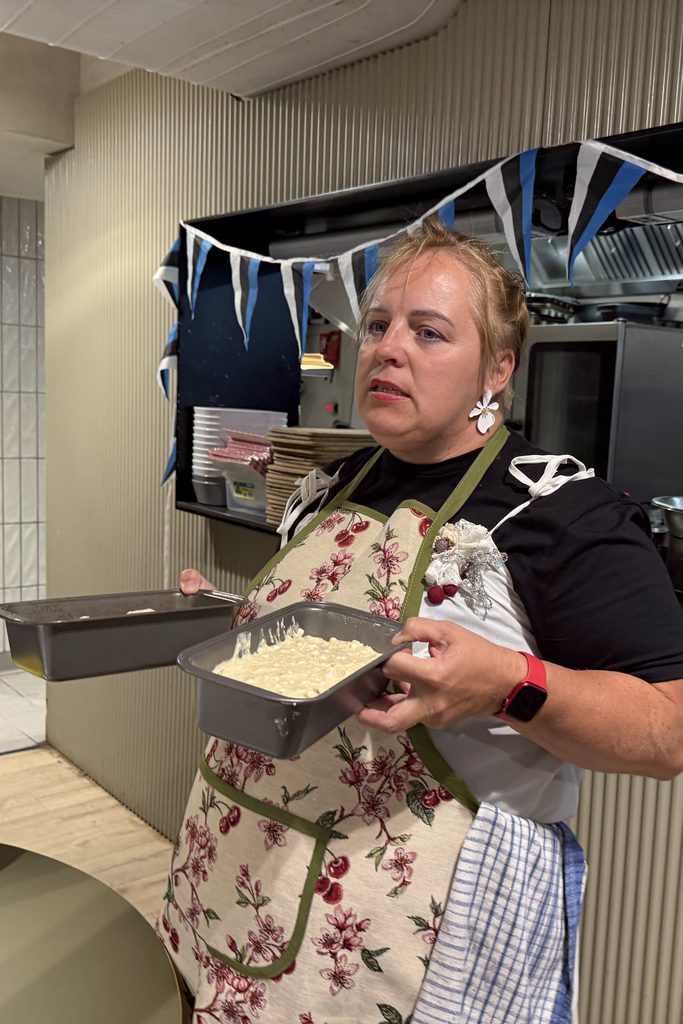
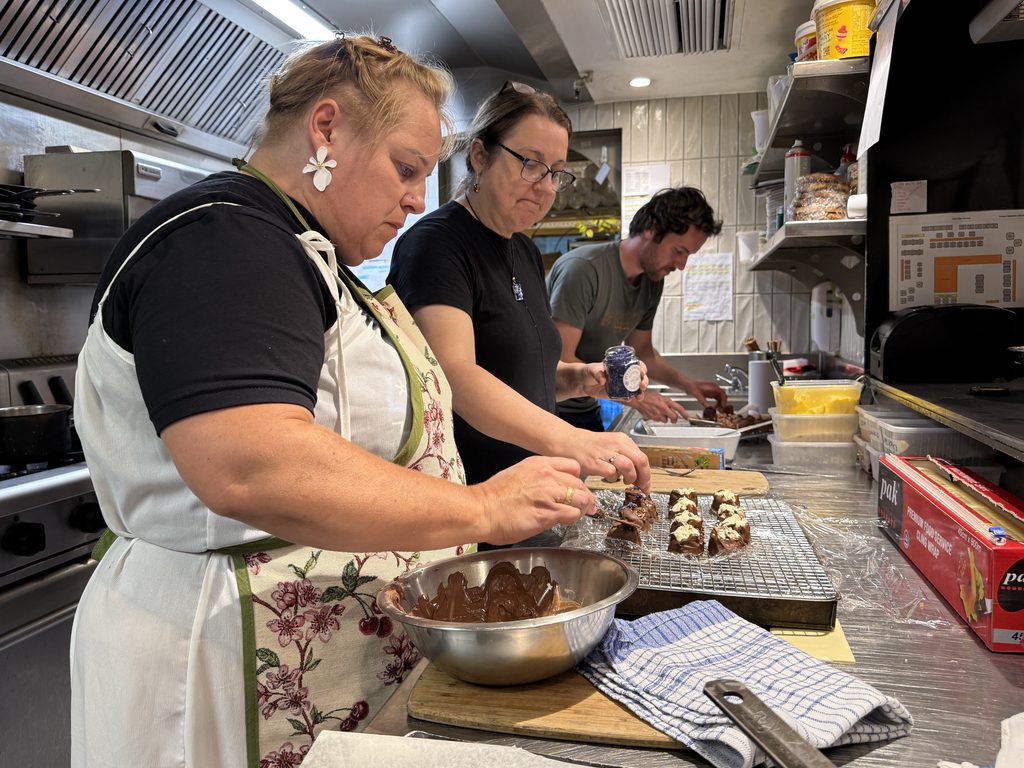
For kohuke, Margit showed us how ricotta and cream cheese can step in when the dairy products we know from Estonia aren’t readily available. Mascarpone works too, but cream cheese is cheaper and can be easier to handle. And sweetness can be adjusted depending on the chocolate you’re using.
Which leads us to another important lesson: kohuke does not require a special occasion. Someone asked Margit when you eat it. Essentially: whenever you like.
Excellent. Flashback to my recent summer holidays, when a friend made a tray of different-flavoured kohukesed the centrepiece of the table. We ate them as appetisers before the main meal. Nobody objected. Everybody enjoyed. The young ones demanded more; the grown-ups said nothing and simply reached for seconds.
Secret number two: baking powder is the safer friend
There were plenty of smaller kitchen secrets too. Margit explained that baking powder already contains both soda and an acid. If you’re using baking soda alone, you need to introduce acidity — buttermilk, lemon or lime juice, for example — otherwise you risk that unpleasant bitter taste.
Her practical advice for those standing in the kitchen staring suspiciously at two little containers? “If you don’t remember, and you don’t know what to use? Use baking powder. It’s safer.”
We also learnt that bread has different clocks. Baking powder or soda works almost immediately; yeast needs a couple of hours to rise; and sourdough starter needs considerably more forward planning. A starter itself can take about a week to establish, and bread made with it requires thinking a day or two ahead. In other words, choose your raising agent according to both desired flavour and how organised you were yesterday.
Secret number three: potatoes go downstairs
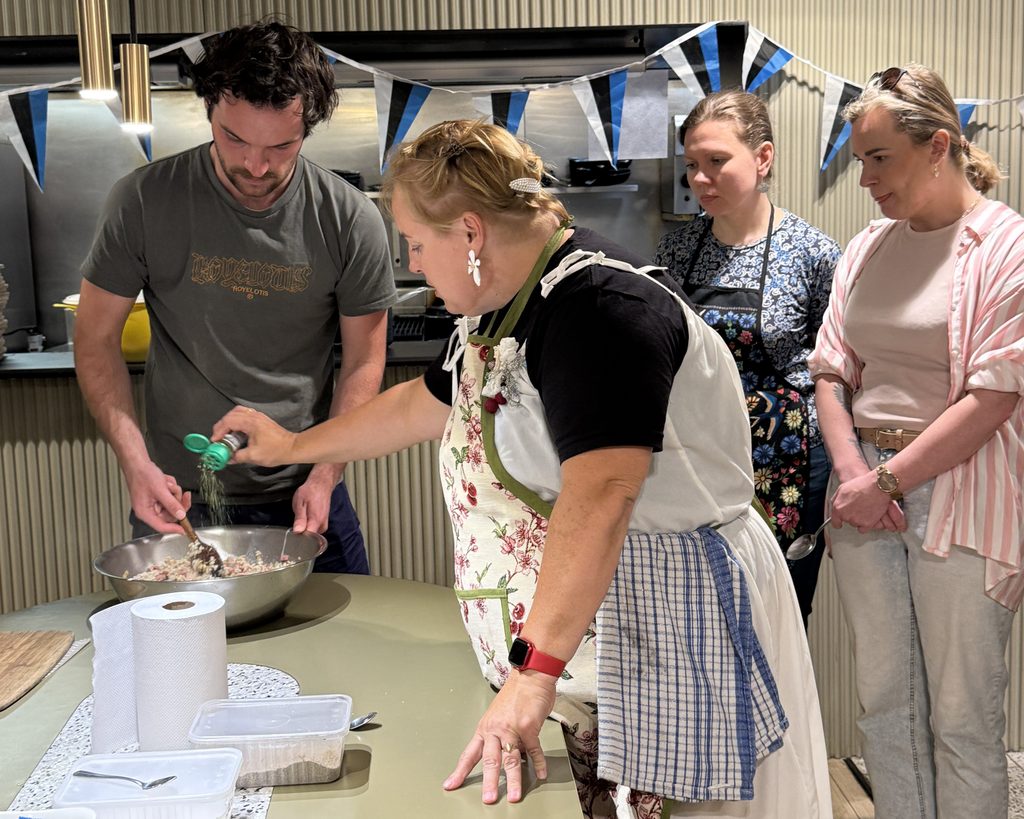
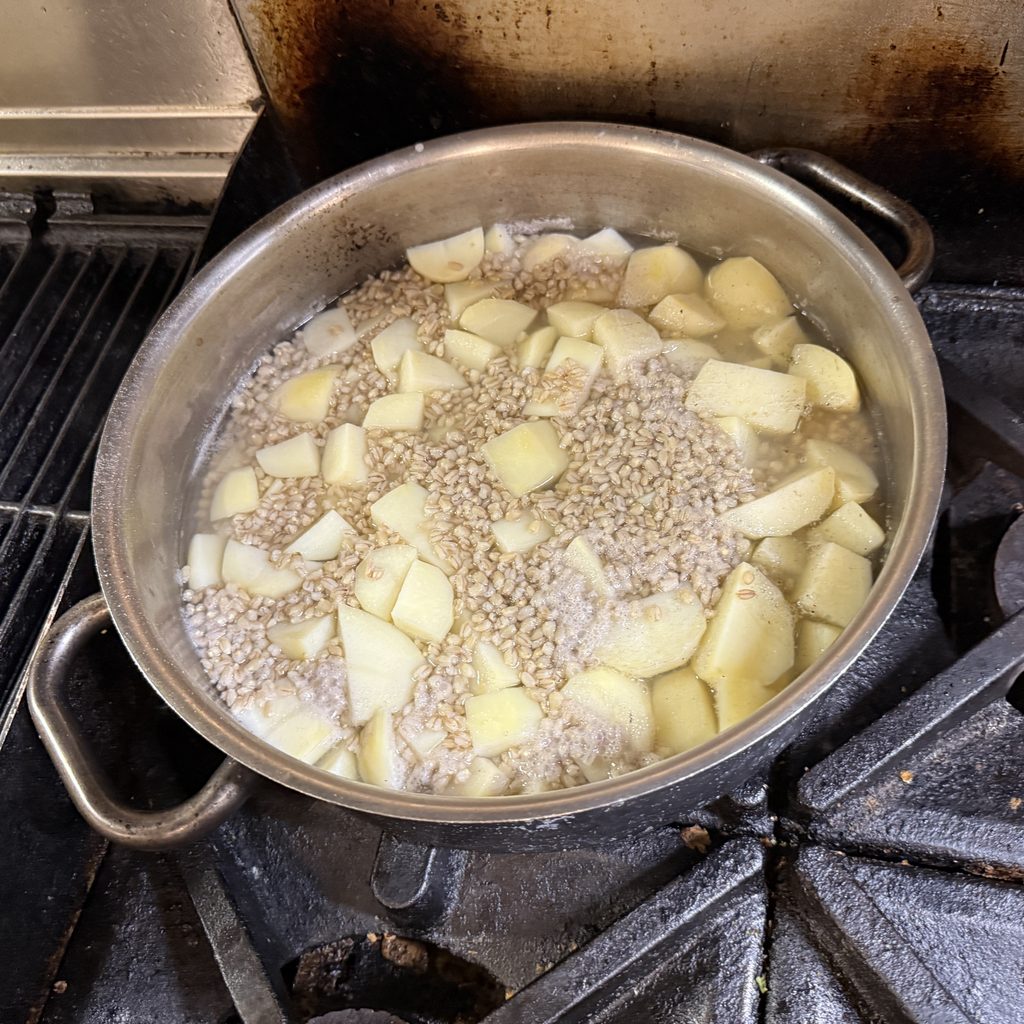
Then there was mulgipuder. When cooking the traditional potato-and-barley dish, the potatoes go on the bottom of the pot and the barley sits on top. That helps stop the barley from burning. Add enough water to cover everything, cook, mash and season.
Simple enough — although this particular HEIA correspondent has a confession to make. I have never really liked mulgipuder. Sorry, Mum. This was the first mulgipuder I have genuinely enjoyed. So much so that I went back for several helpings. Somewhere, generations of Estonian ancestors may have collectively relaxed.
We also picked up smaller tricks along the way: how to slice onions without crying, why cold eggs may need warming before going into boiling water, and why even a single drop of water is a terrible idea around melted chocolate. When coating kohukesed, Margit recommends freezing the filling first and dipping it into melted chocolate, which sets quickly against the cold surface.
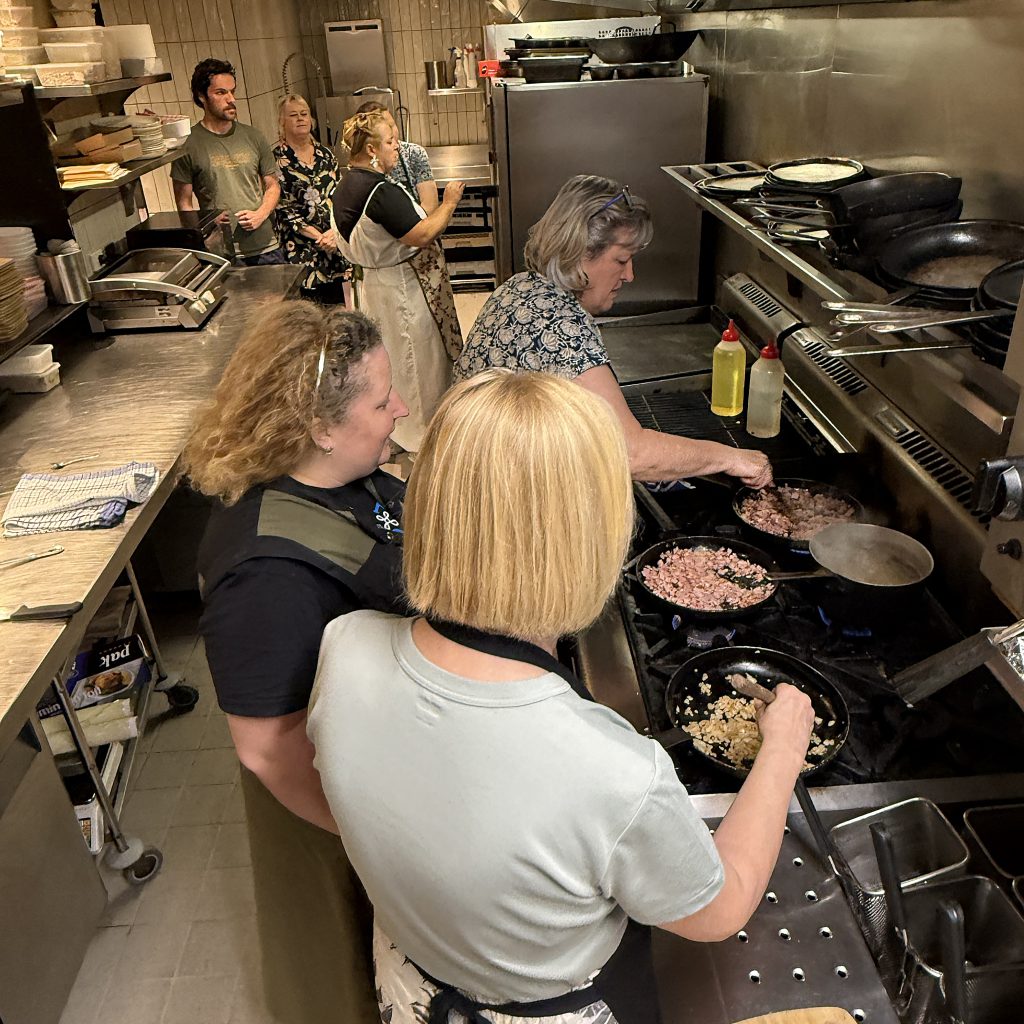
And then the sausage fought back
By the end of roughly four hours, we’d done rather more than learn a handful of recipes. One of the best lessons of the afternoon came from something that didn’t work at all.
We were supposed to make white barley sausages — essentially the familiar Estonian sausage mixture without the blood, which is considerably harder to source in Australia. The ingredients went in. The filling was ready. The sausage casing had other plans. It threw a tantrum and kept breaking. And instead of declaring culinary catastrophe, Margit did what experienced cooks apparently do: changed direction. The result was an entirely new creature: tangukäkid.
Writing afterwards, Margit described the Melbourne kohukesed as “perfectly imperfect” and said that instead of tanguvorst, a new food had been born — tangukäkid that tasted like heavenly barley sausages but looked like oat biscuits. All because the sausage casing broke in her hands. There might be a life lesson hiding in there somewhere, but we were too busy eating and enjoying it. Yum.
Throughout the afternoon, Margit repeatedly reassured us that cooking doesn’t always behave itself. Things fail. Ingredients differ. The thing you planned to make may turn into something else entirely — and sometimes that is exactly how a new, delicious, innovative recipe is born.
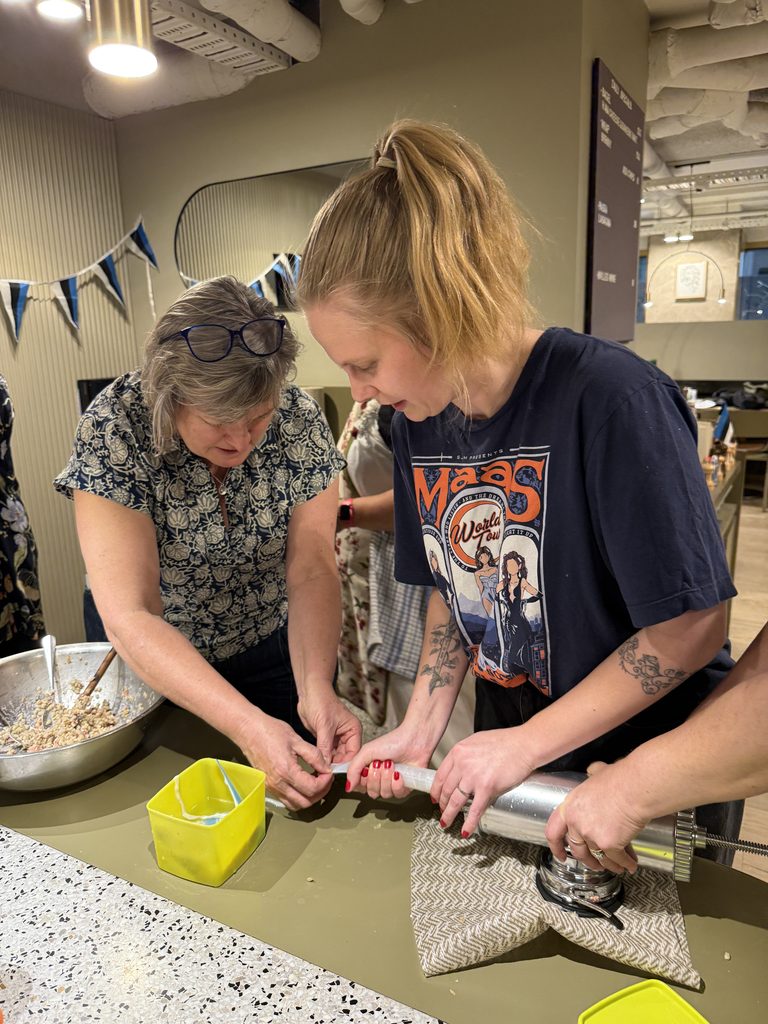
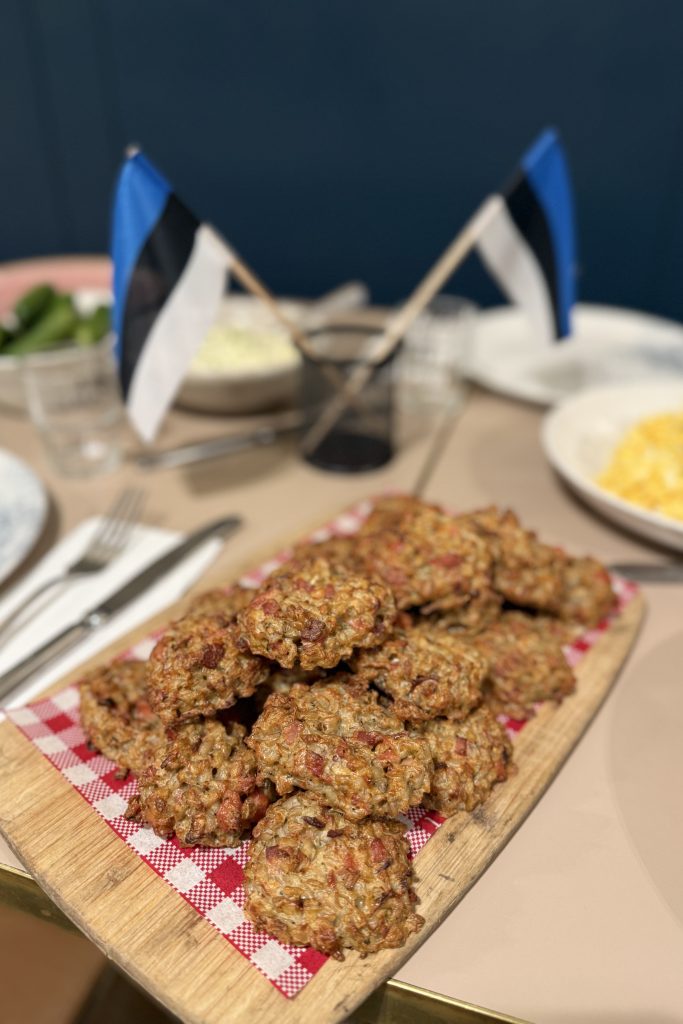
The secret behind the secrets
Then came a really lovely part: everyone sat down together around the table and ate what we had made. We talked and enjoyed.
Participants swapped their own Australian-Estonian kitchen intelligence too — what can be found at IKEA or Aldi, which products work as substitutes and where certain harder-to-find ingredients might be hiding around Melbourne (and elsewhere). No, we’re not publishing all of those secrets. You should have come to the class.
We did, however, leave with Margit’s recipes in both Estonian and English, full stomachs and considerably more confidence about adapting Estonian food to an Australian kitchen. We also left with plans to return to the scene of the culinary adventure very soon — this time simply to order a meal.
The Melbourne workshop took place at Mr Percival Café & Restaurant, owned by Anthony and Evelin Erm, familiar faces in Melbourne’s Estonian community and long-time creators of some superb community Christmas meals. The beautiful CBD space gave us somewhere to cook, experiment, watch kohukesed brought to life and finally sit together over dinner. If you haven’t visited yet, we recommend checking it out.
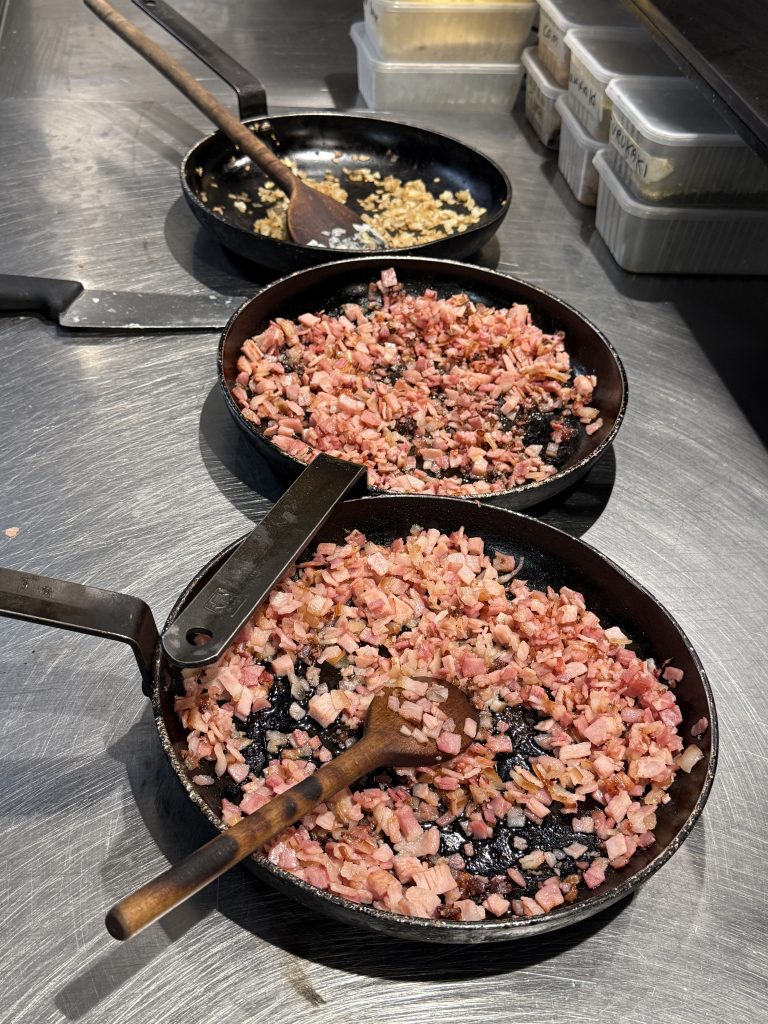
Margit later wrote that creating together with participants leaves her with enormous warmth and gives her confidence to keep doing what she loves: cooking, teaching, travelling, meeting, experiencing, sharing and discovering. That seems a pretty good description of the afternoon from the other side of the kitchen bench too.
We came to learn how to make Estonian food. We left knowing that ricotta can impersonate kohupiim, potatoes belong downstairs, baking powder is your friend when in doubt, kohuke requires no excuse whatsoever — and sometimes the best thing a recipe can do is refuse to behave. We thoroughly enjoyed all that. Come back soon, Margit!
Read more
Margit wrote this after the Melbourne workshop and this after the Sydney workshop
Margit Kirss-Elsayed Facebook | Instagram (@margitkirss)
Kirsikool website | Facebook
Estonian cooking secrets whispered in Sydney, Adelaide and Melbourne | HEIA
Acknowledgement
All photos: Kristel Alla, Melbourne, 13 September 2026.