

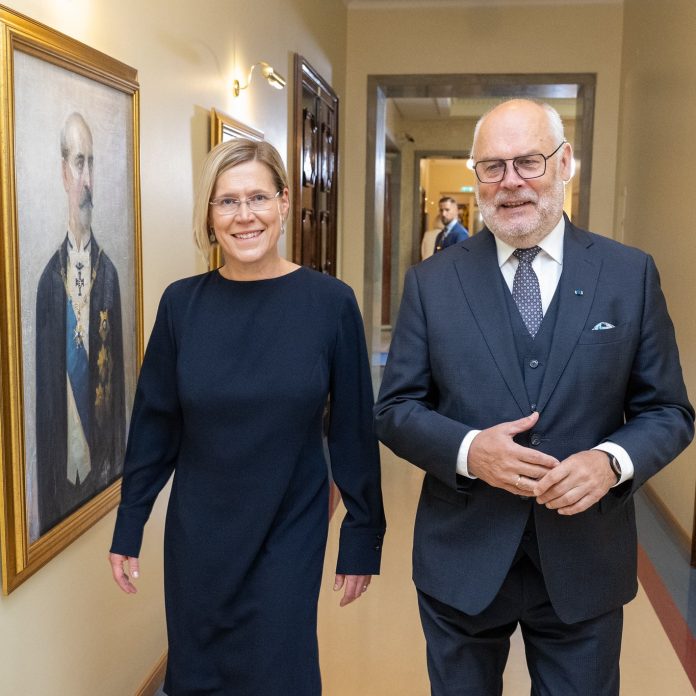
Estonia welcomes a new president today, 12 October 2026, as Ülle Madise takes office in Tallinn, succeeding Alar Karis after his five-year term. The inauguration ceremony will be livestreamed.
Ülle Madise was elected President of Estonia by the Riigikogu (Estonian Parliament) on 2 September 2026, receiving 71 votes in a secret ballot. A candidate needs at least 68 votes, or a two-thirds majority of parliament, to be elected.
Unlike in Australia, where the Governor-General represents the monarch as head of state, Estonia is a parliamentary republic with a president elected for a five-year term. The president represents Estonia internationally, has constitutional responsibilities including reviewing and promulgating legislation, and serves as the country’s head of state. The government, led by the prime minister, is responsible for day-to-day governing.
Ülle Madise becomes Estonia’s sixth president since the restoration of independence in 1991 and its second female president, following Kersti Kaljulaid. Since 1992, Estonia’s presidency has been held by Lennart Meri (1992–2001), Arnold Rüütel (2001–2006), Toomas Hendrik Ilves (2006–2016), Kersti Kaljulaid (2016–2021) and Alar Karis (2021–2026).
Meet Ülle Madise
Born in Tartu in 1974, Ülle Madise is a constitutional lawyer and legal scholar whose career has centred on Estonia’s legal system, public institutions and constitutional rights. She studied law at the University of Tartu and completed her doctorate at Tallinn University of Technology in 2007. Her career has included positions at the Ministry of Justice, the Riigikogu, the National Audit Office and the Office of the President, where she served as legal adviser to President Toomas Hendrik Ilves.
Since 2015, Madise has served as Estonia’s Chancellor of Justice (õiguskantsler), an independent constitutional office responsible for reviewing whether legislation complies with the constitution and protecting people’s fundamental rights. She was appointed for a second term in 2021.
During her career, Ülle Madise has frequently spoken about the importance of constitutional rights, public trust and laws that people can understand. In her speech to parliament before the presidential election, she emphasised the need for greater trust in society and cautioned against expecting the state to tell people how to live, think or feel.
Five years with Alar Karis
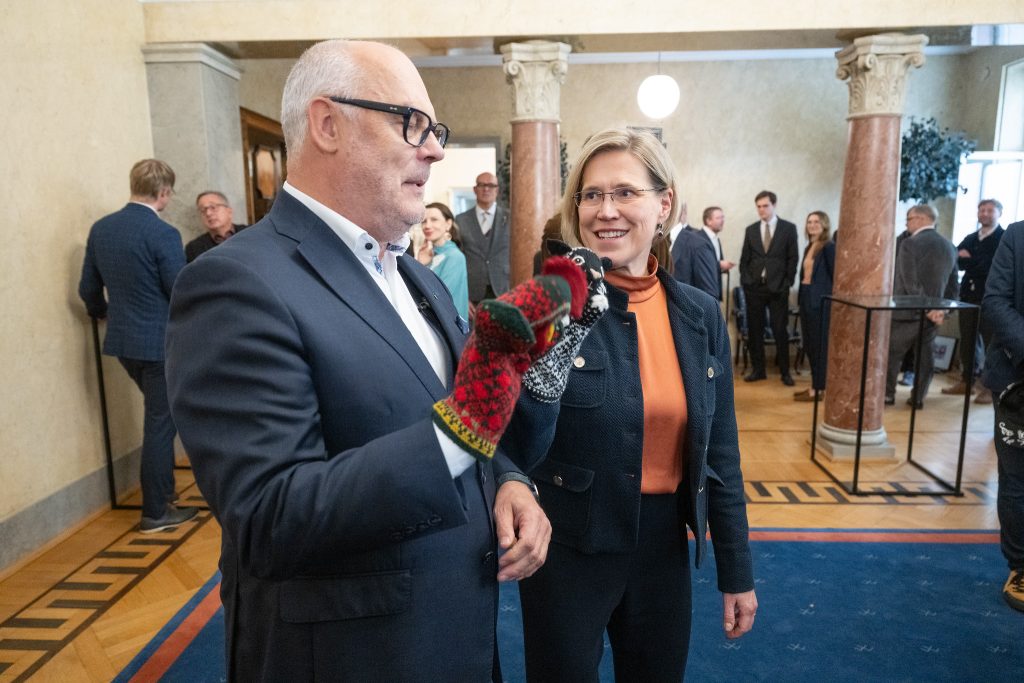
Outgoing President Alar Karis took office on 11 October 2021, succeeding Kersti Kaljulaid. His presidency has spanned a period of significant international change, including Russia’s invasion of Ukraine in February 2022 and the resulting security challenges for Estonia and its European neighbours.
Before becoming president, Karis had a career in science, higher education and public administration. Born in Tartu in 1958, he trained as a veterinarian before moving into research in molecular genetics and developmental biology. He served as rector of both the Estonian University of Life Sciences and the University of Tartu, later becoming Estonia’s Auditor General and director of the Estonian National Museum.
His scientific background and experience leading universities and cultural institutions brought a particular focus on education, research and the importance of knowledge to his public engagements. Throughout his presidency, Karis also represented Estonia internationally, advocating cooperation with European allies, support for Ukraine and the importance of international law.
The president’s constitutional role
One measurable part of Karis’s five-year term is his work reviewing legislation. According to figures compiled by the Office of the President and reported by ERR, Karis promulgated 517 laws during his presidency and declined to promulgate 11 laws, returning them for reconsideration. One of those laws was returned twice.
Under Estonia’s constitution, the president has the power to refuse to promulgate legislation and return it to parliament for further consideration. If parliament passes the legislation again without changes, the president may ask the Supreme Court to review its constitutionality. This constitutional responsibility is one of the ways Estonia’s president can exercise an independent role within the country’s parliamentary system.
Alar Karis has emphasised that declining to promulgate legislation is not something he considers an achievement in itself. In an interview with ERR published on his final day in office, he explained that returning a law to parliament should provide an opportunity to examine the legislation more thoroughly, rather than simply correct an individual constitutional concern.
Estonia’s place in the world
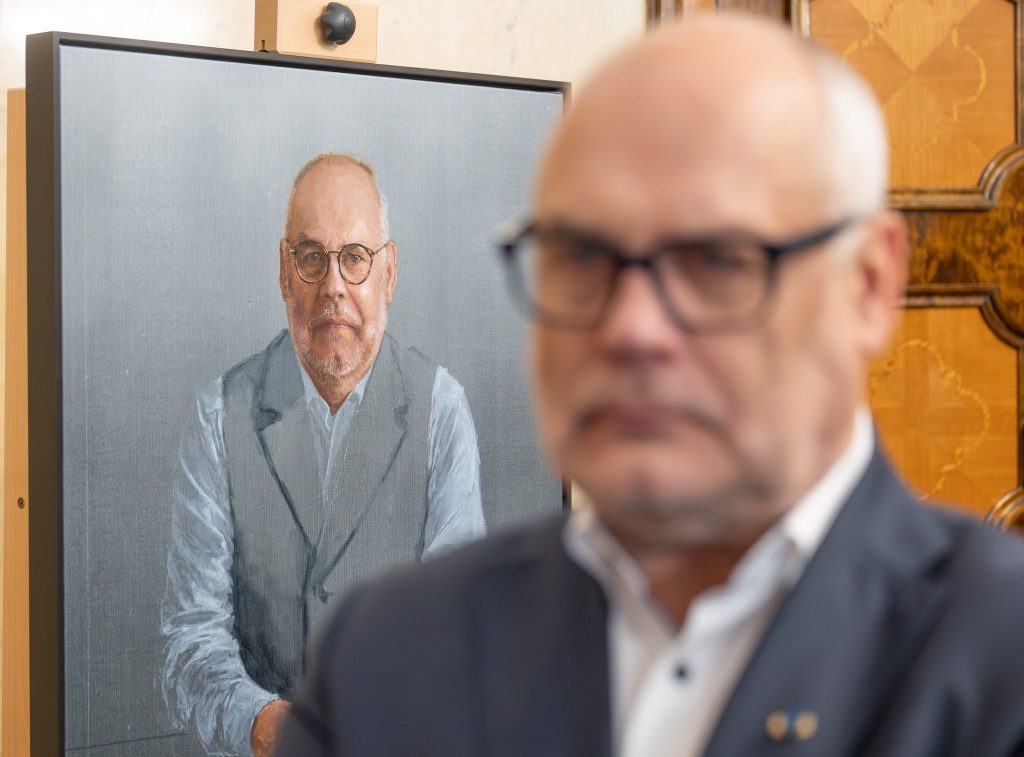
During his five years in office, Alar Karis made 122 foreign visits and hosted 42 foreign heads of state in Estonia, including eight state visits. He has described what he calls “soft diplomacy” — building relationships through meetings and conversations that may not attract headlines — as an important part of his work.
The outgoing president has also acknowledged the importance of Estonian communities living outside Estonia. During a visit to New York Estonian House in September 2026, he spoke about preserving Estonian language, culture and identity across generations, thanking the organisations and volunteers who have maintained Estonian community life abroad for decades. He emphasised that the strength of these communities depends on passing their connection to Estonia to younger generations. He also recognised that participation in Estonian cultural life should remain possible for those who do not speak Estonian, through national celebrations, singing, dancing and community activities.
It is a message that will sound familiar to many Australian Estonians who continue to build and maintain connections with Estonia, sometimes several generations after their families first arrived in Australia.
Watch the presidential inauguration
Estonia’s presidential inauguration takes place at 3.00 pm Estonian time on Monday, 12 October 2026 — 11.00 pm in Melbourne and Sydney. The ceremony will be held at the Riigikogu in Tallinn, beginning with an address from outgoing President Alar Karis. Ülle Madise will then take the oath of office, receive the presidential chain of office and deliver her inaugural address.
The ceremony will be broadcast live on the official Riigikogu website. Official inauguration information and livestream linked here.
Read more
Alar Karis: 5 years as Estonia’s president in pictures | ERR
President Karis: The strength of the Estonian community depends on the sense of identity passed on to the next generation
President Alar Karis: Reflecting on his five years in office | ERR
Looking back at Karis’s presidency | ERR (in Estonian)
Ülle Madise was elected the President of the Republic | Riigikogu
Ülle Madise: When did we stop fighting for Estonia’s future and start fighting one another?

