

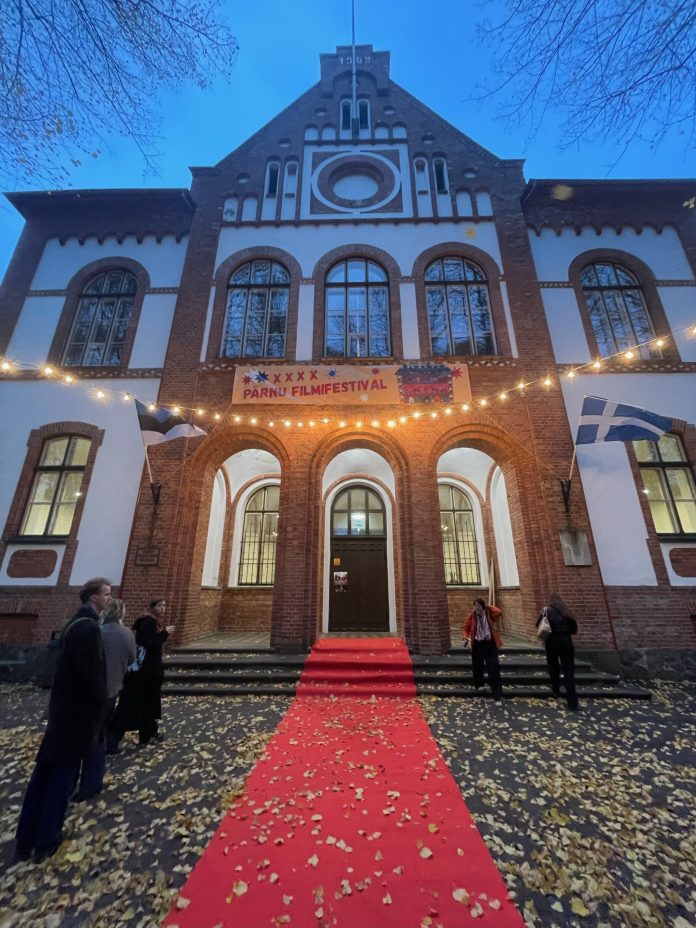
The Pärnu International Documentary and Science Film Festival has been running for 40 years. I had the opportunity to attend this year to present a film and get a sense of the festival itself.
The festival began with the aim of documenting and helping to ensure the survival of indigenous peoples and their cultures, and has attracted anthropological documentaries and, more recently, scientific films, along with other sections, including portraits of artists. It is an eclectic mix, but also narrow enough to create a distinct program.
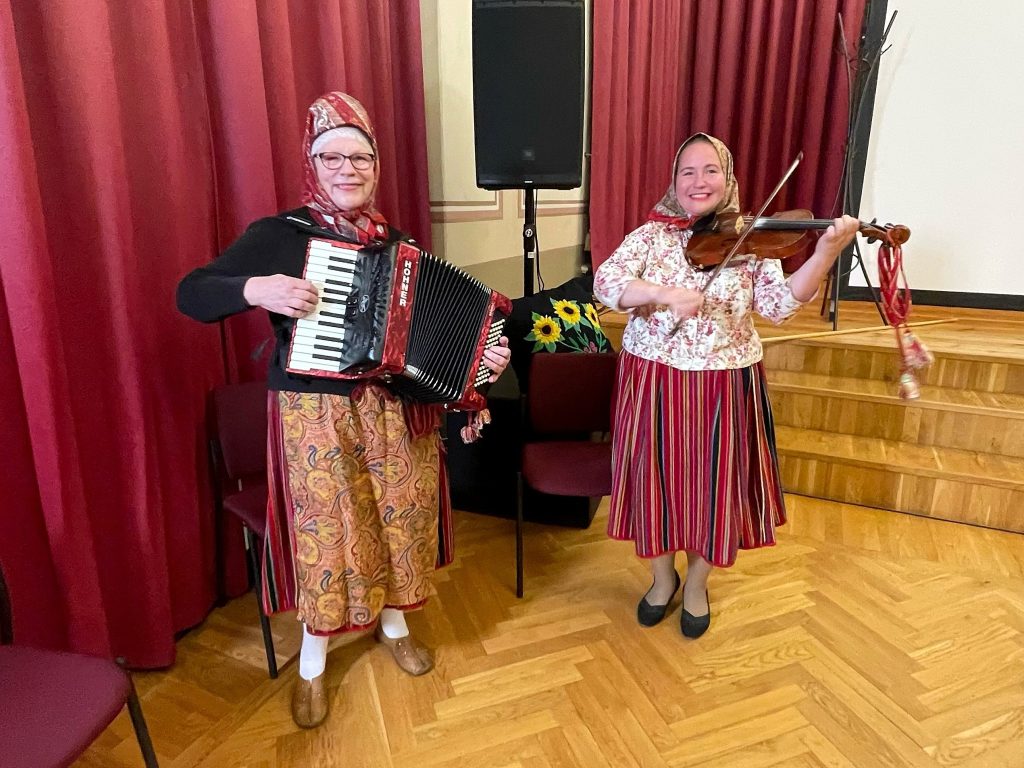
Festival Director Mark Soosaar is himself a filmmaker, and has documented the people of Kihnu Island in his work. Members of the community were involved in the festival, performing at the awards and adding to the community spirit.
The festival was brought into being by Soosaar and filmmaker Lennart Meri, who would go on to become President of Estonia and be very influential in the re-establishment of the Republic. Soosaar writes that “Lennart’s vision was to bring together Soviet documentary filmmakers and folklorists, as well as colleagues from beyond the Iron Curtain.”
The vision was to bring East and West together. While Meri went on to politics, Soosaar held the reins of the festival for four decades and guided it to become an influential and well-respected institution.
This year’s festival, held from 12–18 October 2026, welcomed international guests from around Europe and the world attended, including from Japan, Chile and Australia. I found the festival very interesting, though not without its quirks.
On my first night I attended a retrospective screening of Jacques Demy’s The Umbrellas of Cherbourg. While the official language of the festival is English, the movie was in French with Estonian subtitles. Unfortunately, my French and Estonian are limited to saying hello and ordering a croissant and pirukad (pies) respectively. Luckily, Demy’s film is so colourful and visually engaging that it didn’t terribly matter, and I greatly enjoyed it.
The program is thoughtfully laid out, Pärnu has a walkable core, and most screenings are within a short stroll.
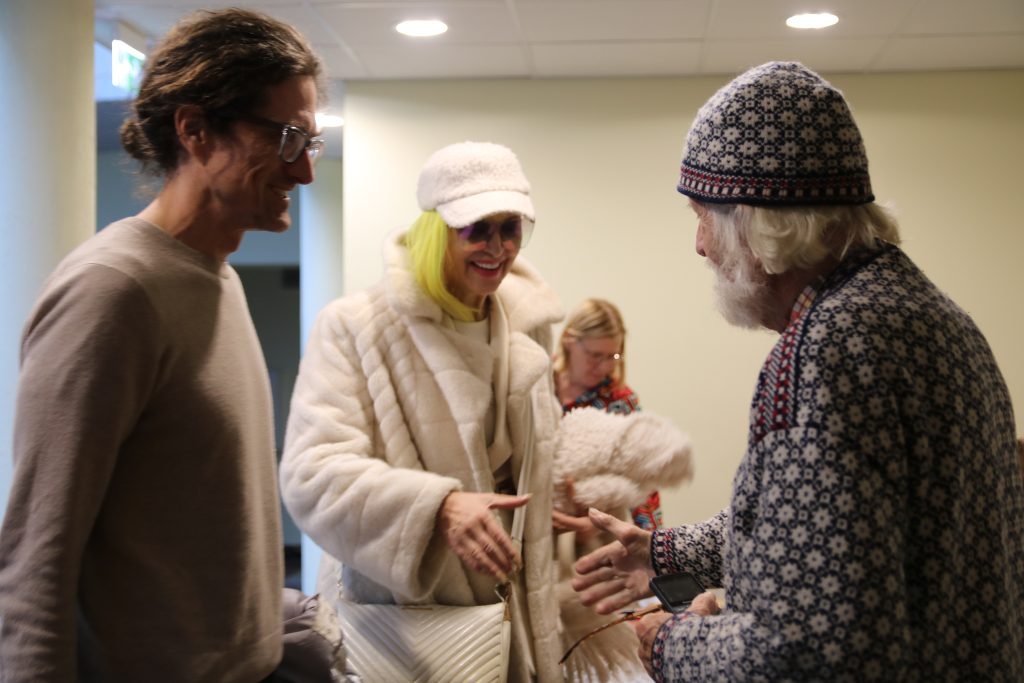
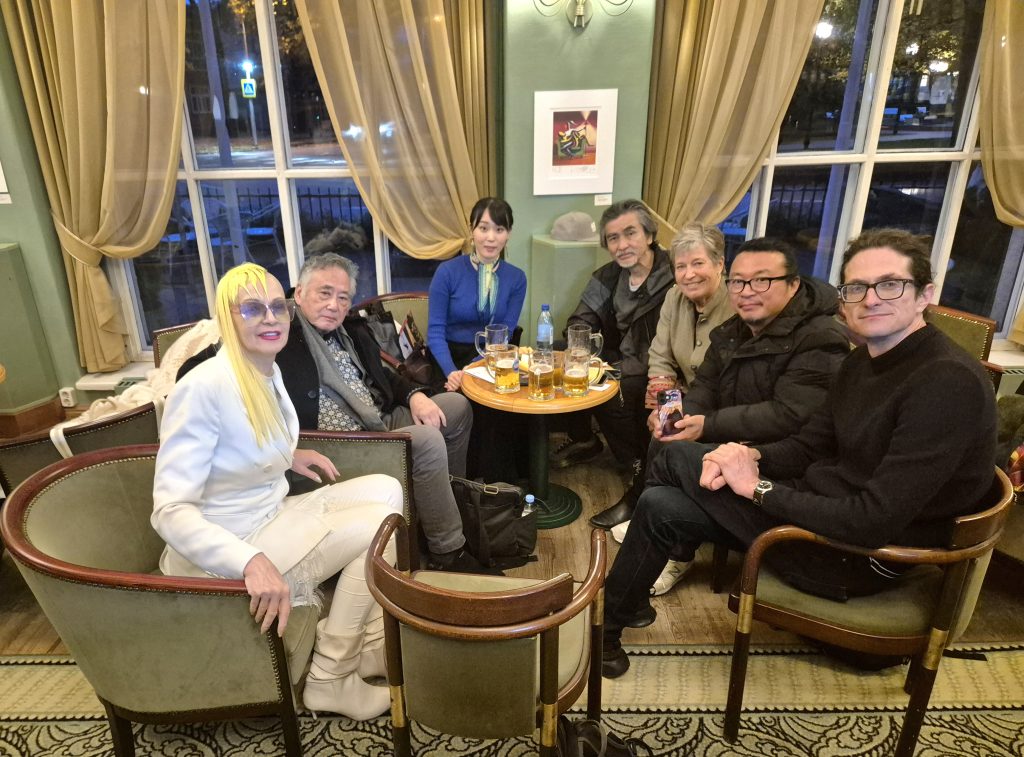
Many of the screenings had international filmmakers in attendance. Three filmmakers travelled from Japan to attend, including a director from the Ainu minority presenting a film directed by a member of the Ainu community, rather than an outsider studying them.
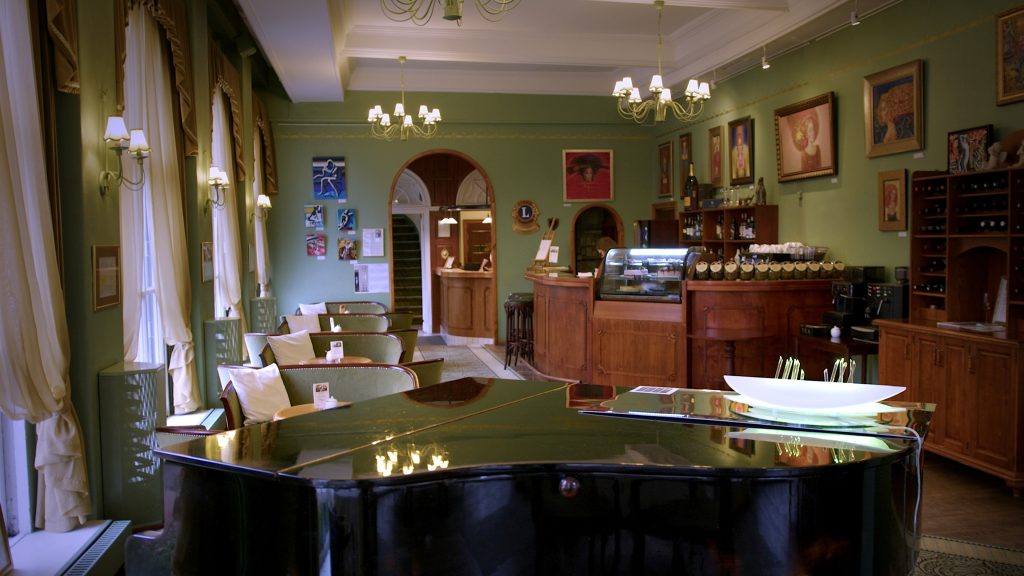
The festival puts filmmakers up in the charming Victoria Hotel, home to the oldest café in Pärnu. I was fortunate to be hosted here by the festival too. Its ornate interior hosts an eclectic series of events, from pop-up exhibitions on the walls to a night when they rolled up the carpet for tango dancers to come in. It’s a lovely experience to stay in the one location and say good morning to other filmmakers over breakfast.
The screenings are mostly in school halls, and education is something done well by the festival. Many screenings were well attended by classes of students. The collected films screened across the years are also available for educational purposes.
The awards night was broadcast on television, featuring a colourful presentation of traditional folk music by Kihnu Islanders, who encouraged dancing to folk music after the ceremony. Soosaar remains a jovial presence, often joking in his presentations.
There are many challenges in organising a festival, and Soosaar has done well to manage them, but I could see the strains during my time in Pärnu. There was a nice community feel to the event, but Pärnu is an international festival.
A screening for filmmakers from Japan was in a school hall, with entry via an unmarked door. It was a struggle to find, and eventually teaching staff were able to direct us to the venue. I entered with one of the directors whose work was screening.
This may be idiosyncratic and charming in a way, but it was disappointing for the director, who had travelled from the other side of the world hoping to reach an Estonian audience, to have their film screened to a handful of people, mostly involved with the festival. Filmmakers often travel at their own expense and, at a minimum, hope for an audience to see their work. For a festival with a long-standing international reputation, making sure visiting filmmakers feel valued is what will sustain it.
The small festival team were apologetic and doing their best with their resources. Pärnu Film Festival is clearly full of heart.
Small turnouts sometimes just happen at festivals. But with no signage, and what seemed like limited promotion, audiences had little chance of finding the screening. The workload of simply getting screenings on clearly stretches a small team, and this is a question of resources rather than effort. Many sessions relied on local high school pupils, or film students who had travelled from Tallinn on a field trip, to make up an audience. Their presence is a strength, but an international festival also needs a broader public audience.
It is a credit to Soosaar that the festival has enjoyed such success over forty years. It has attracted a dedicated team, including voluntary assistance from people like Pärnu Grand Prix-winning filmmaker Kersti Uibo, whose high regard for the festival sees her returning to give her time to help run the festival events.
But the demands of running a festival are great, and what volunteers can do on goodwill alone is limited. There is a lot to love about the festival, and much goodwill towards it, and with proper support it could give every film the presentation it deserves.
In his introduction to the festival guide, the Mayor of Pärnu, Siim Suursild, describes the festival as world-class. Its history bears that out, but it will take more resources for the festival as it runs today to fully live up to that description.
As Mark Soosaar comments in his preface to the festival program, funding is being cut. This is unfortunate, but to make a viable case for more support, the festival will need to show funders a clear plan for renewal.
“Now, it is time to look toward the horizon and ask: In which vessel shall we sail onward?” writes Deputy Mayor Ene Täht.
This is an important festival, and can continue to be so, but it needs a shift in direction to avoid fading away. The festival could possibly position itself as a local educational festival run for students; it does a very good job of that. But if it does want to continue welcoming filmmakers from around the world, new structures will need to take the festival forward, to make it worthwhile for filmmakers and audiences to attend.
Mayor Suursild writes that Soosaar will be “passing the baton after this year’s event.”
In Soosaar’s festival message, he quotes Odysseus: “the ship which brought us here will not carry us any further.”
In this change, there is an opportunity for the festival to be reinvigorated and serve the documentary community for another forty years. Soosaar has built strong connections and an enviable presence on Estonian television, with finalist films and the awards ceremony being broadcast on ETV2, not to mention a successful touring component that travels around the country. At 80, he has served the industry well, and his presence is welcoming and reassuring.
Soosaar in his statement puts it on the Ministry of Culture, the Cultural Endowment of Estonia, and other supporters to decide the fate of the festival. Deputy Mayor Ene Täht writes that the festival’s future “requires clearer interest, involvement, and support from the state than has been the case thus far.” This is true. A festival with forty years of history and an international reputation should not have to rely on goodwill and volunteers alone. It needs the state, the city and the cultural sector working together, and a renewed festival with a vision that gives funders the confidence to invest.
This is a challenging position to be in, as you need funding to run a successful festival that attracts more funding. But some steps cost little compared to the benefits they could bring. Estonia is known around the world as one of the most digitally advanced nations, and the next generation running the festival could bring that same spirit to it: a dynamic online program and ticketing, consistent social media promotion, building on its Facebook presence across other platforms, perhaps with clips of Q&As that reach international audiences and Estonians abroad. These are high-value ways to raise the festival’s profile and strengthen the case for greater support.
On the positive side, there is the drive from the City of Pärnu, with Täht further writing: “The City of Pärnu is ready to work with the festival organisers, the state, and the cultural sector to find a solution that ensures the festival’s continuity and offers an opportunity for renewal.” And importantly: “The fortieth festival need not mark the end of a long journey; instead, it could signal the start of a new one… Let us work together to ensure that the 40th festival is not the last, and that the Pärnu Film Festival’s ship sails confidently into the decades ahead!”
The more I learn of the festival, the more I am impressed by its pedigree, history and spirit, which sees filmmakers enthusiastically travel from around Europe and the world to attend. It is not easy to run a festival and build a reputation. Pärnu has a very strong base, built and maintained by Soosaar. With so many seeing the value the festival has created, it would be a shame to allow such a history to fall away.
With support from the city, and as Soosaar hands over the reins, the path is open for the Pärnu community to come together under new leadership to renew the festival and make it the vibrant link between cultures it was in 1987. From there, pathways to state funding may again open up and rejuvenate the festival, and make it again a truly international event that continues to attract the best films and attendees.
Read more
Pärnu Film Festival
The White Ship screens at the “Invisible” exhibition in Tallinn | HEIA
The White Ship sails into Pärnu Film Festival | HEIA
Anthony’s website, Facebook and Instagram

