

The Last Hurrah has officially begun at Melbourne Estonian House — 22–24 May 2026 — and yes, FOMO is real. Saturday and Sunday still await. Pace yourselves emotionally.
People have arrived from Adelaide, Sydney and across Australia. Some have taken time off work. Some have walked in and immediately found someone they haven’t seen for years. Some have looked at old photos and experienced the very specific archive-table emotion of: “Wait. Is that me? How did I get so old?”
Welcome to day one of the Last Hurrah weekend — the final full-community send-off for Melbourne Estonian House, a place that has held more than 50 years of memories, music, meetings, theatre, folk dancing, kitchen conversations, children running through halls and at least several thousand “just one more quick chat” moments.
And if Friday was meant to be the quiet beginning, someone may need to explain to Friday what “quiet” means.


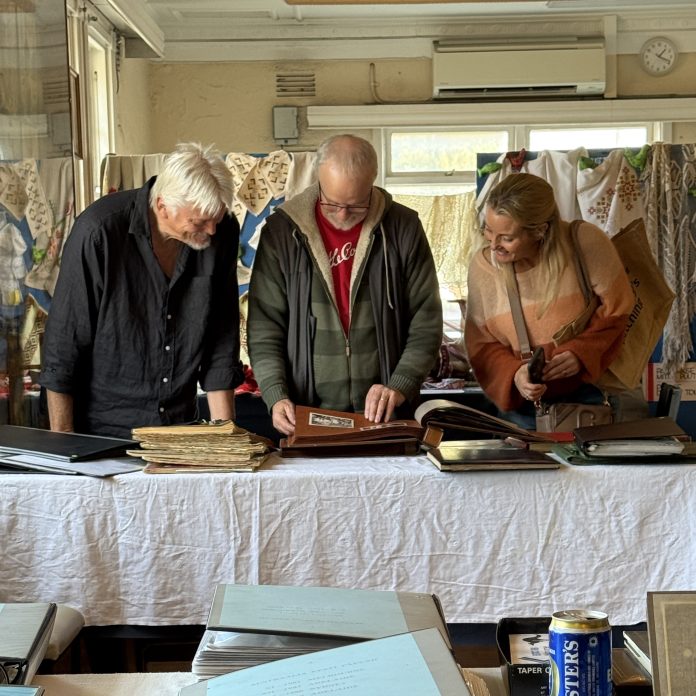
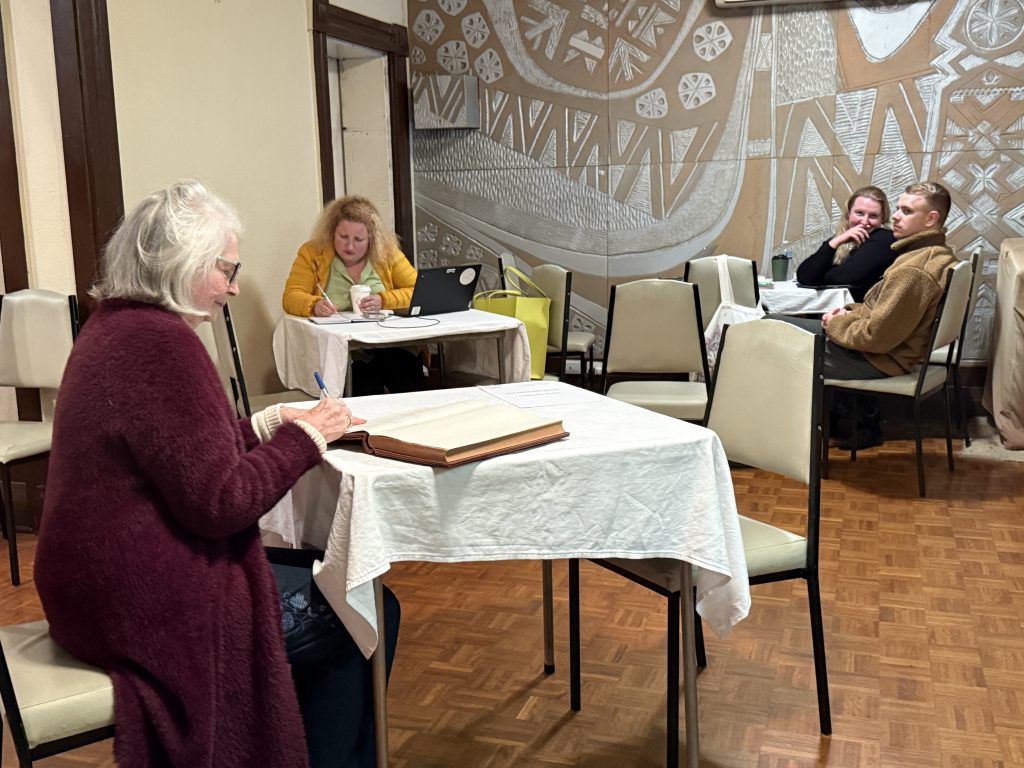
Left: The guestbook for visitors. Right: People browsing the history of the Estonian Society in Melbourne. Last Hurrah, Estonian House in Melbourne, 22 May 2026. Photo: Kristel Alla.
The archive table knows everything
From 10 am, the archive displays opened — and within minutes, the rooms began doing what they were always going to do: turning people into detectives, historians, storytellers and occasional victims of their own youthful hairstyles.
There were folders, albums, photographs, old programs, newspaper clippings, guest books, handicrafts, films and table after table of community history. The displays included material on the history of the Estonian Society in Melbourne, folk dancing, theatre, Eesti Päevad, the Men’s Choir, the Women’s Choir, photo albums and much more.
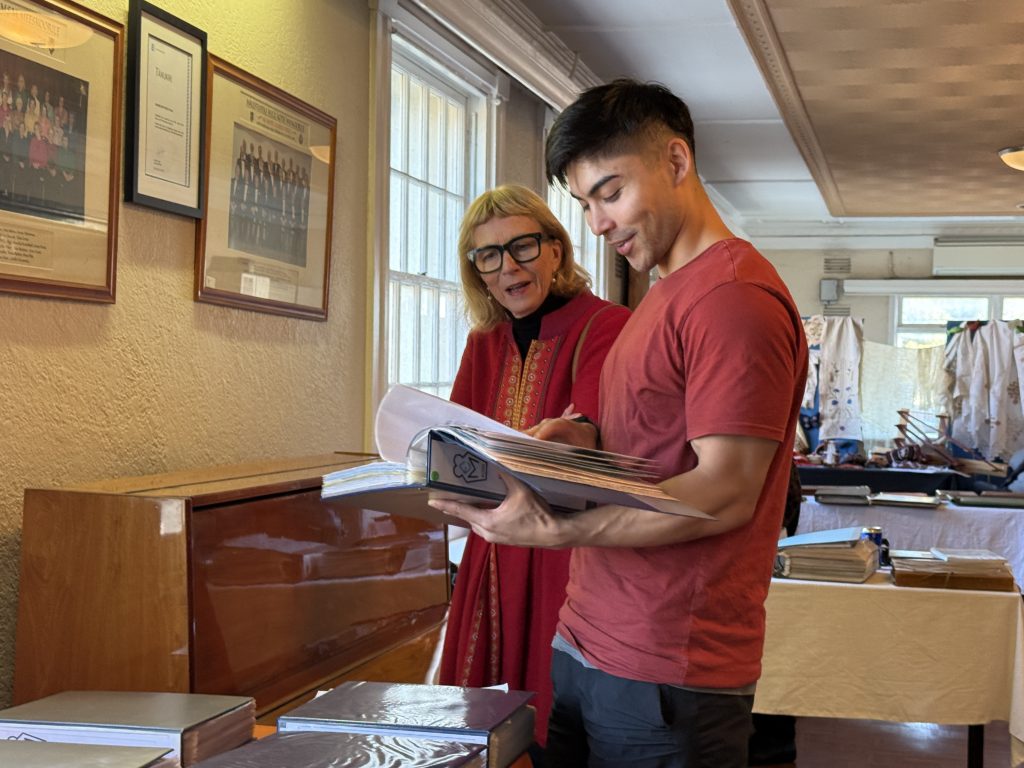
Some people came for a look. Most stayed for hours.
There were discoveries everywhere. Someone found a familiar face but not the name — until suddenly the name came back. Someone else pointed at a photo and said, “That little boy there is my dad”. Another remembered basketball competitions, picnics in the park, dinner dances with Hungarians and Finns, and events where the entry fee was $2 — with concessions for $1, naturally, because history also enjoys humiliating the modern economy.
There were comments like, “Wonderful what has been done here,” and, “This house is one of my favourite places in the world.” One visitor said they had lost count of how many times they had been inside the building — and had attended more than ten weddings there.
That is not a building. That is a social calendar with walls.
Memory lane had traffic
There were people arriving with their own personal collections of photos. There were conversations about drawers full of old images, albums that were carefully organised — and albums that very much were not. There were also gentle regrets about parents who had passed away before names could be added to photographs.
The archive tables quickly became meeting places in their own right. People sat, flipped pages, compared memories, asked questions, corrected each other, debated details and occasionally discovered that the person in the photograph was, in fact, exactly who they thought it was.
There were “Tere, tere — mis sa siin teed?” (“Hello, hello — what are you doing here?“) greetings. Sydney people found other Sydney people in Melbourne. Someone admired blue, black and white nails, because of course national colours belong everywhere, including fingertips. There were discussions about old nicknames — including one society nickname that appears to be “Softy”, and frankly, this may need its own investigation.
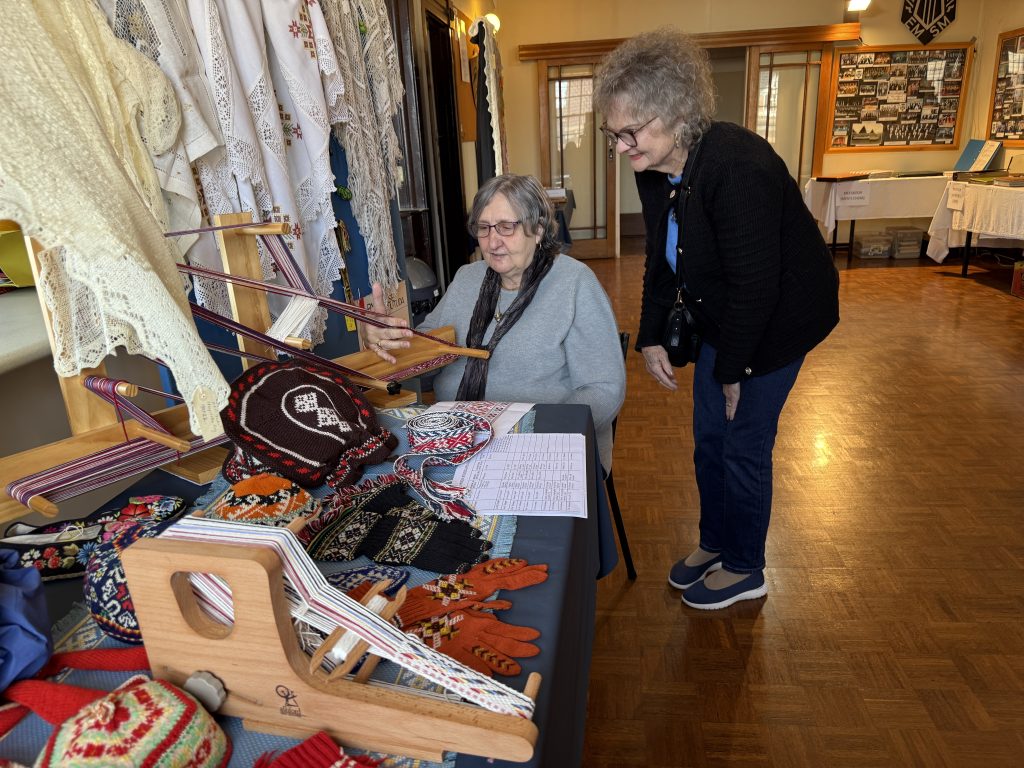
All around the building, conversations unfolded in corners, hallways and beside displays.
There were stories of parents’ parties, Estonian music, dancing, “umpa-pa” sounds drifting through childhood memories, and houses bought big enough to host Estonian gatherings. There were memories of theatre productions, including adult theatre that was apparently “fabulous” and involved at least one person being roped in against their better judgement — which, let’s be honest, is how many excellent community things begin.
There were parents showing children photos of themselves as youngsters. Kids flipped through pages. People practised Estonian, debated words, asked questions and discovered stories they had never heard before.
Upstairs, old video recordings brought events back to life. In the handicrafts corner, our wonderful weaving teacher Gabry Mikkor was weaving in the background. Estonian music played through the day — a cheerful mix of newer songs and old favourites, including music familiar from childhood. At various points, dancing seemed not only possible but spiritually necessary. (I confess to taking a few twirls around the dance floor, out of pure joy — because I could).
And throughout it all, Matti Kiviväli answered questions about the history of the house and the society — offering the kind of extra guidance you cannot get from a display label alone. He also received well-earned praise for the archive work collected over many years. (Truly, we’re really impressed with your knowledge, Matti!)
Friday was only the beginning. Let us stress this gently but firmly: Friday was the least packed day. Yes. The least packed.
The building already felt alive with stories, laughter, questions and reunions. The bar opened in the late afternoon. People settled in. The “I’ll just pop in quickly” crowd began learning the ancient truth of Estonian community events: there is no such thing as popping in quickly. And the weekend is only getting bigger.


Left: Matti Kiviväli and Estonian Society in Sydney President Ave Nukki talking about community history. Right: Aime Metsar, founder of the Melbourne Estonian archives. Last Hurrah, Estonian House in Melbourne, 22 May 2026. Photos: Kristel Alla.
Here’s a reminder of what is happening.
Saturday: beer hall by day, NOËP by night
🕢 10 am — Archives open, free event, no RSVP needed
🕢 12 pm–5 pm — Beer hall, food and drinks for purchase, free event, for catering purposes RSVP here
🕢 7.30–8.45 pm — NOËP takes the stage, doors open 7 pm, tickets here
Saturday, 23 May begins with the archives open again from 10.00 am. If you missed Friday, this is your chance to wander through the displays, follow the photo trails and possibly discover that someone in your family was much cooler than previously advertised.
From 12.00 pm to 5.00 pm, the Beer Hall opens in the main hall. Estonian beer and other drinks will be available, and the kitchen will serve food from 12.00 pm to 5.00 pm. Expect good food, good company and the kind of atmosphere where “just one plate” becomes a full afternoon strategy.
Then, in the evening, the hall transforms again. Doors reopen at 7.00 pm for paid concert-goers, with NOËP taking the stage from 7.30 pm to 8.45 pm. Estonia’s electro-pop magician is coming to the same hall that has held decades of dances, speeches, meetings and celebrations. If the walls have been emotional already, Saturday night may finish them off completely.
Sunday: Family Day, national costumes warmly encouraged
🕢 10 am — Archives open, free event, no RSVP needed
🕢 12 pm — Family Day, kitchen and bar open, food for purchase, free event, for catering purposes RSVP here
🕢 2 pm — Performances and speeches, free event, RSVP to Family Day above
Sunday, 24 May is Family Day — and this is where the whole weekend comes together. The archives open again at 10.00 am. The kitchen and bar open from 12.00 pm, with food available until 2.00 pm. Please plan ahead: no food will be served during the performances and speeches, because even potato salad must respect the program.
At 2.00 pm, performances and speeches begin. Kodu Kaja will sing. Eiderattad will dance. Children will perform. There will be speeches, memories, gratitude and a chance to honour not only the building, but the generations of community life it has held.
Speakers will include Estonia’s Ambassador to Australia, H.E. Jaan Reinhold, Matti Kiviväli, Vanessa Roosmets and others — voices that carry both history and gratitude.
And yes — there will be dancing you can join, including one final Tuljak together, anyone can join. Consider this your warning and invitation.
If you have a national costume, Sunday is a beautiful day to wear it. There is no obligation, but it would be a fitting tribute to a house that has seen generations of beautifully dressed Estonians pass through its doors.
At minimum, come as you are. At maximum, come looking like a walking love letter to Estonia. Come while the house is still full.


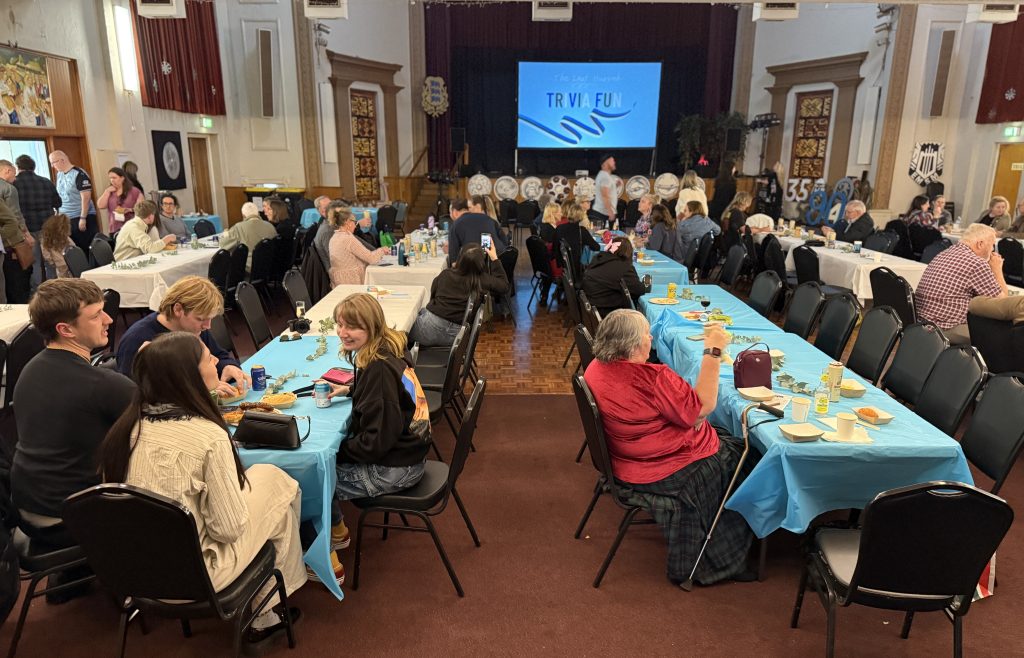
Visitors to the Last Hurrah, Estonian House in Melbourne, 22 May 2026. Photos: Kristel Alla.
Let’s sum up: The Last Hurrah a living archive in real time
It is someone pointing to a photo and remembering a name. It is someone else saying, “My mum and dad met here.” It is children learning what came before them. It is people from different cities finding each other in a Melbourne hallway. It is laughter, old music, folders full of history, and the strange tenderness of seeing your community reflected back at you from tables, walls and faces.
Melbourne Estonian House has been many things: a rehearsal space, a theatre, a kitchen, a meeting room, a bar, an archive, a dance floor, a party hall, a place to belong. This weekend, it is all of those things one more time.
So come today. Come Sunday. Stay longer than planned. Ask questions. Look through the albums. Find the faces. Share the stories. Wear the national costume because you can. Bring your family. Bring your memories. Bring your curiosity.
Your time for the Last Hurrah is here. And honestly? You do not want to be the person hearing about it afterwards.
Read more
Melbourne Estonian archive opens its doors for the Last Hurrah | HEIA
Last Hurrah, program drop: three days, one final goodbye | HEIA
Estonian electro-pop musician NOËP rolls into Australia | HEIA
The Estonian House in Melbourne has found a buyer | HEIA


Last Hurrah, Estonian House in Melbourne, 22 May 2026. Photos: Kristel Alla.

