

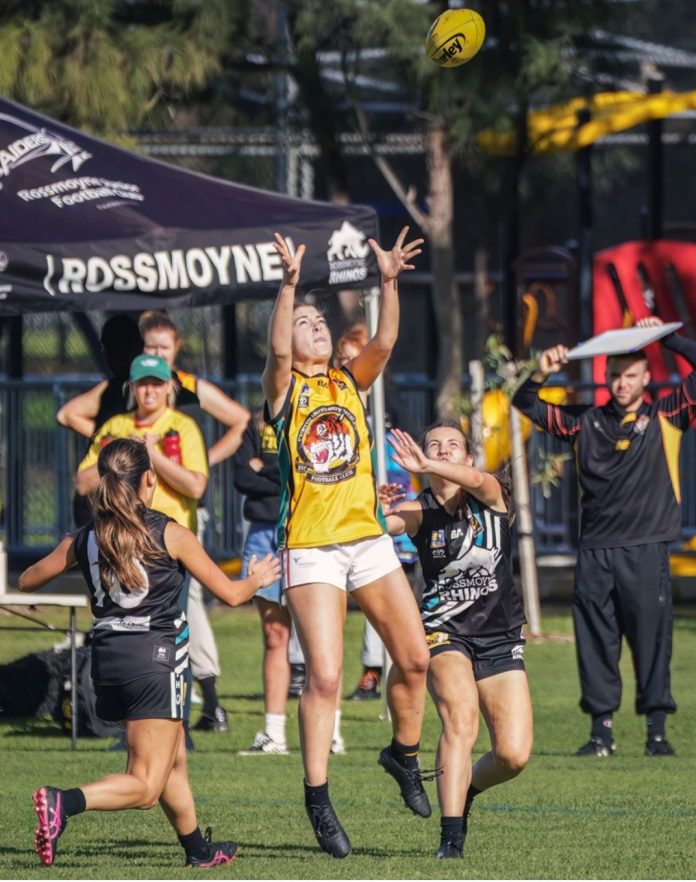
With Fremantle facing Brisbane in today’s AFL Grand Final, 26 September 2026, Mark Narustrang is rather excited. For newly arrived Estonians wondering what all the fuss is about, he explains Aussie Rules.
Many sports are international. Soccer, rugby, athletics, basketball and cricket are played in many countries, creating international competition and garnering global attention. Even surfing is in the Olympics. This makes most of these sports familiar to an Estonian.
But for many Estonians touching down in Australia for the first time — the sport known as “Aussie Rules Football” (or footy) is not something they have come across before. It was created in Australia, and has stayed within Australia. If ever it gets played outside Australian borders, it will be with ex-Australians leading the way.
The thing is, if an Estonian spends more than a few weeks in Australia, they will not be able to avoid the game. Australians looooove their sport — annual game attendance is around 8 million, with TV and streaming audiences totalling more than 370 million — and before too long, you will find yourself in a conversation with someone banging on about the “holding the ball” decision over the weekend.
In advance of this inevitability, this guide is here to help the newly arrived Estonian survive the small talk that you will undoubtedly be drawn into at some point. And maybe — just maybe — participate in it!
Origins
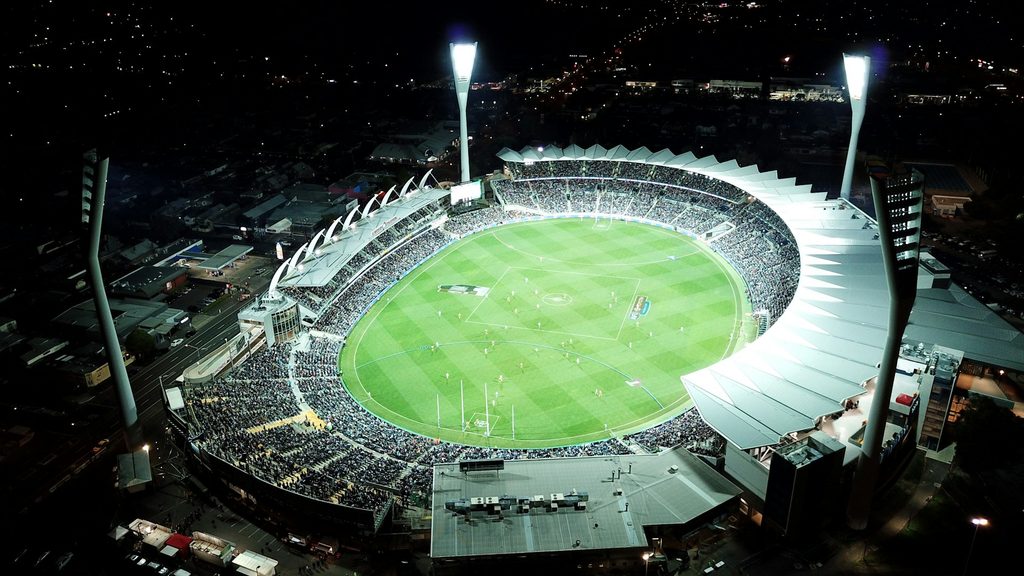
Aussie Rules has been around much longer than many would think. It’s older than Association football — more famously known as soccer. Yep, the Australian version of football was codified in Melbourne in 1859, four years before the first rules of modern soccer were drawn up in England. Not bad considering Australia was still a British colonial outpost at the time. Aussie Rules was formed as a way for cricketers to keep fit over winter, and that’s why it’s played on cricket ovals and not a rectangle like every other footballing code.
States
The states of WA, SA, VIC, along with the NT and TAS, are the heartland of Aussie Rules, and whilst also present in QLD and NSW for well over a century, it competes with Rugby League (NRL) for attention. This has sparked an “us and them” winter sport arm wrestle, with NSW and QLD saying rugby is the best, whereas the rest of Australia declares AFL is the best.
One thing that is certain is that Aussie Rules is the biggest “Australian” sport (rugby being English).
Competitions
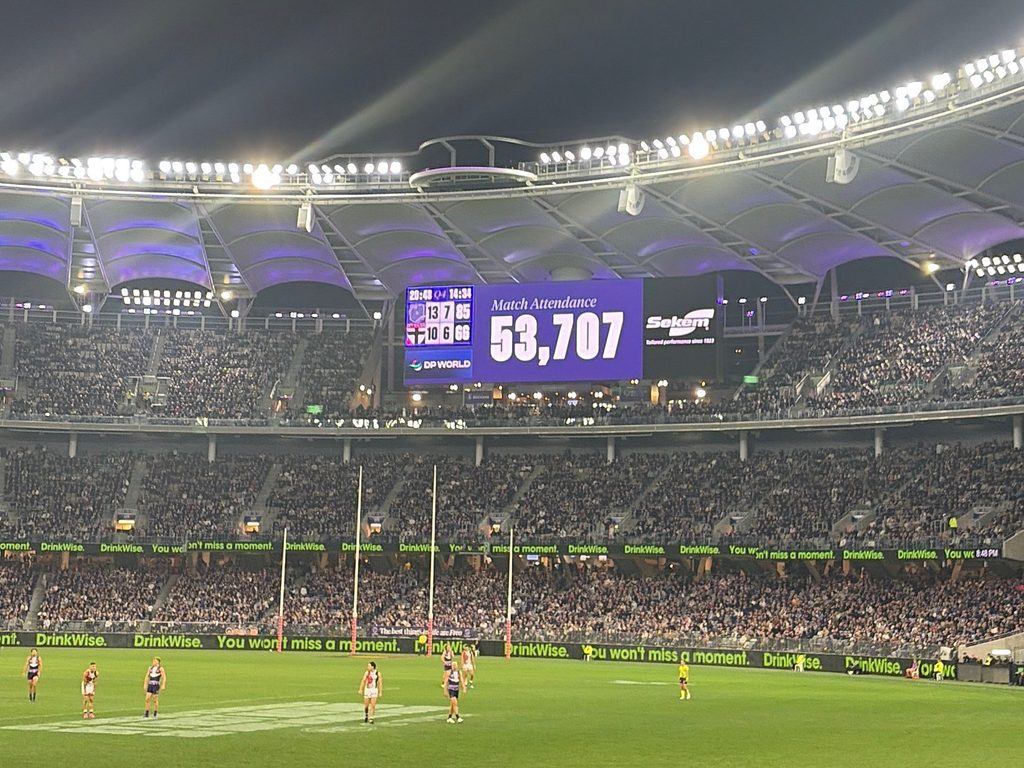
Every state has its own league, like the WAFL, VFL and SANFL — but the national league is the Australian Football League (AFL for the men’s league and, more recently, AFLW for the women’s league). The AFL brand is now synonymous with the sport. That is, AFL is Aussie Rules and even if you play WAFL or under 14s in Launceston, you play AFL, just not IN the AFL. Easy!
If you hear about Auskick — that’s not some form of martial art but the little kids’ version where they don’t tackle… and barely manage to kick!
Clubs
The 18 AFL clubs are scattered around the country, two each in WA, SA, NSW and QLD, with a new club scheduled to start in Tasmania in 2028, and ten in Victoria. That’s right, ten in Victoria. Not because Victoria’s population is five times that of any other state, but because the AFL was born from an expanded Victorian Football League (or the VFL). So basically, the VFL competition became the national competition through mergers, relocations plus brand-new clubs, and the AFL was born. And then the VFL was reborn so Victoria could have a state league! Confusing? Yes!
League, but not
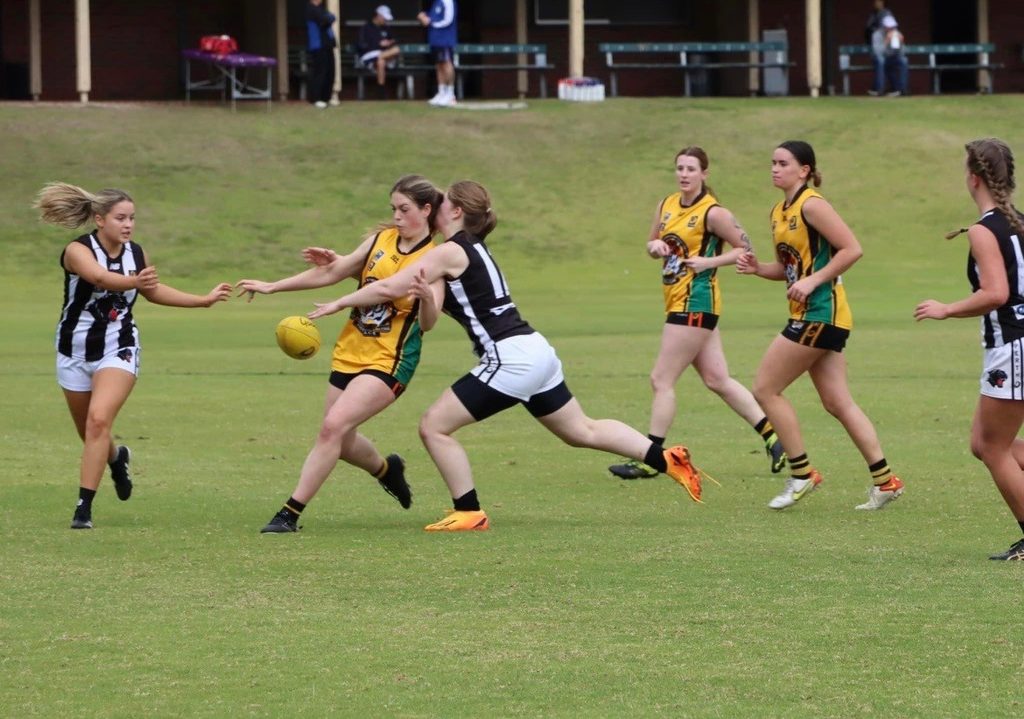
Anyone who follows European sporting leagues knows that the team that finishes top of the league at the end of the season wins. That’s not how it’s done in the AFL. AFL is more like American sports, which have a regular season and then playoffs (which are called finals in Australia). Basically, the top 10 teams at the end of the year (used to be eight) duke it out in knockout finals rounds to get to the “Big Dance” (Grand Final) and the winner of that becomes the premier.
Rules
The rules are objectively complex and impossible to fully understand for a newcomer, especially where umpire intervention is involved. Free kicks are paid for things like “front-on contact”, “insufficient intent”, “lasso” and of course “holding the ball”. They are ripe for interpretation and create howls of dissent during games, subsequently in the media, and decades later as painful memories of lost finals are dredged up. There is a lot of “vibe” in following the flow of the game. At some point, you just know when a whistle should be blown or not.
The basic rules are relatively simple though: kick the ball through the big white posts = a goal, which is six points; miss to the right or left but within the smaller posts = a behind, which is one point; and the ball going through the goal posts without being kicked is also a behind and one point. That’s the scoring bit.
How you get the ball within kicking distance is via running (must bounce the ball), kicking and handballing (punching the ball with one hand off the other hand) to other players closer to goal. The defence can tackle the ball carrier when the ball is in play other than when they take a mark — which is to catch the football from a kick. When the ball gets trapped by a pile of players or goes out of bounds, the umpire throws it up, back into play. The umps used to bounce the ball, so you will hear “bounce-down” is at a particular time (i.e. the start of the game), and then watch the umpire throw the ball up and wonder what’s going on!
That’s more than enough to get you going.
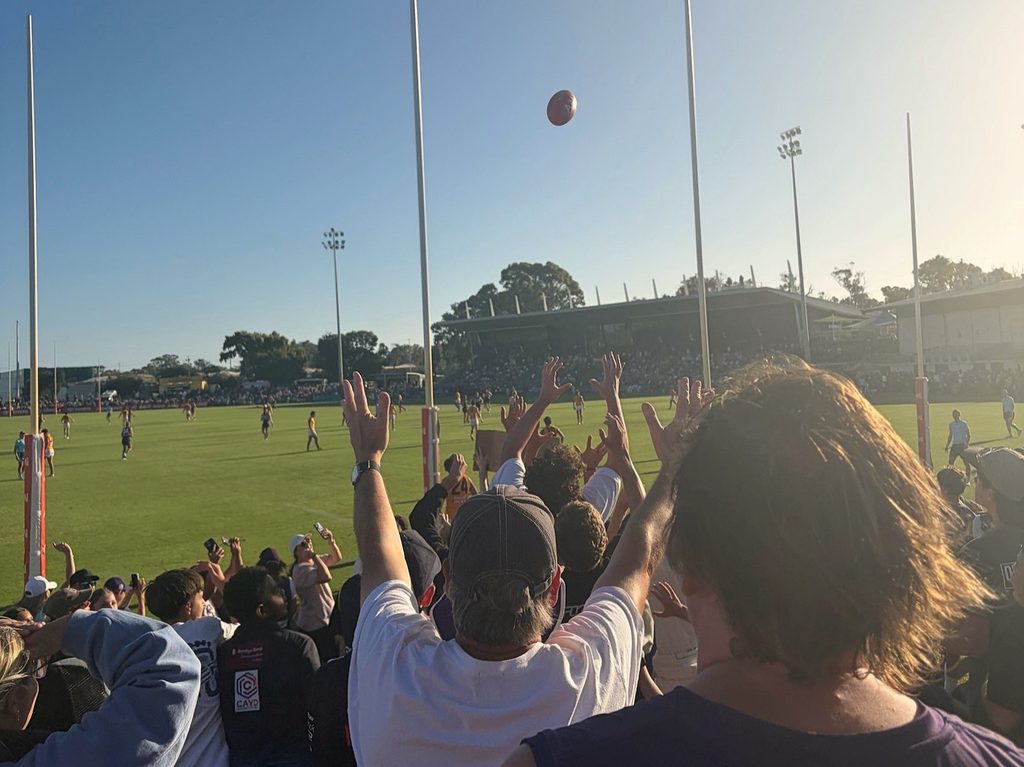
Screamers and bananas
All sports have their quirky vernacular and Aussie Rules is no exception. Just when you think you are pretty good at English, you come across “Strayan” slang, and Aussie Rules is rich with it. A high-flying mark can be called a hanger, screamer or speccy. Types of kicks can be called torps, checksides, dribblers or bananas. Then there are terms like “the G” (the Melbourne Cricket Ground), Charlie (Brownlow Medal) and Sherrin (football) which will not be found in any English dictionary. The best way to learn these is by repeated exposure.
Baltic linkage
Like Australia as a whole, the AFL is multicultural. The surnames running around give you a clue — from Duursma to Aliir — the breadth of heritage playing the game is truly global. And the Baltics are no different. Dane Rampe of the Sydney Swans is of Estonian heritage, while Mark Blicavs, Peter Everitt (both Latvian) and Adam Ramanauskas (Lithuanian) are other past and present players with Baltic ancestry.
Whether watching a game played in 38-degree heat and high humidity on red compacted dirt complete with bullants in the Pilbara, or at the MCG in front of 90,000 feral fans baying at the umpire, Aussie Rules football is a quintessentially Australian experience that many Australian Estonians have embraced. Final tip: if you are going to pick a team, pick one near to where you plan to stay — Australia is a huge continent!

Read more
2026 AFL Grand Final today: start time and how to watch
Aussie Rules Football – AFL
AFL smashes viewership records with audience of 370 million
Acknowledgement
Big thanks to Emily Narustrang and April Narustrang for amazing photos!

