

Kooskõlas is delighted to announce the launch of the Seisler Scholarships for Kooskõlas Segakoor, made possible by a generous donation from Giles Parker, whose family has supported the Australian Estonian community for generations.
We’re incredibly grateful for this support. Below, Giles shares the story behind the scholarships and what he hopes they will achieve.
Why the Seisler Scholarships?
“In 1925, a 19-year-old music-loving Estonian woman named Helene Seisler made the journey from Tallinn to Australia. This scholarship aims to commemorate this 101-year anniversary by helping seven young singers of Estonian heritage return to Tallinn in 2028 for the Laulupidu with Kooskõlas.
The Seisler Scholarships are for young singers who love singing, love the camaraderie of choirs and are prepared to commit to the journey until July 2028.
The scholarship will pay for all Kooskõlas choir membership costs. It will also cover the scholar’s personal registration entry fees if the choir is selected for Laulupidu in 2028. It only asks that you commit to singing in the choir during the lead-up to and, hopefully, participation in Laulupidu in July 2028 in Tallinn.
The scholarship aims to:
- rejuvenate Kooskõlas with young voices to see it thrive well past 2028
- help young singers who might struggle with choir fees as our costs of living escalate
- encourage young singers to engage with their Estonian heritage through song.”
Scholarship details
Who can apply?
The Seisler Scholarships are open to young singers aged 14.5–29 years at the time of application. The Kooskõlas Committee may ask for proof of age.
You don’t have to travel to Estonia to apply! Young singers who would like to join Kooskõlas but aren’t planning to attend Laulupidu in 2028 are also welcome.
For singers under 18 who do plan to travel to Estonia, parents or guardians will be responsible for their supervision and travel arrangements throughout the trip. The committee will need confirmation of these arrangements before departure.
What do the scholarships cover?
There are up to seven Seisler Scholarships available, each worth $650.
Each scholarship covers Kooskõlas choir membership fees from 10 January 2027 to 7 July 2028, as well as the singer’s Laulupidu registration fee if the choir is selected to participate in the 2028 Song Festival in Tallinn.
How to apply?
Interested in joining Kooskõlas? Send a short expression of interest to Pille Püvendi, Kooskõlas Choir Liaison, at kooskolas@gmail.com.
In your email, tell the committee a little about yourself, including your age, what interests you about joining the choir and applying for the scholarship, and whether you’re ready to commit to choir activities in the lead-up to Laulupidu 2028. You’re welcome to include anything else you think the committee should know.
Applications close 5.00 pm on Sunday, 15 November 2026.
Scholarships will be awarded by the Kooskõlas Committee in line with their intended purpose, and the committee’s decisions will be final. If more eligible singers apply than there are scholarships available, applications will be considered in the order they arrive.
📅 Applications close: Sunday, 15 November 2026, at 5.00 pm (Sydney time).
📩 Successful applicants notified: By Monday, 30 November 2026.
For questions or more information, contact the committee at the email address above.
For the complete Seisler family history and scholarship application details, please read the original Call for Applications: The Seisler Scholarships for Kooskõlas Segakoor
Now that we’ve covered the practical details, let’s meet the family behind the scholarships.
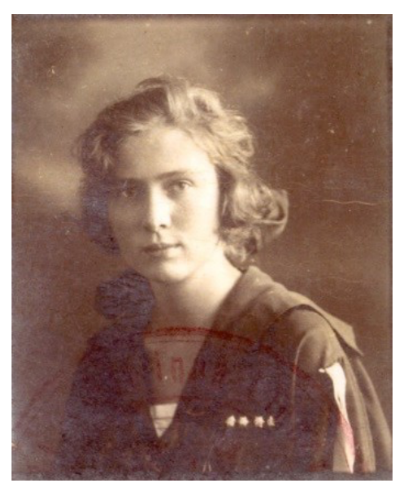
The Seisler family story
The Seisler family were flax farmers and horse breeders from Suure-Jaani in Viljandi County. Helene’s father, Juhann Seisler (born in 1876), loved music, and his family sent him to study at the Moscow Conservatory of Music, where he graduated as an organist in 1904.
Juhann was soon appointed organist and choirmaster at the Lutheran Cathedral in Moscow and became a key member of the small Estonian artistic circle in Moscow, which sought to showcase Estonian composers and musicians such as Mart Saar and Artur Kapp.
In 1903, Juhann married fellow Estonian Ludmilla Loor in Moscow, and they soon had three daughters, Erna, Helene and Ilse. The family enjoyed the high culture of Russia’s Silver Age.
However, in 1917 the political situation in Russia changed dramatically. Twelve-year-old Helene witnessed Russian soldiers firing into a crowd during street battles with revolutionaries, and she never forgot the fear she felt seeing this happen. These events split the family apart – the women escaped to German-occupied Viljandi in Estonia while Juhann hoped to ride out the upheaval in Moscow and send money to his family.
During the turbulent months that followed, the Seisler women fled to Riga, Latvia, as Estonian nationalists, Bolsheviks and the Baltic Landeswehr fought for control of the region. Tragically, while in Riga, Helene lost both her sisters to influenza.
After the 1920 peace treaty with Russia, Juhann was able to return to Estonia, where he taught music and conducted choirs in Tallinn. Sadly, in 1921, he died suddenly while standing in the kitchen, leaving Ludmilla and 15-year-old Helene on their own.
The economic hardships of the 1920s made life in Tallinn difficult. After participating in the eighth Estonian Song Festival (Laulupidu) in 1923 and celebrating Helene’s graduation from high school, Helene and her mother, Ludmilla, decided to escape the sadness of war-torn Europe and make a new start in faraway Australia. They arrived in Sydney in 1925, together with the Sildevers and Reinthal families.
Helene and Ludmilla immediately joined the Estonian community in Sydney and became active committee members of the Estonian Society Linda. They helped organise events, sang in choirs, participated in handcraft activities and pursued their artistic interests. They maintained their Estonian heritage throughout their lives.
Neither was able to return to their homeland to visit the few family members spared by both Nazi occupation and Soviet purges, but Helene lived to celebrate the restoration of Estonia’s independence before her death in 1999, aged 93.
Want to know more about Kooskõlas?
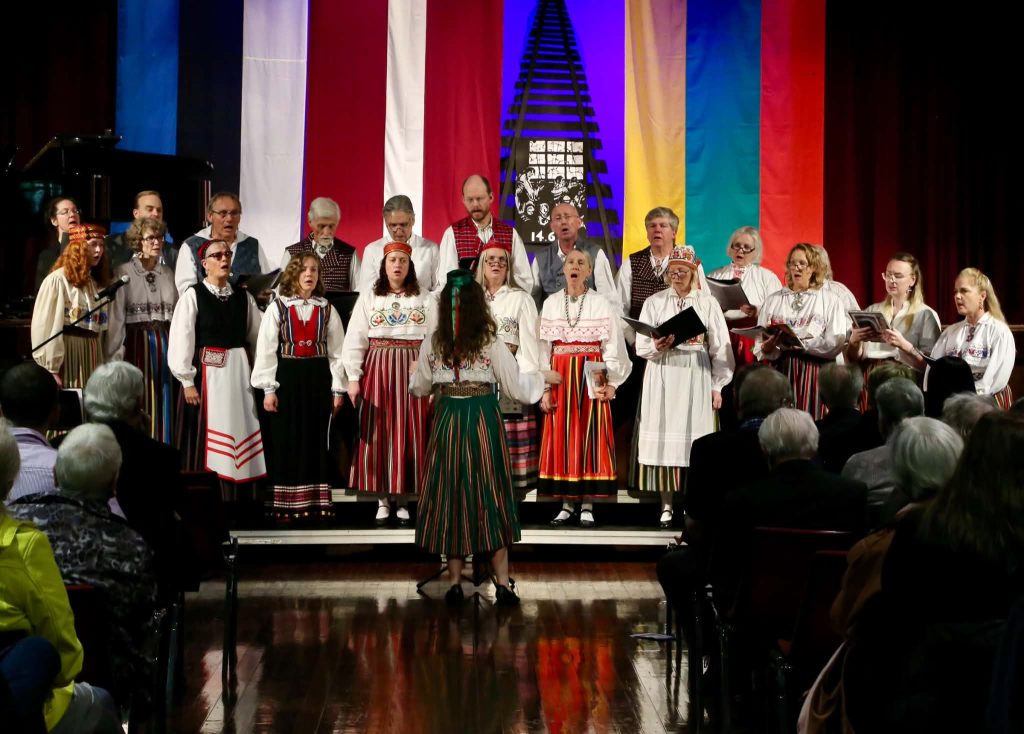
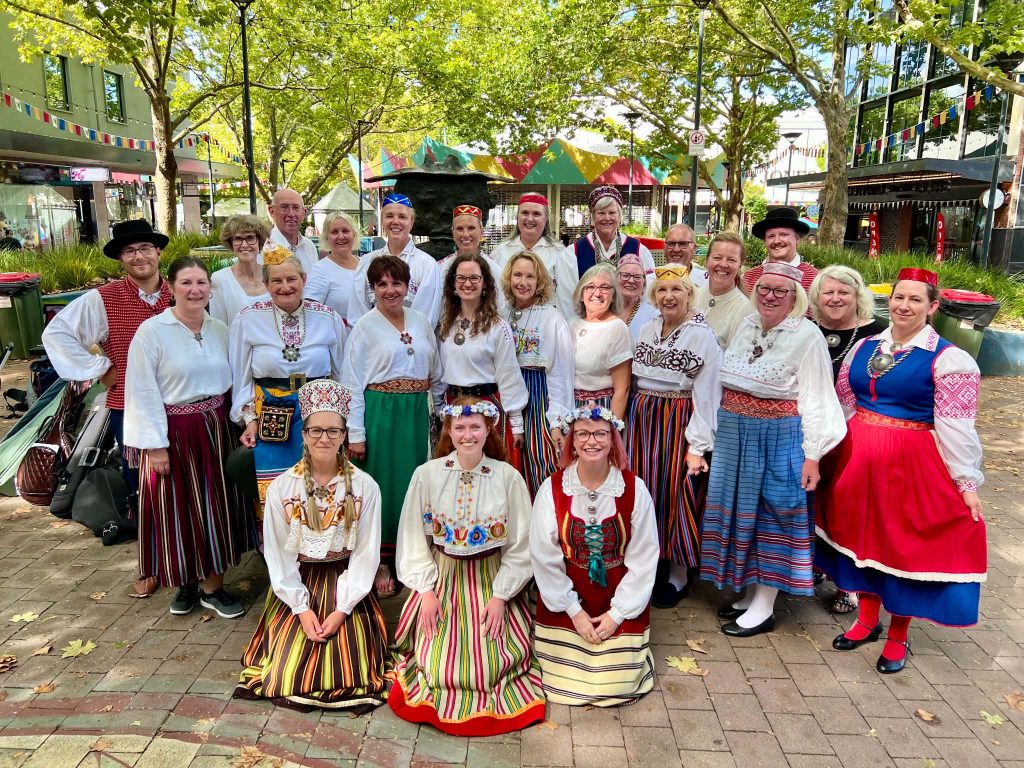
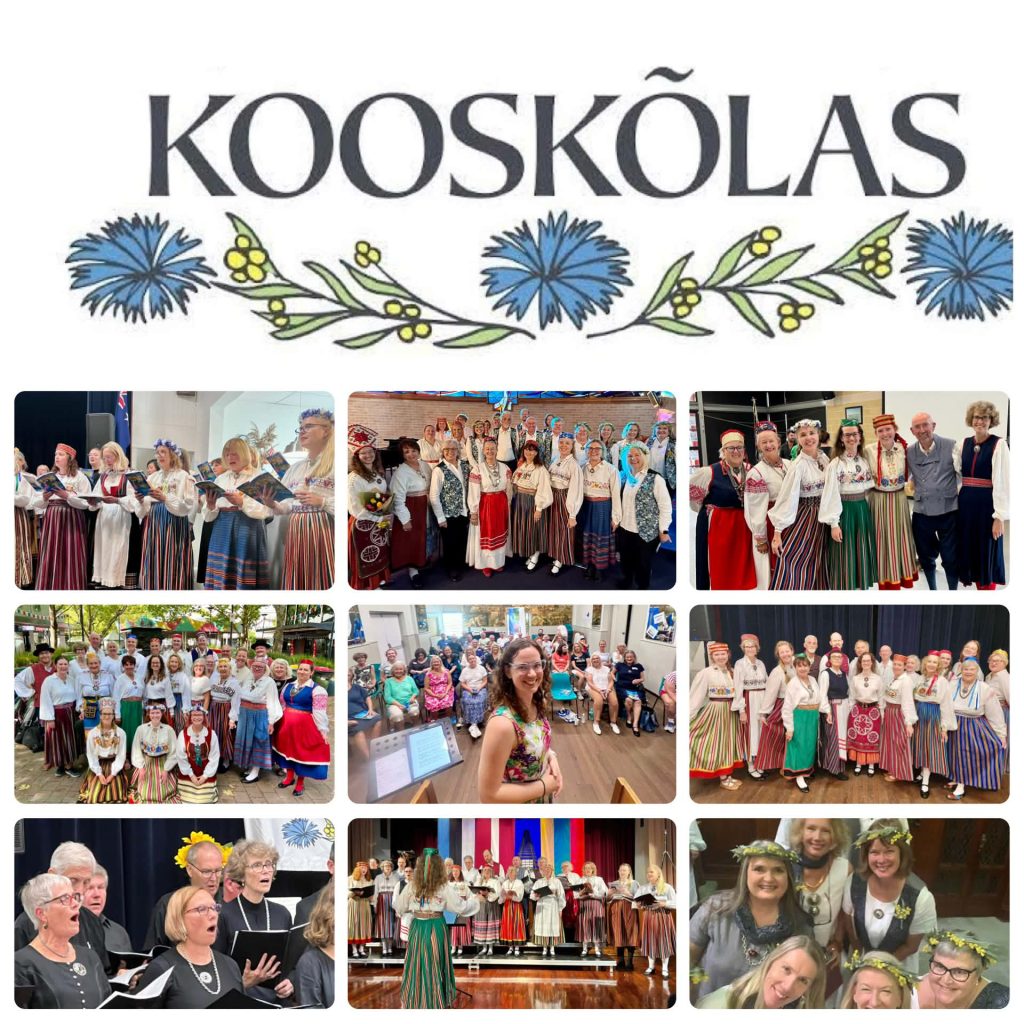
Founded in 2012, Kooskõlas (Together in Song) brings together singers from across Australia who share a love of Estonian music, culture and community. We’re a national mixed choir with a passion for keeping Estonian music alive and thriving in Australia.
Throughout the year, we perform at festivals, concerts and community events around Australia, including Eesti Päevad, the National Folk Festival, Canberra Multicultural Festival, Blackheath Choir Festival and Choralfest.
Rehearsals are held in Sydney, and regular in-person attendance is strongly encouraged as it is important to the overall sound, blend and cohesion of the choir. For those living outside the Sydney area, Zoom access is available via live stream. We encourage everyone who is able to attend in person to do so, as singing together in the same space makes an important difference to our collective sound.
Some of us have sung at every Laulupidu with Kooskõlas, while others are preparing for their first. Some join through family connections to Estonia, while others come for the music, friendships and sense of community. New singers are always welcome! You don’t need to be Estonian, read music or have previous choir experience. Just bring your enthusiasm and a willingness to sing!
We’d love you to be part of our next chapter – whether that’s singing at local performances, making new friends or joining us on the journey to Laulupidu 2028!
Curious?
You are welcome to email us at kooskolas@gmail.com or follow Kooskõlas on Facebook or Instagram.
For the complete Seisler family history and scholarship application details, please read the original Call for Applications: The Seisler Scholarships for Kooskõlas Segakoor
Read more about Kooskõlas | HEIA
Read about one Kooskõlas member and her journey to Laulupidu 2025 | HEIA
Thank you
Big thank you to Esmée Okamoto for photos and information!

