

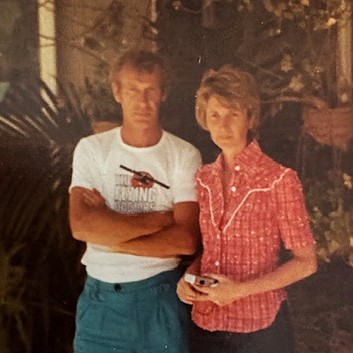
My name is Silvia Sillaots (née Lange), and my story begins in Tallinn at the end of the Second World War. My parents were walking through the city when German soldiers appeared in trucks, telling people to leave. Then the bombs began to fall…
My parents were both born in Estonia. My dad was Lieutenant Johannes Lange and my mum was Hilda M. Lange. They were walking in the city of Tallinn when German soldiers appeared in trucks, picking up people and making announcements that all Estonians must leave the city and board trains to Germany as soon as possible. Bombs were also starting to fall, which left them no choice but to get into the trucks and out of the city.
My mum was heavily pregnant; however, they managed to get to the train station headed for Germany. Not only were they distressed about the danger, but they also had to leave behind their son Bruno (three years old) and their grandmother living in Pärnu. All they could think about was how they could get back to save Bruno and Granny. As this wasn’t possible, numerous trains and small boats were headed for Germany, so my dad and mum were ordered to get on the train, which was headed for the camps.
The trains were not all passenger carriages; the majority of the carriages were the type used to transport sheep or cattle. As the train got closer to their destination, they were making numerous stops throughout Germany for the purpose of offloading some of the male passengers to help German soldiers fight.
When the train finally stopped, the next announcement was for all males to go and fight. That unfortunately was the last time my mum saw my dad.
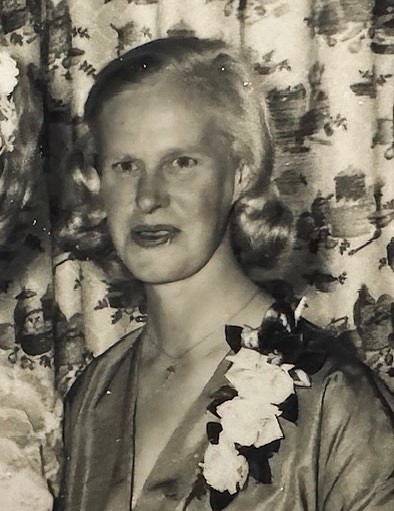
There were still hundreds of people on the train, waiting to be told where they were to go. Bombs were still being dropped and guns were still firing. Suddenly the back few carriages were on fire and burning towards the carriage Mum was in. Her thoughts were to get off the train down the side and walk along the tracks. The pains going through her stomach were unbearable, so while she was calling and screaming for help, one of the German soldiers who saw her knelt down, picked her up in his arms and quickly took her to one of the trucks. Luckily another driver said he would take her to the nearest hospital. So now you can’t say, “all Germans were bad,” can you?
The closest hospital was in a small country town called Hof. The truck headed off, fortunately without bombs going off around them. On arriving, there were so many vehicles surrounding the whole hospital.
The soldier had to plead with the nurses to admit Mum even though he knew they were full. Finally they took her through to the only room they could fit her into, and that was the bathroom. Here she gave birth to a baby girl.
Guess who the baby girl was… me, Silvia, who is writing this story! As far as my name goes, my dad and mum wanted to call me Tippi-Lisi, but it never turned out that way.
As we were registered as Estonian Displaced Persons, the hospital returned us to the same people we were meant to be with in the camps. The younger ones were put to work and the older ones to babysitting. The food supply was very short. You were lucky if you received a loaf of bread for the week or a few vegetables to make a pot of soup. My mum was doing the best she could with all the work they set her to do. The lady looking after me turned out to be my godmother and someone who helped Mum stay sane.
Mum kept looking for my dad for nearly four years until finally the Red Cross sent her information that he was believed to have been killed.
When the Germans had finally arranged ships to take people to immigrate to Canada or Australia, we all had to decide which place we should go. My mum’s thinking was that, because Australia was looking for workers, if she worked long enough she would be able to afford to return to Estonia.
Canada apparently didn’t have as much work, but the people who wanted to go there already had enough money to do so. My godmother decided to go to Canada. Many years later I saved my money to travel all the way to Thunder Bay, Ontario, Canada, where she, her husband and daughter lived.
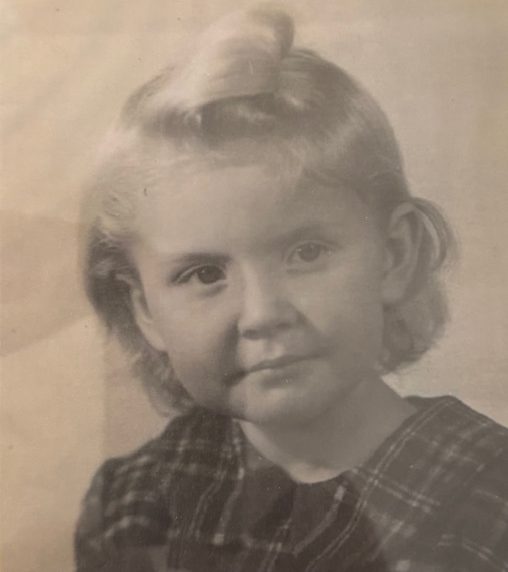
It was in March 1950 that my mum and I arrived in Western Australia. I was five years old and, as there were so many different nationalities on the ship, I spoke four languages.
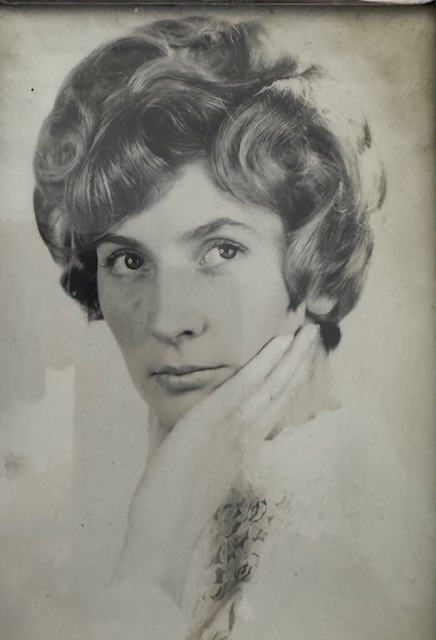
My mum had to report to the Commonwealth Employment Service for many years. Whenever she was looking for work or places to live, they were very helpful. The only thing that was hard to accept was that she couldn’t apply for jobs in the same category as she had in Estonia. Most of the work available was way out in the country on a farm, cooking or cleaning. This obviously was not something you could choose. It was natural that Australian-born people should be granted the better jobs, as there weren’t many of them.
The first job my mum was sent to was in Moora (with me, of course) on a farm. Fortunately she was one of the first to get a job because she could speak English. We loved working amongst the sheep, cows, chooks, etc., and housekeeping, but after a couple of years Mum found it too far away from Perth. We missed all our Estonian friends and decided to move closer to town. We found the Estonian Club close by and could travel there to reunite with people we’d met on the ship and in Germany.
While Mum found a job with a doctor and his wife in West Leederville, I went to a nearby primary school, starting in Third Standard. Unfortunately I found speaking another language hard because the other children laughed at me. This went on for quite a long time. I found the only way to be accepted was to speak only English.
Between 1952 and 1954, most of the Baltic and Polish people, including their children who travelled on the ship Fairsea, received letters from the Australian Government advising that they were to be naturalised by the Lord Mayor at Perth Town Hall and receive proof of their Australian citizenship.
As the doctor and his wife didn’t have any children, they offered Mum the opportunity for me to learn to dance or play the piano. When I chose the piano, they paid for all the lessons to start immediately and the teacher lived just across the road — very convenient. The piano was absolutely beautiful and, even though I had to play scales over and over every day for six months, I loved it. I was very nervous at exam time but passed with Honours in the Theory of Music in 1957. The teacher was so thrilled she entered me in a competition called The Amateur Hour. I came second, and the doctor and his wife gave me a little party.
Many years later we both thought we would be able to go back to Estonia one day, but we obviously were wrong. Perhaps if Mum had remarried and there had been another income, our dreams may have come true. I also bought a house for us both, so there was the mortgage to pay. In November 1985 Mum had a stroke.
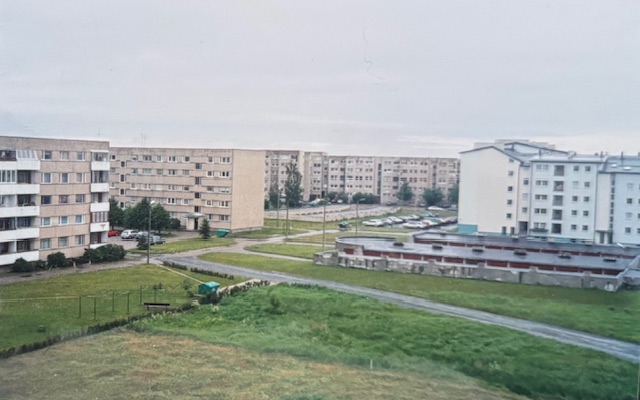
Returning to Estonia
I decided to go to Estonia and bring my brother Bruno out to Australia to see Mum. She had not seen him since he was three years old. Everything was planned. It was wonderful to meet my brother’s wife and children, and Bruno was all ready to come out in November. Time went by so quickly and even Mum was feeling happy. When Bruno got to Singapore, there was a problem with the fares being in Estonian currency. I thought if I paid the amount in dollars he’d get through straight away. He did, but then this happened — Mum passed away just before he got to see her. It was so sad.
Bruno was here with me for one month. All the Estonian people we knew gathered together to take him out, visit him and continually phone him. He could not believe she passed away before he arrived. My mum was only 67 years old. The doctors said she had lived a very stressful life and just couldn’t keep going anymore.
As time went by I visited my family in Pärnu quite often and got to know my brother really well. First I went by myself and from 2015 onwards I travelled with my husband Toomas. Bruno passed away at a young age in 2005 from a bone disease. He was only 63. Then I couldn’t believe it when my husband passed away in November 2023 from brain cancer. He was only 71.
Life did not turn out quite as Mum and I had once imagined. We never managed to return to Estonia together, but years later I did return many times and got to know my brother and family in Pärnu. I have lost many people I loved along the way, but I have also had a long life filled with people, places and memories I could never have imagined as that little girl arriving in Western Australia in 1950.

