

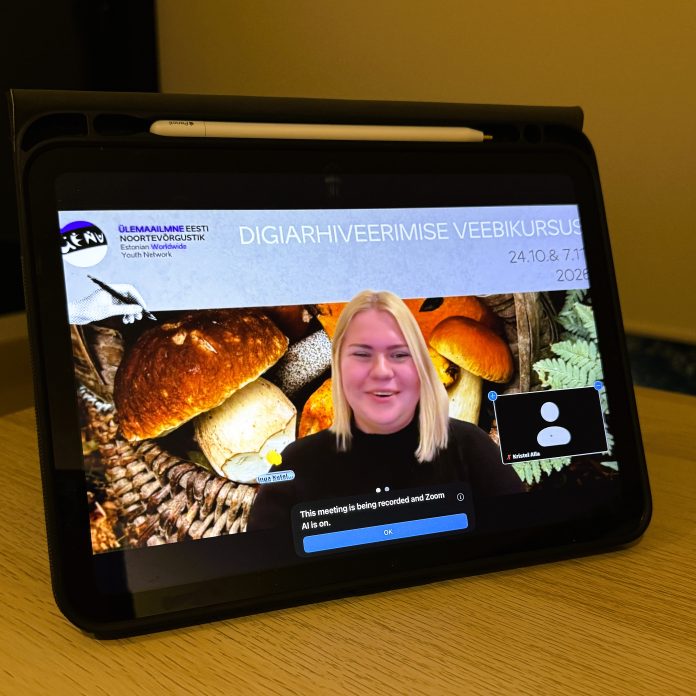
What will future generations know about Estonians living in Australia today? An online cultural heritage course explores why the answer may depend on what we choose to save.
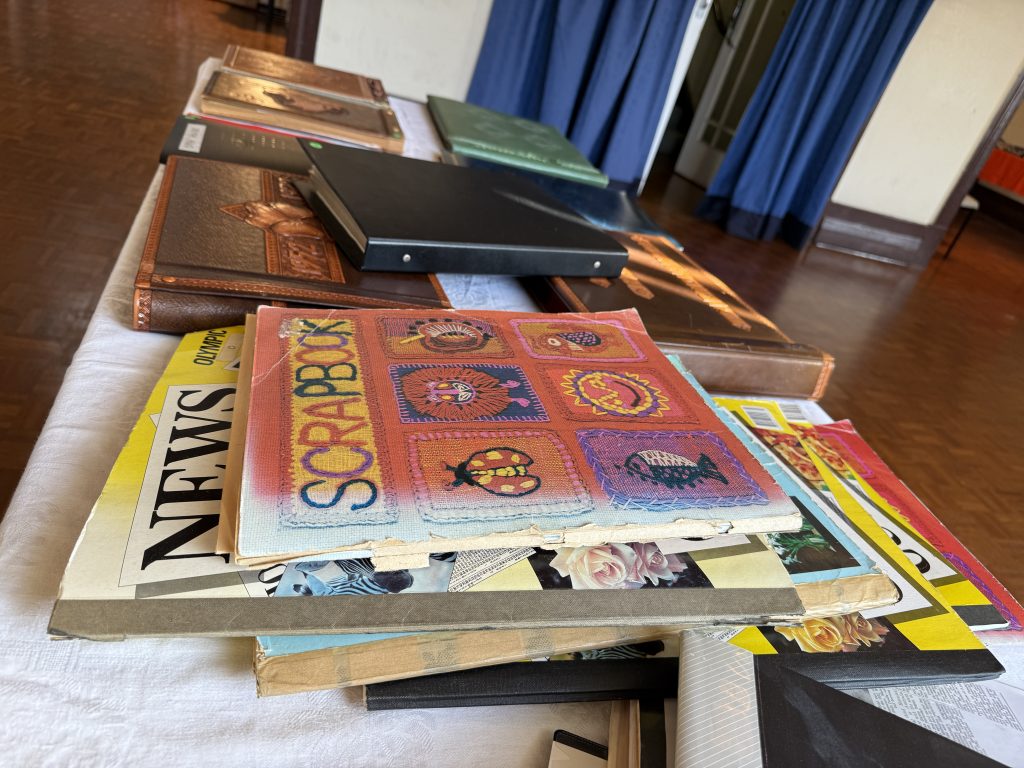
Somewhere in Australia, there is probably a box or two filled with old photographs, letters, community newsletters and documents that nobody has looked at for years. Perhaps it’s in your garage. Perhaps you’ve been meaning to sort through it since 2005. But what if that box contains something future generations will want to know?
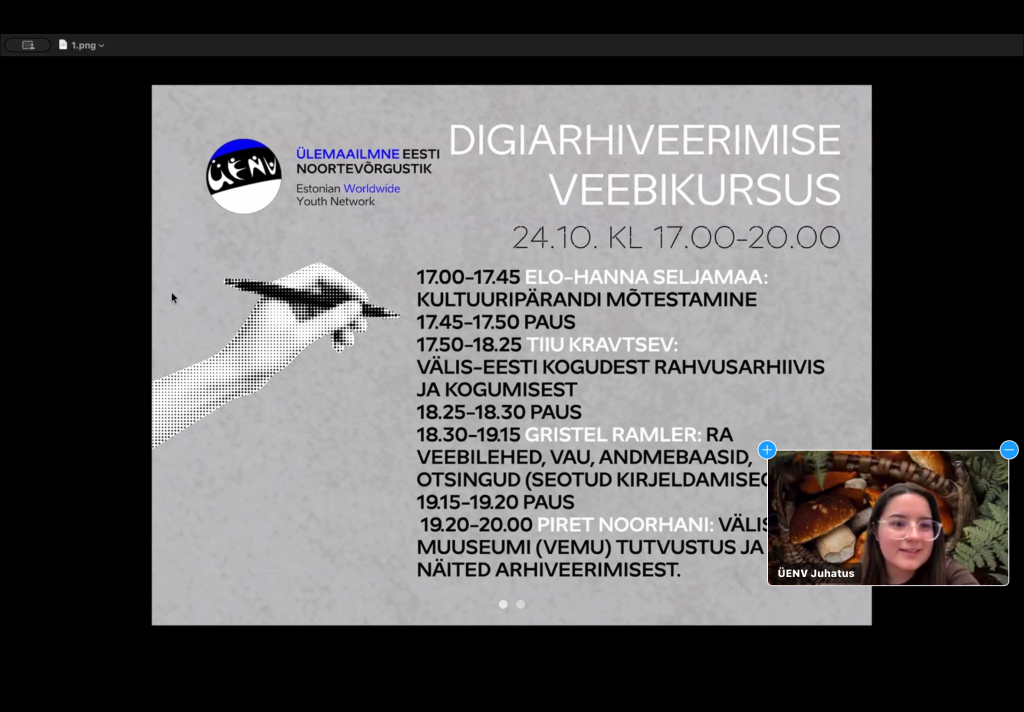
That question takes us into the surprisingly fascinating world of cultural heritage, explored during the first session of an online training course organised by the Estonian Worldwide Youth Network (ÜENV) on 24 October. The course brought together perspectives on cultural heritage, archival collections and the digital tools available for exploring Estonia’s history. And it turns out that preserving history involves considerably more than finding somewhere safe to store old documents (hint: not your shoebox!).
Heritage doesn’t preserve itself
Professor Elo-Hanna Seljamaa from the University of Tartu introduced an idea worth considering: cultural heritage is not simply something we inherit from the past. It is also something we actively create through the choices we make today. After all, we cannot preserve everything, and deciding what deserves to be remembered is itself an act of creating heritage.
What we choose to collect, document and remember reflects what we consider important. Those decisions are influenced by our communities, identities and circumstances — and by whose voices are heard when decisions are made. What becomes recognised as heritage can change over time, as different generations ask different questions about their past.
For Estonians living abroad, this raises an interesting question: What would we like future generations to know about being an Estonian in Australia in 2026?
We have inherited an extraordinary history of migration, community organisations, cultural activities and traditions maintained thousands of kilometres from Estonia. But our history hasn’t stopped happening, and the activities, experiences and everyday lives of today’s Estonian Australians are also part of a story that future generations may want to understand. Not every chapter of that story will necessarily be found in the minutes of a committee meeting.
Elo-Hanna Seljamaa also offered a wonderful example of the limitations of preserving cultural heritage: we can document recipes, but we cannot preserve the actual taste of food. A handwritten recipe might survive for generations, but the taste of grandmother’s potato salad — including her particular interpretation of how much mayonnaise is enough — is another matter entirely. Cultural heritage includes experiences, knowledge and traditions that cannot always be captured in a photograph or document.
Sadly, some of our cultural heritage will inevitably be lost to future generations through the choices we make today. Sometimes we simply don’t recognise the historical or cultural value of an object, particularly when we lack the expertise to assess it. So perhaps think twice before taking that old painting to the op shop simply because it doesn’t match your taste, and seek expert advice when you’re unsure.
This responsibility becomes even greater when we are entrusted with caring for community archives. Making room for new things in our own homes is one matter; deciding what should be preserved on behalf of an entire community is quite another.
Consider an object brought across the ocean by someone fleeing the Second World War, perhaps among the few possessions they could fit into a single suitcase. Imagine them carefully preserving it for almost 80 years, occasionally taking it out of a drawer, remembering their homeland and perhaps shedding a tear, before eventually entrusting it to their community for safekeeping.
It might be a painting hanging in a community hall, beautiful and historically significant even if it doesn’t suit our personal taste or bear the signature of a famous artist. Its value may lie not only in the object itself, but also in its history, the person who treasured it and the circumstances in which it survived.
When we inherit responsibility for a community’s cultural heritage, we also inherit a duty to care, to seek knowledge and to choose carefully.
You don’t have to be famous to be a part of history
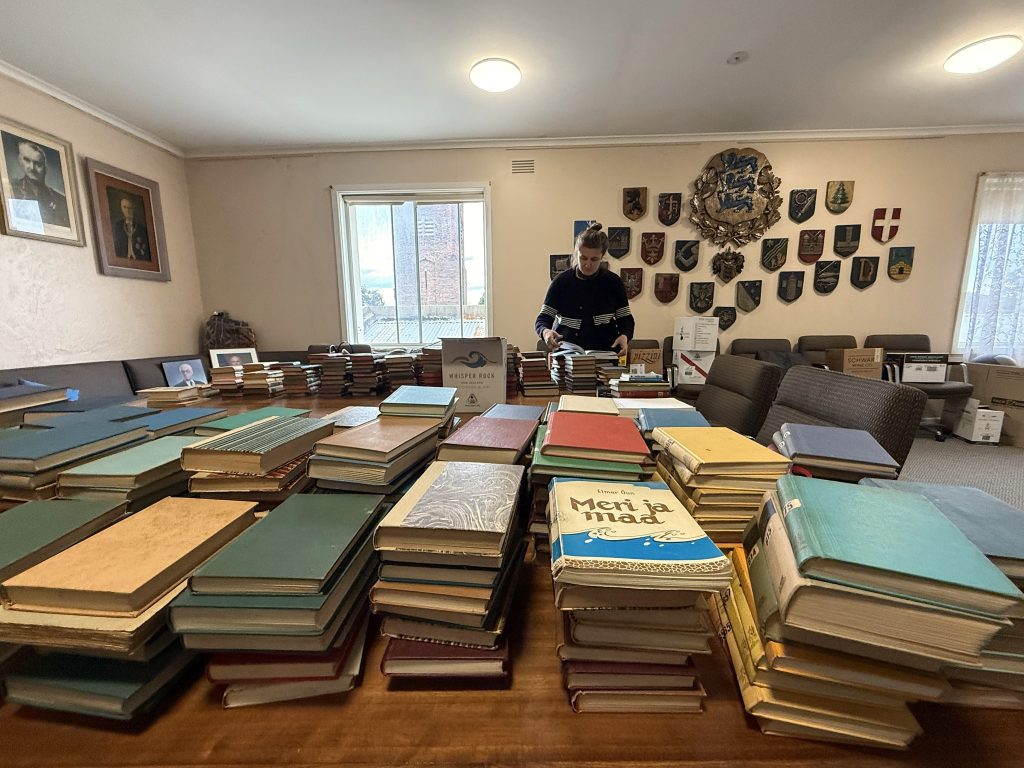
Tiiu Kravtsev from the National Archives of Estonia offered another encouraging perspective. When considering personal archives, the importance of the material does not necessarily depend on whether its owner was a prominent public figure. What matters is the information the documents contain and what they might reveal about society, historical events or everyday life.
For Estonians abroad, that might include correspondence, records of community organisations, documents connected with migration or material illustrating how Estonian traditions have been maintained and adapted in different countries. The National Archives has been collecting material relating to Estonians abroad since the 1990s, with approximately 70 archival collections comprising around 15,000 archival units. Sweden has been a particularly significant source of material, but collections have also arrived from Estonian communities in other countries, including Australia.
The National Archives is not alone in preserving the history of Estonians abroad. Community archives in Australia, Canada, Sweden, the United States (and elsewhere) also play an important role, collecting and caring for material that documents Estonian life outside the homeland. These collections complement those held in Estonia, helping preserve different perspectives and ensuring that valuable historical records remain accessible.
And the task of preserving history never really ends. Estonia’s National Archives receive approximately one kilometre of additional archival material every year. Yes, that’s a kilometre of history arriving annually, waiting to be preserved for future generations.
Of course, not everything can or should be preserved by one institution. Archives, museums and libraries have different responsibilities, and deciding what belongs where is part of the process. But the message is encouraging: an ordinary person’s documents may hold extraordinary historical value.
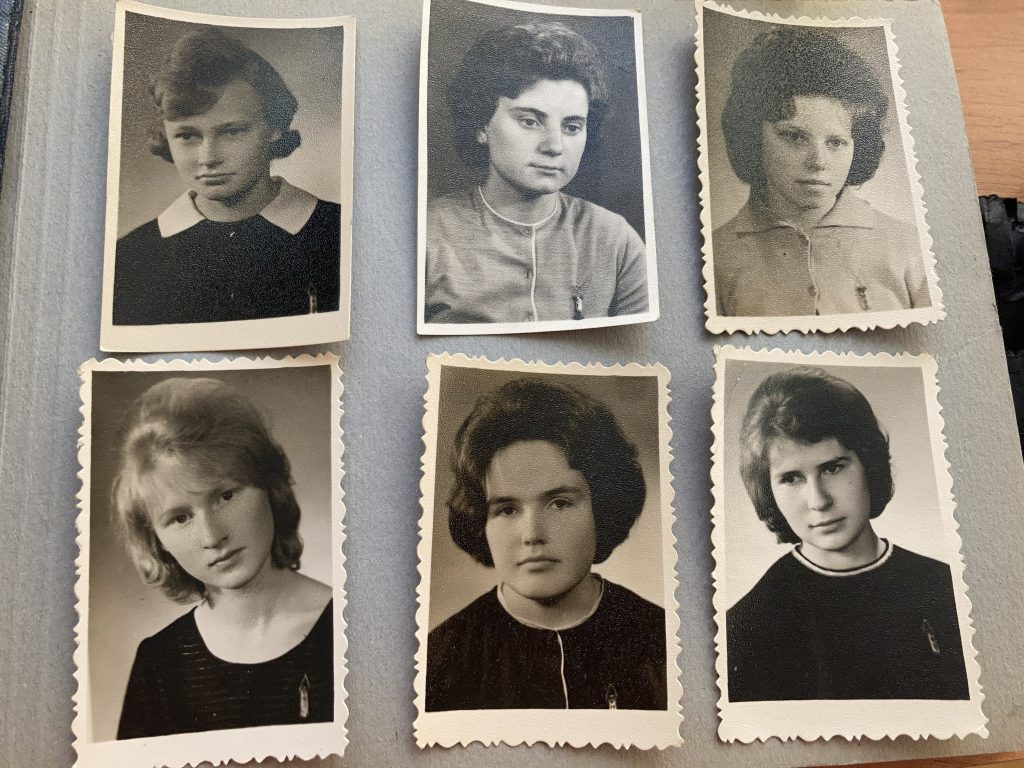
A photograph is worth a thousand words. Unless nobody knows who’s in it
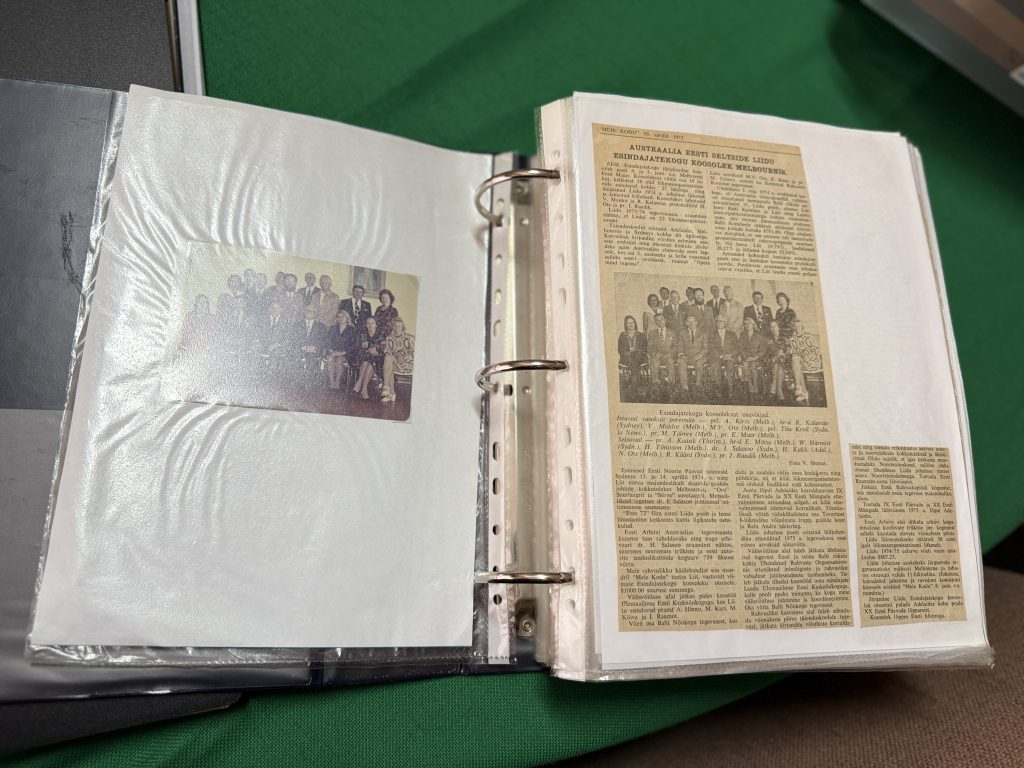
Another useful lesson came from Gristel Ramler’s presentation on archival descriptions and databases. An archive needs more than documents — it also needs information explaining what those documents are, where they came from and why they matter. Without descriptions and context, even valuable collections can be difficult for researchers to use.
Consider an old photograph of an Estonian community gathering. If we know the date, location, occasion and names of the people pictured, it becomes a valuable historical record. Without that information, future researchers might spend considerable time trying to work out who was standing beside whom — and whether the gentleman with the magnificent moustache was uncle Toomas or somebody else entirely.
It’s a useful reminder that preserving family and community history doesn’t always require sophisticated technology. Sometimes the most important first step is simply writing down what we know, while there are still people around who remember.
Adding names, dates and a little background to photographs, letters and other records can make an enormous difference to their usefulness in the future.
There’s a whole world of archives to explore
The course also introduced digital resources that make Estonia’s archival collections accessible to researchers and curious members of the public. The National Archives’ Virtual Reading Room (VAU) provides a starting point for exploring archival services and online collections, while the Archival Information System (AIS) helps users search descriptions of archival material. Other collections provide access to historical photographs, maps, films and sound recordings.
Among the examples discussed were recordings of radio programs produced for Estonians in Australia — a reminder that pieces of our community’s history may already be waiting to be rediscovered in digital collections. These resources can help people research family histories, investigate community organisations or simply satisfy their curiosity about the lives of earlier generations.
There’s an extraordinary amount of history waiting to be discovered, but not all of it is available online. According to the National Archives of Estonia, approximately 10% of its collections have been digitised, with 43 million digital images accessible online. So, if you can’t find something in a digital archive, don’t assume it doesn’t exist. It may simply be waiting patiently in a box somewhere.
For anyone curious enough to start exploring, here are a few useful places to begin:
- National Archives of Estonia — Find information about the archives and their collections, including maps, films and sound recordings. Explore historical photographs held by the National Archives through FOTIS.
- National Archives of Estonia — Virtual Reading Room (VAU) — A central starting point for archival research, providing access to information about collections, services and digital resources. The National Archives holds more than 10.6 million archival units, including approximately 15,000 relating to Estonians abroad.
- Archival Information System (AIS) — Search descriptions of archival collections and individual records held by participating institutions.
- VEMU Estonian Museum Canada — Home to one of the largest Estonian diaspora collections outside Estonia, including more than 300 personal and organisational archives, 24.000 books, 100.000 digitised photographs, historical newspapers, films, sound recordings, artworks and personal artefacts. A treasure trove of Estonian history for and about people living outside Estonia.
- BaltHerNet Baltic Heritage Network — An international network connecting people and organisations involved in preserving the cultural heritage of Baltic communities abroad. A useful resource for discovering diaspora archives, heritage initiatives and opportunities for collaboration.
NB! Please note (October 2026): Some of the National Archives of Estonia’s online resources are temporarily unavailable or accessible only from Estonian IP addresses due to security precautions. If you’re trying to access them from Australia, you may need a VPN connected through Estonia. Hopefully, normal access will be restored soon.
These are only starting points, but they offer a glimpse of just how much material is available to explore. And sometimes the most interesting discoveries begin with a name, a place or a date that leads somewhere unexpected. Knowing where to begin is half the adventure.
What will we leave behind?
Perhaps the most interesting idea from the first session is that cultural heritage isn’t only about looking backwards. It’s also about shaping what future generations will be able to discover, and recognising that the choices we make today influence the stories that survive. The photographs we identify, the stories we record and the documents we preserve may help someone understand our lives decades from now.
And perhaps the most valuable records won’t always be the ones we expect. A photograph of an ordinary gathering, a letter describing someone’s first months in Australia or the records of a small community organisation might one day answer questions nobody has thought to ask yet.
We cannot preserve everything, but we can give future generations more than a collection of unidentified faces and unanswered questions. You and I, we both can have a say in what we leave behind.
Next session, please?
The second session of the online cultural heritage and digital archiving course takes place on Sunday, 8 November at 2am Sydney/Melbourne time (Saturday, 7 November at 5pm Estonian time). Yes, we know it’s the middle of the night here! But it was wonderful to see a few dedicated champions from Australia joining the first session despite the ungodly hour. And don’t worry — you can keep your camera off. Or keep it on — we promise not to comment on your pyjamas.
Organised by the Estonian Worldwide Youth Network (ÜENV), the course is conducted in Estonian and held via Zoom, with registration required. It offers another opportunity for those interested in cultural heritage and archives to continue exploring the subject.
Registration and information: here
In the meantime, perhaps it’s worth opening that box of photographs in the garage. You never know what — or who — you might find. And while you’re at it, perhaps write down a few names before everyone forgets who’s on the photos.
Read more
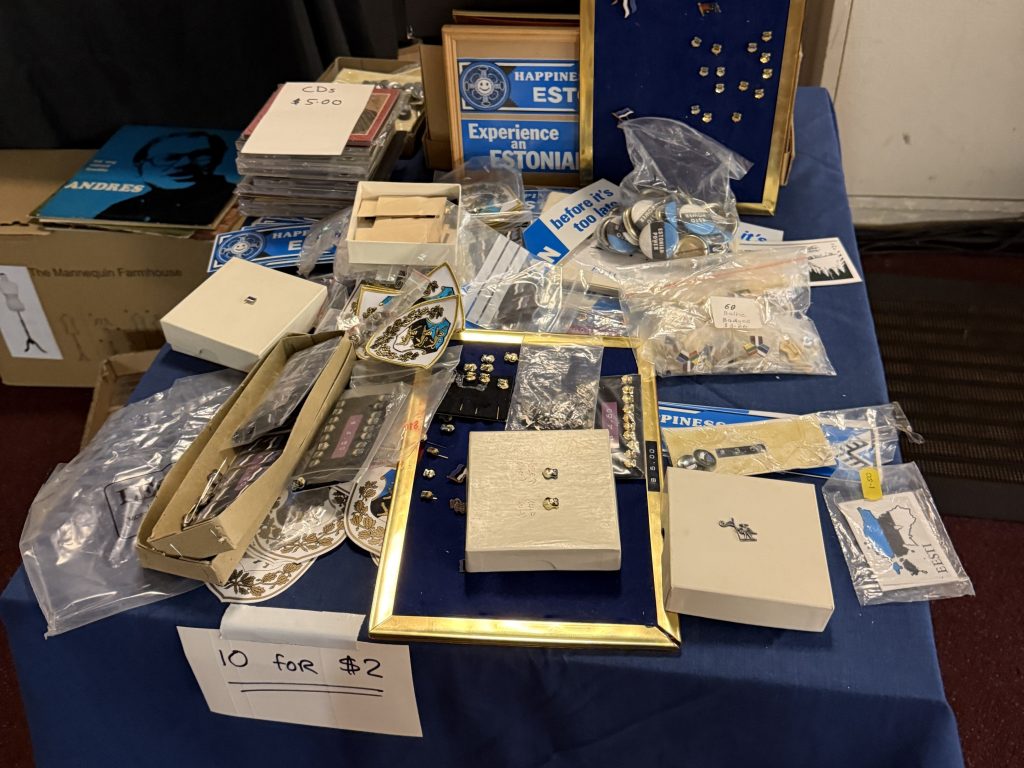
Estonian Archives in Australia
What do we keep? A digital archiving course for Estonians abroad | HEIA

