Sunday, May 3, 2026
16.6 C
Canberra
18.9 C
Tallinn

New name, new look — meet “Kodu Kaja“

0
Photo by Kristel Alla

As we count down the few remaining days to Laulupidu 2025, 5-6 July — suitcases half-packed, vowels lovingly fine-tuned — the Melbourne Estonian women’s choir is stepping out with a new name and a fresh look.

The choir conductor, Hilja Toom, recently shared the story of the name’s evolution — and we wanted to pass it along as she told it to us and how it’s embedded in our memories. Read below.

From MEÜ “Kodu” Naiskoor to Kodu Kaja

We began back in the 1950s as the Melbourne’i Eesti Ühing ”Kodu” Naiskoor (Melbourne Estonian Society “Kodu” Women’s Choir) — a name rich with history, meaning… but, let’s be honest, a bit of a mouthful.

When we were invited to perform at Laulupidu, we realised it was time for a name that better reflected who we are today. Something simpler, something more memorable. A name that would honour our roots, but also sing a little more smoothly — especially outside Estonian circles, where the “Kodu” part of our name often confused audiences.

And so, Kodu Kaja was born — Echoes of Home.

The name still connects us to the Melbourne Estonian Society “Kodu”, where our story began. But it also expresses what we do now: when we sing in Australia, our voices carry the memory of Estonia. When we sing elsewhere, we bring our Australian home with us. In every direction, we are Kodu Kaja.

Photos from the private collection of Hilja Toom.

A logo that speaks volumes

A new name called for a fresh look — and our logo, designed by Alexander Provan (son of our soprano Ingrid Provan), captures the spirit of the choir beautifully. Working from Sydney with our logo committee, Alex created a design that says a lot with just a few elements.

The colours — blue, black and white — honour the Estonian flag. The waves hint at the Baltic Sea that connects us to where we come from. And perched at the top, flying high and free, is Estonia’s national bird — the barn swallow.

It’s a logo we’re honoured to wear, full of meaning and memory.

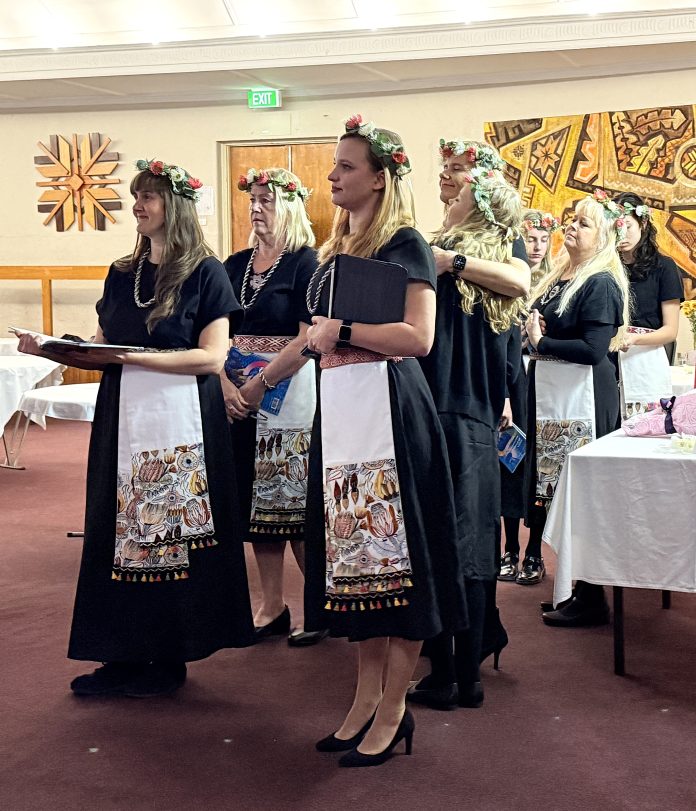
Concert dress: Tradition meets Melbourne chic

Our new concert dress is another beautiful blend of past and present.

  • The black base of the dress is both a reference to Estonian folk costume and a cheeky wink to Melbourne’s famously dark fashion palette.
  • Each singer wears her own national costume belt, adding a personal touch that tells her story.
  • The hip apron is patterned with Australian flora — a subtle, beautiful nod to the land we sing from.
  • And on our heads, we wear pärjad (headdress) made from eucalyptus flowers and leaves — a fragrant symbol of home, beauty and belonging.

From fabric samples to final fittings, this transformation was driven by the care and creativity of our choir members. It truly was a labour of love.

Look out for our new tees!

We’re also sporting new black t-shirts featuring our logo, which we’ll be wearing proudly at rehearsals in Estonia. So if you spot a cheerful group in matching tees — full of song and maybe a little laughter — come say tere! We’d love to meet you.

Whether in concert dress or casual black, we sing with joy, connection and pride.

Wherever we go, we carry the echoes of home.

See you at Laulupidu very soon!

Thank you!

Photos and details were shared with us by our wonderful conductor Hilja Toom, and reviewed by Hilja and Sirje Kiviväli. A big thank you to you!

Read also this article: The road to Tallinn – notes from choir conductor Hilja Toom

Brisbane’s Jaanituli – powered by great people, fuelled by tradition

0

This is Jaanituli — a celebration of Northern Summer Solstice, where people show up at dawn to stack firewood like it’s an Olympic sport, dance around flames like enchanted fairies, and feed the masses like Estonian grandmas on a mission. It’s a people-powered party built around one glorious bonfire that declares: this is how we Midsummer.

What started as a humble picnic now ranks among the biggest Estonian gatherings in Australia — pulling in folks from all corners for a full-throttle day of dancing, feasting and belly laughs. A community that builds, bonds and boogies like no other.

Brisbane Estonian Society has a long tradition of organising Midsummer bonfires in Australia. The Estonian community in Brisbane and wider South East Queensland has been coming together for Estonian holidays and celebrations from around 1930s. It was the parents of our most notable members and former presidents of the society — at a time when Tiina, Kulla & Hans, Jaak, Villiam, Ilse, Ille, Gisela and many others were still just children, unaware yet that the future of Brisbane’s Estonian community life would one day rest in their hands for decades to come. Along the way, Ron & Karel, Harry, Heidi & Rein and many more have joined the society’s activities.

Some 15 years ago, a fresh generation picked up the torch: Sirle, Airi, Kati, Raivo, Esmée, Krista, Anu, Andres, Sigrid, Tarmo and several others. Today, more new names have joined the crew — Siim, Iti, Elina and Mooris — they continue bringing spark by blending traditions with creativity and thus keeping the magic alive.

What made this year special

This year’s Jaanituli felt particularly memorable thanks to a few standout elements.

People, people and people

The joy of this festival lives in the hands and hearts of those who make it happen — and in 2025, that joy overflowed. Around 30 generous volunteers helped power every corner of the event — from ticketing and the kitchen to the kids’ play corner, the bar and beyond. They brought laughter, calm under pressure and true Estonian hospitality to everything they touched.

The busy core team — Siim, Andres, Iti, Kati, Mooris and Elina — poured energy and imagination into every detail, showing that the community’s flame is in good hands. Brisbane’s Jaanituli doesn’t just rest on tradition alone — it dances forward.

Bold and playful video is a must-watch

This year, the story of the celebration was captured like never before in a bold, playful highlight video by Otto Zeiger — a content wiz based in Australia for 13 years we’re hoping to tell you more about soon! — teamed up with fitness influencer Kertu Roose. It’s loud, spirited and 100% Jaanituli.

🎥 Watch the Brisbane’s Jaanituli 2025 video here:

👉 https://youtu.be/SjHjiFZyMRY

Tastes of Estonia

The food at Brisbane’s Jaanituli is always a crowd-pleaser, but this year it felt like a feast made by family. Prepared by Sirle, with the help of many generous hands, the meal was pure Estonian comfort — ŝaŝlõkk, creamy potato salad, black bread and all the trimmings.

Across the dessert tables, community spirit was baked into every bite, thanks to the generous efforts of community members:

  • Estonian Kitchen delighted with Kräsupea cake, waffles and other traditional sweets
  • Eneli served up roulades, meringues, rustic rye sourdough bread and more
  • Kristiina offered cinnamon scrolls and barista coffee
  • Gold Coast Estonian Society brought in beloved Kalev chocolates from Estonia
  • At the bar, many favourite Estonian beverages were served.

Music, dance and fire magic

From day to night, the celebration pulsed with movement, music and moments to remember. Children turned their cheeks into canvases with Sille’s face painting. Merri-Liis’s flower crowns were snapped up as quickly as she could make them — and every cent raised went back into supporting the society.

Folkroos — Brisbane’s local Estonian folk dance group — once again lit up the stage with energy and grace. Their performance erupted into a spontaneous dance around the bonfire by linking hands with audience members, and became a shared magical moment of community.

Andres’s soundtrack of both nostalgic and contemporary Estonian music carried us through the day, while Otto and friends turned the evening into a full-blown dance party. The program was packed with fun and flavour boasting with crowd favourites like tug-of-war, an egg toss and a fiery finale — Merilin’s captivating fire dance.

The flames may have warmed our hands — but the people warmed our hearts.

Stories around the campfire

As in past years, many guests camped overnight beside the beautiful Joyner riverbend that everyone claims “looks like Estonia”. People sat together around the fire well into the night, sharing stories, songs and laughter under the stars. Just like numerous generations of Estonians have sat around their bonfires through history.

With grateful regards

Brisbane’s Jaanituli was organised through the joint efforts of the Brisbane Estonian Society and the Gold Coast Estonian Society, and many volunteers. An event for more than 300 people is no small feat. It is thanks to every person who pitched in that this beloved tradition of Jaanituli not only survives, but gets bigger and better each year.

We’re truly grateful — aitäh, sõbrad!

Photos and videos

Photos: www.facebook.com/BrisbaneEestiSelts

Video @otto.zeiger: https://youtu.be/SjHjiFZyMRY

Time lapse: https://youtu.be/ue1PBdPLCVI

Follow us on Instagram: @brisbaneestoniansociety

Spectate your first serpents & stories

0
Spectate Your First Serpents & Stories

Portia Stanton-Noble invites you to her two books launch at Prospect Library (128 Prospect Road Prospect, SA 5082) on 15 July 2025, 6.30pm to 7.30pm.

As part of Libraries SA Firstival 2025, prepare to be mesmerised by Australia’s premiere Serpent Dancer, Flavella L’Amour, as she brings a powerful story of strength, identity, and transformation to life through graceful movement, stunning costumes, and commanding presence.

Then, join author Author Portia Stanton-Noble as she shares the inspiration behind The Cut Off Road — a murder mystery romance set in regional South Australia that delves into themes of resilience, self-discovery, and change.

Portia will be selling and signing copies of all her six novels. This includes the new releases: rom-com “The Life She Never Had” and murder mystery romance “The Cut Off Road”.

Click on the link below to get your free tickets:
Spectate Your First Serpents & Stories Tickets, Tue 15/07/2025 at 6:30 pm | Eventbrite

Teach Estonian, run a camp, get a grant!

0
Image by Kevin Schneider from Pixabay

The Estonian Language Institute (Eesti Keele Instituut) is inviting applications for funding for Estonian educational projects taking place in the second half of 2025.

If you’re part of a legal entity in Australia working to support Estonian language and culture — whether through language classes, cultural education programs, teacher training, or camps — this is your opportunity to apply for financial support and bring your great ideas to life.

Applications are now open and close on 2 August 2025.

Projects must take place between 1 August and 31 December 2025.

What’s this for?

The goal of the funding is to support activities that help sustain Estonian language and culture outside Estonia, especially among children and young people. Support is available for:

  • regular Estonian language and culture lessons (minimum 4 months)
  • teacher training and methods
  • Estonian language and culture camps for children and young people abroad
  • Estonian camps in Estonia for children of Estonian descent abroad (at least 70% of participants must be of Estonian heritage).

Who can apply?

Registered legal entities that provide Estonian language or cultural education, for example, schools, kindergartens, cultural associations and community groups.

Funding amounts

Grants are available for different project scales:

Up to €7,000 for 9–12-month educational programs
Up to €4,000 for 4–6-month programs
Up to €2,000 for one-off projects (such as camps, training or publications)

Applicants must provide at least 20% co-funding (either self-funded or through other support).

How to apply?

To apply, complete the application form (available on the Estonian Language Institute website) and submit it by email or post using subject line “Haridusprojekt“:

📥 Email: haridusprojekt@eki.ee
📫 Mail: Eesti Keele Instituut, Roosikrantsi 6, 10119 Tallinn, Estonia

Application must be submitted by 2 August 2025 and include a full budget in euros, signed by an authorised representative.

📝 Application form and guidelines (in Estonian):
👉 eki.ee/haridusprojektide-taotlused

Words of encouragement

So why not? Run that Estonian language class, host a culture camp, or finally bring that long-dreamed idea to life — with a little help from a grant!

Funding is available for inspiring projects that celebrate and sustain Estonian language and culture in the second half of 2025.

Dust off those brilliant ideas, put them on paper, and turn them into something real. We’re cheering you on every step of the way!

Need more information?

Read more: eki.ee/haridusprojektide-taotlused/

Email for more information: haridusprojekt(at)eki.ee

Say hello to HEIA!

0

New name, who dis?

Hello to all Estonians in Australia and welcome to: HEIA — Hello, Estonians in Australia!

The brand spanking new Australia-wide site for Australian Estonians is here! Development has been progressing for over 18 months (volunteer pace😊).

HEIA is available on the same site address eesti.org.au and all the information and historical stories have been transferred — so don’t worry about losing that valuable legacy.

What’s new?

The most obvious change is the look and feel but there is additional functionality under the hood that will make presenting topics of interest simpler and in a more engaging manner. More will be coming with time (there may be a few bugs to iron out in the short term — please let us know if you spot any scurrying around — and also what you like and want to see more of!).

Send any feedback via form heia.life/feedback (preferred) or via email heia@eesti.org.au. Is your organisation or activity missing, or do you need to update the information? Let us know via this form: heia.life/add.

Even further under the hood is the new governance structure that means less reliance on Kristi (the doting sole parent of Estonians in Australia) with more contributors and support to enable HEIA to continue to serve the community for the next 20, 40 or 60+ years.

We can’t give you all the goodies now — too much of a good thing isn’t good for you. We will be working on new features including an impressive events calendar — just wait for it!

Why HEIA?

When seeking suggestions for names for the new platform from the community, a key piece of feedback was provided — “what is wrong with Estonians in Australia?” It was a good question! However, there were issues:

  1. Estonians in Australia wasn’t ‘snappy’ and the acronym EIA doesn’t roll off the tongue;
  2. it would be nice to have the Estonian language represented; and
  3. we wanted a refresh as a welcoming site for all Estonian Australians.

That’s where Hello, Estonians in Australia or HEIA provided the perfect solution. HEIA (pronounced Hey Ya) is a phonetic familiar to both Estonians and Australians, an informal Estonian greeting, the acronym for the name of our platform, whilst also referencing Estonians in Australia in a welcoming manner. A win, win, win, win!

We are excited with the new site and hope you are too!

The HEIA team (Kristi, Kristel and Mark)

Ave Nukki featured in Global Estonian newsletter

0

We’re absolutely delighted to share that Global Estonian has featured our very own Ave Nukki, President of the Estonian Society in Sydney and the lead of the next Eesti Päevad, in their June newsletter – and what an inspirational story it is!

Ave writes about how she keeps her Estonianness alive through music and literature – two lifelong passions that have shaped her journey in Australia. She shares memories of singing harmonies around the kitchen table with her sisters, the joy of being part of the Kooskõlas choir, and the excitement of fulfilling a dream this year: singing under the laulukaar at the Estonian Song Festival.

Ave also opens up about the inspiration behind launching the Southern Hemisphere Book Club that is backed by Estonian societies across Australia. The Southern Hemisphere Book Club is a new initiative bringing together Estonian readers across Australia. With a little spark from her conversations with Estonian writer Kristiina Ehin (who visited Sydney in January), Ave helped bring this idea to life through a virtual book club event featuring Kristiina’s new poetry collection Behind the Dams of the Heart (Südametammide taga). The response? Hunger in our communities to connect through books, language and story.

Ave is not only an exceptionally talented connector – she’s also leading the way as Head of the Organising Committee for the next Eesti Päevad, which will be held in Sydney in April 2027.

Ave Nukki is an inspirational leader. Her dedication, creativity and bright ideas continue to lift up Estonian communities across Australia and beyond – and we couldn’t be prouder.


Books. Banter. A touch of homesickness. And a whole lot of heart. That’s the Southern Hemisphere Estonian Book Club for you!


Also in the June 2025 edition…

Globalestonian.com is an information gateway for nearly 200,000 Estonians living abroad and for globally minded Estonians at home. Global Estonian publishes monthly newsletters and organises virtual forums to keep the community informed of what’s happening with Estonians worldwide.

The June Global Estonian newsletter is full of good reads and global connections – from a video introducing Estonia’s E-residents, Midsummer celebrations across the world, learn who will be travelling to Estonia to perform at Laulu- ja tantsupidu, what is the largest expatriate project ever that Estonia has decided to support, and more. Well worth a read!

🌍 Read the full newsletter hereJune 2025 Newsletter

The Lydia Sisterhood welcomes you in

0

Ever felt like you’re the only Estonian woman in your city? You’re not. And now, there’s a global sisterhood to prove it. Welcome, Lydia.

The Lydia is a brand-new initiative calling together Estonian women from all walks of life – wherever you live, whatever your story, and however strong (or rusty!) your connection to Estonia may feel.

Whether you’ve grown up humming Estonian tunes, only just rediscovered you’ve got some Estonian in your DNA, or you’re somewhere in between – this is a safe, supportive space for you to explore what your Estonian identity means now, and where it might take you next.

On Thursday 3 July 2025 at 9.30am, The Lydia is hosting its first in-person event in Tallinn, at the Integration Foundation. It’s the perfect chance for those in Estonia for the Song and Dance Festival to meet face-to-face, share stories, and spark connections.

Here’s the good news: even if you’re not in Estonia, you can still register and be part of what’s to come, including an exciting virtual program starting later this year.

🌿 Participation is free, and women of all ages are encouraged to join
📅 More information here and register here
📧 Where? Integration Foundation, Rävala pst 5, 10143 Tallinn

So… why join?

Because this is a place for women who want to:

  • reconnect with their Estonian heritage
  • chat about traditions, recipes, crafts, language, travel or whatever interests you
  • meet like-minded women of all ages and experiences
  • be part of a friendly community that gets it – no judgement, just joy.

The Lydia is inspired by Lydia Koidula – a trailblazer of Estonian awakening and cultural expression. This new network honours her legacy by encouraging us to shape our own stories, together.

If you’re of Estonian heritage and feel even a tiny spark of curiosity to explore it further – this is your sign to say yes.

💬 Got questions? Email Lisa Kivirist, Lydia Coordinator, at: lisakivirist[at]gmail.com

We can’t wait to meet you! Your story matters. And this sisterhood is ready to welcome you in.

Feast your way through Estonia this summer Michelin style

0
Image by Guillermo Muro from Pixabay

Heading back to Estonia this summer? Pack light – but bring your appetite. It’s not just the Song and Dance Festival turning up the heat – Estonia’s food scene is officially sizzling. With two Michelin-starred restaurants and 43 spots making the 2025 MICHELIN Guide, your tastebuds are in for a standing ovation.

That’s a lot of fancy forks for a nation of just 1.3 million food lovers!

Star chefs and flame-grilled flavours

At the top, 180° by Matthias Diether retained its prestigious two stars, impressing with precision cooking and slick, U‑shaped kitchens overlooking Noblessner’s harbour. Holding steady at one star is the elegant NOA Chef’s Hall, where seafood meets open-fire flair – and a bay view that whispers “please book ahead”.

Michelin Green Stars

For eco-conscious foodies, Hiis now shines with a Green Star, spotlighting foraged fungi and farmhouse-crafted finesse. Want fine dining without the fine-dining price? The Bib Gourmand–awarded UMA offers a playful “Unorthodox Modern Asian” menu and a buzzing atmosphere.
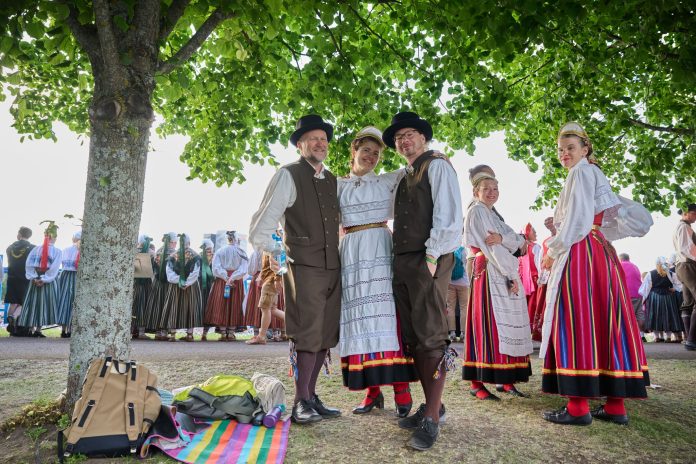
Why you should bite in

Bottom line: Estonia’s now a serious foodie destination. Between midnight folk songs and mouth-watering tasting menus, there’s a reason to RSVP to both the dance festival and dinner festival. So go ahead – plan your summer trip around that Michelin dinner reservation. Your taste buds – and Instagram (of course you’ll share your food pics!) – will thank you.

What is a Michelin Star? ⭐

A Michelin Star isn’t just a fancy label – it’s the culinary world’s gold medal, given only to restaurants that make inspectors sigh with joy (and possibly loosen their belts). Anonymous food pros from the MICHELIN Guide visit restaurants multiple times and judge them on: the quality of ingredients, the harmony of flavours, the chef’s personality (on the plate, not on Instagram), mastery of cooking techniques and consistency (because one great meal isn’t enough).

One star means “worth a stop,” two means “worth a detour,” and three means “cancel your plans and go now.”

There are also Green Stars for sustainability and Bib Gourmand spots for places that serve top-notch food without breaking the bank. So yes – Estonia’s food scene is flaming hot, fabulously plated and 100% fork-worthy. Enjoy! Head isu!

Read more: visitestonia.com.

You can find a list of the best restaurants in Tallinn here.
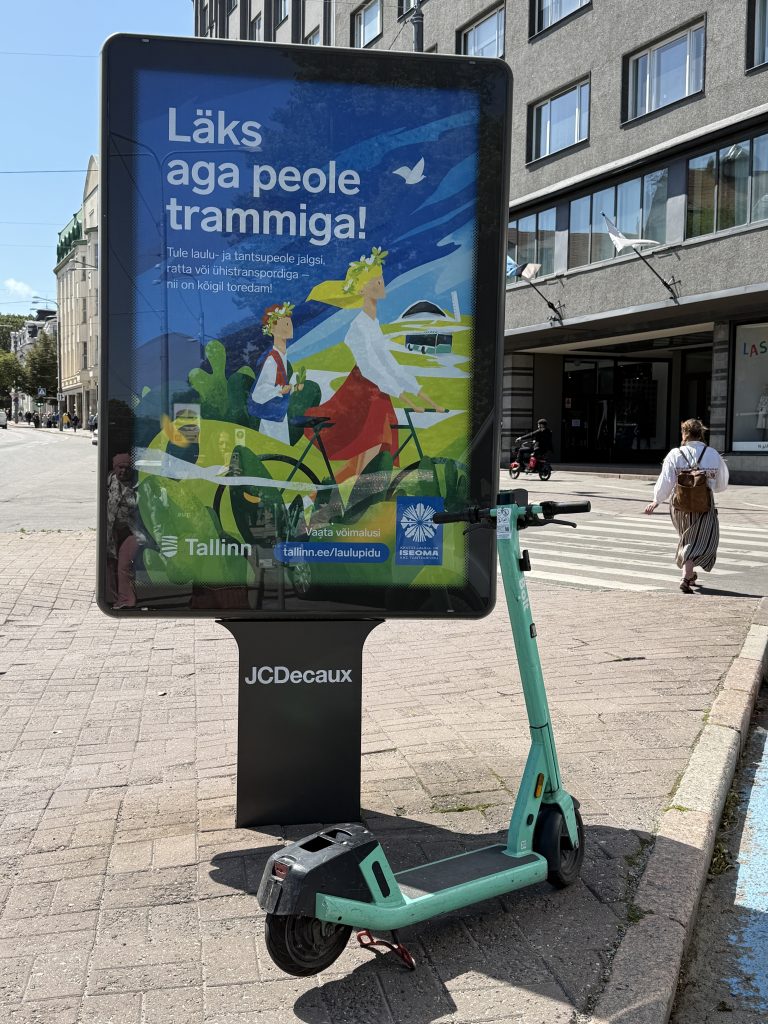
Image by rawpixel from Pixabay

Australian Estonian choirs and dancers embrace Laulu- ja tantsupidu

0
Kooskõlas choir. Photo from the private collection of Esmée Okamoto.

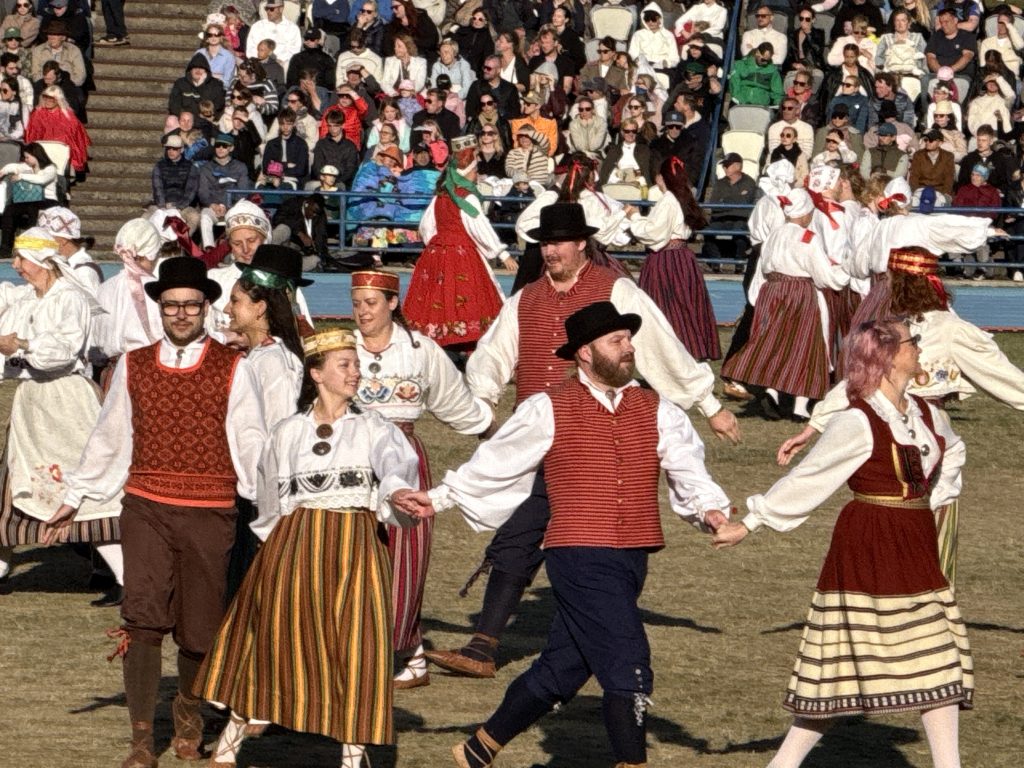
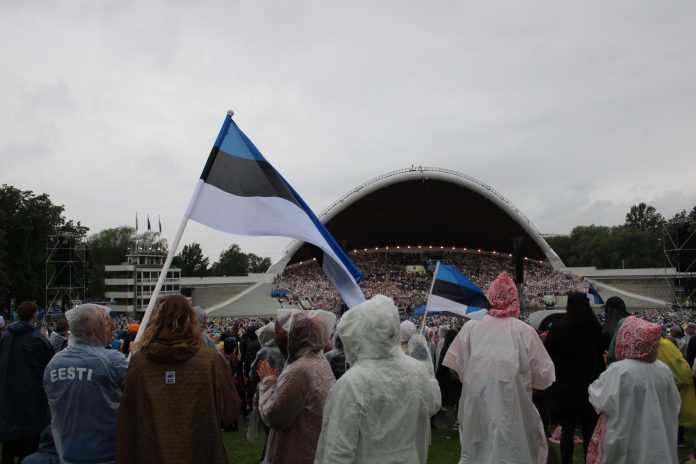
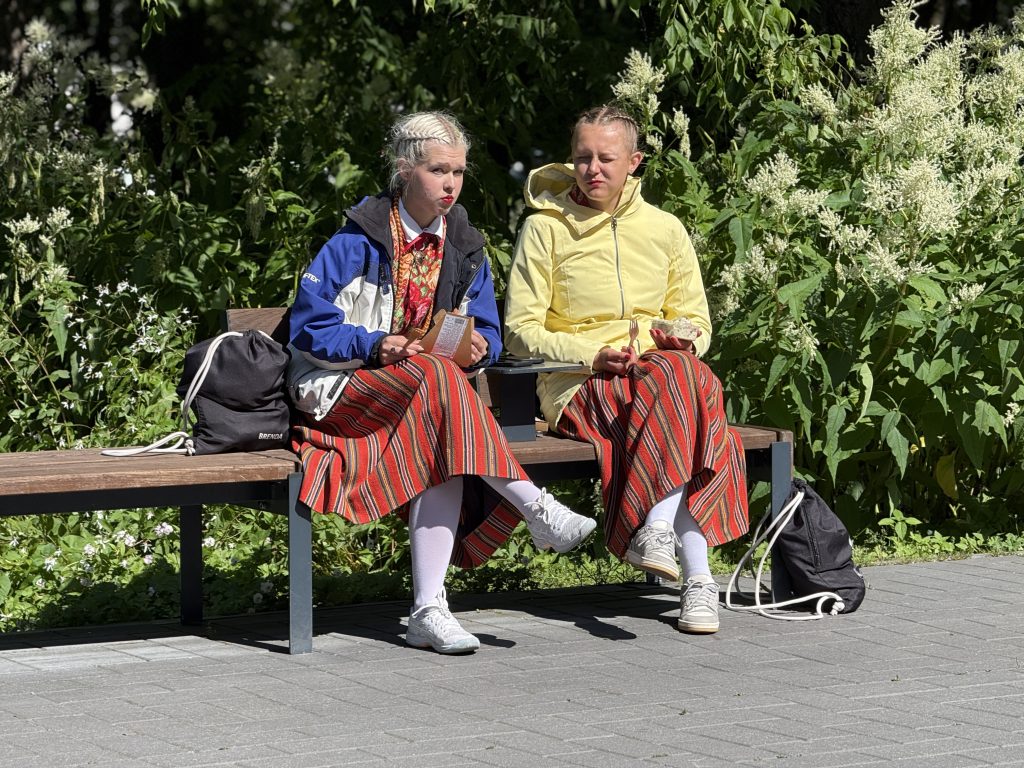
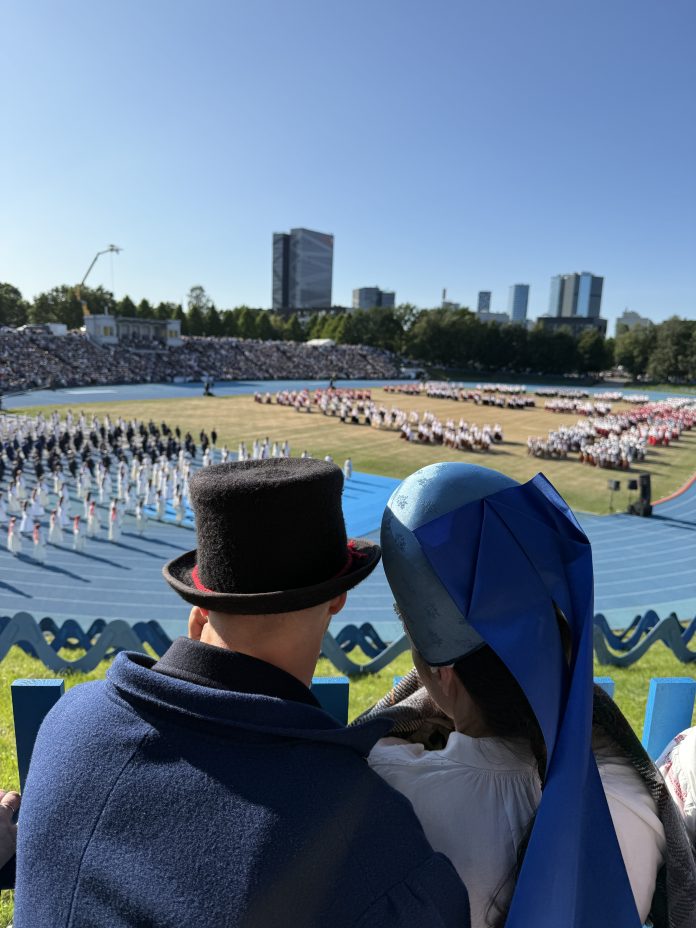
In July 2025, Estonian Australians will make a meaningful pilgrimage to Tallinn to take part in one of the world’s most powerful expressions of cultural identity – the Estonian Song Festival (Laulupidu) and Dance Festival (Tantsupidu). For these singers and dancers from across Australia, this is more than a performance. It is a journey home.

Representing Australia will be these choirs and folk dance groups.

🎶 Kooskõlas – the Australian Estonian national choir, bringing together singers from across the country, including members from Adelaide, Brisbane, Canberra, Melbourne, Perth and Sydney.

🎶 Kodu Kaja – the Melbourne Estonian women’s choir.

💃 Virmalised – the Australian Estonian national folk dance group, with dancers from New South Wales, Australian Capital Territory and South Australia.

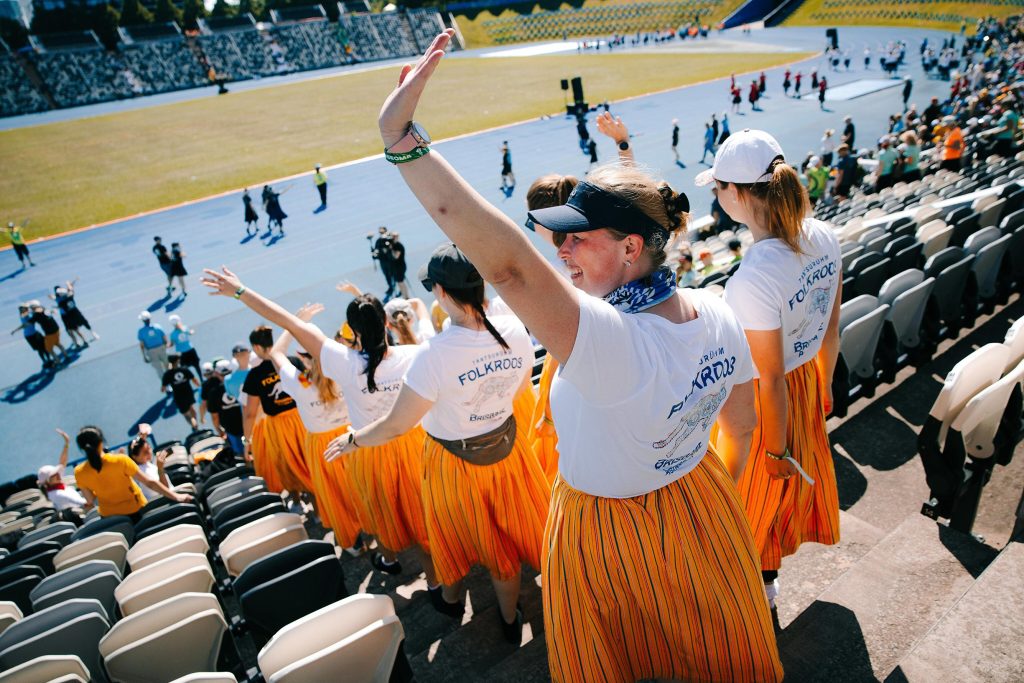
💃 FolkRoos – the Brisbane Estonian ladies’ folk dance group.

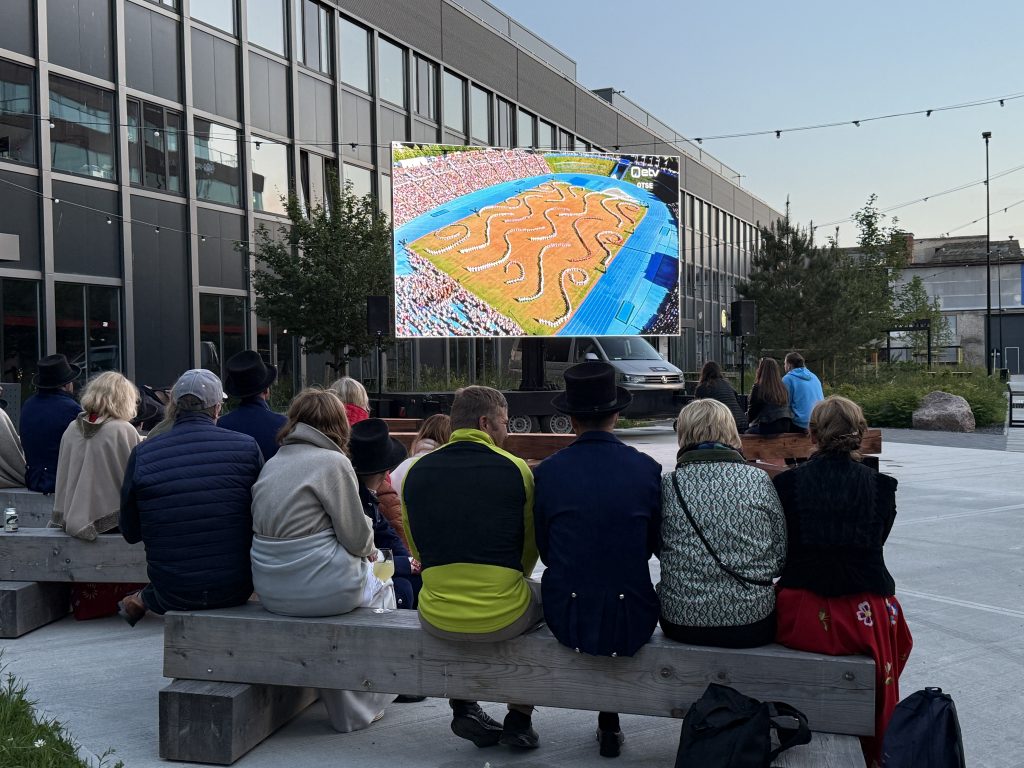
Together, these groups will join tens of thousands on Tallinn’s Song Festival Grounds and Dance Festival field, lifting their voices and stepping proudly in the traditions of their ancestors.

FolkRoos folk dance group. Photo from the private collection of FolkRoos.

💙 A deeply personal journey for many

For many of the participants, this festival is a powerful reminder of their roots – a connection that bridges generations and continents.

“My grandparents fled Estonia during the war and started over in Australia with nothing but hope. When I sing these songs, I feel their strength and their love for the homeland. Being at Laulupidu is like standing on their shoulders.”

“Dancing at Tantsupidu makes me feel part of something timeless. I think of my ancestors who would have danced these same steps in Estonian villages. Now I’m here, representing our community in Australia, and it fills me with pride.”

“Every time I sing at Laulupidu, I think of my grandmother’s stories of leaving her home in Tõrva. The songs keep me connected to the land she loved.”

Laulupidu reminds me why I love Estonia – it’s a feeling of unity, history, and home, no matter how far away I am.”

Virmalised Australia folk dance group. Photo from the private collection of Ella Scott.

🌏 A celebration of community across borders

This festival experience reflects the resilience of Australia’s Estonian community – one that has worked for decades to keep language, song, and dance alive far from the Baltic shores.

For some, it will be their first time in Estonia; for others, a return after many years. All will stand together in Tallinn, united with Estonians from around the world in a shared voice and shared steps.

“There is a deep sense of belonging that comes from singing together, working together towards a shared goal, and being part of something bigger than yourself. We carry this spirit not only in Estonia, but in our communities back home.”

“The Singing Revolution showed the power of song. When we sing together, we continue that legacy of strength and unity.”

“When we return to Australia, we bring back renewed energy – not just for our choirs and dance groups, but for our entire community. Laulupidu and Tantsupidu remind us why we work so hard to keep these traditions going.”

Kodu Kaja choir. Photo by Tiina Pilli from the private collection of Hilja Toom.

Perth Jaanipäev: A Midsummer celebration in winter heralds a new spring

0
Photo by Mark Narustrang.

Perth’s Baltic midsummer celebration, 14 June 2025, was a joyful experience – plain good fun – but also fresh shoots of cultural change.

The event was held at the Latvian Centre in Belmont, a hall proudly hand-built in 1972 by the post-war wave of Latvian immigrants. The building, filled with decades of memorabilia, served as a poignant reminder of how those displaced from their homeland worked to preserve their culture from half a world away.

The story of Perth’s Estonian community is similar. However, the Estonian Centre, Eesti Tare, was sold years ago as the first generation of Estonians aged and their Australian-born children – cut off from their ancestral roots by the Iron Curtain – melded into Australian culture. The Latvian Centre has experienced a similar decline in community but has carried on through dual use as St Paul’s Lutheran Church (a subtle irony, given the day’s pagan origins) and traditional cultural activities like folk dancing.
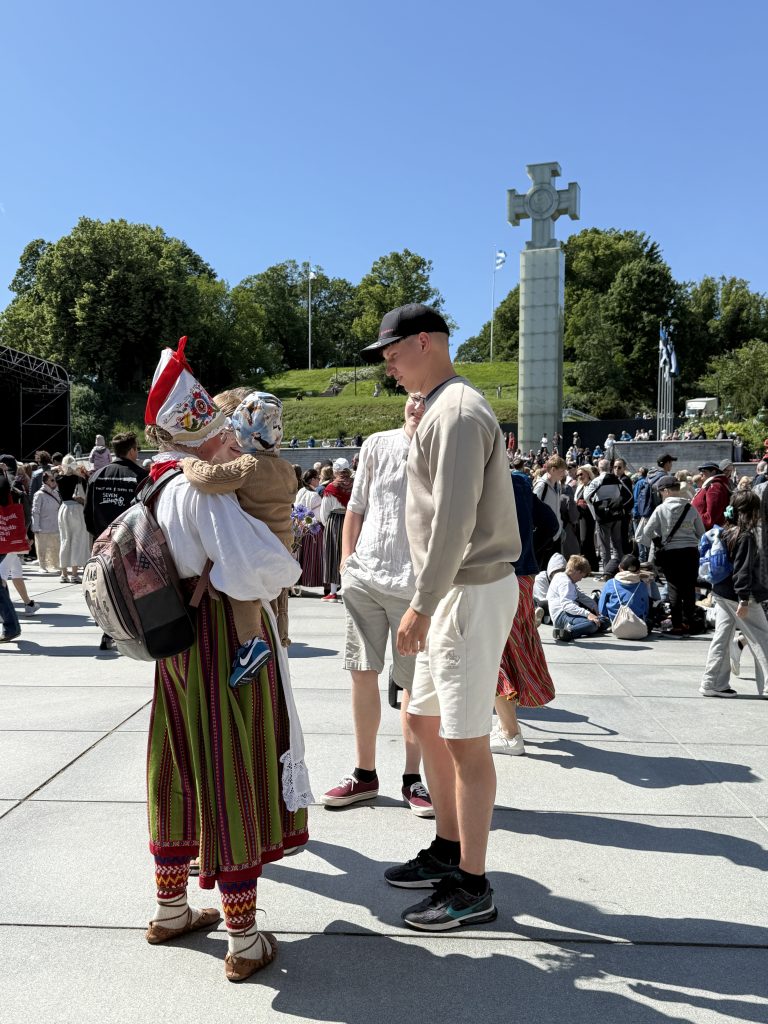
So it made perfect sense to host a combined midsummer event – Jaanipäev for us – at the last remaining Baltic hall in the city, bringing together the combined force of the Estonian, Latvian, and Lithuanian communities to create a critical mass…

And that’s when it became clear that a change of seasons is upon us.

The event sold out all 350 tickets a week in advance, with a growing waitlist behind. On the day, attendees braved drizzly, wintry weather to stream in from mid-afternoon. An older Latvian told me he had never seen the venue so full.

Anecdotally, around 80% of attendees were Estonian. Western Australia has seen a steadily increasing Estonian population, and it’s showing no signs of slowing. There were very recent arrivals, pale from the (lack of) northern sun, who had yet to experience their first Australian summer. And there were those weathered from working for years in more towns and states than many born-and-bred locals have visited. The common thread was resilience – a willingness (and often necessity) to take on demanding jobs in remote places. Hello WA!

Among the crowd were a handful of descendants from the original post-war Estonian migrants (this author included), but the vast majority of attendees came of age well after Estonia’s re-independence, revelling in their freedom to explore the world. Many travel back to Estonia regularly, which is one reason this celebration was held before the actual solstice – why settle for one midsummer when you can have two?

Australia has been a top destination for young Estonians since the Working Holiday Maker agreement was signed in 2005. Estonia’s annual 417 visa quota is uncapped and well utilised, with over 1,300 visas granted in 23/24. By contrast, Latvia and Lithuania do not currently have access to this arrangement – helping explain the disparity in attendance.
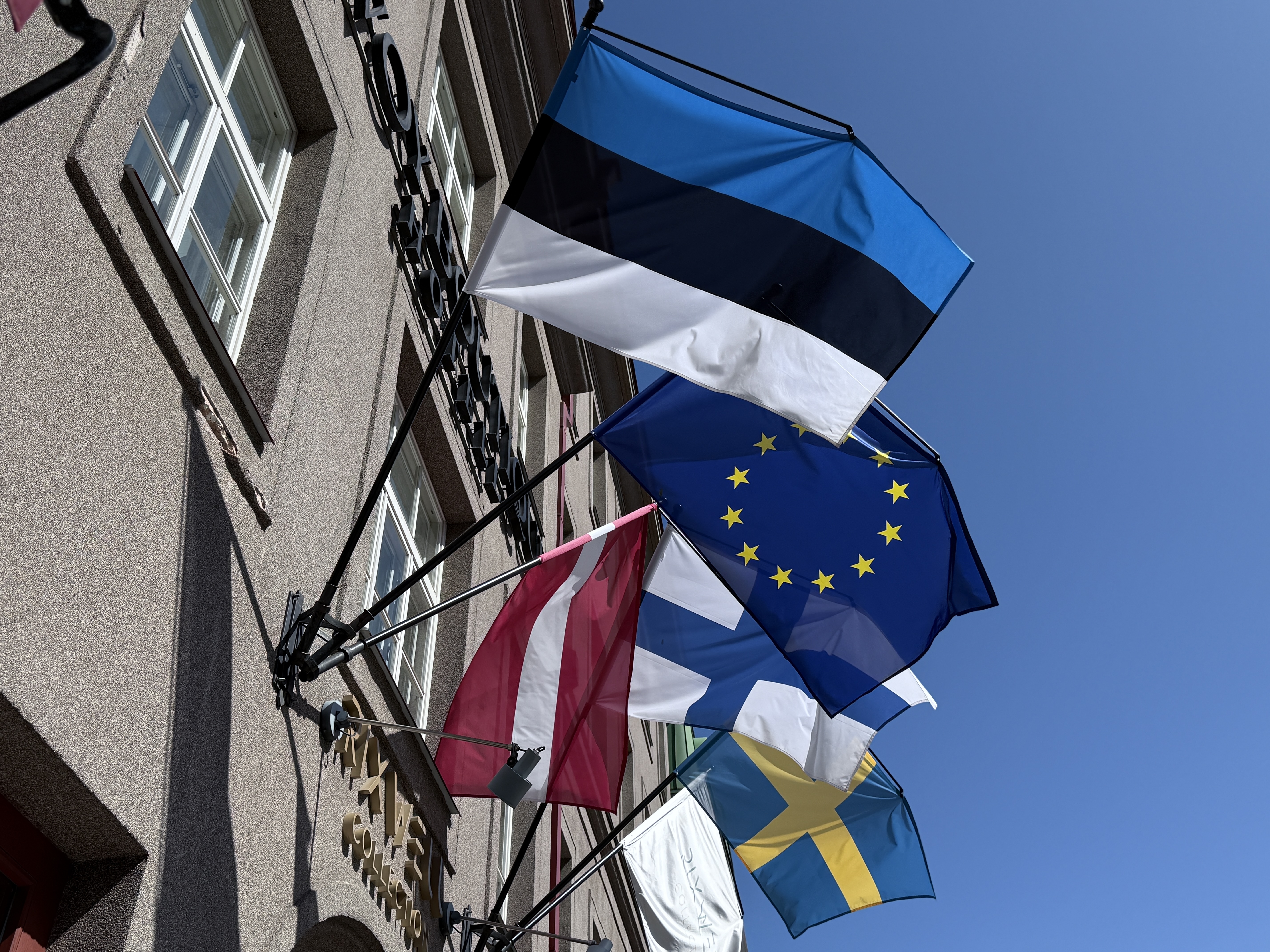
With the growing numbers comes the scale to build a fresh cultural zeitgeist. Perth’s new Estonian Association, EstWest, was the driving force behind this and other events, and it’s clear they have tapped a rich vein of interest.
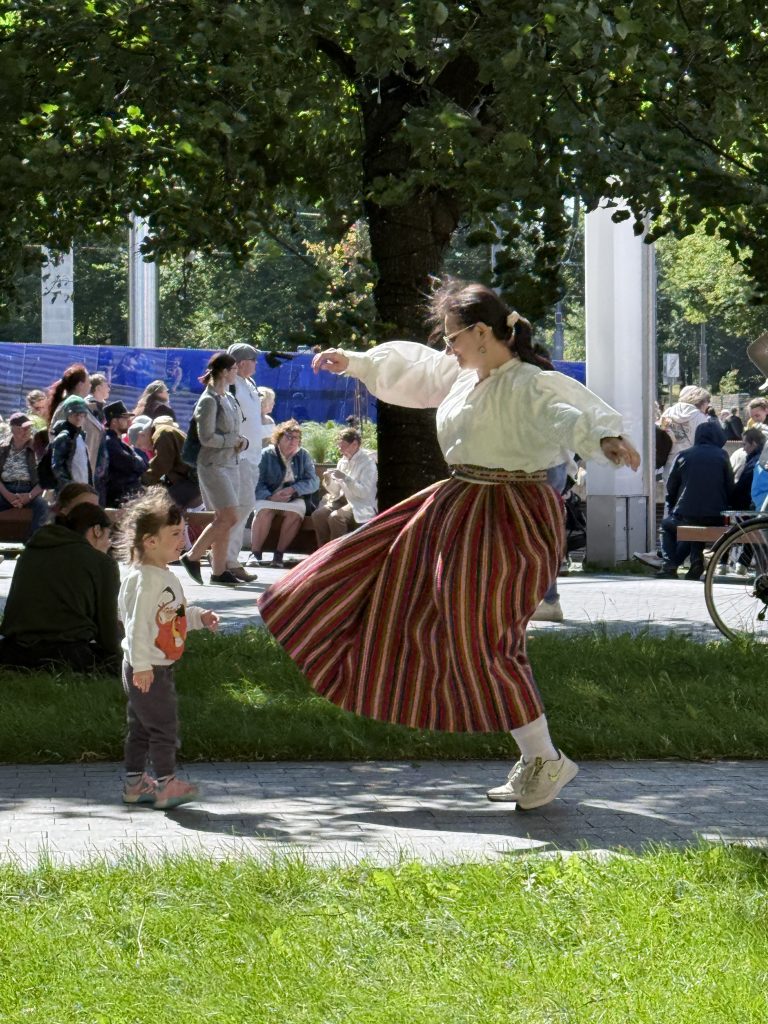
Anyone who has experimented with sourdough knows that its microbial community needs to be fed. A societal culture is no different. Without a fresh influx of “flour and water,” the culture will die. The Perth Estonian community is a good example of how close it can get. After sustaining community with teaspoon-sized doses over the last couple of decades, the new members of the Estonian community are like a 20-kilo sack of Baker’s Best tipped into a 44-gallon drum – and the culture is bubbling, alive, and growing bigger.

The organic energy was on full display during the day’s activities. Traditional elements were all present – folk dancing, flower crowns, sauna, and of course, the bonfire – but there was a contemporary pulse running through it.

Take the tug of war, for instance. A seemingly unprogrammed wave of momentum led a large group of adults to a dimly lit side alley where it seemed something ritualistic was about to unfold. Men stripped off outer layers, revealing the kind of physical conditioning born of work in WA’s agriculture, mining, and construction sectors, as they lined up astride a rope thick enough to moor a Panamax. The alley, churned with mud from rain and boots, offered a splash of Baltic authenticity. One side was a team of Estonia’s finest; the other, a mixed Baltic crew. Two loud, primal, and fiercely short and sharp rounds later, Estonia had the win over the All-stars. And just as quickly, the crowd dispersed, seeking warmth and shelter. This wasn’t for show. It wasn’t staged for Instagram. It meant something.

Was the evening exactly like a midsummer in Estonia? No. The gum trees, early sunset, and Aussie accents made sure of that. But it was an authentic celebration of Estonian culture in an Australian context. And perhaps most importantly, it wasn’t a relic of a fading past – it was living, breathing, evolving tradition at work.

Welcome back.

Flame of Laulupidu ignited – and we’re ready to follow

0
Fire lighting ceremony in Tartu, Estonia, 15 June 2025. Photo by Rein Leib

TARTU, ESTONIA — 15 June 2025, sunrise. While most of Estonia was still wiping sleep from their eyes (or enjoying their Sunday coffee), something magical happened in the park of the Estonian National Museum: the sacred flame of the Song and Dance Celebration – Laulu- ja Tantsupidu – was lit!

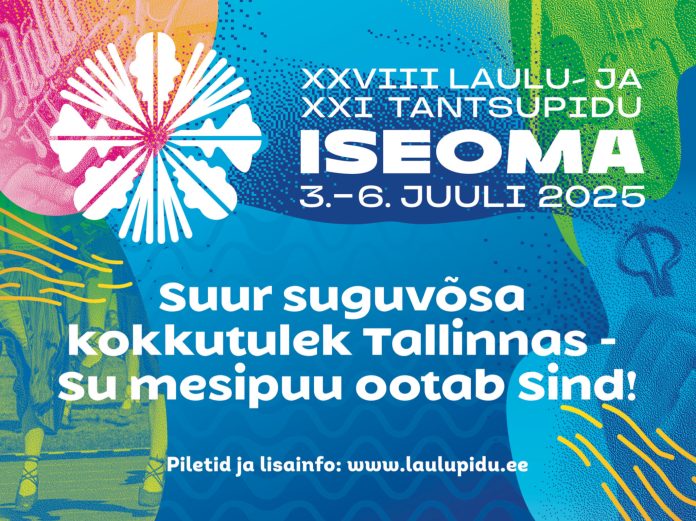
The flame marks the symbolic start of the celebration and now begins its epic 18-day journey across Estonia, visiting counties and culture-rich towns on its way to the grand finale: the XXVIII Song and XXI Dance Celebration “Iseoma“, taking place from 3–6 July in Tallinn.

🔥 One flame, many voices – and a few kangaroo keychains?

Among the tens of thousands preparing for the big event are singers, dancers, supporters – and yes – even a cheerful delegation from Down Under! Australian Estonian performers from all across the continent are heading to Estonia to take part in the historic celebration. They’ll be joining choirs and dance troupes from around the world to represent Estonian spirit with pride (and hopefully with some well-packed throat lozenges, just in case).

From toddlers in traditional skirts to seasoned singers who know all the verses by heart, our diaspora is showing up in style – koala keychains and all.

🌿 Ancient traditions, new footsteps… and probably a few blisters

Since 1969, the lighting of the flame has kicked off the journey to Laulupidu – originally making its way from Tartu to Tallinn to honour 100 years since the very first Song Celebration. Over the decades, it’s been carried by horse, boat, relay runners, and more recently, anything with feet, wheels, or stubborn enthusiasm.

This year, it’s once again hitting the road – creating a glowing, symbolic breadcrumb trail of unity across Estonia. Some call it tradition. Others call it cardio with meaning.

At this year’s sunrise ceremony, the flame was first lit in a joint bonfire and then handed over to the artistic directors of the upcoming celebration:
– Heli Jürgenson, Song Celebration Artistic Director
– Helena-Mariana Reimann, Dance Celebration Lead Director
– Helin Pihlap, Folk Music Celebration Creative Director

And because no Estonian event is complete without some serious musical talent, the ceremony featured moving performances by Celia Roose, Tartu Karlova School’s children’s choir, the Tartu University Mixed Choir, dance group Soveldaja, Andre Maaker, and Margo Kõlar. The celebration was sealed with the planting of an oak tree and the unveiling of a commemorative stone.

Fire lighting ceremony in Tartu, 15 June 2025. Photo by Rein Leib.

🎤 Reporting (a)live, unfiltered and fuelled by kiluvõileib

Also heading to Estonia: the ever-dedicated (and slightly sleep-deprived) team from the Australian Estonian Media Project. Armed with cameras, microphones, umbrellas and questionable pronunciation, we’ll be front and centre – capturing the heart and soul of the Song and Dance Celebration for eesti.org.au.

Expect joy, tears, goosebumps, awkward flag selfies, and possibly a dramatic weather update or two from someone clinging to their kohuke in sideways rain. If nothing else, tune in for live attempts at saying Lauluväljak without spraining a vowel.

Follow the flame

The flame will reach Tallinn on 2 July, just ahead of the start of the main festivities. Each stop along the journey celebrates local traditions, community connection and Estonia’s living culture. You can follow the full route and flame’s progress on the official site: https://2025.laulupidu.ee/tule-tulemine.

Want a sneak peek of the magical sunrise moment when it all began? See the gallery here: Photo Gallery

🧡 See you in Tallinn!

Whether you’re travelling to Estonia, following online, or simply carrying the songs in your heart – this year’s celebration is a reminder of what unites Estonians everywhere. One flame, thousands of hearts and a shared voice that echoes across oceans.

And remember: if you spot someone in a blue-black-white scarf humming “Mu isamaa on minu arm”… they might just be from Melbourne. Or Sydney. Or Brisbane. Or maybe they’re just lost and looking for the nearest place to buy a kohuke. Estonians don’t need an excuse to sing or dance (nor liquid courage, despite popular belief)…

Have a safe trip – and see you at the Song and Dance Celebration!

ECFA grants: Funding available for Estonian cultural projects in Australia

0
Image by Peter J. Althammer from Pixabay

The Estonian Cultural Foundation in Australia (ECFA) is now inviting applications for funding for the 2025–2026 financial year.

Whether you’re an individual or part of an organisation, if you have a project that promotes Estonian culture – be it literature, music, film, visual arts, crafts, design, radio, performing arts, or community events – this is your opportunity to bring your ideas to life with ECFA’s support.

Expressions of Interest are now open, with a total funding pool of approximately $20,000 to $30,000 available. Projects may receive full or partial funding, depending on merit and the discretion of the ECFA Board.

Projects must align with ECFA’s mission to promote Estonian-origin arts and culture in Australia. Applications are welcome from all Australian states and territories.

What you need to know

To apply, submit the completed application form by 31 July 2025 at 8 pm including details such as:

  • your name and organisation (if applicable)
  • contact details and project leader’s information
  • a detailed project description, including a proposed budget
  • the amount of funding requested (for the 2025–2026 financial year only)
  • a program of activities and an implementation timetable
  • all applications must be in English.

Note: Past recipients of ECFA funding must also apply under this current round if seeking support again.

Successful applicants must also:

  • provide photos and a short article upon project completion for ECFA’s promotional use
  • submit half-yearly progress reports (due 1 November and 1 May)
  • submit an annual report detailing outcomes and expenditure
  • acknowledge ECFA’s support on websites and social media.

Interested in an info session?

If you would like to attend an online information session about the grant process, please email ecfa[at]eesti.org.au with your name, email address, and affiliated group (if any), using the subject line: ECFA Grant Information.

To apply

Download the application form directly from the ECFA website:
👉 ECFA Application Form for Grant 2025–26

Completed applications, along with any supporting documents, should be submitted via email to:
📧 ecfa[at]eesti.org.au

Applications close: 31 July 2025 at 8 pm. Successful applicants will be notified in August 2025.

For full details, visit: ecfa.eesti.org.au/grants

Good luck!