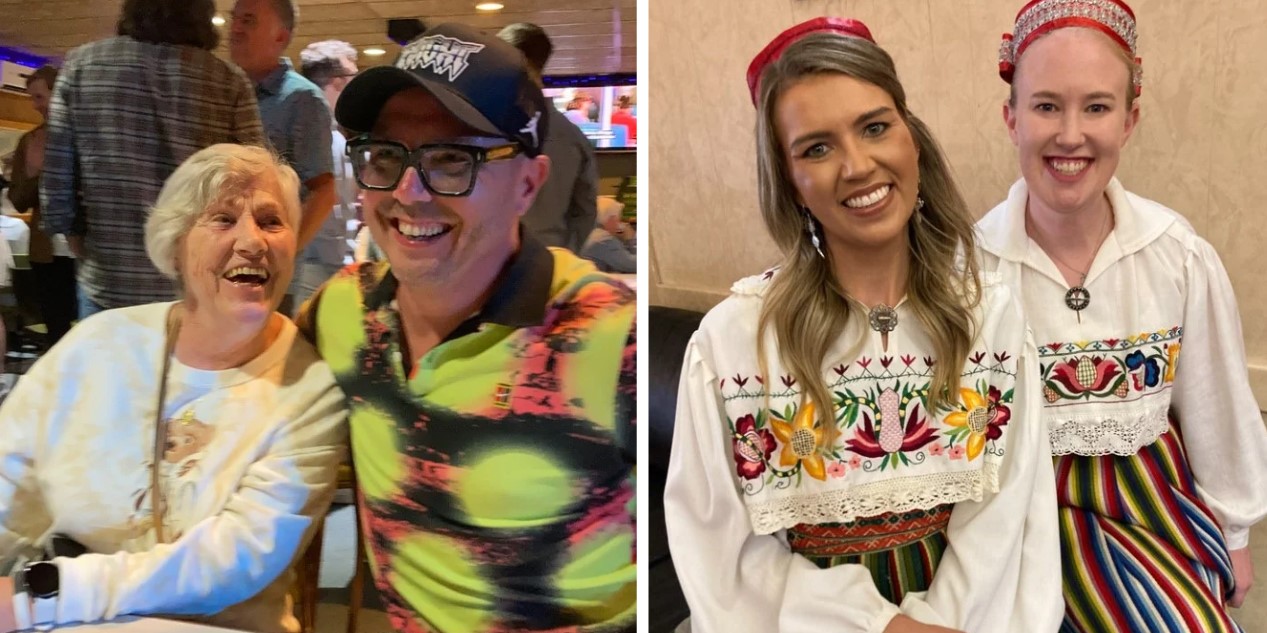
Internship program For young Estonians aged 18-35 who were eitherbornabroadorhavelived abroadformorethan 5 years
The scholarship consists of a basic scholarship and, if necessary, a travel scholarship. The basic scholarship is intended for a full-time internship. Amount of support 4-6 weeks is 1500 euros and from 7+ weeks it is 3000 euros + travel allowance for a round trip travel from your place of residence to Estonia.
The internship must be within the period May 1 – November 30, 2025.
One of the elements of the application is the availability of an internship in Estonia; if necessary, you can consult at diasporaa@mfa.ee to assit you with your search.
Välismaal elav eesti noor – tule praktikale Eestisse
Praktikaprogramm 18-35 aastastele eesti noortele, kes on kas välismaal sündinud või enam kui 5 aastat võõrsil elanud
Stipendium koosneb põhistipendiumist ja vajadusel sõidustipendiumist. Põhistipendium on mõeldud täistööajaga praktikaks. Toetuse suurus 4-6 nädalat on 1500 eurot ja alates 7+ nädalast 3000 eurot + sõidutugi ühele edasi-tagasi reisile elukohast Eestisse.
Praktika peab jääma ajavahemikku 1.mai – 30.november 2025.
Taotluse üheks elemendiks on praktikakohta olemasolu Eestis, vajadusel saab otsingute kiirendamiseks konsulteerida aadressildiasporaa@mfa.ee
Taotluste esitamise tähtaeg on 2. aprill 2025.
Praktikaprogrammi õnnestumise nimel teeme koostööd Work In Estoniaga
Taotlusvooru rahastab Välisministeerium ja läbi viib ESTDEV
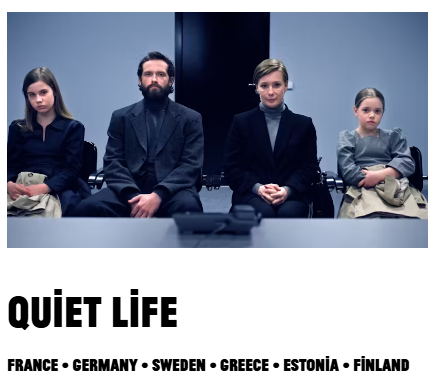
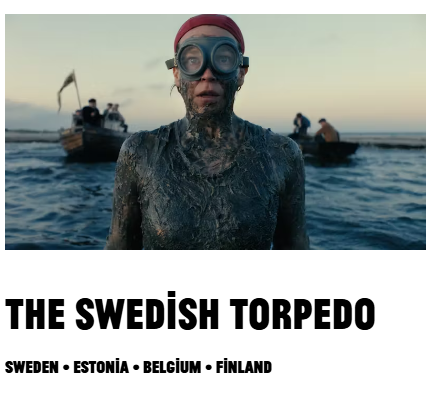
The winners to the Europa! Film Festival competition have been drawn and notified (discretely so friends and family don’t assail them for the spare seat)!
We hope the winners enjoy!
The competition entries provided interesting data – the most popular Estonian movies according to our readers. In the music industry, there is the annual Hottest 100, so let’s call this list the Cool Three – or Külm Kolm!
Without further ado, and in no particular order (as they were all tied), the top three Estonian movies are…
The most common reason expressed by our readers behind selecting their favourite Estonian movie was a personal association to the time, place or characters within the story. From understanding how a previous generation prevailed, through to recognition of their own upbringing, the emotional connection crafted by the film auteur proved strong with our audience.
We will wait and see if the two films with Estonian collaboration showing at the Europa! Film Festival form similarly strong connections.
Hello all, dear Estonians and friends of Estonia, celebrating the 107th anniversary of Estonia today here and around the world!
I am speaking to you from Tallinn, Toompea, from the newly renovated Estonian Statehood House. It was built as a townhouse by the Üxküll family 300 years ago, and subsequently, the building belonged to the Estonian Knighthood. It has also housed the National Library and the Academy of Arts of Estonia.
However, as the foreign minister, I consider it particularly important that between 1921 and 1940 – for almost 20 years – the Estonian Ministry of Foreign Affairs was located here. And perhaps it would still be based here if Estonia had not lost its freedom for almost half a century. And if we had not lost our foreign ministers and diplomats, many of whom died in Russian prison camps.
To celebrate this festive day, I would like to show you some glimpses of the Estonian Statehood House through the camera lens because the rooms in this building tell the story of Estonia through interiors. What better time to tell the story of Estonia than on its birthday?
Dear audience, Statehood entails communicating with partners on the formal state level. Now, Tallinn finally has a distinguished location for this purpose. I am currently in the room that used to house the office of the foreign minister. Foreign ministers like Ants Piip, Otto Strandman, Jaan Tõnisson, August Rei, Karl Selter and others have worked here. The office next to this one showcases beautifully renovated furniture from 1935 that used to belong to the Estonian ambassador in Berlin. The Estonica Library Room and the Three Lions Room are close by, as well as the former conference hall of the Ministry of Foreign Affairs, which is now the Press Room. Not far from here, there is the Statehood Room, where all four Estonian constitutions are displayed. The period when the building was managed by the Estonian Knighthood can be explored in the Maapäev Room, where 280 coats of arms of the nobility illustrate historical Estonia in a pictorial form.
I am convinced that all foreign ministers who once worked here would be proud to see that the historic building that was unused for a long time can now be used by Estonia again in its full glory. Let us be proud of the Estonian Statehood House!
Dear friends, Naturally, our Independence Day is celebrated in 45 Estonian foreign missions and by 200 honorary consuls in 96 countries – all this forms a network of Estonia’s foreign missions that supports you when you are living abroad.
The Globalestonian.com website gives an overview of how Estonians across the world are celebrating Independence Day. I am particularly glad to see that parties are held almost everywhere: in Australia, United States, Austria, Spain, Netherlands, Ireland, Canada, Sweden, Germany, Finland, Switzerland, and many other countries we are not even aware of. I would like to thank all of you who live abroad and preserve Estonian language and culture. In your daily life, you probably do not think about the fact that cherishing Estonian identity and language contributes to the Estonian identity in general, and indirectly, to Estonia’s security. However, that is the case.
You are supporting Estonia by telling your friends and colleagues about Estonia: whether it is the beautiful music of Arvo Pärt, a digital state with zero red tape, Estonia’s unspoiled nature or our education system that is among the best in the world according to PISA rankings. The same is true of you working as a teacher in an Estonian school or kindergarten, making an effort to speak Estonian to your children, taking part in a choir or folk dance group, or volunteering to lead an Estonian organisation or project. The more people know about Estonia, the greater the number of people speaking Estonian and engaging in Estonian culture, the more secure a small country like Estonia is in the current turbulent world.
Particularly in light of the growing pressure on the rules-based international order and Russia waging a full-scale war in Europe against Ukraine. What is at stake in Ukraine is the rules-based world order and therefore, the freedom of us all. Preserving that freedom requires a just peace in Ukraine, the long-term containment of aggressive Russia, reinforced alliances, and a more confident Europe.
I would like to reiterate, a more confident Europe. Because it is in our hands to prevent an agreement on Ukraine without Ukraine. And an agreement concerning Europe being made without us. Like was unfortunately the case in 1939. The Estonian people are painfully aware of this. It is our task as Europe to keep supporting Ukraine if Ukraine wishes to keep fighting for its freedom. And not force unfair conditions on them simply to allow Putin to continue his aggression. Perhaps not only in Ukraine but somewhere else as well.
Dear friends, While we are celebrating our birthday, a lot of complicated things are happening around the world. As the foreign minister, I can assure you that Estonia is at the tables where our and Europe’s future is being discussed. We can be proud of all Estonians and Estonian residents for the contribution that we have made in support of Ukraine, as well as for the initiatives we have led globally.
The Estonian community abroad has emphatically offered both financial and moral support to Ukraine. I would like to recognise and thank you for this! Ukraine must not be forgotten.
Dear friends, Hando Runnel has said ‘Writing is born of the church, a nation of a book.’ These lines remind us during this Year of the Estonian Book that the written Estonian language is 500 years old and this is no small feat. Many European countries cannot make the same claim. This year, I would like to call on you to read literature in Estonian and tell the story of our 500-year-old written language wherever possible. If we do not do this, who else will do it for us?
The song and dance festival is held in Tallinn this summer. ESTO is held in Stockholm, Tallinn, and Narva. I hope that many of you find your way to Estonia to see and experience it all yourself. You can also use the opportunity to visit grandparents, relatives or friends. Hike in the bog and the forest, and go to the seaside and take a dip in the sea.
Sometimes, the negative news feed tends to overshadow positive things but the numbers do not lie: the number of foreign tourists visiting Estonia in 2024 increased by 15% compared to the previous year. One can assume this number will grow even more thanks to the song festival; the number of tourists has usually increased during song festival years. This means that Estonia is increasingly known for the unique things people can see, hear and experience here. This also means that despite our neighbourhood, Estonia is considered a safe destination. It is good to feel that the world believes in us more and more: let us do the same and celebrate the birthday of our small country!
I am wishing you a happy 107th birthday of the Republic of Estonia! I hope all your festive tables include Estonian aromas and flavours. Even if not, there is no doubt Estonia is greater and more powerful in your minds than ever before. In conclusion, as the foreign minister I can assure you that when we decided in the early 1990s that we would never be alone again, this is indeed the case today. We are not alone. We and our Allies are ready to defend the values for which we stand. Either as a NATO member or a European Union member state.
Happy birthday, Estonia!
Margus Tsahkna Eesti välisminister
Tere teile kõigile, head eestlased ja Eesti sõbrad, kes te olete täna siin ja sealpool maakera kokku tulnud, et tähistada Eesti riigi 107. sünnipäeva!
Tervitan teid Tallinnast, Toompealt, värskelt renoveeritud Eesti esindushoonest. Selle ehitas endale linnamajaks 300 aastat tagasi Üxküllide suguvõsa, pärast mida kuulus hoone mõnda aega Eestimaa rüütelkonnale. Siin on asunud ka Rahvusraamatukogu ja Kunstiakadeemia.
Aga mulle kui välisministrile on aga oluline see, et just selles hoones asus aastatel 1921–1940 –peaaegu 20 aastat – Eesti Välisministeerium. Ja võibolla asuks see ka tänapäeval siin, kui Eesti poleks vahepeal oma vabadust ligi pooleks sajandiks kaotanud. Ja kui me poleks kaotanud ka oma välisministreid ja diplomaate, kellest paljud jätsid oma elu Venemaa vangilaagrites.
Soovin teile pidupäeva puhul läbi kaamerasilma Eesti esindushoonet natukenegi näidata, sest selle hoone ruumid räägivad läbi sisekujunduse ka Eesti lugu. Ja millal siis veel rääkida Eesti lugu, kui mitte sünnipäeva tähistades.
Austatud kuulajad!
Riigipidamise juurde kuulub suhtlemine partneritega riigiesinduslikul tasandil. Nüüd on Tallinnas selleks lõpuks väärikas koht olemas.
Praegu olen ma ruumis, mis oli kunagi välisministri kabinet. Siin on omal ajal töötanud välisministrid nagu Ants Piip, Otto Strandman, Jaan Tõnisson, August Rei, Karl Selter jt. Kõrval kabinetis on oivaliselt taastatud 1935. aastast pärinev mööbel, mis kuulus Eesti saadikule Berliinis. Kohe siin asub Estonica raamatukogutuba ja kolme lõvi saal, endine Välisministeeriumi konverentsisaal, tänane Eesti Vabariigi valitsuse pressisaal. Siit mitte kaugel on omariikluse saal, kuhu on välja pandud kõik neli Eesti põhiseadust. Ajast, mil hoone oli Eestimaa rüütelkonna käsutuses, saab aimu Maapäeva saalis, kus on pildikeeles, 280 aadlivapi kujul, väljas terve Eesti ajalooline taust.
Ma olen veendunud, et kõik siin kunagi töötanud välisministrid oleksid uhked, nähes, et pikka aega tühjana seisnud ajalooline hoone on oma ilus nüüd jälle Eesti riigi kasutada. Tundkem Eesti esindushoone üle uhkust!
Head pidulised!
Loomulikult tähistatakse vabariigi aastapäeva 45-s Eesti välisesinduses ja seda teevad ka 200 aukonsulit 96 riigis – see kõik moodustab Eesti välisesinduste võrgustiku, mis on teile välismaal elades toeks.
Veebilehelt Globalestonian.com saab aga ülevaate sellest, kuidas tähistavad Eesti sünnipäeva eestlased üle maailma. Eriti suur rõõm on näha, et vabariigi aastapäeva pidusid toimub pea kõikjal: Austraalias, Ameerika Ühendriikides, Austrias, Hispaanias, Madalmaades, Iirimaal, Kanadas, Rootsis, Saksamaal, Soomes, Šveitsis ja väga paljudes nendes kohtades, mida me isegi ei tea.
Tahan tänada teid kõiki, kes te elate kaugel ja hoiate seal elus eesti keelt ja kultuuri. Ilmselt ei mõtle te iga päev sellele, et eesti meele ja keele hoidmine toidab lisaks teie enda hingele ka eestlust laiemalt ning kaudselt ka Eesti julgeolekut. Ometi on see nii.
Eestit toetab see, kui räägite meie riigist oma sõpradele ja kolleegidele: olgu see siis Arvo Pärdi kaunis muusika, 0 bürokraatiaga digiriik, Eesti puhas loodus või meie haridussüsteem, mis on PISA hinnangute põhjal üks parimaid maailmas. Aga ka see, kui tegutsete õpetajana eesti täienduskoolis, mudilasringis või püüate oma lapsega kodus rääkida eesti keelt; kui osalete kooris, rahvatantsuringis või veate vabatahtlikuna mõnda eesti organisatsiooni või ettevõtmist.
Mida rohkem Eestit teatakse, mida suurem hulk inimesi räägib eesti keelt ning viljeleb eesti kultuuri, seda kindlam on Eesti-sugusel väikeriigil praeguses heitlikuvõitu maailmas võimalik eksisteerida.
Seda eriti ajal, kus reeglitel põhinev maailmakord on suureneva surve all ja Venemaa peab Euroopas täiemahulist sõda Ukraina vastu. Ukrainas on kaalul reeglitel põhinev maailmakord ja seeläbi meie kõigi vabadus. Selle vabaduse hoidmine eeldab õiglast rahu Ukrainas, agressiivse Venemaa pikaajalist ohjeldamist, liitlassuhete tugevdamist ning enesekindlamat Euroopat.
Just nimelt enesekindlamat Euroopat. Seepärast, et meie kätes on see, et ilma Ukrainata ei lepitaks kokku mitte midagi Ukraina kohta. Ja ka see, et Euroopa kohta ei lepitaks midagi kokku ilma meieta. Nii nagu seda kahjuks tehti 1939. aastal. Eesti rahvas seda lugu mäletab väga valusalt. Meie ülesanne on jätkata Euroopana Ukraina toetamist, kui Ukraina soovib sõda jätkata oma vabaduse eest. Ja mitte peale suruda ebaõiglaseid tingimusi lihtsalt selleks, et Putin saaks oma agressiooni jätkata. Võibolla mitte ainult Ukrainas, vaid ka kuskil mujal.
Head sõbrad!
Sel ajal kui me peame oma riigi sünnipäeva, toimub maailmas väga palju keerulist. Ja ma võin teile kinnitada välisministrina, et Eesti on nende laudade taga, kus arutatakse meie tulevikku ja Euroopa tulevikku. Ja me võime olla uhked kõigi eestlaste ja eestimaalaste üle, selle panuse üle, mida me oleme andnud Ukraina toetuseks, aga ka nende initsiatiivide eest, mida me maailmas eest veame.
Eesti väliskogukonnad on seni empaatiliselt Ukrainale pakkunud nii rahalist kui ka moraalset tuge. Selle eest suur tunnustus ja tänu teile kõigile! Ukrainat ei tohi unustada.
Head sõbrad!
Hando Runnel on öelnud „Kiri algab kirikust, rahvas raamatust“. See luulerida meenutab meile käesoleval eesti raamatu aastal, et eesti kirjakeel on 500 aastat vana ja see pole mitte väike asi. Mitmetel Euroopa riikidel pole midagi nii võimsat kõrvale pakkuda. Sel aastal ma kutsun teid üles lugema eestikeelset kirjandust ja rääkima 500-aastase kirjakeele lugu kõikjal, kus vähegi võimalik. Kui me seda ise ei tee, siis kes seda ikka meie asemel teeb?
Sel suvel toimub Tallinnas laulu- ja tantsupidu. Stockholmis, Tallinnas ja Narvas viiakse läbi ESTO. Ma loodan, et paljud teist leiavad sel suvel tee Eestisse, et seda kõike ise kogeda ja oma silmaga näha. Samas külastada ka oma vanavanemaid, sugulasi või sõpru. Käia rabas, metsas ja mere ääres ja mere peal.
Vahel kipub negatiivne uudisvoog häid asju varjutama, kuid arvud räägivad selget keelt: Eestit külastavate välisturistide arv kasvas 2024. aasta lõpus eelmise aastaga võrreldes 15 % võrra. Võib arvata, et tänavu kasvab see veelgi, igatahes varem on turistide arv just laulupeoaastatel suurenenud. See tähendab, et Eestit teatakse ja tuntakse üha enam just nende unikaalsete asjade järgi, mida siin näha, kuulda ja kogeda saab. Ja tähendab ka seda, et Eestit peetakse turvaliseks sihtkohaks meie naabrusest hoolimata. Hea on tunda, et maailm usub Eestisse üha enam: tehkem seda ka ise ja rõõmustagem oma väikese riigi sünnipäeva üle!
Soovin teile rõõmsat Eesti Vabariigi 107. sünnipäeva! Loodetavasti on teie kõigi peolaual täna eesti lõhnu või maitseid. Ja kui ka ei ole, siis kindlasti on Eesti täna teie mõtetes palju suurem ja palju võimsam kui kunagi varem.
Ja ma võin teile kinnitada kõige lõpuks välisministrina, et kui me 90ndate aastate alguses otsustasime, et me ei jää enam mitte kunagi üksi, siis täna see nii on. Me ei ole üksi. Me oleme koos oma liitlastega valmis kaitsma neid väärtusi, mille eest me seisame. Olgu see siis NATO liikmena või Euroopa Liidu liikmena.
Last year I wished everyone a Happy Birthday for 24 February – as it was the day that in 1918, Estonia declared its independence for the first time.
As many others have previously done, last year I looked at some of the history, some of the events that led to this momentous occasion. [Past AESL speeches and addresses can be found at eesti.org.au ].
The day is celebrated around the world – back in our homeland, as well as in many other countries by the diaspora. We all do it in our own way, whichever way is meaningful for us.
And we share this with our friends, our families, and most importantly, with the newer younger generations. Indeed, much of our future will lie with the next generations, the mudilased.
So let us all lift our glasses and have a drink as we say ”Elagu Vaba Eesti!”
Many of us are here because our parents, grandparents or other relatives fled the Russian purges and the great war in the 1940’s.
Last year, 2024, we unveiled a monument in Pärnu to commemorate the refugees = those who did not want to leave, but could not stay. It was a bitter time. I don’t want to dwell on that today, but we need to remember that our freedom did not come cheaply, but with a lot of effort by a lot of people.
Unfortunately, I believe, history will see our great day overshadowed. For on 24 February in 2022, this was the day that Putin’s forces invaded Ukraine.
This is a most tragic event. But we need to note it – it reminds us of the russians, and how they see Europe, and their neighbours. They care little for international opinion, sadly even less for many of their own people.
In Sydney, the Ukrainians have invited us all to a one-hour commemoration ceremony to be held at St. Mary’s Cathedral Square (just next to the Sydney Town Hall), on Monday 24th, from 6-7 p.m. Many countries will be there with their flags; even our Premier has agreed to attend.
We might have thought some 30 years ago that Estonia’s independence was guaranteed from now on; but if Putin takes Ukraine – who will be next = Hungary? Poland? Eesti and the Baltics?
Last year I cited former Prime Minister of Estonia Kaja Kallas:
“after restoring our independence, we have raised a generation of young people who take the current organisation of our society for granted.” – i.e. the freedom, the democracy, and so on “The current situation in Europe resembles the tensions before World War II.” “Our freedom has never been under such a serious attack in the last thirty years as it is today”
While we celebrate our great day on 24th February, we need to also support Ukraine and our fellow Europeans and their struggles to maintain their own independence, and be ready to again support the fight, the struggles.
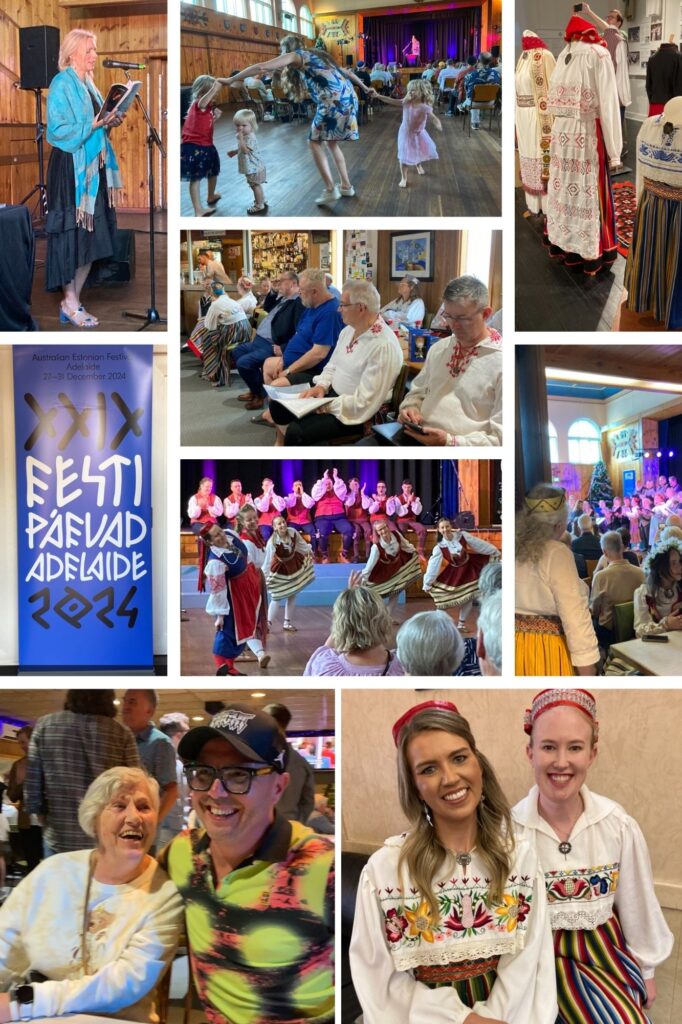
In Australia, we celebrated our Eesti Päevad festival in Adelaide between Xmas and the New Year. It reminded us of how much we can enjoy our culture. Most heartening was to see so many young people taking part, and the emergence in the diaspora of so many Mudilasringid.
The AESL traditionally gives our thanks to some of our outstanding Estonians every year on Independence Day.
Today we celebrate and recognise just a few of these people. This year’s Honours are awarded to –
Bernadette Pilli Victoria for her outstanding a long-term service in leading and working with the Melbourne Estonian Society.
AESL would also like to acknowledge two people who have demonstrated a commitment to the Estonian culture in Australia.
Maie PikkatSydney long-term involvement with the Handicraft group
Ella ScottSydney a young person who has shown a lot of commitment to the Sõrve camp, and now is leader of the Virmalised folk-dancers.
Dear Estonians in Australia, AESL wishes you joyful Independence Day celebrations and success in enterprises that take will take us to the future.
So, I say to you
Happy Independence Day!
Long live Free Estonia! Elagu Vaba Eesti!
24 February 2025 Dr Juho Looveer President, AESL = Council of Estonian Societies in Australia
LUGUPEETUD EESTI PEREKOND AUSTRAALIAS
PALJU ÕNNE SÜNNIPÄEVAKS !
Eelmisel aastal soovisin kõigile palju õnne 24. veebruariks – just sel päeval kuulutas Eesti 1918. aastal esimest korda välja oma iseseisvuse.
Nagu paljud teised on varem teinud, vaatasin eelmisel aastal mõningaid ajalugu, sündmusi, mis viisid selle tähtsa sündmuseni. [Varasemad AESL-i kõned ja pöördumised on leitavad aadressil eesti.org.au ].
Päeva tähistatakse üle maailma – tagasi meie kodumaal, aga ka paljudes teistes riikides diasporaa poolt. Me kõik teeme seda omal moel, kuid see on meie jaoks tähendusrikas.
Ja me jagame seda oma sõprade, peredega ja mis kõige tähtsam, uuemate nooremate põlvkondadega. Tõepoolest, suur osa meie tulevikust on järgmiste põlvkondade, mudilaste käes.
Tõstkem siis kõik klaasid ja jooge üks jook, kui ütleme “Elagu Vaba Eesti!”
Paljud meist on siin sellepärast, et meie vanemad, vanavanemad või teised sugulased põgenesid 1940. aastatel Venemaa puhastuste ja suure sõja eest. Eelmisel, 2024. aastal avasime Pärnus mälestussamba pagulaste mälestuseks = need, kes ei tahtnud lahkuda, kuid ei saanud jääda. See oli kibe aeg. Ma ei taha sellel täna pikemalt peatuda, kuid me peame meeles pidama, et meie vabadus ei tulnud odavalt, vaid paljude inimeste suure pingutusega.
Kahjuks usun, et ajalugu jääb meie suure päeva varju. 24. veebruaril 2022 oli see päev, mil Putini väed Ukrainasse tungisid.
See on kõige traagilisem sündmus. Kuid me peame seda tähele panema – see tuletab meile meelde venelasi ja seda, kuidas nad näevad Euroopat ja oma naabreid. Nad hoolivad vähe rahvusvahelisest arvamusest, kahjuks veelgi vähem paljudest oma inimestest.
Sydneys on ukrainlased kutsunud meid kõiki ühetunnisele mälestustseremooniale, mis toimub Püha Maarja katedraali väljakul (Sydney raekoja kõrval) esmaspäeval, 24. päeval kell 18-19. Paljud riigid on seal oma lippudega; isegi meie peaminister on nõustunud osalema.
Me võisime umbes 30 aastat tagasi arvata, et Eesti iseseisvus on nüüdsest tagatud; aga kui Putin võtab Ukraina – kes on järgmine = Ungari? Poola? Eesti ja Baltikum?
Eelmisel aastal tsiteerisin endist Eesti peaministrit Kaja Kallast:
“Pärast iseseisvuse taastamist oleme üles kasvatanud põlvkonna noori, kes peavad meie ühiskonna praegust korraldust iseenesestmõistetavaks.” – st vabadus, demokraatia ja nii edasi
“Praegune olukord Euroopas sarnaneb pingetega enne Teist maailmasõda.”
“Meie vabadus pole kunagi viimase kolmekümne aasta jooksul olnud nii tõsise rünnaku all kui praegu.”
Kuigi tähistame oma suurt päeva 24. veebruaril, peame toetama ka Ukrainat ja meie kaaseurooplasi ning nende võitlust oma iseseisvuse säilitamise nimel ning olema valmis taas toetama võitlust, võitlusi.
Austraalias tähistasime jõulude ja aastavahetuse vahel Adelaide’is oma Eesti Päevad. See tuletas meile meelde, kui palju me saame oma kultuuri nautida. Kõige julgustavam oli näha nii palju noori osalemas ja nii paljude Mudilasringide esilekerkimist diasporaas.
AESL tänab traditsiooniliselt igal aastal taasiseseisvumispäeval mõnda meie silmapaistvat eestlast.
Täna tähistame ja tunnustame vaid mõnda neist inimestest. Selle aasta autasud saavad –
Bernadette Pilli Victoria silmapaistva pikaajalise teenistuse eest Melbourne’i Eesti Seltsi juhtimisel ja koostöös.
AESL soovib tunnustada ka kahte inimest, kes on näidanud üles pühendumust eesti kultuurile Austraalias.
Maie Pikkat Sydney pikaajaline seotus Käsitöörühmaga
Ella Scott Sydney on Sõrve laagrisse palju pühendunud noor inimene, kes on nüüd Virmalised rahvatantsumeeste eestvedaja.
Armsad Austraalia eestlased, AESL soovib teile rõõmsat iseseisvuspäeva tähistamist ja edu ettevõtetes, mis viivad meid tulevikku.
Niisiis, ma ütlen teile
HEAD ISESEISVUSPÄEVA! JA PALJU ÕNNE SÜNNIPÄEVAKS! ELAGU VABA EESTI!
24. veebruar 2025 Dr Juho Looveer President, AESL = Austraalia Eesti Seltside Liit.
On February 24, we mark the 107th anniversary of Estonia’s independence—a day that unites us all, no matter where we are in the world. It is a time to reflect on our history, celebrate our achievements, and reaffirm our commitment to Estonia’s future.
This day carries profound significance. It reminds us of the resilience of our people, who, despite hardships, have always found the strength to stand up for our freedom and identity. From the Declaration of Independence in 1918 to the restoration of our sovereignty in 1991, Estonia’s story is one of determination and courage. Today, we continue to build a strong, innovative, and forward-looking country that is respected on the global stage.
For Estonians living in Australia, this celebration has a special meaning. Though we are far from our homeland, our ties to Estonia remain strong. Our community here is a testament to the enduring spirit of Estonians—keeping our culture, language, and traditions alive, even on the other side of the world. Whether in Sydney, Melbourne, Perth, Adelaide or other parts of this vast and welcoming country, Estonians have built a home while staying true to our roots. I have had the privilege of meeting many of you and seeing firsthand how deep your connection to Estonia remains.
Yet, while February 24 is a day of celebration for us, it is also a reminder of the challenges that free nations still face. Three years ago, on this very somber day, Russia launched its full-scale war against Ukraine—an unprovoked act of aggression against a free and proud people who, like us, cherish their independence. Estonia knows all too well how precious and fragile independence can be, and this is why we have been unwavering in our support for Ukraine. Their fight is also our fight, a battle for the values that unite democratic nations.
I hope that Estonians across Australia are expressing the solidarity with the Ukrainian community and joining them at commemoration events to show that we stand together against imperialistic aggression. It is more important than ever to demonstrate that independence is not just a privilege—it is something we must actively defend. Australia, too, has been a strong supporter of Ukraine, and together, we reinforce the message that sovereignty, democracy, and freedom will not be surrendered to brutality.
This Independence Day, let us take pride in who we are. Let us remember those who fought for Estonia’s freedom, support those who work to strengthen our nation today and stand with those who are still fighting for theirs. Whether you gather with fellow Estonians, raise the blue, black, and white flag, or simply take a moment to reflect, know that you are part of a global Estonian family.
The Consular Mission to Sydney will take place on the 25 March 2025. Appointments by Registration only. If you would like to apply for new documents, please follow the instructions on the following link to book an appointment https://canberra.mfa.ee/en/consular-mission-to-sydney/
Konsulaarmissioon Sydney-sse toimub 25. märtsil 2025. Vastuvõtt toimub ainult broneeringute alusel. Kui soovite uusi dokumente tellida, siis aja broneerimiseks jälgige juhendit järgneval lingil https://canberra.mfa.ee/konsulaarmissioon-sydney/
Over a month has passed since Eesti Päevad, 27–31 December 2024, yet I still can’t shake it from my mind. Do you want to know why that is?
Over a month has passed since Eesti Päevad, 27–31 December 2024, yet I still can’t shake it from my mind. The exhaustion has faded, the hangovers are gone, and life is back to normal – but the warmth of those days lingers. And no, its not just Adelaide’s summer heat. (Despite warnings that I might need to cool off in a fridge between dance performances, the weather was actually quite friendly).
A festival like no other
As a first-time attendee, I didn’t know what to expect. How would I describe it? Like gathering 200 of my closest friends to celebrate life, culture and each other. Eesti Päevad wasn’t just an event – it was a feeling, a family, a whirlwind of connection that left me somehow more alive.
Set against breathtaking backdrops, from wineries to botanical gardens to the welcoming Estonian House in Adelaide, the festival was more than just a celebration; it was a reconnection with culture, nature and community, a rewiring of sorts to what felt right. Trying to describe Eesti Päevad is like capturing the feeling being hugged by your best friend, dancing with a stranger you somehow already know, or watching the sunrise beside someone who just might be your forever.
It’s about how they make you feel (about you)
Over five days, it was as if a lifetime of love, friendship and joy was squeezed into one festival. Every moment felt like a dance – two steps forward, one step back, and a twirl into conversations that linger long after the final curtain falls. At Eesti Päevad, the old and the new meet on the dance floor and somehow move in perfect step. Warm hugs, knowing smiles, and an unspoken sense of belonging were everywhere.
A smorgasbord of experiences on offer
There was something for everyone: dancers in motion, children running wild with laughter, choirs harmonising with passion, poets and musicians like Kristiina Ehin and Silver Sepp weaving magic with words and rhythms. Conversations about Estonian identity in Australia flowed as freely as the drinks at the bar. And then there were the chance encounters – the kind that leave you wondering if you’ve just met someone who will change your life…
A word of warning…
A word of warning – Eesti Päevad isn’t just an event. It changes you, making you a little more connected, a little more yourself. That was my experience. Clearly, I’m biased – I had an amazing time. But don’t take my word for it. The next festival is in Sydney, 8–11 April 2027. They don’t hand out experiences like this too often, so start planning now!
Until next time!
A huge thank you to everyone who made it so special! It was wonderful to meet you and thank you for sharing your stories! If you want to relive the magic, check out the photos and videos on the Eesti Päevad Facebook page (linked here). Until next time, my friends!
Photos from Eesti Päevad by Kristel Alla.
Acknowledgements
This article first appeared in Teateleht, the Melbourne Estonian Society newsletter, published 17 February 2025.
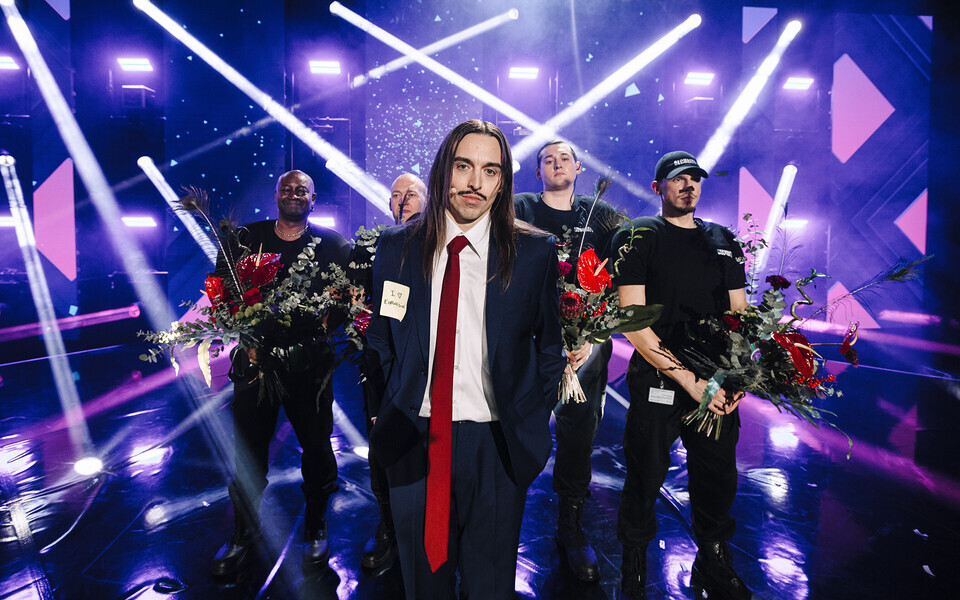
Tommy Cash and his song “Espresso Macchiato” clinched the top spot at Eesti Laul on Saturday night and will go on to represent Estonia at the Eurovision Song Contest in May.
Cash won an overwhelming majority of the vote – 83 percent – beating 15 other hopefuls.
“I am so happy that so many of you understood my story,” he told the audience. “I am honored to be able to do my best for Estonia.”
The winner was determined by both a public vote and an international jury. The contest takes place in May in Switzerland.
The Consular Mission to New Zealand will take place on the 21 February 2025 in Wellington and on the 24 February 2025 in Auckland.
Appointments by Registration only. If you wish to apply for new documents, please follow the instructions on the following link to book an appointment:
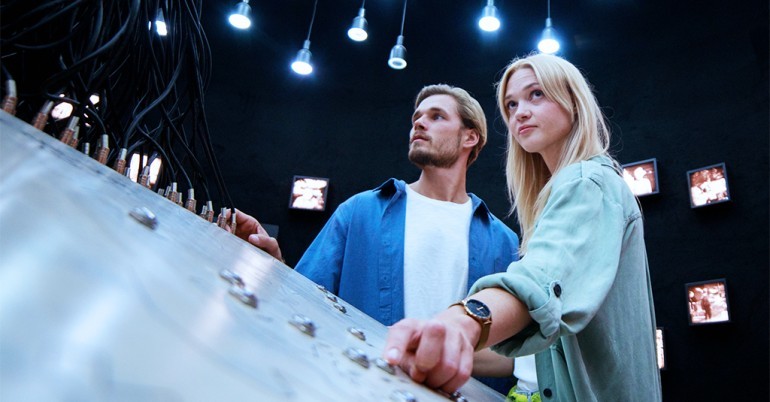
Film lovers, this one’s for you! The Europa! Film Festival is coming to Sydney and Melbourne from 12 February to 12 March, showcasing an exciting lineup of European films – including two from Estonia. To celebrate, we’re giving away 8 free tickets – all you have to do is tell us the name of your favourite Estonian movie!
We’re handing out 8 complimentary movie tickets (that’s 4 double passes – 2 per city in Sydney and Melbourne). Pretty great odds of winning, right? And let’s be honest – who doesn’t love free stuff?! (My hand is up high right now…)
How can I win?
👇 Click below and tell us: What’s your favourite Estonian film and why?
All you need to do is name your top Estonian movie and briefly explain why it floats your boat. Leave your contact details to claim your prize.
Bonus points if your reason is extra creative – we love a good story! Make it fun! Maybe the main character reminds you of yourself (always getting into mischief)? Maybe it was playing in the background during your first kiss? Or did it give you a massive life revelation? We’re all ears!
The winners will be selected at random. Each entry gets assigned an ID number, and a random number generator will pick the lucky winners. (These things are pretty cool – check this out!).
If you win, we’ll contact you using the contact details you provided, shower you with virtual confetti, and send over your free movie tickets. Then off to the cinema you go! (Bring your own popcorn.)
What will we do after?
Stay tuned – we’ll be posting a list of Estonian film recommendations based on your favourites in a separate post to inspire all! (Anonymously, of course – unless you want a shoutout, then let us know!)
Don’t miss your chance to experience the best of European cinema – especially Estonian films! Enter now!
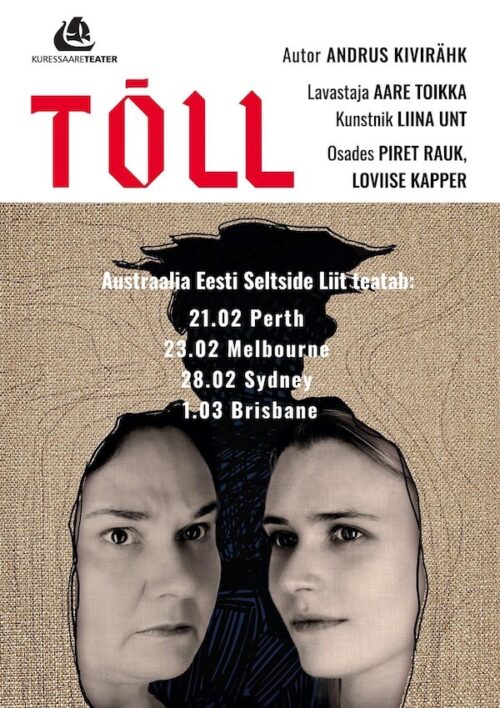
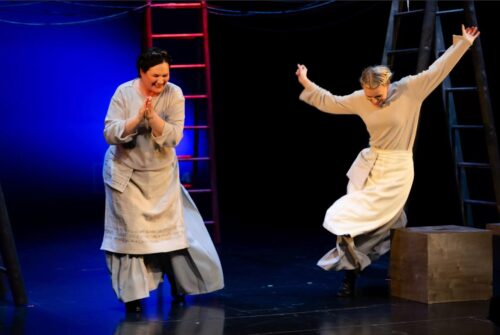
Australian audiences are in for a rare theatrical treat as the Estonian production “Tõll” sets off on a national tour this February, coinciding with celebrations of Estonian Independence Day. Touring Perth, Melbourne, Sydney and Brisbane, this captivating performance is set to be a highlight of the festivities – a fitting reminder of the creativity and resilience of Estonians everywhere.
“Tõll” is performed by the Kuressaare Theatre from the Estonian island of Saaremaa. The play explores the creation of myths and legends, drawing audiences into the mystical world of heroic tales and folklore. Bringing the magic of Estonian theatre to Perth, Melbourne, Sydney and Brisbane, this performance promises to offer an unforgettable cultural experience.
“Tõll” is inspired by the legendary Estonian giant Suur Tõll, a mythical figure from Saaremaa who was known for his superhuman strength and willingness to help those in need. Whether battling storms, overcoming famine, or defending against invaders, Tõll was a symbol of resilience and heroism. Though he remains unseen in the play, the production instead delves into how myths are born, why people believe in extraordinary beings, and how such stories shape cultural identity.
Written by renowned Estonian author Andrus Kivirähk and directed by Aare Toikka, “Tõll” features performances by Piret Rauk and Loviise Kapper, with music composed by Veiko Tubin and choreography by Marge Ehrenbusch. The play is performed in Estonian with English subtitles and runs for approximately 1 hour and 20 minutes.
Find tour dates and booking information below.
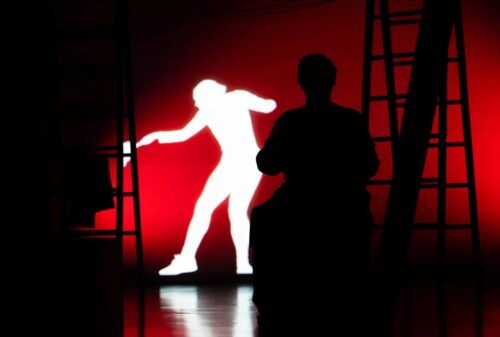
Kuressaare Theatre production “Tõll”. Photo by Gert Lutter. Source: Kuressaare Theatre.
Kuressaare Theatre production “Tõll”. Photo by Gert Lutter. Source: Kuressaare Theatre.
Perth
Theatre Night with EstWest
Date: Friday, 21 February 2025 Time: 6.00 PM Location: Jonesway Theatre, 446–448 William St, Northbridge WA 6000 Tickets: TryBooking – Perth
Dive into the world of legends and storytelling with our upcoming theatre night! EstWest invites you to experience “Tõll” by Andrus Kivirähk, a captivating exploration of how myths are born and dreams take shape. This is a great opportunity to connect with fellow Estonians, celebrate Estonian Independence Day, and enjoy the richness of our culture and stories.
Program
6.00 PM – Doors and bar open
6.25 PM – An Acknowledgment of Country
6.30 PM – Theatre play starts
8.00 PM – Theatre play ends
Guests are welcome to stay for an extra hour to socialise and enjoy good company.
Date: Sunday, 23 February 2025 Time: 2.00 PM Independence Day ceremony, 3.00 PM Theatre performance Location: Melbourne Estonian House, 43 Melville Road, Brunswick West 3055 Tickets: Humanitix – Melbourne
Come celebrateEstonian Independence Day with us! Enjoy a special ceremony at 2 PM (free event), then stay for the theatre performance “Tõll” at 3 PM (buy a ticket). Nibble on delicious free snacks, sip some coffee or buy yourself something stronger from the bar and enjoy a performance that’s larger than life – just like the elusive Tõll himself.
Program
1.30 PM – Doors and bar open
2.00 PM – Independence Day ceremony begins
Welcome – Chair of the Melbourne Estonian Society
Performance – Melbourne Estonian Ladies Choir
Speech – Estonian Ambassador to Australia, Jaan Reinhold
Award presentation – Ambassador presents recognition to Matti Kiviväli
Acknowledgements – Recognitions to the activity group leads
National Anthem – Let’s sing together!
Coffee & Conversation – Enjoy a break before the theatre performance
3.00 PM – Theatre performance “Tõll” begins
4.30 PM – Theatre performance ends, social time after, bar open
Tickets
$25 for members (buy online until 21 February) $30 for non-members (buy online until 21 February) $40 at the door (members and non-members)
Brisbane Estonian Club Independence Day celebrations & Theatre performance
Date: Saturday, 1 March 2025 Time: 5.30 PM Independence Day celebrations, 7.00 PM Theatre performance Location: Latvian House, 24 Church Avenue, Wooloongabba QLD 4102 Tickets: TryBooking – Brisbane
The Brisbane Estonian Club has a special treat for you to celebrate the Independence Day. Before the much awaited theatre performance “Tõll” begins – enjoy a dynamic performance by renowned performer and musician/drummer Jaan Kirss and daughter Helena Victoria.
Program
5.00 PM – Brisbane Estonian Society Annual General Meeting
5.30 PM – Independence Day celebrations begin
Performance by Jaan Kirss and Helena Victoria
Bar open: cold Estonian beers and Vana Tallinn cocktails on offer
Festive cake and homemade treats from generous guests
7.00 PM – Theatre performance “Tõll” starts
8.20 PM – Theatre performance ends, social time after, bar open