Saturday, May 2, 2026
16.6 C
Canberra
18.9 C
Tallinn

Opening of Elk Hunting Season – Oct 21-23, Lake Macquarie

0

20111018-082603.jpg

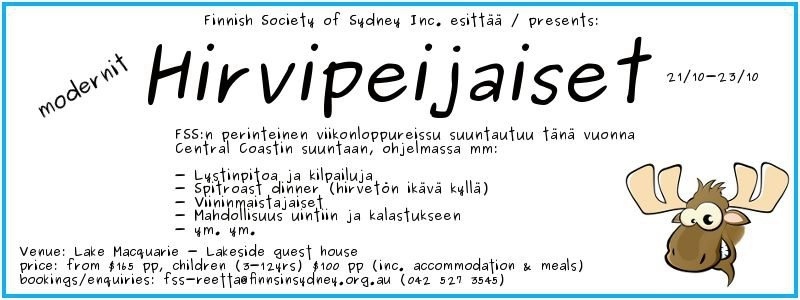
The Finnish Society of Sydney is inviting members of the Estonian Society to the traditional opening of the Elk Hunting Season, at Lake Macquarie, from 21 to 23 Oct. Only $165 per adult incl bed for 2 nights and all meals. BYO. Own transport. See facilities here…
http://www.lakesideguesthouse.com.au/Lakeside/Guest_House.html

Bookings/enquiries: fss-reetta@finnsinsydney.org.au, 0425 273 345

Lots of fun guaranteed.

E Crew presents – the International BBQ Show – Nov 5, Swan Valley, WA

0

The INTERNATIONAL GRAND BBQ SHOW 2011

5 NOVEMBER 2011

11AM-5PM

EDGECOMBE BROTHERS WINERY, SWAN VALLEY, WA

Meet three absolute masters of the bbq world – American and British BBQ Championships Grand Champion Dr. Sweetsmoke (Al Harris), Multi award winning British Grand Champion, World BBQ Finalist Mr Andy Annat and European BBQ Champion Mr Enn Tobleruts. All three guys have more than impressive resumes – they have won numerous awards, written books, worked as a judges in bbq competitions all over the world, broadcasted in different television shows, they all are working as head-chefs for different bbq brands and last but not least – Andy Annat has even catered BBQ for the Queen’s 80th birthday at Balmoral.

Starting at 11AM and running for six hours you can eat (and we mean really eat – we have more than 1 kg of food per person!!) superb bbq and grill dishes. While eating all these delicious masterpieces you are actually learning at the same time. Dr Sweetsmoke, Andy and Enn will give you loads of tips and hints for everything in regards of grilling and bbq – how to cut meats, how to choose right grill, how to create a flavoured smoke, how to grill ON the charcoal, how to smoke food in the BBQ smoker and so much more.

So – there is no need to think any further – take your friends ( or don’t take them if you want to be the only master chef among your friends) and spend a fabulous day in Swan Valley. Eat, learn and relax with Edgecombe Brothers great range of wines.

Be quick to register and grab the $99 tickets before the 1 November.

We will guarantee it will be the best BBQ experience you have ever had!

BEST OF THE BEST!

Find us in Facebook: E crew

More info: http://oznetstudio.com.au/eesti/

****

E crew – who we are?

E crew is 5 Estonians in Perth, Western Australia, who have passion for good food, grilling and Estonian customs and traditions. All that and more can be seen in our events.
In addition we take part of different festivals and fairs and our aim is to introduce Estonian food and culture to the public.
In our homepage you will find information about all our events in Perth. You can order ryebread, liver pate and rent a grill or just ask us to come and cater for your next event.
We were so desperate for proper charcoal grill, that we actually built it ourselves and now its ready to work for you!
E crew is a member of ABBQA (Australian BBQ Association) and Estonian Grilling Union!

E crew – kes me oleme?

E crew on 5 eestlast Perthis, Lääne-Austraalias, keda seob kirg hea kodumaise toidu, grillimise ning Eesti tavade ja tähtpäevade vastu. Kõike seda püüame ka oma korraldatud üritustega edasi anda.
Lisaks osaleme pidevalt erinevatel festivalidel, kus meie eesmärgiks on tutvustada Eesti toitu ja kultuuri ka laiemale avalikkusele.
Meie kodulehelt leiad Sa informatsiooni nii juba toimunud kui ka veel eesseisvate ürituste kohta Perthis. Lisaks saad tellida omale rukkileiba ja makspasteeti või kutsuda meid hoopiski oma järgmisele üritusele toitlustust korraldama/grillima.
Soov valmistada liha korralikul söegrillil oli meil lausa niivõrd suur, et ehitasime endale ise õige suure grilli, millega teid nüüd oma üritustel rõõmustada saame!
E crew on ABBQA (Australian BBQ Association) ja Eesti Grilliliidu liige!

http://oznetstudio.com.au/eesti

Estonian Folk Music Concerts – Across Australia in Nov 2011

0

Come and listen to Estonian folk music in Australia!!!

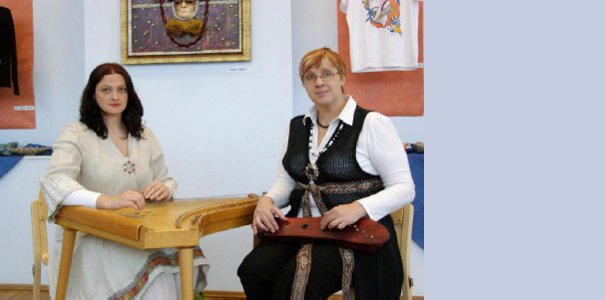
Folk music ensemble SADA will be travelling around thecities of Australia. Four fantastic musicians will introduce, during their performances, interesting folk instruments starting from the parmupill to the torupill, hiiu kannel and lõõts.
The SADA ensemble consists of folk musicians Pille Bergmann, Marju Varblane, Ruth Kuhi and Mati Viiul (concert tour project manager).

Their repertoire includes traditional folktunes as well as more current Estonian composers.

The repertoire has been selected so as to introduce the audience to various folk instruments. A few of these that the ensemble will bring to Australia are: a half-tone lyre, small six string lyre, violin, bowed harp, bagpipe, jew’s harp, diatonic accordion, triangle plus others.

Listed below are all SADA concert dates:

  •  Sydney: 11 November – 6pm, Estonian House Sydney, 141 Campbell St Surry Hills
  •  Brisbane: 13 November – 2pm, 12 Hawthorne Street, Wooloongabba
  •  Thirlmere: 18 November – 2pm, 25 Estonia Rd Thrilmere
  • Melbourne: 20 November – 1pm Cafe opens, 2pm perfromance, 43 Melville Road, Brunswick West
  • Adelaide: 26 November – 4pm, 200 Jeffcott Street North Adelaide

***

TULE KUULAMA – EESTI RAHVAMUUSIKA AUSTRAALIAS!!!

11.-26. novembrini esineb rändab mööda Austraalia linnu ringi Eesti rahvamuusika ansambel SADA. Neli vahvat pillimeest tutvustavad esinemise käigus põnevaid rahvapille, alustades parmupillist kuni torupilli, hiiu kandle ja lõõtsani välja.

SADA ansamblis esinevad rahvamuusikud Pille Bergmann, Marju Varblane, Ruth Kuhi ja Mati Viiul (kontsertturnee projektijuht).

Repertuaar hõlmab nii traditsioonilisi pillilugusid kui eesti autorite (Pärt, Eller, Tobias, Lätte jt) loomingut. Kontserdil saab kuulata muusikat arhailisest eesti rahvamuusikat kuni klassikani.

Repertuaar on valitud nii, et publikule näidata palju erinevaid eesti rahvapille. Nimetagem siin mõningad, mida ansambel Austraaliasse toob: kromaatiline (pooltoonidega) kannel, väike kuuekeelne kannel, viiul, hiiukannel (bowed harp), torupill (bagpipe), parmupillid (jew’s harp), lõõts (diatonic accordion), triangel ja muud pillid.

Lisaks kontserdile korraldab ansambel “õpitoa”, kus õpetab huvilistele pillilugusid, laule ja tantse.

Oled lahkesti oodatud osalema!

Eesti kontserdid toimuvad järgmistel kuupäevadel:

  • Sydney: 11. november
  • Brisbane: 13. november
  • Thirlmere: 18. november
  • Melbourne: 20. november
  • Adelaide: 26. november

NB, täpsem info on peatselt tulekul!

Kino @ Eesti Maja Sydney – first screening Oct 28

0

Sydney Estonian House is starting with film nights!

“Kino @ Eesti Maja Sydney” will start screening newer Estonian films on last Friday of every month at the Estonian House, Sydney. First film night takes place on the 28th of October, where two films will be screened: Monica Bravo short feature “How to Kiss a Dead Girl” and Jaak Kilmi’s and Kiur Aarma’s documentary “Disco and Atomic War”. This event is taking place thanks to Sydney Estonian Society (SES) and Siimon and Leen Rampe who are behind the idea and execution.

Aale Kask-Ong interviews the Rampes.

Where did the idea of a movie nights come from?

Siimon: The idea to show Estonian film had been floating around in our minds for about 3 years though we weren’t sure how to approach doing it. There was no Estonian film being regularly and accessibly shown in Sydney, let alone Australia.

After visiting Eesti Päevad in Adelaide last year, we noticed the gap in their program where showing film could have sat. So with that in mind, we floated the idea to run a small film festival (the Estonian Film Festival Australia – EFFA) alongside next year’s Sydney Eesti Päevad which the organising committee really jumped at.

From there, running a film night once a month on behalf of the SES became the logical way to raise money for such a film festival and allow us to build awareness of Estonian film. Hence ‘Kino @ Eesti Maja Sydney’ will now run on the last Friday of every month.

Leen: Siimon and I are both passionate film lovers and every trip to Estonia means stocking up on Estonian film. The idea to show Estonian film for a wider audience in Australia popped up in Siimon’s head already some years ago. At this stage, I hadn’t even been to Estonian House yet! But some ideas take time and then suddenly all comes together.

Now we hope that film nights will move towards a highlight of Eesti Päevad at the end of next year and to make Estonian Film Festival Australia (EFFA) – our dream come true. The ticket money of the film nights, accordingly 10$ and 7$ for SES members goes directly into budget of organizing EFFA.

What kind of movies do you plan to show?

Siimon: To begin with, it will be English sub-titled Estonian movies that are hopefully as current as possible, with as much diversity as possible be them feature films, short films or documentaries. There’s not a great deal of film that comes out of Estonia annually, but we hope to cater for everyone’s tastes somewhere during the year.

Leen: It is early days yet, but we are negotiating with producers to get the freshest Estonian films. Wouldn’t it be great if we could all see the Estonian latest and greatest right here in Sydney

So, is it a good idea to bring your Australian friends to see the movies since the language is not an issue?

Siimon: Absoluutselt! As I mentioned, ALL films that we intend to show will be with English sub-titles. We want to appeal to as many people as possible, not just our own community per se. Part of our intention is to promote Estonian culture to the broader Australian community, be it via film in this instance.

Leen: Indeed! In my mind, film like art in general is exciting because it is both unique and universal at the same time – each Estonian film reflects directly or indirectly Estonia and Estonians being unique in that way and at the same the story of a film hero is a human journey – either quest for something, finding, loosing, loving or other universal topic in this world. That is why I believe that everyone should bring a friend – both those who are born in Estonia or know a lot about Estonia and those who perhaps don’t even know where Estonia is!

The Film Festival is an expensive project. What kind of preparation work does it require?

Siimon: EFFA is shaping up to be a formidable task, especially as we are first time Film Festival Directors! It’s a steep learning curve and proving not to be as easy as just putting out some chairs and slapping on a movie, though I wish that were the case. The financial outlay to hire a cinema to show just one film for EFFA is massive in itself, let alone to run a festival of films. For our community to have its own film festival means ‘Kino’ has to be successful every month so we have the money to run EFFA. We really hope people come to see some Estonian film so we can keep showing more of it.

Leen: We plan to show the latest of Estonian film at the Estonian Film Festival Australia – both last and same year’s films and also hope to get Estonian film industry professionals to come and introduce contemporary Estonian film, would have lectures and perhaps master classes.
Preparations are being conducted in several levels – here in Australia we are looking for people who would like to participate in this exciting project and volunteer carrying out EFFA, both professionals and enthusiastic film lovers. Also we are looking for appropriate location to show the films.

On the Estonian side we are negotiating with various production companies – what films will be completed by the end of next year, how to get them to Australia, how much is it all going to cost and where to find funds to finance the project.

The first ‘Kino @ Eesti Maja Sydney’ is on Friday the 28th of October 6PM
6.30PM “How to Kiss a Dead Girl” (2009) a short film written and directed by Monica Bravo
7.30PM “Disko& Tuumasõda” (Disco and Atomic War) (2009) a documentary by Jaak Kilmi and Kiur Aarma

ALL FILMS HAVE ENGLISH SUBTITLES!

Films, where Leen Rampe has been involved in:
Australia
2009
• PEANUT- BUTTER short film (dir. Mirina Leonti) set and costume assistant
Estonia
2008
• various TV commercials (dir. Kaimar Kukk, Caviar Productions) set design
• HOW TO KISS A DEAD GIRL short film (dir. Monica Bravo, Widescreen Productions) set design
2007
• ON THE OTHER SIDE short film (dir. Samuel Jaquemin, La Voie Lactee, Average Monkey Prod.) set design (MA Graduate Work)
• Various TV commercials (dir. Veiko Õunpuu, Rain Tolk, Kuukulgur Film Prod.) set design

2006
• ETV New-years-eve on-air-show (dir. Elo Selirand, Estonian National Television) set design
• MAKSUD/TAXES political TV commercial (dir. Kaido Veermäe, Rudolf Konimois Prod) storyboard and costume design
• MAGNUS full length feature film (dir. Kadri Kõusaar, Vitamin K Film Prod.) Art Director

2004
• MALEV / MEN AT ARMS full length feature film (dir. Kaaren Kaer, Exitfilm Prod.) Set and costume design
2003
• WHATEVER, ALEKSANDER! Full length feature film (dir. Maiju Ingman, Luxfilm Prod.) Set and costume design

AALE KASK-ONG

MEIE KODU

Esto Pub Night – OktooberEST , Adelaide Oct 21

0

20111013-162911.jpg

The OktooberEST Night

We here in Adelaide have had a gentle break over the long Southern Hemisphere winter months. The former AES president and his family disappeared to Eesti and the current President also travelled to Paris and Estonia. Other member of the community have either quietly endured the long wet winter months or made short escapes to warmer pastures. Well it is difficult to keep Estonians here in Adelaide at bay for too long, Thomas Sarapuu and his team have put their heads together and created an event that I’m sure will eventually come close to matching Estovision in popularity!

The Nobility from Germany have possibly played some role in Estonian development since their involvement in our country from the early 13th century. The Estonian landscape is still filled with over 1200 manor houses, mostly German, most of which were built in the distinctive classical style with long columns and sharp roofs. Our history has had many influences, and we have grown to appreciate the best of what we have and lead the world in many areas. The next Adelaide Estonian Pub Night is the “OktooberEST Night”, we here in Adelaide have taken the “F” out of the October Fest, sent it elsewhere and hope to make it into an Australian Estonian annual event!! I’m sure the rest of Australia will catch on with this theme… It is going to happen on Friday the 21st of October at Kalev on Jeffcott here in North Adelaide.

This night is going to be one of the best yet, we have already signed the ‘Latvian Village Band’ to provide some an amazing “Umpa” style of music. They are a very experienced band established over 40 years ago and have entertained the Baltic Community here in Adelaide on numerous previous occasions.

We are also pleased to announce that our internationally acclaimed Chef Greggory is back. On this occasion he has perfected an Estonian dish that is true to the Bavarian tradition of this type of event. Tom Sarapuu’s shipment of authentic Estonian beverages from Eesti have arrived, what else could you ask for!!”

So what else could possibly create a doubt, remember our motto. Just drop in for ten minutes or stay for the evening, no booking or formal arrangements are required. You will meet friendly Estonians, enjoy a great meal, sample fantastic wines, Saku Kuld, Valge Viin and Eesti Cider. Drop in after being out elsewhere or come for the evening we will have fantastic music videos. This will be the Esto Pub Night that you will meet all of your old friends! More details can be seen at www.estopubnight.com or find us on Facebook at: http://www.facebook.com/event.php?eid=245180972185890

Richard Semenov

Job Opportunity – Estonian Executive Producer – Melbourne or Sydney

0

Estonian Executive Producer

SBS’s Audio and Language Content Division is looking for a part time Executive Producer for the Estonian Language Program.

Work Area: Audio & Language Content
Salary: Band 4: $65,973 – $71,406
Work Type: Specified Period – Part Time
Location: Melbourne, City, Sydney, Artarmon

Part time 15 hours/week, (full time equivalent salary $65,973-$71,406)

You will be responsible for creating and broadcasting audio content for the Estonian-speaking community. You’ll be required to research, write, produce, sub-edit, translate and present audio content on radio and online. The right person will be an effective communicator, with a sound knowledge and understanding of the Estonian community, culture and issues, and possess proven experience in creating innovative radio broadcasting.

You’ll need to be proficient in written and spoken Estonian and English (successful applicants will be required to pass a language assessment). A background in journalism and broadcasting is preferred. This position involves rostered shift work and successful candidates must be able to undertake shift work (which may involve early morning, evening and weekend work).

Please note that the position will be based in Melbourne or Sydney and is being offered on a 12 month contract.

Please open the attachment below to view the Selection Criteria and Duty Statement. For further information about the position please contact Maurizio Pascucci on (03) 9949 2333.

Applications for the position must be lodged online recruitment@sbs.com.au by 5 pm on 31st of October 2011.

A radio story: We are the world’s most diverse radio network. Every day we transmit close to 100 hours of local, national and international news along with a mixture of current affairs, interviews, sport, music and community information in 68 languages. We are the only radio network able to reach all Australians because we broadcast in a multitude of languages.

Find out more information or apply now for the  Estonian Executive Producer role

OTSITAKSE EESTIKEELSE RAADIOSAATE JUHTI

Mitmed on tundnud puudust eestikeelsest raadiosaatest, mis sel talvel järsku lõpetati.
Tookordsele järelpärimistele vastati SBS-st, et oktoobris kuulutatakse välja eestikeelse raadiosaate juhtiv-produtsendi ametikoht. Nüüd ongi see toimunud, nagu allpool lugeda võib.

Oleks hea, kui meie ühiskonnas leiduks inimesi, kes oleks võimelised ja sooviks seda pooleajaga kohta täita ja eestikeelsed saated jälle käima paneks. Meil on veel küllaltki palju vanemaid inimesi, kes kas silmanägemise halvenemise pärast või muudel põhjustel eestikeelset saadet meeleldi kuulaks. Samuti oleks heas eesti keeles eestiainelist saadet kasulik kuulata eesti keele õpilastel, keda praegu juba peaaegu igas suuremas eestlaste keskuses on. Sajad siin ajutiselt viibivad noored ehk kuulaks ka meeleldi kodumaad meenutavat saadet. Ja kõigile oleks kasulik kuulda kiireloomulisi kohalikke uudiseid eestlaste kokkutulekutest ja sündmustest.

Töökirjeldus ja valiku kriteeriumid on saadaval aadressidel : http://jobs.sbs.com.au/page.php?pageID=160&windowUID=0&AdvertID=129804

Teadet lugedes selgub, et peamisteks kvalifikatsioonideks on hea eesti ja inglise keele oskus, kohaliku eesti ühiskonna ja nende vajaduste tundmine, ajakirjanduslikud kogemused ning SBS-i ja riiklike nõudmiste teadmine. Kõikide kriteeriumite täitmine pole kerge, mis tähendab, et kandidaat peab nendes küsimustes end põhjalikult ette valmistama. Soovikorral võin informatsiooniotsimisel proovida aidata.
Tiiu Salasoo

EstDocs announces 2011 Short Film Competition

0

EstDocs announces 2011 Short Film Competition.
EstDocs welcomes short documentary films with the theme “eestlase rõõm” with any content and in any style, whether it be live-action or animation. That said, entries must be 7 minutes or under in length plus up to 15 seconds for credits. Click for submission guidelines, FAQs and entry form.

$2500 in prizes!

****

EstDocs kuulutab 2011 Lühifilmikonkursi avatuks – tähtaeg 27. september 2011.a. EstDocs ootab osavõtjailt lühidokumentaalfilme teemal “eestlase rõõm”. Filmi sisu ja stiil on vaba, see võib olla mänguline või joonisfilm. Esitatud filmi pikkus peab olema kuni 7 minutit, lisaks tiitrite pikkus kuni 15 sekundit. Klõpsa saamaks osavõtureglementi, KKKi ja osavõtuankeeti.

$2500 auhindadeks

For more information see the EstDocs site

Sir Arvi Parbo – Independence Day address to Melbourne Estonian House

0

Melbourne Estonian House, 20. August 2011

Sir Arvi Parbo Address

Image courtesy of the National Portrait Gallery

Sir Arvi Parbo spoke at Estonian House in Melbourne to commemorate the 20 years of Estonian Independence. The transcript of his address is below.

​I will speak first in Estonian, and then in English.

​Lugupeetud koosviibijad,

​Täna kakskümmend aastat tagasi taastati Eesti Vabariik. Seda tähistades tuletagem lühidalt meelde kuidas eestlased said iseseisvaks. Paljud meist täna siin teavad seda hästi aga aeg läheb edasi, uued põlvkonnad tulevad peale, ja mida kaugemale minevikku need sündmused jäävad seda tähtsam on et meie ajalooline mälu ei tuhmuks. Tähtpäevadel nagu täna on sobiv seda mälu värskendada.

​Arvatakse, et eestlaste esivanemad saabusid Soome lahe lõunakaldale umbes 5000 aastat tagasi. Muinasajal neil ei olnud oma riiki, aga nad elasid vabadena kuni maa vallutati pärast kakskümmend aastat kestnud vastupanu 13. sajandi algusel ristiusu toojate poolt. Järgnes seitsesada aastat võõraste valitsejate all. Mitmed ülestõusud järgmiste sajandite jooksul olid ebaedukad, aga vabaduse tahe ei kadunud.

Esimese Maailmasõja lõpul olid mitmed suured maailmariigid lagunemas, mille üheks tagajärjeks oli nende osadest rahvusriikide tekkimine. Venemaa, mille ülemvõimu all eestlased olid olnud kakssada aastat, oli revolutsiooni ja kodusõja keerises. Eesti rahvuslik juhtkond kasutas lühikest aega enne maa Saksa vägede poolt okupeerimist veebruaris 1918 iseseisva Eesti Vabariigi välja kuulutamiseks.

Lääneriikide aktiivne vastuseis enamlaste revolutsioonile Venemaal aitas tugevalt kaasa järgneva Vabadussõja võitmiseks. Inglismaa, Prantsusmaa ja Itaalia tunnustasid Eesti Vabariiki, Inglismaa varustas vastmoodustatud Eesti sõjaväge relvadega ja nende laevastik kindlustas Eesti rannikut.

Vabadussõda lõppes Tartu rahulepinguga aastal 1920 milles kommunistlik Venemaa, hiljem Nõukogude Liiduks nimetatud, loobus ‘vabatahtlikult ning igaveseks ajaks kõigist õigustest mis olid Venemaal Eesti rahva ja maa kohta’. Sellest hoolimata toimus juba detsembris 1924 kommunistlik relvastatud mässukatse Eesti Vabariigi kukutamiseks, mis aga ebaõnnestus.

Lepingute ja lubaduste murdmine jätkus. Mais 1932 sõlmis Eesti Vabariik Nõukogude Liiduga kümneks aastaks mittekallaletungi lepingu, mis hiljem pikendati 1945. aasta lõpuni. Aga juba augustis 1939 jagasid Saksamaa ja Nõukogude Liit kurikuulsa Molotov-Ribbentropi pakti salajases osas omavahel Poola ja Baltimaad. Viimased jäid Nõukogude mõjusfääri. Septembris alguses Saksamaa ja siis Nõukogude Liit ründasid Poolat ja okupeerisid selle. Ähvardustega suruti Eestile, Lätile ja Leedule peale niinimetatud vastastikused abistamispaktid ja Nõukogude sõjaväe baasid, lubades aga mitte sekkuda nende riikide siseasjadesse. Mõni kuu hiljem, juunis 1940, õnnitles Stalin Hitlerit tema võidu puhul Prantsusmaa üle, marssis Baltimaadele sisse ja annekteeris need.

Nagu teame, ei kestnud Stalini ja Hitleri sõprus kaua. Aasta hiljem ründas Hitler Nõukogude Liitu ja Eesti okupeeriti Saksamaa poolt. Katse iseseisvust taastada Saksa vägede taandumisel septembris 1944 ei õnnestunud ja Eesti jäi peaaegu pooleks sajandiks teise Nõukogude okupatsiooni alla.

Augustis 1991 oli jälle ajalooline moment kus tekkis erakordselt soodus olukord iseseisvuse taastamiseks. Nõukogude Liit oli lagunemas. Ameerika Ühendriigid, Suurbritannia, ja teised lääneriigid polnud Baltimaade annektsiooni Nõukogude Liidu poolt tunnustanud. Välismaale jäänud Eesti Vabariigi esinduste ja Nõukogude teise okupatsiooni eest läände põgenenud eestlaste poolt oli okupatsiooni ebaseaduslikkus ja eestlaste vabadustahe pidevalt vaba maailma silmade ees hoitud ja seal tugevat poolehoidu leidnud. Nii nagu seitsekümmend kolm aastat varem, kasutati otsutavalt ja julgelt võimalust iseseisvuse ja Eesti Vabariigi taastamiseks. Tolleaegse Nõukogude Eesti Ülemnõukogu vastavat deklaratsiooni 20. augustil 1991 toetas kodu- ja välismaal elavatest endise Eesti Vabariigi kodanikest ja nende järeltulejatest koosnev Eesti Kongress.

Paljud riigid, Islandiga eesotsas, tunnustasid seda järgnevatel päevadel, nende hulgas Austraalia 27. augustil, ja veidi hiljem ka Vene Föderatsioon ja siis veel tegutsev Nõukogude Liit.

Eesti, Läti ja Leedu võeti septembris 1991 Ühendatud Rahvaste Organisatsiooni liikmeteks vastu ilma hääletuseta, tugeva aplausi saatel. Täna on Eesti peale selle veel Euroopa Liidu, Põhja-Atlandi Lepingu Organisatsiooni ja paljude muude rahvusvaheliste organisatsioonide liige, edukas ja lugupeetud demokraatlik riik , nagu ta oli varemgi.

Täna oleme vaba ja iseseisev, aga see ei tähenda et tulevik on nüüd kindlustatud. Vabaduse hoidmiseks tuleb pidevalt valvel olla. Meie kõige mõjuvam abinõu selleks on maailma avalik arvamine. Nii iseseisvuse saavutamisel kui ka selle taastamisel oli suur abi vaba maailma poolehoiust ja toetusest. Oma iseseisvust ja vabadust hoiame ja kindlustame kõige paremini sellega, et tegutseme ja käitume riigina, rahvana, ja ka üksikisikutena selliselt, et teenime maailma lugupidamise.

Mitmel viisil olemegi seda saavutanud. Eesti heliloojad ja muusika on maailmakuulsad, sportlased on tuntud maailma spordiareenidel, ja meie laulupeod on laialdast imetlust äratanud. Ehkki meil on omavahel küllalt lahkarvamisi nagu igas demokraatlikus riigis, pole me unustanud kuidas raskustele näkku vaadata ja tähtsates asjades kainelt ning vastutustundlikult käituda. Üks näidis on see, et praegu kui peaaegu kogu läänemaailm, isegi Ameerika Ühendriigid, ja Jaapan ägavad liigsete riigivõlgade ja eelarvepuudujääkide all, on Eesti üks vähestest maadest mis selle all ei kannata. Valitsus mis pidi selle saavutamiseks karme ja ebameeldivaid samme astuma valiti endisest suurema enamusega tagasi. Hiljuti, samal ajal kui Ameerika Ühendriikide krediidireiting alandati, tõsteti Eesti reitingut.

Lugupeetud koosviibijad, muistses vabadusvõitluses ristirüütlite ja teiste pealetungijate vastu ja vabaduse kaotusele järgenud ülestõusmistes järgmiste sajandite jooksul langes palju meie esivanemaid. Vabadussõjas langenutele on hilisema pool sajandit kestnud okupatsiooni ajal lisandunud, nii okupantide vägivalla läbi kui ka võitlustes pealetungijatega, veel kümneid tuhandeid inimkaotusi, mehi, naisi ja lapsi. Paljud nendest on teadmata ja nimedeta haudades. Iseseisvuse taastamine augustis 1991 ei nõudnud õnneks nendel päevadel inimohvreid, aga Eesti rahvas on ajaloo jooksul oma vabaduse eest kõrget hinda maksnud.

​Tähistame iseseisvuse taastamise kahekümnendat aastapäeva teadmises, et ehkki raskusi on palju, Eesti Vabariik on teel ôiges suunas. Austame ja mäletame neid nii kodu- kui ka välismaal kes meie muistsete esivanemate ja hilisemate iseseisvuse loojate pärandi vääriliselt vabaduse ideed poole sajandilise okupatsiooni ajal üleval hoidsid, selle eest vôitlesid, kannatasid ja langesid, ja kes vôimalust iseseisvuse taastamiseks 20. augustil 1991 julgelt ja otsustavalt kasutasid. Soovime ônne ja jôudu kôigile, kes viimase kahekümne aasta jooksul on Eesti parema tuleviku heaks töötanud, ja kes seda tööd jätkavad.

​Soovime Eesti Vabariigile ja kôigile kaasmaalastele edu ja kôike head tulevikus.

​May I now repeat my comments in English.

​The Republic of Estonia was restored twenty years ago today. Commemorating this, let us briefly recall how Estonians became independent. Many of us here today know it well but time passes, new generations take over, and the more distant these events become the more important it is that our historical memory does not fade. Occasions such as today’s are fitting for refreshing this memory.

​The ancestors of the Estonians are thought to have arrived at the southern coast of the Finnish Gulf some 5,000 years ago. In ancient times they did not have a national structure but lived as free people until they were conquered after twenty years of resistance at the beginning of the 13th century by Christianising crusaders. For the next seven hundred years they were under foreign overlords. A number of uprisings during the following centuries were unsuccessful, but the desire for freedom was not lost.

​At the end of World War I a number of large empires were breaking up, one result of which was the emergence of nation states from parts of them. In Russia, under which the Estonians had been for two hundred years, there was revolution and civil war. Estonian national leaders used the short time before the country was occupied by German forces in February 1918 to declare an independent Republic of Estonia.

​The active opposition of the western countries to the bolshevik revolution in Russia helped greatly in winning the War of Independence which followed. Britain, France and Italy recognised the Republic of Estonia, Britain supplied armaments to the newly created Estonian armed forces, and the British navy guarded the Estonian coast.

​The War of Independence ended with the Peace Treaty of Tartu in 1920 in which communist Russia, later renamed the Soviet Union, solemnly pledged to ‘unreservedly recognise the independence of Estonia and renounce voluntarily and forever every sovereign right Russia has ever had on the Estonian land and people’. In spite of this, there was already in December 1924 an armed communist attempt to seize power in the Republic of Estonia which was, however, unsuccessful.

​The breaking of agreements and promises continued. In May 1932 the Republic of Estonia and the Soviet Union concluded for ten years a non-aggression pact, later extended to the end of 1945. But already in August 1939 Germany and the Soviet Union divided in the secret part of the infamous Molotov-Ribbentrop Pact Poland and the Baltic States between them, the latter left in the sphere of influence of the Soviet Union. In September first Germany and then the Soviet Union attacked Poland and occupied it. So-called mutual cooperation treaties and Soviet military bases were forced with threats on Estonia, Latvia and Lithuania, although with promises not to become involved in the internal affairs of these States. Some months later, in June 1940, Stalin congratulated Hitler on his victory over France, marched into the Baltic States, and annexed these.

​As we know, the friendship of Stalin and Hitler did not last long. A year later Hitler attacked the Soviet Union and Estonia was occupied by Germany. An attempt to restore the independence when German forces retreated in September 1944 did not succeed and Estonia remained for nearly half a century under the second Soviet occupation.

​In August 1991 there was again a historic moment when there was an extraordinarily favourable situation for restoring the independence. The Soviet Union was breaking up. United States of America, Great Britain, and other western countries had not recognised the annexation of the Baltic States by the Soviet Union. Representatives of the Republic of Estonia who had remained abroad and Estonians who had escaped to the west ahead of the second occupation by the Soviet Union had kept the illegality of the occupation and the desire of Estonians for freedom before the free world, and found strong support. Similarly to seventy three years earlier, determined and bold use was made of the opportunity to restore the Republic of Estonia. The appropriate declaration by the then Estonian Supreme Soviet on 20 August 1991 was supported by the Estonian Congress, consisting of citizens of the original Republic of Estonia and their successors at home and abroad.

​Many countries, led by Iceland, recognised this in the following days, including Australia on 27 August, and a little later also the Russian Federation and the then still existing Soviet Union.

​Estonia, Latvia and Lithuania were in September 1991 admitted as members of the United Nations unanimously, without voting, and accompanied by strong applause. Today Estonia is in addition a member of the European Union, NATO, and many other international organisations, a successful and respected democratic country, as it had been earlier.

​Today we are independent, but this does not mean that the future is now assured. One has to remain continually alert to maintain freedom. Our most effective means for this is world opinion. The support and assistance of the free world was of great help, both in achieving independence and in restoring it. We can best maintain and secure our independence by acting and behaving as a State, as a nation, and as individuals so as to earn the respect of the world.

​In various ways this is being achieved. Estonian composers and music are world famous, sportsmen and -women are known in world arenas, and the national singing festivals are widely admired. Although there are many disagreements among ourselves, as there are in any democratic country, we have not forgotten how to face adversity and how to behave soberly and responsibly in important matters. One example of this is that, while almost the whole western world, even the United States of America, and Japan groan under excessive government debt and budget deficits, Estonia is one of the few countries not to suffer from this. The Government which had to introduce austerity measures and take unpleasant steps to achieve this was re-elected with an increased majority. Recently, while the credit rating of the United States of America was reduced, the rating of Estonia was increased.

​Ladies and gentlemen, many of our ancestors fell in the battles against the crusaders and other aggressors and in the uprisings during the centuries following the loss of ancient freedom. To the fallen in the War of Independence were later added during the nearly half a century of occupations, by the hand of the occupiers and in fighting against them, tens of thousands of human losses, men, women, and children. Many of them are in nameless graves. The restoration of the independence in August 1991 fortunately did not involve loss of life, but during their history the Estonian people have paid a high price for their freedom.

​We commemorate the twentieth anniversary of the restoration of independence in the knowledge that, although there are many difficulties, the Republic of Estonia is proceeding in the right direction. We honour and remember all those in Estonia and abroad who, worthy of the inheritance of our distant ancestors and those who later established our independence, kept alive the desire for freedom during a half a century of occupation, fought, suffered and fell for it, and those who boldly and decisively used the opportunity to restore independence on 20 August 1991. We congratulate and thank all those who during the last twenty years have worked for a better future for Estonia, and who are continuing to do so.

​We wish the Republic of Estonia and all Estonians success and the very best in the future.

LOGO for the XXIV Estonian Festival

0


The Committee of the XXIV Estonian Festival in Australia hereby announces a competition for a design for a

LOGO for the XXIV Estonian Festival


The logo shall include the following information:

„XXIV EESTI PÄEVAD SYDNEY 2012″


The logo should reflect aspects of Estonian cultural heritage, it must be suitable for reproduction as a lapel pin as well as for use in general advertisements and letterheads.


The size of the design should be about 10 cm.


The designs will be judged by a panel selected by the Festival Committee and will become the property of the Estonian Festival Committee. The winner will receive $ 200.00. The designs must be sent in an envelope bearing a pseudonym, together with a sealed envelope giving the author’s name and address.


The designs must be forwarded by September 20, 2011 and posted to: „Eesti Päevade märk” PO Box 147, Darlinghurst NSW 1300.

ANNUAL BALTIC GAMES VOLLEYBALL AND BASKETBALL

0

ANNUAL BALTIC GAMES VOLLEYBALL AND BASKETBALL

The annual friendship games will be played on Saturday 17th Sept 2011, Starting from 10 am, at Bankstown Basketball Stadium, Third Ave, Condell Park

Baltic Games 2011

Baltic Ball, Sat 13 August 2011 – Sydney

0

Baltic Ball - 13th of August 2011

The Baltic “Black & White”  Ball will be held on Saturday, 13 August 2011 at 7pm a the Lithuanian Club.  There will be a welcoming drink and European antipasto on arrival, a delicious three-course meal, live band and raffle. Drinks can be purchased at the bar. Free street parking available.

When

Saturday August 13th, 2011
From 7pm

Where

The Lithuanian Club
16-20 Meredith Street
Bankstown 2200, at 7.00 p.m. till late.

Tickets

Tickets are $50/head (young children free) and can be ordered on (02) 9708 1414 or (02) 9412 4540
E-mail: contactus@lithuanianclub.org.au
Cheques can be made out to The Lithuanian Club and posted to the above address.

World premiere of Tüür’s new work “Flamma”, Australian Chamber Orchestra – Nov 2011 Australia wide

0

The Australian Chamber Orchestra will perform new work by Estonian composer Erkki-Sven Tüür on a 9 date tour across Australia, including Canberra., Melbourne, Perth and Sydney.

Ticket bookings

Find out more information at the Australian Chamber Orchestra website, or book tickets directly here: Australian Chamber Orchestra ticket bookings

Beethoven Pastoral

TÜÜR New Work (World Premiere)
WIENIAWSKI Violin Concerto No.2
BEETHOVEN Symphony No.6, “Pastoral”

Richard Tognetti Artistic Director and Lead Violin

The most unashamedly beautiful of Beethoven’s symphonies, perfect for the sweet, burnished sound of the ACO strings, the radiant Pastoral swirls with the sounds of bucolic breezes, brooks, birds and storms.

Richard Tognetti performs the quintessential Romantic violin concerto, full of dazzling technique, lush harmonies and swooning melodies. Critically acclaimed as “inspired, compelling”, Tüür’s music for the ACO is both clever and moving.

Concert Dates:

Canberra
  • Sat 5 Nov, 8:00 PM – Canberra Llewellyn Hall, ANU, Canberra
Melbourne
  • Sun 6 Nov, 2:30 PM – Melbourne Town Hall, Melbourne
  • Mon 7 Nov, 8:00 PM – Melbourne Town Hall, Melbourne
Perth
  • Wed 9 Nov, 7:30 PM – Perth Concert Hall, Perth
Sydney
  • Sun 13 Nov, 2:00 PM – Sydney Opera House, Sydney
  • Tue 15 Nov, 8:00 PM – Sydney – City Recital Hall Angel Place, Sydney
  • Wed 16 Nov, 7:00 PM – Sydney – City Recital Hall Angel Place, Sydney
  • Sat 19 Nov, 7:00 PM – Sydney – City Recital Hall Angel Place, Sydney
Brisbane
  • Fri 18 Nov, 8:00 PM – Brisbane – QPAC Concert Hall, Brisbane
    • Critics about Tüür’s previous work for ACO:

      As part of its nationwide Rapture tour, the Australian Chamber Orchestra explores, through collaboration with Lacey, the scope of the recorder’s versatility across genres and eras. Traversing the pristine, rapid solo passages of a Telemann concerto, ACO arrives at the more volatile sound worlds of newly commissioned works by Estonian composer Erkki-Sven Tüür (b. 1959) and Perth-based James Ledger (b. 1966). The program concludes with a lush string orchestra arrangement (sans recorder) of Verdi’s String Quartet in E minor, perhaps an odd addition but not without musical antecedents to the sweeping romanticism found in Tüür’s offering.

      Erkki-Sven Tüür often draws inspiration for his work from landscapes in which he perceives ‘the presence of both movement and stillness.’ Whistles and Whispers from Uluru (2007) combines the rich birdsong of the composer’s native surrounds (the Baltic Sea) with the hum of a starkly different environment: that of the Australian desert.
      Tüür is not the first European composer to be taken with this country’s flora and fauna: Messiaen was famously entranced by lyrebird song during his excursion to the Brindabella Ranges in Canberra. Whistles and Whispers opens with similarly ecstatic, birdlike swoops and flourishes from the sopranino recorder, melting microtonally into a dialogue of crisp string pizzicato and shimmering chords described by the composer as ‘soundclouds’. Tüür’s atmospheric use of strings is not far removed from the glassy violin harmonics in the music of countryman Arvo Pärt, but, instead of eerie austerity, he achieves a charged, gestural drama. It is as if each sustained chord represents the composer’s view of the imposing rock formation from a new and humbling angle.

      This sense of awe and discovery is echoed by forays into the recorder’s arsenal of extended techniques (eg. multiphonics, twin recorders). The piece moves gradually through the recorder family, reaching its climax on a large tenor played like a shakuhachi to evoke the dry desert wind. Finally, Lacey retreats symmetrically through various instrument sizes and tessituras to return to the original sopranino, as if Tüür had pressed the rewind button on evolution.
      Resonate Magazine, 19.12.07, Melissa Lesnie

      The appearance of any new work by leading Estonian composer Erkki-Sven Tuur should be an international event. Commissioned by a generous ACO patron in Perth, Peter Dawson, Whistles and Whispers from Uluru inhabited two worlds, the natural soundscape alongside more contemporary dimensions. For an unsettling 16 minutes, Tuur’s subtle imagination veered between fascination and trepidation.
      The Australian

      Erkki-Sven Tüür’s Whistles and Whispers from Uluru, is a musical tribute to Australia. Music of shifting tonalities and rhythmic changes, of whispering bird-like suggestions and sounds standing in space, it effectively uses multiple recorders in solo from the highest in register to the lowest. It was realised in a performance of assumed brilliance from the soloist, with firmly shaped support.
      W.L. Hoffmann, Canberra Times (7 November 2007)

      Estonian composer Erkki-Sven Tüür’s Whistles and Whispers from Uluru began suggestively enough with Lacey’s sopranino instrument imitating bird twitterings before moving into more solid territory, the soloist working through the work with a full range of recorders from soprano to bass and back again. Like the Ledger piece, this also invited the listener to watch out for changing textures, the orchestra underpinning their soloist with impressively unpredictable textures that served as a meleonic foil for Lacey’s conscientious delineation of a taxing, rapidly moving dominant thread in this intriguing piece.
      Clive O’Connell, The Age (8 November 2007)