


Dear Fellow Estonians in Australia,
As autumn descends upon Australia and the first signs of spring emerge in Estonia—despite the temperamental weather—this season brings with it a period of intense activity and renewed purpose on both sides of the world.
The beginning of the year has introduced new dynamics both domestically in Australia, where the federal election campaign is gathering momentum, and globally, where the international landscape continues to be shaped by a series of complex crises. These include the ongoing war of aggression by Russia in Ukraine, China’s increasing assertiveness in the Asia-Pacific region, and evolving trends in transatlantic relations.
Estonia and Australia have long shared a close alignment in their foreign policy outlooks, driven by a mutual commitment to upholding the rules-based international order and the security architecture that has underpinned global stability for the past eight decades. This shared understanding was further reaffirmed at the Senior Officials’ consultations held in Tallinn at the end of March, where mutual interests were confirmed, and future directions for cooperation were set in navigating the challenges ahead.

A reminder of the complexity of modern hybrid threats came on Christmas Day last year, when the oil tanker Eagle S, sailing under the flag of the Cook Islands, damaged the Estlink 2 submarine power cable between Estonia and Finland. This incident underscored the vulnerabilities associated with critical infrastructure and the increasingly blurred lines between conventional and non-conventional threats. In response, the Embassy initiated a broader dialogue with Australian counterparts on safeguarding subsea infrastructure and mitigating related risks. While the incident had a short-term effect on electricity pricing in Estonia, it did not compromise energy security. Importantly, in February this year, the Baltic states completed their desynchronisation from the Russian electricity grid—an act likened to the withdrawal of Soviet army forces three decades ago. Our energy system is now fully independent and self-sufficient. Nevertheless, the Eagle S incident illustrated the interconnectedness of crises and the global imperative to cooperate on the protection of undersea cables—both in the Baltic Sea and off the coast of Australia. I am pleased to note that information exchange and dialogue between Estonia and Australia on this matter have been active and productive in recent months.
Regrettably, for the past three years, 24 February has also marked the beginning of Russia’s unprovoked aggression against Ukraine. This sombre anniversary inevitably casts a shadow over our national day celebrations, while also reinforcing the critical importance of independence and the shared responsibility to defend it. Estonia continues to stand firmly with Ukraine, which is sacrificing immensely in its defence of not only its own sovereignty but also the broader cause of a just international order. Estonia remains the leading contributor to Ukraine on a per capita basis, and Australia, notably, stands among the foremost non-NATO supporters. I would like to thank all Estonians across Australia who participated in rallies supporting Ukraine and condemning Russian aggression. In Canberra, with the support of Senators Debbie O’Neill and Linda Reynolds, we hosted a parliamentary roundtable on Ukraine, where I joined my colleagues from Latvia, Lithuania, and Ukraine in expressing collective solidarity. This initiative was warmly received by Australian Members of Parliament and representatives of the government. On 24 February, I also took part in a diplomatic memorial service at the Ukrainian church in Canberra.

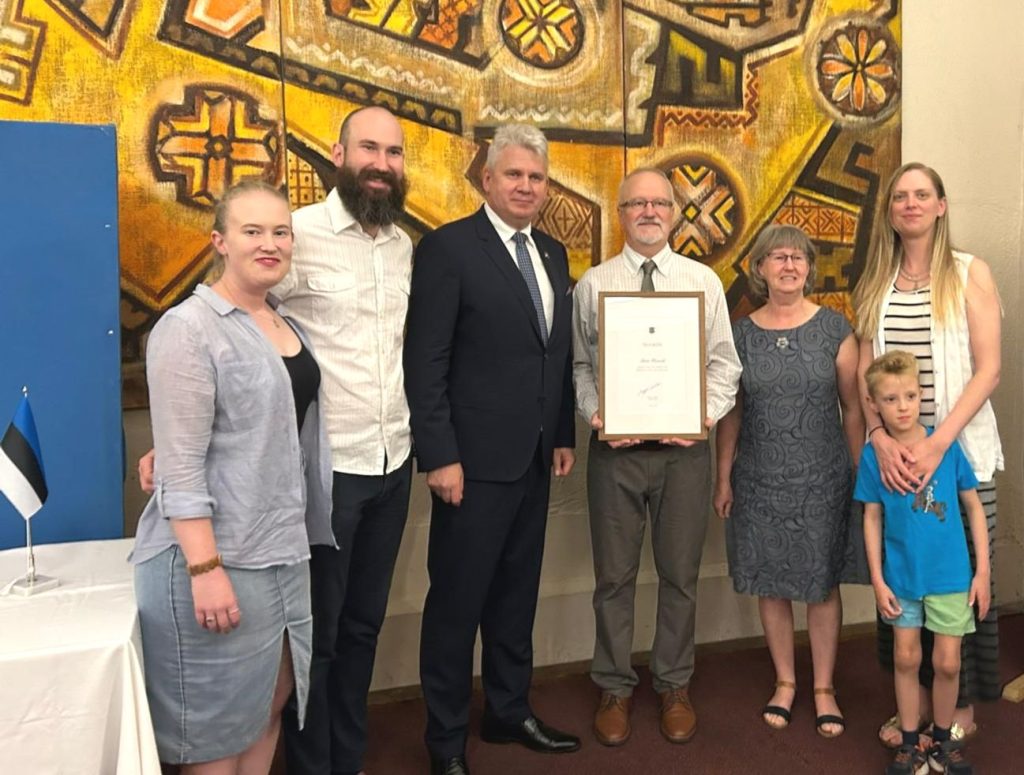
February is a month of national significance for Estonians, as we mark the anniversary of the Republic of Estonia. In celebration, the Embassy hosted a reception in Canberra for the Estonian community and friends of Estonia, providing a welcome opportunity to reconnect with familiar faces and forge new friendships. I am sincerely grateful to the Estonian community organisations across Australia for their invitations to participate in their festivities. Regrettably, due to time constraints and travel requirements, I was unable to attend more than one. However, I had the pleasure of celebrating the anniversary in Melbourne, where I had the opportunity to meet the local community and present a Certificate of Appreciation from Estonia’s Minister of Foreign Affairs to Mr Matti Kiviväli in recognition of his longstanding commitment to preserving the Melbourne Estonian House. I was also delighted to attend a performance of Tõll, a stage production by Andrus Kivirähk, brought to Australia by a talented team of visiting Estonian actors. I am glad that the production was staged in multiple cities across Australia and hope that such cultural exchanges will continue and flourish. I extend my sincere thanks to all those who contributed to the success of Tõll’s tour in Australia.
In terms of consular work, the Embassy has been actively conducting missions throughout the region. This year, we have already held missions in Wellington and Auckland in February and in Sydney at the end of March. Our next consular mission will take place in Brisbane in May, and we plan to continue these visits regularly to ensure that Estonian citizens have consistent and convenient access to consular services. Many public services related to document applications have also moved online, significantly reducing the need for in-person visits to the Embassy or Honorary Consuls.
We will continue to develop these digital solutions and will inform the community of further updates in due course. I would also like to express heartfelt thanks to Mr Lembit Marder, our long-serving Honorary Consul in Melbourne and the state of Victoria, who retired from his post on 25 February. He was awarded a Certificate of Appreciation from the Estonian Foreign Minister in recognition of his exemplary service. During the interim period, consular duties in Melbourne will continue to be ably handled by Mrs Bernadette Pilli, whose dedication and professionalism are greatly appreciated.

It is also encouraging to witness the continued vitality of the Estonian diaspora in Australia. We are pleased to see progress in the renovation plans of the Sydney Estonian House and wish to commend Mr Hillar Ranniko, Mr Grahame Reinthal, and all those who are contributing to this important initiative. Everything that Estonians have built in Australia is worthy of preservation. I would also like to extend a call to those in possession of materials, artworks, or memorabilia related to Estonia and the Estonian-Australian community: please let us know about them. By documenting and displaying these valuable items, we can ensure that younger generations of Estonians have the opportunity to connect with their roots via this heritage, understand their cultural legacy, and contribute to its preservation. Visiting the Sõrve youth camp earlier this year, I was moved by the enthusiasm of young participants engaging with the Estonian language and traditions. And during a recent visit to Thirlmere, I was reminded of the deep historical roots of the Estonian community in Australia. My sincere thanks to Mrs Krista Ford and her family, as well as Mr Mart Rampe, for their warm welcome and for facilitating my visit.

Much work has been happening behind the scenes with the Australian Estonian Media Project and the website eesti.org.au. It’s great to see so many Estonian organisations and groups promoting and keeping our Estonian culture alive. I would like to encourage all organisations to share their details so you can be part of the new website launch. You can list your organisation by filling out this online form, https://wkf.ms/3XOwC3F
Finally, I would like to extend warm congratulations to the Estonian cultural groups in Australia who have successfully qualified to participate in the XXVIII Song and XXI Dance Celebration in Tallinn this July. I thank all the singers and dancers involved—and especially the leaders of these groups—for their tireless dedication to preserving and promoting Estonian cultural heritage abroad.
This year’s festival, titled “Iseoma” (“Our Own”), serves as a poignant reminder of the uniqueness of our culture and the importance of carrying forward what is inherently and distinctly Estonian. Through music, dance, and tradition, we continue to celebrate and share what it means to be part of our remarkable nation.
With best wishes,
Jaan Reinhold
Ambassador of Estonia to Australia

