

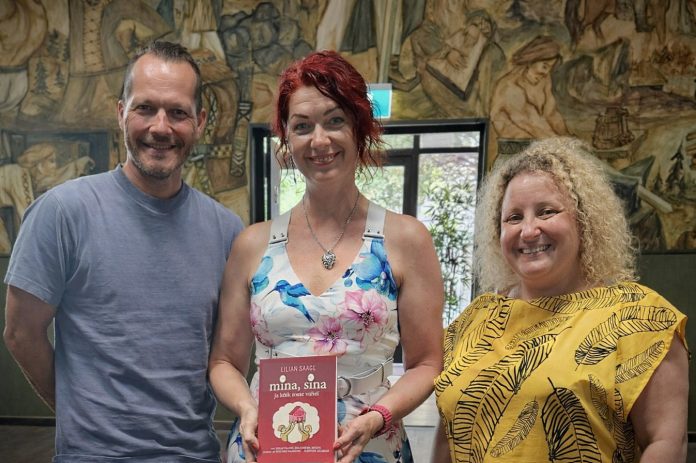
On 1 February 2026 at the Sydney Estonian House (and on Zoom), Lilian Saage invited us into an honest Sunday conversation — this is what stayed with us after the coffee cooled.
And then, on a warm Sydney Sunday morning — with others listening in via Zoom — Lilian did exactly that. Not loudly. Not dramatically. Just calmly, thoughtfully, and with a kind of honesty that makes you sit up straighter in your chair and really pay attention.
Lilian spoke, we listened. We asked questions and shared our own relationship stories. We took notes and quietly wished someone had taught us all this in high school.
By the end of the morning, many of us had realised something gently confronting: we don’t sabotage our relationships because we’re bad at love. We do it because we’re exhausted, under-fuelled, over-committed, and running on emotional fumes. Sometimes, we just don’t know better. Which is… relatable.
Relationships aren’t optional — even if romance is.
One of the first myths gently dismantled was the idea that relationships are a nice-to-have.
Romantic partnership? Optional.
Human connection? Not negotiable.
We can be fine without a romantic partner, but as social creatures, we don’t survive long without someone — someone who knows us, witnesses us, and occasionally reminds us that coffee is not a food group.
We need meaningful human connection. Life companions. And no — relationships aren’t a side hobby. They’re the operating system.
We each carry an invisible backpack, lovingly packed by our families.
We arrive in adulthood carrying generations with us — parents, grandparents, great-grandparents — along with love, values and survival strategies… and a few deeply ingrained patterns we didn’t consciously agree to. Some families teach women to carry everything (and everyone), men to work hard and feel very little, and emotions to be managed later — or never.
You can’t throw the backpack away. But you can open it, look inside, and decide what still belongs. Do I want to continue this — or do I choose differently?
Progress, it turns out, looks a lot like unpacking. And that knowledge, Lilian reminded us, is power.
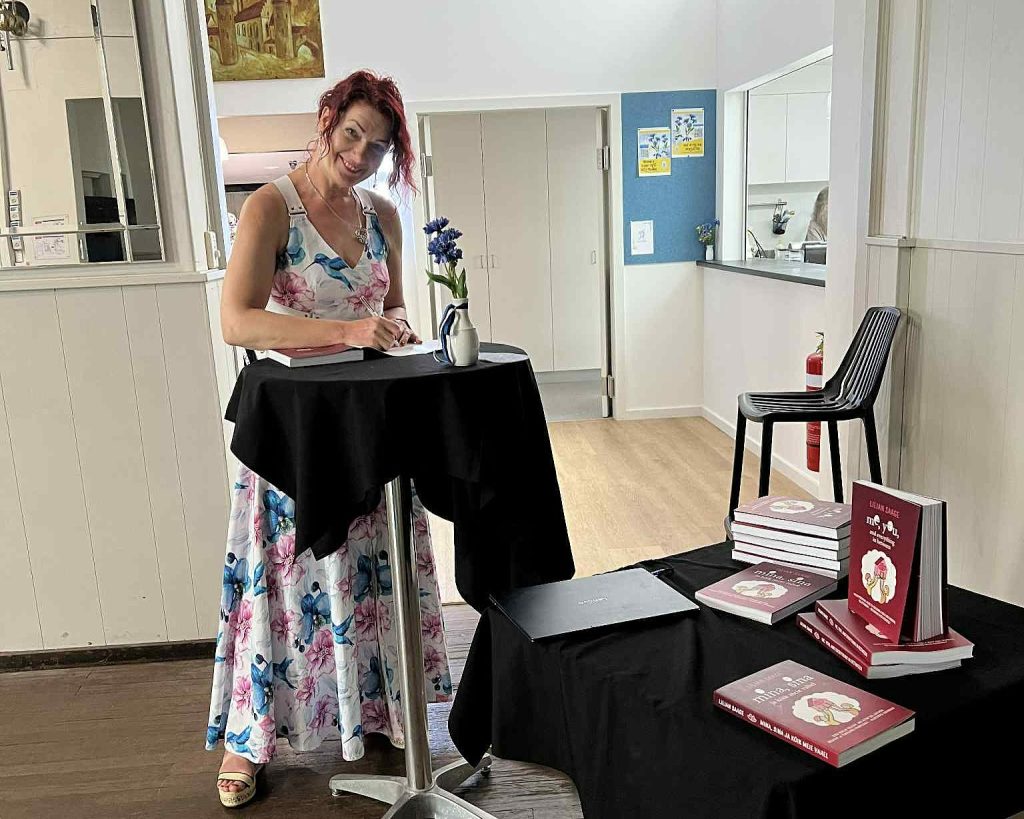
Our relationship with ourselves is the most important relationship of all — and a key factor in how our other relationships unfold.
Lilian offered a self-check — deceptively simple, like all honest questions tend to be. If you’re ready to be honest, this test will tell you a lot.
How well are you taking care of yourself today? Rate each on a scale of 1 to 5:
- Sleep and recovery – Do you wake up rested… or already irritated?
- Food and presence – Are you feeding your body like it matters, or like it’s a rubbish bin?
- Movement – Are you moving enough for your heart and muscles, not just your step counter?
- Work boundaries – Does work stay at work, or move in rent-free?
- Energy after work – When the day ends, do you have energy for life — or only the couch?
Lower scores simply signal that your energy reserves may be stretched and that this could be a good moment to pause, be kind to yourself, and consider what support or small adjustments might help.
Important note: if you don’t want to make decisions based on the answers — skip the test. (Just like you shouldn’t step on the scale if you plan to ignore it completely.) Awareness without action is just information. Sometimes useful. Often annoying — especially when it brings its best friends, Shame and Blame, along to the party.
Burnout doesn’t knock — it creeps and impacts our relationships.
Burnout affects many, builds slowly, and impacts deeply. It doesn’t happen because you’re weak, lazy, or doing life wrong. Lilian reminded us that burnout happens because you’ve been giving more energy than you have — for too long. To work. To kids. To everyone else. Forgetting yourself, arguably the most important person in your life.
Empathy doesn’t disappear because you’re a bad person. It disappears because you’re exhausted. And once energy is gone, relationships quietly take the hit — not out of cruelty, but depletion.
This was one of those deep-exhale moments in the room.
When burnout knocks, the most important question isn’t “How bad is it?” It’s this: What is one small thing I can do differently today to take better care of myself?
Why not ask yourself that now — regardless of where you land on the scale today.
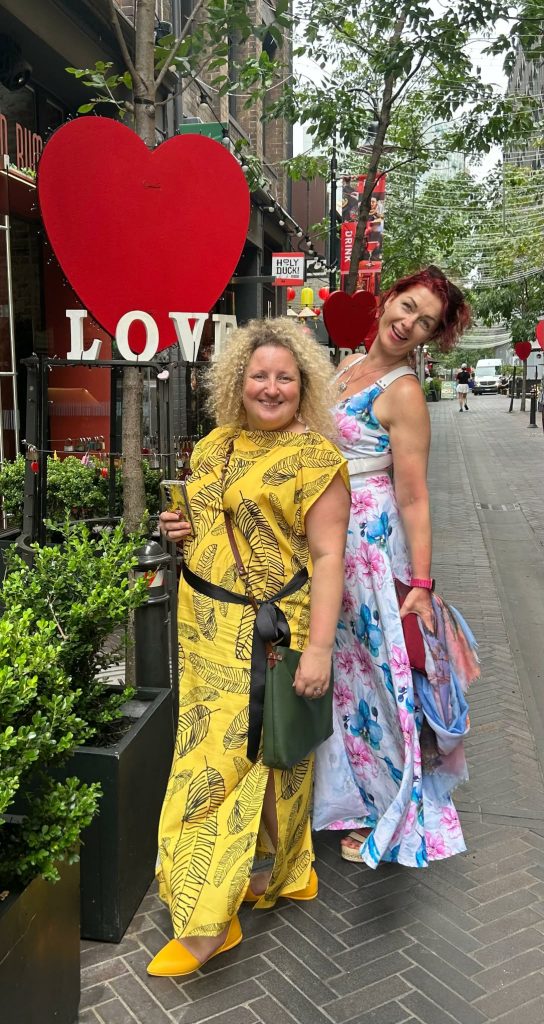
We talked about why conflict repeats in relationships — and how to stop the infamous conflict dance.
Lilian described a familiar tango:
One partner seeks connection through intensity.
The other seeks safety through distance.
Both want closeness — but create insecurity instead.
Neither feels safe.
Cue music. Same steps. Same ending.
Without a change in behaviour after conflict, apologies become empty rituals. The music starts again. And the dance repeats.
Stopping it, it turns out, is a joint decision — not a solo performance. And it takes self-awareness to admit that it’s not just the other person’s fault. That we’re not perfect. That we have work to do too. That’s called emotional adulthood.
Being emotionally grown-up isn’t about age — it’s about choice.
It’s staying grounded when others aren’t. It’s not outsourcing your decisions to parents, partners or panic. It’s tolerating discomfort without collapsing or attacking, It’s recognising that others often act from fear or fatigue — not malice.
Not glamorous. Very powerful.
True maturity includes the courage to say: This is my choice. I may be wrong — and I’m still responsible.
Do this (for one minute and six seconds) every day.
We also talked about joy — the kind that doesn’t need to produce anything. About novelty as a way to slow time and feel alive. About doing things simply because they’re fun. Not as indulgences or rewards — but as essential, everyday forms of self-care.
And then there was this important relationships rule (hard to argue with this one):
- Six seconds of real kissing every day. Not a peck. A proper, grounding kiss.
- Plus a minute of calm hugging — no agenda, no multitasking.
Simple. Powerful. Scientifically backed. Surprisingly rare. Go on. Try it.
If all of this sounds like a lot, that’s okay — the invitation here isn’t to overhaul your life, but to notice where a little more care might quietly fit.
The heart of the morning wasn’t about fixing everything. It was about asking: What’s one small thing I can do differently today, this week? Not a life overhaul. Not a dramatic exit. Just a conscious choice — made with self-awareness, honesty and a little kindness toward yourself. Because small, conscious choices are often where care begins — and where life quietly starts to feel fuller again.
As Lilian reminded us: We don’t need more years in life. We need more richness in the years we already have.
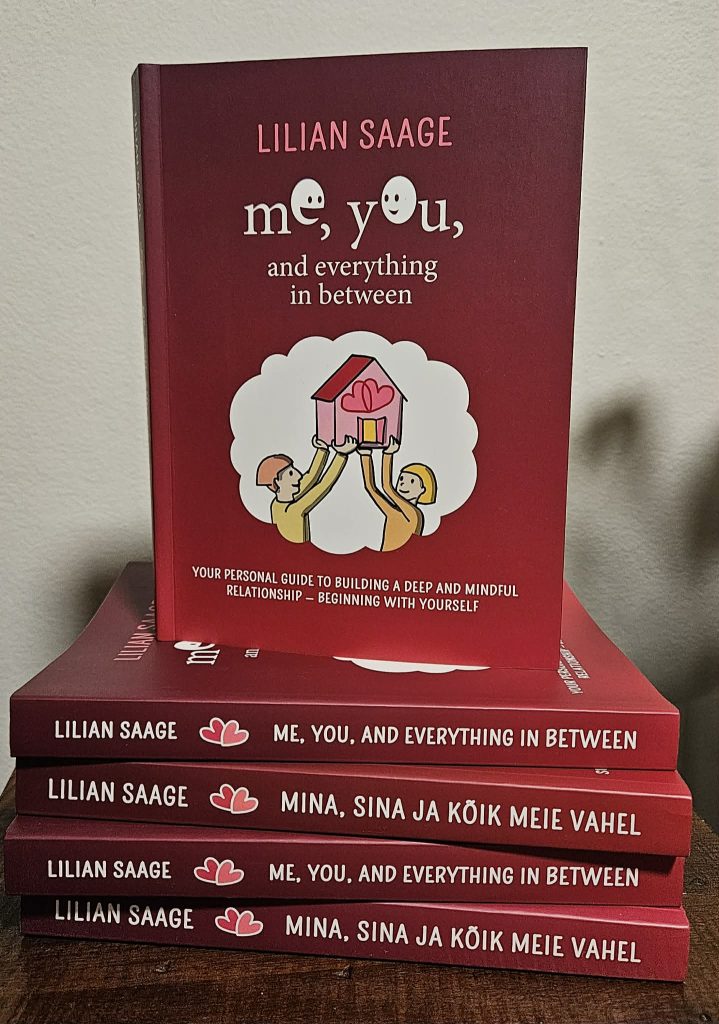
Lilian Saage and the book at the centre of the conversation
Our lively discussion was led by Lilian Saage — Estonian author, mentor, trainer and family therapist — whose work focuses on supporting people toward healthier, more conscious relationships in personal and professional life.
The session drew from Lilian’s book Mina, sina ja kõik meie vahel (Me, You and Everything in Between), published in 2025.
The book invites readers to pause and notice how earlier experiences, family patterns and emotional defense strategies show up in the present — not as a reason for blame, but as a doorway to understanding, responsibility and choice. Rather than offering rigid rules, the book acts as a neutral guide — a third presence at the table — helping partners (or individuals) talk through difficult topics without blame. Each chapter includes reflection questions, practical tools and everyday examples grounded in what Lilian calls talupojamõistus — plain sense for real life.
Want to get the book?
In Australia, some copies of the book are available here: Book by Lilian Saage
In Estonia, the book is available from: Apollo, Rahva Raamat and Väike Vanker
Want to know more about Lilian Saage?
Read here: https://liliansaage.ee/en/
Acknowledgement
The event was organised by the Estonian Society in Sydney. Warm thanks to Ave Nukki for the information shared and for the photos used in this article. Thank you also goes to Anu Läänesaar for telling us about Lilian’s upcoming book event in Perth.
Perth friends — your chance to meet Lilian 💙
If you’re based in Western Australia, there’s good news.
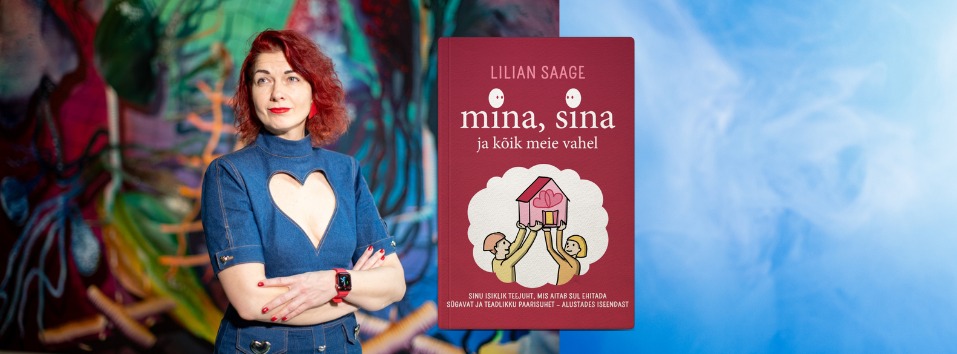
Upcoming book event & conversation with Lilian Saage in Perth
🗓️ Date: Friday, 13 February 2026
🕔 Time: 6.00-8.00 pm (Perth time, AWST)
📍 Where: 5 Mackie Street, Victoria Park 6100 WA
🎟️ Please register: https://MinajaSinaEsitlus.eventbrite.com.au
🗣 Language: in Estonian
📘 Facebook event page: https://www.facebook.com/share/1AV76Efqq9/
This in-person evening offers a relaxed opportunity to meet Lilian, hear more about the ideas behind her book, and take part in an open conversation in a warm, welcoming atmosphere. Tea and coffee will be provided — and partners or friends are very welcome. Highly recommended.

