

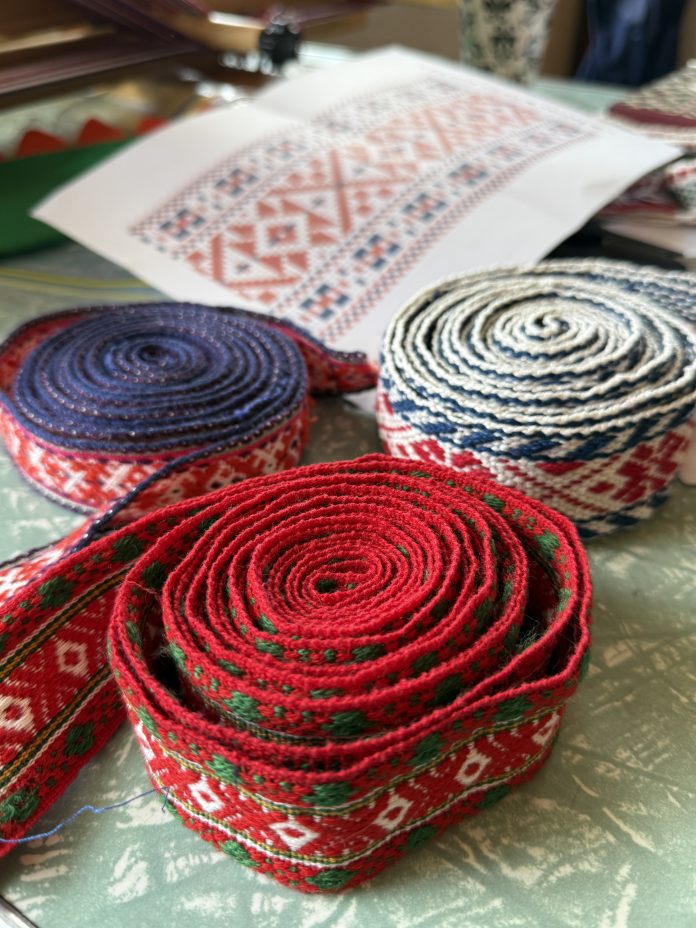
Two Saturdays, a room full of looms, colourful threads, coffee-fuelled conversations and the gradual emotional journey from “I have absolutely no idea what I’m doing” to “excuse me while I casually admire my own woven belt”. Melbourne’s Estonian weaving workshops turned out to be about far more than learning patterns.
Because somewhere between the tangled wool, concentrated silence and occasional dramatic “wait — I’ve threaded this backwards again” moments, something rather lovely happened.
People connected. Not just with weaving, but with culture, creativity, each other — and perhaps slightly with their inner village grandmother too.
Held at Melbourne Estonian House on 18 April and 2 May 2026, the workshops introduced participants to traditional Estonian weaving techniques using inkle looms.
Now, before this course, some participants had never touched a loom in their lives. Some had recently fallen into the wonderfully slippery rabbit hole of handicrafts — trying ceramics, painting, sewing and various other activities that begin innocently enough before you suddenly find yourself pricing storage shelves for yarn. Others arrived with handmade bags and intricate craftwork already casually draped over chairs like it was completely normal to possess this level of talent.
Frankly, some people in our community are suspiciously good at making beautiful things. Really, really good.
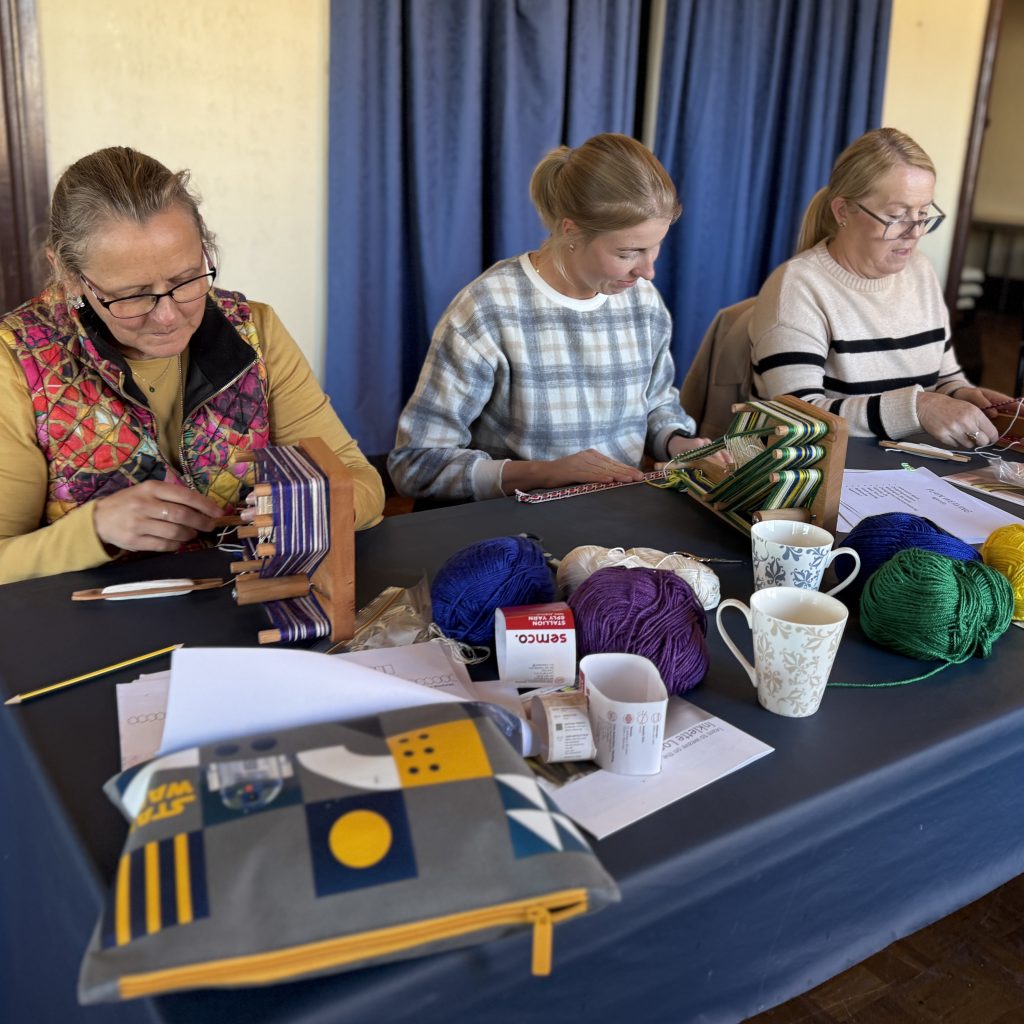
One of the biggest takeaways from participants was a newfound respect for the generations of women who mastered these techniques long before YouTube tutorials and emergency Google searches existed. Because weaving looks deceptively simple right up until you attempt it yourself. Then suddenly you discover patterns require concentration, patience, coordination and the ability to confidently recover from mistakes while pretending you absolutely meant to do that.
And yet — once the rhythm settles in — something deeply calming happens. Hands work. Minds quiet down. Conversations drift naturally around the table. Stories get shared during coffee breaks. Someone compliments someone else’s colour choices with the respect and admiration usually reserved for art galleries.
It becomes easy to imagine generations of Estonian women doing exactly this around kitchen tables and firesides — weaving practical, beautiful things for families and communities while quietly carrying culture forward through their hands.
There’s something unexpectedly emotional about realising that not all that long ago, people genuinely made the things they wore themselves. And honestly? That’s impressive. Most of us struggle to successfully assemble flat-pack furniture without emotional damage.
Participants repeatedly praised workshop facilitator Gabrielle Mikkor (Gabry) for creating a learning environment that felt encouraging, warm and refreshingly free of perfectionism.
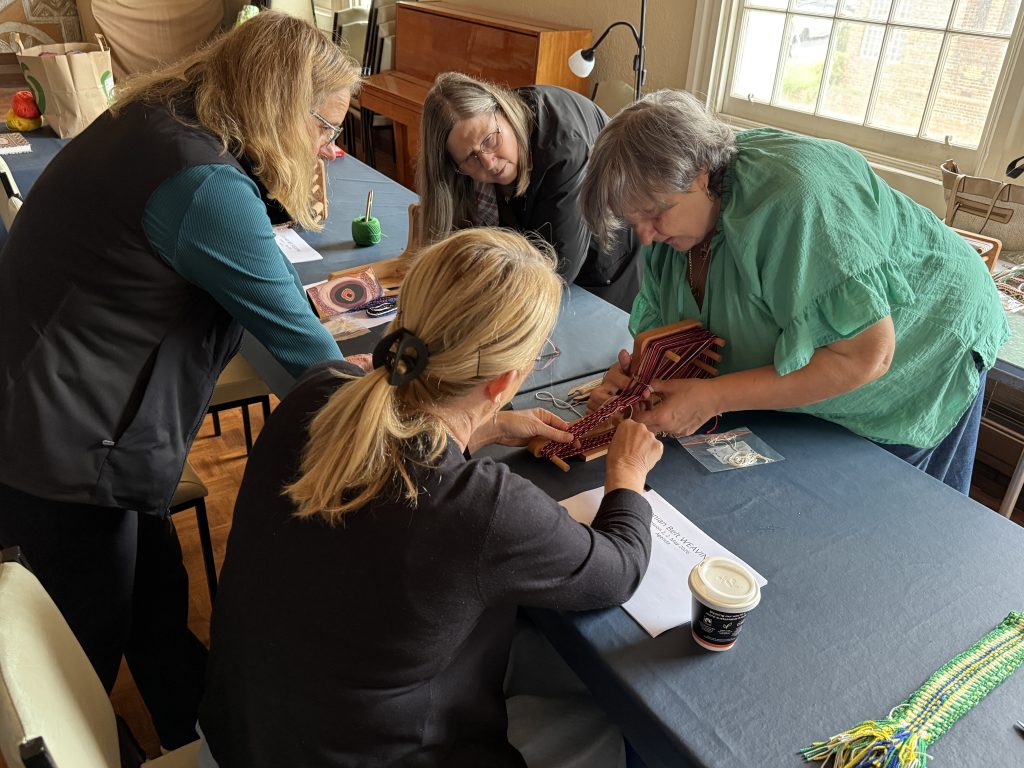
There were beautifully prepared guides, traditional patterns to explore, examples of different techniques and plenty of hands-on support — but also constant reassurance that experimentation was part of the process.
Or, as Gabry reminded participants throughout the workshop: there’s no single “right” or “wrong” way to weave. Which was fortunate. Because while some participants followed patterns carefully and methodically, others approached weaving with a more “creative interpretation of instructions” energy (yes, me!).
Occasionally this led to innovation. Occasionally this led to confusion. Both were embraced equally.
And perhaps that’s part of what made the workshops feel so special. Nobody was there to perform expertise. People were simply there to learn, create and enjoy the process together.
Also, yes, there may have been some light competitive energy around whose belt was progressing fastest. Entirely healthy community behaviour, obviously.
By the second workshop, colourful belts and bookmarks had begun appearing across the tables in wildly different patterns and colour combinations. And walking around the room, seeing everyone’s choices side by side, became its own little reflection on personality.
Some people chose soft traditional colours. Others went boldly towards bright rainbow combinations that could probably be spotted from space. Some worked with absolute precision. Others embraced a more “the vibe will guide me” approach. All of it worked.
Because ultimately the workshops weren’t really about creating flawless weaving. They were about creating something with your own hands. Something made slowly, thoughtfully and imperfectly by human hands in a world increasingly obsessed with speed, convenience and buying things online at 11.57 pm while half-asleep.
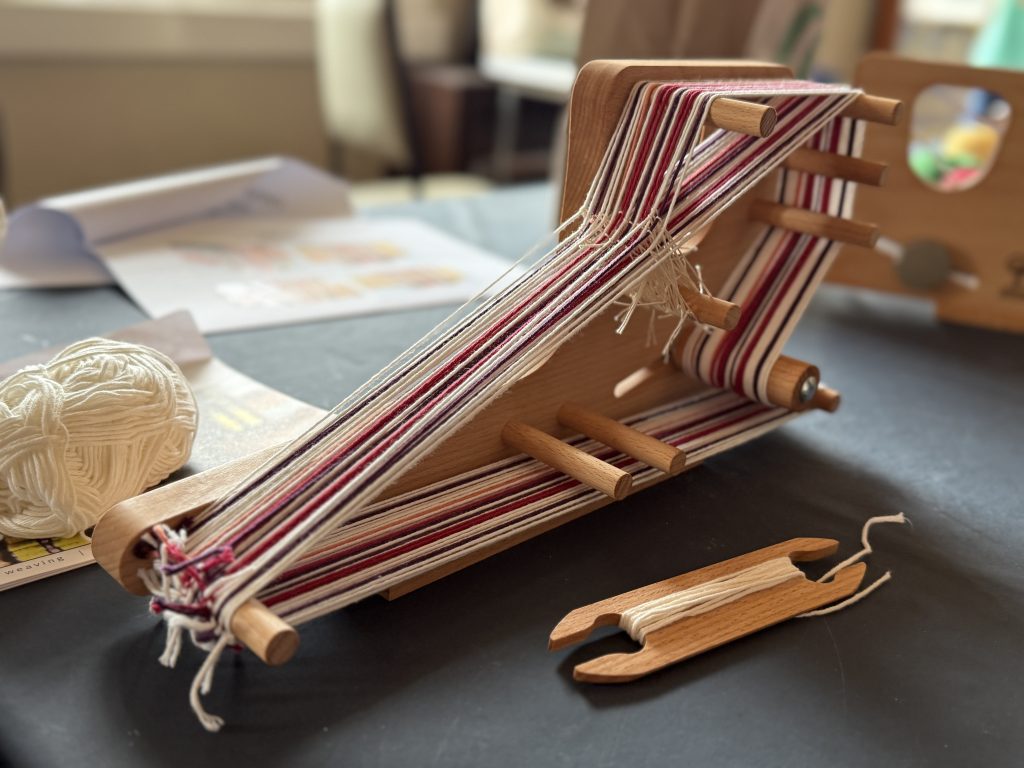
Another favourite part of the course? Participants were able to borrow looms and weaving books to continue practising at home between sessions and after the workshops finished.
And importantly, this doesn’t feel like something that simply ended when the final threads were packed away.
The hope now is for these workshops to grow into an ongoing circle of weaving and handicraft enthusiasts — people gathering not just to learn techniques, but to create together, share stories and keep these traditions alive in a modern way.
Because in the end, weaving turned out to be about much more than weaving.
It became about belonging. About creativity. About culture. About discovering that perhaps we are all capable of making beautiful things if someone simply hands us colourful thread, a loom and enough encouragement.
And maybe also about discovering that Estonian women have been quietly overachieving for generations.
One participant described the workshops as “a fun and welcoming social environment” and said it was especially rewarding to create a woven belt and bookmark using traditional Estonian patterns. They added that they hoped more workshops like this would be offered in the future.
Another participant praised the care and preparation that went into the classes, saying the workshops created “such an encouraging and enjoyable learning environment” and left them inspired to continue practising at home.
And judging by the smiles around the table, the growing confidence by session two and the number of people suddenly evaluating whether weaving supplies will fit somewhere in their homes — this may only be the beginning.
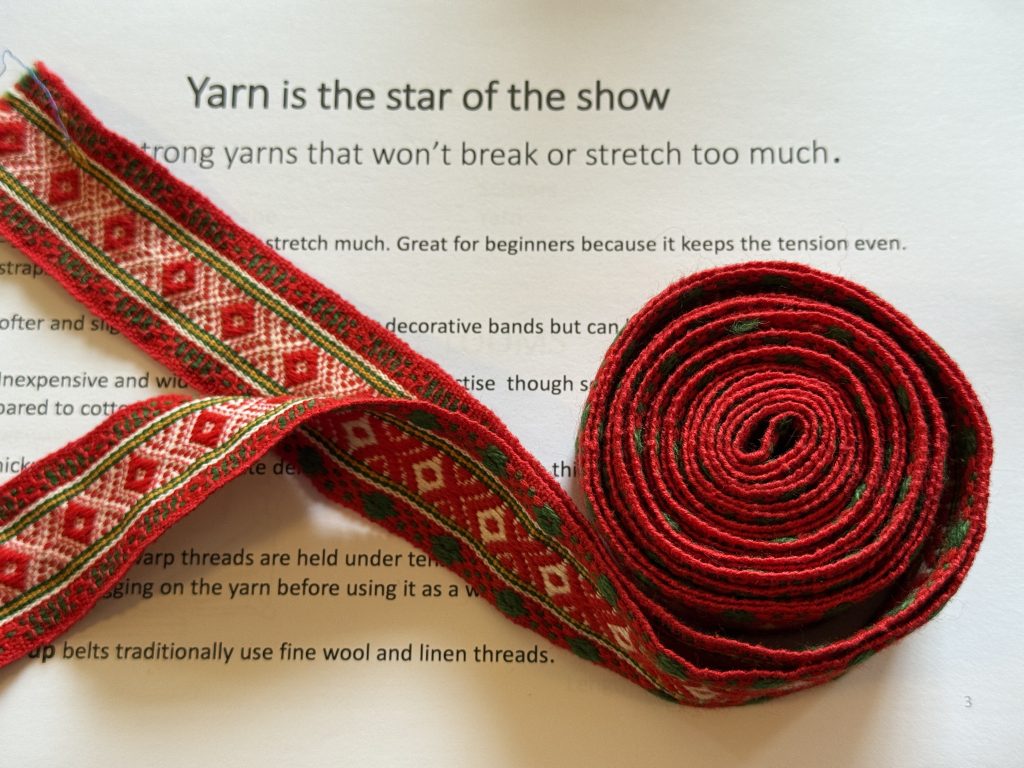
Thank you
Thank you, Gabrielle Mikkor, for your wonderful teaching, guidance and encouragement throughout the workshops. Thank you to Karen Nield for your ideas, inspiration and input. Thank you also to the Estonian Society in Melbourne and the Estonian Cultural Foundation Australia for supporting these workshops and helping bring traditional weaving skills to the community.

