

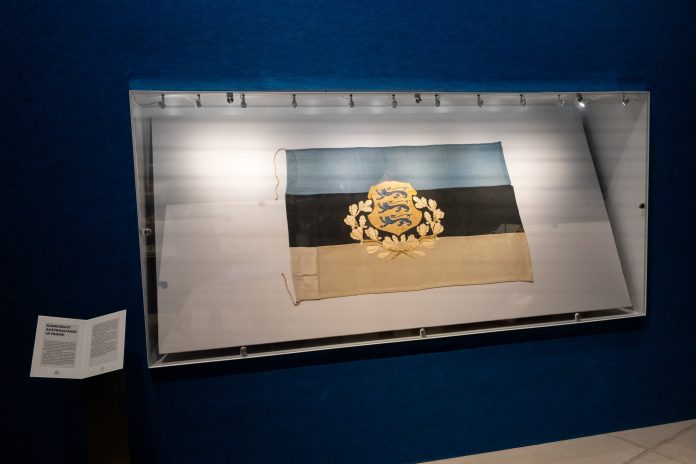
When the President’s Standard returned to Estonia after more than 80 years in Australia, it marked the end of an extraordinary journey and the fulfilment of a long-held wish. In this speech delivered at the Estonian National Museum on Flag Day, Ambassador Jaan Reinhold shares the Australian chapter of the flag’s story, the people who preserved it and the community that helped bring it home.
The speech is reproduced below in English and Estonian.
In English
Honourable Minister of Foreign Affairs, Bishop, Mayor, distinguished rectors and Professor Pajur, dear friends of the Estonian National Museum.
It is an exceptional pleasure to be among you on this Estonian Flag Day, which is particularly symbolic given the reason for our gathering today.
First of all, allow me to thank Ms Kipper and the friendly staff of the Estonian National Museum for their warm hospitality.
My special thanks also go to the Minister of Foreign Affairs, who, despite his very busy schedule during his visit to Sydney in March this year, found the time to meet with the Estonian community. That meeting set a snowball rolling, and today we are able to celebrate together the arrival of this remarkable artefact into the collection of the Estonian National Museum, where it will help preserve the history of our nation and state. Our community in Sydney, Australia, sends its gratitude and greetings to you, Minister, as well as to everyone gathered here today.
The story of this flag has already been recounted by the Minister. It was my honour to present Ms Kipper with a letter from the donor, Andres Vello Vilder, together with his account of the flag’s journey from Estonia, through a displaced persons camp in Germany, to Australia, and now back to its historic homeland. We have also provided a copy of the birth certificate of the central figure in this story, Eugen Rudolf Vilder, from the archives in Sydney.
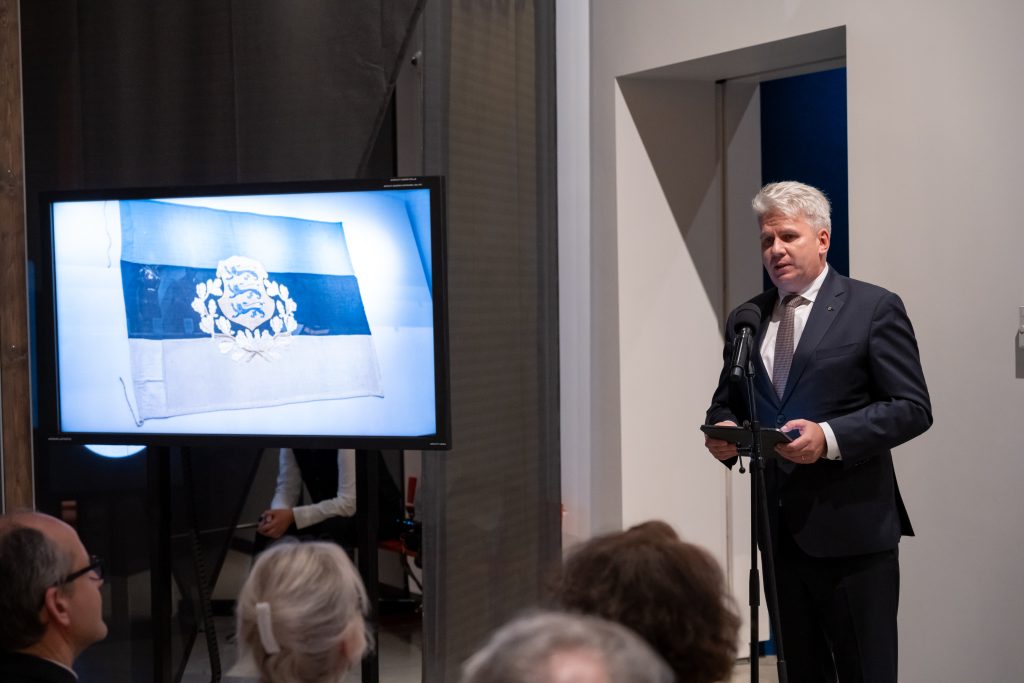
I would now like to share with you the recollections and perspective of the older generation of Estonians in Australia regarding this flag and the events associated with it. This account was compiled with the assistance of our Honorary Consul in Sydney, Mr Sulev Kalamäe, who first contacted me in August last year and without whose efforts this journey home would never have begun. I would also like to acknowledge Honorary Consul Anu van Hattem in Perth, Western Australia, who helped provide information about the Vilder family’s arrival in Australia from Germany through the port of Fremantle.
I would also like to welcome Mr Kalev Kalamäe, who joins us today as a member of the Honorary Consul’s family at this significant occasion.
According to information that reached me through Honorary Consul Kalamäe in August last year, Uncle Eugen told his nephew Andres the story of this very flag on at least two occasions — first when Andres visited him as a child, and again a few years before Eugen’s death, when he expressed a clear wish that the flag should one day return to Estonia.
Following Eugen Vilder’s passing on a warm summer day, 20 January 2022, the flag could not be found for some time. Only after several years of searching was it finally rediscovered in August last year. The discovery was reported to the Honorary Consul and, through him, to me.
One part of a diplomat’s work is telling stories. This is a beautiful and credible story that forms one piece of the broader story of the Great Escape of September 1944, when not only Estonians but also cultural treasures and national symbols were carried out of the country in an effort to save them from invading Soviet forces who respected neither heritage nor history.
Exactly what circumstances led to the flag leaving Estonia is a question best left to historians. Perhaps one day it will become the subject of a university student’s research project.
Allow me also to briefly recount the lives of the key people in this story, as they deserve to be remembered.
Eugen was born in Tartu in 1930 and fled to Germany at the end of September 1944 together with his mother Olga and his brother Valdemar, who was three years older than him.
The head of the family and Eugen’s father, Aleksander Engelbert Vilder, was a veteran of the Estonian War of Independence, a soldier and a sports shooter. Little is known about his fate other than that he disappeared in the turmoil of war. Records show that while living in a refugee camp in Germany, the family searched for him and even placed a notice in the July 1946 edition of Eesti Teataja in Sweden. The search appears to have been unsuccessful.
Archive records show that the Vilder family arrived in Fremantle aboard the General Hersey on 3 November 1950. They were initially accommodated at the Northam Migrant Camp for three months before completing the mandatory two-year migrant work contract in Western Australia. They later moved to Sydney, where they established their new lives.
The central figure in our story, Eugen Rudolf Vilder, lived and worked in Sydney, most recently as an employee of the Department of Education. He remained unmarried and was said to have led a somewhat private life, although he was known among Estonians for his interest in history. After fleeing Estonia, he never returned.
According to the recollections of Valdemar Vilder, the flag was first publicly displayed in Perth on 8 September 1951 at the founding of the Western Australian Estonian sports association Kalev, whose basketball team later became well known in Australia. Valdemar’s account suggests that Eugen received the flag from a soldier in a displaced persons camp in Germany, which differs significantly from the version of events most commonly associated with the flag today. Other active members of the Estonian community at the time have not confirmed this account, nor the claim that the flag was displayed at other events in Perth. Let historians determine the full truth of these details.
For today, however, I believe we can accept what we do know: the powerful story of a teenage scout boy who regarded the flag as sacred, rescued it from the occupiers, and whose actions have been remembered by members of the Vilder family’s generation.
The Vilder family’s final resting place is in Sydney’s Rookwood Cemetery, where many Estonians in Sydney are buried, including Olga, Valdemar and Eugen. Valdemar was survived by his sons Andres and Toomas and their families, who have now fulfilled Eugen’s final wish by helping return this flag to Estonia.
This historic flag has now arrived home, in our nation’s largest institution of memory, where it belongs. Here it will tell not only the story of our people and our independent state, but also the story of Estonians around the world who have preserved our culture, history and identity and passed them from generation to generation.
When a nation remains so strong and united despite living on the other side of the world from its homeland, no enemy can defeat it — whether that enemy stands directly across our border or much farther away.
Thank you, and I wish everyone a pleasant evening.
H.E. Jaan Reinhold
Estonian National Museum, Tartu, 4 June 2026
Eesti keeles
Austatud välisminister, hr piiskop, linnapea, lugupeetud rektorid ja professor Pajur. Lugupeetud Eesti Rahva Muuseumi sõbrad!
Mul on erakordselt hea meel olla teie hulgas tänasel Eesti lipu päeval, mis on just sümboolne meie kogunemise põhjust silmas pidades.
Esmalt lubage mul tänada proua Kipperit ja Eesti Rahva Muuseumi sõbralikku kollektiivi meie lahke võõrustamise eest!
Eriline tänu loomulikult härra välisministrile, et ta enda väga pingelises kohtumiste graafikus Sydneys tänavu märtsi keskel leidis aega kohtuda ka eesti kogukonnaga, mille tulemusena läks lumepall veerema ja nii on meil võimalik üheskoos pühitseda selle märkimisväärse eksponaadi jõudmist Eesti Rahva Muuseumi kogusse, meie riigi ja rahva ajaloo jäädvustamisel. Meie kogukond Austraalias, Sydneys, saadab teile omapoolse tänu ja tervitused, hr minister, nagu ka kõigile teistele, kes täna on siia kogunenud!
Selle lipu lugu on välisministri poolt juba edasi antud, minu poolt oli suureks auks proua Kipperile üle anda veel vaid kinnituskiri lipu annetaja Andres Vello Vilderi poolt, millele on lisatud ka temapoolne kirjeldus selle lipu loost teekonnal Eestist läbi Saksamaal asuva DP laagri Austraaliasse ja nüüd tagasi ajaloolisele kodumaale. Ühtlasi lisame ka Sydney Eesti Arhiivist pärineva selle loo peategelase Eugen Rudolf Vilderi sünnitunnistuse koopia.
Tahan järgnevalt teiega jagada Austraalia vanema põlvkonna meenutusi ja vaadet selle kõnealuse lipu loole ja sellega seotud sündmustele. Selle aitasid kokku panna meie aukonsul Sydneys, härra Sulev Kalamäe, kes võttis minuga ühendust eelmise aasta augustikuus ja tänu kellele lipu koju-tagasi-teekond üldse alguse on saanud. Ja aukonsul proua Anu van Hattem Lääne-Austraalias Perthis, kes vahendas mulle infot Vilderite pere jõudmisest Saksamaalt Austraalias Fremantle sadamasse.
Ühtlasi soovin tervitada härra Kalev Kalamäed, et olete aukonsuli perekonna liikmena samuti tänasel märkimisväärsel sündmusel koos meiega.
Niisiis, eelmise aasta augustis minuni aukonsul Kalamäe vahendusel jõudnud info kohaselt olevat onu Eugen oma vennapojale Andresele just sellesama lipu loo jutustanud vähemalt kahel korral — kui Andres oli lapsena onul külas ja seejärel ka veel enne oma surma mõned aastad tagasi, mil Eugen väljendas selget tahet, et lipp võiks kunagi jõuda tagasi Eestisse.
Eugen Vilderi lahkumise järel 2022. aasta suvesoojal jaanuarikuu 20. päeval jäi see lipp pikalt leidmata. Alles mitme aasta järel eelmise aasta augustis, kroonis neid otsinguid lõpuks edu. Nii sai see teatavaks aukonsulile ja tema läbi minule.
Diplomaatide töö üks osa ongi lugusid rääkida. Ja see ongi üks ilus ja tõeväärne lugu, mis läheb ühe huvitava doominoklotsina kokku sellega, kuidas 1944 aasta septembris toimunud Suurpõgenemine viis Eestist mitte ainult meie rahvuskaaslasi, vaid nendega koos ka kultuuri- ja sümbolväärtusi, mida mitte midagi pühaks pidavate sissetungivate vene vandaalide eest sooviti päästa.
Kas ja millised nüansid selle lipu äraviimise tausta võiksid selgitada, jätaksin siinkohal ajaloolaste kinnitada. Võib olla sünnib sellest ühel päeval mõne ajalootudengi kursusetöö.
Lubage lühidalt kokku võtta ka lipu loo peategelaste elusaatused, sest neid on siinkohal oluline ära märkida.
Eugen sündis 1930. aastal Tartus ja põgenes 1944. aasta septembri lõpus Saksamaale koos oma ema Olga ja endast kolm aastat vanema venna Valdemar Vilderiga.
Vilderite perekonna pea ja Eugen Vilderi isa, Aleksander Engelbert Vilder oli Vabadussõja veteran, sõjaväelane ja laskesportlane. Tema saatuse kohta pole rohkem teada, kui et ta jäi sõjakeerises kadunuks. Teada on, et Saksamaal põgenikelaagris viibinud perekond otsis teda taga ja nii ilmus nende poolt 1946. aasta juulis Rootsis ilmunud Eesti Teataja kuulutuste rubriigis „Otsimisi Saksamaal“ kuulutus, kuid väidetavalt tulutult.
Arhiivimaterjalid näitavad, et Vilderid jõudsid Euroopas Fremantle sadamasse Kindral Hersey nimelisel laeval 3. novembril 1950. aastal. Nad paigutati esmalt kolmeks kuuks Northani migratsioonilaagrisse. Nad töötasid järgnevad migrantide töölepingu järgi kohustuslikud kaks aastat Lääne-Austraalias ja liikusid seejärel edasi Sydneysse, kus ka Austraalias oma edasise elu sisse seadsid.
Meie loo peategelane Eugen Rudolf Vilder elas ja töötas Sydneys, viimati haridusameti teenistujana, oli üksik ja väidetavalt ka erakliku eluviisiga, kuid eestlaskonna seas tuntud oma ajaloo huvi tõttu. Eestisse ta peale põgenemist enam ei jõudnudki.
Valdemar Vilderi mälestuste järgi esitleti seda lippu esmakordselt Perthis 1951. aasta 8. septembril Lääne-Austraalia eestlaste spordiühingu Kalev asutamisel, mille korvpallivõistkond hiljem Austraalias tuntust kogus. Valdemari sõnul oli Eugen selle Saksamaal põgenikelaagris ühelt sõdurilt saanud, mis läheb oluliselt lahku sellest legendist, mille järgi meie selle lipu lugu täna teame. Teised samal ajal aktiivsed eestlased seda lipu DP laagris üleandmise lugu ei kinnita, nagu ka seda, et seda lippu oleks teistel Perthi üritustel välja pandud. Las see jääb siis siinkohal ajaloolaste välja selgitada.
Täna me võiks leppida sellega, mis meile teada on – ilus lugu teismelisest skaudipoisist Kadrioru tornis ja lipust, mida ta pühaks pidas ja okupantide eest päästis ning mida ka Vilderite kaasaegsed kogukonna liikmed kinnitavad ja usuvad tõepärase olevat.
Vilderite perekonna rahupaik on Austraalias, Uus-Lõuna Walesis Sydney piirkonnas Rookwoodi kalmistul, kus paljud Sydney eestlased on oma viimase puhkepaiga leidnud, nende seas nii Olga, Valdemar kui Eugen. Valdemarist jäid maha pojad Andres ja Toomas ning nende lapsed, kes täna Eugeni viimase soovi on täitnud ja selle lipu meieni toimetanud.
See ajalooline lipp on nüüd jõudnud koju, meie kõige suuremasse mäluasutusse, kuhu see ka kuulub. Ja siin on see määratud jutustama mitte ainult meie rahva ja iseseisva riigi lugu, vaid ka eestlaste lugu üle ilma, kes kõrgelt väärtustavad meie iseolemist, kultuuri ja ajalugu, andes seda põlvest põlve edasi.
Kui üks rahvus ka kodumaalt sedavõrd kaugel, teisel poolel maakera, on nii tugev ja ühtehoidev, siis ei ole meid võimalik võita mitte ühelgi vaenlasel, olgu ta siis vahetult meie piiri taga või kaugemal.
Tänan teid ja soovin kõigile meeldivat õhtut!
H.E. Jaan Reinhold,
Eesti Rahva Muuseumis, Tartus, 4. juunil 2026. aastal
Read more
Üle 80 aasta Austraalias varjul hoitud Vabariigi Presidendi lipp on nüüd tagasi kodumaal! | Välisministeerium | Facebook
Gallery: Wartime Estonian flag hidden since 1944 returns home from Australia | ERR
Estonia marks Flag Day – a brief history
The President’s Standard returns to Estonia after 82 years | HEIA

