Monday, May 25, 2026
11.4 C
Canberra
15.2 C
Tallinn

Estonians in Australia by Maie Barrow – Review

0

ESTONIANS IN AUSTRALIA

BY MAIE BARROW

Publisher: Council of Estonian Societies in Australia,

Price $5 + postage

Reviewed by Marika Tiggemann

Last night I finally opened and spent a pleasurable hour or so reading my fresh new copy of Estonians in Australia. It gave me much to ponder on, and I have continued to think about the various characters, events and times depicted (and where my parents and I myself fit in), throughout the day. I expect it will have the same effect on others of Estonian heritage.

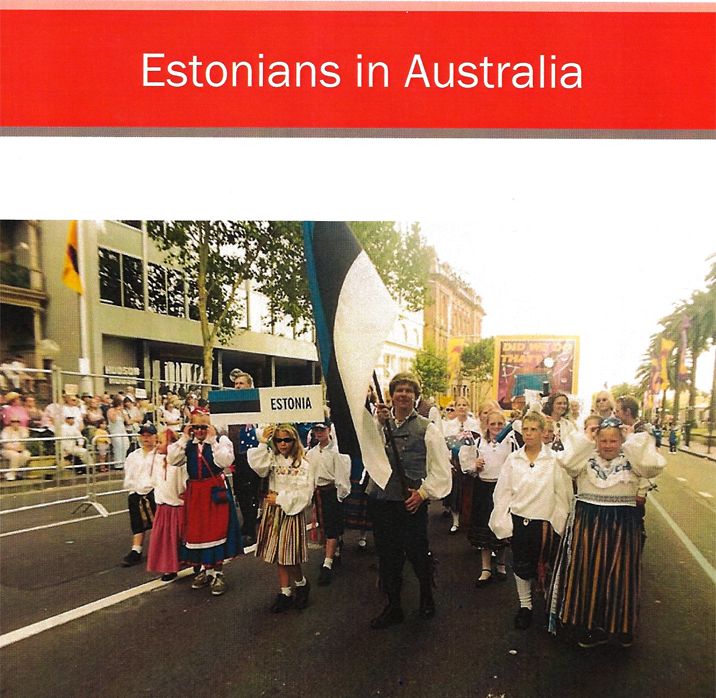
Published by the Estonian Council of Estonian Societies in Australia, Estonians in Australia is a handsome slim volume. It offers an overview of the history of Estonians in Australia in an accessible and pictorial form. This is quite a long history, well over 100 years, with consideration of the different waves of Estonian immigration into Australia. For example, we hear of characters like Evan Lumme who jumped ship (having escaped going into the Czar’s army) in the 1890s. Much of the volume focuses on the activities of the Post World War II migrants (mostly displaced persons, like my parents), and the establishment of Estonian societies and the accompanying cultural activities that Estonians love, including song, dance, language, sport, and scouts.

The history is there, written in plain clear prose (in English) and meticulously researched by Maie Barrow, the archivist of the Estonian Archives in Australia. But what really makes this volume are the beautiful photographs sourced from the Archives. These breathe life into the stories. In addition, although scholarly, what comes through is the author’s enthusiasm for her work and tenderness toward her subjects.

In short, this slim booklet provides a good concise introduction to the history of Estonians in Australia. It is attractively produced and can be read quite quickly or dipped into or savoured slowly. It provides a valuable historical record for all those of Estonian heritage. In addition, it should prove of interest to their friends and extended family, as well as those interested in the making of Australian society more broadly.

Of course, the history of Estonians in Australia is far from finished. Since the newlyfound independence of Estonia, thousands of young Estonians have visited Australia, and some have stayed to enrich our communities. It also seems that an increasing number of young Australians are taking an interest in their Estonian heritage. This little book is also for them.
austrailan-estonians

Estonians in Australia by Maie Barrow is available for $5 plus postage from the:

The Estonian Philharmonic Chamber Choir at Estonian House Sydney

0

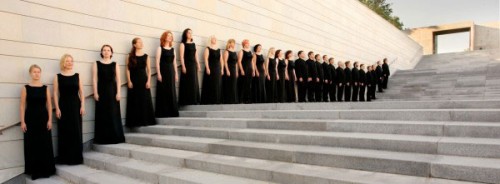
Consulate General of Estonia in Sydney and Estonian Society of Sydney cordially invite you to welcome and meet The Estonian Philharmonic Chamber Choir next Tuesday 2nd of April 6pm at Estonian House Sydney (141 Campbell St, Surry Hills).

This is a great opportunity to meet one of the most accomplished choirs in the world. The choir is in Sydney to perform as part of Arvo Pärt concert on April 7th at the Sydney Opera House.

Everybody is welcome!EFC

Learn Estonian online – New course for English speakers now available

0

A new Estonian course is available online and free of charge!  Here is your chance to learn Estonian in your own house at your own pace!

From the website: https://www.keeleklikk.ee/front/ru_RU/

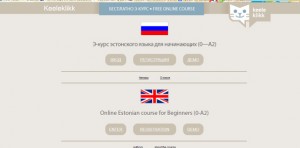
Keeleklikk is a modern online Estonian course for beginners that is suitable for individual study and also for classroom use. Keeleklikk targets adult learners who want to learn how to communicate in everyday situations.

The course consists of 16 comprehensive language learning units that include a total of 200 animations, over 100 videos that explain grammar and roughly 1200 exercises. Keeleklikk also features a real Estonian teacher with whom students can exchange letters via e-mail.

keeleklikkThe project has been financed by the European Social Fund and the Estonian Ministry of Education and Science, and it is free of charge for anyone who wishes to use it.
In 2010-2012 the version for Russian-speaking learners was developed and already it has more than 12 000 active users!

In 2013-2014 the course will be translated and amended to meet the needs of English-speaking learners. Units will be made available for users one by one in the order in which they are completed.

The development of Keeleklikk has been a team effort, and more than 50 different experts have contributed to its completion.


The course is available at https://www.keeleklikk.ee

Kino at Estonian House Sydney – 5th April

0

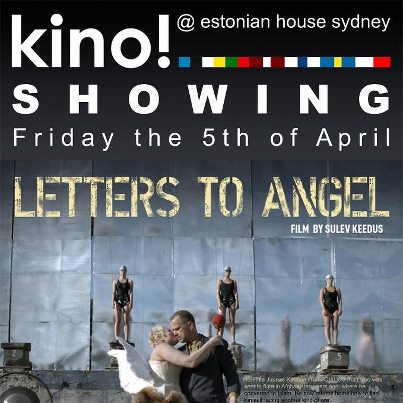
Letters to Angel’ (Kirjad inglile), Friday the 5th of April 7pm

kino at estonian house sydney

This is a film only for the adults, and it is not a film to be missed.

With a directorial style not dissimilar from that of David Lynch (think of ‘Wild at Heart’) but more down-to-earth, director Sulev Keedus has created a story which is layered in spirituality and subtle messaging. The storyline throughout the movie can leave the viewer perplexed and inconclusive at times, however going the distance on this film becomes rewarding, as the story becomes more surreal, it is counter balanced by imagery which is visceral and beautifully shot. Answers will be given and you will be left with a story that seeps into you for days to come.

As always, doors open at 6pm, fill rolls at 7pm.

Tickets are $7 at the door ($5 for SES current members)

For more info see Kino’s website  – Letters to Angel’ (Kirjad inglile), Friday the 5th of April 7pm

Esto Pub Night 26 – Adelaide Sat 6th April

0

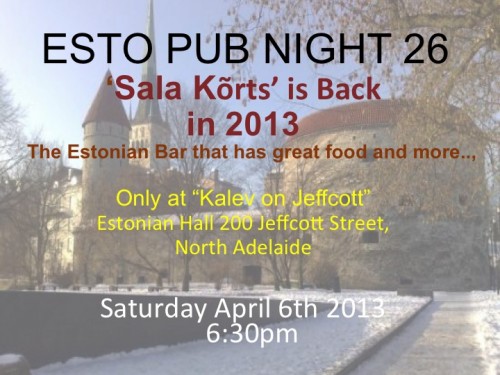
‘Sala Kõrts’ is back in 201326-esto-pub-night

We realise you have had to wait until April in 2013. After the fantastic Esto Festival functions over the December period the team has taken a well earned rest.

Tom Sarapuu and his team have been overwhelmed by enquiries for the next EPN. The team has decided to go back to the original concept of Estonian Saturday night Pub Nights or evenings.

Sala Kõrsts refers to a ‘Secret or Exclusive Bar’ the meaning may be lost in translation but come and see what it is all about. We will have the usual great Estonian food available, the cheapest Estonian drinks available in the Southern Hemisphere and a chance to meet great Estonians. Put Saturday April the 6th into your diary.

Remember, drop in for 20 minutes or stay for the evening. Drop in after being out elsewhere. ‘Kalev on Jeffcott’ is centrally located close to the city, parking is easy. Meet friendly Estonians. This is a night not to miss.

Where did you buy Estonian black bread ‘must leib’ in Sydney in 1953?

0

The answer can be found in Meie Kodu, which is now available as a digitised copy from the web site of the National Library of Australia.

estonian-black-bread

The Estonian Archives in Australia has joined forces with the National Library of Australia to ensure Meie Kodu is available for everyone to read now and into the future.
Meie Kodu from 1949 to 1954 has been digitised as part of the National Library’s Australian Newspapers Digitisation Program and is now available to read online at http://trove.nla.gov.au/newspaper.

The cost of digitising the first five years of Meie Kodu has been borne by the Estonian Archives in Australia.

The digitisation has been undertaken as part of a National Library of Australia programme available to all libraries, community groups and other organisations, to digitise selected newspaper titles. This service has provided free online access to over 6 million pages from around 270 Australian newspapers from every state and territory.
What makes the project so exciting is that the result of the digitisation is not just a PDF copy of the newspaper. All issues that are available on-line as part of this project are fully text searchable. Using a powerful search engine, users type in a term they want to search. They can limit the search by date and newspaper and even type of report such as ‘Headline’, or ‘Article’ or ‘Advertising’. In this case, ‘leib’ turned up a number of references, some to articles using the term, but also to advertisements for stores selling it. For example, an advertisement for a new European-style delicatessen opened by E Tähtra at 148 Cabramatta Road, Cabramatta appeared in the issue of 22 January 1953. People looking for references to relatives, ancestors or family in these issues of Meie Kodu can search by their names.

The co-operation of Meie Kodu, which kindly gave copyright permission to allow the copies of Meie Kodu to be digitised and made available on the Internet, is gratefully acknowledged by the Estonian Archives in Australia. It is hoped that later issues after 1954 will be digitised as well making them available to all. However, this will need financial assistance from the Estonian community. The Estonian Archives in Australia hopes to set up a scheme seeking donations to fund further digitisation.

‘Working with the National Library to digitise Meie Kodu makes a valuable historical resource freely available to anyone who wants to research Estonians in Australia from the comfort of their own home’, observed Dr Terry Kass, chairman of the Council of the Estonian Archives in Australia. ‘Historians, researchers, family historians and many others have been using TROVE since it started in 2008. It has already revolutionised historical research by increasing the quantity of historical data that can be found on-line. It has made historical research in regional Australia, where people do not have ready access to major libraries or archives, so much easier. Now those of Estonian descent may also benefit from this resource.’

The program is closely linked with the Australian Newspaper Plan (http://www.nla.gov.au/anplan), a cooperative endeavour to collect, preserve and provide access to Australian newspapers.

Access to digitised newspapers including Meie Kodu is through the National Library’s free discovery service, Trove (http://trove.nla.gov.au/newspaper). By searching in TROVE, users can easily find other information such as books, pictures, maps and sound recordings.
It’s free to all users. Why not try a search? You might find more than you imagined.

Dr Terry Kass
Chairman, Council of the Estonian Archives in Australia

Source: Meie Kodu http://mk.eestiselts.org/Where_did_you_buy_Estonian_black_b_476.htm

Estonian Design and Handicraft – 23 March Perth

0

photo-26

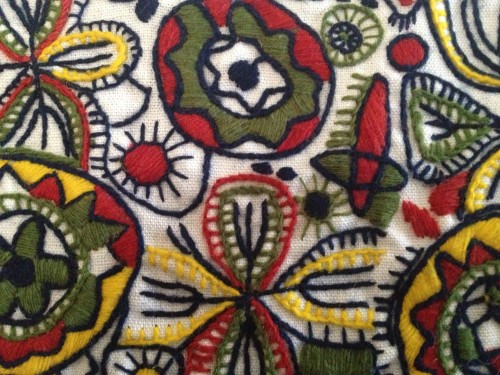
Estonian Design and Handicraft

Saturday 23 March 3-5pm
Eesti Konsulaat
11 Langsford Street
Claremont
Everyone welcome
Bring along your own projects and meet some very talented people

For more information contact Anu van Hattem anuvanhattem@aol.com or 0414 842757

Listen to the top 20 songs battling it out to represent Estonian in the 2013 Eurovision Song Contest

0

eurovision-estonia

The Estonia Public Broadcasting site has all the songs available to listen!  Listen to them now at Poolfinalistid 2013.

The final will be held on March the 2nd to decide Estonia’s representative for the 2013 Eurovision Song Contest!

2013 President’s Independence Day Address: Full Text in English

0

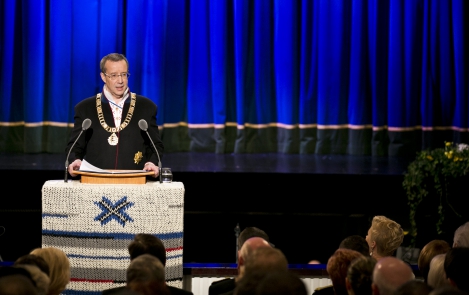
On Sunday evening, February 24, President Toomas Hendrik Ilves delivered his traditional address to the nation on the occasion of the anniversary of the Republic of Estonia.

© Andres Putting
© Andres Putting

Dear friends,

Dear Estonian people across the world, in your homes and here, in this hall,

Today, on the 95th anniversary of Estonia, the thought of independence has, once again, become natural. It neither requires interpretation nor explanation because it is a basic truth.

Just as freedom is no longer something to strive for, there is also no other possible alternative, at least not for us, not for Estonia. The idea of Estonia’s freedom has become perpetual. And this is the way it should be.

Read the full speech here President’s Independence Day Address: Full Text

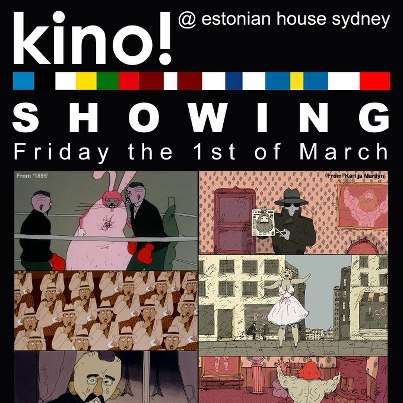
KiNO! #14 @ Estonian House Sydney on Friday, the 1st of March, 2013

0

404515_474483769267414_898673985_n

The Estonian Film Festival Australia (EFFA) and Sydney Eesti Selts (SES) are proud to present….

KiNO! #14 @ Estonian House Sydney on Friday, the 1st of March, 2013!

kino! is changing!!

As part of our new format, we will be showing either a single feature or documentary film, or a series of shorts during our film nights.

Instead of starting at 6:30pm like we used to, we will now be starting at 7pm – to take the pressure off getting there early. We want you to be relaxed when you arrive 🙂

Doors will still open at 6pm so you have time to grab a bite and a drink before taking in our film/s for the night.

Because we wont be showing a short film before, we will also be finishing a little earlier as well. But that’s ok, because you can stick around for a social drink afterwards as the bar will stay open!

—————————————————————————–

Although not advertised, we will be showing a third film due to the run time of each of the three films being no longer than 30 minutes.

19:00 – 19:30

‘1895’ (1995) [R]
The animated cartoon “1895” is dedicated to the centennial of cinema. “1895” is a picture about the life of brothers Auguste and Louis Lumiere.
The cartoon acquaints the public with so far unknown biographical facts and events from the life of the two celebrated brothers who have immortalized their names as inventors of cinematography. The picture is an illusion.
Is illusion truth?
This assertion and the subsequent question gave the authors of this cartoon the rights to declare that namely their version of the life of brothers Lumiere and the birth of cinema was the most original and unique of all. (imdb.com)

20:00 – 20:24
‘Karl ja Marilyn’ (2003) [R]
Karl is tired of the heavy burden of fame that oppresses him and he decides to liberate himself from it.
He returns to life among so called ordinary people, after which he crosses paths with fame-seeking Marilyn.
Ordinary Karl is the force that turns Marilyn into an idol of the masses. But not for long… (imdb.com)

21:00 – 21:29
‘Night of the Carrots’ (1998) [R]
Diego the bicyclist waits to check into the PGI hotel, where each room’s inhabitant seems more bizarre than the last, and the rabbits on the top floor have discovered the secret of voodoo, using electronics and carrots.
Can the rare and unpredictable night of the carrots save everyone, or will their connections to the room’s electrical sockets restrain them too much?
Will Diego find love with an egg that speaks incessantly in German? Will the cellist, who is actually a room full of a gelatinous substance, affected in some way by buttons labeled K, G, and B, have dreams that explain everything?
Or will the audience just leave scratching their heads? Not all questions get answered. (imdb.com)

—————————————————————————–

And remember:
bring a friend, bring a relative even if they are non-Estonian speaking because ALL FILMS HAVE ENGLISH SUB-TITLES!!! EVERYBODY is invited!

Doors open from 6pm.

**NEW TICKETING PRICES**

SES members – $5
Non members – $7

Remember to keep your door ticket as one lucky viewer will win free entry for next months KINO night!!!

Whether its for one film or both your donation towards cultural activities of SES is appreciated.

Finger food and bar service will be available on the night.

All proceeds from the door go towards kino! @ Eesti Maja and the Estonian Film Festival, Australia 2014.

Estonian pianist Kristan Randalu in Australia March 2013

0

Estonian pianist Kristan Randalu

Estonian pianist Kristan Randalu will be in Australia performing in both Melbourne and Adelaide.

MARCH 8TH 2013
AT 7:30 PM
ELISABETH MURDOCH HALL,
RECITAL CENTRE, MELBOURNE
with DHAFER YOUSSEF
www.melbournerecital.com.au

MARCH 9TH 2013
AT 3 PM
WOMADELAIDE FESTIVAL, ADELAIDE
with DHAFER YOUSSEF
www.womadelaide.com.au

MARCH 10TH 2013
AT 11:30 PM
WOMADELAIDE FESTIVAL, ADELAIDE
with DHAFER YOUSSEF
www.womadelaide.com.au

“Silmast Silma” (K. Randalu).

Live recording at Chamonix Mont Blanc, France
July 31, 2011
by Oléo films

To find out more about Kristan, visit his webpage at: http://www.randalu.com/about

Touring Estonia — Pärnu, Saaremaa and Võru

0

HANS TAMMEMAGI 23. nov. 2012

We left Tallinn in our rental car and headed southwest toward Pärnu, the start of our counter-clockwise trip around Estonia.

With little idea of what to see en route we decided to wander from one historic spot to another using the guidebook, Estonian Museums, and following the ubiquitous brown signs pointing to historic/cultural sites. Occupying a strategic location, Eesti has long been coveted and fought over and, thus, has an enormous number of castles, fortifications and other ruins. As we soon discovered, history abounds.

Our first stop was Padise Monastary, whose construction began in the 13th century. It had a vaulted church and was fortified, but fell into ruins after a fire in 1776. The monastery was not fenced, there was no entrance fee, we wandered freely and, best of all, there was a large sign that provided a detailed history. And we had the place to ourselves.

We meandered along back roads, passing small villages and enjoying the countryside. There was little traffic, the signage was good and there were virtually no billboards nor litter. It was peaceful and restful.

Near Taebla we stopped at the Ants Laikma Museum, the house of the deceased famous painter. It was closed, but we explored the extensive grounds and admired the thatch-covered house. I chatted with the only other visitor in my broken Estonian.

The steepled church at a small village beckoned. The cemetery was beautiful, in a natural setting and we read the dates and names on the tombstones with fascination. A monument to more than 100 people massacred by the Russians gave an insight into the sad decades of oppression that Estonia suffered.

With “Agnes” (our Estonian-speaking GPS) giving directions and rain starting to spatter, we drove through a flat landscape with birch forests, wetlands and occasional farms and villages to Pärnu, and our hotel, Villa Wesset.

Pärnu (populaton 45,000) is a popular sea-side resort with a long sandy beach, many parks and a rich cultural life including the excellent New Art Gallery. However, it was the end of September and a cool wind blew along empty streets. The town centre featured a walking promenade and, delightfully, no big American chain stores. At a small, back-alley restaurant, the Veerev Ōlu (Rolling Beer), we enjoyed a (very) cheap, tasty meal while other customers contested a chess game.

Parnu Beach. Photo: Hans Tammemagi

Next morning the breakfast table was elegantly adorned with cloth napkins, a fresh rose and two candles in pewter holders. Omelettes were followed by Eesti pannkoogid (one of my childhood favourites!), crepes with icing sugar and lingonberry sauce.

We drove leisurely toward Saaremaa, Estonia’s largest island. Along the coast, the blades of 19 towering wind turbines slowly turned. The ferry was cheaper and more efficient and comfortable than the ones plying Canada’s west coast.

On Muhumaa we wandered around Koguva village, a national heritage fishing village with moss-covered stone fences, log buildings and thatched roofs. My camera clicked constantly.

Koguva Village Photo:Hans Tammemagi

The highlight of Kuresaare, Saaremaa’s capital, was the castle, the best-preserved medieval (14th century) stronghold in the Baltics. A small exhibit dedicated to the Estonians murdered by the Soviets in 1941, brought tears to our eyes. It differed dramatically from other memorials by naming those responsible and showing their photos.

We returned to Pärnu through birch forests with yellow leaves and past prosperous farms. At Liiva village, we visited the church and cemetery where a massive oak loomed over ancient stone crosses.

Next morning, we headed toward Võru, passing wooden houses and remnants of the Soviet-occupation days: deteriorating apartment blocks, and large collective-farm buildings, now abandoned. A small detour led us to Karski Fortress (1248) along with its pretty Baroque church. Wildflowers bloomed alongside the ruins.

Motoring eastward, the countryside became rolling and more forested. At Valga we popped into Valka, Latvia. There was no border stop, just a sign. What a contrast to the long line-ups and formal process at the Canada-US border! Latvia looked the same as Estonia except the signs and names were in an incomprehensible Slavic language.

Nearing Võru, “Agnes” led us along a dirt road to the farm of my cousin, Matti, whom I had never met. His family greeted us with open arms and sat us down to a hearty farm meal. They spoke no English but we managed to bumble along quite nicely, aided by a few glasses of Vana Tallinn, a liquor they explained was more valuable than money during the occupation. Then we visited the neighbouring farm, now abandoned, where my father grew up. It was very emotional to make these connections with my roots.

Finally we arrived at the Kubija Hotel-Naturespa, south of Võru where roller-bladers and runners raced along forest trails preparing for the cross-county ski season. Erki Nool, the legendary gold-medallist in the decathlon at the 2000 Olympics, trained here and the lobby boasts a statue of him pole-vaulting.

Source: Meie Kodu http://mk.eestiselts.org/Touring_Estonia_8212_Parnu_Saa_430.htm