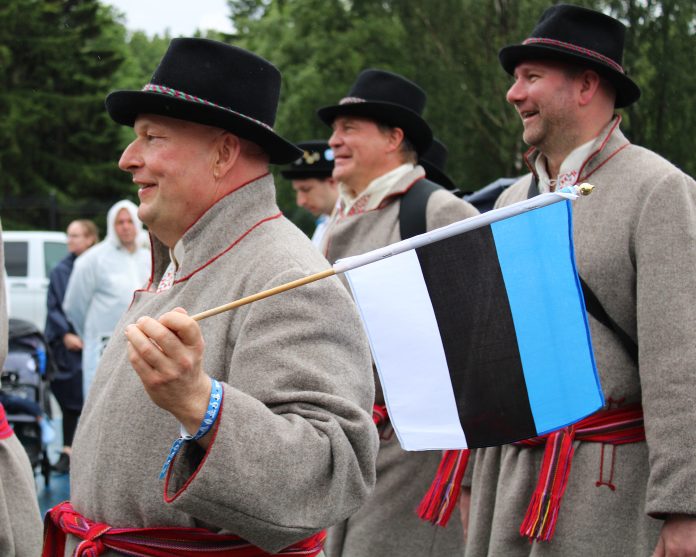
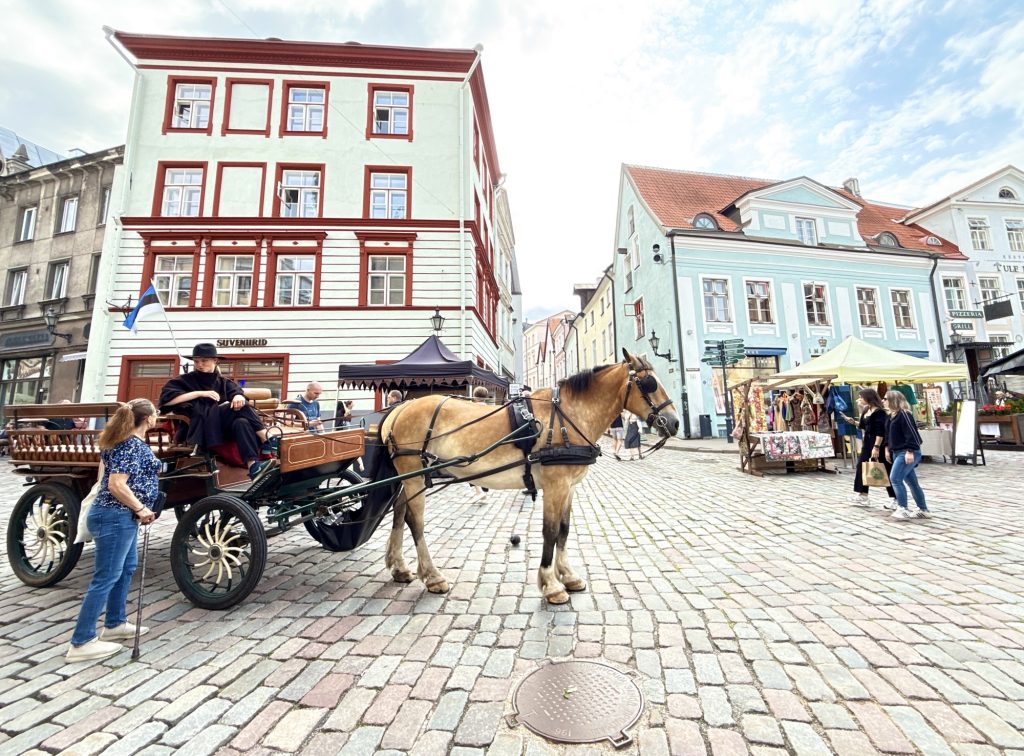
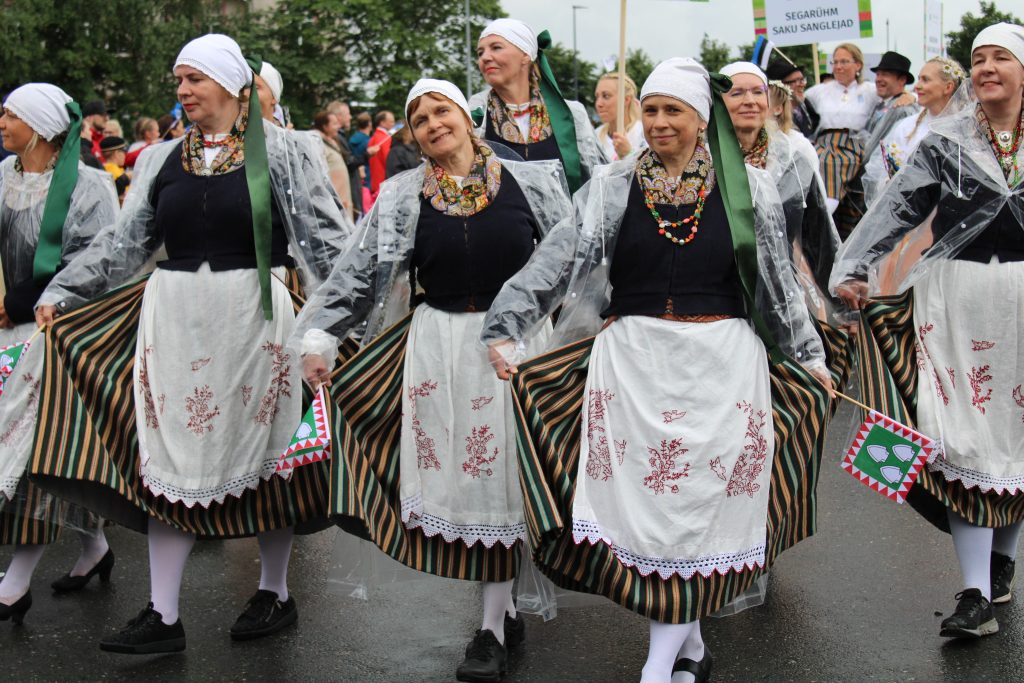
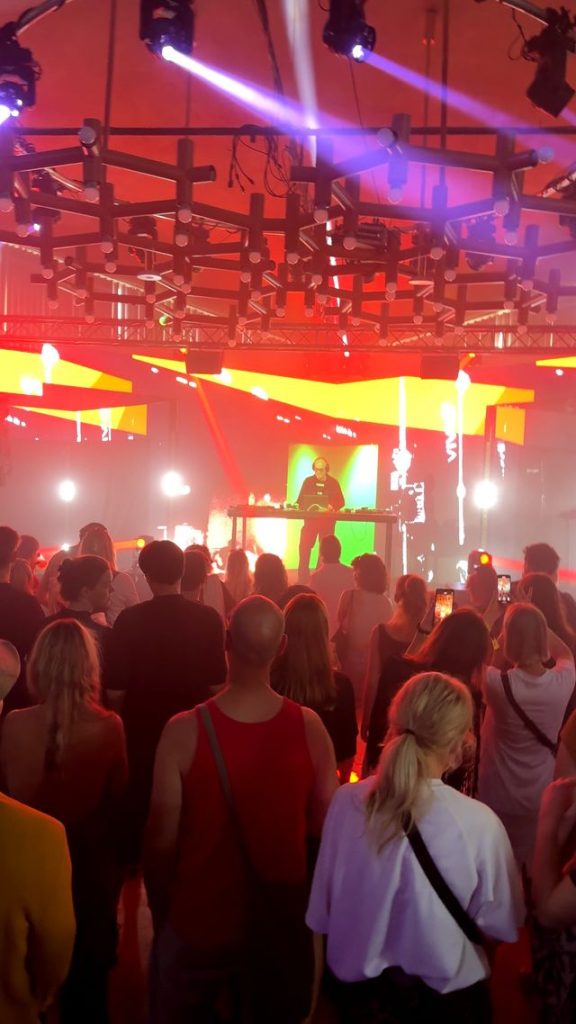
It’s been far too long since Melbourne has seen a Baltic bash quite like this — and on Sunday, 19 October at 2pm, we’re bringing it all back under one roof at Estonian House. Choirs, dancers, kids, costumes, cake — if it’s Baltic, it’s probably on the program.
This year’s Spring Fling isn’t just another Baltic song festival (lovely as those are). It’s the full package — singing and dancing, with around 150 performers taking to the stage. Two kids’ groups kick things off (expect maximum cuteness), followed by the Lithuanians and Finns. Then — after a well-earned coffee and food break — the Latvians take the stage, before the Estonian folk dancers get everyone’s toes tapping and the Estonian choir rounds out the afternoon in grand, harmonious style.
Where Baltic beats meet baked goods
While the choirs raise the roof, the Baltic Market will be buzzing with handmade crafts, jewellery and tasty Baltic treats. But that’s not all — this year, community members are once again bringing their legendary home-baked cakes, pastries and sandwiches for everyone to enjoy. If you were at the Melbourne Laulupidu last May, you’ll remember just how good our local bakers are — the kind who can turn butter, sugar and nostalgia into something borderline spiritual.
Vendors, take note! If you’d like to sell your art, jewellery, handicrafts, food or drinks, please purchase a stall via the ticketing link below, then email the organisers at info[at]melbourneestoniansociety.com
And yes, there’s a raffle, because it wouldn’t be a proper Baltic event without one. Expect prizes as impressive as our choirs and folk dancers — think Estonian artist Navitrolla artwork, an Anglesea sauna escape, Baltic gourmet hampers, and even bottles of wine to toast your luck.
If you’d like to contribute a prize, please email the organisers first at info[at]melbourneestoniansociety.com to let them know what you’re donating — before you bring it along on the day.
More tickets, more fun
The first ticket batch disappeared faster than kiluvõilevad (sandwiches) at morning tea, so we’ve released more!
📅 Sunday, 19 October 2025, 2.00 – 6.00 pm 📍 Estonian House, 43 Melville Road, Brunswick West, VIC 3055 🎟️ Tickets: $20 per adult | Kids 17 and under free 👉 Book your ticket here before they disappear again.
So gather your friends, dress up (or don’t), bring your kids, bring your curiosity — and come soak up a day of Baltic energy, joy and togetherness. Because when the music starts and the dancers start twirling, you’ll be very glad you didn’t stay home doing laundry.
More information
Melbourne Estonian Society 🌐 www.melbourneestoniansociety.com 📧 info[at]melbourneestoniansociety.com
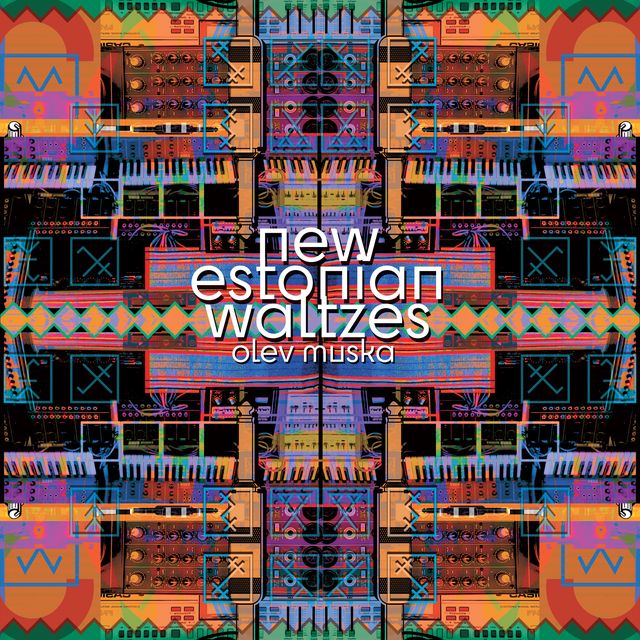
Cover of Olev Muska's record New Estonian Waltzes. Source: Maarja Merivoo-Parro.
New South Wales based Olev Muska, hailed as the father of Estonian ethnotronica, recently completed an extensive Baltic tour with over 20 events. A tour of this scale is exceptional for Estonia and unprecedented among visiting diaspora artists.
The endeavour was organised by the record label Glitch Please, whose executive Karl Korts sprang into action after hearing Muska’s music at the beginning of the year. By springtime, Muska’s new album had gone to press and his concert calendar for the summer was packed.
Olev Muska has been actively creating since the 1970s. In addition to experimental music, his many endeavours also include public art projects, design and film. Muska’s audience has been growing steadily, with multiple international releases and critical acclaim under his belt. In Estonia, he is regarded as a cultural icon.
“Muska is like a magic word in Estonian music circles — it opens doors,” confessed Karl Korts after counting many happy accidents on the road to the most ambitious tour he has organised thus far.
Olev Muska put on a number of solo shows, for example at the legendary HALL club and Cabaret Volta in Tallinn and Armastuse Saal in Tartu. He also took the stage at several festivals — for example, Kõu, Dark Side of the Moon, and I Land Sound — and rubbed shoulders with local musical icons like Vaiko Eplik, Kiwanoid, and Ratkiller, to name a few. There were also events specifically catering to audiophiles where Muska’s discography was played, as well as speaking engagements and workshops.
“With my partner, Angela Pasqua, we encountered many wonderful people — relatives, old friends, colleagues, professionals, and newly formed friendships — often warm, generous, enthused and highly respectful. And highly intelligent. Angela videoed and photographed as I performed. As a 71-year-old, it was inspiring to see lots of young people listening to and jumping to my particular brand of electro-folk,” reminisces Muska.
The media was highly engaged with covering Muska’s activities, and his fresh LP New Estonian Waltzes was quickly sold out, giving music circles cause to call the summer of 2025 “Muska’s summer”. There were also tour T-shirts, a dedicated beer from a local brewery, and a new book about Muska’s old band Kiri-uu — a favourite of Rolling Stone magazine — the group with which Muska had toured Estonia over 35 years ago. It was then that he had finally met Estonian composer Veljo Tormis, whose work had influenced his own. Muska remembers that experience fondly. This summer, he had the privilege of symbolically returning to Tormis once more for the late composer’s 95th birthday celebration at his childhood home in Kõrveaia to present the new book about Kiri-uu, where Veljo Tormis himself is also a character.
The intense tour also gave Muska opportunities to perform in his own ancestral spaces: his mother’s home village, Kabli, on the western coast, as well as the island of Kihnu — home of Muska’s great-grandmother Marie Uuetoa, sister to legendary Kihnu Jõnn. By the end of “Muska’s summer”, both Olev and Angela were invited guests at the Estonian President’s annual Rose Garden celebration in honour of Estonia’s re-establishment as an independent country.
Muska describes his 50-day trip to Estonia as an amazing adventure:
“Through all the interviews and conversations, I must’ve talked myself empty, and it is somewhat discombobulating that after speaking so much Estonian, now back in Australia, it’s all back to English or pure silence. I do notice, though, that far more of the random conversations happening inside my head are in Estonian. Weird!”
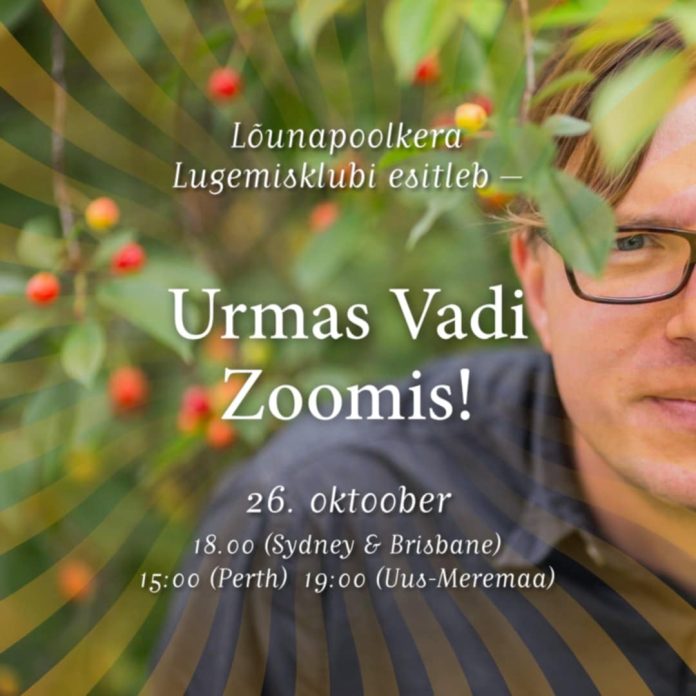
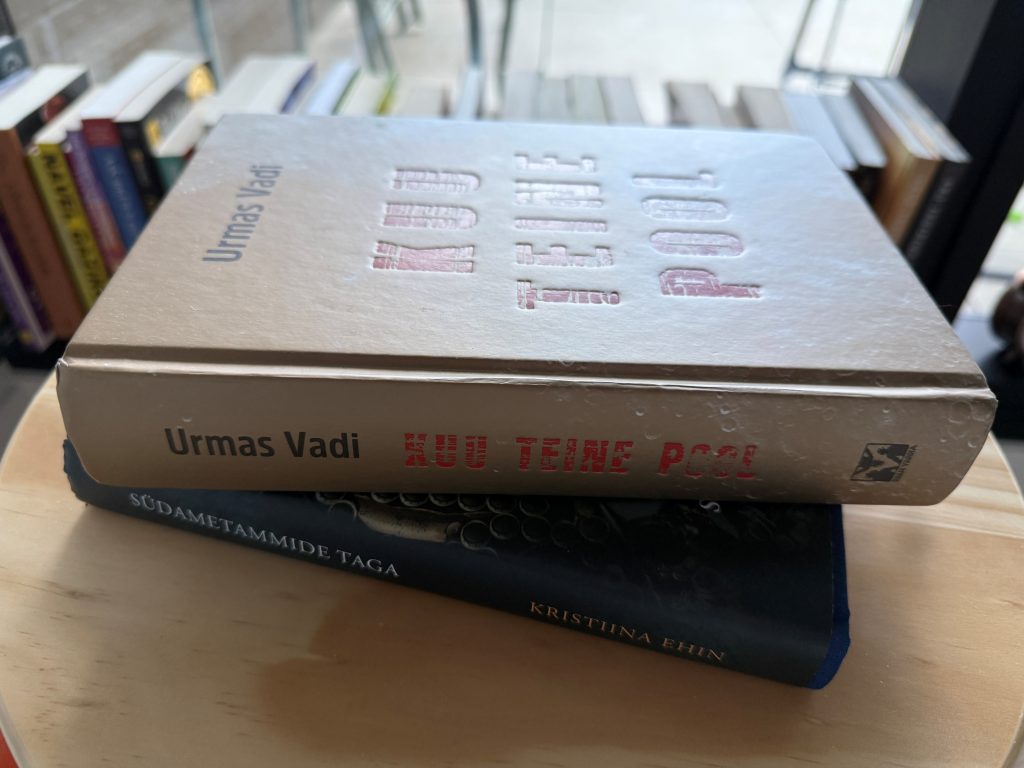
The Southern Hemisphere Estonian Book Club (Lõunapoolkera Lugemisklubi) is kicking off its second virtual literary event — and this time, our guest is none other than one of Estonia’s most distinctive contemporary writers, Urmas Vadi, who will join us to talk about his award-winning novel Kuu teine pool (The Other Side of the Moon).
In the lead-up to the event, Urmas Vadi kindly answered several questions from HEIA, sharing thoughts on writing, life and what “home” means to him. It’s not every day our readers get to hear directly from an author whose humour, humanity and oddball charm have made him one of Estonia’s best-loved literary voices.
From Sydney rain to literary acclaim
Imagine a rainy Sydney afternoon. You’ve just landed, hopeful for beaches and sunshine, but instead find yourself stepping off a bus into grey drizzle on Anzac Parade. That was Urmas Vadi’s very first impression of Australia back in the mid-2000s, when he arrived as one of the early Estonian backpackers with a Working Holiday Visa. His memory is still sharp: the plane sprayed down before landing (“to kill off any unwelcome microbes”), the apartment key in hand, and the shock of rain instead of Bondi.
This October, Vadi returns to Australia in a different way — through our screens, as the special guest of the Southern Hemisphere Book Club.
Event details
📅 Date & time: Sunday, 26 October 2025 🕕 6.00 pm Sydney & Melbourne | 🕒 5.00 pm Brisbane | 🕒 3.00 pm Perth | 🕖 8.00 pm New Zealand 💻 Where: Zoomlink here. Meeting ID: 861 5805 1811 | Passcode: 855791 🗣 Event language: Estonian 📖 The Other Side of the Moon is available in print (Apollo, Rahva Raamat) and as an audiobook (Rahva Raamat app).
A book that feels like life itself
The Other Side of the Moon is a story of family — how its love, patterns and fractures ripple across decades. It’s funny, painful and instantly recognisable (“like your own life, but better written,” as one Estonian reader quipped).
Asked what he hopes readers take away, Vadi replies:
“Maybe a sense of lightness. Things are as they are, but we can change our patterns and behaviours. Life is serious, but we don’t always need to take ourselves too seriously.”
That delicate balance — humour meeting heart — is what makes his writing so memorable.
The novel has also been showered with accolades, winning Aasta Raamat 2024 for Best Estonian Fiction, the People’s Choice Award, and Estonia’s oldest literary prize — the Eduard Vilde Award.
Books we’ve been reading at the Southern Hemisphere Estonian Book Club. Photo by Kristel Alla.
The many hats (and awards) of Urmas Vadi
Born in Tartu in 1977, Urmas Vadi is a novelist, playwright, radio host and theatre director — a creative powerhouse whose career spans more than 25 years. His works often blend the absurd with the deeply human, offering witty yet thoughtful reflections on modern life.
The Other Side of the Moon is his fifth novel, following Letters to Aunt Anne (2010), Back to Estonia (2012), Neverland (2017) and Balletmeister (2019). The latter reimagined Estonia’s 1940s through comical and surreal adventures and went on to win the Virumaa Literary Prize.
Over the years, Vadi has received some of Estonia’s most prestigious literary and theatre honours, including the Friedebert Tuglas Short Story Award, the Literature Endowment Annual Award, the Tallinn University Literary Prize, and the title of Writer of the Year. He’s also been recognised as a Culture Carrier of Tartu and continues to contribute to Estonian public broadcasting as a creator of literary and cultural programs.
With his trademark humour, Vadi explores memory, relationships, identity, and the small absurdities that shape everyday life — the very qualities that have earned him a loyal following both at home and abroad.
“No ghosts at home”
When HEIA asked Urmas about his favourite place in Estonia, he didn’t hesitate: home.
“My favourite place is my home. I live in Tammelinn, Tartu, and six years ago we bought an old house there, which we almost completely demolished and then rebuilt. When we first came to look at the house, my very first thought was: what does it feel like here, are there any ghosts? I went through all the rooms, and everything was clean — no ghosts at all!”
It’s an answer that captures his characteristic humour — everyday, a touch philosophical, and entirely human.
Why join?
Because this isn’t just a book talk — it’s a shared moment of Estonian language, reflection and laughter across time zones and continents, under the same moon. Bring your copy of the book, a glass of wine or a cup of tea, and join in. Pajamas or evening wear — it makes no difference on Zoom.
We’ll meet Urmas Vadi where he writes best: at the crossroads of humour and truth. Come join us. Everyone welcome — even if you haven’t read the book yet.
👉 Join the Zoom meeting on 26 October at 6.00 pm (or your local time) — no registration needed!
This book club event is made possible thanks to the joint contribution and support of the Estonian societies of Sydney, Brisbane, Melbourne, Perth and the Gold Coast.
Thank you to Urmas Vadi for answering our questions and Ave Nukki for making this happen!
Books. Banter. A touch of homesickness. And a whole lot of heart. That’s the Southern Hemisphere Estonian Book Club for you!
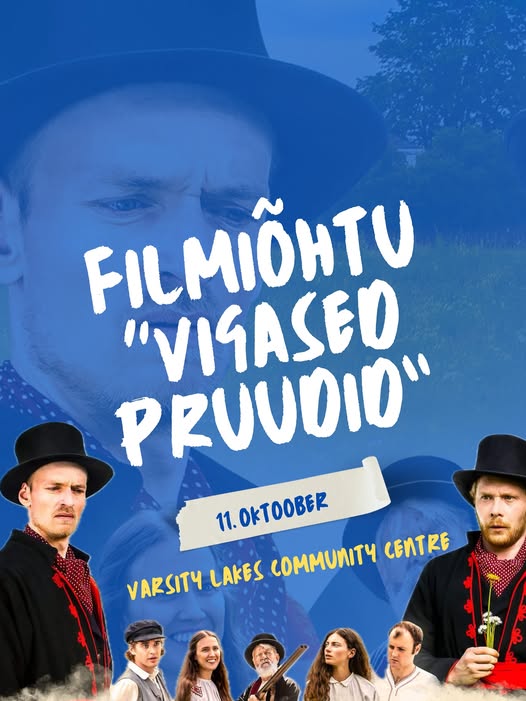
Estonian wit takes centre stage on the Gold Coast — the laughs continue this Saturday as the Gold Coast Estonian Society screens Faulty Brides (Vigased pruudid) at its latest Estonian Movie Night. Expect great company and a relaxed community vibe with Estonian drinks, snacks and even a play corner for the kids.
Directed by Ergo Kuld, Faulty Brides is a fast-paced comedy based on Eduard Vilde’s 1888 classic story of arranged marriages gone hilariously sideways. The film reimagines a clash between old traditions and young love — when stubborn fathers, romantic daughters and overly confident suitors collide in a tangle of heart and humour.
Behind the laughter lies a surprisingly forward-thinking message: Vilde was writing about women’s independence and free choice long before it was fashionable. As Kuld explained to Pärnu Postimees, “Eduard Vilde’s humour is also timeless, but behind the jokes he deals with serious topics and is at times very socially critical. At a time when marriages arranged by parents were very common, Vilde was the first to write a work that feels like a declaration of a new era. In Faulty Brides, the younger generation stands up decisively to the older one to decide their own happiness.”
It’s a story that still feels fresh today, reminding us that love — and a little rebellion against parental meddling — never go out of style.
Vigased pruudid stars Pääru Oja, Kaspar Velberg, Maarja Johanna Mägi, and Maria Teresa Kalmet, and comes with English subtitles so everyone can enjoy the fun.
🎬 Event details
📅 Saturday, 11 October 2025 🕒 Doors open 3.00 pm | 🎞 Film starts 5.00 pm 🎥 In Estonian with English subtitles 🍺 Snacks, Estonian beer, Gin Long Drinks and sweets for kids 🧸 Children’s play corner 📍 Varsity Lakes Community Centre, 20 Mattocks Road, Varsity Lakes QLD 4227 💰 Tickets $10 — Book via TryBooking
The Gold Coast Movie Nights series is fast becoming a community favourite — part film night, part social catch-up. Organisers hand-pick recent, award-winning Estonian films by reaching out directly to producers, ensuring audiences get a taste of the best of Estonian cinema without leaving the coast.
Every Estonian knows that breakfast starts with bread — and not just any bread. Proper rye bread — the kind that smells amazing, holds its crust in any weather, and stays the taste of home no matter how far you wander.
This week, Estonia is giving that humble hero its due. From 6–12 October 2025, the country celebrates Bread Week, honouring leib — the one food no Estonian childhood, picnic or president can do without. But this year, the celebration comes with a twist of national pride: a formal proposal submitted to have Eesti rukkileib (Estonian rye bread) recognised as a Protected Designation of Origin across the European Union (kaitstud päritolunimetusega toode).
That means only bread baked in Estonia, from locally grown rye, milled flour and proper sourdough starter, could proudly call itself Eesti rukkileib. It’s the bread equivalent of heritage status — crust and all.
An old tradition fresh out of the oven
Bread Week officially began when Uno Kaldmäe, president of the Estonian Bread Union, carried a warm loaf — affectionately named Bruno — to President Alar Karis in Kadriorg. The tradition has continued for 27 years, a symbolic handover celebrating both gratitude for the harvest and respect for bread as a national symbol. This year’s loaf, baked by Hiiumaa Pagar, channels the flavour of old Borodino bread, with a hint of coriander for personality.
All week, bakeries, schools and kindergartens are getting their hands floury, hosting bread-themed workshops, tastings and lessons in the ancient art of rising dough. Meanwhile, students in Tartu are showing that bread can be both sustainable and stylish, reusing old loaves in new recipes and introducing visitors to bread traditions from around the world.
President of Estonia, Alar Karis, receiving a gift of bread from the President of the Estonian Bread Union, Uno Kaldmäe. Source: Vabariigi Presidendi Kantselei.
More than food — it’s the flavour of belonging
For Estonians, bread isn’t just a staple — it’s a symbol of continuity and belonging. It’s the smell of those lazy Sunday brekkies with family around the table, the taste of home after a long trip, the quiet heartbeat of everyday life.
As Eesti rukkileib moves toward official recognition in Europe, Bread Week reminds everyone that this isn’t just about a loaf — it’s about who we are and where we come from.
From 14–16 November 2025, the Estonian Language Camp for Children and Families is back at Anglesea YMCA Discovery Camp in Victoria — and this year promises even more culture, fun and seaside shenanigans.
Forget classrooms — this is camp! The best way to learn about your culture and language is by living it — singing songs under the gum trees, weaving crafty treasures, strolling sandy beaches, and battling it out in the kind of “Olympic Games” where kids usually outrun their parents (again) and referees hover with red cards at the ready. Add bonfires, good food, and plenty of Estonian words slipping into conversations — sometimes on purpose, sometimes by accident.
Everyone’s welcome — whether you’re fluent in Estonian, know a few words, or just enjoy the sound of vowels you can’t quite pronounce. The point is to have fun together and give kids a chance to hear and use Estonian in the wild (gum trees count as the wild, right?).
📅 Friday to Sunday, 14–16 November 2025 📍 Anglesea YMCA Discovery Camp, 1535 Great Ocean Road, Anglesea VIC 3230 🎟 Tickets close 30 October 2025: Grab yours here 👉 Information or special arrangements? Email info[at]melbourneestoniansociety.com
The details (a.k.a. excuses to pack your bags)
Kids (16 & under) join for free — no excuses, bring the whole gang.
Adults can grab a single ticket or a family pass. Concessions available.
Curious? Pop down on Saturday to see what all the fuss is about.
Back in 2024, the inaugural camp set the tone — everyone left sandy, tired, marshmallow-sticky and unanimous: so much fun! Highlights? The Olympic Games, where kids obliterated their parents in obstacle courses and football matches, beach adventures with bonus seashell collections, arts and crafts in Estonian colours, and marshmallow bonfires that turned chilli nights into warm memories.
Children proudly marched away with printed medals and camp T-shirts, parents limped away with sore legs and full hearts, and everyone agreed: best idea ever!
The Melbourne Estonian Society can’t wait to do it all again. So polish your marshmallow stick, practise your Macarena, and pack an extra pair of socks — we’ll see you by the campfire in November.
Read more
Read more about what happened at the camp last year here:
This camp is supported by the Estonian Cultural Foundation in Australia, the Institute of the Estonian Language (Eesti Keele Instituut), the Estonian Integration Foundation (Eesti Integratsiooni Sihtasutus), and the Melbourne Estonian Society.
Anne and Kati-Rose from Baltic Folk with H.E. Jaan Reinhold. Photo from the private collection of Jaan Reinhold.
This weekend the Sydney Baltic Markets transformed the Latvian House into a buzzing hub of Baltic culture, crafts and community. The day also included a tour of the Latvian House archives and library, and speeches from the Baltic ambassadors — read the full text of Estonian Ambassador Jaan Reinhold’s address below.
Organised by the Latvian Society and supported by the Estonian and Lithuanian communities, the event drew crowds eager to browse handmade jewellery, try Baltic treats, and enjoy wonderful performances from choirs and folk dancers.
Estonian stalls stood out with beautifully presented products and flavours of home — from rye bread, kohupiimakook and teekook to smoked sausage, pirukad and folk-inspired jewellery. Visitors could also find Latvian and Lithuanian favourites, from beetroot soup, Karums kohukesed to apple strudel. And for those seeking a stronger taste of home, Estonian alcoholic beverages — beers, longero and Vana Tallinn.
The day was made special by great performances: Estonian Virmalised folk dancers and the Kooskõlas choir performed alongside Latvian and Lithuanian groups. The Baltic ambassadors joined the celebrations and toured the Estonian stalls, giving vendors the chance to share their work and stories. Estonian Society of Sydney President Ave Nukki summed up the atmosphere simply: “Excellent event! Väga tore üritus oli!”
Adding to the sense of occasion, Ambassador of Estonia to Australia Jaan Reinhold delivered a warm and thoughtful address to the gathered community.
Madis Alvre, Jaan Reihold and Tiina Alvre. Baltic markets in Sydney, 27 September 2025. Photo by Ave Nukki.
Welcoming address by the Estonian Ambassador Jaan Reinhold at the Sydney Baltic Markets, 27 September 2025.
Dear friends,
It is a great honour to join you here today at the Sydney Baltic Markets. My warm thanks go to Latvian Society for hosting us in this beautiful Latvian House, and to my Latvian and Lithuanian colleagues for this joint effort in representing our shared Baltic spirit.
We, the Baltic nations, have always been known for our energy and determination to work hard and build. This was true when we first created our modern economies after independence, and again when we rebuilt them after regaining our independence.
The same spirit carried our compatriots who left Europe after the Second World War and started new lives in faraway places, including here in Australia. They brought skills, resilience and entrepreneurship with them, and that legacy continues to shine in our communities today.
I am proud to note that Australia is home to one of the few Estonian Chambers of Commerce established outside Estonia, a living example of how entrepreneurial spirit turns into concrete partnerships and opportunities.
H.E. Jaan Reihold speaking at the Baltic markets in Sydney, 27 September 2025. Photo from the private collection of Jaan Reinhold.
But alongside enterprise, we are also peoples of culture, handicraft and tradition. This market shows it so well: every stall and product, every performance tells a story about our heritage. Through them, you bring Estonia, Latvia and Lithuania closer to Australia. It is very rewarding to see how our culture, preserved across generations, becomes part of the rich mosaic of Australian society, which itself is built on diversity and strong diasporas.
And yet, there is something more – the Baltic spirit. A spirit that united us when we fought for our independence, and that continues today as we stand with those whose struggle is our own. Today, this means Ukraine. Ukraine is fighting not only for its survival, but for the very values of freedom and dignity that we share.
I want to express my deep gratitude to our Baltic communities here in Australia. Across this country: in Sydney, Melbourne, Adelaide, Perth and beyond, you have stood up for Ukraine with passion and dedication: organising rallies, raising awareness, providing humanitarian aid, and keeping the cause alive in the public conscience. You honour our history and you show the world that solidarity is not an abstract word, it is lived action.
On a personal note, I was born in an Estonian town close to the Latvian border, and my first diplomatic posting was to Lithuania. So today, among all of you, I truly feel at home – as an Estonian, yes, but also as a proud representative of Baltic nation.
Let me close by thanking everyone who has worked so hard to make this event possible, especially our Latvian friends. I am delighted to see so many entrepreneurial Estonians here too. Please keep this tradition going – it strengthens our bonds, showcases our heritage, and keeps alive the good spirit of three close nations in this generous country we now call home.
I wish you all a joyful day here at the Sydney Baltic Markets. Aitäh, paldies, ačiū!
Acknowledgement
With thanks to Ambassador Jaan Reinhold for sharing his speech and photos, and to Ave Nukki for providing information and photos from the markets.
Estonia’s beaches are famed for their wild beauty — and some hide a secret. Under the right conditions, the sand itself begins to “sing”, a mystery filmmaker Aare Baumer explores in his new documentary Seitse liiva (Seven Sands), premiering at the Matsalu Nature Film Festival.
The sands literally squeak or hum when touched, walked on, or shifted by the wind. What makes it enchanting is how pure and delicate the sound is. Each grain resonates with its neighbour, creating a natural chorus that scientists still don’t fully understand.
However, sand can have stage fright. Apparently, sand won’t sing just because you ask nicely. Aare Baumer found out the hard way. He has been chasing this strange natural phenomenon for three years.
For sand to sing, the surface temperature has to be above 26°C, the air humidity below 60 percent, and you need grains that are practically identical twins. Oh, and you have to stroke the sand at just the right speed — slower than 0.4 metres per second and you’ll get nothing but silence. Think of it as Estonia’s version of karaoke: the conditions need to be just so before anyone dares to belt out a tune.
A chill film without the word “chill”
Baumer originally set out to make a “chill” film, he told ERR. Then he realised Estonian doesn’t really have a word for “chill,” so he had to improvise. Instead of sunsets on repeat, he gave us seven beaches and a spider-meets-ant showdown on Nõva beach — the arthropod equivalent of a Tarantino scene, minus the soundtrack. Turns out the beach isn’t just for humans; it’s crawling with dramas if you crouch down low enough. It’s a whole other world down there.
Estonia’s secret symphonies
Estonia is home to several of these rare “singing” stretches. If you’re wondering where to try this for yourself, head for Lake Peipus (Peipsi). At Kauksi, Estonia’s longest sandy beach, each barefoot step can set off a faint melody, a blend of nature and music that lingers in memory long after you’ve left the shore — part concert, part science experiment.
Laulasmaa (“singing land”) hints at the same magic in its very name, though like any diva, the sand only performs when it feels like it. The same phenomenon has been recorded in deserts across the world, from China to California, but here in Estonia it has its own gentle Baltic charm.
Meet the man behind the camera
Aare Baumer is not your average filmmaker. He’s an inventor, science communicator, and collector of spider webs (yes, really). As head of science and development at the Energia Discovery Centre, he’s spent decades bringing science to the public, winning the Tiiu Silla Lifetime Achievement Award for his efforts. He insists curiosity is what drives him — though he admits his heart races when audiences get his “meta-jokes” tucked into the science.
A film that listens closely
Seitse liiva isn’t just about sand, it’s about wonder — and listening closely to the world under your feet. For those lucky enough to be at the Matsalu festival, the film offers a new way to experience Estonia’s coast. For the rest of us, it’s an invitation: next time you’re by an Estonian beach, try sliding your hand across the sand. If the conditions are right, you might just hear it sing. How cool is that?!
Sydney, get ready — because from 29 September to 3 October 2025, the world’s space elite are landing in town for the 76th International Astronautical Congress (IAC). Astronauts, astrophysicists, rocket-builders and dreamers from every corner of the globe will be talking satellites, Mars missions and sustainable futures. And guess what? Estonia’s part of the crew.
A 10-member Estonian delegation is strapping in, bringing with them representatives from the Estonian Parliament and some of the country’s brightest space minds. Think: Tartu Observatory, Crystalspace, KuupKulgur, the Estonian Student Satellite Foundation, Moliri and Enterprise Estonia.
It’s a line-up that proves Estonia isn’t just about singing festivals and bright minds — we’ve also got our eyes firmly fixed on the stars.
Mission Sydney Estonian House
On 2 October 2025, the delegation will touch down at the Sydney Estonian House. This one’s strictly invitation-only, but those lucky enough to nab a seat can expect mingling, snacks, drinks and a film that’s practically rocket fuel for the imagination.
The screening? “ESTCube-2.X: Ten Years to the Stars” — a documentary that tells the story of Estonia’s most ambitious satellite project. Spoiler alert: there were delays, disasters and a pandemic thrown in for good measure. But against all odds, a team of brilliant students got ESTCube-2 into orbit. Sure, the ending wasn’t quite Hollywood (or was it?), but the grit, genius and gall behind it will inspire anyone who’s ever tried to make the impossible fly.
About IAC 2025
This year’s IAC theme, “Sustainable Space: Resilient Earth”, is all about making sure our adventures in the cosmos don’t wreck the home planet. Hosted by the Space Industry Association of Australia, the Congress promises everything from heavyweight plenaries to Space Day – Powered by LEGO® Play (yes, really).
For Estonia, it’s not just about showing off satellites. It’s about proving that even a small country can punch above its orbital weight — and reminding the world that Estonians don’t just sing under the stars, we build the technology to get there.
Roll up, roll up — the Sydney Baltic Markets are turning Strathfield into a little corner of Estonia, Latvia and Lithuania on Saturday, 27 September. Expect stalls piled high with Baltic treats, from pirukad fresh from the oven to rye bread still warm, plus Estonian folk performances to keep your feet tapping while you shop.
Beyond the flavours, discover Baltic-inspired jewellery, beautiful handmade designs, and even a splash of Ukrainian colour. Kids can dive into their own craft corner, while the rest of us browse, eat and clap along to surprise pop-up performances.
⭐ Highlights
Estonian folk dancers Virmalised and choir Kooskõlas – bringing Estonian joy to the stage.
AeroTravel– the go-to boutique agency for Estonian Australians, keeping our community travelling the world safely and stylishly.
Baltic Folk – contemporary jewellery inspired by Estonian tradition (and your ancestors will approve).
Estonian Designs AU – making their first ever market stall debut (we’re excited for you!).
Eurodrinks – with an exclusive market deal: your favourite alco bottles just $50.
Whether you come for the cake, the singing, or the chance to stock up on Vana Tallinn, this is one Saturday you don’t want to miss. Come early and who knows, you might even get to shake the hand of a Baltic Ambassador or two…
🕙 Saturday, 27 September 2025, 10.0 am to 3.00 pm 📍 Latvian House in Sydney, 32 Parnell Street, Strathfield NSW 2135 💸 Entry: Free
Tallinn may be small, but it’s got plenty stories to tell. In 48 hours it served the British TV popular Travel Man hosts, Richard Ayoade and Alice Levine, a buffet of medieval murder stories, KGB paranoia and a schnitzel the size of a trampoline.
The pair kicked off their tour at the Tallinn TV Tower, where Estonians once blocked Soviet troops from hijacking the airwaves (simply by turning off the elevators — Tallinn’s tallest building, 1; Soviets, 0). Richard and Alice, naturally, hijacked the broadcast room instead — reporting breaking news about the Wife Carrying Championships. Pulitzer material, clearly (with some practice).
Old Town, new trauma
With tour guide Riina leading the way, the Old Town offered up charming squares, gothic cathedrals, and a monk who committed murder over warm beer. (Lesson: never mess with an Estonian barkeep.) Also: a “Peeping Tom” legend where the joke was literally built into the wall. Tallinn: where history is equal parts UNESCO and unhinged.
Boozy business and bugged hotels
Next came Pegasus Bar, where the infamous “Hammer and Sickle” cocktail — basically Fanta with a vendetta — left them blinking with one eye closed. Suitably wobbly, they tottered into Hotel Viru’s secret KGB floor, a Cold War wonderland of hidden microphones, surveillance equipment, and exploding “curl bombs” to keep staff in line. Airbnb could never.
Ice, Ice, maybe?
What’s more relaxing than sliding across a frozen lake on kick sleds? Answer: absolutely anything. At Lake Maardu, Alice screamed with joy while Richard looked like he was auditioning for Frozen: The Existential Crisis. Richard got unusually quiet — that should tell you something.
Noah’s Ark (of schnitzel)
At Restaurant Noah, they sampled aubergine “caviar”, eel sushi, scallops, and the mighty “elephant ear” schnitzel — a chicken cutlet flattened within an inch of its life. The sharing plates caused mild diplomatic tension: Alice wanted Richard’s food, Richard wanted Richard’s food.
Sean Connery’s big head and marzipan meltdown
The Scottish Club revealed Tallinn’s most baffling landmark: an oversized bust of Sean Connery lurking in a courtyard, because why not. From there it was on to Café Maiasmokk, where the pair painted marzipan frogs and chickens that looked like fever dreams. Their instructor politely called them “creative”. Translation: nightmare fuel.
Sink or swim
Finally, they wrapped things up at the Seaplane Harbour Museum, crawling over a submarine while debating whether it was sinking or “just underwater”. Tallinn, of course, stayed afloat — equal parts oddball, historic and heartwarming.
Verdict?
Tallinn smashed it. The guides were brilliant, the food outrageous, the stories deranged, and the cocktails aggressively orange. As Richard put it: “The people have been the wind beneath our chicken wings.”
So next time you’re in Estonia, remember: Tallinn isn’t just charming — she’s surprising, a little mischievous, and impossible not to love.
Watch it here
We had a few laughs watching this episode and even learnt a thing or two about Tallinn. Watch the episode, 24 minutes, by clicking below. Or catch the 8-minute version here.
This episode was first aired on 29 April 2019, reposted 16 September 2025. Read more about Travel Man and see where else in the world the show has travelled since they first aired in 2015 here.
Maie (middle),
with her daughter, Kristi (2nd from left) , relatives Anne (left), Elen (2nd from right) and Foreign Minister Margus Tsahkna (right) at the Great Flight Commemoration service in Tallinn in September 2024.
It has been a year since the 80th commemoration of the Mass Flight of 1944. This year the occasion will be more modest, with the Mass Flight working group arranging a concert of Eduard Tubin’s music at the Tallinn College of Music and Ballet. I wonder whether the many Estonian organisations that participated last year will mark the day again.
I have been a member of the Mass Flight 1944 (MF 1944) working group for eight years. The group was formed by the Estonian World Council (ÜEKN) to raise awareness of this tragic event in Estonian history. In the autumn of 1944, an estimated 80,000 Estonians fled west to escape the advancing Soviet army. Many perished at sea, so we will never know how many set out — only how many arrived on other shores.
In 2019, for the 75th anniversary, the group arranged a seminar at VABAMU, an exhibition in the Theatre Museum, a wreath-laying ceremony at the Cross of Freedom, and a church service in St John’s Church. Yet none of these activities gained attention from the local newspapers, radio or television and audiences were small. The Mass Flight was not talked about for 50 years, it does not feature in the school history books and was an unpopular topic for many people.
We did not give up. Each September we organised talks for schoolchildren, plays and essay competitions to keep the memory alive. Slowly, we found likeminded organisations in Estonia willing to support our work.
Last year, for the 80th anniversary, everything changed. There was extensive print, TV and radio coverage. Museums, churches, city councils, schools and the Estonian government all took part.
Highlights are described below.
Seminars and exhibitions. The Institute of Historical Memory introduced its refugee database at a seminar in Haapsalu. University of Tartu hosted an exhibition of works by artists from the Geislingen displaced persons camp alongside Ukrainian refugee artists now living in Estonia. The Pärnu Museum displayed photographs from post-war displaced persons camps.
Church and community events. Services were held in Haapsalu, Tallinn, Tartu and Pärnu. At 5.45pm on 19 September, bells rang out across Estonia in memory of those who fled. The Estonian government held a wreath-laying at the Cross of Freedom in Tallinn, while President Alar Karis cast a wreath into the Gulf of Finland to honour those lost at sea.
Discussion series. The Oak Tree Club, with EU support, launched the program “Don’t want to go but can’t stay”. Seminars ranged from women’s expatriate stories to the turbulent autumn of 1944, with speakers from Estonia, Australia and abroad. A short play based on the memoirs of Mari Raamot was performed, and further discussions were hosted at the Estonian parliament and VABAMU.
School engagement. In Tallinn, the ÜEKN Mass Flight 1944 group organised a meeting between refugee expatriates and senior students at Tallinn Real School, followed by a wreath-laying at the memorial stone and a memorial service at St John’s Church.
Memorial stone in the St Michaels Church carpark. Photo from the private collection of Maie Barrow.
The main event for the working group was the unveiling of the memorial in Pärnu on the 21st of September. The sculpture by Elo Liiv, funded largely by diaspora communities in the USA, Australia and Canada, now stands near the city bridge. Once the riverbanks are stabilised, it will be moved to its permanent site with lighting and landscaping. Do go and visit it when you are in Pärnu.
The unveiling was a remarkable day: sunshine, choirs, flags and a large audience. The ceremony was opened by Iivi Zajedova, chair of the working group, followed by speeches from President Toomas Hendrik Ilves, Pärnu’s mayor Romek Kosenkranius, Marin Mõttus of the Foreign Ministry, and committee members including Marju Rink Abel, Ülle Ederma and Kristi Vuht Allpere (Kristi led the memorial project). The Pärnu City Council gave its strong support, and ÜEKN formally gifted the sculpture to the city. Bishop Emeritus Tiit Salumäe blessed the monument before it was unveiled by members of the working group.
That evening, at the Estonian Symphony Orchestra concert, conductor Neeme Järvi dedicated a piece to the memory of those who fled in 1944.
It has been a long journey, but this important part of Estonia’s history is finally being discussed openly. It is no longer only the diaspora who remember, but Estonians everywhere.