Mother’s Day is coming in hot (Sunday, 10 May 2026), and across Australia, Estonian communities are doing what we love — gathering, sharing food, and celebrating the women who somehow make everything work.
Mother’s Day — emadepäev — falls on the second Sunday of May and has been celebrated in Estonia since the 1920s as a day to honour mothers, grandmothers, and motherhood itself.
At its heart, it’s simple: A thank you. A phone call. A bunch of flowers (bonus points if picked, not panic-bought).
Traditionally, it’s about spending time together — sharing meals, giving mums a break from the everyday, and creating those small, warm moments that quietly turn into lifelong memories. And lucky for us — there’s no shortage of ways to do exactly that this year.
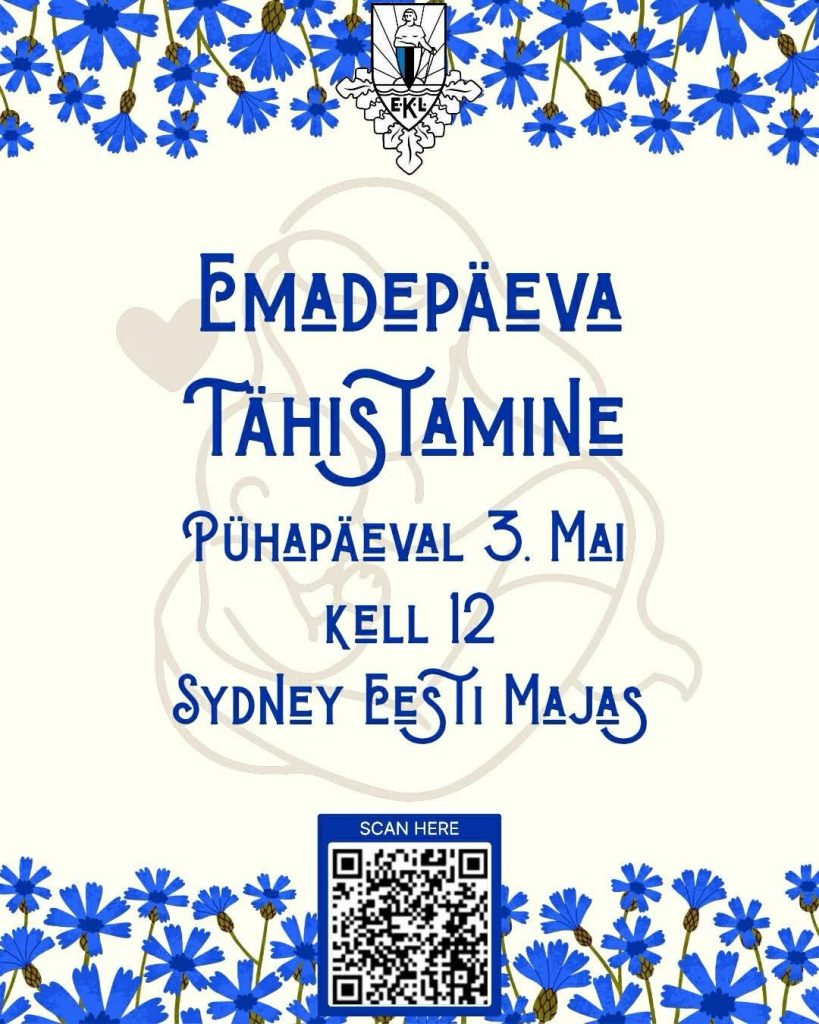
Sydney is keeping things beautifully classic — think coffee, cake, and a cosy room filled with familiar faces. Expect performances, warm conversations, and that comforting feeling of “this is exactly where I’m meant to be.”
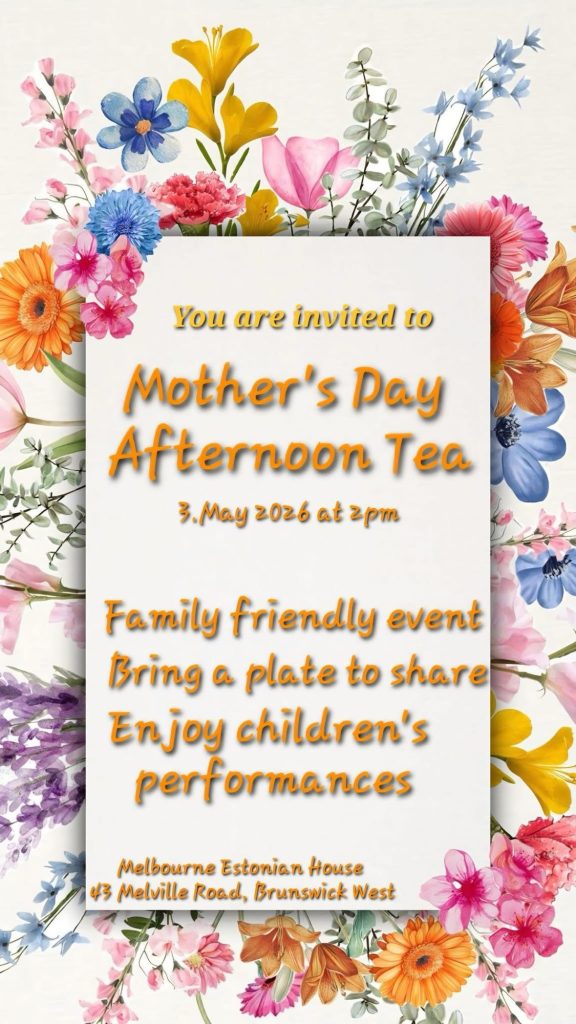
Mother’s Day Afternoon Tea with Melbourne Estonian Society
📅 Sunday, 3 May 2026 🕛 From 2pm 📍 Melbourne Estonian House, 43 Melville Road, Brunswick West VIC 3055 🎟️ Free event (no registration) 🔗 Updates: Event Facebook page 🥧 Bring a plate to share (sweet or savoury — we trust you)
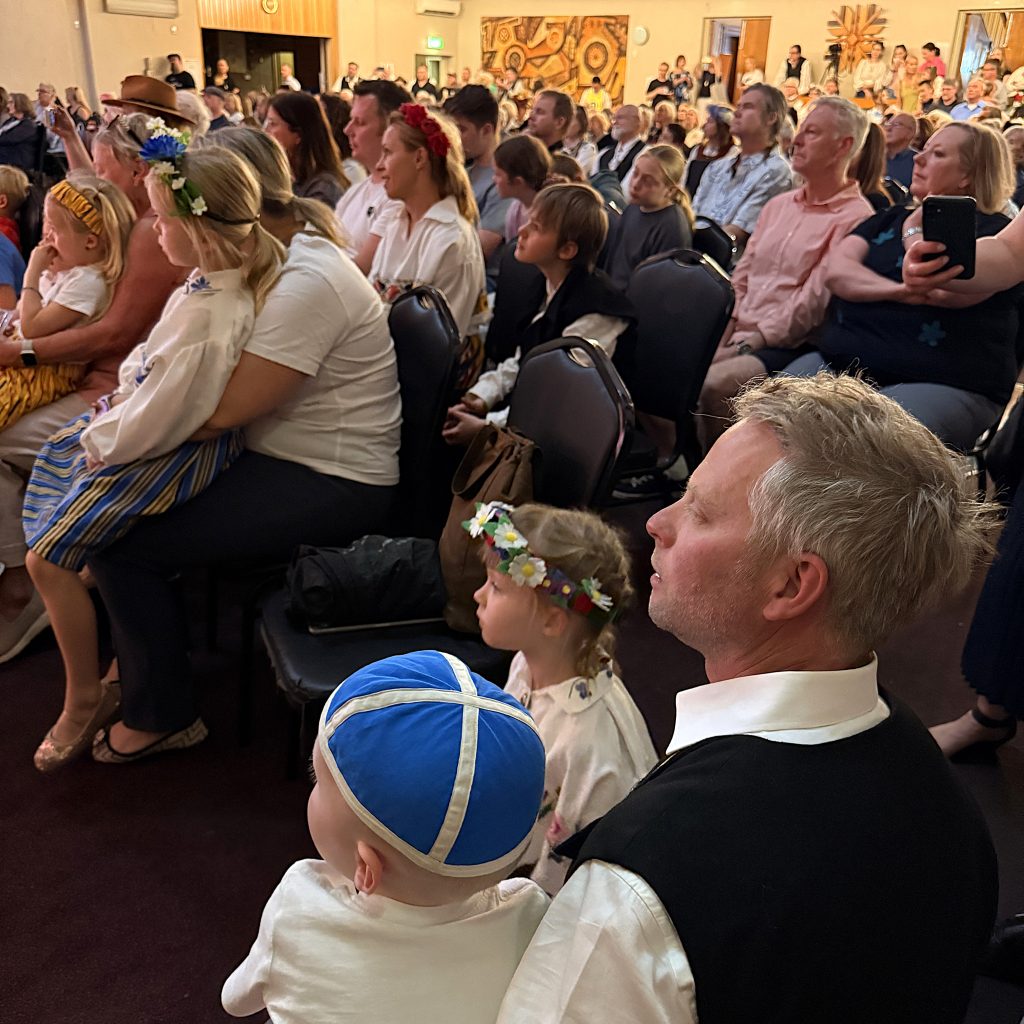
Melbourne is going full community mode — a relaxed afternoon tea with delicious treats, good company, and plenty to keep the little ones entertained.
Expect children’s performances, games, laughter, and that familiar hum of people catching up over second (and third) slices of cake.
Source: Estonian Society in Melbourne.
Brisbane — picnic, performances and sunshine
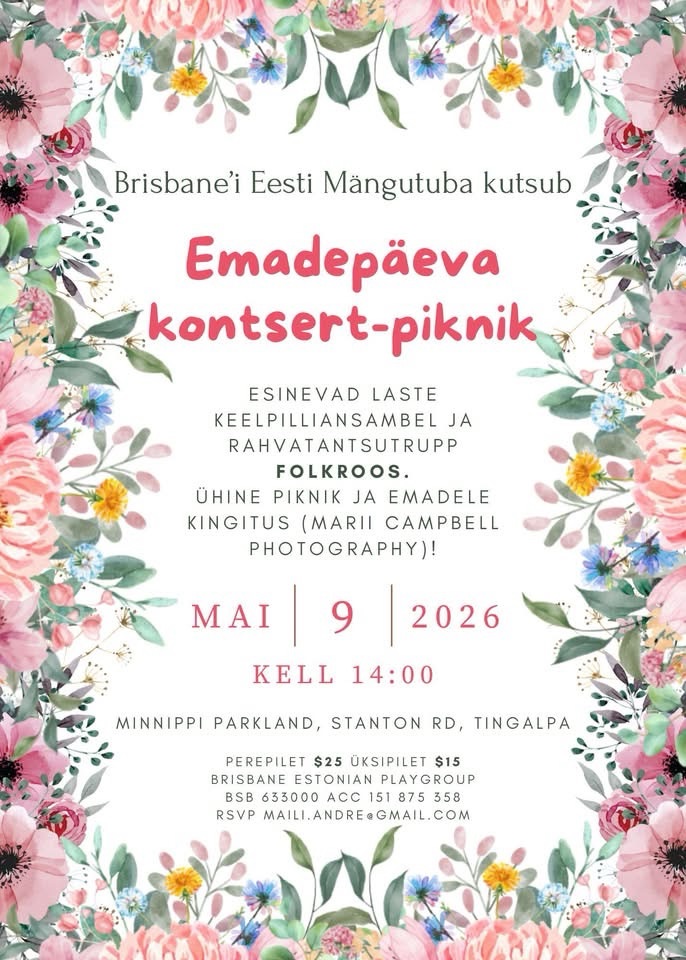
Mother’s Day Concert and Picnic with Brisbane Estonian Playgroup
📅 Saturday, 9 May 2026 🕑 2pm 📍 Minnippi Parkland, 139 Stanton Road, Tingalpa QLD 4173 🎟️ $25 family | $15 single 👉 Payment via bank transfer to Brisbane Estonian Playgroup: BSB 633 000, ACC 151 875 358. 📩 RSVP by 4 May (maili.andre[at]gmail.com) 🔗 Updates: Event Facebook page 🧺 Bring a plate to share
Brisbane is taking things outdoors — and honestly, we love this for them. An afternoon of music, games and celebration under the open sky, featuring:
Folk dance by Folkroos
Children’s string ensemble
Singing, games, and gifts for mums
Plus picnic vibes, fresh air, and morss (fruit juice drink) on hand — what more could you want?
Source: Brisbane Estonian Society.
So… what’s the plan?
Whether it’s cake in Sydney, a shared table in Melbourne, or a picnic blanket in Brisbane — the message is the same: Show up. Sit down. Celebrate mum.
Because while the flowers are lovely and the cards are sweet… it’s the time together that really counts.
Final note (with love)
Call your mum. Visit if you can. Bring cake if you’re feeling ambitious.
And if nothing else — just remind her she’s amazing. Happy Mother’s Day!
Dreaming of a summer in Estonia? The legendary malev (youth work camp) is open for ages 13–18 — but you’ve got just one week to apply. Yes, one. Week.
There’s something special about this year — malevs in Estonia are celebrating 60 years, bringing together generations connected by the same kind of summer experience.
What is malev?
Some summers pass. Others… become stories you retell slightly louder every year. Malev sits firmly in the second category.
It’s Estonia’s iconic youth work camp — part first job, part social experiment, part “how did that become the best summer of my life?” situation. You work, you earn, you meet people, you learn how to function without your usual comforts… and somewhere in between, something shifts.
Expect:
your first proper job,
pocket money you earned yourself,
new friendships that don’t stay in Estonia,
teamwork skills (yes, even with people you just met yesterday),
a summer that feels full — in the best possible way.
And the magic? It’s been happening like this for generations. Same idea, new stories.
City or countryside? Choose your adventure
Here’s where things get interesting — because not all malevs are built the same.
City groups (Tallinn): You’ll work a few hours a day, head into shared activities in the evenings, and sleep somewhere civilised (read: with relatives or family friends). It’s a nice balance — structured days, social nights, and just enough independence to feel like you’re doing life properly.
Rural groups (the full “this will change me” experience): You live together, work together, eat together — for 2–3 weeks. It’s giving: shared rooms, simple living, big skies, and long evenings where friendships form faster than you expected. No one is doing your laundry. You’ll be fine. You might even thrive. This is usually where the best stories come from. Just saying.
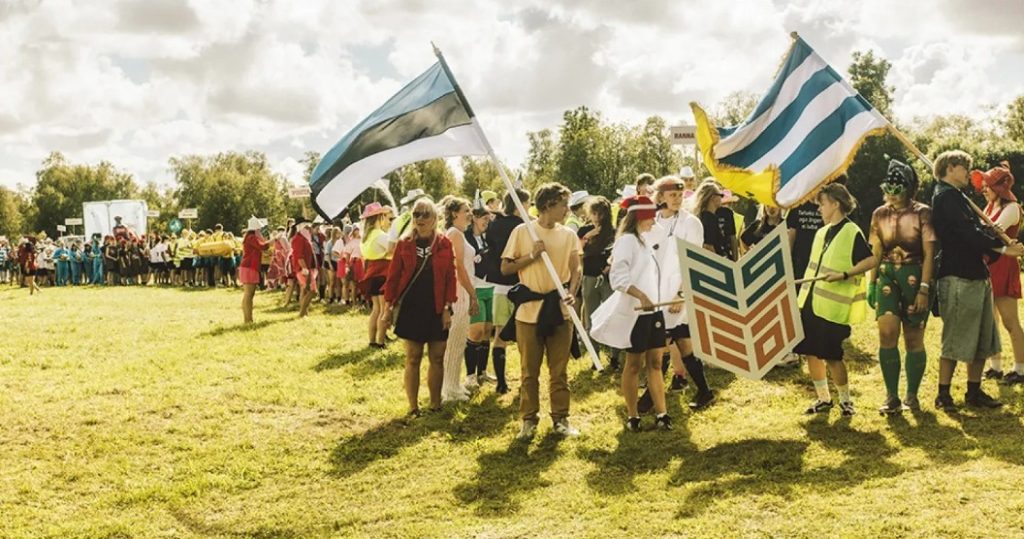
Photo of malev. Source: Global Estonian.
Why this matters (especially if you live abroad)
This isn’t just a summer job, it’s fun. Plus, you get to experience Estonia in a unique way — not through textbooks or short visits, but through real life. Conversations. Work. Inside jokes. Shared meals. The kind of connection that only happens when you’re actually in it. You will:
use your Estonian in real situations (and get better fast),
experience everyday life, not just the postcard version,
build independence in a way that sticks,
meet other young Estonians from all over the world.
And in 2026, up to 20 places are supported for young people living abroad, which makes this opportunity even more special.
Important things (read this bit)
Before you start packing your imaginary suitcase, a few realities:
Age: 13–18 years.
Language: You must speak Estonian.
Spots: Limited — not everyone gets in.
Work: varies (yes, sometimes outdoors, yes, sometimes physical).
Pay: based on Estonia’s youth minimum wage.
Documents: You’ll need valid documents and health insurance.
It’s not luxury. It’s better — it’s real.
This is how to apply
Here’s how to make it happen:
Explore the groups on malev.ee (this is where your future begins to take shape).
Choose up to two groups that actually suit you.
Submit between 27 April – 4 May 2026 (for young people living abroad).
Malev is popular — properly popular. Which means: not everyone gets a spot, and not everyone gets their first choice. But here’s the thing — even applying matters. You’re making choices, backing yourself, and stepping into something unfamiliar. That’s already a win. And if you do get in? You’ll come back with more than just photos. You’ll come back different (in the good way).
Did someone say photos? Check out the photo gallery from past events to see what it’s all about: here
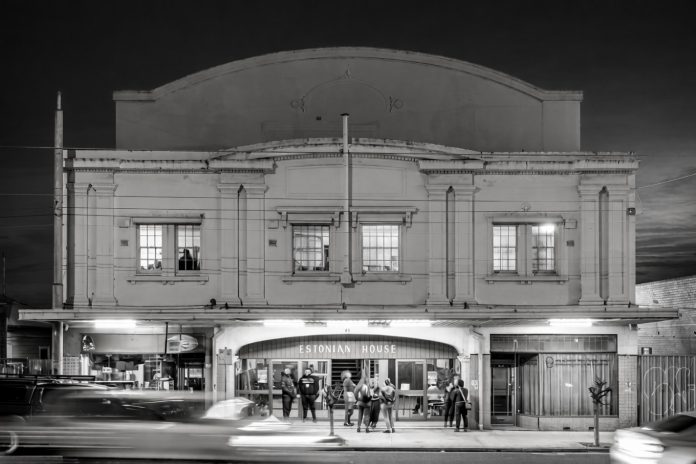
Photo of Estonian House in Melbourne. Source: Estonian Society in Melbourne.
Your final chance to experience Melbourne Estonian House in full swing. The Last Hurrah weekend brings three days of memories — and a proper send-off for a place that has held decades of community life (and our hearts).
If walls could talk, the ones at Melbourne Estonian House would probably ask you to stay a little longer, they’ve so enjoyed the stories. They’ve heard choirs warming up on cold evenings, folk dancers stamping warmth into winter floors, children running through hallways, and the low hum of conversations that stretch well past closing time.
From 22–24 May 2026, we gather for one final weekend — the Last Hurrah — to fill the house one more time with exactly that. With the house now sold, this is our moment to come together before we move on to a new home.
Friday, 22 May: the quiet beginning
🕢 10 am — Archives open, free event, no RSVP needed 🕢 4 pm–9 pm — Bar open, drinks for purchase, free event, no RSVP needed
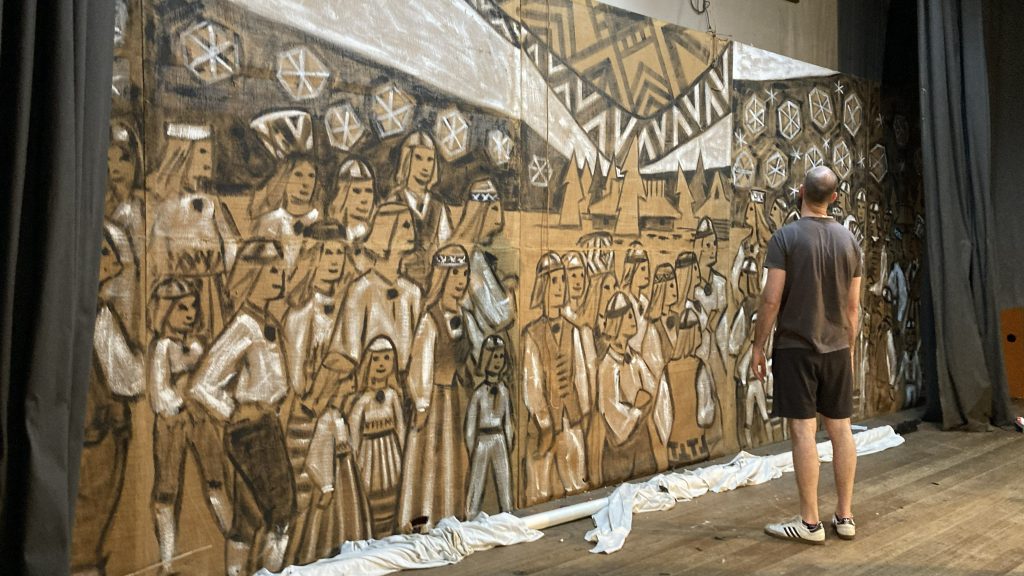
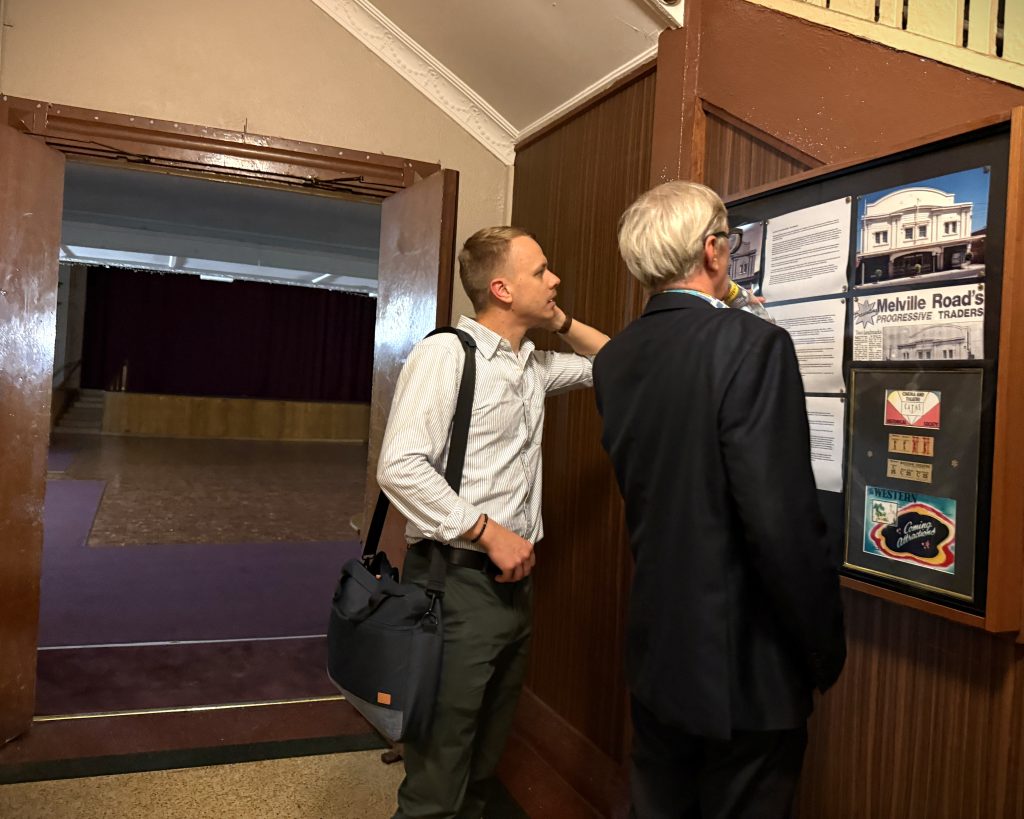
Folk dance teacher Rein Kiviväli studying the mural by Estonian Australian artist Gunnar Neeme at the Estonian House in Melbourne, December 2024.
From Friday morning, the doors open not just to a building, but to memory. Upstairs, the archives and photographs quietly tell stories — of people, of moments, of a community growing up far from Estonia but never far from each other. Somewhere, a film flickers. Somewhere else, someone points at a photo and says, “That’s us.”
The exhibitions stay open all weekend. You may come for ten minutes. You may stay for hours — looking at photographs, handicrafts, books, paintings and film screenings running throughout the building.
By 4 pm, the bar opens. There’s no rush, no big headline act — just people arriving, greeting each other, easing into the space. Conversations start again where they left off years ago. Someone laughs. Someone lingers a little longer than planned. It’s the kind of evening where the building feels… aware.
Friday is your soft landing. The atmosphere is relaxed, and the plan is simple: arrive, reconnect and soak up the space before the big weekend energy kicks in. Just people, conversations and a few quiet moments with the past.
Saturday, 23 May: beer hall by day, party by night
🕢 10 am — Archives open, free event, no RSVP needed 🕢 12 pm–5 pm — Beer hall, food and drinks for purchase, free event, for catering purposes RSVP here 🕢 7.30–8.45 pm — NOËP takes the stage, doors open 7 pm, tickets here
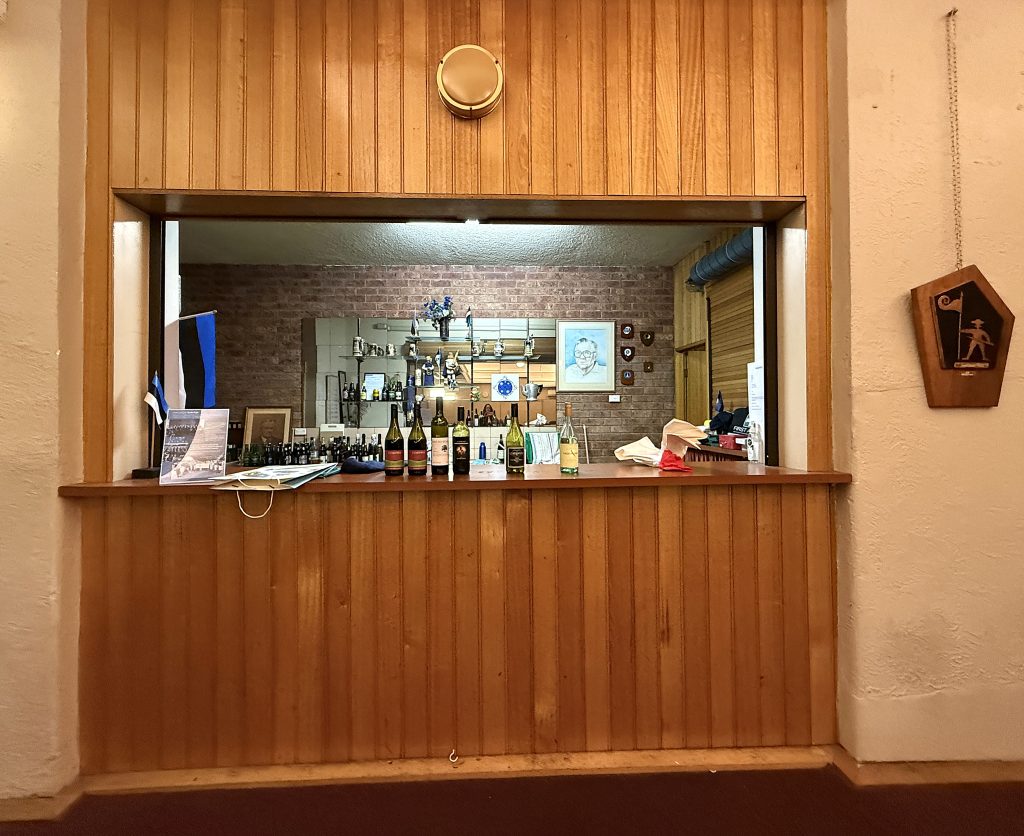
The bar at the Estonian House in Melbourne. Christmas party, 12 December 2025. Photo: Kristel Alla.
Saturday morning begins gently, with the archive open from 10 am — a slower start before the day gathers momentum.
By midday, the house shifts gears. Long tables, shared plates, the hum of voices — the beer hall takes over. There’s pirukad (Estonian meat pies), sausages, sauerkraut, pretzels, something cold in hand, and the kind of atmosphere where you arrive for “just a quick visit” and suddenly it’s mid-afternoon.
And those pirukad? They carry their own story.
A week earlier, on Sunday 17 May, volunteers will gather in the Estonian House kitchen — some experienced, some learning — rolling dough, sharing tips, laughing and baking together. Some will make more at home. All of it comes together here, on Saturday. Food made by the community, for the community. Just like it always has been.
✨ Want to bake pirukad for the Last Hurrah — at home or together on 17 May?
Then night falls — and the mood shifts again. The sound fills the hall. The same space that has held decades of dances, meetings and celebrations becomes something else again — light, music, movement. Estonia’s electro-pop magician, NOËP takes the stage.
Born Andres Kõpper, NOËP is part musician, part producer, part filmmaker and fully committed to making you feel like you’re in a late-night indie film. (Where you are, obviously, the main character.) NOËP has built a reputation for performances that are immersive, intimate and just a little bit magical. His sound? Think catchy electronic pop with warm, expansive layers — the kind that makes you want to dance and contemplate your life choices (in a good way).
🕢 10 am — Archives open, free event, no RSVP needed 🕢 12 pm — Family Day, kitchen and bar open, food for purchase, free event, for catering purposes RSVP here 🕢 2 pm — Performances and speeches, free event, RSVP to Family Day above
Baltic Festival, Estonian House in Melbourne, 19 October 2026. Photo: Kristel Alla.
Sunday begins, once more, at 10 am — the archive open, the house ready. By midday, it fills again. Families, friends, familiar faces. This is Family Day — open, welcoming, full. Food is delicious and unmistakably Estonian: potato salad, rye bread sandwiches and more, something sweet — the kind of table that feels like memory before you even take a bite.
At 2 pm, the performances begin.
The Kodu Kaja choir sings — voices echoing through a space that has heard them for years. The Eiderattad folk dancers move — steps learned, repeated, passed on. The children perform — the next chapter already in motion.
And then, we pause. There are speeches, stories, shared memories. A moment to acknowledge not just the building, but everything that has happened inside it.
You’ll hear from the Estonian Ambassador to AustraliaH.E. Jaan Reinhold, Matti Kiviväli, Vanessa Roosmetsand others — voices that carry both history and gratitude.
And somewhere in there — one more Tuljak. And dances you can join us for on the dance floor (including Tuljak!).
And if you have a national costume, Sunday offers a quiet invitation to wear it. You’re warmly encouraged — no obligation, just a fitting tribute to a house that has seen generations of beautifully dressed Estonians pass through its doors.
Estonian Society in Melbourne Committee member Rano Uesson explores the history of the Estonian House with Estonian actor Margus Talbot following his performance “Mamma lood”, 27 February 2026.
More than a building
The Melbourne Estonian House has been in community hands for over 50 years — since the early 1970s.
It has been a theatre, a rehearsal space, a kitchen, a meeting place, a playgroup, an archive. It has seen generations grow — children becoming adults, newcomers finding connection, communities forming and reforming. It has held Christmas parties, rehearsals, workshops, quiet Sundays, loud Saturdays, and everything in between.
It’s not just a place — it’s a witness.
And while the community will move on to a new home, this house has carried something important for decades — a sense of belonging, of identity, of being Estonian in Australia.
So come. Walk through the rooms. Touch the walls. Stay for a conversation longer than you planned. Ask someone what they remember. You might hear a story you didn’t know you needed.
This is your last chance to experience the Estonian House like this. Come along! Looking forward to seeing you!
P.S. If you feel like a chat, you’ll most likely find me near the archives — or around the dance performances on Sunday. Come say hello. We can just talk… or, if you’d like, we can capture your story — a memory, a moment, something meaningful you’ve experienced at the Estonian House — to be shared in HEIA.
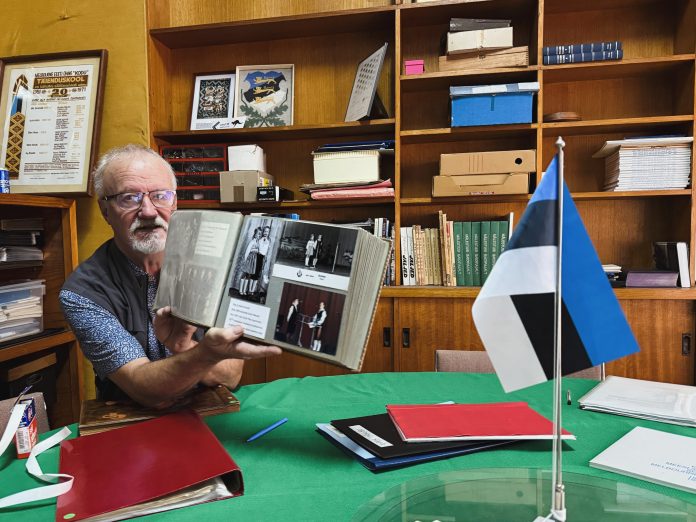
Matti Kiviväli showing a photo album from the Melbourne Estonian Archives, March 2026. Photo: Kristel Alla.
For decades, Melbourne’s Estonian community history lived in folders, boxes and personal collections. Now, as the Estonian House prepares for its final chapter, that story is stepping into the spotlight.
From scattered memories to a living archive
For almost 80 years, the Melbourne Estonian Society “KODU” was without an archive. Some items of relevance had been preserved by individuals, including meeting minutes dating back to the society’s beginnings in 1914, correspondence folders, Teatelehts from the 1950s to 1960s, and photographs.
A decision was made to preserve these materials, and in 1993 the archive formally began under the direction of Aime Metsar. She led the collection and organisation of existing materials while also gathering new contributions, assisted by Toomas Steinberg.
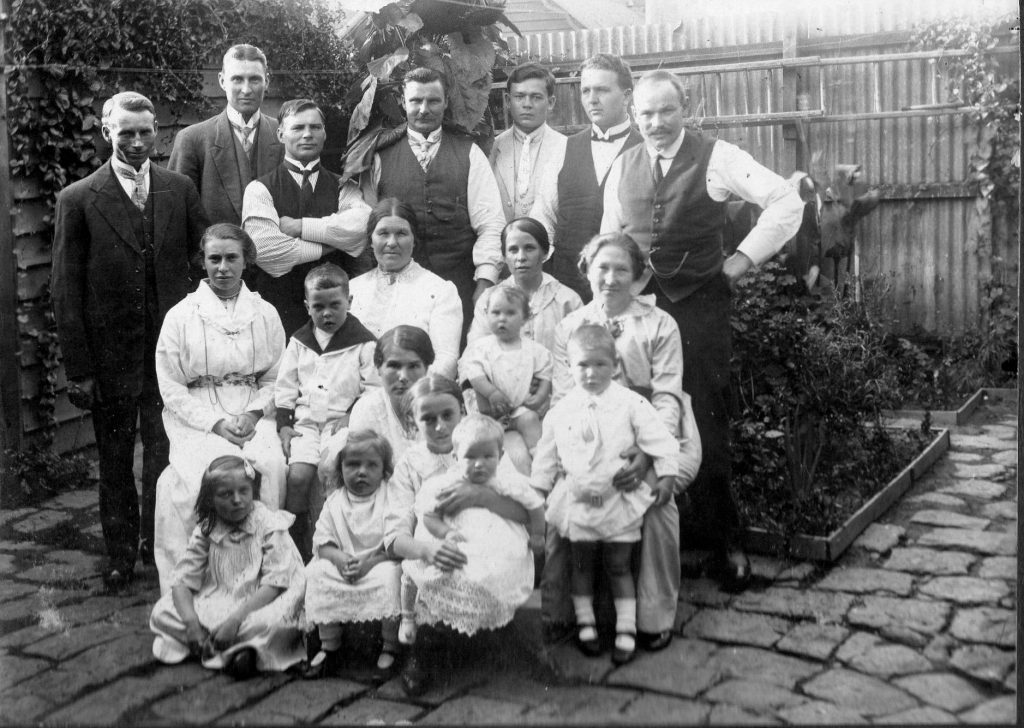
Estonian community members in Melbourne, 1913. Source: Melbourne Estonian Archives.
Building the collection
Over a short period of time, the archive expanded significantly. Historical copies of the Australian Estonian newspaper MEIE KODU were donated by community members including Dr Kalev Kruup, Ivy Raadik (who contributed the very first edition), Juta and Evald Mõisa, Vilma and Sven Kiviväli, Ants Ots, and many others. With these contributions, and the ongoing collection of the newspaper, the archive now holds close to a complete set.
The archive has a wide selection of photographs from past events. Photographic collections from Karl Joosep (1950s–1960s) and Viktor Luuken (1980s), along with contributions from families such as Seeger, Kroon, Tõnisson, Kiviväli, Valling and Lauk, provide a vivid visual record of community life.
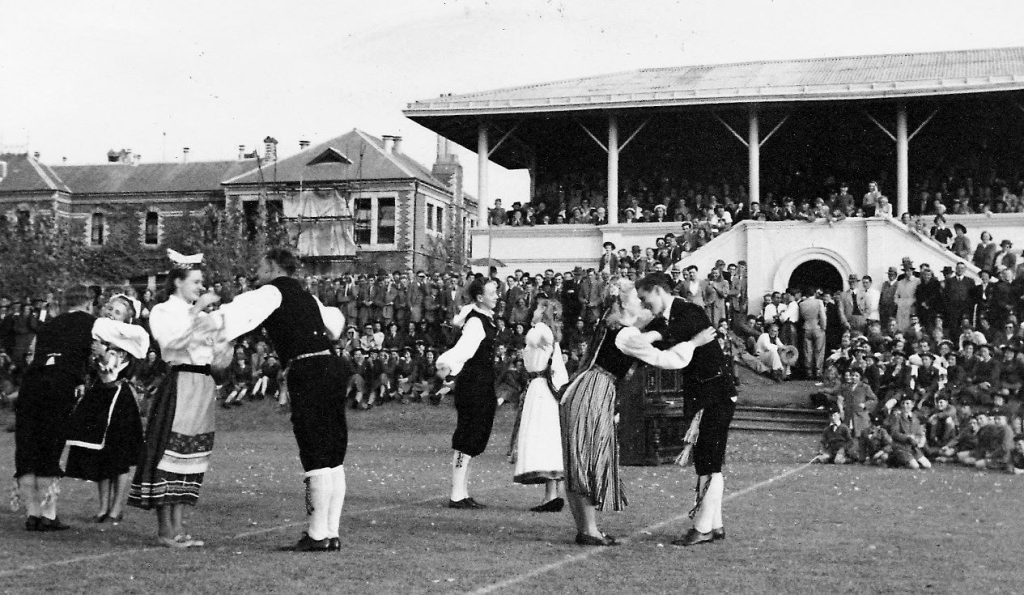
Estonian folk dancers in Geelong, Victoria, 1949. Source: Melbourne Estonian Archives.
A record of community life
The materials have been carefully organised into a catalogue documenting Estonian activities in Victoria from 1914 to the current day. These are presented in folders prepared by Aime Metsar, with further contributions by Matti Kiviväli, who joined the archive group around 2018.
The archive also includes albums, booklets and recordings covering a wide range of community groups — from choirs and folk dancers to scouts and guides, theatre, sport, the Lutheran congregation, and the Täienduskool (children’s language school). Major events such as Eesti Päevad and ESTO88 are also represented.
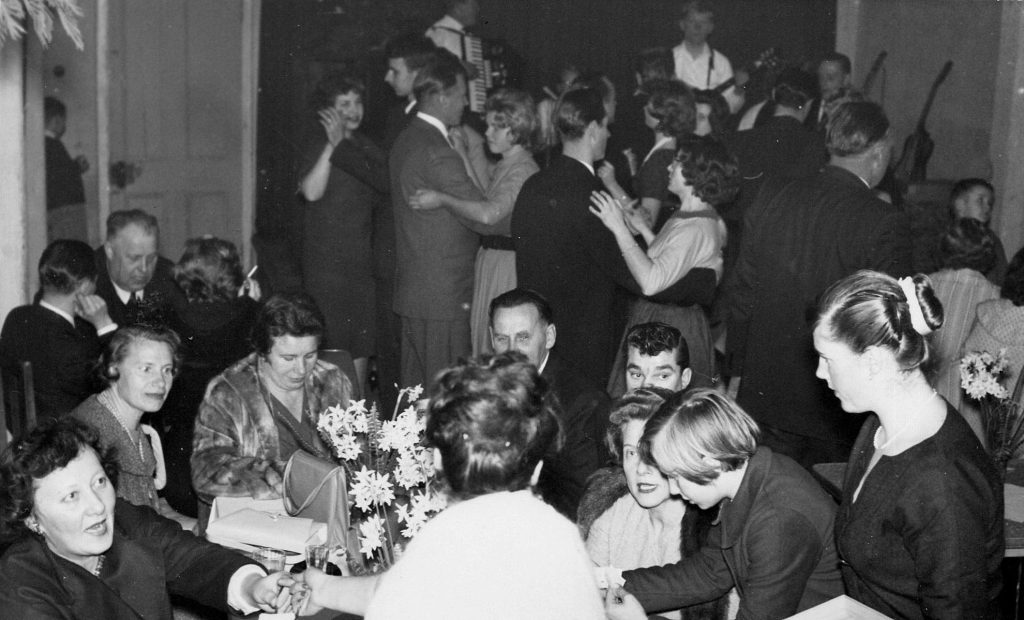
Estonian community event in Melbourne — Perekondlik õhtu, 16 March 1957. Source: Melbourne Estonian Archives.
On display for one last look
Most of this material will be on display from 22 to 24 May 2026 at Eesti Maja in Melbourneas part of the Last Hurrah weekend. Visitors are welcome to explore the collections at their own pace, with videos playing throughout the venue. Entry is free.
Make sure you visit Eesti Maja during our Last Hurrah weekend and spend some time browsing through the material – you never know, there may be a relative amongst the pages, or even a picture or two of you. Take the opportunity to catch up with old acquaintances as well.
Photo album
A selection of photographs from the Melbourne Estonian Archives, capturing moments from decades of community life at the Estonian House. Top row (left to right): Theatre performance “Kosilane Rakveres”, March 2004; folk dancing at Välis-Eesti päev, November 1986; Kai Mõisa, Toivo Taves and Anne Kärner from Täienduskool, September 1958. Bottom row (left to right): Eesti Naisklubi Mustlaste Pidu, March 1981; folk dance group Eiderattad at the Christmas party, 2016.
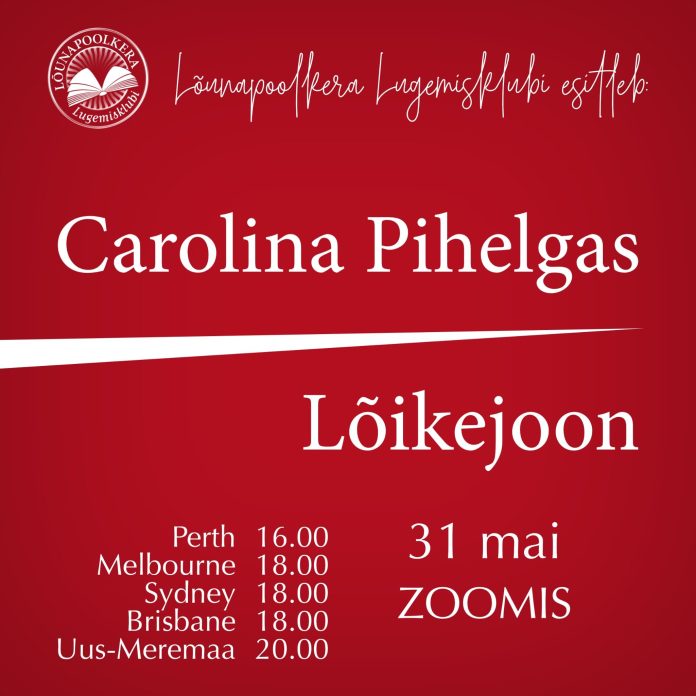
The Southern Hemisphere Book Club (Lõunapoolkera Lugemisklubi) invites you to a special online gathering with writer Carolina Pihelgas, who will introduce her novel “Lõikejoon” (The Cut Line).
This is a rare opportunity to hear directly from the author — to listen, reflect and ask questions about a work that moves between the deeply personal and the quietly political.
Importantly, you don’t need to have read the book beforehand. Come as you are — curious, thoughtful, or simply in the mood for a meaningful conversation.
At the heart of “Lõikejoon” is Liine, a young woman who retreats to the countryside after leaving a long-term relationship that has become emotionally toxic. Alone in a rural farmhouse, she begins the difficult process of confronting herself — her past, her pain, and the choices that brought her there.
The emotional landscape is echoed by the physical world around her — nearby military exercises rumble in the background, threatening both the environment and a sense of safety. The result is a layered narrative where inner conflict and external tension mirror each other.
Written in poetic fragments, the novel weaves together themes of relationships and emotional boundaries, trauma and healing, solitude and self-discovery, environmental and societal unease. It is a book that doesn’t rush to resolve — instead, it sits with the complexity of being human.
About Carolina Pihelgas
Carolina Pihelgas is an Estonian writer, poet, translator and editor whose work is known for its emotional depth and poetic clarity. She first gained wide recognition as a poet, with her prose poetry collection Valgus kivi sees (The Light Within the Stone, 2019) receiving the Estonian Cultural Endowment’s annual award for best poetry book.
In 2020, she was named Tartu’s City Writer Laureate — a great recognition that reflects both her literary voice and her place within Estonia’s contemporary writing landscape.
Carolina has published seven poetry collections and moved into prose with her debut novel Vaadates ööd (Watching the Night, 2022). “Lõikejoon” (The Cut Line) is her second work of fiction — and her first work translated into English, bringing her work to a wider international readership.
Her writing often sits at the intersection of the intimate and the societal, exploring relationships, identity, and the emotional realities that shape how we move through the world. There is a quiet intensity to her work — an honesty that doesn’t try to resolve complexity too quickly, but instead allows it to be seen and felt.
Why join this conversation?
Even if you haven’t read “Lõikejoon”, this event offers something valuable:
a glimpse into contemporary Estonian literature,
insight into the creative process behind a powerful novel,
a chance to engage directly with the author,
connect with like-minded readers and be part of a literary conversation.
This book club event is made possible thanks to the joint contribution and support of the Estonian societies of Sydney, Brisbane, Melbourne, Perth and the Gold Coast.
A small but welcome update: the “My Estonia” writing competition deadline has been extended to 17 May 2026 — which means there’s still time to write and share your story.
Estonia means different things to different people.
Maybe Estonia is the place where you were born. Maybe it’s the place your grandparents won’t stop talking about. Maybe it’s a country you visit occasionally and leave with a suitcase full of chocolate, black bread and complicated feelings about leaving a piece of your heart there. (That might just be me.)
Or maybe Estonia is something you are still discovering.
Wherever you fall on that spectrum, Vabamu Museum of Occupations and Freedom’s youth writing competition “My Estonia” would love to hear your story.
Source: Vabamu.
What to write about, you ask?
For young Estonians growing up outside Estonia — including here in Australia — the theme opens the door to all sorts of stories.
Maybe it’s about learning Estonian from grandparents who insist your pronunciation still needs work. (It’s perfect, come on!)
Perhaps it’s about your first visit to Estonia and realising suddenly that the place you’ve heard about all your life is actually real. (Yes, it is!)
Or maybe it’s about what Estonia means when you’re living 15,000 kilometres away and can’t see your lovely Estonian family quite as often as you’d like. (You’re not alone.)
All of these stories count. And yours will be uniquely yours — which is exactly why the world should hear it.
So go on. Don’t deprive us of your creative genius. You never know whose day — or whose life — your words might touch.
What are my rules to follow, you ask?
If you are between 15 and 25 years old, you can enter.
Your text can be: a short story, an essay, a poem or another short literary form. Basically — if it involves words arranged in an interesting way, you’re on the right track.
Entries can be written in Estonian or English, and other languages are also welcome as long as a translation into one of those languages is included.
The only strict limit is the length: no more than five pages. So yes, sadly this is not the moment for your 54-chapter fantasy trilogy about medieval Tallinn.
You see, the people reading your work are very much into stories.
Submissions will be reviewed by an international jury including representatives from the Estonian Ministry of Foreign Affairs, the Estonian Literary Museum, VEMU Estonian Museum in Canada, and other cultural organisations.
Now, before you start imagining a panel of extremely serious people sitting behind towering stacks of manuscripts — don’t worry. The jury members are some of the most thoughtful and knowledgeable people working with Estonian culture and diaspora stories today. In other words, exactly the kind of readers you would want for a piece about Estonia. They are:
Liina Viies – Adviser for the Diaspora, Estonian Ministry of Foreign Affairs
Piret Noorhani – Chief Archivist, VEMU Estonian Museum Canada
Marin Laak – Senior Researcher, Estonian Literary Museum
Iivi Zajedova – Tammepuu Club
Ants Veetõusme – 20 August Club
Maja Soomägi – Vabamu.
In other words — people who genuinely care about stories and the many ways Estonia lives in them.
Need inspiration? Writing can start in many ways — with a memory, with a question, or with a blank page that slowly begins to fill.
The competition is also inspired by Vabamu’s exhibition “Worldwide Estonia”, which explores 150 years of Estonian migration and diaspora life.
It’s true: Estonians have been travelling, settling, adapting and carrying their stories around the world for ages. Which means one important thing: Estonia doesn’t only live in one place — it lives wherever Estonians tell their stories.
And if you’re still waiting for inspiration to strike — here’s a radical suggestion: grab a pen (or turn on your computer), start writing, and see what happens. Inspiration has a funny habit of arriving halfway through the second paragraph.
And yes, there is a pretty exciting prize…drumroll please!
The winner will be announced in June 2026, with awards presented later in the year.
And here is the part that might make your keyboard (or pen) suddenly jump with joy: the winning author will have the opportunity to present their work in Estonia, with travel supported by the Estonian Ministry of Foreign Affairs.
Yes, that’s right. One piece of writing could take you all the way to Tallinn.
Not bad for five pages. (Some of us may be slightly jealous about the age limit… but we’ll survive.)
And if you needed a sign to start (or finish) your piece — this might be it: the deadline has now been extended to 17 May 2026.
Let’s sum it up: here’s how you enter
📅 New deadline: 17 May 2026 (previously 1 May 2026) 📄 Length: up to 5 pages 🌍 Languages: Estonian or English (other languages accepted with translation) 📧 Submit to: maja.soomagi(at)vabamu.ee
If you’re a young writer sitting somewhere in Australia wondering whether your story counts — the answer is simple.
It does. Now go write it.
And who knows — the next powerful story about Estonia might come from a young writer sitting in Tassie, Perth, Sydney, Darwin, Melbourne, Brisbane… or somewhere entirely unexpected.
Perhaps your first sentence is already waiting… Good luck!
Thank you!
Thank you to Maja Soomägi from Vabamu for sharing information about this competition and for the update on the extended deadline.
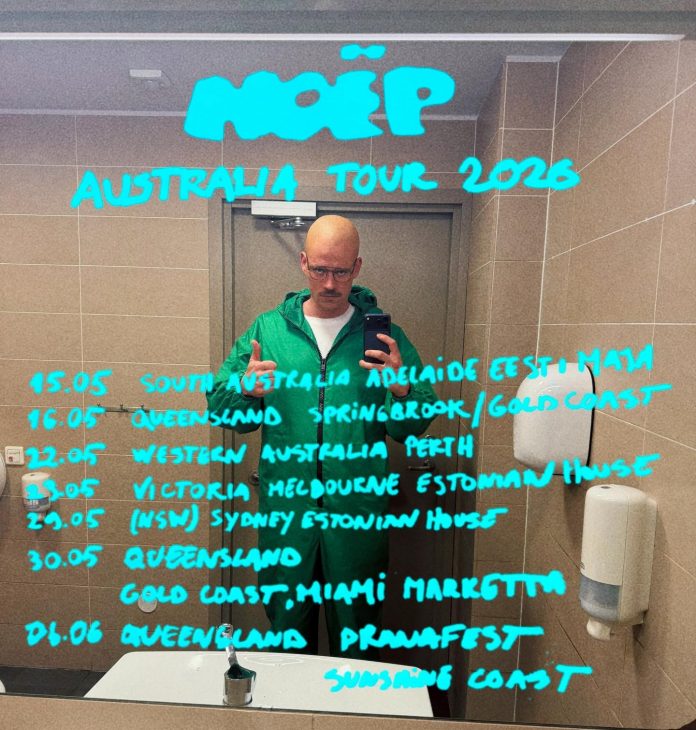
Some artists release music. Others create a vibe. NOËP does both — and turns it into a cinematic experience. Good news — he’s touring Australia this May–June, hitting five states along the way.
Born Andres Kõpper, NOËP is Estonia’s electro-pop magician. He’s part musician, part producer, part filmmaker and fully committed to making you feel like you’re in a late-night indie film. (Where you are, obviously, the main character.)
His sound? Think catchy electronic pop with warm, expansive layers — the kind that makes you want to dance and contemplate your life choices (in a good way). From early tracks like Move and Rooftop to international stages from Paris to Berlin, NOËP has built a reputation for performances that are immersive, intimate and just a little bit magical.
Oh — and casually:
NOËP has over 18 million Spotify streams,
multiple Estonian Music Awards (including Male Artist and Album of the Year),
a near-miss at Eurovision 2026 (2nd place at Eesti Laul with Days Like This).
This is a big deal. He’s bringing all of that energy to festival grounds and Estonian Houses across Australia. Yay!
🎤 Tour dates
15 May: Adelaide, Estonian House (SA) 16 May: Gold Coast, Secret Garden Festival (QLD) 22 May: Perth, Vin & Flowers (WA) 23 May: Melbourne, Estonian House (VIC) 29 May: Sydney, Estonian House (NSW) 30 May: Gold Coast, Miami Marketta (QLD) 6 June: Sunshine Coast, Pranafest (QLD)
Adelaide, South Australia — first stop, no warm-up needed
🗓️ Friday, 15 May 2026 📍Estonian House, 200 Jeffcott Street, North Adelaide SA 5006 ⏰ Doors open 7 pm | Show starts: 7.30 pm 🎟️ Tickets: TryBooking | $48
Adelaide, you’re up first — and yes, it’s his first time performing there. No pressure, but also… maximum pressure. Make it loud.
Springbrook, Queensland — part of the Secret Garden Festival
🗓️ Saturday, 16 May 2026 📍 The Secret Garden Festival, Springbrook QLD 4213 ⏰ Show starts 6.30 pm 🎟️ Tickets
A little bit mysterious, a little bit magical — this one feels like a “you had to be there” kind of night. NOËP steps into festival mode here, where music meets nature, and the crowd already knows they’re part of something special.
Melbourne, Victoria — part of the “Last Hooray” weekend
🗓️ Saturday, 23 May 2026 📍 Estonian House, 43 Melville Rd, Brunswick West VIC 3055, Australia ⏰ Doors open 7 pm | Show starts 7.30 pm 🎟️ Tickets: Humanitix | Early bird for $40 (members of Estonian Society in Melbourne) & $50 (non-members) | General admission $50/$60
Melbourne, this one comes with extra feelings. NOËP’s show is part of the three-day Last Hooray weekend — a final celebration before saying goodbye to the beloved Melbourne Estonian House.
Sydney, New South Wales — don’t overthink it, just come
🗓️ Friday, 29 May 2026 📍 Estonian House, 141 Campbell St, Surry Hills NSW ⏰ Doors open 6.30 pm | Show starts 7 pm 🎟️ Tickets: Trybooking | $69 (members of Estonian Society in Sydney) & $79 (non-members)
Come solo, come with friends, come dramatically late (but ideally not). The key message from organisers: peaasi et tuled — just make sure you come.
Woodfordia, Queensland — part of the Pranafest Festival
🗓️ Friday to Sunday, 5–7 June 2026 📍 Pranafest, 87 Woodrow Road, Woodford, Sunshine Coast QLD 4514 🎟️ Tickets: Humanitix
For those who like their music with a side of wellness, connection and barefoot dancing — NOËP will also appear at Pranafest. Think music, community and “I might stay another day” energy.
Some people spend Saturday evenings on the couch. Others… wander into a global street party and accidentally eat their way across three continents while watching Estonian folk dancers. Perth, this is for you.
This weekend, the Global Streets Festival 2026 brings together food, music, and cultures from around the world — and right in the middle of it all, a small but mighty Estonian presence is ready to take the stage (with actual footwork, not just quiet pride).
Event information
🗓️ Saturday 18 April 2026 🕓 4.00pm – 8.00pm 📍 Hillview Intercultural Community Centre, 1-3 Hill View Place, Bentley WA 6102 🎟️ Free entry
Estonian Folk Dance — 6pm (Hillview Stage)
Representing Estonia is the EstWest Folk Dance Group — bringing traditional steps and coordinated enthusiasm to a stage shared with some of the world’s biggest and boldest cultures.
And let’s be honest — when you’re lined up alongside Brazilian samba, African drummers, Japanese taiko and lion dances, you don’t quietly blend in. You show up, you dance, and you make sure people remember where Estonia is on the map.
What to expect?
This is not a “stand politely and observe” kind of event. This is a wander, taste, watch, clap, repeat situation. Expect:
Food trucks from across the globe
Live performances across two stages
Cultural activities for kids and adults
Market stalls, crafts and hands-on experiences
And yes — dogs are welcome, so even your four-legged friend gets a cultural outing.
Why go?
From henna art to Indigenous weaving, giant bubbles to global beats — it’s the kind of event where you arrive for “a quick look” and leave three hours later with a full stomach and a slightly expanded worldview.
Events like this bring cultures and communities together, side by side, in a way that feels joyful and (importantly) delicious.
And for our Estonians dancers in Australia, moments like this — dancing on stage, sharing what we love — are something special. Small nation, proud presence.
Bring your people
Free entry. Great food. Live performances. A genuinely feel-good community atmosphere.
Bring your family, your friends… and yes, your dog.
And when the Estonian dancers step on stage at 6pm — maybe give them a little extra cheer. And don’t clap like a stereotypically quiet Estonian, put your heart (and muscles) into it! Have fun!
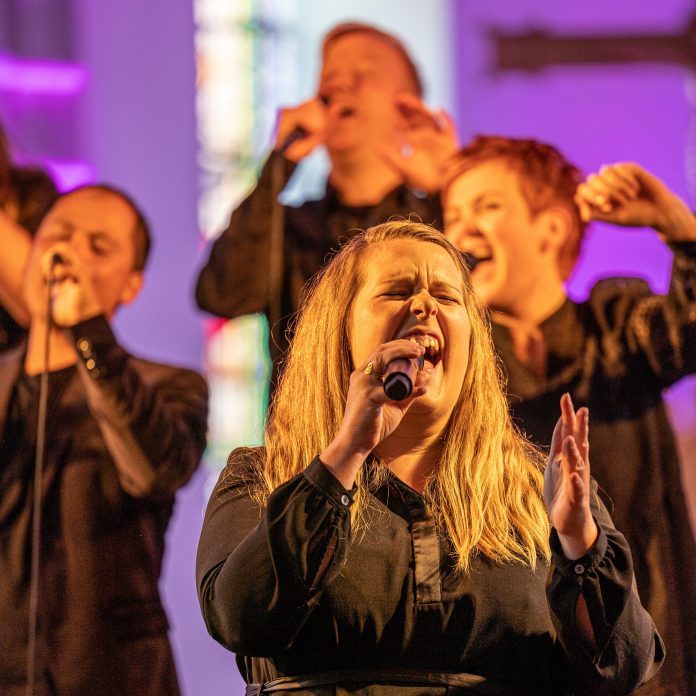
Some people hear “choral concert” and think polite clapping and straight backs. Others… accidentally discover it’s a full-body, spine-tingling experience. Perth, upgrade your evening with the Giovanni Consort’s “Baltic Sounds”, featuring Arvo Pärt.
If your last choir memory involves childhood uniforms, mild stage panic and counting down the minutes — good news: this is not that choir.
This is the Giovanni Consort — Western Australia’s premier professional chamber choir — and they don’t do “nice background music.” They do sound that stops you mid-thought and makes you feel things you didn’t schedule for the evening.
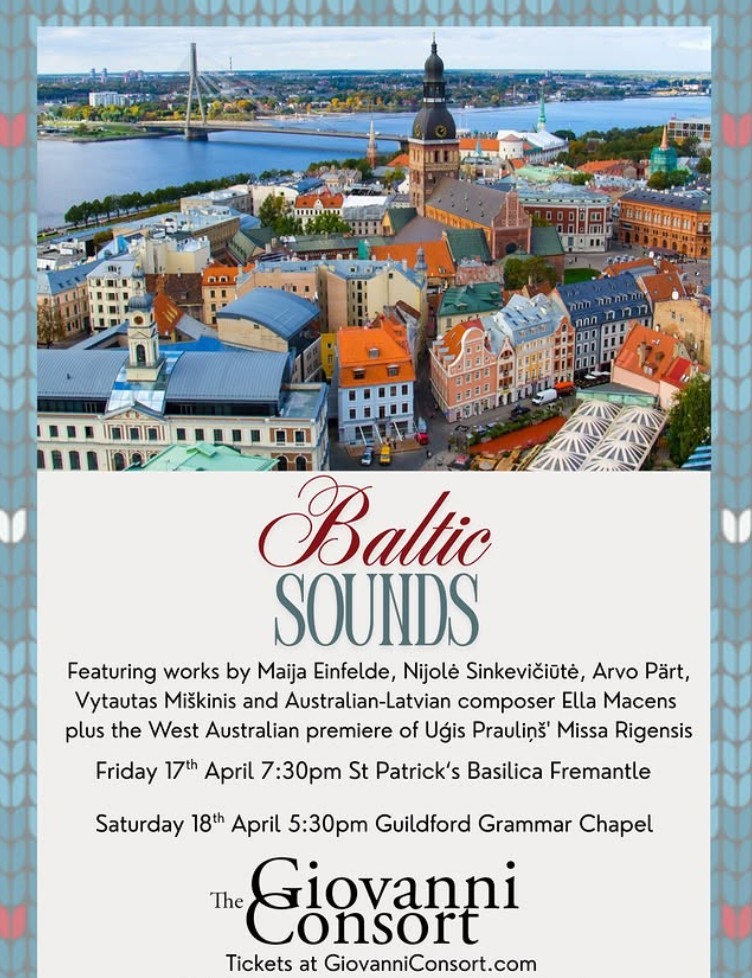
Their upcoming concert, Baltic Sounds, is a deep dive into the musical soul of Estonia, Latvia and Lithuania. Think haunting harmonies, shimmering textures, and the kind of stillness that only happens when a room full of people forgets to breathe at the same time.
Event information
🗓️ Friday 17 April 2026, 7.30pm (Fremantle) 📍 St Patrick’s Basilica, 47 Adelaide Street, Fremantle WA 6160
🗓️ Saturday 18 April 2026, 5.30pm (Guildford) 📍 Guildford Grammar School Chapel, 5 Terrace Road, Guildford WA 6055
At the heart of the program is Estonian composer Arvo Pärt — a name that tends to quietly rearrange your internal world. His De Profundis sits alongside works by Baltic greats like Maija Einfelde and Vytautas Miškinis, plus the striking Missa Rigensis by Uģis Prauliņš.
And just to keep things interesting (and proudly local), Australian–Latvian composer Ella Macens brings a contemporary emotional punch with When the world closes its eyes.
In short: lullabies, sacred works, premieres — and moments that may leave you staring into the middle distance afterwards wondering who you are now.
Who is Arvo Pärt? (The composer who made silence famous)
If there were a quiet superstar of the classical world, it would be Arvo Pärt. He’s consistently ranked as the most performed living composer globally — not because he’s loud or flashy, but because his music does something rarer: it lingers.
Born in Estonia in 1935, Pärt didn’t follow a straight creative path. After early success in the avant-garde scene, he stepped away completely — entering an eight-year period of silence and searching that would eventually reshape his entire musical language (and, arguably, modern music itself).
Out of that silence came tintinnabuli — his signature style, named after the sound of bells. It’s simple, precise, and deeply meditative. No big showy gestures — just clarity, stillness, and the kind of emotional depth that tends to sneak up on you mid-performance and refuse to leave. Works like Fratres and Spiegel im Spiegel have since become iconic, quietly influencing composers and audiences around the world.
Today, Pärt’s music fills concert halls from New York’s Carnegie Hall to Europe’s grandest stages, yet it still feels intensely personal — like it’s written for a single listener, sitting very still, somewhere in the dark.
The Giovanni Consort
Under the direction of Nicholas Dinopoulos, the Giovanni Consort has been doing this for 30 years — building a reputation for performances that are both technically exquisite and emotionally disarming.
They’ve shared stages with international ensembles, released recordings, and quietly nurtured generations of singers right here in Western Australia.
Why you might love this
Even if choir isn’t “your thing”, here’s the secret: live choral music at this level isn’t about understanding every note. It’s about feeling it.
As reviews have neatly put it — the sound can be so powerful it’s hard to believe it comes from just a handful of voices.
Which is a polite way of saying: you might walk in sceptical… and walk out slightly transformed.
Last call (literally)
Two performances. Beautiful venues. A program that doesn’t come around every day. Our pride and joy, Arvo Pärt.
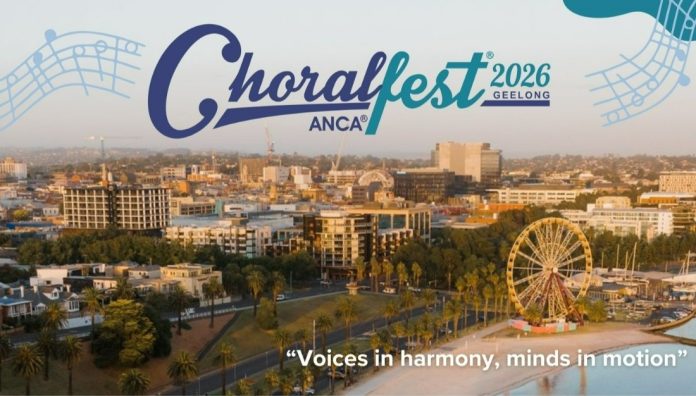
Some people spend their weekends quietly humming in the kitchen. Others take that energy, gather 20–40 like-minded humans, and project it into a concert hall with intent. This week, Geelong is full of exactly that energy as Choralfest 2026 brings together choirs from across Australia — and for the first time, two Estonian choirs are in the mix.
We’re not saying this is a big deal… but we are also not not saying that.
A festival of voices (and the occasional goosebump ambush)
Held from 9–12 April at Deakin University’s Waterfront Campus and Costa Hall, Choralfest 2026 is Australia’s national choral symposium — which is a formal way of saying: four days of people who really love singing, all in one place.
Expect concerts, pop-up performances, workshops, masterclasses and those moments where a chord lands just right and suddenly you’re reconsidering your entire emotional stability.
With keynote voices like Catherine Fender (France — casual), the festival brings together singers, conductors and choral thinkers from around the world.
Two of our choirs, one proud diaspora
Flying the Estonian flag (musically, not literally… although we wouldn’t rule it out) are:
Melbourne’s Kodu Kaja and Sydney-based Kooskõlas.
Two cities. Two choirs. One shared ability to make you feel things you didn’t schedule into your day.
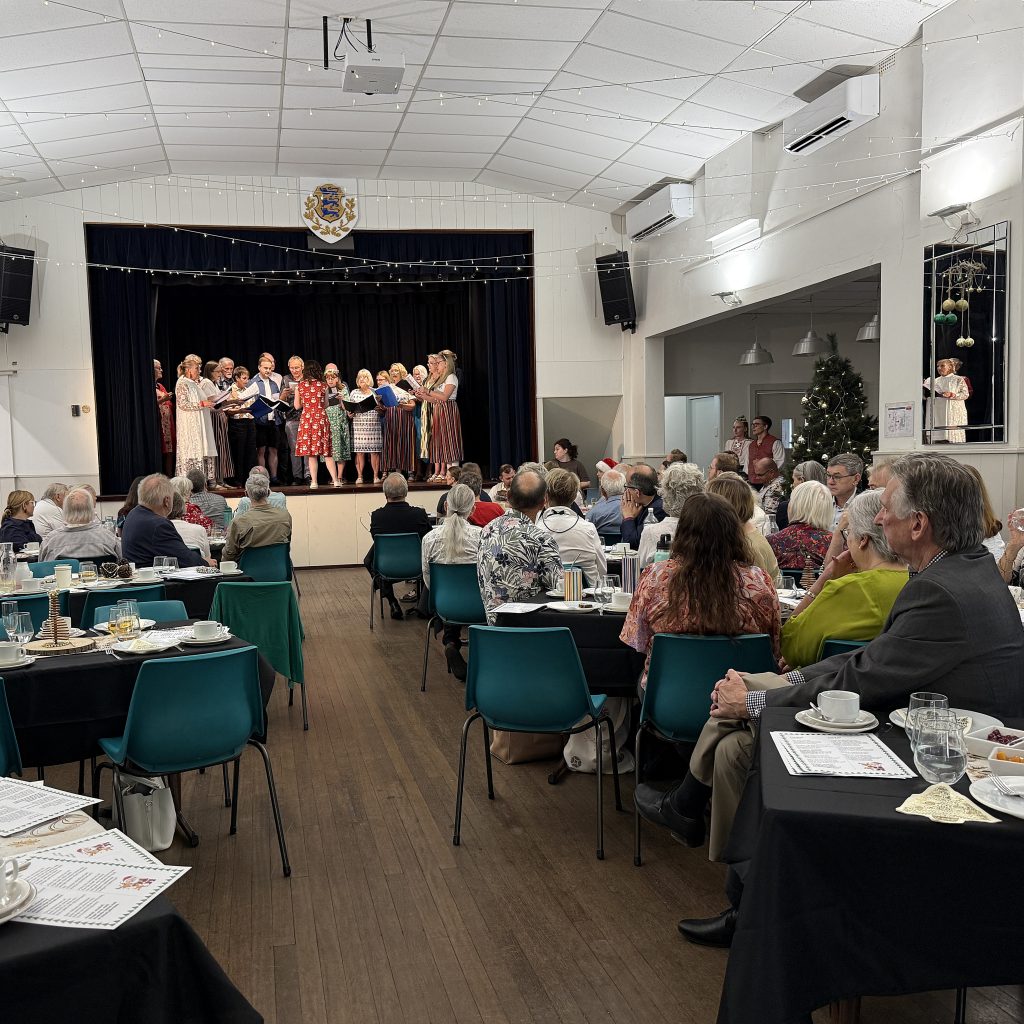
Kooskolas singing to Estonians at the last Christmas party, Estonian House in Sydney, December 2025. Photo by Kristel Alla.
Where to catch them (and casually say “oh yes, we know them!”)
Kooskõlas kicks things off at the Twilight Concert on Thursday evening — opening the festival, no less. No pressure, just setting the tone for the entire event.
They’ll also appear here:
Thursday 9 April, 5.30pm — St Paul’s Anglican Church, Geelong
Friday 10 April, 12.30pm — Choirs in the City, Westfield Central Atrium
Saturday 11 April, 3pm — Choral Masterclass, Costa Hall
Meanwhile, Kodu Kaja will be:
Saturday 11 April, 1pm — Courthouse Theatre, Geelong
Plus pop-up performances around town (the kind you “accidentally” stumble upon and then don’t leave)
**These times and venues are subject to change, please check the program.
Full choral immersion (bring feelings)
Choralfest isn’t just about standing still and singing beautifully (though there is plenty of that).
It’s also about learning, connecting and gently levelling up — with workshops, lectures, conducting masterclasses, repertoire sessions and massed choir moments where everyone sings together and you briefly consider joining a choir immediately.
This is a moment worth celebrating (and bragging about)
For Estonian choirs in Australia, having two groups represented at a national festival like this is something special. Can we get a high five?
It speaks to the strength of our community — and to the fact that Estonians, wherever they go, will eventually organise themselves into a choir. It’s just how things unfold.
Thinking of heading down?
If you’re near Geelong, Victoria, keep an ear out for free concerts and pop-up performances across the festival.
Go along, have a listen, and if you suddenly feel an emotional lump in your throat for no clear reason — don’t worry. That’s just choir music doing its job. Enjoy!
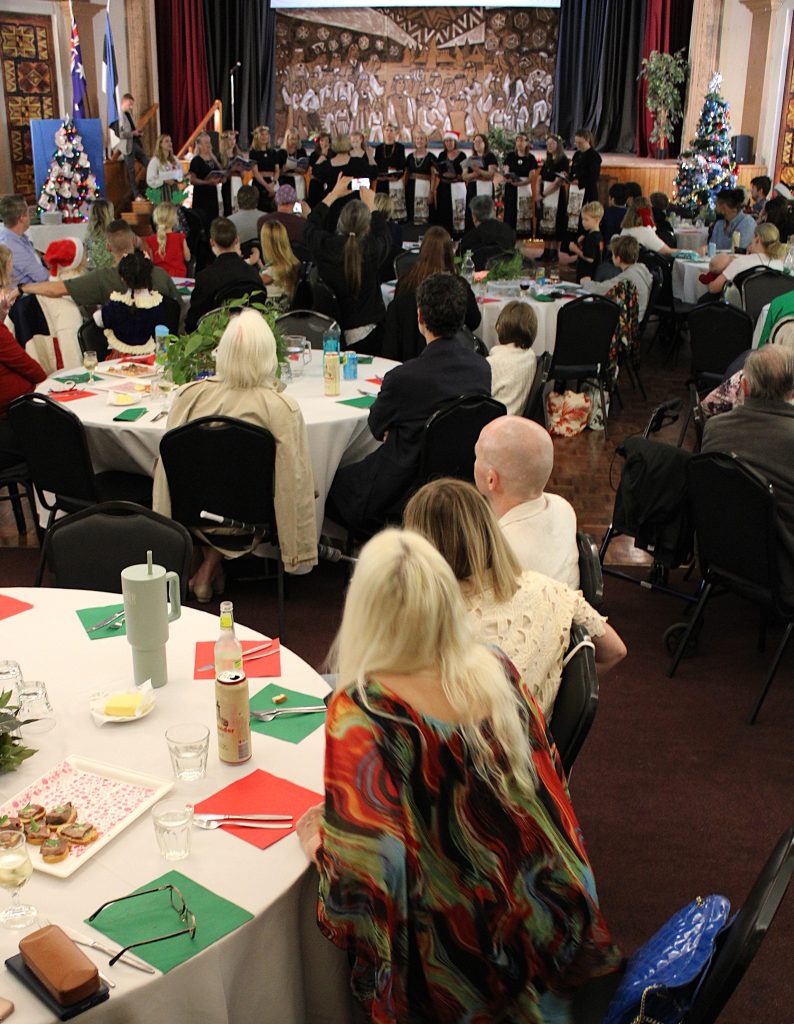
Kodu Kaja singing to Estonians at the last Christmas party, Estonian House in Melbourne, December 2025. Photo by Kristel Alla.
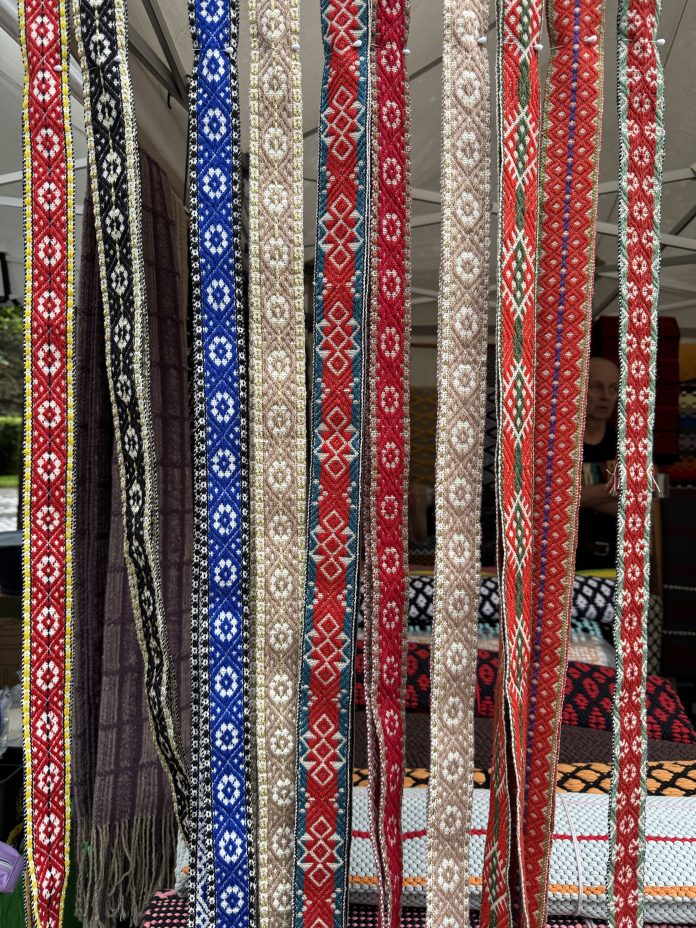
Woven belts, Estonian style. Photo by Kristel Alla.
A hands-on weaving workshop is coming to the Estonian House in Melbourne this April and May, offering the chance to learn traditional Estonian techniques in a relaxed, welcoming setting (with plenty of chatting encouraged — this is still us, after all).
A craft with stories woven in
Weaving is one of those quietly powerful traditions — practical, beautiful and deeply tied to Estonian cultural heritage. Belts, patterns, colours… each piece tells a story, even if you’re just starting with a humble bookmark.
And that’s exactly the point of this workshop — no pressure, no perfection, just learning by doing.
What to expect (no prior weaving career required)
Across two Saturdays, participants will be guided through the fundamentals of inkle loom weaving.
Session one is all about setting up your loom and getting those first threads underway (yes, there will be a moment where it all makes sense).
Session two builds on that foundation, introducing pick-up belt weaving — where patterns begin to emerge and things start looking impressively intentional.
Small group, big cosy energy
With only eight spots available, this is a small, hands-on workshop designed for actual learning (and actual conversations).
Participants can create their own woven pieces — bookmarks, belts or handbag straps — and take home not just something they made, but the skills to keep going.
New looms, new beginnings
Thanks to support from the Estonian Cultural Foundation Australia, the workshop team has recently acquired brand new inkle looms — ready to be used, learned on, and possibly admired.
Not a bad way to spend a Saturday.
When and where?
🗓️ Saturday 18 April & Saturday 2 May 2026 ⏰ 10am–3pm 📍 Melbourne Estonian House, 43 Melville Road, Brunswick West VIC 3055 💰 Tickets $50 total (covers both sessions)
Ready to give it a go?
No experience needed — just bring your curiosity, comfortable clothes, and a willingness to shine (just a little) when you say, “I made this!”
Spots are limited — and once they’re gone, they’re… well, woven into history.
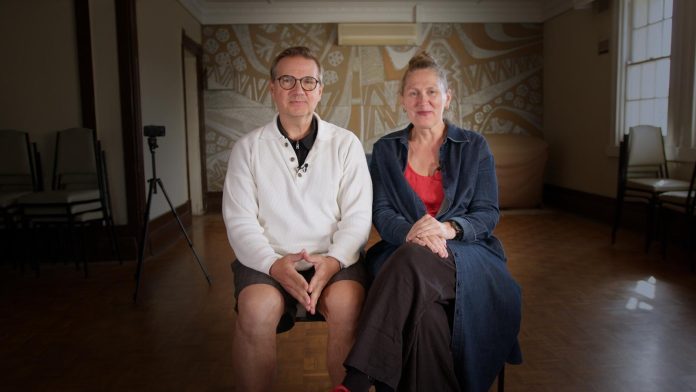
Estonian clown duo Piip ja Tuut sat down with filmmaker Anthony Noack for an engaging conversation.
Currently performing in Melbourne, they reflected on life on tour, working together as creative partners (and as a couple), and the simple but powerful idea at the heart of their work — bringing people together through laughter. Watch the full conversation below.