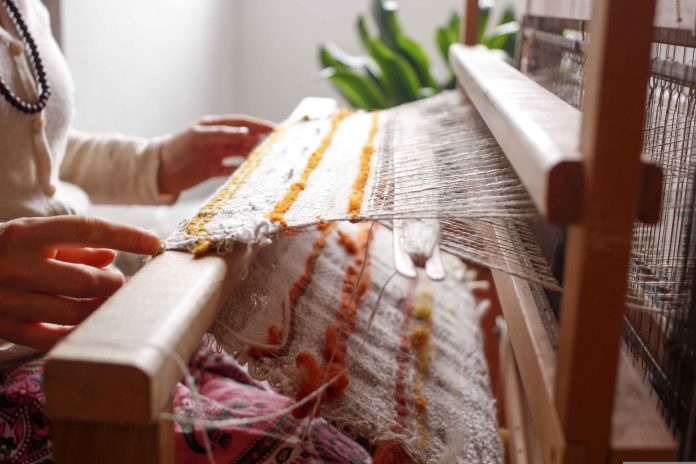
Has your inner crafter been whispering, “Thread the needle, come on!?” This is your moment. July in Viljandi, Estonia, is waiting — and the Early Bird closes on 31 March 2026.
From 12–18 July 2026, Viljandi transforms into a glorious swirl of yarn, wood shavings, silver dust and people cheerfully declaring, “I haven’t crocheted since Year 9, but how hard can it be?” (Answer: slightly tricky, extremely fun.)
Choose three of the 23 hands-on workshops, each taught by masters who can embroider a Mulgi pattern with the calm confidence most of us reserve for making toast. Beginners, experts and enthusiastic in-betweeners are all welcome.
When workshops wrap up, the cultural program kicks in — concerts, lectures, a film night and the kind of late-evening craft chat that starts with “just one more row…” and ends an hour later with existential questions (about wool, about life).
On 15 July, camp heads out into Estonia — to Tartu, Mulgimaa, or the legendary Kihnu Island, where craft isn’t just a pastime but a way of life.
All workshops take place at the Viljandi Culture Academy’s sleek home where ancient techniques meet excellent coffee breaks. Accommodation and most meals are DIY, giving you a chance to eat your way through Viljandi like a local.
Everything’s in English (or translated from Estonian), and the fee includes workshops, materials, snack breaks and a festive dinner with folk music — because what’s craft camp without someone pulling out a set of torupill pipes? The kind of creative momentum that lasts long after you’re home is a freebie. You’re welcome.
Some workshop materials and field trips may add a little extra to the invoice.
Whether you’ve always dreamed of stitching a Mulgi shawl, carving your initials into wood, or simply running away to Estonia for a week of creative bliss — Craft Camp 2026 is calling. Register and let July be the most Estonian month of 2026 — in our experience, it’s when Estonia shows off, with culture, craft and summer in full swing.
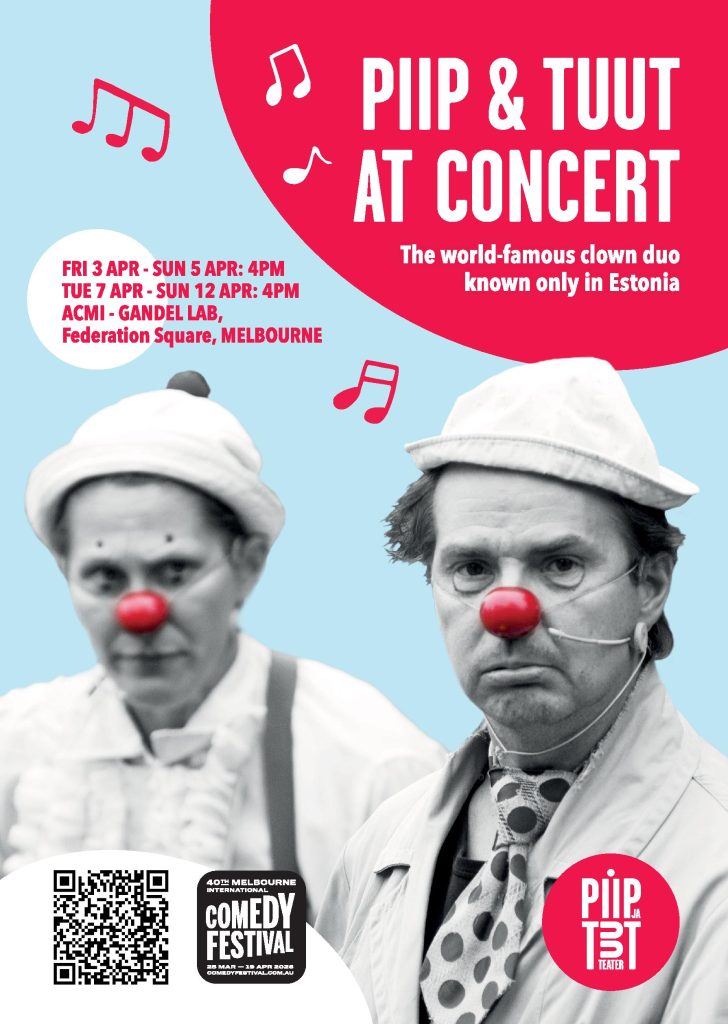
Laughter incoming! Estonia’s beloved clown duo Piip ja Tuut (Piip and Tuut) are touring Australia this March and April, bringing their joyful chaos to Perth, Adelaide, Sydney, the Gold Coast and Melbourne — and yes, audiences aged 3 to 103 should be very excited!
If you’ve never met Piip and Tuut before, prepare yourself. What begins as a wonderful concert quickly dissolves into a delightful comedy show. Two clowns arrive at a concert hall expecting a refined evening of music — but things go wonderfully off-script. Think slapstick, live music, acrobatics and the kind of physical comedy that makes both children and adults laugh out loud.
Behind the clown noses are Estonian actors Haide Männamäe and Toomas Tross, who have been performing together since 1998. Their theatre, Piip ja Tuut Teater, opened its own playhouse in Tallinn in 2010 and has toured internationally for over two decades across Europe, North America, the Middle East and Asia.
Now Australia gets a turn. The duo will appear at two of the country’s biggest festivals — the Adelaide Fringe Festival and the Melbourne International Comedy Festival — alongside special performances for Estonian communities across the country. Expect mischievous clown tricks, surprising acrobatics, songs, improvisation and plenty of contagious laughter
This Estonian clown duo is exceptionally good at their craft. In 2022 they were awarded the Order of the White Star, one of Estonia’s state honours, recognising their contribution to culture.
Ready to laugh? Here’s where you can catch the shows.
Source: Piip ja Tuut.
Perth
🗓️ Sunday, 8 March 2026 📍 Lathlain Playgroup, 6 Lathlain Pl, Lathlain, Perth WA 6100 🕠 10.00 am 🥪 Tickets: Trybooking 🎟️ Event page: Facebook
Adelaide
🗓️ 9–22 March 2026 | “Piip & Tuut at Concert“ 📍 Fool’s Paradise, Victoria Square, Grote Street, Adelaide SA 5000 🕠 Various times | See when and where: Adelaide Fringe Festival 🥪 Tickets: Adelaide Fringe Festival 🎟️ Event page: Facebook
Sydney
🗓️ Saturday, 28 March 2026 📍 Estonian House, 141 Campbell Street, Surry Hills NSW 2010 🕠 11.00 am 🥪 Tickets: Trybooking 🎟️ Event page: Facebook
The Gold Coast
🗓️ Sunday, 29 March 2026 📍 Varsity Lakes Community Centre, 337 Christine Avenue, Varsity Lakes QLD 4227 🕠 11.00 am 🥪 Tickets: Trybooking 🎟️ Event page: Facebook
Melbourne
🗓️ Sunday, 5 April 2026 (Estonian House) | 3-12 April 2026 (Melbourne International Comedy Festival) 📍 Estonian House, 43 Melville Road, Brunswick West VIC 3055 | ACMI Gandel Lab, Flinders Street, Melbourne VIC 3000 🕠 11.00 am (Estonian House) | 4.00 pm (Melbourne International Comedy Festival) 🥪 Tickets: Trybooking | Melbourne International Comedy Festival 🎟️ Event page: Facebook
The Australian tour has been organised by Ave Nukki, Estonian Society in Sydney,for Estonian community performances in Perth, Sydney, the Gold Coast and Melbourne, and by Reeli Lonks for the Adelaide Fringe and Melbourne International Comedy Festival.
Margus Tsahkna, Estonia's Minister of Foreign Affairs. Source: Ministry of Foreign Affairs of Estonia.
Dear Estonians around the world,
Greetings on Estonia’s Independence Day!
Anniversaries are celebrations, but they are also an opportunity for reflection. Exactly one month ago, we marked the 106th anniversary of the birth of one of the people who forged Estonia’s independence, our first Foreign Minister, Jaan Poska. On 2 February, we will mark the 106th anniversary of the Tartu Peace Treaty. It was the work of Jaan Poska and his contemporaries on the Tartu Peace Treaty that secured international recognition for Estonia and laid a strong foundation for the state whose 108th anniversary we are celebrating today.
In his speech on the ratification of the Tartu Peace Treaty, Jaan Poska said: “Let us savour peace but let us maintain and strengthen our military power.” This observation is more relevant than ever today. The impact of today’s events and decisions will stretch into the future: the actions we take now will shape the mood of the Estonian Independence Day celebrations for decades to come.
We are living through a time when the global system of governance is undergoing profound change. It is characterised by increased confrontations between major powers, which places countries that stand for the rules-based international order in a difficult position. Estonia is among them.
President Lennart Meri once said, “Estonia is not great in terms of its territory; it is great in its spirit.” It is now our responsibility to make sure that we are present at every table where decisions are made, and that we demonstrate this clear and bold spirit.
The anniversary of our country will always remind us that, four years ago on 24 February, Russia launched its full-scale war against Ukraine. We stand with the Ukrainians who are fighting for their survival as an independent state with territorial integrity. This is an existential issue for Estonia and for all of Europe.
This is a moment when we need to work together for a better world order. That is why telling Estonia’s story around the globe is more important than ever. I would like to assure those of you living abroad that you can contribute to this as citizen diplomats: the better Estonia is known internationally, the better it is for all of us.
We all are concerned about our talented and active young people abroad losing touch with Estonia. The Ministry of Foreign Affairs is committed to preserving Estonian identity abroad to ensure that the Global Estonian village flourishes, and that Estonians at home and Estonians abroad exist as one shared Greater Estonia. As early as this summer, there will be lots of opportunities for young people to establish or re-establish ties to Estonia – whether by coming here to study, attending camps or testing life in Estonia – an experience that has, for many, led to landing a great job here. The Estonian diaspora is global and this is why our summer outreach programme for young people is called Global Estonian.
Dear friends, I would like to wish you a happy 108th anniversary of the Republic of Estonia! Hopefully you will keep Estonia in your thoughts, your hearts and your songs – that is what matters the most. And here I am talking about the great, borderless Estonia that can be found around the world in the hearts of Estonians and friends of Estonia.
Long live Estonia!
Margus Tsahkna Estonia’s Minister of Foreign Affairs
Eesti keeles
Head eestlased üle ilma!
Tervitan teid Eesti riigi sünnipäeva puhul!
Sünnipäevad on küll pidupäevad, aga ka hetked, kus mõtestada oma olemist. Täpselt kuu aega tagasi tähistasime Eesti esimese välisministri ja Tartu rahu sepistaja Jaan Poska 160. sünniaastapäeva, 2. veebruaril tähistasime Tartu rahu sõlmimise 106. aastapäeva. Just Jaan Poska ja tema kaasaegsete töö Tartu rahu nimel tõi Eestile rahvusvahelise tunnustuse ja lõi tugeva aluse riigile, mille 108. sünnipäeva me täna tähistame.
Jaan Poska ütles Tartu rahu ratifitseerimiskõnes: „Maitskem küll rahu, aga hoidkem alal ja kasvatagem oma sõjalist jõudu.“ See tõdemus on täna ajakohasem kui kunagi varem. Ka meie tänaste sündmuste ja otsuste mõju ulatub tulevikku: suuresti just praegustest tegudest sõltub see, milline on meeleolu Eesti Vabariigi aastapäevadel kümnete aastate pärast.
Elame ajal, kus üleilmne valitsemissüsteem on läbi elamas murrangut. Seda iseloomustab terav jõukatsumine suurriikide vahel, mis paneb raskesse olukorda riigid, kes pooldavad reeglitepõhist maailmakorda. Nende hulka kuulub ka Eesti. President Lennart Meri on öelnud: „Eesti ei ole suur oma territooriumilt, vaid oma vaimult“, ning meie kohus on praegu kõikide laudade taga, kus asju otsustatakse, just seda ärksat ja julget vaimu näidata. Meie riigi sünnipäev jääb meile meenutama, et just 24. veebruaril neli aastat tagasi alustas Venemaa täiemahulist sõda Ukrainas. Toetame ukrainlasi, kes võitlevad ellujäämise eest iseseisva ja tervikliku riigina, ning see on ka meile ja kogu Euroopale eksistentsiaalne küsimus.
On hetk, kus peame ühiselt töötama parema maailma(korra) nimel. See aga tähendab, et Eesti loo rääkimine kõikjal maailmas on muutunud veelgi olulisemaks. Tahan teile südamele panna, et teie, kes te elate välismaal, saate seda rahvadiplomaatidena samuti teha: mida rohkem Eestit maailmas tuntakse, seda parem meile kõigile!
Meil kõigil on südamel see, et meie andekad ja ettevõtlikud noored välismaal ei kaotaks sidet Eestiga. Välisministeerium soovib olla toeks Eesti identiteedi hoidmisel välismaal, et eesti ilmaküla õitseks ning et Kodu- ja Välis-Eesti eksisteeriks ühtse Suur-Eestina. Juba sel suvel on avanemas palju uusi võimalusi noortele, et nad saaksid luua või taastada oma sideme Eestiga – tulla õppima, laagritesse või katsetada Eestis elamist, mis paljudele on lõppenud Eestis hea töökoha leidmisega. Eestlus on globaalne ning seetõttu on ka meie suvise noortetöö brändiks Globalestonian.
Head pidulised!
Soovin teile rõõmsat Eesti Vabariigi 108. sünnipäeva! Loodetavasti on Eesti täna teie mõtetes, tunnetes ja lauludes – just see ongi kõige tähtsam. Ja siin ma mõtlen ka seda suurt piirideta Eestit, mis asub üle maailma kõikide eestlaste ja Eesti sõprade südames.
Elagu Eesti!
Margus Tsahkna Eesti Vabariigi välisminister
Read more about Margus Tsahkna and what the Foreign Ministry has been up to here
H.E. Jaan Reinhold speaking at the Independence Day celebrations, Estonian House in Adelaide, 22 February 2026. Photo by Krista Reinhold.
Dear Estonians in Australia,
I know that Estonian communities all across Australia celebrated our national day over the weekend, and I sincerely hope it was a joyful and memorable occasion for everyone — one that brought our Estonian community even closer together.
This time, I had the pleasure of celebrating together with the Estonians in Adelaide, and I would like to share below some of the reflections I offered there.
Celebrating Estonia’s Independence Day nearly 15,000 kilometres from Tallinn always carries a special meaning. Distance, however, does not diminish belonging. On the contrary — it often deepens it.
What makes Estonia and Australia natural partners?
First and foremost, we share a firm commitment to freedom, democracy and the rule of law. In recent years, our bilateral relations have grown steadily stronger. We have welcomed visits by Estonia’s Parliamentary Foreign Affairs Committee, by our Minister of Education and Research, as well as several business delegations to Australia.
In just two weeks’ time, we will have the honour of welcoming Foreign Minister Margus Tsahkna to Australia — the first visit by an Estonian Foreign Minister since the opening of our Embassy ten years ago. This marks an important milestone in our relationship. There are further high-level visits planned for later this year, although it is still too early to speak publicly about them.
The growing intensity of contacts alone brings our countries and our peoples closer together, especially now when we are living in a turbulent time for international relations. The rules-based order established after the Second World War is under considerable strain.
For eighty years, the principles of sovereignty, territorial integrity and the prohibition of the use of force have protected states large and small. For small nations in particular, a rules-based order is not merely a preference — it is an existential necessity.
Estonian flag at Estonian House in Adelaide, 22 February 2026. Photo by Krista Reinhold.
Dear friends, This is why I wish to speak clearly about Ukraine.
Russia’s full-scale invasion of Ukraine is not a misunderstanding or a regional dispute. It is a direct violation of the United Nations Charter and a fundamental challenge to the international order. The deliberate targeting of civilians, the deportation of children, and systematic violations of humanitarian law demonstrate why these rules were established in the first place.
This war is not confined to Europe. It is an attempt to redraw borders by force and to reintroduce spheres of influence — concepts that many believed had been relegated to history.
For Estonians, this war resonates deeply. We know from our own experience what occupation means. We know what it is to have sovereignty denied and identity suppressed.
For fifty years, Estonia’s independence was extinguished — yet it was never legally recognised as such by many democratic nations. International law mattered. Principles mattered. And, they prevailed.
If aggression were to succeed in Ukraine, it would weaken the very principles that protect all nations — including those far from Europe. It would send a dangerous message that power can override law. That is why Estonia’s support for Ukraine is principled and unwavering.
Supporting Ukraine is not an act of charity. It is a strategic investment in a world where sovereignty and territorial integrity are respected.
Ladies and gentlemen, The global environment is undeniably complex. We observe growing tensions across regions, including here in the Indo-Pacific. Yet small states are not without agency. When we act consistently and speak with clarity, our voice carries weight.
President Lennart Meri once said: “If you are not visible and audible, no one will notice your disappearance.” Those words remain as relevant today as ever.
Estonia today is a confident, innovative and outward-looking nation. Together with our Nordic and Baltic partners, we represent a region known for resilience, technological advancement and a strong values-based approach to international affairs. We bring that spirit into our cooperation with Australia and the broader Indo-Pacific.
There is significant potential to deepen Estonia–Australia relations — in trade and investment, in digital innovation and cybersecurity, in education and research, and in strategic dialogue.
H.E. Ambassador Jaan Reinhold together with Lithuanian, Latvian and Ukrainian honorary consuls and community leaders. Estonian House in Adelaide, 22 February 2026. Photo by Krista Reinhold.
Dear Estonians, Each of you plays a vital role in strengthening Estonia’s presence abroad.
By preserving our language and traditions, you sustain the foundation of our national identity. By engaging with Australian colleagues and friends, you build bridges of understanding and solidarity.
The generations who preserved Estonia in exile carried a profound responsibility. Our responsibility today is to ensure that freedom is safeguarded and that history does not repeat itself.
And my special message comes to the younger generation, echoing President Alar Karis at the ESTO 2025 Youth Conference:
Teostage end seal, kus elate ja kus teie anded on kasutatud, kuid teadke, et uks Eestisse on ka alati avatud. Contribute fully to the societies in which you live, where your talents are meaningful and valued – while knowing that Estonia always remains your home, with its door open.
Let us continue to strengthen the bonds between Estonia and Australia. Let us continue to stand firmly for democratic values and international law. And let us celebrate with pride the independence that was regained — and that we are committed to defend.
Elagu Eesti! Long live Estonia!
The Ambassador, H.E. Jaan Reinhold, presenting Martin Kurvits with his recognition by the Minister of Foreign Affairs. Estonian House in Adelaide, 22 February 2026. Photo by Krista Reinhold.
On 8 February 2026, the Southern Hemisphere Book Club gathered to meet Estonian writer Lilli Luuk, and within minutes we were all leaning slightly closer to our screens. Not in a creepy way. In a “please keep talking, this is fascinating” way. Somewhere along the line, an hour vanished.
Lilli joined us bright and early from Estonia, cheerfully noting that she likes to wake early and write while the world is still quiet. What followed was a generous, thoughtful conversation about her novel The Night Mother (Ööema), her writing process, Estonia’s forest history, women in hiding, buried milk cans, and the peculiar ways memory behaves.
Yes, milk cans. Stay with us.
A novel born in the bog
The Night Mother reaches back to the end of the Second World War, when many Estonians fled Soviet occupation and hid in forests and bogs — some for years, even decades.
Lilli spoke about how the novel begins in the landscapes of her own childhood: the bogs of Järvamaa and Läänemaa. As a child, trudging through cranberry marshes may have felt mildly torturous. As a writer, she realised those same wetlands had quietly shaped her.
Estonian bogs, she reminded us, are not just scenic postcard material. Historically, they were refuge. Shelter. Survival.
Several readers confessed that the novel’s opening felt strangely homely — even cosy — despite the underlying tension. Which, if you think about it, is peak Estonian energy: beauty, silence, existential unease.
The forest brothers… and the forest sisters
Much has been written about the metsavennad (forest brothers). Less so about the metsaõed — the women who hid, supported, endured and survived in parallel.
Lilli spoke powerfully about this imbalance. Women were not initially mobilised. But they became targets quickly — pressured, interrogated, used as leverage. Many lived in forests themselves. Their reasons varied. Their stories are still emerging. As she researched, Lilli discovered how little systematic study had been done on these women. Writing the novel became a way of asking: what did survival look like for them?
And then there were the details. Lilli showed us photographs of milk cans buried underground to protect belongings from damp and rodents. Photographs of bunker excavations. Objects preserved in metal containers — spectacles, razors, even playing cards — because human dignity does not pause simply because history has gone feral.
It was not misery theatre, she reminded us. People were young. They tried to be happy. Even in hiding.
History breathes and whispers
One of the most fascinating parts of the evening was Lilli describing her writing process. Writing historical fiction, she said, feels a little like being a historian — except with more imagination and more responsibility. You read. You listen. And crucially, you notice what is not said. Sometimes a memory ends abruptly. A pause hangs in the air. That silence can be as revealing as any archive document.
Lilli visits real locations — sits on remnants of bunker walls, walks through forests, studies old photographs — trying to sense how the landscape might have felt decades ago. Fieldwork, but make it literary.
Her writing routine? Early mornings. Word-count discipline for novels (10,000 characters a day when deep in a project). Music to match the era — Nancy, Artur Rinne, whatever helps the mood settle. And notebooks everywhere.
At one point Lilli described the sensation that the characters themselves lead her. “Sometimes it feels like I’m walking behind them,” she said, “rather than inventing them”. (We collectively agreed that this is both poetic and mildly mystical — and we loved it.)
Black-and-white childhood, colour at a distance
The novel doesn’t stay in wartime. It moves into 1984 — into a closed Soviet society where fragments of beauty flicker through television screens. Figure skating. Music. Glittering costumes glimpsed in black and white.
Lilli spoke about the shock of realising, as a child, that somewhere else the world was bright and dazzling — while your own felt muted. She even wove in subtle references to Estonian singer Artur Rinne, whose life reflected the ruptures of his generation.
And then, as the book moves toward the late 1980s and early 1990s, everything collides: forest survivors, Soviet functionaries, returnees from exile, village reunions. History refuses to stay politely in the past.
Perhaps the most moving part of the conversation was when Lilli spoke about responsibility. You can never fully reconstruct history. You cannot see into people’s thoughts. But you must try to stay close to truth. You cannot be careless. She described elderly readers calling her to say, quietly, “Yes. It was like that.” Those calls matter.
Writing the novel took three years — though in truth, she admitted, it began decades earlier in family albums and half-heard stories.
The story continues
Lilli has three books published so far, with two more arriving this year:
A historical short story collection due in late Estonian spring/early summer.
A contemporary short story collection toward the end of the year — with a little more humour woven in.
By the end of the session, it felt less like a book club and more like a shared excavation — of forests, of silence, of inherited memory. Books like The Night Mother remind us that history is not abstract. It lives in villages, in bogs, in family stories told — or not told — at kitchen tables. And in the end, what maybe matters most is that we remember. And the story continues.
"Estonia Worldwide" exhibition opening at the Vabamu Museum in Tallinn. Photo by Aron Urb. Source: Vabamu.
Estonians have packed their lives into suitcases and quietly carried Estonia with us to faraway places for many reasons — by choice, by necessity, by force and by curiosity. Now, a new exhibition in Tallinn transforms 150 years of those journeys into an experience visitors can walk through — and see themselves within.
On display at the Vabamu Museum of Occupations and Freedom until January 2028, the exhibition Estonia Worldwide (Ilmaküla eestlased) explores migration, memory and identity. It asks a deceptively simple question: what does it mean to be Estonian when your address is somewhere else?
Three waves
The exhibition is shaped around three broad movements. First, the 19th-century settlers and early independence-era communities who sought land, work and opportunity across the Russian Empire and beyond. Then, the darkest chapters — deportations, the Great Flight of 1944, exile communities preserving language and statehood while the homeland was occupied. And finally, the post-1991 generation: students, professionals, artists, families — leaving not because they must, but because they can.
Curators Martin Vaino and Ede Schank Tamkivi resist the temptation to tell a single heroic or tragic tale. Instead, they lean into complexity. Identity here is not boxed in by passport stamps or perfect grammar. Some contributors speak Estonian fluently. Others don’t. Some left in fear. Others left in curiosity. All are part of the picture.
“Estonia Worldwide” at the Vabamu Museum in Tallinn. Photo by Aron Urb. Source: Vabamu.
Hyphenated identities
There are stories of families torn apart by deportations, of stormy crossings in fragile boats, of rebuilding life from almost nothing. But there are also deeply human artefacts — objects that survived the journey and quietly testify to love, habit and hope.
The section on contemporary migration, curated by anthropologist and filmmaker Terje Toomistu, adds another layer. Through filmed interviews, it captures a generation comfortable with hyphenated identities and multiple homes. One person misses Estonia while abroad — and misses abroad while in Estonia. If that sounds familiar, you’re not alone.
As one of the curators has reflected publicly, diaspora communities show particularly clearly that identity is not monochrome. It is layered, negotiated and sometimes contradictory. In other words: very human.
“Estonia Worldwide” at the Vabamu Museum in Tallinn. Photo by Aron Urb. Source: Vabamu.
Estonia, expanded
The exhibition also gently challenges the idea that migration is something exceptional or modern. Movement has always been part of Estonia’s story. What changes is the context — empire, war, open borders, love, study, work.
And then there is the quiet provocation: Estonia is not only a territory. It is also a network. A web of relationships, memories, rituals and recipes scattered across continents.
It feels fitting that this story is told at Vabamu, founded by Olga Kistler-Ritso — herself shaped by displacement and return. The museum’s walls already hold stories of occupation and freedom; now they also hold the story of Estonia beyond its borders.
Add your dot to the map
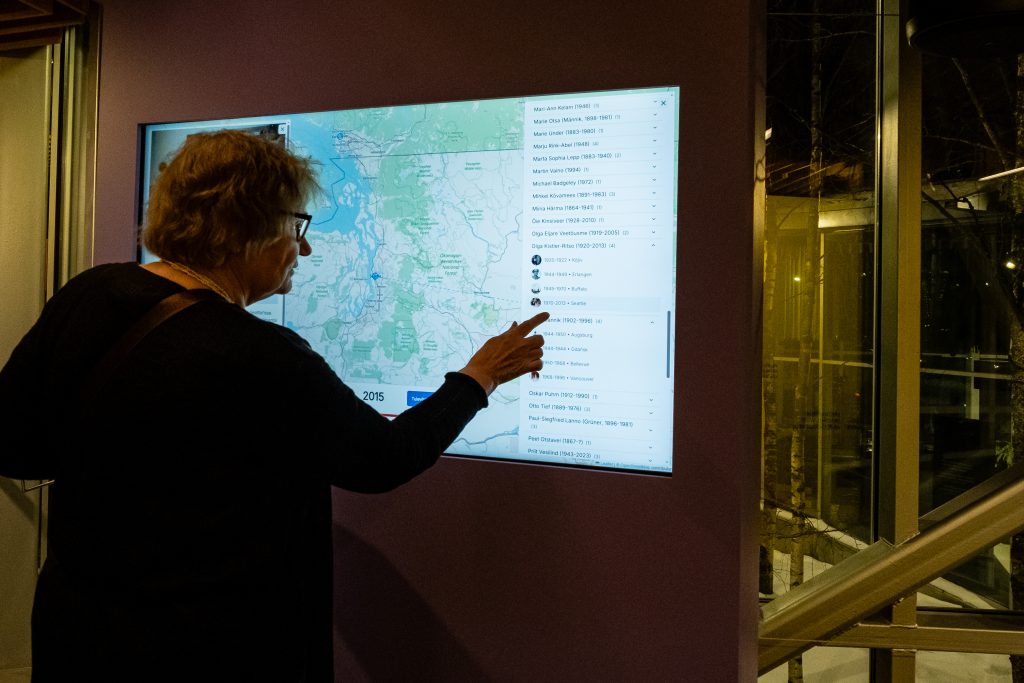
Perhaps the most delightful feature is the interactive world map, already filled with more than 200 personal stories. Visitors — including Estonians in Australia — are invited to submit a photo and a short reflection on their own version of “home away from home”.
Yes, that means your Melbourne kitchen table with rye bread. Your Brisbane folk dance group. Your Sydney choir rehearsals. Your Perth beach walk with a blue-black-white scarf tucked into your bag.
An interactive map in the “Estonia Worldwide” exhibition. Photo by Aron Urb. Source: Vabamu.
If you are heading to Tallinn in the coming years, make time for this exhibition. And if you are not, consider sending in your story anyway. Because the truth is, Estonia is not smaller for having a diaspora. It is larger, more textured and more visible — a country drawn not only in borders, but in people.
This is where you can see the exhibition
📍Location: Vabamu Museum of Occupations and Freedom, Toompea 8b, 10142 Tallinn, Estonia. 🗓 Opening hours: Wednesday–Sunday, 11 am to 6.00 pm (closed Monday and Tuesday) 🎟 Tickets: €10–€30 (depending on ticket type and concessions)
Thank you
Thank you to Agnes Kaasik from Vabamu Museum for information and photos!
Polish your crowns. Stretch those voting fingers. Estonia has chosen its Eurovision 2026 warrior queens — and yes, Australian Estonians, your May watch parties just levelled up.
On Saturday night in Tallinn, Estonia selected its Eurovision representative at the annual Eesti Laul showdown — a night where juries deliberate, the public decides, and polite applause coexists bravely with barely concealed side-eye. After two rounds of voting (jury + public first, then a public-only superfinal), it was Vanilla Ninja who claimed the crown with their anthem “Too Epic to Be True”.
And honestly? The title alone is a mood. Intrigue. Drama. Slight disbelief. You lean in immediately. And no, you don’t have to search far for the theme — it’s about epic love (of course it is). The song was written by Sven Lõhmus, a name Eurovision fans know very well.
How the final unfolded
Twelve artists competed in this year’s final. After the first round combining jury and public votes, three acts moved into the superfinal:
Vanilla Ninja – Too Epic to Be True NOËP – Days Like This Ollie – Slave
Then the scoreboard reset. The public alone decided.
And Estonia made its preference clear: familiarity, spectacle and a chorus you can shout dramatically into your kitchen spoon-microphone still win hearts. Vanilla Ninja secured 35% of the final vote in a tight finish, booking their ticket to Vienna in May.
A comeback in style
Vanilla Ninja are no strangers to big stages. Formed in the early 2000s, the trio — Lenna Kuurmaa, Piret Järvis-Milder and Kerli Kivilaan — became one of Estonia’s most internationally recognised pop exports, especially across German-speaking Europe. They have released five studio albums, most recently “Encore” in 2021.
Eurovision déjà vu? Absolutely.
Back in 2005, Vanilla Ninja represented Switzerland at Eurovision with song “Cool Vibes”. They placed 8th — a result many countries would happily frame and hang in the hallway.
Your Estonia-on-Eurovision facts
Estonia has participated in the Eurovision Song Contest 30 times, debuting in 1994 (and only skipping 1995).
Estonia has qualified for the Grand Final 11 out of 21 times and has won once — in 2001 — with the song “Everybody”, performed by Tanel Padar, Dave Benton and 2XL. (Yes, we still talk about it. As we should.)
What this means for Australian Estonians
We all know Eurovision is not simply a song contest. And while some people — usually the ones who don’t wake up at 4am for it — still wonder why Australians care about a European competition, we politely ignore them.
Because we know what happens every year. There is photographic evidence.
Across Sydney, Melbourne, Brisbane, Perth and beyond, living rooms transform into miniature Eurovision arenas. Snacks are themed. Someone brings kiluvõileivad and kartulisalat. Someone else critiques staging choices like a professional lighting designer. Dance moves are rehearsed in advance. Alarm clocks are set at unreasonable hours.
Then it begins
People gather in front of television screens in the dark, clutching extra-strong coffee, yelling “Eesti! Eesti! Go, Estonia!” at volumes that absolutely concern the neighbours. It is a national celebration. It is diaspora bonding. It is part sporting event, part cultural ritual, part sleep-deprivation experiment. And we would not have it any other way.
The band has already spoken about the importance of fan support and international backing. Given how many Australian Estonians sacrifice sleep for this event every year, we suspect that support is guaranteed.
So start planning your Eurovision night in May. Group chat activation begins… now.
And as for the title? Too epic? We’d argue there’s no such thing. But we’re ready to see it.
Linda, Malle and Albert Karp c 1944 in Geislingen. Source: The Oaks Historical Society newsletter, February 2026.
Mall Juske (née Karp) was born in Tallinn, Estonia, on 6 August 1935. Passed in Camden, Australia, on 21 January 2026.
We would like to mark the passing of a lady who was very supportive of The Oaks Historical Society in the days when we were installing the exhibition “From Estonia to Thirlmere” and share something of her life with you.
Mall Karp was born in the lovely old merchant city of Tallinn, at a time when Stalin in Russia and Hitler in Germany were fighting over the Baltic countries of Estonia, Latvia and Lithuania. In 1940 the country was occupied by Russian forces and Estonian political leaders were arrested and sent to Siberia. In 1939 Mall’s parents, Linda and Mall escaped to the rural home of Linda’s mother Lisa when their own home was burnt down. Albert joined the Air Force auxiliary and moved to another part of the country. When Russia invaded again in 1944, Linda and Mall left on a convoy to Latvia and then by a German ship to Frankfurt. Once again, they were threatened by Russian troops but found safety in Bavaria where Albert eventually joined them after the war. He had suffered while he was away and needed nursing.
Responsibility for those who lost their countries and homes was divided between the Allies; Russia, USA and UK. In Germany the town of Geislingen was cleared of people for the American camp and the Karp family shared a house with several other families. They were given rations for food and clothing and schooling was soon organised for the children and cultural activities encouraged. Mall joined the dancing school and Linda, who was a skilled seamstress, managed to make alterations to her National Costume. She hired a sewing machine to do this. The original skirt was made of woven stripes and Linda found coloured wool in the correct colours and sewed it strip by strip onto old cotton on the sewing machine.
Linda sewing Mall’s National Costume. Photo from the private collection of Doreen Lyon.
The family was accepted into Australia and arrived by boat to Fremantle where they were met by the Estonian Relief Committee and sailed to Melbourne and then boarded a train to Sydney. They were sponsored by the church, so Albert was not required to work for a two-year bond, and they settled in Dover Heights. Albert found work with Dunlop Rubber and Mall attended Double Bay Primary and then to Dover Heights school. In 1952 she attended Macquarie Fields Secretarial School and got a job with Lysaght Bros, and then in the office at Hardy’s Rubber. She resumed her interest in folk dancing and met Helmut Juske and they married in 1955. Helmut worked for Michael Nairn Linoleum and moved to Hardy’s Rubber where Mall worked.
Helmut applied for Crown Land in Thirlmere where other Estonians lived and in 1956 he was granted 12½ acres on Michel Road, Thirlmere (next to an old man from Burragorang Valley called Mr. Clive Catt). The land value was £230 and rental of £5/15/- weekly. They came out at weekends to clear the land and took courses in Poultry Breeding at Ultimo Tech. In 1957 they made the move to Thirlmere and built brooder and poultry sheds and their first day old chickens were delivered in 1959. Helmut delivered eggs in his van to local businesses twice a week. Their daughters, Helle and Valli, were born in 1961 and 1962. When the Egg Board imposed egg quotas Helmut decided to convert to intensive egg production in battery cages. He became a Director of the Egg Board and the Thirlmere Farmers Group “Kungla” and was involved with Australian United Farms, the Estonian Choir and “Koit” the Estonian Society. They built a home on Michel Road from a plan Mall saw in the newspaper. In 1982 they sold the business and then the house in 1987.
Source: The Oaks Historical Society newsletter, February 2026.
I remember Mall from the above photo when she donated the egg washing machine and showed us how to use it! Also from the National Costume which Mall loaned for the exhibition!
Acknowledgement
Originally published in The Oaks Historical Society newsletter, February 2026. Thank you to Doreen Lyon, Krista Ford and Mart Rampe for information.
Estonians across Australia are gathering to celebrate the 108th birthday of the Republic of Estonia over the next week or so — and yes, we fully intend to do it properly. Blue, black and white out. Voices warmed up. Cake sliced. Read below to see what’s happening near you.
The communities come together to honour 24 February 1918 — the day Estonia declared itself an independent nation for the first time. That day is a big deal. Fast-forward through occupations, exile and 45 years of Soviet rule, and you realise just how precious and hard-won that freedom is. For many of us, memories of 1990–1991 still sit close to the surface. This is not just history. It’s lived experience.
Celebrations here and there
Whenever I’m in Estonia for Independence Day, I try to catch the parade and then park myself in front of the TV for the President’s reception — affectionately known as the “Parade of Penguins” — where political speeches, state awards and ambitious fashion choices share equal airtime. Over the years, even some prominent Australian Estonians have received that coveted invite. Not bad for a community on the other side of the planet.
And here in Australia? We do it our way — with choirs, folk dancers, theatre, picnics, speeches, anthem-singing that may or may not become competitive, and long tables of shared food. For Estonians in Australia, this day is proof that identity travels. Our stories, traditions, language, songs and friendships bind us together. We celebrate freedom. We celebrate continuity. We celebrate each other.
Brisbane
🗓️ Saturday, 21 February 2026 📍 Latvian Hall (Läti maja), 24 Church Avenue, Woolloongabba QLD 4102 🕠 5.30 pm – Estonian Independence Day celebration (FREE) 🕖 7.00 pm – Mamma Lood theatre performance (in Estonian) | Tickets: https://www.trybooking.com/DICGN 🎟️ Event page: Facebook
Source: Brisbane Estonian Society.
Canberra
🗓️ Sunday, 22 February 2026 | 12.00–2.30pm 📍 Himalayan Cedar Forest, National Arboretum Canberra, Forest Drive ACT 2602 🕠 12.30 pm – Short presentation + national anthem 🥪 Free event – BYO picnic 🎟️ Event page: Facebook
Sydney
🗓️ Sunday, 22 February 2026 📍 The Estonian House in Sydney, 141 Campbell St, Surry Hills NSW 2010 🕠 1.00 pm – Estonian Independence Day celebration | Tickets: https://www.trybooking.com/DHCNM 🕖 4.00 pm – Mamma Lood theatre performance (in Estonian) | Tickets: www.trybooking.com/DICGN 🎟️ Event page: Facebook
🗓️ Sunday, 1 March 2026 📍 The Estonian House in Melbourne, 43 Melville Road, Brunswick West VIC 3055 (upstairs hall) 🕒 Doors open 12.45 pm | 🎤 Show starts 1.00 pm 🥗 Free event – please bring a plate to share 🎟️ Event page: Facebook
Source: Melbourne Estonian Society.
How Estonian Australians are celebrating this year
Across the country, celebrations range from forest picnics in Canberra’s Himalayan Cedar Forest to theatre evening in Brisbane with Mamma Lood and its warm, witty storytelling. Sydney gathers formally at the Estonian House to raise the sinimustvalge flag, enjoy performances and the gorgeous Estonian Book 500 tapestry the ladies have been working on will be on display. Adelaide brings music front and centre with Vikerkaar and Hapu Koor filling the Estonian House with song and cheer.
Melbourne rounds out the celebrations on 1 March with choir performances, folk dancing and a viewing of the President’s speech — because what is Independence Day season without at least one official address and a few thoughtful nods to Tallinn? Whether you prefer anthem-singing in a forest, theatre humour, or a hall full of familiar faces and shared food, there is something beautifully Estonian happening near you.
Wherever you are this Independence Day season, come along. Wear something blue, black or white. Bring a friend. Teach a child to say: “Elagu Eesti!” (Long live Estonia!). Stay for cake and great company. We’ll be glad to see you!
Happy birthday, Estonia!
Editorial note
Our listing includes events with publicly available details at the time of publication; we also understand that Independence Day was marked in Perth earlier in February alongside the Mamma Lood performance.
On 24 February, we celebrate together the 108th anniversary of the Republic of Estonia — the day in 1918 when our beloved Estonian state was proclaimed. 108 years of freedom, resilience, hope and faith in our people.
It is a great joy to see that across Australia — in Sydney, Melbourne, Adelaide, Brisbane, Perth, Hobart, and beyond — Estonians and friends of Estonia are gathering to mark this important national day. Every blue-black-white flag, every song sung, and every word spoken in Estonian here in the southern hemisphere affirms: Estonia lives in our hearts.
It is a special honour for me to stand before you today for the first time as President of the Council of Estonian Societies in Australia (Austraalia Eesti Seltside Liit, AESL). I have only recently stepped into this role, and I feel deep gratitude for the trust you have placed in me. This position does not belong to me alone — it belongs to all of us. It is a shared responsibility to preserve and strengthen Estonian identity in Australia, to build connections between our communities, and to pass on our language and culture to the next generations.
Estonia’s history teaches us that freedom is never self-evident. It is born of courage, unity and perseverance. Our forebears carried these values through difficult times — wars, occupations, and exile. Many members of our community, or their parents, arrived in Australia with the hope of building a new life, yet they always carried Estonia in their hearts. Thanks to them, we have strong societies, schools, choirs, and folk dance groups today.
Our task now is as important as ever: to keep the Estonian language alive, to support our young people in their search for identity, and to serve as a bridge between Estonia and Australia. We are not simply a community far from our homeland — we are part of a global Estonian family.
108 years is a venerable age, yet the Estonian state is young at heart. It continues to develop, learn and grow together with its people — both at home and abroad. May our connection to Estonia remain strong and vibrant — visible in our actions, in the eyes of our children, and in our singing together.
May this national day fill us with pride and gratitude. Pride in being Estonian. Gratitude to those who built the Estonian state, and to those who kept Estonian identity alive here in Australia.
Long live Estonia! Long live Estonians around the world! And long live our united community here in Australia!
Thank you.
Ave Nukki President of AESL
Eesti keeles
Head kaasmaalased, armsad sõbrad!
Täna tähistame me üheskoos Eesti Vabariigi 108. aastapäeva – päeva, mil 1918. aastal kuulutati välja meie kallis Eesti riik. 108 aastat vabadust, vastupidavust, lootust ja usku oma rahvasse.
On suur rõõm näha, et üle kogu Austraalia – nii Sydneys, Melbourne’is, Adelaide’is, Brisbane’is, Perthis, Hobartis kui ka mujal – kogunevad eestlased ja Eesti sõbrad, et seda tähtsat pidupäeva tähistada. Iga sinimustvalge lipp, iga lauldud laul ja iga eestikeelne sõna siin kaugel lõunapoolkeral kinnitab: Eesti elab meie südametes.
Mul on eriline au seista täna teie ees esimest korda Austraalia Eesti Seltside Liidu (AESL) presidendina. Olen alles hiljuti sellesse rolli astunud ning tunnen sügavat tänutunnet usalduse eest, mida olete mulle osutanud. See amet ei kuulu ainult mulle – see kuulub meile kõigile. See on ühine vastutus hoida ja arendada eestlust Austraalias, tugevdada sidemeid kogukondade vahel ning kanda edasi meie keelt ja kultuuri järgmistele põlvkondadele.
Eesti ajalugu õpetab meile, et vabadus ei ole iseenesestmõistetav. See sünnib julgusest, ühtsusest ja visadusest. Meie esivanemad kandsid neid väärtusi läbi raskete aegade – sõdade, okupatsioonide ja paguluse. Paljud meie kogukonna liikmed või nende vanemad saabusid Austraaliasse lootusega alustada uut elu, kuid südames kandsid nad alati Eestit. Tänu neile on meil täna tugevad seltsid, koolid, koorid ja rahvatantsurühmad.
Meie ülesanne täna on sama tähtis kui kunagi varem: hoida eesti keel elavana, toetada noori nende identiteedi otsingul ning olla sillaks Eesti ja Austraalia vahel. Me ei ole lihtsalt kogukond kaugel kodumaast – me oleme osa ülemaailmsest eestlaskonnast.
108 aastat on väärikas iga, kuid Eesti riik on oma hingelt noor. Ta areneb, õpib ja kasvab koos oma rahvaga nii kodumaal kui ka võõrsil. Olgu meie side Eestiga tugev ja elav – olgu see nähtav meie tegudes, meie laste silmades ja meie ühislaulmises.
Soovin, et see pidupäev täidaks meid uhkuse ja tänutundega – uhkusega olla eestlane. Tänutundest nende vastu, kes ehitasid Eesti riigi, ja nende vastu, kes hoidsid eestlust elus siin Austraalias.
Elagu vaba Eesti! Elagu eestlased üle kogu maailma! Ja elagu meie ühtehoidev kogukond siin Austraalias!
Aitäh teile.
Ave Nukki Austraalia Eesti Seltside Liidu president
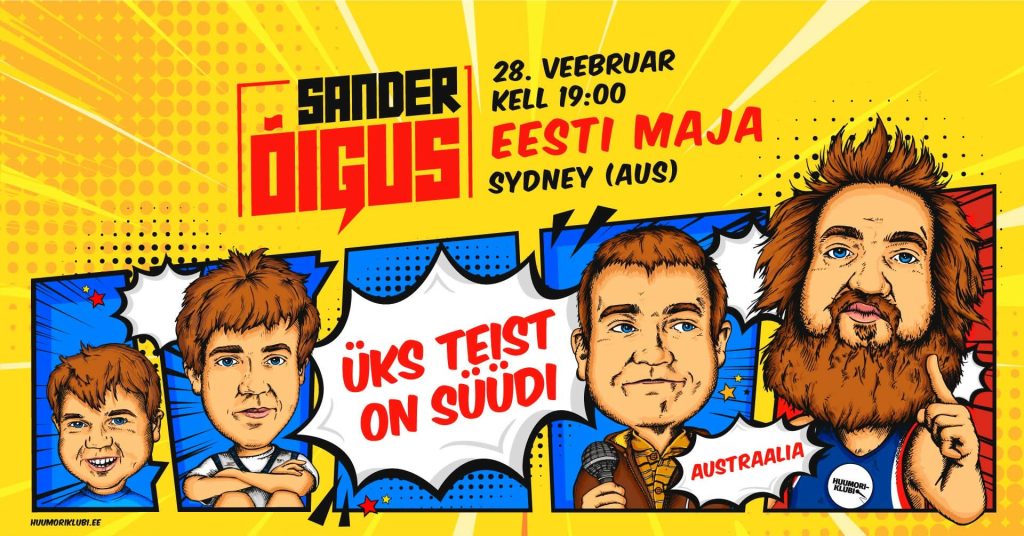
He made Melbourne cry-laugh last year. Now Sander Õigus is back in Australia with a brand-new solo show — and Perth and Sydney, you’re first in line. Melbourne… we’re hearing whispers.
If you remember how he turned Melbourne into a full-scale laughter zone last year (yes, we’re still recovering), you’ll know this is not just “a comedy night”. This is sharp, self-aware, slightly chaotic Estonian humour at its finest — delivered by a man who looks like he’s asking life’s biggest questions while quietly roasting himself.
Perth — you’re up first
🗓️ Sunday, 15 February 2026 🕒 Doors 7.00pm | 🎤 Show 7.30pm 📍 The Leederville Comedy Club, 742 Newcastle St, Perth WA 🎟️ $50 AUD (+ booking fee) | Tickets: Eventbrite link 🎟️ Event page: Perth Facebook 🗣 Language: in Estonian
The new solo hour is titled Üks teist on süüdi (One of You Is Guilty). The premise? Simple. We gather in beautiful halls across Australia to determine… who exactly is responsible for how we ended up here.
How did things go wrong? Is there a way back? Are we all slightly to blame?
Sander says he doesn’t have the answers — but he does have an hour of brand-new jokes where he attempts to find them. Expect existential questions, self-inflicted humiliation, and that very specific Estonian ability to laugh at our own life decisions (mostly his, but we’ll recognise ourselves).
Source: Huumoriklubi.
Sydney — your turn
🗓️ Saturday, 28 February 2026 🕒 Doors 7.00pm | 🎤 Show 7.30pm 📍 The Estonian House in Sydney, 141 Campbell St, Surry Hills NSW 2010 🎟️ $50 AUD (+ booking fee) | Tickets: Eventbrite link 🎟️ Event page: Sydney Facebook 🗣 Language: in Estonian
Sydney, this is your chance to experience a full house of Estonians laughing in unison at slightly uncomfortable truths. It’s bonding. It’s therapy. It’s cheaper than actual therapy.
And Melbourne?
Rumours are circulating that negotiations are underway for a Melbourne show. We are not saying anything definitive. We are, however, crossing fingers, toes, and possibly entire committee structures.
If last year was anything to go by (read our previous story here), you do not want to miss this if it lands in your city.
So Perth and Sydney — gather your friends, your cousins, that one uncle who laughs too loudly and come investigate which one of you is guilty (leave the kids home, this show is for 16+ years). We’ll see you there. Probably laughing at ourselves.