Friday, May 1, 2026
19.3 C
Canberra
10.2 C
Tallinn

AESL AGM: what was discussed and decided

0
The annual general meeting of AESL, 18 January 2026. From left: Martin Kukk, Ave Nukki, Elen Ellervee, Marissa Pikkat and Martin Kurvits. Photo by Sirje Jõgi Rivers.

The Council of Estonian Societies in Australia (Austraalia Eesti Seltside Liit, AESL) held its annual general meeting (AGM) on 18 January 2026. I attended, and here’s a brief overview of what I saw, heard, and what we discussed and decided.

The annual general meeting of the AESL brought together a range of folks from ten Estonian organisations around Australia, with 34 votes present. What was encouraging about this meeting was seeing so many different Australian Estonian organisations represented in one room, with their voices heard on matters important to the community. The organisations represented at the AGM included:

  • Adelaide Estonian Society
  • Brisbane Estonian Society
  • Estonian Society of Sydney
  • Estonian Cultural Association of Western Australia (EstWest)
  • Gold Coast Estonian Society
  • Melbourne Estonian Society
  • Estonian Cultural Foundation in Australia (ECFA)
  • Sydney Eesti Seltsi Kunsti-, Käsitöö Ja Etnograafia Ring (SESKKE) — the Sydney handicrafts society
  • Sydney Estonian Parents’ and Friends’ Association – SÕRVE Sõbrad
  • Virmalised Sydney Estonian Folk Dancers

It warmed my heart to see just how big our community is and how many people care about the future of it! This is incredible. When I was growing up, I heard about the different community organisations but now I am right in it, following the footsteps of one of my grandfathers. He would be so proud!

To give you some background, using the AESL annual report booklet as a guide, AESL unites 11 societies and organisations from across Australia, including from Tasmania and Perth. Each society or organisation holds a varying number of votes depending on membership numbers. This also affects how much each organisation pays to AESL in membership fees (currently $2 per member). These contributions go towards the financial support that AESL divides between community projects.

So, if you want to increase the voice your organisation has at the AESL AGM, consider joining and supporting your local society (usually for a small membership fee), and come along. Interested parties are always welcome to attend these meetings, so hopefully we will see you at the next one!

The AGM of AESL, 18 January 2026. From left: Sulev Kalamäe, Michael Payne, Martin Kukk, Ave Nukki and Elen Ellervee. Photo by Sirje Jõgi Rivers.

Estonian language updates

At these AGMs, we hear what’s been happening in the Estonian communities and organisations across Australia. This includes updates about Estonian language learning. It was great to hear from the Language Coordinator, Iti Connor, about the incredible work happening with the Estonian language teachers last year. I had no idea how many language classes were on offer, or how connected the local teachers are to the global Estonian network of teachers and resources.

To find out more about how you can learn Estonian, click here.

Social media and where to find resources

There was a long conversation at the AGM about social media and resources, especially where to find information about AESL and how people discover it. Some incredible ideas came out of what was, at times, an emotionally charged conversation. A “newer” Estonian in the room (who didn’t grow up in the Australian Estonian community) shared that they rely heavily on social media and online networks to connect with the Estonian community. It was fantastic to have that fresh perspective present and learn more.

It became clear that increased strategy around social media, visibility and how information is shared would help community members connect with information that interests them. I really enjoyed discussions on this topic; I’ve been sharing my ideas about this for a number of years and adopting fresh perspectives has given me hope for the future.

The value of HEIA

The topic of Hello Estonians in Australia (HEIA) came up during the discussion about social media and where people find community information. For this writer, HEIA has become a valuable source of news and community updates that I enjoy reading (and writing for). We talked about the benefits of HEIA for the Estonian community as a hub for news and information, these are obvious. The eesti.org.au platform has been around for a number of years, and it’s fantastic to see HEIA developing and publishing regularly. There was interest around the table in various collaboration opportunities as part of the media strategy mentioned above. AESL decided they would like to collaborate with HEIA to help information flow about what AESL is doing and increase visibility.

The AGM of AESL, 18 January 2026. From left: Ingrid Provan, Sirje Jõgi Rivers, Martin Kurvits, Dr Juho Looveer, Martin Kukk, Ave Nukki and Esmée Okamoto. Photo from the private collection of Sirje Jõgi Rivers.

Australian Estonian Archives

There was a conversation about making the Estonian Archives in Australia more accessible to folks across Australia. The archives are currently based at Sydney Estonian House and are open only at specific times each week. We discussed digitising the archives so people can access materials online without needing to visit in person. Now wouldn’t this be an incredible achievement! This no doubt is a big project to undertake, and from what my sources tell me, some digitisation work has already started. (See this link for examples of some incredible work that’s been done.)

To add to this, we talked about bringing the archives into the modern day and making them more visible to younger people who may want to explore family or community history. Social media was mentioned as one option. Facebook and Instagram pages exist but are not overly active. Some attendees floated the idea of expanding to other platforms, such as TikTok, to connect with the younger generation, although that would require some planning and more volunteers. If anyone is interested in helping out, please get in touch with me and I will point you in the right direction.

Eesti Päevad

The festival Eesti Päevad also came up at the AGM — as this is something AESL is part of, responsible for, guides, does, not too sure. The exciting news is: Eesti Päevad is going ahead in 2027! This is such wonderful news as it is something this girly grew up attending and how I connected with folks in the community every other year. It’s also great that the festival moves around the country — especially as communities continue to grow in places like the Gold Coast, Perth and even Darwin.

It was great hearing from the trusted head organisers of Sydney Eesti Päevad 2027 about their plans and what’s needed to get this project rolling. AESL kindly agreed to grant $10,000 to kick things off, with plans to increase this funding over the coming months — to really bring us something spectacular. This is a huge project after all — a festival of four days with many performers from Estonia and Australia gathering, the biggest event for our communities. I have high expectations for Eesti Päevad 2027. I know they will deliver — if the increased buzz and life the organisers have brought to Sydney Eesti Maja is anything to go by! Watch this space and their socials, once up and running, for more information and details.

Budgets

This part was a little boring for this writer and it might be for you too, but don’t zone out just yet. While I’m more interested in the fun stuff, like the cultural items, the budget is what is needed for the fun stuff to happen, so I did pay close attention.

It was fantastic to see a robust discussion around decisions and where funding would be allocated this year. AESL does not have a huge pot of money like the Estonian Cultural Foundation of Australia (ECFA), however it does try to support a range of activities that serve the Estonian community, in line with its constitution.

With the increase in the number of children’s camps across Australia — now including Sydney (you know the one!), Melbourne, Perth and the Gold Coast — it was agreed funding would be allocated to support these camps, to see future Estonians in Australia connected from a young age. AESL decided that $3,000 would be distributed among the children’s camps (excluding the Sõrve Summer Camp). Sõrve asked for $2,000 at the AGM, which members approved. To put this in perspective, Sõrve has been receiving financial support of around $5,000 over recent years ($5,000 in 2025, $8,000 in 2024) from AESL’s very small pot of money. Sõrve graciously reduced what they asked for to allow AESL to financially support other children’s camps this year. This made my heart so warm, as a previous laagrijuht (camp leader) of Sõrve Summer Camp, I completely understand the value of bringing our youngest members of the community together to connect and create shared memories! I’m so excited this can happen even more across Australia, giving our youngest community members a place of belonging.

Now you might be wondering where this money has come from, or part of it anyway. During the budget review, it was discovered that the Estonian Archives in Australia were incredibly financially self-sustaining, at least for last year, supported by grants and generous donations from Australia and Estonia. The Archives graciously advised that they did not require an AESL allocation this year, which meant $3,500 could be redirected to other priorities, children’s camps and Eesti Päevad 2027. Gratitude filled the room when this occurred.

Final thoughts

This was a long meeting, at times emotionally charged — but as you can see, some really important things came from it. While I have stepped off the AESL board, I’ll still be keeping an eye on how things progress, and I hope the plans discussed are put in place, including a strategy around visibility and purpose in the coming months.

I would encourage anyone from the community to dedicate a day to attend the AESL AGM. You don’t have to represent an organisation, but you do need to be a member of one. You may not have voting rights unless you are attending as a delegate, however, you will get a clearer understanding of what is happening in the Estonian community, what AESL does, and how they serve the community. And yes — they even feed you pizza!

Acknowledgement

Thank you to Sirje Jõgi Rivers for photos used in this article!

Read more

Council of Estonian Societies in Australia (AESL) webpage

To read the annual booklets and learn more about AESL, click here

Lõunapoolkera Lugemisklubi welcomes Lilli Luuk on Zoom

0
Image by Andres Truus.

The Southern Hemisphere Estonian Book Club (Lõunapoolkera Lugemisklubi) is back on Sunday 8 February, welcoming acclaimed writer Lilli Luuk to Zoom for a warm, thoughtful and very human conversation about her novel Ööema (The Night Mother). Have you read five pages? The whole book? Or the book… five times? Perfect. Join us.

Event details

🗓 Date: Sunday, 8 February 2026
⏰ Time: 6.00 pm Sydney & Melbourne | 🕒 5.00 pm Brisbane | 🕒 3.00 pm Perth | 🕖 8.00 pm New Zealand
💬 Language: Estonian
💻 Where: Zoom Meeting ID: 889 0607 4165 | Passcode: 138283 | Link
📖 The Night Mother (2024) is available in Australia (link here) and in Estonia via Apollo or Rahva Raamat

The Night Mother

Ööema is a powerful, layered novel set in rural Estonia in the years following the Second World War — a time when the fighting may have ended, but fear, loss and impossible choices continued quietly shaping everyday life. At its heart, the novel asks what it means to survive when moral clarity is a luxury, and when silence can feel safer than truth.

Moving between generations and perspectives, the author traces how violence, secrecy and unspoken grief ripple through families long after the original events have passed. The story unfolds in landscapes that feel almost like characters themselves — bogs that hide and protect, forests that witness without judging, homes that hold both care and unbearable tension. Life goes on, children are born, work is done — even as the past presses heavily against the present.

Lilli writes with empathy for characters caught between loyalty and survival, love and fear, protection and betrayal. Women’s experiences sit at the centre of the novel, revealing the emotional and bodily labour required to keep families intact in times when history leaves no good options.

The result is a novel that is deeply human — one that lingers not because of dramatic plot twists, but because of its emotional honesty. Ööema invites readers to sit with discomfort, to acknowledge what has been inherited, and to consider how stories — once finally told — might loosen history’s grip, even if they cannot fully undo it.

More about Lilli Luuk

Lilli Luuk entered Estonian literature in 2017 and has since become one of its most read voices. She is a two-time Friedebert Tuglas Short Story Award winner (for short stories Auk [Hole] and Kolhoosi miss [Collective Farm Miss]). She is also the literary journal Looming annual prize recipient (for short story Mäed [Hills]) and has been named The Writer of the Year (in 2023). Last year, she won the Estonian State Annual Cultural Award for her book Ööema.

Lilli’s first novel Minu venna keha (My Brother’s Body, published in 2022) received major nominations and awards and Ööema, published in 2024, is her second novel — continuing her sharp, compassionate exploration of history’s long shadows. She writes with clarity, courage and a deep feel for how the past lives on in bodies, families and landscapes.

Why join?

This isn’t just about a book. It’s about pausing together, in Estonian, across continents and clocks. Come for the story, stay for the conversation — and for those quiet moments when something lands and stays with you. Come curious, come comfy, come exactly as you are.

👉 Join the Zoom meeting on Sunday, 8 February at 6.00 pm (or your local time) — no registration needed!

Zoom Meeting ID: 889 0607 4165 | Passcode: 138283


Read more

📖 Event Facebook page
📖 Lilli Luuk on Facebook and Instagram
📝 Read about Lilli Luuk and her book in Estonian here. More in English here and here.
📚 Year of the Estonian Book information

Read about our past book club events:

Lõunapoolkera Lugemisklubi met and loved Urmas Vadi | HEIA
Southern Hemisphere Estonian Book Club launches with a literary star – Kristiina Ehin | HEIA

Acknowledgement

This book club event is made possible thanks to the joint contribution and support of the Estonian societies of Sydney, Brisbane, Melbourne, Perth and the Gold Coast. Thank you to Estonian Society of Sydney for information and Andres Truus for creating the amazing images.

Image by Andres Truus.

Better conversations begin with ourselves

0
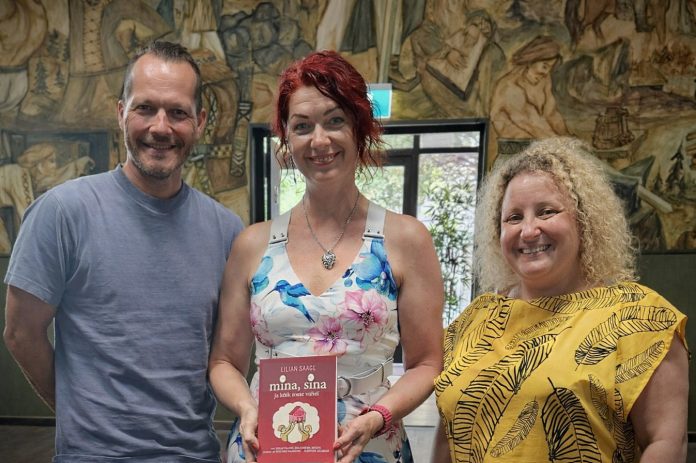
From left: Martin Kukk, Lilian Saage and Ave Nukki, at the Estonian House in Sydney, 1 February 2026. Photo from the private collection of Ave Nukki.

On 1 February 2026 at the Sydney Estonian House (and on Zoom), Lilian Saage invited us into an honest Sunday conversation — this is what stayed with us after the coffee cooled.

And then, on a warm Sydney Sunday morning — with others listening in via Zoom — Lilian did exactly that. Not loudly. Not dramatically. Just calmly, thoughtfully, and with a kind of honesty that makes you sit up straighter in your chair and really pay attention.

Lilian spoke, we listened. We asked questions and shared our own relationship stories. We took notes and quietly wished someone had taught us all this in high school.

By the end of the morning, many of us had realised something gently confronting: we don’t sabotage our relationships because we’re bad at love. We do it because we’re exhausted, under-fuelled, over-committed, and running on emotional fumes. Sometimes, we just don’t know better. Which is… relatable.

Relationships aren’t optional — even if romance is.

One of the first myths gently dismantled was the idea that relationships are a nice-to-have.

Romantic partnership? Optional.
Human connection? Not negotiable.

We can be fine without a romantic partner, but as social creatures, we don’t survive long without someone — someone who knows us, witnesses us, and occasionally reminds us that coffee is not a food group.

We need meaningful human connection. Life companions. And no — relationships aren’t a side hobby. They’re the operating system.

We each carry an invisible backpack, lovingly packed by our families.

We arrive in adulthood carrying generations with us — parents, grandparents, great-grandparents — along with love, values and survival strategies… and a few deeply ingrained patterns we didn’t consciously agree to. Some families teach women to carry everything (and everyone), men to work hard and feel very little, and emotions to be managed later — or never.

You can’t throw the backpack away. But you can open it, look inside, and decide what still belongs. Do I want to continue this — or do I choose differently?

Progress, it turns out, looks a lot like unpacking. And that knowledge, Lilian reminded us, is power.

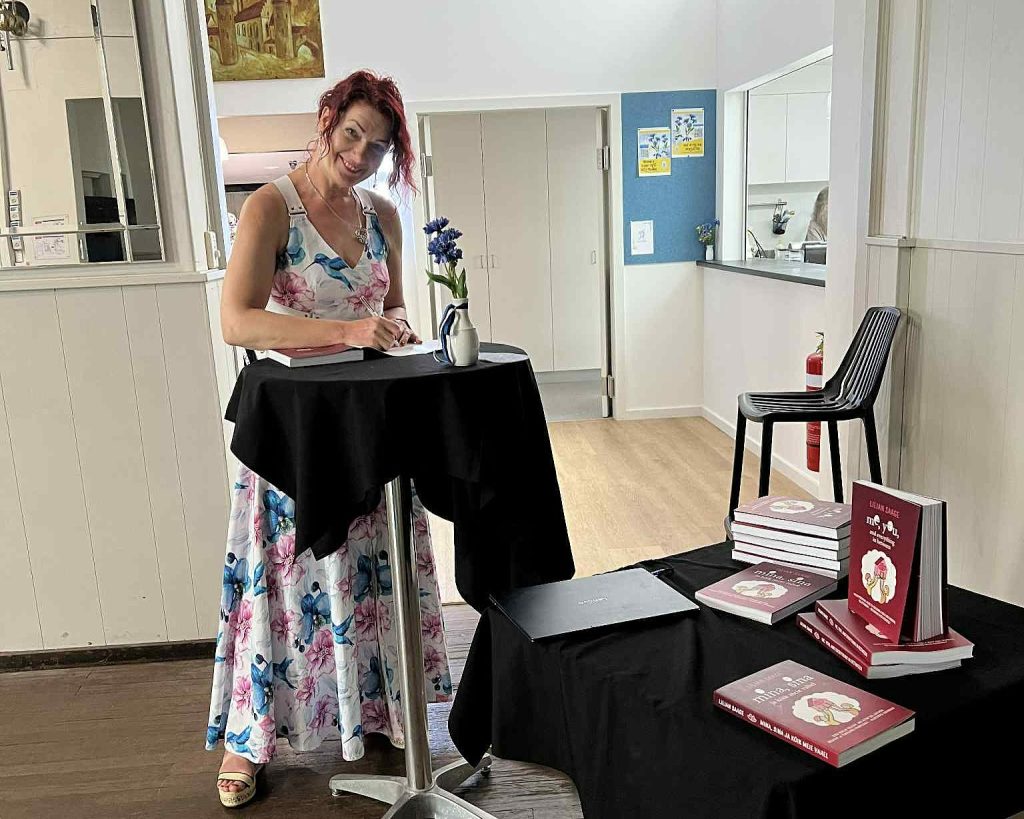
Lilian Saage signing her books at the Estonian House in Sydney, 1 February 2026. Photo by Ave Nukki.

Our relationship with ourselves is the most important relationship of all — and a key factor in how our other relationships unfold.

Lilian offered a self-check — deceptively simple, like all honest questions tend to be. If you’re ready to be honest, this test will tell you a lot.

How well are you taking care of yourself today? Rate each on a scale of 1 to 5:

  • Sleep and recovery – Do you wake up rested… or already irritated?
  • Food and presence – Are you feeding your body like it matters, or like it’s a rubbish bin?
  • Movement – Are you moving enough for your heart and muscles, not just your step counter?
  • Work boundaries – Does work stay at work, or move in rent-free?
  • Energy after work – When the day ends, do you have energy for life — or only the couch?

Lower scores simply signal that your energy reserves may be stretched and that this could be a good moment to pause, be kind to yourself, and consider what support or small adjustments might help.

Important note: if you don’t want to make decisions based on the answers — skip the test. (Just like you shouldn’t step on the scale if you plan to ignore it completely.) Awareness without action is just information. Sometimes useful. Often annoying — especially when it brings its best friends, Shame and Blame, along to the party.

Burnout doesn’t knock — it creeps and impacts our relationships.

Burnout affects many, builds slowly, and impacts deeply. It doesn’t happen because you’re weak, lazy, or doing life wrong. Lilian reminded us that burnout happens because you’ve been giving more energy than you have — for too long. To work. To kids. To everyone else. Forgetting yourself, arguably the most important person in your life.

Empathy doesn’t disappear because you’re a bad person. It disappears because you’re exhausted. And once energy is gone, relationships quietly take the hit — not out of cruelty, but depletion.

This was one of those deep-exhale moments in the room.

When burnout knocks, the most important question isn’t “How bad is it?” It’s this: What is one small thing I can do differently today to take better care of myself?

Why not ask yourself that now — regardless of where you land on the scale today.

From left: Ave Nukki and Lilian Saage, in Sydney, 1 February 2026. Photo from the private collection of Ave Nukki.

We talked about why conflict repeats in relationships — and how to stop the infamous conflict dance.

Lilian described a familiar tango:

One partner seeks connection through intensity.
The other seeks safety through distance.
Both want closeness — but create insecurity instead.
Neither feels safe.

Cue music. Same steps. Same ending.

Without a change in behaviour after conflict, apologies become empty rituals. The music starts again. And the dance repeats.

Stopping it, it turns out, is a joint decision — not a solo performance. And it takes self-awareness to admit that it’s not just the other person’s fault. That we’re not perfect. That we have work to do too. That’s called emotional adulthood.

Being emotionally grown-up isn’t about age — it’s about choice.

It’s staying grounded when others aren’t. It’s not outsourcing your decisions to parents, partners or panic. It’s tolerating discomfort without collapsing or attacking, It’s recognising that others often act from fear or fatigue — not malice.

Not glamorous. Very powerful.

True maturity includes the courage to say: This is my choice. I may be wrong — and I’m still responsible.

Do this (for one minute and six seconds) every day.

We also talked about joy — the kind that doesn’t need to produce anything. About novelty as a way to slow time and feel alive. About doing things simply because they’re fun. Not as indulgences or rewards — but as essential, everyday forms of self-care.

And then there was this important relationships rule (hard to argue with this one):

  • Six seconds of real kissing every day. Not a peck. A proper, grounding kiss.
  • Plus a minute of calm hugging — no agenda, no multitasking.

Simple. Powerful. Scientifically backed. Surprisingly rare. Go on. Try it.

If all of this sounds like a lot, that’s okay — the invitation here isn’t to overhaul your life, but to notice where a little more care might quietly fit.

The heart of the morning wasn’t about fixing everything. It was about asking: What’s one small thing I can do differently today, this week? Not a life overhaul. Not a dramatic exit. Just a conscious choice — made with self-awareness, honesty and a little kindness toward yourself. Because small, conscious choices are often where care begins — and where life quietly starts to feel fuller again.

As Lilian reminded us: We don’t need more years in life. We need more richness in the years we already have.

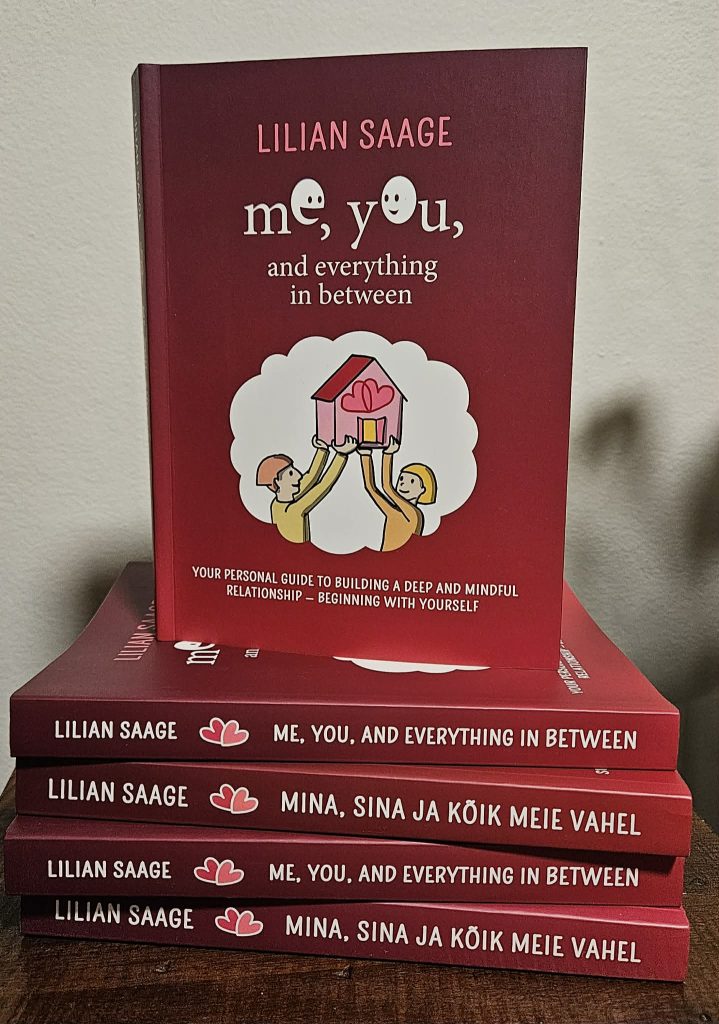
Lilian Saage’s books “Me, You, and Everything in Between”. Photo by Ave Nukki.

Lilian Saage and the book at the centre of the conversation

Our lively discussion was led by Lilian Saage — Estonian author, mentor, trainer and family therapist — whose work focuses on supporting people toward healthier, more conscious relationships in personal and professional life.

The session drew from Lilian’s book Mina, sina ja kõik meie vahel (Me, You and Everything in Between), published in 2025.

The book invites readers to pause and notice how earlier experiences, family patterns and emotional defense strategies show up in the present — not as a reason for blame, but as a doorway to understanding, responsibility and choice. Rather than offering rigid rules, the book acts as a neutral guide — a third presence at the table — helping partners (or individuals) talk through difficult topics without blame. Each chapter includes reflection questions, practical tools and everyday examples grounded in what Lilian calls talupojamõistus — plain sense for real life.


Want to get the book?

In Australia, some copies of the book are available here: Book by Lilian Saage

In Estonia, the book is available from: ApolloRahva Raamat and Väike Vanker

Want to know more about Lilian Saage?

Read here: https://liliansaage.ee/en/


Acknowledgement

The event was organised by the Estonian Society in Sydney. Warm thanks to Ave Nukki for the information shared and for the photos used in this article. Thank you also goes to Anu Läänesaar for telling us about Lilian’s upcoming book event in Perth.


Perth friends — your chance to meet Lilian 💙

If you’re based in Western Australia, there’s good news.

Perth book event & conversation with Lilian Saage. Source: Facebook event page.

Upcoming book event & conversation with Lilian Saage in Perth

🗓️ Date: Friday, 13 February 2026
🕔 Time: 6.00-8.00 pm (Perth time, AWST)
📍 Where: 5 Mackie Street, Victoria Park 6100 WA
🎟️ Please register: https://MinajaSinaEsitlus.eventbrite.com.au
🗣 Language: in Estonian
📘 Facebook event page: https://www.facebook.com/share/1AV76Efqq9/

This in-person evening offers a relaxed opportunity to meet Lilian, hear more about the ideas behind her book, and take part in an open conversation in a warm, welcoming atmosphere. Tea and coffee will be provided — and partners or friends are very welcome. Highly recommended.

What to do in Estonia this winter?

0
Photo author: Mariann Liimal. Source: Visit Estonia.

Hey there, adventurer! From Australia’s sunburnt optimism to Estonia’s snow-covered determination — the latest European winter newsletter from Visit Estonia is here. Read to make you rethink cardio, comfort and what counts as a sensible holiday.

If you started 2026 with vague promises of “getting fitter” or “doing something adventurous,” Estonia would like a word. Winter there isn’t for slowing down — it’s when people sign up for things, train stubbornly, and accept suffering as part of the fun.

The logic is persuasive: rowing feels less grim when it’s helping you survive a 100-kilometre river race. Jogging becomes meaningful when it ends with a medal, a sauna and dinner you absolutely deserve.

Estonia: where weekends involve finish lines

Estonia’s sporting calendar has a special talent for turning casual interest into full commitment. Yes, there are European and World Championships — but there’s also a very Estonian enthusiasm for “let’s just see how far we can go”.

Running, skiing, cycling, rallying — these events attract everyone from serious athletes to people who registered months ago and are now politely panicking. The reward? Community, bragging rights and a deeply satisfying sense of accomplishment.

Read more about Estonia’s biggest sporting events

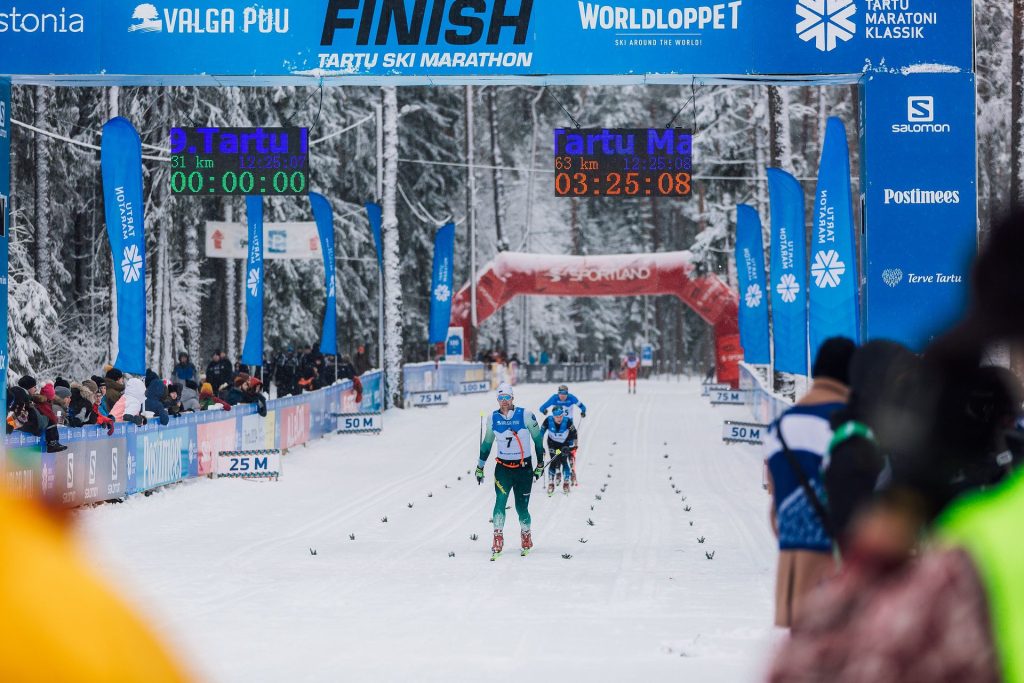
Photo author: Tartu Ski Marathon, Tartu 2024. Source: Visit Estonia.

Tartu takes marathons very personally

If marathons had a spiritual home, Tartu would like to apply. Its running, cycling and skiing events are not just races — they are cultural institutions.

The legendary ski marathon, often dubbed the “Winter Song Festival”, draws enormous crowds who appear unfazed by cold, distance or common sense. Other routes snake through forests, countryside and city streets, casually proving that in Estonia, winter isn’t something to endure — it’s something to show off.

Read more about Tartu’s marathons.

Slide first, eat buns later

Winter adventure also means sledding downhill for the sake of agricultural prosperity, then immediately rewarding yourself with a bun full of whipped cream because… obviously. Vastlapäev (Shrove Tuesday) is folklore, generously buttered.

Once upon a time, longer sled rides meant better flax crops. These days, the focus is more on seasonal food, cheerful chaos and cafés competing to outdo each other with increasingly indulgent buns. Progress comes in many forms.

Read more: Sledding and sweet buns: Shrovetide in Estonia

Source: Visit Estonia.

The great outdoors does not close for winter

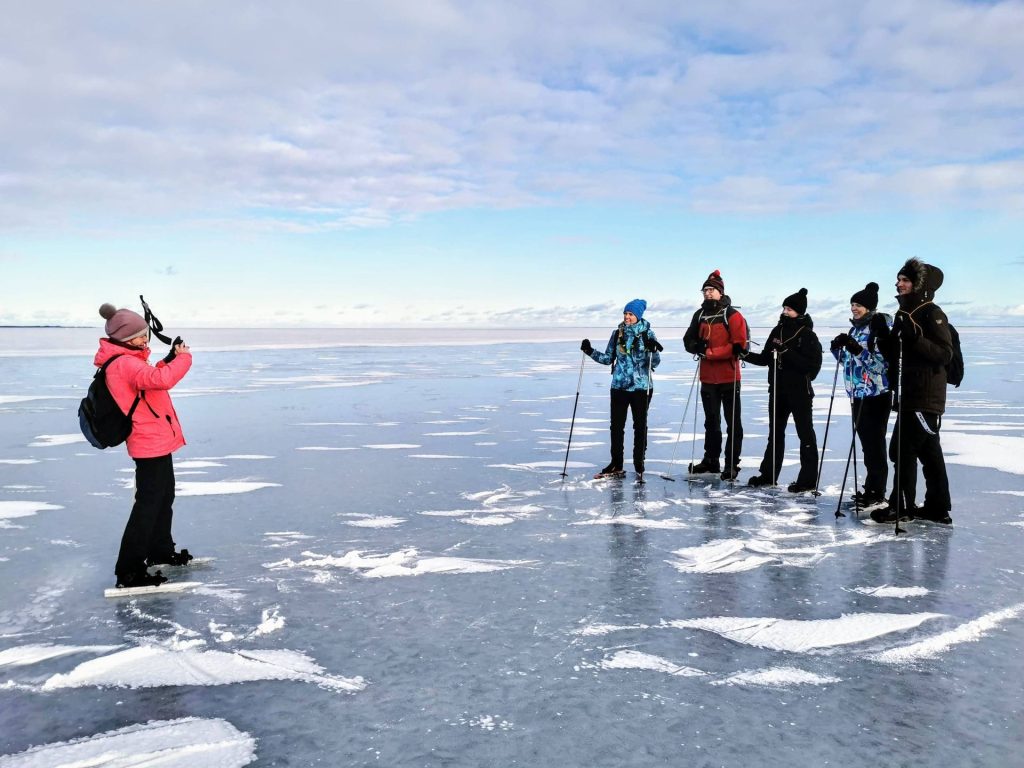
When winter hits, Estonians do not retreat indoors. They simply change footwear (and add five layers of clothing). Snowshoes, skis, skates and kick sledges turn frozen bogs, beaches and forests into accessible adventure zones.

Trails are well-marked, gear can be rented, and nature is never far — even from cities. The national motto applies: there is no bad weather, only bad clothing. (You — yes, you — in a pink miniskirt trying to impress someone in this weather. We see you. No hot chocolate for you. You absolutely know better.)

Read more: Thrilling outdoor winter activities in Estonia

Ice skating, but make it cinematic and slightly surreal

Ice skating in Estonia does not stop at neat little rinks. When conditions allow, people glide across frozen lakes, bog pools and even the sea — wide, silent spaces that feel more sci-fi than sport.

Guided tours help newcomers explore safely, often adding hot drinks, outdoor snacks or a post-skate sauna. City rinks keep things lively, while indoor ice halls ensure skating never really goes out of season.

Read more: The best places to go ice skating in Estonia

Photo by Elen Juurma. Source: Visit Estonia.

The Visit Estonia newsletter

Visit Estonia newsletters are less about selling destinations and more about explaining how life actually works — culture, seasons, movement and food all tangled together. They are deeply effective at making winter look appealing and staying inside feel like a missed opportunity.

Read more

Read the Visit Estonia winter newsletter here

Read more about Visit Estonia and see the resources on offer

From seed to oak: Growing Estonian culture at Sõrve

0
H.E. Ambassador of Estonia to Australia, Jaan Reinhold, and Sõrve kultuurijuht Ella Scott. Here Ella is receiving her letter of appreciation signed by Kristina Kallas, the Estonian Minister of Education and Research, at the end of Sõrve Summer Camp, January 2026. Photo by Tomas Kuru.

The seed of an idea was planted when I was able to represent Sõrve Sõbrad (Friends of Sõrve) at the Global Estonian Diaspora Networking Day (Üleilmsete eestlaste võrgustike päev), held in Tallinn as part of ESTO 2025, just prior to the 2025 Song and Dance Festival (Laulu- ja Tantsupidu).

During the event, speakers, including Foreign Minister Margus Tsahkna, emphasised the vital importance of encouraging the use of the Estonian language across all diaspora activities.

The sessions were conducted in Estonian. As I do not speak eesti keel (Estonian), I was allocated an interpreter, which allowed me to understand what was being discussed. Two common challenges emerged among the organisations represented at the round table:
• the importance of maintaining eesti keel as the centre of culture
• the difficulties of attracting second- and third-generation diaspora to participate.

While Sõrve has been increasingly successful at attracting younger families, the use of the Estonian language is limited compared to camps in Europe and North America. As our community moves further from its original Estonian roots, our traditions and language face the risk of being lost. Without a deliberate focus, Sõrve risks becoming “just another sports camp” — enjoyable, but not meaningfully different from any other holiday activity.

Just as the Aboriginal Dreamtime stories serve as spiritual narratives that form the foundation of culture, law and identity, the Sõrve Constitution’s mandate is to:

“Maintain and promote Estonian culture, language and traditions among young people of Estonian heritage in Australia.”

Sõrve is in a unique position to celebrate these traditions, ensuring the “wisdom of the ancestors” is preserved and passed on to future generations by those entrusted with this knowledge.

On returning, I was pleased that the Sõrve Sõbrad komitee (committee) agreed with my suggestion to establish the role of kultuurijuht (cultural lead) as part of the leadership executive at Sõrve from 2026.

Sõrve Sõbrad Komitee: Arvi Lehtsalu (VP), Taime Maidla, Ella Ranniko, Sulev Kalamäe (P), Toni Lehtsalu, Barbara Howard Kalamäe (S), Elen Ellervee (T), Katrin Porm, Danae Pikatt. Photo by Rachel Matwisyk.

The kultuurijuht role, supported by those in the juhtkond (leadership), is to plan and oversee the integration of keel (language), rahvatants (folk dancing), laul (singing), käsitöö (crafts) and ajalugu (history) into all aspects of camp programming culminating in the Kultuuri Konsert (cultural concert) on the final day of camp.

Such a significant position needs to be given a lot of thought and, with the input of the Sõrve Sõbrad komitee, I was able to develop a role description and selection process that can be used for future kultuurijuht selection. As the next camp was only a matter of months away, it was agreed that Ella Scott be invited to take on this inaugural role for Sõrve 2026.

Ella chose as her theme: “Rahvas algab raamatust — 500 years of Estonian books”. In the lead-up to camp, she asked elanikud (camp participants) to pack their keelekott — their language bag of favourite Estonian sõnad (words) and each morning at lipuheiskamine (flag raising) she introduced a “word of the day”. This was an opportunity for her to also explain the plural form of the word in eesti keel, something that is often muddled with English. For example, saying tares rather than tared (huts).

Kids helping Eno Raud’s book character “Sipsik” (a.k.a. Lachlan Bell) find his way home. Photo by Tomas Kuru.

Following the 500th Anniversary of the Estonian Book theme, Ella worked with Lachlan Bell, who has been a juht (leader) for several years and is now studying at the University of Tartu, to update the Sõrve laulik (song book), curating a vibrant mix of timeless classics and fresh additions to reflect the camp as it is today and honour its longstanding singing traditions.

Bookbinding was chosen as the craft activity this year with language and culture being integrated into the project. Children (older kids from the A group) made eksliibrid (ex libris) for their laulikud, and younger kids from the C and F groups had lots of fun helping Eno Raud’s book character “Sipsik” find his way home.

Ex libris made by kids at the Sõrve Summer Camp 2026. Photo by Lachlan Bell.

Although I don’t have an Estonian birthright, my forty years of involvement in the community have made me passionate about providing the opportunity for my grandchildren to be engaged with their cultural heritage. I see the kultuurijuht role as crucial in not only maintaining the Sõrve traditions, but also in immersing the younger generation of Australian-Estonian children in their cultural heritage and exposing them to current events in Estonia.

For future camps, the role of kultuurijuht will be filled after Expressions of Interest are advertised.

Let’s hope my little seed of an idea will be able to grow like the Tamme-Lauri oak — a symbol of Estonia’s independence and a subject of national pride — to play a lasting and significant role in maintaining Estonian culture in Australia.

“Be brave – practice and use the Estonian language!”
Alar Karis, President of the Republic of Estonia

Barbara Howard Kalamäe is the 2025-26 Secretary of the Sõrve Sõbrad Komitee.

Read more

Sõrve Summer Camp

New kultuurijuht (cultural lead) role at Sõrve camp | HEIA

Global Estonian January newsletter: cream buns and big news

0
Source: Global Estonian.

Kick off your shoes, raid the snack drawer — the first Global Estonian newsletter of 2026 has landed, serving big diaspora thinking and enough delicious cultural goodness to keep your evening scrolling justified.

This issue opens with Marin Mõttus, Estonia’s Ambassador at Large for the Diaspora, basically saying sleepy January absolutely is not — the world is shifting fast and Estonia’s more visible on the global stage.

The headlines you will repeat to your friend (and ponder over)

Because Global Estonian always serves a delicious buffet:

  • Niina Petrõkina has done it again — she’s retained her European figure skating title. (Remember the Winter Olympics are starting soon!)
  • Estonia’s population fell by over 7,000 in 2025 — a stat that sits behind a lot of the “how do we stay connected?” thinking.
  • Animal of the Year 2026: hedgehogs (plural!). They’re here with a message: be kind to nature… and also to small spiky introverts.
  • Vastlakukkel season is back — which means time for cream buns, pea soup and sleigh rides on snow or grass.
  • And for Eurovision-curious readers: all 12 Eesti Laul 2026 songs are up on Jupiter for your annual “I’m just listening casually (obsessively)” phase.
  • Film night, anyone? Jupiter has a stack of excellent Estonian films you can watch for free — the perfect excuse to make cream buns and invite friends over. (To use Jupiter abroad, you’ll need a registered account.)

The bits that feel very “Australia, hi”

Here’s where we perk up in our blue-black-white corner of the Southern Hemisphere:

  • Preserving Estonian memory in Australia — a video story featuring Maie Barrow and the work of the Estonian Archives in Australia.
  • Grants alert: applications for Estonian cultural heritage projects abroad close on 4 February 2026 — Australian Estonian organisations, this is your gentle-but-firm “put it in your calendar” moment.

Dates to circle (before you forget again)

📅 30 January – Estonian Literature Day
📅 17 February – Vastlapäev (Shrove Tuesday)
📅 24 February – Estonian Independence Day

Ready for the full scroll?

Eesti keeles: https://bit.ly/GE-01-2026
In English: https://bit.ly/GE-01-2026-ENG

Portia Stanton-Noble’s “The Big Dead Dry” heads to the big screen

0
Portia Stanton-Noble showing off her book "The Big Dead Dry".

Portia Stanton-Noble’s debut novel The Big Dead Dry is now in development as a feature film with Australian production company 13th Street Films. A mystery with a dash of romance and a cast of quirky locals — yes, please!

Australian Estonian author Portia Stanton-Noble has confirmed that her novel The Big Dead Dry is now in development as a feature film with 13th Street Films. If you like your crime with a side of romance and regional oddness, this is exciting news for you. The characters sure sound like they were made for the screen.

Set in the fictional regional South Australian town of Brumby Flat, The Big Dead Dry drops a newcomer, Raquel Willaston, straight into a community where secrets travel faster than gossip at the post office. A mysterious stranger arrives — and is soon found dead at the base of the town silos — kicking off an investigation led by Senior Detective Phillip Duncan.

The novel’s world is packed with quirky characters (the kind you definitely recognise if you’ve ever lived in, visited, or driven through an Australian country town). They include a silo mural painter with a mysterious edge, a vintage-loving local reliving the past, an ex-military man running on precision, a flirtatious postmistress, and a shop selling rain gear in a town stuck in drought.

About the author

Portia Stanton-Noble was born and raised in Melbourne to Estonian parents who migrated to Australia after World War II, and she now lives in regional South Australia — the kind of background that makes many HEIA readers go, “Yep, one of us.”
Portia’s novel The Big Dead Dry is the first in a four-book murder mystery romance comedy series. The second book, Pretty Dead Ordinary, returns to Brumby Flat when a wedding celebration turns sinister and Detective Duncan finds himself under suspicion.

The third book, Drop Dead Like Flies, shifts the drama to a nearby national park and a folk festival anniversary where old grief and fresh danger collide.

And then comes the finale: Dead Goes the Neighbourhood, where a “next door” town, a travelling circus, and a fresh wave of murders drag Detective Duncan back into the chaos — sequins, sparkles and all.

Outside the Brumby Flat world, Portia has also released the rom-com The Life She Never Had and the murder mystery The Cut Off Road. Her most recent title A Body Came Ashore has received a Bronze book cover award from the Wickham St George Book Cover Awards.

Who are 13th Street Films?

13th Street Films is led by Brisbane-based filmmakers Sian and Joel, who met while studying film and screen media and later joined forces to build the company together. Their track record spans comedy, thriller and genre work, and they’ve been steadily racking up development, festival and industry momentum. For example, they co-founded the Brisbane Indie Film Festival.

13th Street Films created the six-part POV web series Socially Distant (which screened at Melbourne Web Fest), co-directed and produced the short thriller OUTPOST (Darwin International Film Festival), and produced and directed Voyager as a proof-of-concept project. On top of that slate, their current project list includes Welcome to Wrigleton (a mockumentary comedy about a country town on the brink), and Filthy Habit (a feature film with an… let’s say a bold premise involving a nun exploring some sins).

What happens next

At this stage, the project is described as in development, with casting and further announcements to come. If you love seeing Australian landscapes and offbeat small-town stories make the leap from book to screen, and supporting Australian Estonian authors, keep this on your radar.

Portia shared her excitement about the film adaptation:

“I’m thrilled that The Big Dead Dry is being developed into a feature film by 13th Street Films. It’s an incredible opportunity to showcase the beauty of South Australia while bringing the story’s intrigue, comedy and drama to life.”

Congratulations, Portia! We’re excited about this film. We’re also looking forward to your next books.

Acknowledgement

Thank you to Portia Stanton-Noble for the information and photo.

Read more

About Portia Stanton-Noble (website) and social media (@portiastantonnobleauthor)

About The Big Dead Dry

About 13th Street Films (website) and social media (@13thstreetfilms)

Maie Barrow: keeper of Estonian memory

0
Screenshot from video "Maie Barrow – Keeper of Estonian Memory" by Priit Laineste.

A new video by filmmaker Priit Laineste takes us into Sydney Estonian House and down to the Estonian Archives in Australia — with Maie Barrow as your guide (and yes, she knows exactly where the good stuff is).

In “Maie Barrow – eesti mälu hoidja” (Maie Barrow – Keeper of Estonian Memory), Priit also captures a quick slice of Sydney’s Australian-Estonian community life — including moments around Restoration of Estonian Independence commemorations in 2025 — before the camera heads downstairs, where the memory lives.

Downstairs, where the memory lives

Once we’re in the archive space, Maie becomes both guide and storyteller. She explains what the Estonian Archives in Australia holds, why it matters, and what it actually takes to keep a heritage collection alive (spoiler: it’s not magic — it’s steady, meticulous work). The archives have been collecting Australian-Estonian history since 1952, and Maie points out the kinds of “community time capsules” you hope never end up in someone’s mystery garage box: documents, photographs, books, artworks, and the paper trail of organisations and events.

We also meet Dr Terry Kass — historian and author — who is the Honorary Archivist since Maie stepped down after 29 years in the role (though Maie still volunteers and stays closely involved). And we’re introduced to Ave Nukki, President of the Estonian Society of Sydney, who pops in with a thoughtful note about language and cultural continuity in Australia.

If you’ve ever wondered where old Eesti Päevad programs go, what happens to newsletters after everyone’s finished debating them, or how a family story gets traced across decades — this is your window into the “how” behind remembering. But it’s also about something bigger: what communities choose to carry forward, and what it takes to keep those choices alive.

Maie’s story, in her own words

One of the best things about these videos is that Maie doesn’t present the archives as a museum behind glass. She talks about real people, real decisions, and the long, careful work of preserving what matters — while still making space for the complicated bits: belonging, language, identity, and the occasional question of what exactly are we called again — Estonian-Australian or Australian-Estonian? (Yes, it comes up. I’m glad — I’ve wondered about this.)

Maie also shares her own personal journey — including her family’s displacement during wartime, growing up speaking a “secret language”, the experience of visiting Estonia decades later (first time in the 1960s!), and watching Tallinn change through different eras.

And if you’re thinking, this is the kind of lifelong work that deserves recognition — you’re right. Maie’s decades of archival work have been formally acknowledged, including the Order of the White Star (5th Class) bestowed by the President of Estonia.

📺 Video links

Priit Laineste has shared two videos from the same Sydney visit — they complement each other beautifully.

FIRST VIDEO (Estonian with English subtitles, 24 min):
Maie Barrow – Eesti mälu hoidja (Keeper of Estonian Memory)
https://www.youtube.com/watch?app=desktop&v=-qS_RGglC8c

SECOND VIDEO (Estonian only, 30 min):
Maie Barrow – Elu pärast (Life After)
https://www.youtube.com/watch?v=QKeieCQBmAo

Click below to watch.

Read more

Estonian Archives in Australia

Sydney Eesti Maja EW Taasiseseisvuspäev 2025 (Restoration of Independence Day 2025 at Sydney Estonian House) by Priit Laineste.

Check out more videos by Priit Laineste here — a little treasure trove of Estonian traditions, events and people.

A Sunday morning of better conversations with Lilian Saage — in Sydney/on Zoom

0
Image by Gabriel Alva from Pixabay.

Make your Sunday morning count: on 1 February 2026 you can tune in via Zoom or meet at the Estonian House in Sydney for a conversation on relationships and wellbeing with author and relationships expert Lilian Saage (in Estonian).

Picture it: a summer Sunday morning. Some of us with coffee, some with kids climbing the furniture, some bravely attempting a “calm” start to the day. And then — one simple, surprisingly brave question arrives in Estonian: how are our relationships actually going… with ourselves, with our partners, and with the people we work alongside?

This event brings that question to life through a talk and discussion around the themes of conscious relationships — the kind that don’t just “happen” but can be understood, practiced, repaired and strengthened.

Event details

🗓️ Date: Sunday, 1 February 2026
🕔 Time: 11.00 am (Sydney & Melbourne) | 8.00 am (Perth) | 1.00 pm (New Zealand)
📍 Where: Sydney Estonian House (141 Campbell Street, Surry Hills NSW 2010) or online via Zoom
🎧 Zoom: Meeting ID: 810 4356 1976 | Passcode: 365 944
🗣 Language: in Estonian
🎟️ Register for free: https://www.trybooking.com/DIVFL

What we’ll explore together

As the event poster reminds us: “Meie elukvaliteet sõltub suhete kvaliteedist, nii tööl kui eraelus. Suhe endaga mõjutab suhteid teistega.” (Our quality of life depends on the quality of our relationships, both at work and in our private lives. Relationships with ourselves impact on our relationships with others.) In other words: relationships aren’t a side hobby — they are the infrastructure of daily life.

The session will explore topics such as:

  • how to create a safe environment for collaboration and clearer communication (and what that asks of us)
  • how to notice whether we may be undermining ourselves in relationships (yes, it happens)
  • how emotional and sexual closeness connect in a partnership, and where curiosity and playfulness fit in
  • how trust and commitment grow — and what to do when passion feels like it has wandered off into the laundry pile of everyday life.
Poster by Lilian Saage.

The book at the centre of the conversation

The discussion is based around the book Mina, sina ja kõik meie vahel (Me, You and Everything in Between) — a practical guide to building a more conscious partnership, starting with the relationship that sits underneath all the others: the one you have with yourself.

It invites readers to pause and notice how earlier experiences, family patterns, and emotional defense strategies show up in the present — not as a reason for blame, but as a doorway to understanding and choice. The book frames this as more than reading: it’s a set of reflections and practical steps for making sense of relationships, developing and sustaining them.

The event features Estonian author, mentor, trainer and family therapist Lilian Saage, whose work focuses on supporting people toward healthier, more conscious relationships in both personal and professional life (read more about Lilian Saage here). One line from her writing captures the spirit of the session — gentle, encouraging and very practical:

“Every step counts. Including the one you just started.”

This event is hosted by the Estonian Society in Sydney, offering a chance for community members to join a shared conversation — either in the room at Sydney Estonian House, or online via Zoom from wherever you are.

If you’ve been wanting something that feels both meaningful and useful — ideas you can actually take into Monday morning, not just nod along to — this is a lovely opportunity to listen, reflect and perhaps make one small, helpful shift.

Read more

About Lilian Saage: https://liliansaage.ee/en/
Book information: https://liliansaage.ee/en/product/me-you-and-everything-in-between-pre-order/
Book available from: Apollo, Rahva Raamat and Väike Vanker

Acknowledgement

Thank you to Ave Nukki and the Estonian Society in Sydney for organising this event and for this information. Thank you to Lilian Saage for information and poster. We’re excited about this event!

Yes, Estonia plays cricket!

0
Estonian Women's National Cricket Team. Photo: Medha Gooch.

With the Australian summer of cricket well underway, it seems a good time to get an update on Estonian cricket (Eesti kriket). What? I hear you say. Estonia plays cricket?

Eesti kriket

From across the green field in an outer suburb of Tallinn come urgent voices: “Head šotti! Kaks, kaks! Tubli Eesti!” (Head shots! Two, two! Go Estonia!) as the two batters in sinimustvalge (blue-black-and-white) make their ground and move closer to winning the game.

It is September and I am at the Estonian National Cricket Ground at Tiskre, about a 10-minute drive west of Tallinn, with Medha Salome Gooch, the team manager. The Estonian National Women’s Cricket Team is hosting Czechia in a three-match T20 series and hoping to end the season with a clean sweep win to improve their world ranking.

I am the only spectator today, sitting under my Eesti lipp (Estonian flag) tied to some scaffolding, perched on a borrowed seat. The Tiskre grounds consist of two grass pitches and mown ovals surrounded by a few shipping containers as sight screens and storage, a couple of portaloos and a construction shed in a large grassy paddock. However, team manager Medha tells me that they have finally been given planning permission for a proper pavilion with team changing rooms, officials’ area and, most importantly, a bar and food for visitors. They hope construction will begin next year.

The first game of cricket in Estonia was played in 1998, after a trip to Australia exposed Baltic businessman Kristian Garancis to the excitement of the Boxing Day Test. On his return to Tallinn, he met with other expat cricket fans and the first scratch matches were organised against Finland. With increased development and investment from the International Cricket Council (ICC), the Eesti Kriketi Liit (Estonian Cricket) was formed and joined the ICC in 2008, enabling Estonia to participate in international competitions.

Estonian Women’s National Cricket Team playing cricket at Tiskre. Photo: Medha Gooch.

Eesti v Czechia

In August, the 64th-ranked Estonian women played 44th-ranked Gibraltar in three games, and despite winning the first game in a shock result, they lost the series two-one. This series against 72nd-ranked Czechia is the last for the summer and is a great chance to finish the year on a high and show their new coach Anuradha Doddaballapur (Anu) their match skills after weeks of video-based training plans.

In the first game on Saturday morning, captain Annemari Vessik wins the toss and sends the Czechia team in to bat on a beautiful, sunny and hot day. Czechia opener Katerina Tesarikova shows her excellent hand-eye coordination and puts the Estonian bowlers under pressure with her powerful hitting. At 0-56, Medha confides that the players are off their game, bowling too many wides and no-balls. The introduction of Chamali Lokuge’s spin suddenly changes the game, with three wickets falling quickly and the pressure back on Czechia. However, they complete their 20 overs with a very respectable 107 runs, with Tesarikova top scoring with 56.

The Estonian run chase begins badly, with Geethma Madanayake run out in the second over, but Ragne Hallik and Annemari Vessik soon steady the innings with some strong hitting. Ragne, especially, clearly loves to hit the ball hard! At 4-72 in the 11th over, Estonia is the clear favourite to complete a comfortable win — but cue the dramatic music because a series of bad shots and a hat-trick (three players out in three balls) swings the momentum sharply, as Estonia’s scoring almost stops. With 12 balls to go they need six runs, but only have two batters left. Czechia quickly pile on the pressure, bringing all the fielders in close to the batter to stop any easy runs. Pressure works both ways, however, and it strains the Czechia bowler Pavlickova, who bowls four wides in a row, leaving just two runs required from the final over.

My fellow spectators — Medha, and groundsman and local player (UK born) Kevin Pattenden — look worried. Kevin’s wife Sirle is the last batter, and he tells me she has excellent defence but is not a quick scorer! First ball of the last over and Viktoria Frey sees the opportunity to win the game with a big shot but is caught out. Kevin covers his face! 5 balls left, two runs to win, Sirle on strike. As described, her first two balls are well defended for no runs before she manages a quick single on the third ball. One run to win from two balls, one wicket left — anything could happen.

And in a huge anti-climax, the next ball is delivered way wide. In the confusion of running batters and fielders and an attempted run-out, the umpire’s call of “wide” means Estonia have won this heart-stopping game. The team are happy and greet the batters with smiles and clapping, but they all know that without the 47 extras from wides and no-balls, they would have lost. The Eesti top scorers were Annemari and Viktoria, each with only 13 runs.

Estonian Women’s National Cricket Team playing cricket at Tiskre. Photo: Medha Gooch.

Getting cricket established in Estonia

With an hour for lunch before the next game, Bolt food deliveries are ordered, and I help Kevin and Medha get cold drinks and iceblocks from the local supermarket. They are both happy to share their love of cricket with me and discuss the challenges of establishing the game in Estonia, including that while many Estonians play sport, there are few games here where catching and throwing are so important. Basketball and football require very different skill sets.

Kevin grew up playing cricket in England and was living in the north near Bradford with Sirle and their two children, Henri and Amy, until they all moved back to Estonia in 2020. Henri is on the cusp of selection for the Estonian men’s team, while Amy has already played for Estonia, appearing alongside her mother against Guernsey in Oslo in 2024. Kevin told me his kids are not dual nationals — they hold only Estonian passports — but were lucky to grow up playing cricket in England.

Medha was born in India but has lived in Europe for several years and is married to Australian-born eestlane (Estonian) and cricketer Steffan Gooch. It was Steffan who propelled the Estonian men’s team into the Challenger Division playoffs of the 2024 European Cricket League with a six off the last ball, and still holds the ECN’s best bowling figures of six wickets for 2 runs.

Watch a video of Steffan playing cricket on Facebook here: Steffan Gooch, take a bow!

During the lunch break, I also discuss the plans and hopes for the women’s team with their new coach, Anuradha. Anu is a seriously impressive woman. She works full-time as a cardiovascular research scientist at the Max Planck institute in Germany, spending her holidays in Estonia as a professional cricket coach. Anu was the first woman to take four wickets in four consecutive balls in an international match. She was captain and player for Germany for 13 years, and still holds the record for their best bowling figures of five wickets for one run.

Anu explains how Estonia is taking a bottom-up approach to developing cricketers, with ambitious plans to bring cricket to 1,000 schoolchildren each year through local coaching clinics. She knows it is vital to create a clear development pathway, especially for young cricketers, moving from schools competitions through under-15s, under-17s and under-19s into national adult competitions.

Anu also believes it is important for young Estonian girls to see their national team full of local players — following the adage that “you can’t be what you can’t see”.  Anu notes that many European countries rely on landing externally trained cricketers to rise up the ICC rankings, but says this approach “soon drops away — you can’t expect players to materialise from nothing”. During our conversation, teenager Maia Mägi is busy working on her bowling in the nets behind us. Medha later tells me Maia only discovered cricket at school this year, decided she wanted to play, and now turns up every weekend to improve her skills.

Estonian Women’s National Cricket Team. Photo: Medha Gooch.

After a debrief by Anu, the Estonian women come out for the second game of the day determined to improve their focus and play to their strengths. This time Annemari decides to bat first after winning the toss, and the batters improve significantly, scoring 153 runs for five wickets, with Ragne Hallik top-scoring with 32. In the Czechia innings, Maret Valner ramps up the pressure, taking two wickets in the first over and another in the fifth to leave Czechia at 3/22. When Lokuge takes three wickets in the ninth over and Ragne takes two in the next, the game is effectively over, with Czechia dismissed for 32 and Estonia winning comfortably by 115 runs.

The last game of the series takes place on Sunday morning, with the ground hidden by thick fog before play. Czechia win the toss and elect to bat first. Carrying confidence from the previous day, the Estonian women remain focused, taking a wicket with the first ball and piling pressure on Czechia. By the end of their innings, Czechia have scored just 58 runs. In reply, Geethma Madanayake and Ragne Hallik do most of the early scoring, and Estonia finish their season with a seven-wicket win in just 10 overs. Now it is time to pack away their cricket gear and plan for the next season.

At the end of the season, the Estonian women’s team have again improved their ranking and, as of December 2025, sit at number 58 in the ICC table. Who knows what heights they might reach as more youngsters like Maia Mägi are exposed to cricket at school and decide that this funny game is worth committing to.

How Australian Estonians can help

What can Australian Estonians do to help the game in Estonia? Go and watch, support, and — if you play — share your cricketing skills and experience. The team is also looking for an assistant coach and a team manager. Any takers?

Read more

Estonian Cricket
Estonian Cricket seeking volunteers

Acknowledgement

With thanks to Eesti Kriketi Liit and manager Medha Gooch.

Estonian National Cricket Ground at Tiskre. Photo: Medha Gooch.

Questionnaire callout for campers young and old!

0
Lachlan Bell, May 2025. Photo by Berta Jänes.

Tšau! Hello!

You are invited to take part in a questionnaire, with the option of a follow-up interview, as part of my Master’s research project at the University of Tartu in Folkloristics and Applied Heritage Studies, within the Department of Estonian and Comparative Folklore.

My thesis, titled “Routines and Rituals at Sõrve: Inheritance of a Camping Tradition in an Estonian Children’s Summer Camp” (working title), examines the traditions, rituals and everyday folklore of Sõrve Summer Camp. The study focuses on how camp practices contribute to community life, identity-building, social relationships and the development of a distinct Sõrve culture within the Estonian-Australian diaspora. It also considers the historical development of the camp since its modest beginnings in 1953 at the Narrabeen Fitness Centre, as the Sydney Eesti Seltsi Täienduskool’s end-of-year celebration.

The project is currently in the data collection phase and seeks contributions from people (aged 18+) with connections to Sõrve across different generations and roles. Whether you are a former C-grouper, long-term alumni, or just a visiting guest for the weekend, your participation will help build a well-rounded and representative picture of the camp and its more than 70 years of practice.

Below is the link to a secure Microsoft Form, and your participation — whether you have attended camp in any capacity — is of value to my research. All responses are anonymised, with the option to be identified if you choose. Your participation is voluntary, and you can withdraw or revoke consent at any time. The form takes approximately 40 minutes to one hour to complete.

Thesis questionnaire: “Routines and Rituals at Sõrve: Inheritance of a Camping Tradition in an Estonian Children’s Summer Camp”

Suur, suur aitäh! (Thank you very much!) Please feel free to share this form with anyone you think might be interested or relevant. If you are interested in a follow-up interview, do not hesitate to contact me at lachlan.christopher.bell@ut.ee