Wednesday, May 6, 2026
6.9 C
Canberra
9.3 C
Tallinn

ECFA Announces grants for 2021-2022

0

THE ESTONIAN CULTURAL FOUNDATION IN AUSTRALIA LTD (ECFA) HAS ANNOUNCED ITS FUNDING ALLOCATIONS FOR THE COMING YEAR.

Applications were received from groups in Sydney, Canberra, and Melbourne. Funds allocated this year are:

  • Sõrve Children’s Camp $6,000
  • Eesti Päevad (Melbourne, Easter 2022) $5,000
  • Virmalised folk dancing group $550

As well as this, the Cultural Foundation continued its support via the Hans Ots Award, which provided an extra $4,000 to the Sõrve camp, but targeted to assist children from interstate to attend the camp.

For more information see the ECFA’s announcement: GRANTS AWARDED FOR THE 2021-2022 FINANCIAL YEAR

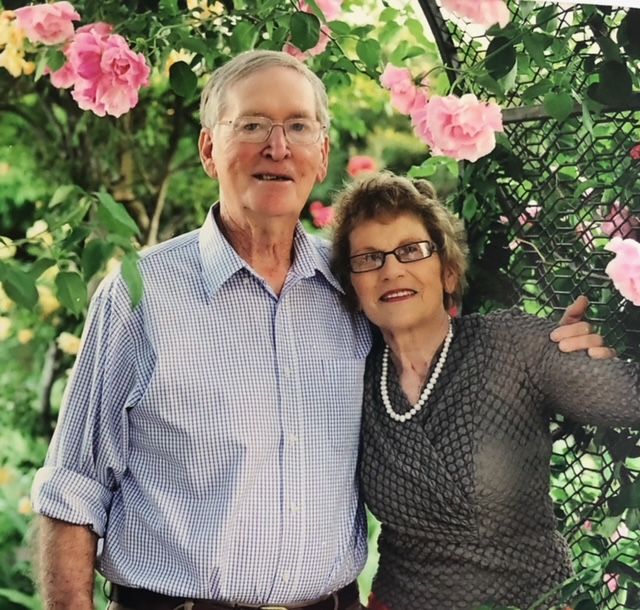
In Memoriam – John Spencer Butler

0

John Spencer Butler
1931 – 2021
89 years

Retired Solicitor


Esteemed and beloved.

Husband of Tiiu Butler
(Edgar and Linda Aavik’s daughter).
Father and father-in-law,
Tessa and James Newmarch
Matthew and Sue Butler
Rowan and Rachel Butler
Saima and Heath Grills
Children of his children,
Alexander and Heidi, Eliza, Samuel, Lachlan, Finley, Rory, Ben, Jono, Andrew, Charles and Paddy.
And great grand-daughter Ellery.
Greatly missed and in our hearts forever.

Victory day greetings on 23rd June, 2021

0


Estonian Victory Day is an anniversary of crucial military victory against foreign forces.

At the end of World War I, Estonia was engaged in a War of Independence with two former major powers, against attacks by Soviet-Russian troops and a Baltic-German Landeswehr army. By the end of December 1918, the Soviet-Russian forces, in an effort to re-establish the borders of the Tsarist Empire, had succeeded in occupying half of Estonia. The tide began to turn in late December 1918 when Finnish volunteers and British naval assistance arrived Estonia to support Estonia’s defence. In less than a month Estonia was virtually cleared of all Soviet forces.

Intermittent fighting continued on the eastern and southern fronts throughout 1919. On 5 June 1919, General von der Goltz advanced and attempted to isolate the right wing of the Estonian Army, but the final battle on 23 June 1919 saw the collapse and defeat of the von der Goltz army. The defeat of the two invading forces and the signing of the Tartu Peace Treaty in 1920 between Estonia and Soviet Russia marked the successful achievement of Estonia’s independence after centuries of struggle, Estonia’s borders were restored and 23 June became a day to celebrate the victory.

Victory Day is a remembrance day that serves to honour those who fought for Estonia.

On June 23 rd 2021, we honour all who have fought for Estonia’s democracy and for freedom, we remember the sacrifices made, the price paid for it, the lessons learnt. Freedom and independence are not given or granted, but stood for and fought for. The flames we light, and the blue-black and white we raise, are not only to remember the past, but also to take us to the future, as a sign that we stand for Estonia and for its independence where ever are.


Have a beautiful and proud Victory Day!
On behalf of AESL,
Sirje Jogi

Estonian Festival Program 2022

0
Eesti-Päevad-2022-Program

The 2022 Eesti Päevad program has been released!

Eesti Päevad 2022 Program / FESTIVAL PROGRAM 2022 – extended version

15.04.2022: FOREST DAY / KÜLASIMMAN

11:30 AM Ground open / Peoplats avatud
12:00 PM Estonian bar / Eesti baar (Tom Sarapuu Adelaide, Raul Seepter Sydney)
12:00 PM Singing with Children / Laste Lauluhommik (Karin Kapsi Sydney)
1:00 PM Games for Children / Mängud lastele (Olga Loitsenko; Maarja Kamar; Sven Nuutman Melbourne)
2:00 PM Fun & Games / Murumängud (Arno Vann Melbourne Skaudid)
3:00 PM Opening of Markets / Turuplatsi avamine
4:00 PM Opening Ceremony / Avatseremoonia (Aukonsul, Jumalasõna, EP organiseerijad)
5:00 PM Bonfire Lighting / Lõkke süütamine (Sulev Kalamäe, Sõrve Sõbrad Sydney)
6:00 PM Soup Kitchen / Supiköök (Indrek Ott Sydney, Kelli Schwede Melbourne)
7:00 PM Live Band / Ansambel (Linus Aisatullin & Rolling Stonians Sydney)
7:00 PM Sauna / Saun (Latvian, Melbourne)
8:00 PM Open program / Lahtine programm

16.4.2022 – CULTURE DAY / KULTUURIPÄEV

11:00 AM Estonian House Tour / Eesti Maja ekskurssioon (Matti Kiviväli, Melbourne Estonian House)
11:00 AM Social Chess / Male turniir (Martin Lukas, Melbourne) – Upstairs library
11:00 AM Taara Shop / Taara Pood avatud (Aime Metsar Melbourne) – Foyer
12:00 PM Handcraft opening / Käsitöö nurk avatud (Ingrid Renno Sydney) – Upstairs Hall
12:00 PM Café open / Kohvik avatud (2 Castles Bakery) – Kitchen
1:00 PM Literature Afternoon / Kirjanduse pärastlõuna (Muusajüngrid Kristiina Ehini kavaga) – Downstairs Bar
3:00 PM Stand-up Comedy / Komöödia etteaste (He Huang, Maren Whittaker and Olga Loitsenko – Melbourne International Comedy Festival show ‘Of Outsiders and Misfits’.) – Stage
5:00 PM Band from Estonia (To be confirmed) / Ansambel Eestist (võimalusel)
6:30 PM Bar & Café – Baar ja kohvik (2 Castle’s Bakery) – Kitchen
7:00 PM Concert / Kontserdi õhtu (Jex Saarelaht band; Karin Kapsi band I) – Stage
9:00 PM Bar Mingle / Baar avatud – Hall

17.4.2022 – PARTY DAY | PIDUPÄEV

9:00 AM Rehearsal for Folk Day / Lavaproovid folgiks – Stage
11:00 AM Soup kitchen / Supiköök avatud (Indrek Ott Sydney) – Kitchen
12:00 PM Group discussions & conversations / Avatud arutelud (Juho Looveer Sydney) – Downstairs Bar
2:00 PM Language teachers’ meeting / Keeleõpetajate kohtumine (Tiiu Salasoo Sydney) – Upstairs Library
2:00 PM Axe Throwing (Maniax in Abbotsford) / Kirve viskamine
7:00 PM Dinner (Reception Centre at Melbourne Zoo) / Pidulik õhtusöök ja tants (Karin Kapsi band II)

18.4.2022 – FOLK DAY | FOLK

11:00 AM Folk Program Part I / Folk programm
12:30 – 1:30 PM Interval / Paus / BBQ (Tom Sarapuu Adelaide; Indrek Ott Sydney)
1:30 – 3:00 PM Folk Program Part II & Festival Closing / Folk programm jätkub & lõpusõnad

Jaanipäev (St. John’s Day) @ Sydney Eesti Maja 25th June 2021

0

E-klubi on tagasi tähistamaks ühte tähtsamat pidustust – jaanipäeva! Tule tähista meiega.

***

Celebrate with us one of the most important days, the Midsummer Day, the time of mystical rituals held during the shortest night of the year. In modern days, time for all-night parties, sauna and jumping over the fire.

Statement to commemorate 80 years since the first wave of mass deportations from Baltic countries

0

14.06.2021

Statement by the Presidents of Estonia, Latvia and Lithuania on 14 June 2021 to commemorate the 80 years since the first wave of mass deportations from Baltic countries

80th Anniversary of the first mass deportations of the Baltic people in June 1941

0

On the 14th of June


The Occupation Museum, at the heart of Tallinn, has records of one of the country’s darkest hours, of 14 June 1941, when over 10,000 people were deported from Estonia.

We know the story. In 1939, the Soviet Union and Germany established what is known as the Molotov-Ribbentrop Pact. The secret protocols divided central and eastern Europe into respective spheres of influence.
Although the Estonian government had declared its complete neutrality, the Soviet Union coerced Estonia into so-called mutual military assistance pact, which resulted in the deployment of the Soviet military bases in Estonia. Illegal parliamentary elections with forged results were organised. The Soviet authorities implemented a reign of terror, to suppress any possible resistance from the very beginning and to inculcate fear among people. On 17 July 1940 the last Chief Commander of the Estonian Defence Forces, Johan Laidoner, and his wife, were exiled to Penza. On 30 July 1940, President of the Republic of Estonia, Konstantin Päts, and his family, were exiled to Ufa.

What followed was a planned repression and extermination of the prominent and active persons, as well as the displacement of large groups of people, with intention to destroy the Estonian society and economy. Approximately 23% of the population belonged to categories declared to be enemies of the state.

The first wave of deportations of “enemies of the state” took place in 1941, then the plan was interrupted by Nazi Germany’s invasion of Russia, breaking the infamous Molotov-Ribbentrop pact. With the defeat of Nazi Germany and the re-occupation of the Baltic States by the Soviet Union, an even more savage round of deportations was launched.

In the aftermath of the Second World War, Estonia lost approximately 17.5% of its population. More than 200,000 people are estimated to have been deported from the Baltic in 1940–1953. In addition, at least 75,000 were sent to Gulag. 10 percent of the entire adult Baltic population was deported or sent to labour camps. The death rate among the deported was extremely high.

It was not until the late 1950s that deportees who had survived their ordeal had a chance to return to their homeland, remaining second-rate citizens in the Soviet Union. They were under the surveillance of the security authorities; their confiscated property was not returned to them.

This is the storyline from history books of the most horrible events of the past centuries. The two deportation dates that affected Estonia the most, are the 14 June 1941 and 25 March 1949, both now annually observed as days of mourning.

But storyline is not the whole story. Do we know the real suffering and humiliation that happened behind the Iron Curtain? There are some films that reflect what is behind the facts – a human being squashed between the two big players in history, the choices they had and made, silence that followed.

All Estonians wanted at the start was to keep their homeland free from outside domination. To have the right to fight against occupants, whatever uniform they have.

Do we know the traumatic events of brother going against brother, one choosing the soviet side, another the side of nazis? Sons, the young men fighting the Soviets, their classmates fighting the Germans, Estonia declared the first European country to be “Jew free”, etc.

Do we know how families were broken up by the deportations, living next door to the people who gave them up, betrayed them, to save themselves? And to live with the knowledge that because of your own actions, the neighbour, friend, even a family member was deported, tortured, killed?
The Deportations are one layer of the horrors enforced by invaders.

Politics is the side which is public, there is also a pain that is personal. The pain of the events that made one an “undesirable element”, events that “dealt” with that, and the silence that followed as life went on behind the Iron Curtain.

This is not a distant and obscure past; it is still a living memory in the minds of people, now citizens of the European Union. Today there are still living witnesses of the crimes that were committed.

The subject matter is complicated, it is a silenced collective trauma. The pain suffered reverberates for generations in the form of broken families, stories not told, shattered lives. Being Estonian means to understand the story of crossroads and being stuck between the two rocks, and what it can do to a human being. We are not after a payback. We are one with our neighbour and our brother. But there is also the silence – Estonians don’t talk. Estonians bury deep inside and carry on. When something is forgotten, not processed and healed, it has a tendency to repeat.

There is a dark mecca – at the heart of Tallinn – that commemorates today 80 years of the horror date June of deportation. If humanity is our direction, then many and various stories need told and learned from.

What is past is prologue unless we are strong enough to prevent it when it is a crime against humanity and human dignity.

On behalf of AESL,
Sirje Jogi

ECFA Applications for Project Funding Now Open

0

The ECFA (Estonians Cultural Foundation in Australia) invites expressions of interest from individuals and organisations who wish to apply for funding of projects which satisfy the objectives of the Foundation.

Applications close June 30, 2021

The Estonian Cultural Foundation in Australia (ECFA) Ltd has as its objectives:

  • The promotion of Estonian history and culture in Australia;
  • The teaching and promotion of literature, design, crafts, performing arts, radio, TV, moveable cultural heritage, music, community arts, video, visual arts, film, etc which is of Estonian origin;
  • The preservation and promotion of Estonian language skills;
  • The promotion and development of cultural relationships between Estonia and subsequent generations of Estonian descent born in Australia;
  • To facilitate cultural exchanges between groups with similar objectives from Australia and Estonia.

Total funding for these projects during the 2021-2022 financial year may be limited to approximately $20,000, subject to the discretion of the ECFA Ltd Board. Please note that all past recipients of funding from the ERC will now be required to make an application under this funding arrangement.

Individuals and organisations seeking funding should clearly outline the following matters in their application:

  • Name of individual and Organisation;
  • Contact details; also details for the project leader
  • A detailed description of the project proposal;
  • The total amount of funding being sought (applicants should note that funding is for the 2021-2022 financial year only – there is no guarantee that funding will be extended into subsequent years);
  • All applicants should submit a program of activities and a timetable for the implementation of the Project;
  • All applicants will be required to submit a half-yearly progress report, due 1st November and 1st May including an Annual report which details the implementation and outcomes of their project; and
  • All applications are to be lodged in English.

Together with any supporting documentation, this must be lodged by 30 June, 2021. Successful applicants will be notified late July or August, 2021.

All applications are to be submitted electronically to:

The Secretary,

Email: ecfa@eesti.org.au

Help the EAA digitise their UNESCO recognised Oral History Collection

0

It is tax return time again and the Estonian Archives in Australia are asking for your help.


This year EAA was honoured and recognised when our Oral History collection was inscribed into the UNESCO Australian Memory of the World Register as part of “Migration Voices: Estonian Oral Histories 1952-2020”.

The oral histories are currently on cassettes and VHS videos. The cassettes are being digitised in Estonia but we need to digitise the VHS tapes to prevent the loss of this important collection.

The Oral History Collection features many Australian Estonians, including Kaljo Palmoja, Ene-Mai Reinpuu, Raivo Kalamäe, Arvi Vainomäe, Ron Baum (who just turned 91 last month!) We currently have about 70 tapes covering Estonian stories such as:

  • Leaving Estonia to make successful lives in Australia.
  • Histories of cultural activities in Estonian communities all over Australia
  • Personal stories of making a new life in a new land

We have received funding from our own donations, a grant from the Estonian Cultural Foundation in Australia and funding from the Ministry of Education and Science in Estonia. These funds cover 2/3 of the cost of digitising the collection but we need to raise another $2,500 to complete the project.

Can you help?

Donate $100 and become a Friend of the Archive for 2021, names of the Friends will be listed on the EAA website. All donations over $2 are tax deductible and we appreciate all contributions.


Donations can be made by bank transfer, cheque or in person at the Archive on Wednesdays. Please visit our donation page for information on how to Donate.

SESSKE Craft – Mulgi Embroidery Workshop – 3 July in Sydney

0

You are invited by the Sydney Estonian Society Art, Handicrafts and Ethnographic Collective for a day workshop in various embroidery techniques including archaic Mulgi embroidery and cross stitching.

Open to both novice and advanced stitchers, all are welcome. Whether you wish to learn, share your skills or just join us for a chat. Tickets are only $30 and the event includes material costs, lunch and afternoon tea.

Please register and pay via the TryBooking link:

Date: Saturday, 3rd July Start time: 9:30 am
End time: 3:30 pm
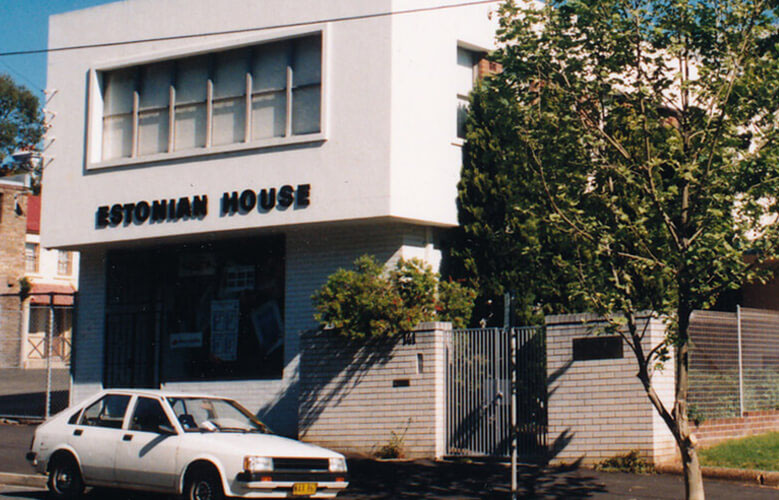
Location: Estonian House
Address: 141 Campbell St
Surry Hills, NSW, 2010
Admission: $30

The Sydney Estonian Society Art, Handicrafts and Ethnographic Collective is a celebration of collective creative minds with a passion for keeping Estonian handicrafts skills, designs and hearts connected and thriving across Australia.

Oled kutsutud osa võtma Sydney Eesti Kunsti- ja Käsitööringi õpikojast, tutvumaks mitmesuguste tikandi stiilidega, sealhulgas ajaloolise mulgi ja ristpistes tikanditega.

Teretulnud on kõik, kas algaja või meistri tasemel näputöö huvilised, sooviga õppida või oma oskusi jagada.

Õppepäeva sisse kuuluvad materjalise maksumus, lõuna ja kohvipaus.

Palun registreeri TryBooking kaudu siin 

Kuupäev: laupäev, 3. juuli
Algusaegl: 09:30
Lõpuaeg: 15:30
Asukoht: Eesti Maja
Aadress: 141 Campbell St
Surry Hills, NSW, 2010
Sissepääs: $30

Sydney Eesti Kunsti, Käsitöö ja Etnograafia Selts on loodud ühendamaks loomingulisi, Eesti käsitöö oskuste, kavandite ja mustrite säilitamisest, hoides elus tradistsioone nii Sydney’s kui kogu Austraalias.

Melbourne Estonian Comminity Discussion- 30 May Melbourne Eesti Maja

0

Please if you have any interest towards Estonian community in Melbourne. We would like to discuss and share ideas how to move forward. The Event will be organized by professional leader Morgana. Please share with other Estonians.

This was advertised in the newsletter.

Event will take place on the 30th May at 2:00pm., in the upstairs hall.

This is for young community members, who may not belong to any particular organized group, to come together over a drink, to discuss their specific needs of a future Estonian House in Melbourne. Regardless of where you were born, whether or not you speak the language, drink vodka, eat pirukad.

Please let us know if you would like to attend:

Kringli Töötoa | Kringel Workshop – Sydney, May 29

0

Join our master baker, Lagle Sammelsaar, as she guides you through the process in making an Estonian kringel.This 4-hour workshop, includes the cost of all of the required ingredients, baking materials as well as notes and tips and tricks to getting the best result in the future.

10AM on Saturday, May 29, 2021

Sydney Estonian House
141 Campbell St,
Surry Hills NSW 2010

The kringle is a type of Scandinavian pastry, a brother to the pretzel and distant cousin to the cinnamon roll. Braided and filled with buttery cinnamon sugar, the crust is sweet, crunchy and the layers of bread – buttery soft. It’s a custom in Estonia to bake a kringle on your birthday. The easy to make, twisted plaits of bread is a delicious treat that also fills the kitchen with a lovely aroma too!

COVID-19 UPDATE & SAFETY PROTOCOL
Upon arrival we require all attendees to scan the QR codes and to check in via the Service NSW app. If you have any cold or flu symptoms, please get tested immediately and isolate yourself until you receive a negative result.We highly recommend wearing a mask when inside unless you are eating or drinking, communicating with another person who is deaf or hard of hearing, or have a physical or mental health illness, condition or disability that makes wearing a mask unsuitable. Children under 12 years old are not required to wear a mask