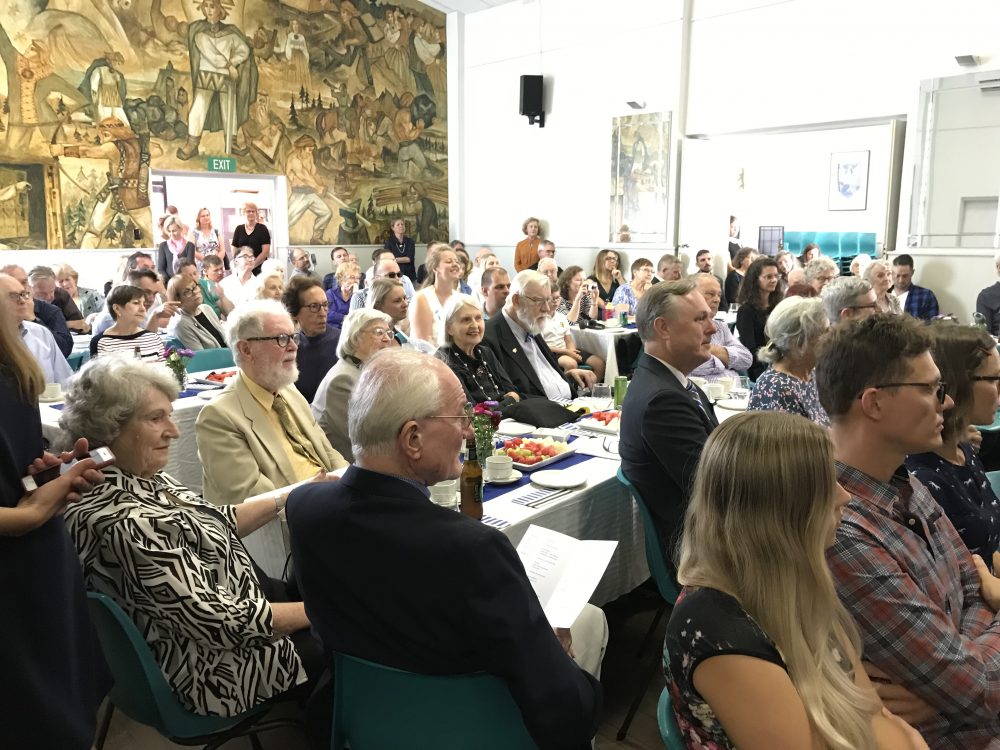
It is time to put our team together! Being a kid in Sõrve is learning in many ways – from making your bed to military level to confidently getting on stage in front of a crowd. This stuff will stay with you for life, and is taken to class rooms and then to board rooms.
The next step up from being a Sõrve kid is being a Sõrve leader (aka juht). Going through the leaders’ training program is not much different to an intense third year uni course work (but on steroids). This comes with all the perks of: sleep deprivation, getting to do a gazillion things at once, solving the world’s problems on a stage, and whenever in doubt, winging it . Or, if that’s not for you, you can just go with the flow, sit back and chip in your genius when called out for it.
As part of the formal leadership training and being a member of the leadership team you’ll get to:
know what you are really really good at and what are the things you can work on
apply your creativity
make up games and coming up with lots of wild ideas
inspire kids because they look up to you
train in basic first aid to manage risk of allergy and asthma
go through a crash course in Estonian
sing like Maria von Trapp at the top of a mountain (don’t worry that is optional)
have an excuse to wear folk clothes and be cool
Leaders’ meetings are compulsory for all leaders to attend on the following dates:
4-25 August 2019, Colo Vale
5 October 2019, Colo Vale
1 December, Estonian House
Fourth leaders’ meeting to be confirmed
Please note: Working with Children’s Check (in Australia) must be completed (or renewed if expiring before 12 January 2020) by 31 July 2019! Please contact Rhys Maidla at rhys.maidla@hotmail.com if you have any questions.
Submit your expression of interest by 31 May 2019.
They have put in months of work to prepare for XXVII Laulupidu – the epic singing festival that marks 150 years since the first “party of singing” was held in 1869 to celebrate 50 years from abolishing slavery. This was initiated by the choir “Vanemuine” at the instigation of Johann Voldemar Jannsen.
Estonians may not have big soccer stadiums but the Tallinn singing stadium is pretty impressive drawing in tens of thousands of viewers (photo by Andres Tarto)
Before Kooskõlas singers head off to Estonia, there will be one more get-together to perform the full repertoire they have been learning – note by note, vowel by vowel.
Everyone is invited to come along and experience the XXVII Laulupidu getting a taster of songs that will be heard at the singing festival in Estonia.
Choir Kooskõlas (which means harmony) has been practicing in the Sydney Estonian House every month
When: Saturday, 25 May 2019 Doors open at 3.00 pm 3.30 pm start
Where: St Stephen’s Church 197 Macquarie Street, Sydney
Tickets:
At the door (cash only) $25 general / $15 seniors / $10 12yo and under
Pre-book $20 general / $15 seniors / $10 12yo and under
Highlights of the 2019 Eurovision semi-final from Tel Aviv
Recap of winners of the past
Performances & games
Frankfurt hot dogs, seljanka, dessert & euro beer
Dress code: classic euro, winner takes it all, with love from Israel (50% off entry fee for a serious effort)
All proceeds go towards fundraising for the 2020 Sõrve Children’s Camp in Australia to promote Estonian culture, language, customs, traditions and community
Join us for a Mothers’ Day celebrations at the Sydney Estonian House. There will be folk dance and singing performances. Snacks, tea and coffee will be served and you’re welcome to bring along some home-baked goods.
Date: Saturday, 11th May Time:11am-1:30pm Address: 141 Campbell St, Surry Hills, NSW Entry: Free
In 1950 the Soviets are trying to crush a budding resistance movement in the countryside of Estonia. A girl doesn’t understand why her mother was arrested or why her father was upset when she cheered on the young pioneers as they marched.
Lights go out at 5pm at the Estonian House (141 Campbell street Surry Hills)
or may be found on our website www.sorve.org.au or by calling 0452 581 120.
Nominations for the Sõrve Sõbrad 2020 Committee election are to be received by the Secretary, Barbara Howard Kalamäe PO Box 9 Balmain NSW 2041 or may be emailed to admin@sorve.org.au
Proxy nominations are to be received by the Secretary, by 10.00am Saturday 23rd March 2019.
This coming summer the XII Global Estonian Cultural Festival, otherwise known as ESTO 2019, will cross the symbolic “Finnish bridge” between Finland and Estonia and arrive on Estonia’s shores. The festival, which is part of the Republic of Estonia’s 100th anniversary celebration and carries the theme “Our Future”, will focus on youth. Registration for performers has begun and discounted passes are available until February 28. ESTO 2019 will take place from June 27 to July 3.
Image courtesy of Esto 2019
For the first time in ESTO’s history, the festival will start out in Finland and the opening events in Helsinki will be organized by Estonians in Finland. According to head of the ESTO 2019 Executive Committee Sirle Sööt, Finland was the obvious choice.
“Currently the largest population of Estonians outside Estonia is in Finland, with over 60 000 Estonians permanently residing there. Estonian cultural days give people a chance to acknowledge their identity and show how we are always developing and moving towards the future, emphasizing the Estonian identity as a whole. There are no longer Estonian-Estonians and foreign Estonians – we’re all the same, we are global Estonians,” Sööt emphasized.
Head of the Organizing Committee of Estonia 100 Jaanus Rohumaa stated that it is important for Estonians living far from Estonia to also take part in the centennial programme.
“The ESTO festival taking place in 2019 is a wonderful opportunity for them to participate in the Estonia 100 celebration and visit Estonia. I’m especially pleased that this year’s ESTO is focused on children and youth, who are also at the heart of the Estonia 100 programme,” he noted.
ESTO 2019 will take place from June 27 to July 3 in Helsinki, Tartu and Tallinn. ESTO passes will be sold at discounted prices until February 28 and single tickets will be sold prior to the start of the festival if spots are available. You can find the programme on the ESTO 2019 website estofestival.com/en/
Chairman of the Estonian World Council Aavo Reinfeldt affirmed how vital it is to value ESTO and carry on the tradition. “It is unbelievably important that the ESTO legacy is treated respectfully. ESTO played a vital cultural and political role in the past, and Estonians all around the globe should remember its history,” Reinfeldt stated.
Head of the Department of International Relations on Integration Issues at the Ministry of Culture Anne-Ly Reimaa said that this year is of notable importance.
“To this day, ESTO is an important part of the identity of Estonians around the world. It is important for the Republic of Estonia to recognize and support efforts by Estonians abroad to preserve the Estonian language and culture,” Reimaa emphasized.
The first global Estonian gathering, later dubbed ESTO, took place in Toronto in 1972, and since then ESTO has taken place every four years. Estonians that fled Soviet-occupied Estonia and their descendants joined together at the festival to tell the world about Estonia and work to preserve the Estonian language and culture. In addition to cultural preservation, ESTO’s goal was also to deliver political messages. The programme of this year’s ESTO has includes the traditional National Congress, gala ball, and singing and folk dance events.
ESTO 2019 would like to thank its partners and sponsors: Estonia 100 and the Government Office of the Republic of Estonia, Tallink, Estravel, Estonian Ministry of Education and Research, Estonian Ministry of Culture, Estonian Ministry of Foreign Affairs, Hedman & Partners, City of Helsinki, Estonian Embassy in Helsinki, Enterprise Estonia in Helsinki, Helsinki Cathedral, the Estonian-language congregation of Helsinki, the congregation of Kallio, Helsinki Estonian House, Tuglas Society, Finnish Association of Estonian Societies (SVYL), Anni kindergarten, Helsinki Central Library OODI, City of Tartu, National Archive, Museum of Estonians Abroad (VEMU), Baltic Heritage Network, Gunpowder Cellar, University of Tartu, Estonian Evangelical Lutheran Church, Estonian National Museum, Widget Factory, Tartu Song Festival Museum, Tartu Nature House, City of Tallinn, Kesklinna municipal government, Telliskivi Creative City, Estonian History Museum, Seaplane Harbour, Estonian Song and Dance Festival Foundation, EstDocs, Estonian Institute, Estonian Association of Culture Clubs, Estonian World, Enterprise Estonia, Gambling Tax Council, Rakvere Theatre, and the Estonian Academy of Sciences.
In late 2018 a special edition of Azuria, Geelong’s own literary journal, was published to mark the centenary of the declarations of independence by the three Baltic republics. It was launched at the 19th Baltic Studies Conference at Deakin University.
The initial print run of 140 has been sold or donated to libraries.
Following many request for more copies, a further 50 have been printed in time for Easter.
The following articles & stories will be of especial interest to Estonian community:
Tania Lestal, ‘The road back to Nõo’: tells of her visit to Tallinn, the author was raised in Australia, but now lives in Germany.
Sylvia Macneal, ‘Flight from Carlsbad’: a detailed account of how her father brought the family safely into the West.
Anu Mihkelson, ‘Estonia’s Islands’: an interesting travelogue.
Sandra Buchert, ‘Estonia is a beautiful country’: a lyric tribute to her motherland.
The collection also contains memoirs, short stories & poetry by writers from the three Australian communities and the Baltic republics. There is also supplement of student writing.
Each copy costs $AU25 (posted).
Payment by cheque: “Geelong Writers Inc.”, PO Box 1306, Geelong VIC. 3220.
Payment by direct deposit: CBA “Geelong Writers Inc.”, BSB 063 551,
Account No. 1015 7327, Reference /you r surname/
For further enquiries, contact the editor, Dr. E (Ted) Reilly by email tedreilly100@hotmail.com, or call him on 0421 559 592.
Estonian TV Girls’ Choir to visit Sydney in July. ????? Between Monday 15 – Sunday 21 July 2019 the Estonian TV Girls’ Choir conducted by Aarne Saluveer will be performing in Sydney as part of the Gondwana World Choral Festival.
Celebrating the 30th anniversary of the Sydney Children’s Choir, the festival will include concerts, recitals, workshops, masterclasses and panel discussions.
The eight nations, and around 1500 singers, attending are considered the elite athletes of children’s choirs, according to Australian choir director Lyn Williams OAM.
With gala concerts at the Sydney Opera House, and Sydney Conservatorium of Music, this will be an international choral event to remember!
Other International guest choirs include Riga Cathedral Girls’ Choir (Aira Birzina), Boston Children’s Choir (Anthony Trecek-King), La Cigale de Lyon (Anne-Marie Cabut), Toronto Children’s Chorus (Elise Bradley) and the Young Adelaide Voices (Christie Anderson)
To all the members, friends and colleagues of the Estonian Relief Committee (ERC):
The ERC has prepared a survey regarding the future of Estonian House in Sydney to its members, friends and colleagues, seeking their input regarding this matter. This survey is found at the following link and we urge everyone who has had any involvement with Sydney Estonian House to complete and lodge the survey. It will only take a few minutes.
At last year’s Eesti Vabariigi aastapäeva aktus I deliberately spoke in Estonian. It was essential on that critical day, in my view to honour Estonia by speaking it’s language. But many of our younger generation genuinely struggle with the Estonian language, and so as not to alienate them and to help them better understand their Estonian ancestry, this time I will speak in English.
Eesti Vabariigi aastapäeva aktus 2019
If you are anything like me you are probably wondering where 2018 went. Today one year ago we were celebrating Estonia’s 100th birthday, yet now we are assembled here again to celebrate Estonia’s 101st birthday.
Relatively little has happened here in Australia, on a nation-building scale. However what happened in Estonia during that same twelve months, 100 years ago during that precarious first year of Estonia’s existence after the Declaration of Independence was issued on 24 February 1918, was absolutely critical and things were literally on a knife’s edge.
If you indulge me, I will provide a quick summary of that critical twelve months between 24 February 1918 and 24 February 1919 (today 100 years ago).
First a bit of a recap. In early 1918 following the Russian Revolution of October 1917, the Russian state was in relative disarray – and it was in this context that the German Army began their offensive against Estonia on 18 February 1918. As the Russian Army and the Bolsheviks fled the country, it left a power vacuum before the arrival of the German troops. Within the space of a week (ie. between 20-26 February) with the help of Estonian national brigades that had, up to then been part of the Russian Army, Estonian politicians took power in all country towns in Estonia (except for Võru). The Estonian Declaration of Independence was read out to the public for the first time on the evening of 23 February, in Pärnu. However, by convention Independence Day is not celebrated on that day, but on the next day 24 February, as this is when the Salvation Committee of Estonia took power in Tallinn and formed the Estonian Provisional Government (led by Prime Minister Konstantin Päts).
Thus Estonia’s first period independence commenced, but it practically lasted only a few days.
The Germans arrived very soon and immediately placed Estonia under a military dictatorship. The Provisional Estonian Government and the Declaration of Independence were not recognised, even banned. Estonian political; leaders were arrested or fled the country. Within two weeks, by 4 March 1918, the whole of Estonia had been occupied by the Germans. The Bolsheviks had all fled back to Russia.
During the next 9 months of German occupation the Estonian nation could do very little, but prepare behind the scenes. It was a promising gesture, that in May 1918, Great Britain, France and Italy (who were all at war with Germany) gave de-facto recognition of Estonia as an independent free nation, and did not recognise the illegal German occupation.
However, it was the German nation’s very own and unexpected ‘November Revolution’ in their homeland that allowed Estonia’s leaders to exploit the subsequent general confusion of the occupying Germans in Estonia. The underground Estonian Provisional Government quickly took the opportunity to reconvene in Tallinn on 11 November 1918 (yes, this is Armistice Day on the Western Front, the end of World War 1) to commence the transfer of power from the demoralised Germans.
So remember – Armistice Day 11th November – the surrender of the Germans in WWI – is the very day the Estonian nation seized the moment to seek regain it’s independence. Next time you salute the Australian flag on 11 November, remember the alternative untold back story involving your heritage.
The Germans agreed to formally transfer all power over to the Estonian Provisional Government, at noon on 21 November 1918, ten days after Armistice Day, when hostilities ceased on the Western Front. However, Communist Russia was having no bar of this so-called new independent nation, and saw itself as the rightful heir to the former Czarist empire, including Estonia and the other two Baltic States.
Unfortunately for the Estonians, World War 1 would continue on, despite the Armistice. Just a mere seven days after the departing Germans had handed over power to the Estonian Provisional Government, the Bolsheviks launched their attack on Estonia, commencing with the Battle of Narva, on 28 November 1918.
With this attack, the actual Estonian War of Independence had begun, and the war would last another 14 bloody months until the Peace Treaty of Tartu was finally signed with Soviet Russia on 2 February 1920.
However back in November 1918, the new nation of Estonia was in fact unprepared, and exhausted after four previous years of WWI, the Estonian soldiers had low morale and lacked arms and sufficient trained men. So initially the Red Army was quickly able to capture vast areas of Estonia. Within a couple of weeks Viru, Võru and Tartu counties fell, as well as parts of Harju, Järva, Viljandi and Pärnu counties. By Christmas Day 1918, a hundred years ago, the front line was approaching Tallinn, Paide, Viljandi and Pärnu.
By any person’s assessment, the situation was looking quite hopeless, so in an act of desperation on 27 December 1918 (virtually just a month after the War of Independence began) the Provisional Government of Estonia contacted Great Britain and requested their help to fight the Red Army. Great Britain was reluctant to send troops, but (thanks mainly to Winston Churchill) the British instead sent their warships to Tallinn carrying much needed munitions & weapons for the Estonian armed forces. British naval ships also took over the maritime defence of Estonia’s coastline, to defend against Russian warships.
The British squadron’s arrival brought a huge positive effect on the morale of Estonian troops, as did the arrival of Finnish volunteers to Estonia on New Year’s Eve in 1918. In addition to our northern cousins, the Estonian Army suddenly had the assistance of the White Russian, Latvian, Ingrian, Baltic German, Danish & Swedish volunteer units who had all come to help us. The fledgling Estonian nation suddenly realised – we were not alone! The key turning point in Estonia’s War of Independence thus came during the most depressing days of late December 1918. It was then that people who valued nationhood came to the realisation that they needed to protect their homeland, and to cast aside the fear of Russia’s might and size that had been instilled in them for centuries. Slowly, but with increasing pace, one after another, volunteer battalions of Estonians were formed, given fresh arms, and set off to defend their new nation. These volunteers included many schoolboys, university students, young intellectuals and women.
By the first week of January 1919, the Red Army’s advance was halted in many small ‘breakthrough battles’, after which the Reds were resisted everywhere across the front. The tide of war turned!
By February 1919, this very time 100 years ago today, the Red Army had been pushed back – completely beyond the Estonian border.
The Estonian War of Independence did not end there, of course. On the contrary, the leaders of the Red Army, who had initially mistakenly believed the Estonians would not defend themselves, now began to take the war of Independence more seriously and amassed far more powerful forces against Estonia.
Thus, from now, February through to May 1919, 100 years ago today, fierce battles would be waged on the southern front of Estonia. And worse, in June 1919 Estonia would be attacked by another new foe – the German Landeswehr and German Freikorps. And later on, the Estonian Army would then go on to help the Latvians defeat their occupiers, in one massive battle on Latvian soil – the Battle of Cesis – that is still commemorated each year to this day by Estonians by a national public holiday – Võidupüha – on 23rd June .
But we are getting ahead of ourselves. That is another chapter of history – and it will not be until the next Vabariigi aastapäev in February 2020 that we will be able to properly commemorate and remember what happened 100 years ago.
EV100 is after all, a three-year long celebration – from 1918 to 1920. I hope you will forgive me for my rather long history lesson. But as someone wiser than me once told me – if you don’t remember the past then you have no reference points for living the future. Or as my father Raivo once told me – Kui sul ei ole meeles mineviku, siis sul ei ole õiget tuleviku.