Friday, May 1, 2026
14.9 C
Canberra
16.2 C
Tallinn

Register for Craft Camp and spend July in Viljandi

0
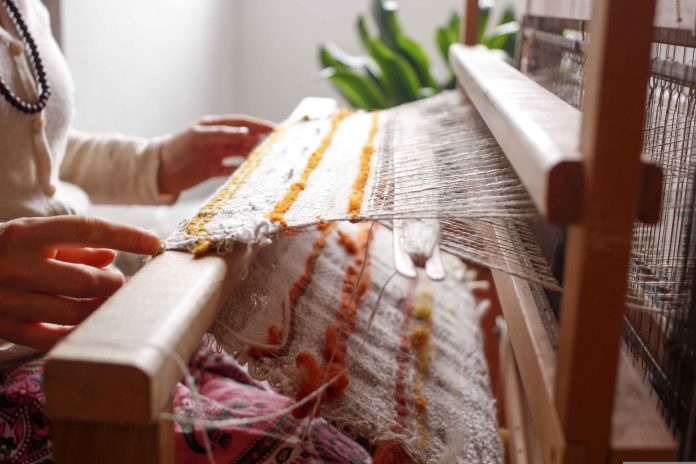
Image by TImor from Pixabay.

Registration for Craft Camp 2026 is officially open — so if your inner crafter has been whispering, “Learn silversmithing, come on!” this is your moment. July in Viljandi, Estonia, is waiting.

From 12–18 July 2026, Viljandi becomes a glorious tangle of yarn, wood shavings, silver dust and people proudly announcing, “I haven’t crocheted since Year 9, but how hard can it be?” (Spoiler: very, very fun.)

Choose three of the 23 hands-on workshops, each taught by masters who can embroider a Mulgi pattern with the calm confidence most of us reserve for making toast. Beginners, experts and enthusiastic in-betweeners are all welcome.

When workshops wrap up, the cultural program kicks in — concerts, lectures, a film night and the kind of late-evening craft chat that starts with “just one more row…” and ends an hour later with existential questions (about wool, about life).

On 15 July, camp heads out into Estonia — to Tartu, Mulgimaa, or the legendary Kihnu Island, where craft isn’t just a pastime but a way of life.

All workshops take place at the Viljandi Culture Academy’s sleek home where ancient techniques meet excellent coffee breaks. Accommodation and most meals are DIY, giving you a chance to eat your way through Viljandi like a local.

Everything’s in English (or translated from Estonian), and the fee includes workshops, materials, snack breaks and a festive dinner with folk music — because what’s craft camp without someone busting out a set of torupill pipes? The kind of creative momentum that lasts long after you’re home is a freebie. You’re welcome.

Treat yourself early — the Christmas special runs 9 December 2025 to 4 January 2026, followed by Early Bird (5 January to 31 March 2026) and regular pricing (1 April to 31 May 2026).

Some workshop materials and field trips add a little extra to the invoice.

Whether you’ve always dreamed of stitching a Mulgi shawl, carving your initials into wood, or simply running away to Estonia for a week of creative bliss — Craft Camp 2026 is calling. Register and let July be the most Estonian month of 2026 — in our experience, it’s when Estonia shows off, with culture, craft and summer in full swing.

Read more and register

Register here: https://viljandi.ut.ee/en/craftcamp

See photo albums from past camps: https://viljandi.ut.ee/en/node/115402

The story behind the SESKKE calendar

0
SESKKE calendar 2026, photo by Kristel Alla.

The Sydney handicrafts society, Eesti Seltsi Kunsti-, Käsitöö- ja Etnograafia Ring (SESKKE), has created a calendar that shows off the national costumes worn by Australian Estonians across the country, and this is the story behind how the calender came to life.

This project came about due to another project SESKKE had undertaken, the digital photo archive, led by Mai Buchert. We had a series of photographs of members in the Australian Estonian community wearing their folk costumes, or folk costumes donated to our rahvariide raamatukogu (folk costume library), curated by Maie Pikkat.

Turning the archive into a community calendar

The calendar project was first brought to SESKKE by Maie Pikkat, who has built her knowledge over the years about Estonian folk costumes though many trips to Eesti, and watching her grandmother create many of the pieces in Australia, in the 1960s and 1970s. Many of which have found their way back to the folk costume library. Maie thought it would be a great idea to have the photos taken from the digital archives project and turn them into a calendar that could be enjoyed all year round.

The idea behind it was to showcase a variety of folk costumes, but also the people within the Estonian community throughout Australia. The 2025 calendar mostly showcased folks in New South Wales, with those from other states missing out. This was largely due to the project idea being brought to SESKKE and developed in the middle of the year, with all the backend work done by Mai Buchert to obtain consent from the people previously photographed as part of the digital photography archive. Thankfully many wonderful community members contributed with their content that was included in the 2025 calendar. At the 2024 Eesti Päevad, SESKKE were selling the calendars and heard thoughtful suggestions to feature Australians from more states. This encouraged SESKKE to expand the reach and include even more Australians in the 2026 edition.

It was a collaborative effort to obtain consent from folks all over Australia, to showcase even more beautiful people and costumes, as this calendar project was not considered when the original photographs were taken. The ladies at SESKKE worked hard over the first few months in 2025, led by Mai, to gather the consent. Luckily the ladies in SESKKE are very well connected. Once the consents started to come in, the photos were securely handed over to Danae Pikkat to start putting the calendar together.

Esmée Okamoto showing you the SESKKE calendar 2026, photo by Marissa Pikkat.

Designing the calendar

Danae is not part of SESKKE, however she was very generous with her time, collaborating with Maie Pikkat to design the calendar. Danae and Maie decided on the front page image, which is a broach (sõlg) from Maie’s collection. Danae took the photo, then spent hours editing to get the image right, and the cover was born. The name of the calendar was also developed by Maie and Danae Pikkat, with meaning around the community coming together and showcasing the folk costumes we have put together in Australia. There is an understanding, developed from these two projects, that the costumes may not always be accurate but we do our best with what we have at the time. Our ancestors who created these costumes largely made them from memory because when they left Estonia and came to Australia, during occupation, they only had one suitcase full of essentials, not folk costume books, like we have access to now.

Once the cover and general layout was decided, the graphic along the bottom of each page to bring it all together needed to be decided. Now Danae was using the paid Estonian Designs AU Canva account so she added the Setomaa graphic across the bottom of each page, as she had access to this, then in a very cheeky way asked for my permission to use the commission paid for Estonian Designs AU to use in the calendar. There was no question that this could be used for the community, with acknowledgement on the back page. In fact, it was an honour and a privilege.

Printing and a special diplomatic request

Danae had worked hard for months, going back and forth with Mai getting images in a secure way, to add to the calendar. Once the calendar was almost ready, Maie and myself presented the digital version to SESKKE for feedback and comments. These were taken onboard, some further edits were made, then the calendar was sent for printing.

Danae and Maie made a decision on how many were to be printed and an extra 10 were added to the order, especially for our Ambassador Jaan Reinhold. Last year at Sõrve camp, Jaan and I discussed the calendars and he personally requested we do a 2026 edition as he wanted to purchase some to give as diplomatic gifts. True to his word, they were ordered and delivered to our Ambassador, ready to be gifted this Christmas. This was very exciting for SESKKE and there was a collective gratitude around this kind gesture and appreciation for our hard work.

SESKKE calendar 2026. Photo by Kristel Alla.

Launching the calendar

When SESKKE had the final prints of the calendars, it was time to sell them. I was tasked with setting up the Trybooking event page and developing all the backend logistics for our community to be able to order these beautiful calendars for 2026. There was also a need to talk about these calendars and create social media content around them. One Sunday, for several hours, Esmée Okamoto and I got together to shoot a range of videos, to add to our social media, to get folks interested and to purchase the results of our hard work. This day was so much fun with a blooper reel yet to come.

A celebration of Estonian folk costumes in Australia

The 2026 calendar is a combination and collaboration of a number of SESKKE projects, come together to celebrate and showcase Estonian folk costumes in Australia. Lots of hard work and dedication from a number of people, with the same goal – to celebrate Estonian folk costumes throughout the year.

There are still some calendars left, shipping all over Australia. Get yours now, a little piece of Australian Estonian history. Aitäh (thank you!) SESKKE and all the dedicated folks who produced this wonderful calendar.

To purchase one of our beautiful calendars, please click here and don’t forget to add postage at checkout for shipping all over Australia. Thank you for allowing us to be part of your home.

Poster by Marissa Pikkat.

Tree of Eternal Love screens on the Gold Coast

0
Source: The Estonian Film Database.

The Gold Coast Estonian Society is rolling out the popcorn and the punchlines this Saturday as the award-winning Tree of Eternal Love hits the screen — impressive cast, absurd humour, Estonian snacks and a kids’ corner all included.

Gold Coast Estonian Movie Night is back, and this time it brings a road-trip absurdist comedy featuring heartbreak, friendship, questionable decision-making and an axe. In other words, peak Estonian storytelling.

Tree of Eternal Love (Kiik, kirves ja igavese armastuse puu), directed by Meel Paliale, follows Kiik — a young mechanic who takes heartbreak to dramatic new heights by attempting to chop down a mythical “eternal love” tree somewhere across the country. The result? A journey that’s equal parts thorny, introspective and delightfully chaotic.

Source: Gold Coast Estonian Society.

This movie has a cast that needs no introduction (but gets one anyway). Starring Marko Matvere, Andrus Vaarik, Jan Uuspõld, Egon Nuter, Mihkel Raud and more, this award-winning 2021 film became a standout of Estonia’s new wave of absurd comedy.

As always, the Gold Coast Estonian Society promises a cosy night out: think snacks, popcorn, Kalev sweets, drinks (yes, Gin Long Drinks too), and a relaxed corner for the tiniest film critics.

Show up early for a chat and stay after for more — these movie nights are as much about people as they are about cinema. So grab your friends, bring the family and settle in for an evening of Estonian film, laughter and great company on the Gold Coast.

🎬 Event details

📅 Saturday, 13 December 2025
🕒 Doors open 3.00 pm | 🎞 Film starts 5.00 pm
📍 Varsity Lakes Community Centre, 20 Mattocks Road, Varsity Lakes QLD 4227
🎥 In Estonian with English subtitles
💰 Tickets $10 — book via Trybooking link here

Learn more

Event information: https://www.facebook.com/events/697711943107233

About the film in the Estonian Film Database: https://www.efis.ee/film/20350

The Gold Coast Estonian Society on Instagram: https://www.instagram.com/goldcoastestonians/

📽️ Watch the Tree of Eternal Love trailer below.

Thank you

Thank you to Elina Peedoson and the Gold Coast Estonian Society for this information.

Gold Coast Family Camp: Estonia tucked between the trees of an Australian rainforest

0
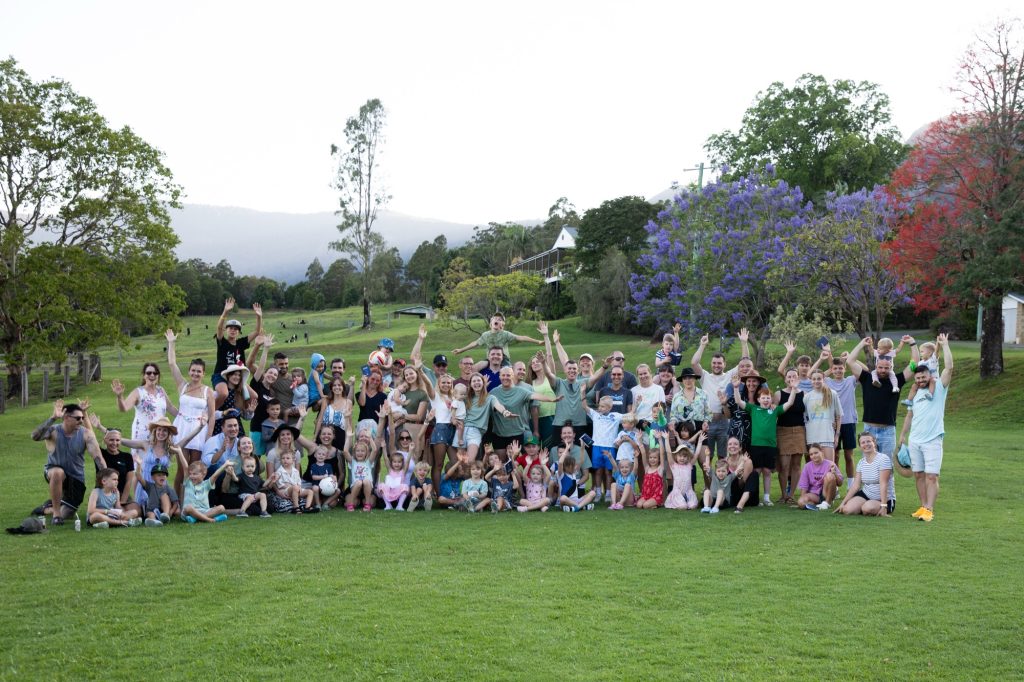
Gold Coast Family Camp 2025. Source: Oakstone Photography.

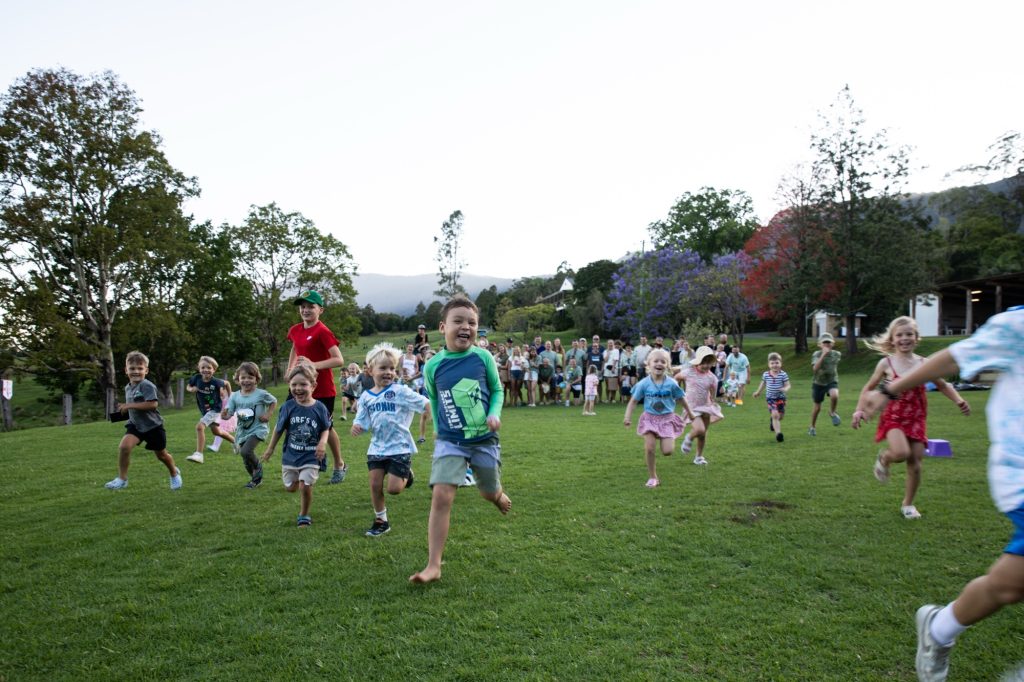
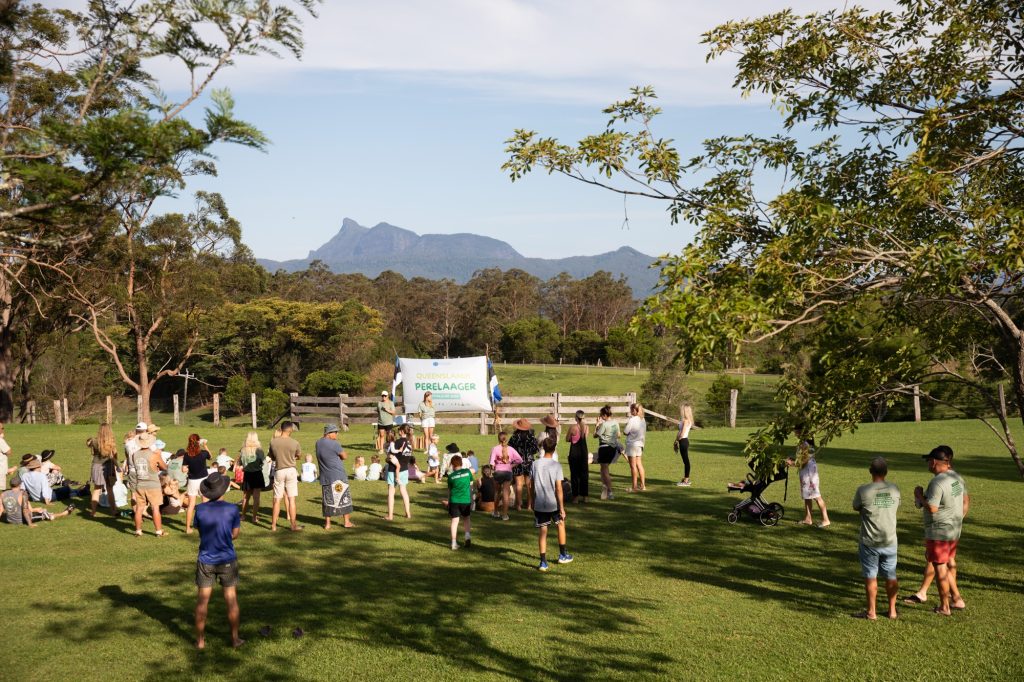
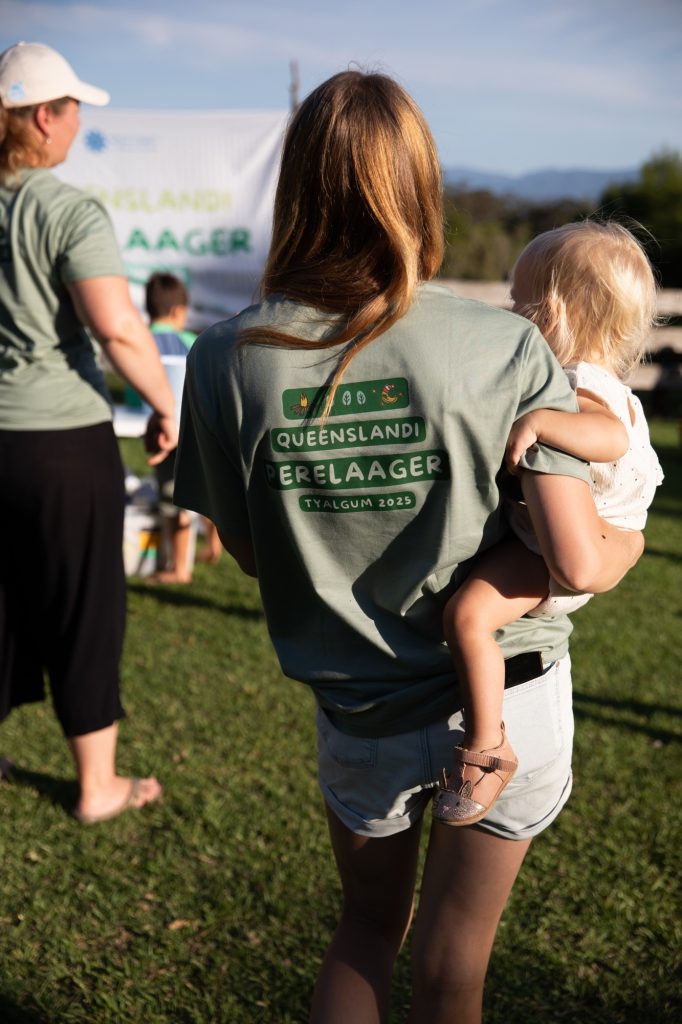
A total of 110 children, parents and volunteers spent an unforgettable November weekend deep in a New South Wales rainforest — and many still swear their hearts are somewhere between a kookaburra call and a slice of küpsisetort (cookie tart).

Hosted by the Gold Coast Estonian School and Playgroup — with enthusiastic reinforcements from Brisbane, Newcastle and New South Wales — the very first Gold Coast Estonian Family Camp unfolded from 7-9 November 2025. Think lush valley, wandering farm animals, walking trails… and limited phone reception. A paradise for children, and mildly confronting for adults who kept patting their pockets for phantom notifications.

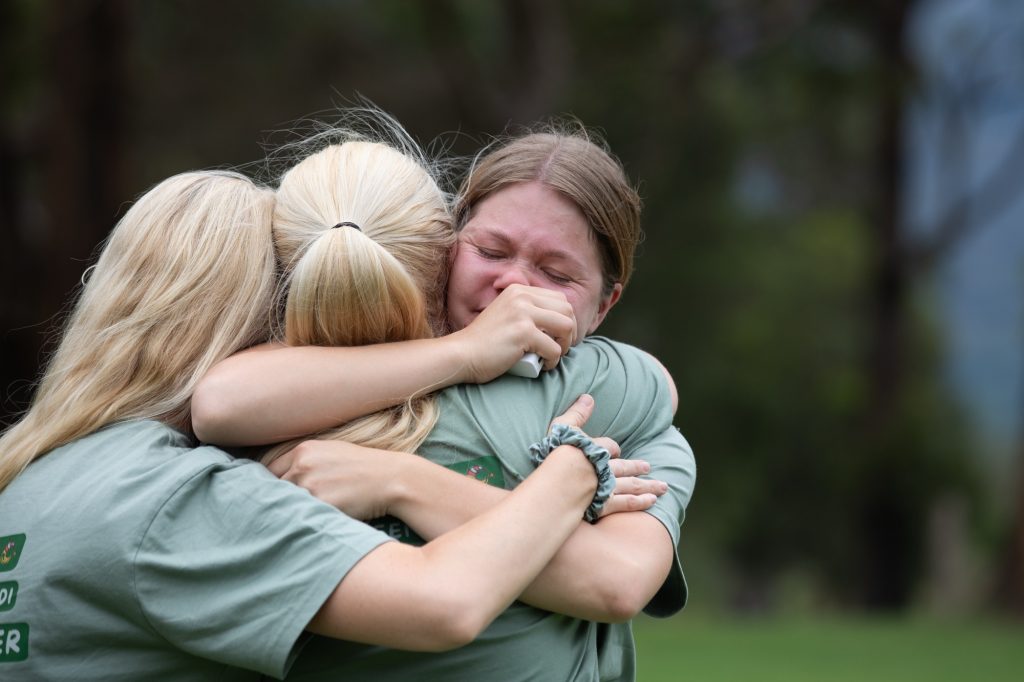
With no city noise and no Wi-Fi to negotiate, families suddenly had space to breathe, connect and — most importantly — speak Estonian. By Sunday, several parents reported hearing more eesti keel from their kids than they usually manage in a month. And when it was time to say goodbye? Let’s just say the rainforest wasn’t the only thing dripping with moisture.

Gold Coast Family Camp 2025. Source: Oakstone Photography.

Learning, laughing, exploring

Children were grouped into teams across three age brackets (0–3, 4–8 and 9–15 years), each guided by tireless volunteers who deserve their own medals. Across the weekend, kids took part in a full Estonian-language program designed to spark curiosity and showcase culture.

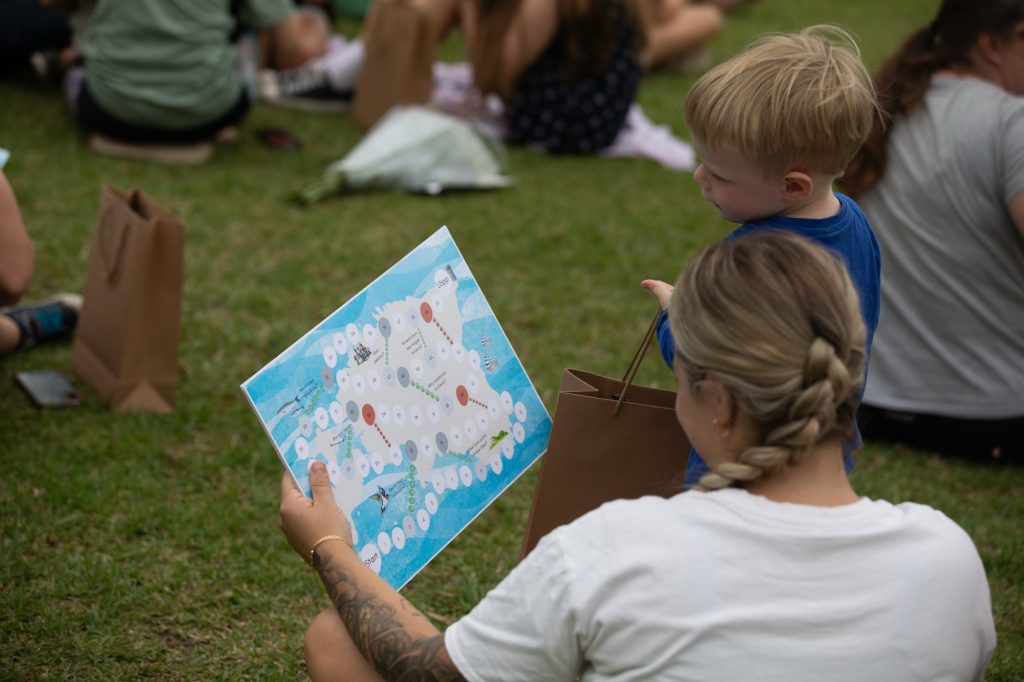
The six-point adventure challenge sent teams racing (sometimes literally) through tasks such as:

  • learning and performing Estonian songs
  • crafting a traditional Estonian küpsisetort
  • acting out Estonian pantomime
  • matching spoken words with pictures and meanings
  • solving puzzles and other creative challenges.
Gold Coast Family Camp 2025. Source: Oakstone Photography.

Everywhere you wandered, you could hear laughter, singing, new Estonian words being tested aloud, and small groups cheering each other on. Children and parents too were enjoying themselves, learning and connecting. Something magical happens when you combine good people, a rainforest, with Estonian language floating through the air like a soft lullaby.

Gold Coast Family Camp 2025. Source: Oakstone Photography.

The program woven with care

The program was beautifully curated — thoughtful, varied and clearly crafted with love.

Children created Estonian-themed posters, joined dance sessions led by accredited teacher Elen Ellervee, and even composed their own camp hymn. Older kids filmed mini-movies documenting their camp adventures, while the littlest ones thrived in a dedicated playgroup program.

Estonian music floated through the valley all weekend, gently nudging kids (and adults) into speaking more Estonian than they do in their everyday Australian lives.

Elen captured the feeling perfectly:

“The Gold Coast Family Camp turned out to be a special, heart-warming and memorable event. It felt like a small oasis of Estonian language and culture tucked between the Australian mountains. Throughout the camp there was a friendly and engaging atmosphere — children’s laughter and Estonian music could be heard everywhere, and the activities brought childhood memories back to life. There was black bread on the table and the children made küpsisetort — what more could one wish for? A deep bow to the organisers, and I hope this becomes an annual tradition.”

Gold Coast Family Camp 2025. Source: Oakstone Photography.

Finding Estonia on a rainforest trail

On the final morning, families — from brave toddlers to tall teenagers — set out on a rainforest hike. There was a waterfall to spot, steep paths to conquer and small hands reaching for bigger ones. For many, that earthy, unhurried moment became the highlight of the entire weekend.

The kids tell it best

Sophie, 14: “The games and activities were really fun… I made so many great memories — I would 100% come back.”
Rayden, 6: “I loved playing with friends… the waterfall walk was a bit hard but fun! I would definitely come again and bring my dad!”
Lola, 12: “It was fun — I especially loved the games. I would definitely come again.”
Kaspar, 14: “A great event and a great place to make new friends… I would 100% come again.”
Gold Coast Family Camp 2025. Source: Oakstone Photography.

A community effort — and something quite extraordinary

These memories were brought to life thanks to the Gold Coast Estonian School and Playgroup and dedicated volunteers from the Gold Coast, Brisbane and Newcastle. Support also came from the Integration Foundation, the Estonian Ministry of Foreign Affairs, the Institute of the Estonian Language, the Estonian Ministry of Education and Research, the Estonian Cultural Foundation in Australia, the Gold Coast Estonian Society and the Brisbane Estonian Society.

Judging by the tears at the closing ceremony — and the thank-you messages still appearing weeks later — the Gold Coast Estonian Family Camp has already become something quite extraordinary. For many families, it felt like rediscovering a tiny piece of Estonia tucked between the trees of an Australian rainforest.

Well done, Gold Coast!

Gold Coast Family Camp 2025. Source: Oakstone Photography.

Photo album

Here are some photos by the Oakstone Photography capturing some wonderful moments from the Gold Coast Estonian Family Camp.

Acknowledgement

We are grateful to Elina Peedoson from the Gold Coast Estonian Society for this information and photos.

Lecture notes: Estonia’s AI leap in education

0
Kristina Kallas speaking at RMIT University, 27 November 2025. Photo by Kristel Alla.

You know those events you wander into with no real expectations – and then halfway through you realise, quietly, this is special? Kristina Kallas’s lecture at RMIT University was one of those rare moments. Let me tell you what she spoke about, you might want to lean in too.

When Estonia’s Minister of Education and Research, Dr Kristina Kallas, stepped up to the lectern at RMIT in Melbourne, 27 November 2025, she did not just present policy or sound like “just another politician on script”. She spoke with the kind of clarity, urgency and care that made a Council Chamber lean in.

She spoke as a lifelong educator, policymaker and citizen of a small country that has decided to treat artificial intelligence (AI) not as a threat to be feared, but as a challenge to grow into.

By the end of the lecture, “Redefining Education: Harnessing AI for Cognitive Growth”, the audience had been taken on a journey from 17th-century Estonian village schools to a national “AI Leap” program that will put a tailored version of ChatGPT and Gemini into the hands of every Estonian secondary school student from January 2026.

Kristina Kallas earned a loud, sustained applause that is not standard issue in academic halls.

The Minister began by situating Estonia: a Nordic-Baltic country of just over one million people, 171,000 students and around 500 schools – some with only a handful of children, especially on small islands.

Despite its size, Estonia is widely recognised as one of the most digitalised countries in the world: 100% of public services are online, from tax returns and voting to driver’s licences and, as of 2025, even filing for divorce.

This digital infrastructure is not separate from education – it shapes it. To function in a fully digital state, young people must learn to live and act in that environment. Schools therefore cannot sit outside the digital ecosystem; they are part of it.

But Estonia’s education story did not begin with e-government. Kallas reminded the audience that the education system is older than the Estonian state itself. Under Swedish rule in the 17th century, a network of schools and a university were established on what is now Estonian territory. Compulsory schooling followed in the 19th century, and by 1881 literacy had reached around 94% – among the highest in Europe at the time, despite Estonia being a poor, rural region.

Crucially, when the Republic of Estonia was founded in 1918, many of its leaders were not lawyers or businessmen, but teachers, headmasters, journalists and writers. In Kallas’s words, Estonia is in many ways “a nation founded by education leaders”.

That tradition was tested during the 50 years of Soviet occupation that followed 1940. Estonia maintained its historic school structure, but a parallel Russian-language system was created, under Moscow’s jurisdiction. Since regaining independence in 1991, Estonia has worked to integrate those schools into a single national system. The final step – shifting Russian-medium schools to Estonian-medium instruction over a nine-year transition – is now underway, accelerated by Russia’s war in Ukraine.

In the 1990s, Estonia faced an urgent question: what should a modern Estonian curriculum look like? The answer was to look across the Baltic Sea to Finland, then – and still – one of the world’s strongest education systems. Estonia adapted the Finnish model, but also added something bold for its time.

In 1997, Estonia launched a major initiative to bring computers into classrooms and connect all schools to the Internet. This was met with the now-familiar worries: computers would make students “lazy”, no one would memorise facts any more, children would just play games and use Wikipedia. Sound familiar?

Despite the resistance, the program went ahead – and helped shape an entire generation of Estonian tech leaders. Many of the founders behind Skype, Wise (formerly TransferWise), Bolt and other Estonian unicorns are alumni of this early “digital leap” in schools.

This positive experience matters today. Because Estonia has already lived through one wave of technological anxiety and seen the long-term benefits, its attitude to AI is more pragmatic and hopeful than purely defensive.

Where some systems instinctively push AI away, Estonia is asking: how do we bring it in – wisely?

Kristina Kallas speaking at RMIT University, presentation slide of Estonia’s PISA rankings, 27 November 2025. Photo by Kristel Alla.

Before turning to AI, Kallas outlined the foundations of Estonia’s strong performance in international assessments such as PISA, where Estonia ranks among the top countries globally and first in Europe.

Key elements are described here.

High expectations and hard work
The national curriculum is demanding. It assumes that students, teachers and parents all contribute. There is homework. There is debate about pressure. But there is also a deeply rooted cultural belief that education is an investment into human capacity and that each generation can improve its life chances through learning.

Teacher autonomy
While Estonia has national learning standards (what students should know), teachers have high professional autonomy in how they teach. They can decide whether to use digital devices or not, when to take learning outside the classroom, and which methods suit their students.

Kristina Kallas was clear:

If we over-prescribe teachers’ actions, we turn them into clerks rather than professionals. Autonomy, she argued, is fundamental to serving diverse children in real classrooms.

Equity and diversity
Estonian children go through nine years of comprehensive basic education together, without selective “smart” streams. The goal is that by age 16 they should all be able to reach strong levels in key subjects, regardless of their starting point. The school network itself is diverse – from large urban schools to tiny rural ones and community-driven private schools – and parents can choose environments that fit their children.

Early childhood education
Perhaps the most important element, in the Minister’s view, is what happens between ages 1 and 7. Early childhood education is widely accessible, tax-funded and guided by a national curriculum. It focuses not on early reading or maths, but on social-emotional development and self-regulation – giving children a more equal start, regardless of home background.

Estonian children start compulsory schooling at age 7, meaning by age 15 they have spent fewer years in formal school than peers in countries like Australia – yet they still perform extremely well. Kallas sees this as strong evidence for the value of high-quality early childhood education.

Growth mindset and creativity
In PISA surveys, more than 80% of Estonian students report believing that intelligence can be developed, not something you are simply born with. Estonia also scores highly in creative thinking and problem solving. This culture of “you can get better if you work at it” is now central to how Estonia is approaching AI.

Kallas did not minimise the scale of the challenge AI poses. When a device in a student’s pocket can perform in seconds what schools may take years to develop, the risk is not abstract.

Estonia’s biggest fear is that, without a deliberate strategy, students will use AI for “heavy cognitive offloading” – outsourcing so much thinking to the machine that the AI learns, but the child does not.

To explain why this matters, Kallas turned to basic neuroscience. Human brains, she reminded us, tend to operate in two modes:

Lower-order cognitive processes – memorisation and repetition. Once we learn to ride a bike or remember that the Second World War began in 1939, we store that information and reuse it without much effort.

Higher-order cognitive processes – analysing, evaluating, creating; re-organising knowledge for new situations. These processes are energy-intensive, and anyone who has studied for an exam or learned a completely new task in a day knows the exhaustion that comes with it.

For the last 200 years, most education systems have focused on the lower part of Bloom’s taxonomy: remembering, understanding and applying knowledge. AI now forces a pivot upwards. Computers – and especially AI – already outperform many humans in lower-order skills.

If humans are to remain “sovereign thinkers”, we must consciously train far more people to live much more of their day in higher-order thinking.

This is not about asking everyone to use AI “more”. It is about using AI differently – to free up human energy for deeper reasoning, systematic thinking and creativity, rather than replacing those capacities.

Out of this reflection came Estonia’s AI Leap (AIA) program, a national experiment in higher-order thinking.

In early 2024, the Ministry of Education convened an AI Council bringing together developmental psychologists, neuroscientists, brain researchers and education specialists. Their task was to design a strategy that uses AI to strengthen higher-order cognitive skills in schools, not weaken them.

The result is an ambitious, system-wide initiative:

AI Leap Foundation
A public–private foundation was created, funded 50% by the Ministry and 50% by private donations, largely from the tech sector.

Partnerships with OpenAI and Google
Estonia negotiated a special licence for a customised version of ChatGPT (from OpenAI) and Gemini (from Google). This “Socratic version” is designed not to simply hand over answers, but to respond with questions, prompts and counter-arguments that force students into an ongoing dialogue – mirroring the Socratic method.

Whole-system rollout
Around 30,000 secondary school students and 5,000 teachers will be covered. Teacher training began in August 2025; from January 2026 all secondary students will receive individual licences to use these tools in every subject, from mathematics to music and art.

Teachers at the centre
Kallas was explicit: the key variable is not which AI version students use at home – a generic app on their phone will always be a click away – but how teachers redesign learning processes in the classroom. If teaching stays the same, students will simply ask AI to write their essays and do their assignments. If teaching changes, AI can become a scaffold for deeper engagement.

Scientific monitoring and new exams
Two research teams – one in neuroscience, one in education – will monitor the program from January 2026. They will study how students actually interact with AI, what learning strategies they use, and how motivation and deep learning are affected.

In parallel, new national exams are being developed for 2027 to explicitly assess analytical, systematic and higher-order thinking, alongside traditional subject knowledge. Estonia wants evidence that the AI Leap is genuinely shifting cognition, not just rhetoric.

Kristina Kallas did not pretend that every risk has been solved. She noted concerns about cultural and linguistic bias in AI models trained largely on English-language, North American content, and about students choosing to interact in English rather than Estonian. These issues are part of the ongoing research agenda.

Kristina Kallas speaking at RMIT University, 27 November 2025. Photo by Kristel Alla.

Throughout the lecture, the Minister’s enthusiasm for the topic and for her country’s way forward was palpable.

She did not claim Estonia had all the answers. Instead, she extended an invitation: “We invite the world to lean in with us and to learn with us, to be more risk-taking in applying AI in education.”

The message was simple.

  • AI will not wait for education systems to feel ready.
  • Simply banning or ignoring it will not protect students from cognitive offloading.
  • The real task is to re-design learning so that AI supports, rather than replaces, human thinking.

For a small country founded by education leaders, that evolutionary leap feels like a natural, if ambitious, next step.

If you have the chance to hear Kristina Kallas speak in person in the future, consider it strongly. This is not a minister reading from a script; it is an educator-in-chief thinking aloud with her audience.

Many of us left the room quietly proud to be Estonian, to be connected to Estonia – and curious to see what the AI Leap will reveal by 2027 and beyond.

See photos from the Minister’s visit on Flickr.com and read about Estonia’s AI Leap program here.

Meet Angelina, the Estonian stand up comedian in Sydney

0
a.v.dane, photo by arc_inc.

Estonian-born comedian Angelina — performing under the stage name a.v.dane — brings her comedic skills to Sydney show in Marrickville on 10 December at 7pm, inviting the community to an evening of sharp humour, life stories and the kind of honesty only a fellow immigrant can deliver.

For many of us, the journey to Australia begins with wide eyes and a backpack. For Angelina, it began with a working holiday visa, a hay farm, a forklift licence and a deep desire to escape the rigid nine-to-five life she’d lived in Estonia. She arrived in Sydney, and proceeded to work everywhere from vineyards to warehouse floors — a contrast to her professional background in IT, which remains her day job today — all while figuring out what life here could be.

But her story took an unexpected turn some years later, when a spark she hadn’t been looking for found her: stand-up comedy.

Finding comedy — and a stage that fit

Angelina admits she had never been a stand-up comedy fan. She rarely watched specials and wasn’t convinced it was “her thing”. Instead, she dipped into improvisation courses at Improv Theatre Sydney, curious about performance but not yet pulled toward the microphone. What changed everything was a stand-up course — a structured environment where, for the first time, she felt something click.

She recalls: “For the first time, I felt like this is exactly what I’m meant to be doing.”

Suddenly, all the side-quests made sense: the short films she’d tried making, the background acting roles, the acting courses, even the years of collecting stories from long shifts and odd jobs. Comedy became the place where she could use all of it. And she was hooked.

Carving out a space in Australia’s comedy scene

Angelina is no stranger to stages nor performances. She has been in smaller acting roles both in Estonia and Australia, including a longer stint in an Estonian series Viimane Võmm (“The Last Cop”).

Angelina tells us that Sydney’s stand-up circuit isn’t easy. She describes it as tight-knit, small, political and entirely dependent on persistence. You put your name in a bucket, wait for your five to ten minutes, and hope someone remembers you next time. Few earn money; most perform simply because they love it.

Angelina writes constantly — jokes, story fragments, moments of absurdity caught on the train, even late-night flashes of inspiration she forces herself to jot down before they vanish back into what she calls “the ether of ideas”. By day she works in IT — a world of structure, screens and problem-solving — which makes the freedom of comedy all the more appealing.

She prefers storytelling over one-liners, and her material often reflects life as an immigrant, an observer, and a woman navigating Australia one unusual job at a time. Her vast experiences and realistic yet playful outlook on life give her a uniquely fresh voice in the scene.

“I want to tell stories, so people have a great time and forget their worries for one evening,” Angelina says.

And perhaps that is what makes her comedy special: it comes from someone who has carried boxes, driven forklifts, crushed grapes, survived office fatigue, navigated migration, and rebuilt her life through art, courage and a very Estonian stubborn streak.

Next performance

📅 Wednesday, 10 December 2025
⏰ 7:00 pm
📍 329 Illawarra Rd, Marrickville NSW 2204, Australia
🎤 Featuring: a.v.dane (Angelina) at Kookies Comedy Show
🎟️ Book your ticket: https://events.humanitix.com/wethree/tickets

The show promises sharp observations, immigrant humour, and that unmistakable Estonian ability to turn hardships into dry, delicious comedy. If you’ve ever worked a strange job, moved countries, questioned your life choices, or simply enjoy the feeling of cheering on a fellow Estonian finding her voice — this is a night not to miss.

P.S. You can see Angelina perform a few times a month, so if you can’t make it this time — catch her next set by keeping an eye on her Instagram account here: https://www.instagram.com/a.v.dane/

When an Australian Estonian follows the dream home

0

Australian Estonian Arvi Lehtsalu does what many dream of while stirring their morning coffee: moves his family back to Estonia. This profile by film director Anthony Noack pairs everyday life with sweeping Tantsupidu scenes and Virmalised performing on the stadium floor.

Arvi arrived with a four-year-old, a six-month-old, and the kind of optimism only a returning Estonian can muster. Within weeks, the baby learned to crawl, the big brother discovered snow (even a millimetre counts), and the whole family embraced bog walks, forests and the quiet magic of tiny-country living.

But the heart of the film lies in Arvi’s Tantsupidu (Estonian Dance Festival) experience dancing with Virmalised — especially that moment before Tuljak, when thousands of dancers stream wordlessly onto the field and the world falls into an eerie, perfect stillness. As Arvi tells it, you don’t forget the sound of 10,000 people not making a sound. And yes, it’s as spine-tingling as it sounds.

Between dance rehearsals and nature adventures, Arvi also stepped back into his old role as packaging manager at one of Estonia’s major craft breweries. He walks us through the 75-metre canning line with the enthusiasm of someone who genuinely loves machines — and good beer. (Tip: ask him about the birch-infused lager that tastes like sauna wood.)

Watch the video by clicking below.

Film on Arvi Lehtsalu by Anthony Noack.

More by Anthony

The White Ship screens at the “Invisible” exhibition in Tallinn | HEIA

PÖFF: Anthony Noack interviews two American filmmakers | HEIA

The sun came out to sing: Watch the Laulupidu 2025 finale in 3 minutes | HEIA

Laulupidu in 60 seconds, Day I magic caught on camera | HEIA

Anthony Noack

A taste of Estonia at Perth’s World of Food Festival — *EVENT CANCELLED*

0
Source: Government House Western Australia.

If you’re in Perth next weekend, 13-14 December 2025, consider this your gentle nudge to wander into a world of global flavours — and to come find a cheerful corner dedicated to Estonia.

This year’s World of Food Festival gathers cuisines from across the globe, and Estonia will be there with familiar tastes, seasonal favourites and the kind of dishes that tend to disappear the moment someone says, “Just a small bite…”

Event details

📅 Saturday 13 & Sunday 14 December 2025
🕒 3.00 pm – 7.00 pm
📍 Government House WA, 13 St Georges Terrace, Perth
🎟 Free entry — including tours, kids’ activities and entertainment (food available for purchase)

As part of the annual Government House Open Weekend, the festival turns the gardens into an easy-going celebration of culture, food and music.

Source: Government House Western Australia.

Program highlights

Visitors can take self-guided tours through the historic estate, enjoy children’s activities by Scouts and Girl Guides, try the kids’ quiz, snap a photo at the selfie station, and meet Santa — all while drifting from one performance to another.

Across the two afternoons, the program offers plenty to settle into:

  • A traditional Smoking Ceremony to open each day
  • Cultural performances from consular communities
  • MetSO Orchestra with carols, classics and a touch of Bond on Saturday
  • Australian Girls Choir on Sunday
  • Joondalup Symphony Orchestra and Choir with festive works
  • A rotating program of musicians and ensembles in the Ballroom.

And then, of course, the food — which is half the fun of the festival. These are just some of the flavours promised: Chinese Peking duck pancakes, Estonian grilled chicken and pork with salad, Japanese yakisoba, karaage and taiyaki, Portuguese bifana pork with garlic and butter, Spanish paella, French sweet and savoury crêpes, Italian pizza and gelato, Malaysian nasi lemak, mee goreng and beef rendang, Indian sweets and snacks, Colombian empanadas with salsas…

It’s the sort of list that makes you realise one visit may not be enough (tip: take-home containers and extra bags).

Why visit?

Some flavours feel like memory, and others simply bring joy. The Estonian stall, run by Valeria Karoman, promises both. It’s a small corner of the festival where people pause, reconnect and share a moment. Whether you’re discovering Estonian cuisine for the first time or returning to flavours you’ve missed, you’ll find something worth stopping for.
Read more

World of Food Festival WA — Facebook: https://www.facebook.com/worldoffoodfestivalWA/
World of Food Festival WA — Instagram: https://www.instagram.com/Worldoffoodfestivalwa/#
Government House WA — Event page: https://govhouse.wa.gov.au/2025/09/open-weekend

Acknowledgement

A warm thank you to Anu van Hattem for sharing information about Estonia’s participation. Thank you also to Valeria Karoman for running the Estonian stall.

Source: the World of Food Festival 2025.

Invitation to a communion service in Sydney led by Bishop Ove Sander

0
Bishop Ove Sander speaking to the representatives of the global diaspora. Tallinn, 1 July 2025. Photo by Kristel Alla.

We’re delighted to invite you to a communion service in Sydney this Saturday, 6 December 2025, led by Bishop Ove Sander from the Estonian Evangelical Lutheran Church (EELK).

Bishop Ove Sander of the EELK Diaspora will be visiting the Estonian community in Sydney together with his wife Liina from 2-9 December. You can also say hello to them at the Christmas party at the Estonian House in Sydney this Sunday.

As part of his visit, Bishop Ove Sander will lead a communion service in Estonian and everyone is welcome.

Event details

🗓️ Saturday, 6 December 2025
⏰ 11.00 am
📍 St John’s Church, 11 Waratah St, North Strathfield NSW 2137

Bishop Ove Sander serves Estonians living across the global diaspora, offering spiritual support in their native language wherever they may be. His visit gives Sydney a rare opportunity to meet a bishop deeply engaged in supporting Estonians abroad.

Read more

EELK Sydney Jaani Koguduse Facebook | SEEL St. John’s Congregation Facebook page

EELK Sydney Jaani Koguduse uudisleht | SEEL St. John’s Congregation newsletter

The White Ship screens at the “Invisible” exhibition in Tallinn

0
Filmmaker Anthony Noack and artist Mery Crystal Ra at Tallinn TV Tower, July 2025. Source: Anthony Noack.

Mery Crystal Ra’s radiant exhibition INVISIBLE is approaching its grand finale, and Tallinn TV Tower is gearing up for an evening that promises one very anticipated world premiere — Melbourne-based film director Anthony Noack’s short film The White Ship.

At the very top of the TV Tower, light, glass and decades of artistic experimentation converge in a setting as dramatic as it sounds. This is your chance to experience it.

When and where?

📅 Date: Thursday, 4 December 2025 a 5.00 pm (Estonian time)
📍 Location: Tallinn TV Tower, Kloostrimetsa tee 58a, Tallinn
🎟 Tickets: €14 — limited numbers, available at the Tower on the night
🖼 Exhibition open until: 31 December 2025

This isn’t just an exhibition closing — it’s a celebration. Expect presentations, performances, kinetic movement, music and a whole lot of light. The evening opens with insights into Mery Crystal Ra’s artistic journey. International collaborators, curators and creative thinkers will share their insights from New York to Helsinki and beyond.

🎬 World premiere: The White Ship

The centrepiece of the night is the world premiere of The White Ship, a short film by Australian-Estonian filmmaker Anthony Noack. Inspired by Ra’s sculpture White Ship and the paintings currently on display, the film weaves migration, memory and light into a poetic visual meditation — part art encounter, part personal story.

Following the screening, Anthony joins Finnish filmmaker and research professor Pia Tikka for an on-stage conversation about the creative process behind the film.

Meet Anthony Noack

If the name Anthony Noack rings a bell for HEIA readers, it should. A filmmaker, writer and videographer, he works across film, arts and interviews, often exploring themes of identity and belonging. Anthony’s recent work includes short films, reviews and interviews with international directors during the Black Nights Film Festival in Tallinn.

The White Ship is supported by the Australian-Estonian community (including HEIA) and rooted in the migrant storylines connecting both countries.

Watch the trailer of The White Ship by clicking below.

Trailer for “The White Ship” short film by Anthony Noack.

The tower comes alive

After the film, the Tower lights up with the revival of Mery Crystal Ra’s celebrated light sculpture FIIRII, accompanied by:

  • South Korean contemporary dancer Dongbin Lee
  • Japanese lute player Sakiko Ishii
  • Estonian voice and viola artist Kristjan Kannukene

It’s part performance, part sculpture, part “did the Tower just come alive?” moment. Highly recommended.

Final chance to experience this exhibition

The “INVISIBLE” exhibition has been a sweeping retrospective of Mery Crystal Ra’s 40-year journey: from shimmering glass sculptures to multimedia installations and paintings that turn light into its own landscape. The celebration gives her work one last burst of energy before the exhibition closes on 31 December.

The evening promises to be luminous, a little mysterious, and entirely worth the elevator ride to the top. If you’re in Estonia, don’t miss this.

Learn more

The White Ship sails with a little help from home | HEIA

Anthony Noack

Podcast alert: Estonia’s education minister on early learning, equity and AI

0
Estonia's Minister of Education and Research, Dr Kristina Kallas. Source: Estonia's Ministry of Education and Research.

Estonia’s Minister of Education and Research, Dr Kristina Kallas, sat down with Teacher Magazine during her recent visit to Melbourne for a conversation on early childhood education, equity and Estonia’s bold leap into AI-enabled learning.

During her week in Australia, Kristina Kallas met with local educators, delivered a public lecture and visited the Estonian community at Estonian House in Brunswick. This new podcast offers a candid, interesting look at the ideas shaping Estonia’s education reforms.

A full transcript and audio are available for those wishing to hear the discussion in full here.

Why Estonia starts early?

One key theme in the conversation was the decisive role of early childhood education. Children in Estonia begin academic schooling later than in Australia — at age seven — yet consistently perform among the world’s best in international assessments.

Kristina Kallas reminded listeners that this success is built long before the first day of school: “It’s not about the school only, it’s so much what you do with them before they actually come to compulsory schooling.”

She explained that Estonian children typically attend full-day early childhood programs from 18 months onward, taught by qualified educators and supported by curriculum specialists. Social–emotional development, self-regulation and the ability to manage daily routines independently are prioritised. By the time children reach Year 1, the academic gap between different socioeconomic and linguistic backgrounds is significantly reduced.

Equity, inclusion and the “proud to be average” mindset

A second major focus was Estonia’s philosophy of equity: students learn together in the same classrooms without segregating them based on ability. The aim is to “level up” all learners while supporting those who need additional help.

Dr Kallas noted: “From the age of 7 to 16 they all study together, no matter how smart… Because we believe that … if you teach them together there is a mutual learning that is happening in the classroom. So, our teachers are encouraged to not differentiate…” 

This approach, she says, is a cornerstone of Estonia’s excellent academic outcomes. Rather than producing unusually large numbers of top scorers, Estonia minimises the number of students falling behind. Deeper support in early childhood education and learning specialists in every kindergarten form a key part of this structure.

Preparing students for an AI-shaped world

The second half of the podcast turned to Estonia’s AI Leap program — an innovative national initiative that launched this year.

Unlike education systems focused on restricting or avoiding AI, Estonia is taking a proactive stance. The Minister explained that the country’s biggest concern is not AI itself, but inaction: “We are afraid that by doing nothing, our kids will … replace their own learning with AI learning…”

Estonia’s approach emphasises deep thinking, problem-solving and higher-order reasoning. Students will work with a “Socratic” version of ChatGPT designed to ask questions rather than provide ready answers. Teachers and school leaders across the country have already undergone extensive training, with neuroscientists, developmental psychologists and technologists embedded in the process.

Underlying it all is trust in teachers: “It’s not that we trust AI — we trust our teachers.”

A message to educators

As 2026 approaches, Kristina Kallas encouraged teachers and school leaders worldwide: invest in skills, prioritise human relationships, and ensure that technology strengthens — rather than replaces — thinking.

She also extended an invitation for continued global collaboration, noting that Estonia does not claim to have all the answers, but is eager to share its journey.

Listen to the full conversation

You can listen to the podcast and read the full transcript here: https://www.teachermagazine.com/au_en/articles/teacher-exclusive-podcast-special-with-estonian-education-minister-dr-kristina-kallas

EstTube: A review of three Estonian YouTubers

0
AT Restoration YouTube Channel, episode "Nobody wants to restore this bed but this guy". Source: AT Restoration.

Maybe it’s selective bias, but it seems a lot of dads watch a particular type of YouTube video. What sort, I hear you ask? If you’ve ever walked past a building site and pondered why there are a couple of random blokes on the street watching concrete being poured, it’s only a short leap from there.

There is something mesmerising about seeing people exercise their skills — a practice pigeonholed in the digital sphere under ambient media or slow content — but there is more to it than just zoning out to the colour and movement of physical activity.

For some, there is also a feeling of vicarious productivity that comes from watching others achieve things. Why go out and get cold, hot or dirty when you can watch all that hard work from the comfort of your iPad?

These videos are also educational, though not necessarily in a practical sense. The average bloke could happily watch a CNC machine cut out garden screens without ever intending to do so themselves — but be content with just KNOWING how it’s done. As well as esoteric curiosity being satisfied, if ever a highly selective Armageddon struck down CNC machinists across the globe, the micron-slim chance humanity could be saved by using your YouTube-gleaned knowledge to make garden screens in their stead seems worth the time invested!

What does any of this have to do with HEIA you ask (so many questions!)?

Rather randomly, I was made aware of a YouTuber from Tallinn who restored furniture. The particular dad who informed me, said he had never heard of Estonia but enjoyed the content as there was little speaking (another stereotype, but that sounds Estonian).

AT Restoration

The YouTuber in question, Ahti Toplaan and his channel AT Restoration, is the quintessential chewing gum for the visual mind. As noted, Ahti is a man of few words, and the few he uses are written. As he works with old pieces, he is part historian, part carpenter and part artist. Not only do you see the painstaking approach required to recreate broken parts on a chair, the viewer learns that the original piece was created in Poland in the ’30s, imported into Estonia disassembled (IKEA style), before being damaged in a Soviet bombing raid in 1944. History chronicled through the travails of a single piece of furniture. Ahti posts new content every couple of weeks and clearly has appeal with a following over 300k at the time of writing.

Of course, once you follow one such channel, it’s a matter of minutes before the YouTube algorithm typecasts you, and more of a similar vein start flowing. Like a water course – in the case of Fishtonia.

AT Restoration with Ahti Toplaan, episode titled: “I restored a CHAIR and found a MYSTERIOUS letter”.

Fishtonia

Fishtonia (content maker’s name unknown) spends his time traipsing the rivers and coastal regions of Estonia “fishing”. There is a reason that fishing is not called catching, as the vast volume of time documented is the slow and leisurely piscatorial chase of species such as trout, perch, salmon and pike – but rarely seeing any! The fishing is more an excuse to spend time outdoors with a few friends, complete with sizeable packed lunches. Whether greeting local swans, spotting frogs or hiking through a wooded area, the charm of the channel is the environment in which it’s filmed.

The cinematography of Fishtonia is better than the average fare, complete with drone footage, and the editing is crisp. With only 470 followers, Fishstonia is a niche offering despite posting over 70 videos. Truly a labour of love.

Watch a chill day fishing for trout with Fishtonia.

Ants Pants

Lastly, we will cover Ants Pants. Editing is not a priority on this channel – this is the long-form version of YouTube stretching into the multiple hours. So much so, another unrelated Youtuber has created a channel editing the best bits of Ants Pants (with permission) called Ants Pants Edits.

Andris Arike is the Estonian behind the hundreds of hours of footage and he describes himself as a homesteader that makes and repairs stuff, from saunas to soviet tractors. In some ways, such a description is a disservice. His world is a window back into the 20th century, but without the pastiche of recreation – its just the way he lives.

Take the restoration of his family’s homestead. It came into his grandfather’s possession, buying it from the Government many years after it was seized from the original owner that was deported to Siberia, never to return. Every part of that rebuild is a journey through the decades via understanding the building’s purpose relating to the needs of each stanza of the past. Andris’ work is just another step in the continuum as he modernises (noting that modern includes concreting over earthen floors for the first time in 110 years!) and repurposing for today’s needs. Andris has a hardcore following of 70k subscribers – who clearly have a lot of time on their hands!

Watch Ants Pants on YouTube. Episode titled “Odd ends, side jobs and stuff”.

These three content providers provide an insight into Estonian culture without trying too hard. Being in English, they are trying (and at least in Ahti Toplaan’s case – clearly succeeding) to draw global audiences, but not at the expense of their culture. Rather than an Instagrammer filming the reactions of English speakers pronouncing kaksteist kuud (12 months), these three just film as they live and/or work. With all of them, the minimalist Estonian dry wit shines through, making a stark difference to the prevalent “look at me” overbearing offerings on YouTube.

For those members of the Estonian community in Australia who visit Estonia infrequently, channels such as these provide a portal into Estonian life.  And for the global audience of dads with no link to Estonia at all, it provides slow content, Eesti style.

Watch more

AT Restorationhttps://www.youtube.com/@ATRestoration?app=desktop

Fishtoniahttps://www.youtube.com/@Fishtonia

Ants Pants: https://www.youtube.com/@Ants_Pants