Sütti, sütti lõke! Midsummer celebrations across Australia

0
Image by MatteoSunbreeze from Pixabay.

Good news! Estonian Australian communities are gathering this June for Jaanipäev (Midsummer) celebrations featuring everything from bonfires and fire dancers to saunas, games and enough šašlõkk (grilled meat) to make even the most homesick Estonian feel right at home.

If you’ve ever tried explaining jaanipäev traditions to an Australian, you’ve probably witnessed a fascinating progression of facial expressions.

The barbecue? Understandable.
The potato salad? Excellent.
The bonfire? Makes sense.
Then comes: “Wait, you jump over the bonfire?”
And shortly afterwards: “Sorry… you go into the forest at night looking for a flower that doesn’t exist?”

Technically speaking, yes to all of the above. It’s culture — don’t question it. It’s also a lot of fun, so question it even less.

According to folklore, the mythical fern flower blooms only on jaanilaupäev (Midsummer Eve) and brings good fortune, wisdom or love to whoever finds it. Despite the minor complication that ferns do not actually produce flowers, generations of Estonians have enthusiastically gone looking for it anyway. In fairness, people have done stranger things in the name of romance.

The bonfire jumping tends to generate similar reactions. While usually performed safely and sensibly, there is something delightfully Estonian about seeing a large fire and collectively deciding that the correct response is to leap over it. Extra points, of course, if you’re holding hands with someone who already makes your heart race slightly faster than usual…

Yes, it’s all happening this year too. Check out the midsummer events near you.
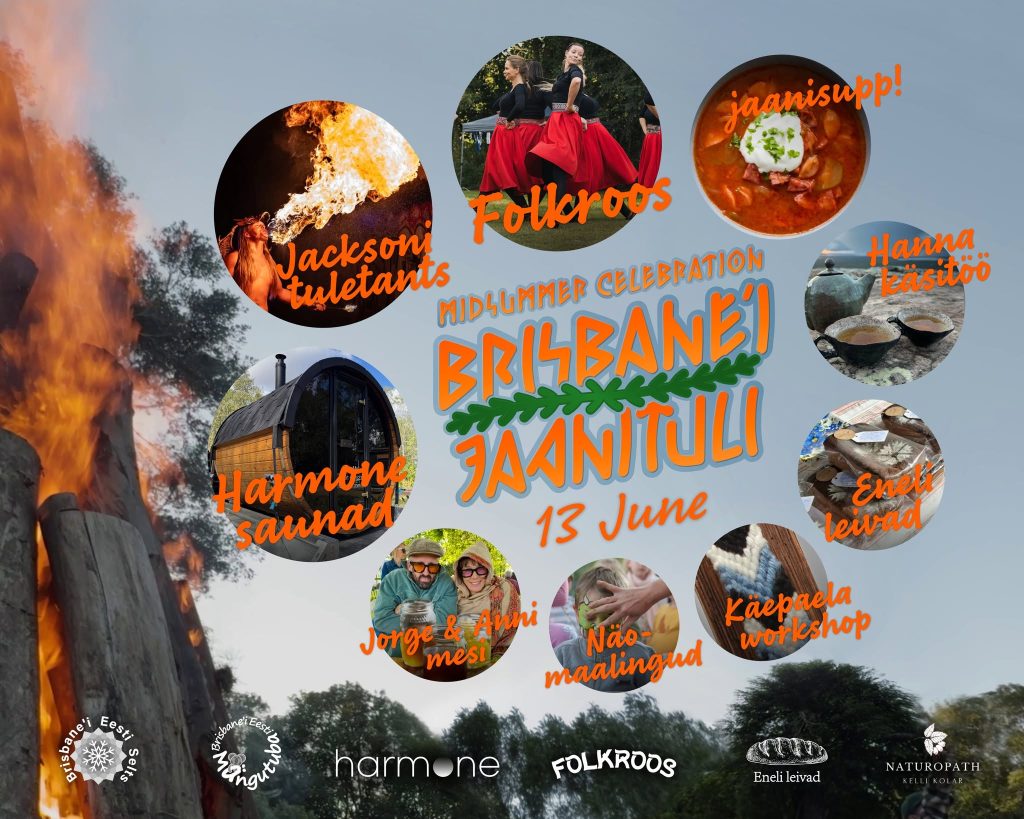

Poster by Andres Truus. Source: Brisbane Estonian Society.

BRISBANE: where the bonfire comes with fire dancing and sauna

Brisbane’s Estonian Midsummer Celebration kicks off the national jaanipäev season on Saturday, 13 June 2026. This year’s celebration is shaping up to be one of the most diverse yet. Alongside the traditional bonfire, a fire dancer performance, folk dancing by Folkroos, sauna, tug-of-war competitions, lawn games, friendship bracelet workshops, children’s activities and face painting.

📅 Date: Saturday, 13 June 2026
🕚 Time: 1pm
📍Location: Byrnes Road North, Joyner QLD
🎟 Tickets: Trybooking
🍽 Entry: Adults $40 (Early bird $30 until 10 June), children (under 16) and pensioners free, campting $20, sauna (ticketed on-site)
📖 Event information: Facebook

There will also be local makers and community members sharing their talents, including handmade crafts, rye bread, honey and other treats. Feeling brave? Visit the beekeeper-composer. Curious? Chat with the naturopath. Feeling chilly? Head straight for the Harmone barrel sauna.

Add jaanisupp (midsummer soup), Estonian drinks, music, and you’ve got the sort of event where people arrive for an afternoon and somehow find themselves chatting around the fire until early morning.

Piece of advice from the organisers: Bring along a camp chair, a picnic blanket and a torch — your future self will thank you.


Source: Jāņi Tērvetē | Winter Solstice in Tervete Trybooking.

MELBOURNE: where winter solstice comes with mulled wine

Melbourne joins the midsummer celebrations on 20 June at Tērvete, organised by our Latvian friends in the beautiful Victorian countryside.

📅 Date: Saturday, 20 June 2026
🕚 Time: 11am
📍Location: Tērvete, 301 Old Kilmore–Lancefield Road, Springfield VIC 3434
🎟 Entry: Free
🍽 Lunch: Adults $30 | Children $10 (hot dog and dessert)
📖 Event information: Trybooking (photos/article from 2025 here)

Visitors can enjoy a bonfire, games for children and adults, traditional wreath-making (bring your own flowers), great food, coffee and dessert, mulled wine and a raffle.

Let’s pause briefly to appreciate the fact that mulled wine is perhaps the most Australian adaptation of midsummer traditions. In Estonia, midsummer is celebrated in warmth and endless daylight. In Victoria, midsummer requires a jacket, a scarf and a beverage capable of reheating your soul.

For those wanting the full midsummer experience, overnight stays are also available by arrangement (call 0417561703 or email hpacers@outlook.com).

Piece of advice from the organisers: Pre-order your meals and bring cash for drinks. Future-you, standing in front of a plate of delicious food, will be grateful.
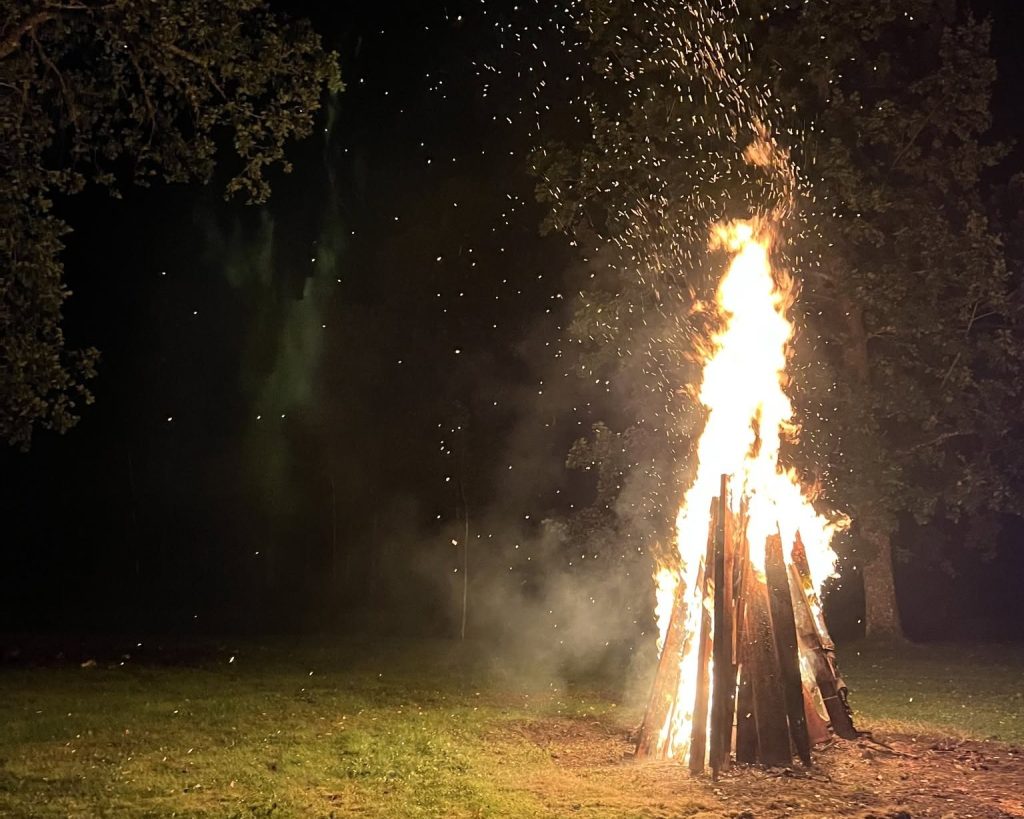

Source: Estonian Midsummer Celebration 2026 Perth Trybooking.

PERTH: the closest thing to Estonia without the airfare, they say

Perth’s celebration heads to Quarry Farm on Saturday 20 June. The great midsummer ingredients are all there: bonfire, sauna, traditional games, Estonian music, camping and a menu that reads like a nostalgic wish list.

📅 Date: Saturday, 20 June 2026
🕚 Time: 2pm
📍Location: Quarry Farm, 1475 South Western Highway, Whitby WA 6123
🎟 Tickets: Trybooking
🍽 Entry: Adults $35 | Kids 2-16 years $15 | Camping $25
📖 Event information: Facebook (read about Perth jaanipäev 2025)

Expect grilled meat, potato salad, roasted potatoes, seljanka (meat soup), rye bread, cinnamon rolls and other homemade treats. A DJ will keep the Estonian hits flowing while children enjoy activities throughout the afternoon and evening.

Family and friends welcome, including those who’ve never attempted to pronounce jaanituli (bonfire).

Piece of advice from the organisers: Consider camping — one bonfire is good, but a bonfire under the stars is even better.
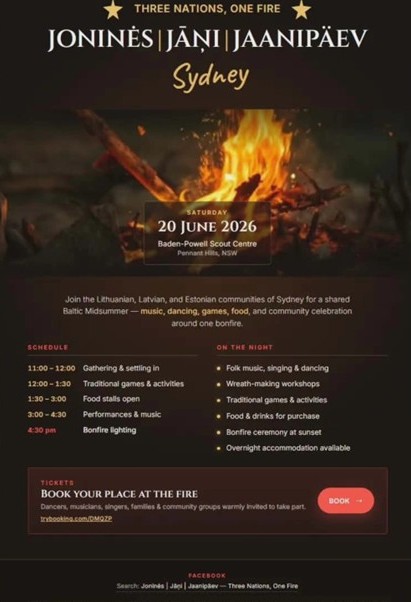

Source: Three Nations, One Fire Trybooking.

Sydney: three nations, one fire

Sydney’s midsummer celebration brings together Estonian, Latvian and Lithuanian communities. Because one Baltic nation around a bonfire is lovely. Three friendly Baltic nations around a bonfire is even better. As the saying goes: the more, the merrier.

📅 Date: Saturday, 20 June 2026
🕚 Time: 11am
📍Location: Baden Powell Scout Centre, Pennant Hills, NSW 2120
🎟 Tickets: Trybooking
🍽 Entry: Members $5 | Non-members $10 | Kids 2-16 years $15 | Camping $16 | Bunk bed $50
📖 Event information: Facebook

The day features a bonfire, traditional games, performances, music, dancing, food stalls and plenty of opportunities to experience the traditions of all three Baltic nations.

Piece of advice from the organisers: Why rush home? Overnight accommodation is available for those wishing to maximise their midsummer experience.
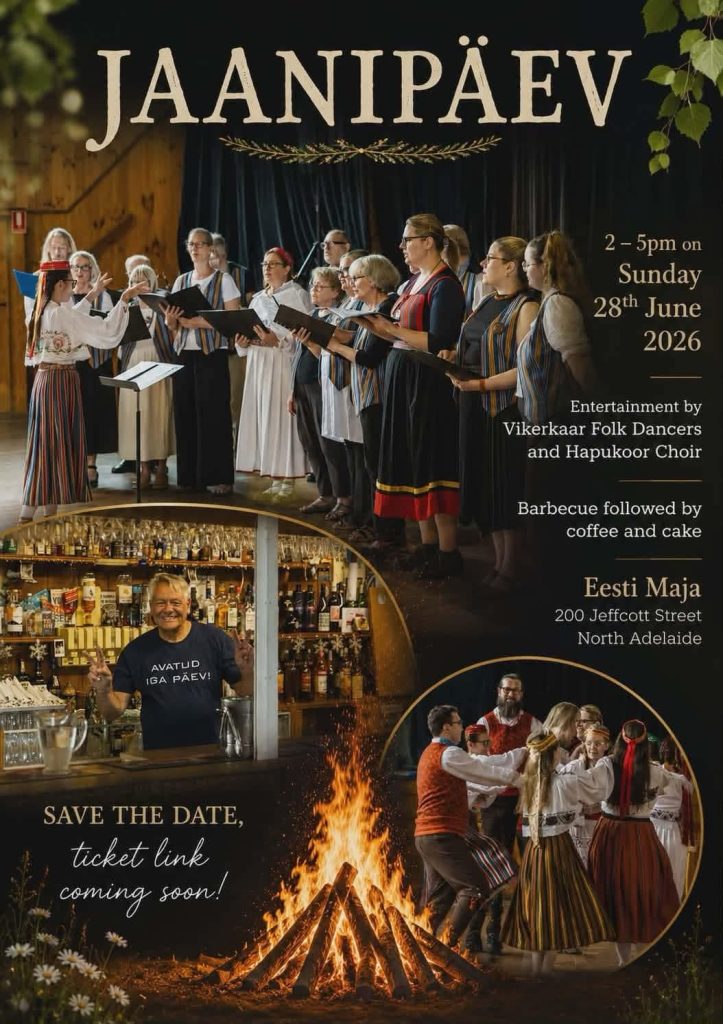

Source: Eestlased Adelaides Facebook page.

Adelaide: dance, song and coffee afterwards

Adelaide wraps up the national midsummer season with a relaxed community gathering on Sunday, 28 June.

📅 Date: Sunday, 28 June 2026
🕚 Time: 2pm
📍Location: Estonian House, 200 Jeffcott Street, North Adelaide SA 5006
🎟 Tickets: Details coming soon (we’ll add them here)
🍽 Entry: Details coming soon
📖 Event information: Facebook

Entertainment will be provided by the Vikerkaar folk dancers and Hapukoor choir, followed by a barbecue, coffee and cake. Adelaide’s celebration promises music, friendship, good food and good company. The bar will be open, of course.

Piece of advice from the organisers: Pencil it into your calendar now; ticket details are coming soon.


The midsummer magic

Every community celebrates jaanipäev a little differently. Some add fire dancers. Some add saunas. Some invite neighbouring Baltic nations. Some focus on music, dance and cake. All of them gather around a fire and continue traditions that have travelled thousands of kilometres from Estonia to Australia.

Perhaps that’s the real magic of jaanipäev. Not the fern flower. Not the bonfire jumping. It’s the fact that every year, no matter where they live, Estonians somehow find each other again around a fire.


Disclaimer

HEIA cannot guarantee sightings of the legendary fern flower. Success rates remain frustratingly difficult to verify. 🌿😄🔥


Is your event missing?

We’d love to know about it. If you’re organising a midsummer celebration anywhere in Australia and it’s not listed here, please email us at news@eesti.org.au. No bonfire left behind.
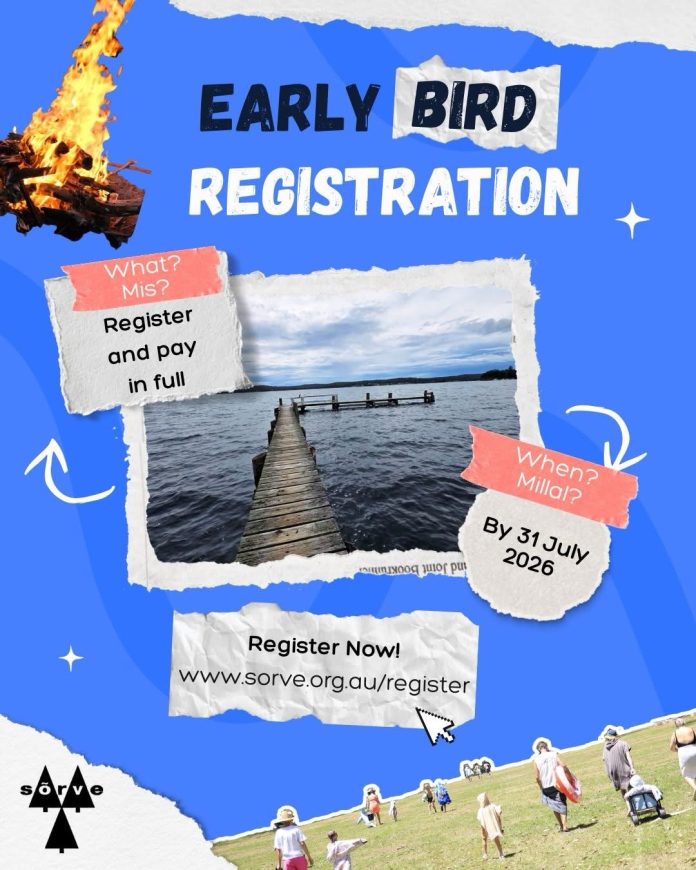
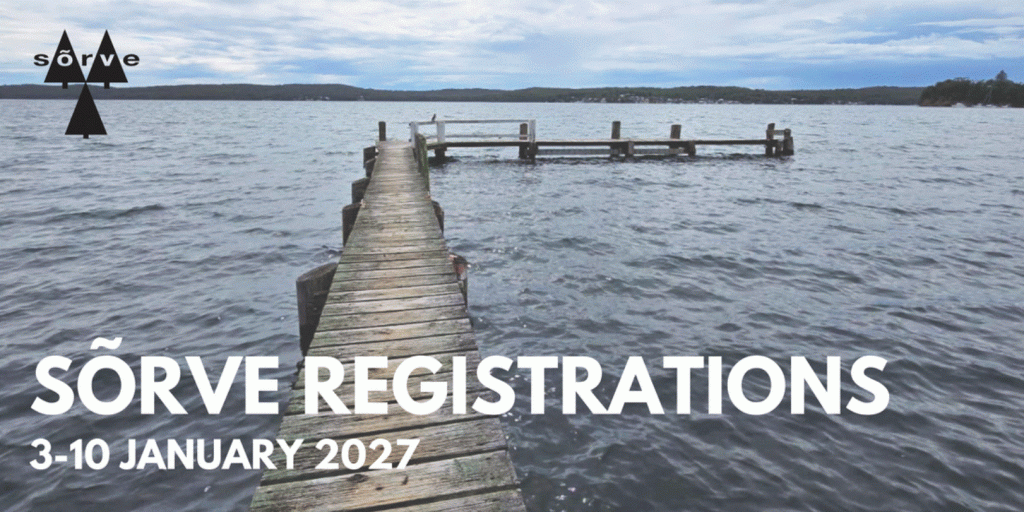
Get in early: Sõrve 2027 registrations now open

0
Source: Sõrve Summer Camp.

Thinking about summer already? Registrations for popular Sõrve Summer Camp 2027 are now open, with early bird pricing available for those who register and pay by 31 July 2026. Sõrve Summer Camp will run from 3–10 January 2027.

What is Sõrve?

For over 70 years, Sõrve has been a summer highlight for generations of Estonian Australians. The camp brings together families from across the country for a week of friendship, culture, sport, games and shared experiences, while helping children and young people connect with Estonian language, traditions and community.

The 2027 camp will take place at the Point Wolstoncroft Sport and Recreation Centre in Gwandalan, New South Wales. Nestled on the shores of Lake Macquarie and surrounded by beautiful bushland, it’s a fitting backdrop for a week of adventure, connection and lifelong memories.

Read about the camp and see photos: here

Early bird pricing

Fees are published here. Two registration periods are available:

Early Bird: 1 June – 31 July 2026
Full Fee: 1 August – 30 November 2026

Please note that registrations must be both submitted and paid by 31 July 2026 to receive the early bird rate.

Financial support available

The Hans Ots Award is available to assist interstate and regional families with travel expenses, as well as provide financial support for children on a case-by-case basis. Additional discounts are available for first-time children attending Sõrve and families registering three or more children.

Read more about financial support: here

Important dates

📅 Registrations open: 1 June 2026
📅 Early Bird closes: 31 July 2026
📅 Registrations close: 1 December 2026
📅 Camp dates: 3–10 January 2027

Registration forms

Sõrve 2027 – Full Time Registration
Sõrve 2027 – Part Time Registration

For all registration forms, fee information, cancellation policies and further details, visit:
🔗 www.sorve.org.au/register

Questions?

Contact: admin@sorve.org.au
Sõrve Summer Camp website
Sõrve Summer Camp Facebook page

Source: Sõrve Summer Camp.

Baltic deportations commemorations to be held across Australia

0
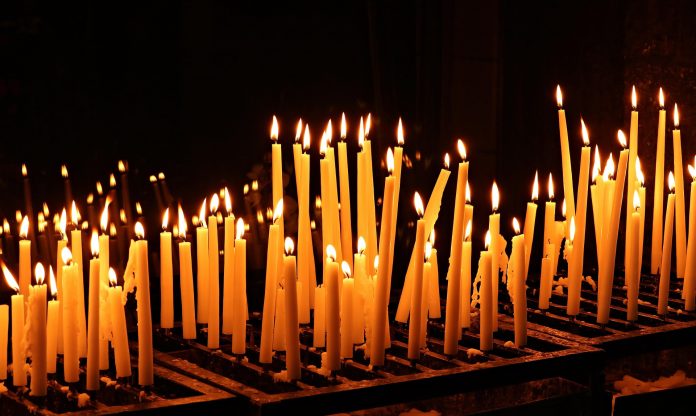
Image by NoName_13 from Pixabay.

This June, Baltic communities across Australia will come together to remember one of the darkest chapters in Estonian, Latvian and Lithuanian history. Public commemorations will be held in Adelaide, Canberra, Melbourne and Sydney, and all are welcome to attend.

In June 1941, tens of thousands of people from Estonia, Latvia and Lithuania were forcibly removed from their homes by Soviet authorities and deported to Siberia and other remote regions of the Soviet Union. Families were separated, communities disrupted and lives forever changed.

More than eight decades later, these annual commemorations continue to honour those who suffered, preserve historical memory and remind us of the importance of freedom, human rights and democracy.


Adelaide

📅 Saturday, 13 June 2026
🕑 2.00 pm
📍 Migration Museum, 82 Kintore Avenue, Adelaide SA 5000
🎟️ Free entry

The South Australian Baltic community will gather at the Migration Museum for a wreath-laying ceremony in remembrance of those who suffered and perished during the deportations. Members of the mixed choir will also perform several songs as part of the commemorative program.

Source: The Latvian Association of South Adelaide.

Canberra

📅 Sunday, 14 June 2026
🕛 12.00 pm
📍 Polish White Eagle Club, 38 David Street, Turner ACT 2612
🎟️ Free entry

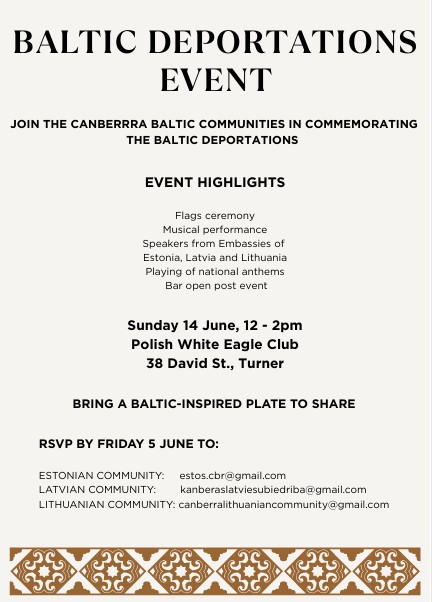
The Canberra Baltic communities invite members of the public to join a commemorative gathering featuring a flag ceremony, musical performances, speakers from the Estonian, Latvian and Lithuanian embassies, and the playing of the three national anthems.

Guests are invited to bring a Baltic-inspired plate to share, and the club bar will be open following the ceremony.

Please RSVP by 5 June via email to: estos.cbr@gmail.com

Source: Personal collection of Denis Bowler.

Melbourne

📅 Sunday, 14 June 2026
🕑 2.00 pm
📍 Melbourne Latvian Evangelical Lutheran Church, 40 Warrigal Road, Surrey Hills VIC 3127
🎟️ Free entry

Melbourne’s commemoration will include speeches, flag bearers from the Baltic communities and musical performances by choirs, including the Estonian women’s choir Kodu Kaja. The ceremony will be conducted in English and will be followed by a reception.

Source: Personal collection of Hilja Toom.

Sydney

📅 Sunday, 14 June 2026
🕑 2.00 pm
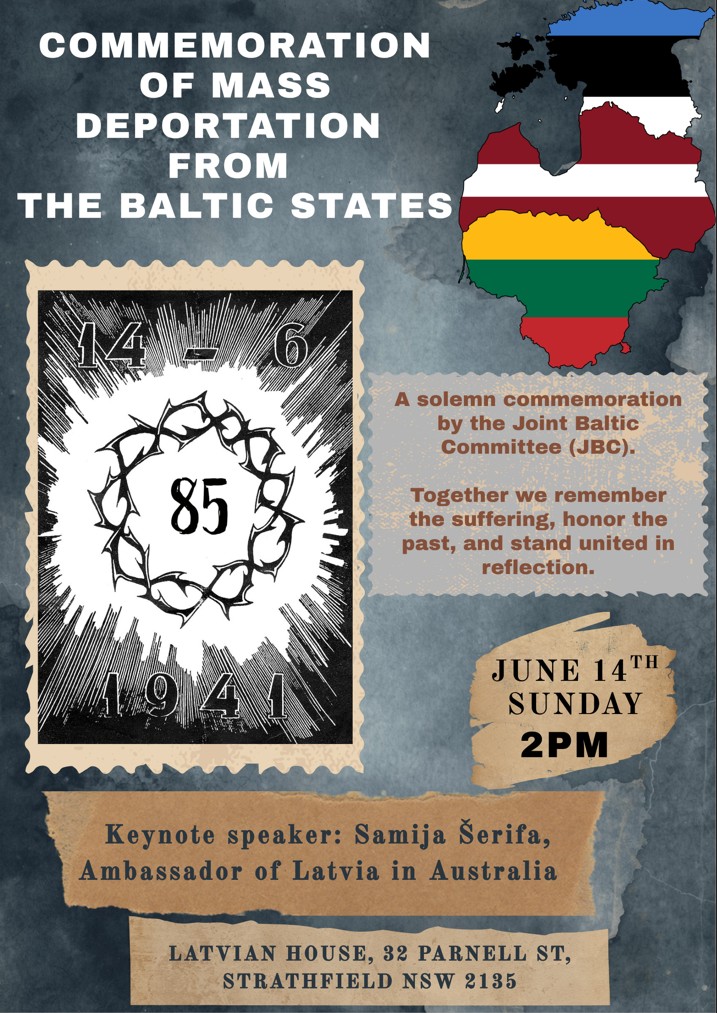
📍 Latvian House, 32 Parnell Street, Strathfield NSW 2135
🎟️ Free entry

The Joint Baltic Committee (JBC) will host Sydney’s annual Baltic Deportation Commemoration. The event will bring together members of the Estonian, Latvian and Lithuanian communities to remember those affected by the deportations and reflect on their impact. The keynote speaker will be Samija Serifa, Ambassador of Latvia to Australia.

Source: Estonian Society in Sydney.

Remembering together

While these events commemorate a tragic chapter in our history, they are also about resilience, remembrance and hope. They remind us how precious freedom is — and why we should never take it for granted.

Read more

Estonia’s Victims of Communism 1940–1991

Thank you!

Thank you to: Denis Bowler, Hilja Toom, Allan Johanson and Ave Nukki for information.

Donation appeal – support the digitisation of rare migrant ship newsletters

0
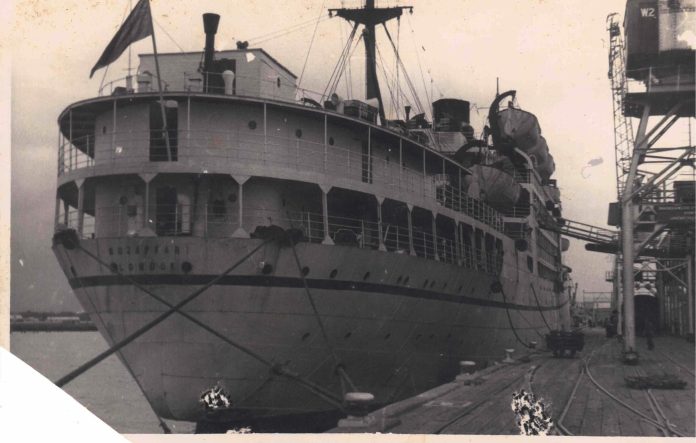
Ship "Mozaffari" at Fremantle, 1949. Source: Estonian Archives in Australia.

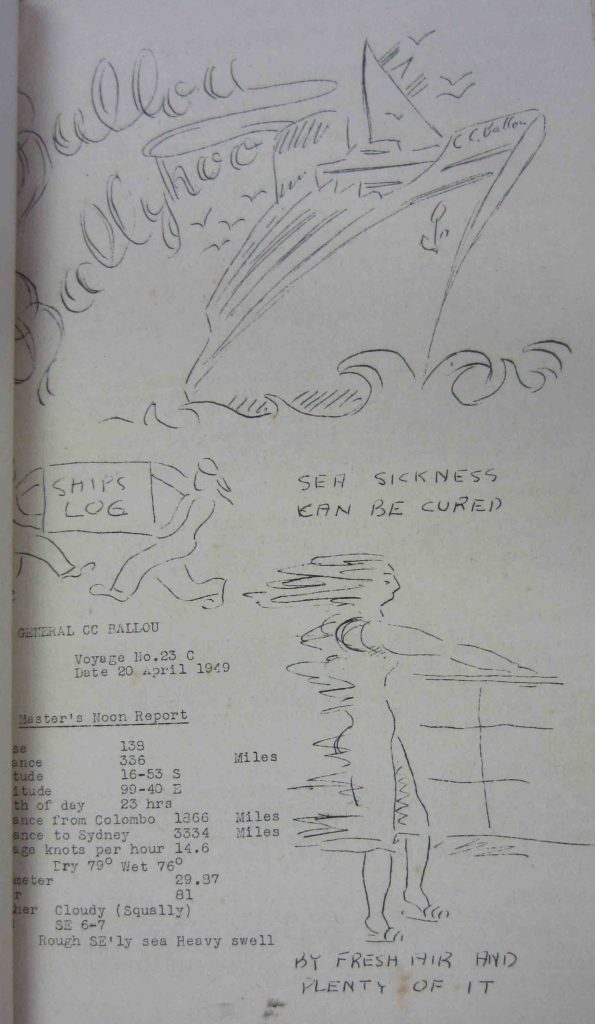
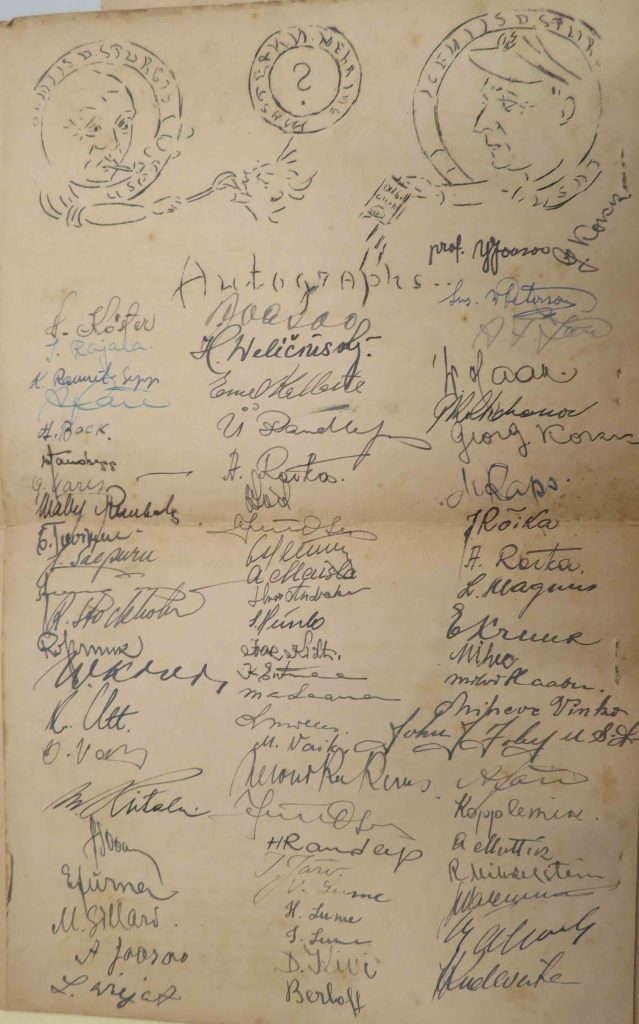
The Estonian Archives in Australia has a collection of newsletters from Displaced Persons (DP) ships sailing to Australia. Many of these newsletters are rare and fragile — small pieces of the migrant journey to Australia — a program to digitise and preserve them is underway. The archive is appealing for donations to help finance the project.

Since the newsletters are delicate and often not produced on standard A4 paper sizes, they require professional care and handling during digitisation. Would you consider supporting this project with a donation?

A glimpse into the migrant journey

Displaced Persons (DPs) sailing to Australia from war-torn Europe arrived in a series of ships. Some carried a dozen or so Estonians. Others carried hundreds.

Newsletters produced by ships’ crews and passengers reflected the long voyage from Europe to Australia via the Suez Canal, the Red Sea and the Indian Ocean. Some publications were simple collections of news and updates for travellers. Others included cartoons, commentary and pieces written by passengers themselves.

Newsletter from the “General Ballou”: “Seasickness Can Be Cured”. Source: Estonian Archives in Australia.

Most newsletters were produced in English or German, although some included Estonian, Latvian and Lithuanian sections. They were printed on board using Gestetner ink duplicators — something many older readers may remember from the days before photocopiers and computer printers.

When the General Stewart arrived in Fremantle on 12 February 1948, there were over 30 Estonians aboard. Sydney received the General Ballou on 29 April 1949, carrying over 60 Estonians. Many other ships followed. Perhaps your own family arrived on one of these migrant ships.

Support the project

The archive aims to raise $1,000 to support the digitisation project.

Donations of $2 and over are tax deductible.

If you would like to support the project, please use the following bank details to make your donation:

Bank details

BSB 062-016
Account 11651110
Account name: Kris Kaldma Fund
Reference: Your name

Thank you!

About the Estonian Archives in Australia

The Estonian Archives in Australia (EAA) was established by the Council of Estonian Societies in Australia in 1952. It is one of several Estonian Archives operating outside Estonia and holds an important collection documenting the lives and achievements of Estonians abroad.

Read more

Estonian Archives in Australia

Autographs page from the “General Sturgis” newsletter, May 1948. Source: Estonian Archives in Australia.

Estonia’s roads are getting self-driving cars. What could possibly go wrong?

0
Image by Ooceey from Pixabay.

Just when we got used to robot couriers trundling around Estonian footpaths, Estonia has taken another step into the future — becoming one of the first countries in Europe to allow self-driving systems on public roads.

If you’ve ever visited Estonia and watched a cute delivery robot confidently navigate a street crossing while not quite believing your own eyes, here’s your next glimpse of the future.

Estonia has become the third European Union country to allow cars equipped with self-driving systems on its roads, following the Netherlands and Lithuania. According to Estonian public broadcaster ERR, drivers of newer Tesla vehicles may be able to install self-driving software updates within the coming months.

Before anyone writes to us: no, we’re not endorsing self-driving cars, sleeping behind the wheel, or attempting a Tallinn-to-Tartu road trip while knitting a scarf. We are simply observing, with equal parts fascination and raised eyebrows, that Estonia once again appears to be at the front of the queue when it comes to embracing new technology.

The important detail is that these are not fully autonomous vehicles. Under current rules, a driver must still be behind the wheel and remains legally responsible for the vehicle at all times. According to Estonia’s Transport Administration, the system is considered a driver-assistance technology rather than a replacement for the driver.

In practice, that creates an interesting partnership. The car helps drive, while also keeping an eye on whether the human is paying attention. Tesla’s system reportedly monitors driver engagement and issues alerts if the driver appears distracted or focused on something other than traffic.

Which, naturally, raises all sorts of fascinating questions.

Some readers will immediately wonder about safety. Others may be curious about privacy, data collection, insurance, liability and what exactly happens when a vehicle is simultaneously driving itself and supervising its human. According to legal experts interviewed by ERR, these are precisely the sorts of questions lawmakers will increasingly need to tackle as automated driving technology becomes more common.

Technology journalist Kuldar Kullasepp, who tested a self-driving Tesla in Finland, described the experience as almost uneventful — perhaps the highest compliment a car can receive. He said the vehicle handled conditions smoothly and that the journey occasionally became “boring”, which is presumably better than “terrifying”.

Supporters also argue that automated systems could improve road safety and driving behaviour by eliminating some of the human habits that make traffic frustrating. Skeptics, meanwhile, are likely to keep both hands firmly on the steering wheel and one eyebrow permanently raised.

Either way, it is happening.

So if you’re driving in Estonia in the near future and notice a Tesla beside you looking suspiciously self-confident — don’t panic. The driver is still supposed to be keeping their eyes on the road. At least that’s the plan.

Read more: Estonia becomes third EU country to allow self-driving cars on its roads (ERR).

ECFA grants: 2026-27 funding available for Estonian cultural projects in Australia

0

The Estonian Cultural Foundation in Australia (ECFA) is inviting applications for grants funding for the 2026-27 financial year.

Whether you’re an individual or an organisation, if you have a project that promotes Estonian culture or benefits the Estonian community in Australia, Estonian Cultural Foundation of Australia can support your activity by providing a financial grant.

In the past, we have supported language classes, literary and film projects, arts and crafts activities, children’s camps, choirs, folk-dancers, history and archives projects, touring artists and community events. Projects must align with ECFA’s mission to promote Estonian-origin arts and culture in Australia. Applications are welcome from all Australian states and territories, and projects can be national or local in their focus.

Our total funding pool for 2026-27 is around $30,000. Projects may receive full or partial funding from this pool, depending on merit, the number of successful applications, and at the discretion of the ECFA Board. In 2025–26, $38,000 in grants was distributed across the country.

How to apply

Application forms for a 2026-27 grant will be available from 1 June 2026 on the ECFA website at ecfa.eesti.org.au. Completed applications must be submitted online by midnight 30 June 2026 AEST. Extensions beyond this deadline will not be granted.

What to provide

The application form will ask you to provide information including:

  • your name and organisation
  • contact details and details on the project leader
  • a detailed project description
  • a detailed budget, showing all proposed sources of revenue for the project and major areas of expenditure
  • the amount of ECFA funding requested for 2026-27 and what it will be used for
  • key people involved with the project, including project team members, office holders, and whether volunteers and paid staff will be involved
  • a program of activities, implementation timetable, and key milestone dates
  • goals of the project and how success will be measured

Additional or supplementary information on the proposed project or activity is always welcome.

All applications must be in English and submitted via the online form. The funding we offer is for 2026-27 only and must be acquitted by 30 June 2027. Past recipients of ECFA funding may reapply for funding in 2026-27, but need to submit a new application for this current funding round.

What happens if I am successful?

All applicants will be advised of the outcome of their application in the early part of August 2026.

If you are successful, then we will discuss the transfer of the grant funds into the relevant bank account. You will be required to:

  • submit an annual report detailing project outcomes and acquitting expenditure by 30 June 2027
  • acknowledge ECFA’s support on any promotional materials, websites and in social media reports on the project
  • provide photos and a short article upon project completion for ECFA’s promotional use

Interested in more information?

If you want more information on the forthcoming funding round, please send an email to ecfa@eesti.org.au using the subject line: ECFA Grants – seeking more information. We will respond to your inquiry as quickly as we can. If you would like to talk on the phone or by video, please provide contact details and a member of the ECFA Board will get back to you. But bear in mind the cut-off date for applications, and the risk that last-minute inquiries may not be responded to.

Summary of what to do next

1. To apply for a grant, complete the application form available from the ECFA website at ecfa.eesti.org.au, or directly using the online form: Apply Now


2. To ask questions about ECFA grants in general, or the 2026-27 funding round in particular, send an email with the subject line: ECFA Grants – seeking more information to: ecfa@eesti.org.au


3. Complete the online application form, with any supporting information emailed to ecfa@eesti.org.au by midnight 30 June 2026 AEST.


Applicants will be notified of the outcome of their application in the first part of August 2026.

Good luck!

Lembit Suur
Chair of the Estonian Cultural Foundation in Australia

Read more


Estonian Cultural Foundation in Australia
Grants, performances and what’s next — an ECFA update | HEIA
Estonian clown duo Piip ja Tuut touring Australia | HEIA
Mamma Lood brings Hiiumaa humour to Australian stages | HEIA
Estonian Cultural Foundation in Australia: past, present and a new board | HEIA

AESL recognises outstanding community contributors in 2026

0
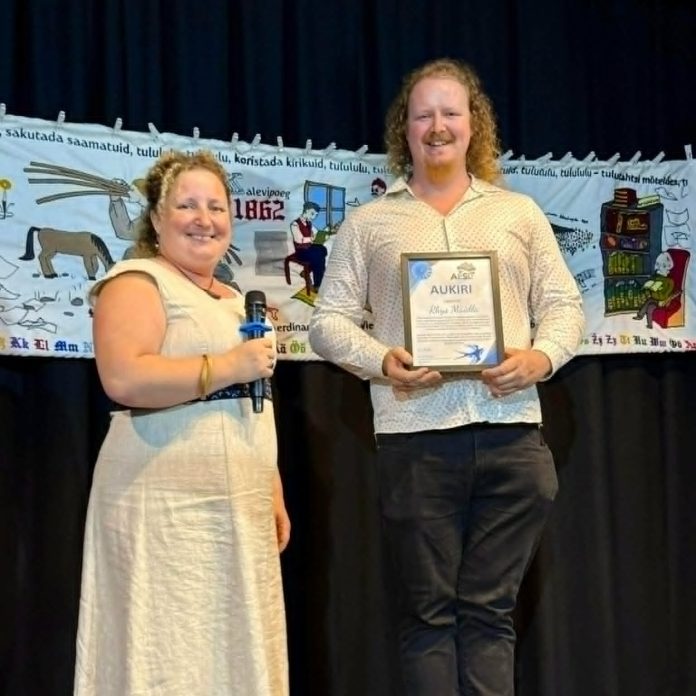
AESL president Ave Nukki and award recipient Rhys Maidla. Photo: AESL.

Each year, the Council of Estonian Societies in Australia (AESL) honours the volunteers, educators and community leaders whose dedication helps Estonian language, culture and community life thrive across Australia.

This year, AESL recognised nine outstanding community contributors. Through their work in language education, folk culture, community events, youth programs and organisational leadership, these recipients have made lasting contributions to preserving Estonian identity for future generations. Read more about each recipient and their award below.


AESL Aukiri (Certificate of Honour) Recipients

Rhys Maidla

Rhys Maidla has been a dedicated contributor to the Sydney Estonian community for more than a decade through Virmalised folk dancers and Sõrve Summer Camp. He has served in multiple leadership roles within Virmalised, including President, Vice President, committee member and dance instructor. Rhys represented the Australian-Estonian community at national festivals and internationally at Tantsupidu in 2014 and 2025, helping lead Virmalised’ participation in the 2025 celebration. He has also contributed extensively to Sõrve Summer Camp as a leader, organiser and committee member. His commitment has helped strengthen Estonian cultural identity among younger generations in Australia.

Kati Virtaal

For over 15 years, Kati Virtaal has been one of the key figures of the Brisbane Estonian Society. As President and Treasurer, she has helped unite different generations of Estonians while supporting new ideas and initiatives within the community. Kati has contributed to countless events and regularly wrote articles for Meie Kodu, keeping Estonian communities across Australia connected. She has also represented the Estonian community within broader multicultural networks in Queensland. Her warmth, leadership, and dedication have made a lasting impact on Brisbane’s Estonian community.

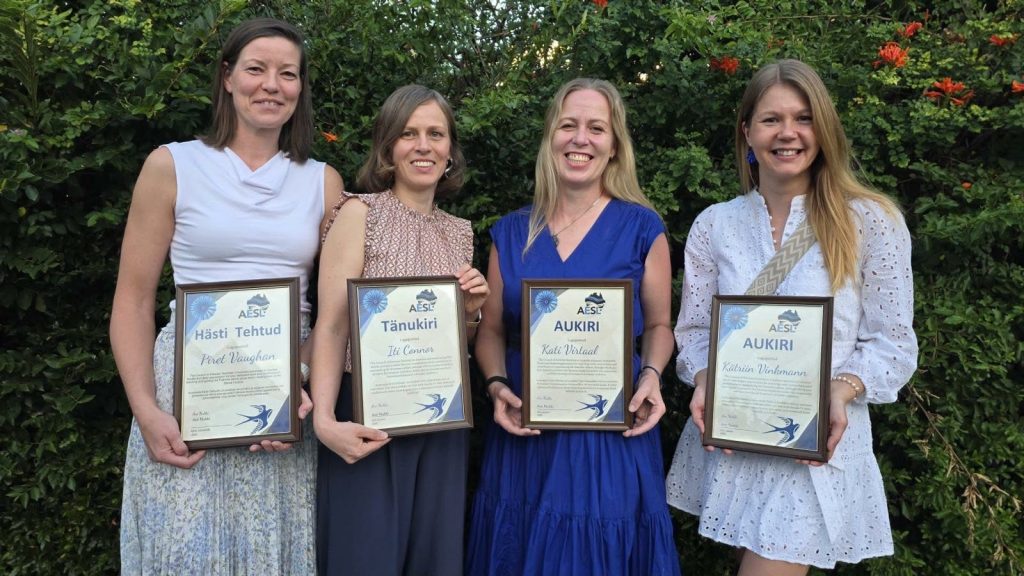
AESL award recipients Piret Vaughan, Iti Connor, Kati Virtaal and Kätriin Vinkmann. Photo: Brisbane Estonian Society.

Kätriin Vinkmann

Since arriving in Australia in 2015, Kätriin Vinkmann has played an important role in Estonian language education in Queensland. She has taught children in Brisbane and on the Gold Coast since 2016 and contributed to numerous community events and camps. Kätriin also led the Folkroos folk dance group from 2018 to 2023, guiding them to the 2019 Estonian Laulu- ja Tantsupidu. In 2025, she received recognition from Estonia’s Minister of Education and Research for her dedicated work abroad. Her contribution has helped preserve Estonian language and culture among young families in Queensland.

Kristina Toom-Berger

Kristina Toom-Berger has been a driving force within the Brisbane Estonian community for approximately 15 years. In 2013, she founded the Brisbane Estonian Playgroup, helping to create a strong foundation for Estonian-language education and family activities in the city. Together with Ingrid Hämer, she also founded the Folkroos folk dance group in 2018. Kristina has played a major role in organising community events and bringing families together through cultural activities. Her vision and initiative have had a lasting impact on Estonian life in Brisbane.

Gabrielle Mikkor

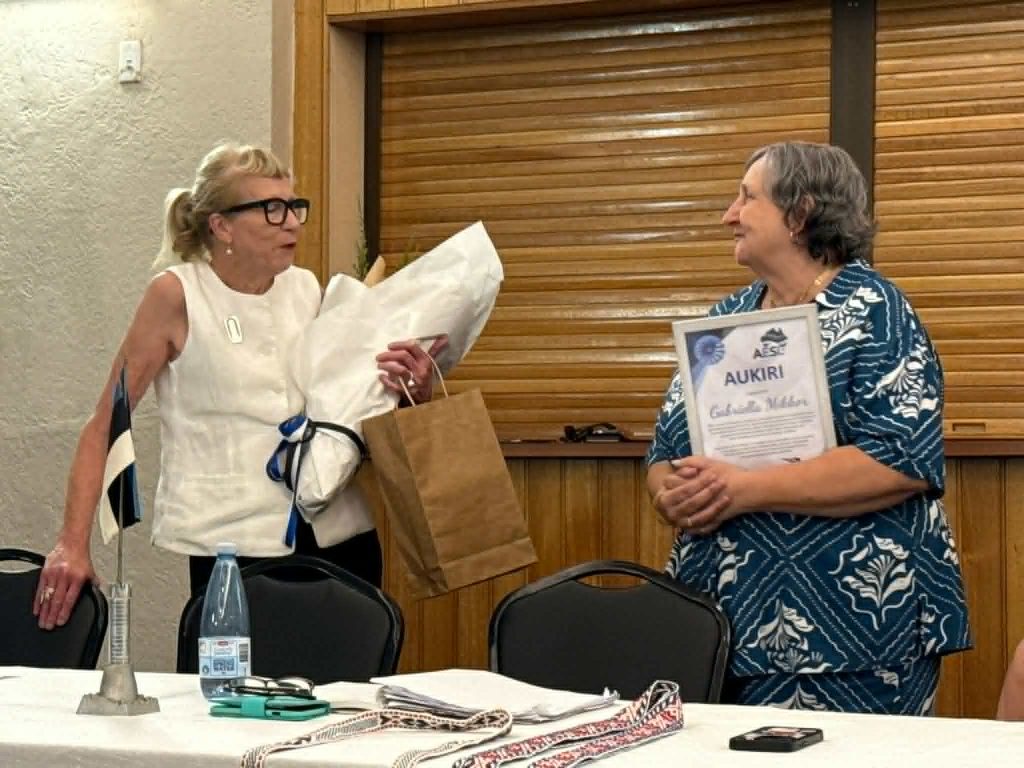
Gabrielle “Gabby” Mikkor has been an active and valued member of the Melbourne Estonian community for many years. Since joining the Melbourne Estonian Society committee in 2016, she has served in numerous leadership roles including Chairperson, Deputy Chairperson, Secretary and Deputy Treasurer. Gabby has also contributed to Eesti Päevad, the Melbourne Estonian House Co-op, craft groups, folk dancing, and the Estonian House relocation project. She is known for supporting people across generations and helping maintain an inclusive and welcoming community. Her dedication and quiet leadership have made her an invaluable part of Melbourne’s Estonian life.

Bernadette Pilli, Estonian Honorary Vice Consul in Melbourne, handing the AESL award to Gabrielle Mikkor, Melbourne Estonian House, March 2026. Photo: Kristel Alla.

AESL Tänukiri (Certificate of Appreciation) Recipients

Carmelina Kannelmäe

Carmelina Kannelmäe has dedicated many years to teaching Estonian children in Queensland through the Brisbane and Gold Coast playgroups. A qualified early childhood educator trained in Estonia, she has helped close to 100 children learn Estonian through songs, games, dance, and everyday activities. Carmelina creates a warm and encouraging environment where children feel proud of their heritage. She has also helped prepare young children for community concerts and celebrations. Her commitment has played an important role in preserving Estonian language and culture among young families.

Iti Connor

Iti Connor has been one of the central organisers of the Brisbane Estonian community since leading the Brisbane Playgroup from 2019 onwards. She has helped organise major community celebrations including Jaanituli, Christmas, Independence Day, and family events. Iti has also represented Queensland within AESL and led Australia-wide workshops for Estonian playgroup teachers. She is a passionate advocate for maintaining strong and correct Estonian language use within the community. Her dedication has significantly strengthened Estonian-language education and community life in Queensland.


AESL Hästi Tehtud (Well Done) Recognition

Siim Sipelgas

Siim Sipelgas served as President of the Brisbane Estonian Society from 2023 to 2025. During his leadership, he supported major community traditions, cultural events, the Folkroos dance group, and the Brisbane Playgroup. He played an important role in organising successful Jaanipäev celebrations and welcoming Estonian performers and visitors to Queensland. Siim encouraged new initiatives and actively supported Estonian cultural life across both Brisbane and the Gold Coast. His steady leadership and community spirit earned him this recognition.

Piret Vaughan

Piret Vaughan served as the teacher of the Folkroos folk dance group from 2023 to 2026. Under her leadership, the group successfully participated in the Estonian Song and Dance Celebration for a second time. She has motivated and guided dancers through regular rehearsals while preparing the group for future cultural goals. Piret’s dedication has strengthened both the dance group and the wider Estonian community in Queensland. Her commitment to folk dance continues to inspire the next generation of dancers.


Celebrating community

The 2026 AESL award recipients represent the strength, dedication and future of the Estonian-Australian community. Across Australia, these individuals have devoted countless hours to preserving Estonian language, culture, traditions and connection between generations. Their work ensures that Estonian identity continues to thrive far from Estonia, while remaining deeply rooted in community spirit and shared heritage.

About AESL

The Council of Estonian Societies (Austraalia Eesti Seltside Liit) in Australia is the national umbrella organisation connecting Estonian community groups across Australia. It brings together 11 member organisations and provides a national structure for coordination and communication.

Read more about what AESL does here and previous award recipients here.

Tonight: Lõunapoolkera Lugemisklubi welcomes Carolina Pihelgas

0
Photo: Kristel Alla.

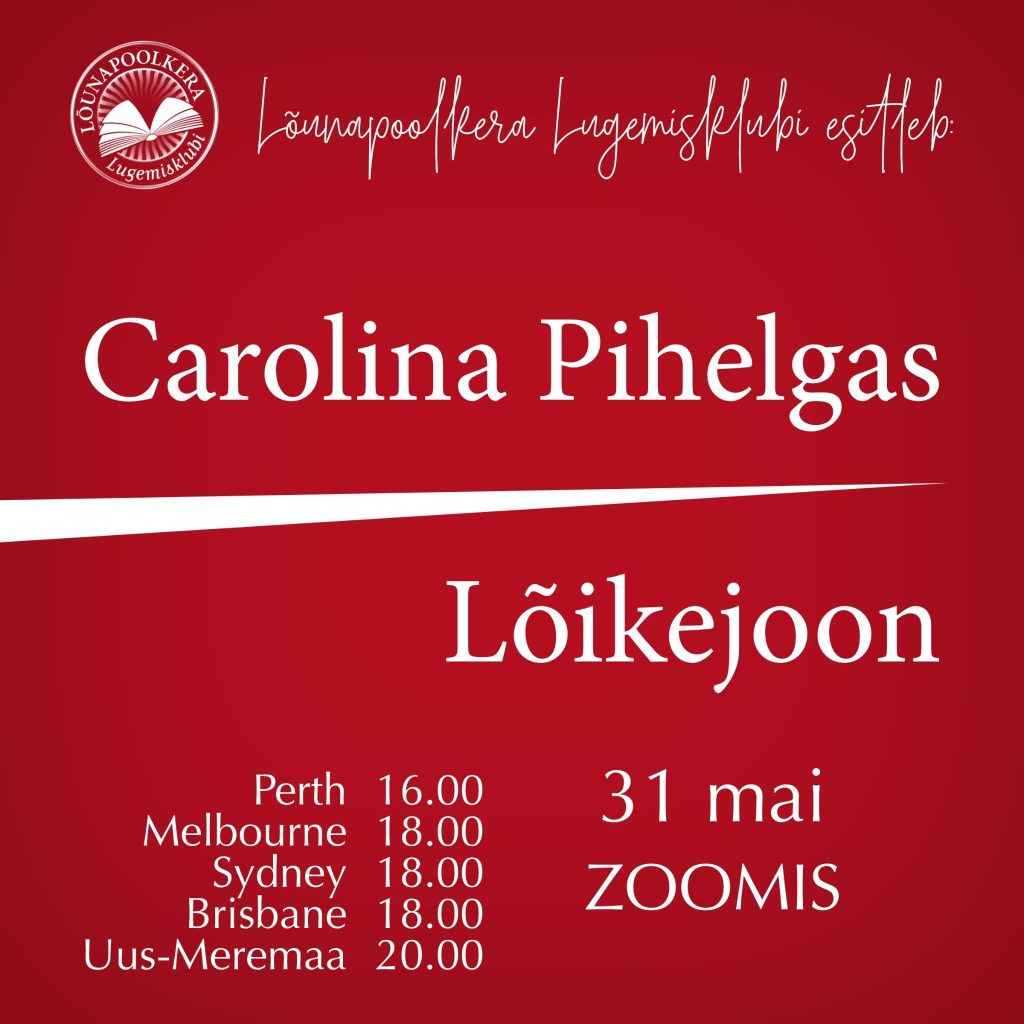
The Southern Hemisphere Book Club (Lõunapoolkera Lugemisklubi) invites you tonight to an online conversation with Estonian writer Carolina Pihelgas, who will introduce her novel Lõikejoon (The Cut Line).

Whether you’ve already read the book or are simply curious about contemporary Estonian literature, this is a rare opportunity to hear directly from the author, ask questions and join a thoughtful literary conversation.

Importantly, you don’t need to have read the book beforehand. Come as you are — curious, thoughtful, or simply in the mood for an interesting conversation.

Event information

📅 Date: Sunday, 31 May 2026
🕕 Sydney, Brisbane, Melbourne: 6.00 pm
🕓 Perth: 4.00 pm
🕗 Auckland: 8.00 pm

Please note: The conversation will be in Estonian.

📍Zoom link: here
Meeting ID: 884 7952 9749
Passcode: 702356

About the book: Lõikejoon

At the heart of “Lõikejoon” is Liine, a young woman who retreats to the countryside after leaving a long-term relationship that has become emotionally toxic. Alone in a rural farmhouse, she begins the difficult process of confronting herself — her past, her pain, and the choices that brought her there.

The emotional landscape is echoed by the physical world around her — nearby military exercises rumble in the background, threatening both the environment and a sense of safety. The result is a layered narrative where inner conflict and external tension mirror each other.

Written in poetic fragments, the novel weaves together themes of relationships and emotional boundaries, trauma and healing, solitude and self-discovery, environmental and societal unease. It is a book that doesn’t rush to resolve — instead, it sits with the complexity of being human.

Poster by Andres Truus.

About Carolina Pihelgas

Carolina Pihelgas is an Estonian writer, poet, translator and editor whose work is known for its emotional depth and poetic clarity. She first gained wide recognition as a poet, with her prose poetry collection Valgus kivi sees (The Light Within the Stone, 2019) receiving the Estonian Cultural Endowment’s annual award for best poetry book.

In 2020, she was named Tartu’s City Writer Laureate — a great recognition that reflects both her literary voice and her place within Estonia’s contemporary writing landscape.

Carolina has published seven poetry collections and moved into prose with her debut novel Vaadates ööd (Watching the Night, 2022). “Lõikejoon” (The Cut Line) is her second work of fiction — and her first work translated into English, bringing her work to a wider international readership.

Her writing often sits at the intersection of the intimate and the societal, exploring relationships, identity, and the emotional realities that shape how we move through the world. There is a quiet intensity to her work — an honesty that doesn’t try to resolve complexity too quickly, but instead allows it to be seen and felt.

Why join this conversation?

Even if you haven’t read “Lõikejoon”, this event offers something valuable:

  • a glimpse into contemporary Estonian literature,
  • insight into the creative process behind a powerful novel,
  • a chance to engage directly with the author,
  • connect with like-minded readers and be part of a literary conversation.

Or simply — an hour to pause, listen and think.

Find the book

📖 Available in Estonian and English:
In Estonian from Rahvaraamat
In English from: Apollo, Amazon, Goodreads and Booktopia

Read more

Facebook event page
Carolina Pihelgas on the Estonian Writers’ Online Dictionary
Lõunapoolkera Lugemisklubi meets Carolina Pihelgas | HEIA
Lõunapoolkera Lugemisklubi met and loved Urmas Vadi | HEIA
Southern Hemisphere Book Club leaned closer to the screens for Lilli Luuk | HEIA

Acknowledgement

This book club event is made possible thanks to the joint contribution and support of the Estonian societies of Sydney, Brisbane, Melbourne, Perth and the Gold Coast.


Rannavolle returns to the Gold Coast this Sunday

0
Source: Gold Coast Estonian Society.

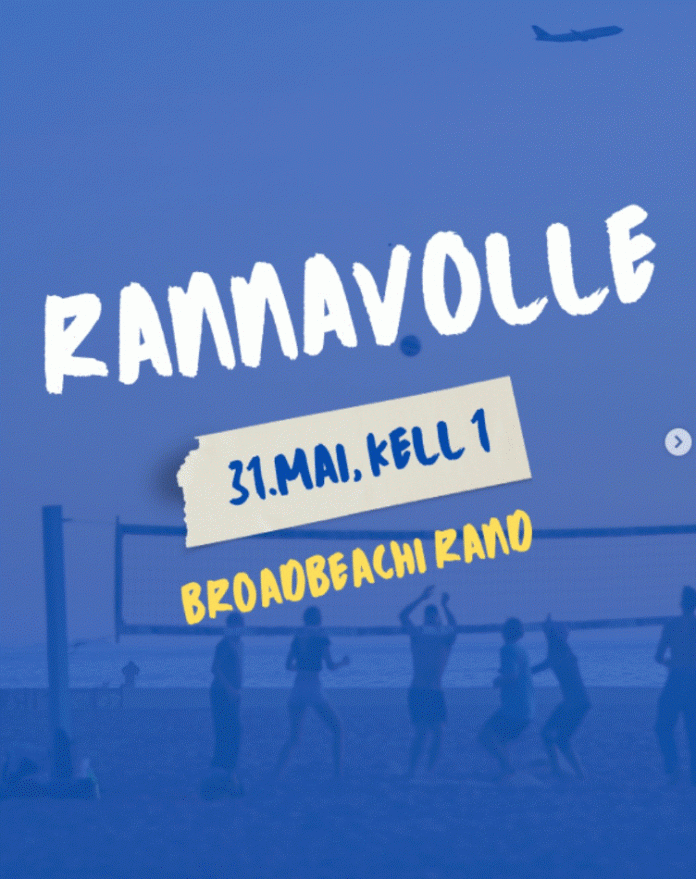
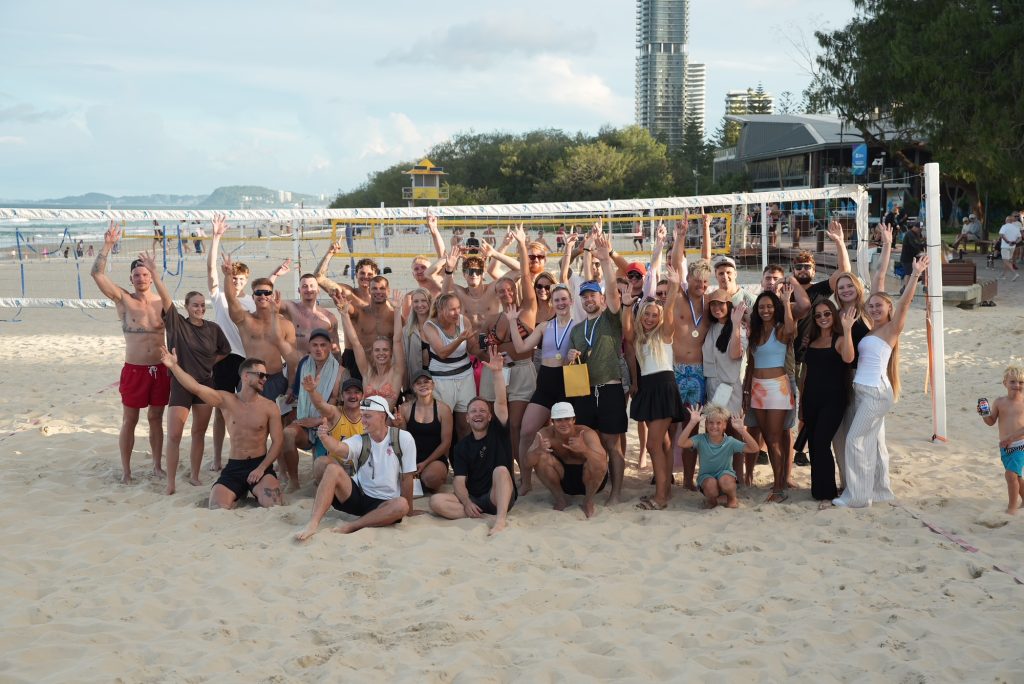
If you hear enthusiastic cheering (in Estonian!) coming from Broadbeach tomorrow afternoon, don’t worry — it’s probably just the Estonians playing beach volleyball. One of Estonia’s favourite summer sports is making another appearance on the Gold Coast, with the Gold Coast Estonian Society hosting its second rannavolle (beach volleyball) tournament of the year on Sunday, 31 May at 1pm.

And judging by what happened last time, this is going to be a lot of fun.

What’s all this about?

For the uninitiated, rannavolle is the delightfully Estonian nickname for beach volleyball. While Australians may think they invented every possible beach activity, Estonians have been enthusiastically diving into the sand and chasing volleyballs for decades. The sport is hugely popular in Estonia during summer and has produced Olympic-level athletes, beachside rivalries and countless arguments about whether that ball was actually in.

Tomorrow’s tournament will take place at Broadbeach from 1pm to 4pm, with teams playing four-versus-four matches on the sand. Organisers will create balanced teams based on skill level, meaning participants can register individually, with friends or as couples — no need to arrive with a ready-made team.

There are great prizes for the winners, Estonian music, spectators are welcome, and afterwards many participants will continue the tradition of celebrating their sporting brilliance over food and drinks at a local pub.

A look back at the first tournament

The inaugural Gold Coast rannavolle tournament in March attracted an impressive turnout, with 24 players competing across six teams and another 30 spectators cheering from the sidelines.

Teams battled it out in a round-robin format across two courts, with Estonian music providing the soundtrack and plenty of sporting spirit on display. Organisers reported a fantastic atmosphere, and participants left asking when the next tournament would be. The answer, as it turns out, is tomorrow.

Estonians playing beach volleyball, 21 March 2026, the Gold Coast. Photo by Otto Zeiger.

Ready to hit the sand?

Whether you’re an experienced volleyball player, someone who simply enjoys a good excuse to spend an afternoon at the beach, or a spectator keen to support fellow Estonians, Broadbeach is the place to be.

📅 Sunday, 31 May 2026
⏰ 1pm – 4pm
📍 Broadbeach, Gold Coast
💰 $20 participation fee
🏐 Spectators welcome

For registrations and event details, see the Gold Coast Estonian Society event page.

Learn more

Gold Coast Estonian Society: Facebook and Instagram and email: info[at]goldcoastestoniansociety.com.au

Thank you

Thank you to Elina Peedoson and the Gold Coast Estonian Society for this information and Otto Zeiger for photo/videos.

Just be warned: watching the videos below from the first tournament — beautifully captured by Otto Zeiger — may trigger an uncontrollable urge to head to the nearest beach and start practising your serve. We suggest you embrace this entirely reasonable impulse and head down to Broadbeach tomorrow for the fun and games.

Estonian roots for Aaron Pedersen on SBS?

0
Source: SBS.

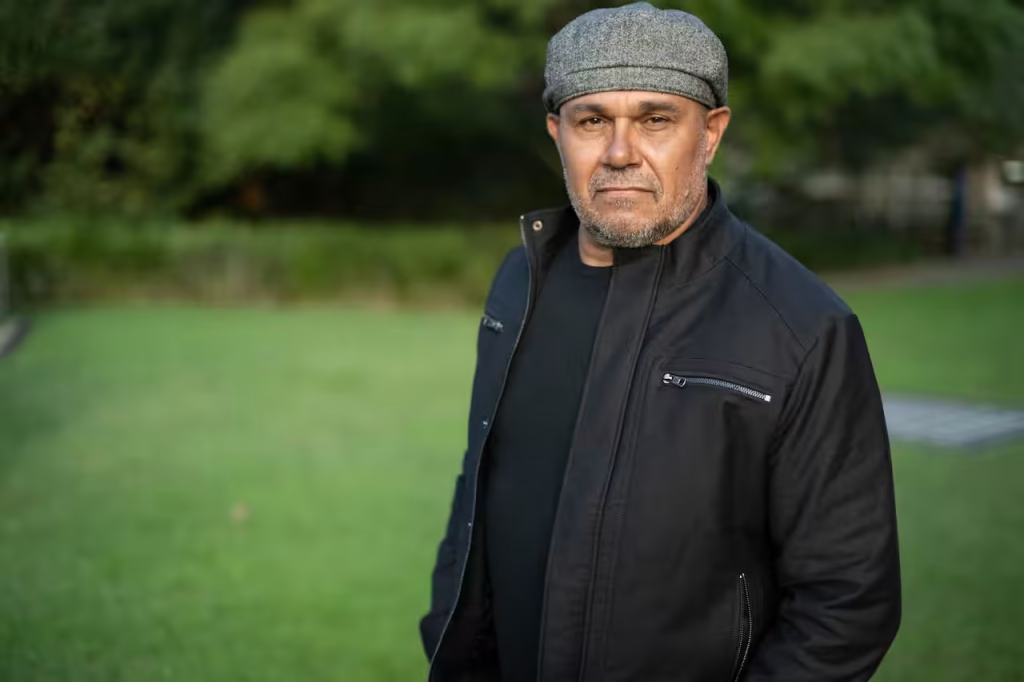
Australian actor Aaron Pedersen — known from Mystery Road, Jack Irish and every Australian television production where someone intensely stares into the distance while solving crimes — is set to uncover Estonian ancestry in an upcoming episode of SBS’s Who Do You Think You Are?

Yes. Estonia has apparently entered the storyline. And we couldn’t be more excited!

According to SBS previews, the next episode of the long-running genealogy series will follow Aaron Pedersen as he explores previously unknown family history — including Estonian heritage.

Naturally, this immediately caught the attention of the HEIA newsroom, because the words “famous Australian actor” and “Estonian ancestry” appearing in the same sentence might be less common than you think. And yet here we are.

📺 The episode is scheduled to air on SBS on Tuesday, 2 June 2026 at 7.30 pm.

UPDATE: Watch now on SBS on Demand Who Do You Think You Are? Australia – Aaron Pedersen

Aaron Pedersen. Source: SBS.

For anyone unfamiliar with the series, Who Do You Think You Are? follows well-known Australians tracing their ancestry across generations, often uncovering dramatic stories, migrations, wartime histories and long-lost family connections along the way. Occasionally there are emotional revelations. Occasionally there are old photographs. Occasionally someone discovers their ancestors survived three wars and a suspiciously complicated shipping route through Europe. And now, apparently, Estonia.

Whether the episode leads to Tallinn archives, old photographs involving serious expressions, or simply a distant family branch with matching blue-black-white jumpers remains to be seen — but we are absolutely intrigued.

The episode will also be available afterwards via SBS On Demand for those who miss the television broadcast or prefer their genealogy discoveries accompanied by buttered popcorn and the pause button.

“Finding out the truth about my family, and finally knowing where I come from, has given me a sense of peace. It’s something I’ve carried for a long time, and now I feel like I can move forward with a clearer understanding of who I am.” – Aaron Pedersen, SBS.

Watch Now

Who Do You Think You Are? Australia – Aaron Pedersen

Read more

SBS | Who Do You Think You Are? Australia
Aaron Pedersen | IMDb

Thank you

Thank you to Sirje Kiviväli and Ann Tündern-Smith for this information!

Global Estonian May 2026 newsletter: the diaspora has been busy (again)

0
Source: Global Estonian.

The latest Global Estonian May 2026 newsletter has landed, and it is not here to sit quietly in the corner. The May newsletter politely places a very full events calendar in front of you and raises one eyebrow.

The issue opens from Munich, where Kristel Kaljund reflects on why the diaspora still matters in a world where Estonia is never more than a phone scroll away. Yes, we have news feeds, video calls and social media. But shared identity, culture and community still need actual people, actual projects and occasionally — because we are Estonians — an actual committee.

Highlights you may want to mention at dinner

Because Global Estonian has once again served a generous buffet, here are a few things worth noticing:

  • NoorKunst.com is spotlighted, an online magazine for young Estonian culture in Europe. It is not just about art in the “stand in a gallery and nod wisely” sense. Noor Kunst looks at creative beginnings, studies, identity, everyday life and the slightly messy but fascinating reality of being young, creative and Estonian-adjacent in Europe.
  • From Vancouver comes a thoughtful piece about how the local Estonian community is approaching its future. This is the kind of community planning that sounds sensible on paper and emotional in practice — because behind every building, hall, camp, committee and archive box are people, families, memories and someone who definitely remembers where the old photo albums are stored.
  • Global Estonian is now on Instagram, because even the diaspora must eventually make peace with the square photo.
  • The Estonian Youth Film Series in Munich is launching with a Midsummer celebration by the Isar, bringing young Estonians and friends of Estonia together through film, music and cultural outreach.
  • Kiirstin Marilyn Kuhi, a New York-based singer-songwriter, shares a powerful story of reconnecting with her Estonian voice and family story through music.
  • Estonian Sports Association Kalev is celebrating 125 years of connecting Estonia through sport, movement and community.
  • Eesti.ai gets a feature too, with Estonia exploring how artificial intelligence can become part of everyday work, public services and economic life. Naturally, Estonia looked at AI and thought: “Yes, but can we make it practical, efficient and mildly world-leading?”

Your “Australia, hi”

Australian readers may notice one very familiar listing in the events section: The Last Hurrah: Melbourne Estonian House, held from 22–24 May 2026 in Melbourne. A final weekend of gathering, remembering, dancing, singing, eating, laughing and gently pretending not to get emotional — in other words, an Estonian community farewell done properly.

Ready for the full scroll?

Eesti keeles: Global Estonian uudiskiri mai 2026
In English: Global Estonian nwsletter May 2026