Monday, May 4, 2026
13.2 C
Canberra
10.6 C
Tallinn

Reviving the Estonian Section at Rookwood Cemetery

0
estonian-rookwood-garden-revitalisation

Join Lachlan Bell in his mission to restore and revitalise the Estonian niche wall section at Rookwood Cemetery. Following an exhibition held at Rookwood in 2023, this project will to bring life back into the site by helping preserve Rookwood’s natural heritage whilst honouring the memory of our relatives by creating a sanctuary that celebrates the unique flora of the Cumberland Plains ecosystem. The project seeks to remediate the site through the addition of endemic species as well as new gravel, native-friendly soil, and tools for the project’s success that will allow visitors to tend to the garden as well as clean the site which extends into the grave plots.

To assist in reaching this goal, a fundraiser on GoFundMe has been set up with a goal of $1500 (with any additional monies going to the volunteers at Rookwood).

You can visit it here: https://www.gofundme.com/f/rookwood-estonian-cemetery-garden-talgud-aka-do-up-good

For those who may not be able to financially contribute, you can participate by attending a talgud (an Estonian-style working bee) on Saturday, 15th June, from 10 am onwards, to remediate the soil, polish the plaques, clean the bricks, get involved in planting, and tidy the site. If you wish to attend, please come with a hat, gardening gloves, water bottles and mosquito repellent.

For donors contributing over $100, you will receive a signed, unframed illustrated print by Lachlan, featuring the flora to be planted at Rookwood.

Your donations will directly support the purchase of native plants from Western Sydney Bush Native Nursery, essential materials, and tools for the project’s success. Let’s come together to create a beautiful and sustainable garden, preserving Rookwood’s heritage and supporting the community.

Adelaide Consular Mission – 10th June 2024

0
Estonian Passport

The Consular Mission to Adelaide will take place on Monday, 10 June 2024. If you wish to apply for new documents, please book an appointment on the following link:

https://canberra.mfa.ee/en/consular-mission-to-adelaide/

Why I donated towards the Mass Flight Memorial – Esmée’s Story

0
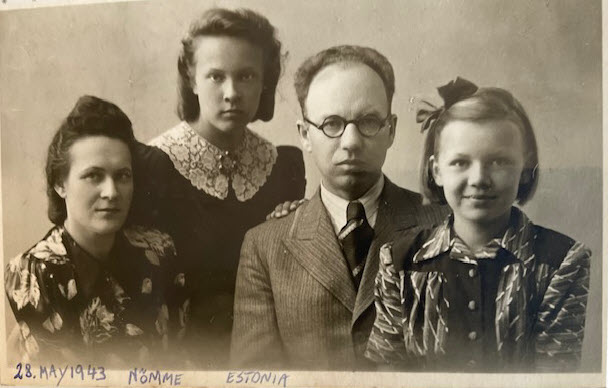
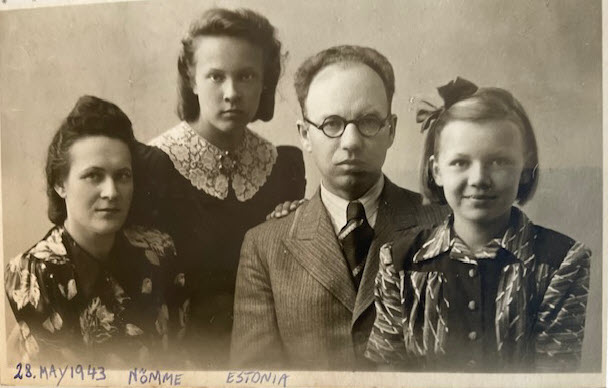
Ella Tomson with her daughters Mailis and Dagmar (L-R)

We have been collecting stories about people who participated in the Mass Flight of 1944 as part of a campaign to support the Mass Flight memorial in Pärnu. Here we bring you the story of Esmée Okamoto.

Why did I donate towards the creation of this memorial in Pärnu? I did it in honour of my Grandmother, Ella Toovis (née Tomson/Pein), who escaped war torn Estonia to the safety of Camp Hochfeld, a Displaced Persons Camp in Germany. My Grandmother fled with one young child (Dagmar Neal, née Pein) and bore my mother (Mailis Wakeham, née Pein) whilst in Miltenberg. A few years later they immigrated to Australia, but I think my Mother and Aunt were too young to appreciate the enormity of it all. 

Though they were young and keen to assimilate into their new environment, with no other immediate family travelling with them, I am glad to know they had a strong Estonian community here to support them. I grew up with bonus “Grandparents” and “family” that were Estonian family friends simply brought together by shared struggles (new jobs, friends, schools, a foreign language, etc) and adventures here in Australia. 

I often reflect on how brave my Grandmother was, an incredible journey to make with two young kids in tow and no family in Australia to call on for support… it must have been an emotional and challenging time. 

My Grandmother went on to marry an Estonian here in Adelaide, Heino Toovis (he even has a street named after him in Adelaide, having built the first house on the block) but very rarely did they talk of their struggles in Germany or Estonia… it was like they wanted to pretend it never happened. Blot it out… out of sight out of mind. 

Though I admit I hid from it in my youth, I am so thankful and proud to be part of the Australian Estonian community now. With thanks to singing with the Australian Estonian Choir Kooskõlas (travelling over to perform at Laulupidu) and embracing social media I have been able to meet, stay in touch with and better get to know an extended family I previously never knew existed. 

My friends in the Choir, Kasitöö (handicraft), Rahvatants (folk dancing) and local Estonian community (both here and interstate) act as my “family” here and continue to inspire me to be involved to do more to keep our unique community thriving. 

For these reasons and more I am keen to honour those that fled during the Mass Escape in 1944. They helped shape who I am today. 

This story was collected as part of a campaign in support of the Mass Flight Memorial. If you have a story to share about your family’s mass flight experience, please write to us at news@eesti.org.au

On 14 May – watch the ÜEKN Security Conference LIVE

0

During the Cold War, the Estonian World Council’s (EWC / ÜEKN) focus was to support the struggle for the freedom of Estonia and the other Baltic States. Now, their focus is on addressing present and emerging security risks in the Baltic Sea region. To increase awareness on this issue, EWC is hosting the Hybrid Conference “Security and Defense in the Baltic Sea Region” on 14 May 2024.

The conference will feature keynote speeches and panel discussions on various topics related to security and defense in the region. Keynote speakers include Douglas Hickey, US Ambassador to Finland, and Jessikka Aro, Finnish journalist and author.

Panel discussions will cover NATO’s role in Baltic Sea Region Security and civil preparedness and disinformation, with speakers from organizations such as NATO, the Swedish Defence University, and the Estonian Parliament. The conference aims to provide valuable insights and discussions on safeguarding freedom and security in the Baltic Sea region.

For more details and the full agenda, visit the Facebook event page or ÜEKN website.

DATE: 14 May 2024
TIME: starts at 13:00 (Estonian Time)
– 6:00 pm AWST
– 7:30 pm ACST
– 8:00 pm AEST
VENUE: Online – watch LIVE on Youtube →
MODERATOR: Reet Marten Sehr

Switzerland wins Eurovision 2024 – but Estonia won our hearts (just see the video!)

0

The Eurovision Song Contest 2024 has been a journey, with arguably one of the best line-up of acts in years. It wasn’t without its drama and controversy: tensions rose with the inclusion of Israel, the exclusion of Netherlands, Ireland’s baby thug missing dress rehearsals, and the resignations of multiple juries. But the controversy that hits closest to home: 5MIINUST and Puulup didn’t win Eurovision 2024.

Twenty-five countries competed in the final; viewer votes made up half of Saturday’s final result, while juries of five music professionals in each participating country made up the other half. Taking first place this year was Switzerland’s “The Code” by Nemo.

Estonia placed twentieth, scoring 37 points. Fans of “(nendest) narkootikumidest ei tea me (küll) midagi” took to social media to share their disappointment about Estonia’s placement, commenting things like “Estonia was robbed”:

At the same time, fans discussed that an entry like Estonia’s is not one to be forgotten and will probably become a permanent fixture in Eurovision folklore for years to come.

Either way, Estonia won at least two things: the longest song title in Eurovision history and… our hearts. See for yourself:

Estonians in Australia doing the Veisson Dance from 5MIINUST and Puuluup’s “(nendest) narkootikumidest ei tea me (küll) midagi”.

We won in our own way.

We (really) don’t care about (these) critics.

STREAM 5MIINUST x PUULUUP’S NEW ALBUM:

Learn more about the Veisson Dance here →

AESL Conversation #4 – May Wrap Up

0

On the first Wednesday of every month, AESL holds “AESL Conversations” – an open virtual meeting in which individuals and organisations can come along for a chat. 

Facilitator Marissa Pikkat reports: 

The meeting in May commenced with a palpable sense of enthusiasm as members of the Estonian community gathered to discuss upcoming projects and initiatives. The agenda was packed with diverse topics ranging from cultural events to community outreach efforts. 

Eesti Päevad and Artist Engagement

One of the key topics of discussion centered around the upcoming Estonian Festival (Eesti Päevad) and the involvement of artists within the community. There was a suggestion to include activities for artists’ children at the camp, fostering a sense of intergenerational participation. Additionally, plans were proposed for artists to showcase their talents at events in Western Australia, further promoting Estonian culture abroad. 

Pärnu Monument Fundraising

The meeting delved into the ongoing efforts to raise funds for the Pärnu Monument project. With a donation goal of 10,000 euros ($16,000 AUD), the community aims to commemorate the resilience of individuals like Maie Barrow, who arrived as refugees during turbulent times. Despite facing challenges in garnering support, the community remained steadfast in their commitment to honouring their history. Strategies for spreading awareness and increasing donations, including outreach to local Estonian communities, were discussed. 

Community Engagement and Moderation

Concerns were raised regarding the influx of posts on social media platforms, necessitating additional moderators on some Facebook pages to manage approvals and address potential issues of spam. It was emphasised that a more proactive approach was needed to ensure the smooth functioning of online platforms and foster a sense of community cohesion. Johanna volunteered to join as an admin, aligning with her involvement in the media project. 

Media Project Updates

Progress on the Australian Estonian Media Project (AEMP) was highlighted, with plans underway for collaborations with local and national news organisations. The project had received provisional approval for a grant from the Estonian foreign ministry. The focus remained on leveraging digital platforms to engage with the community effectively, with a competition proposed for naming the initiative. Very exciting developments with a range of things happening and always looking for volunteers to help bring it to life.  

Sõrve and Virmalised Initiatives

Updates were provided on the Sõrve and Virmalised projects, with expressions of confidence regarding the reformation of committees and plans for future engagement. Social media played a pivotal role in disseminating information and recruiting participants for upcoming activities. 

Closing Remarks

The meeting concluded with a sense of optimism and camaraderie as attendees reaffirmed their commitment to advancing Estonian culture and heritage. Plans were set in motion for further collaboration and engagement, with volunteers encouraged to contribute to ongoing initiatives. 

Join us again in June

We are looking forward to hosting the next conversation on June 5 @ 7:30 pm – 8:30 pm AEDT on Zoom. We are grateful for those who attend and can’t wait to build this further! 

Mother’s Day in Melbourne delivered fun across generations

0

On Sunday the 5th of May, the Melbourne Estonians, at heart and/or at birth, celebrated Mother’s Day at the Melbourne Estonian House.

Workshops and games

There were lots of games and activities for the children where parents also joined in.

  • There was a busy workshop where children created beautiful cards for their mothers. Reds, pinks, and greens appeared as favourites of the day.
  • Children learned to bake some goodies (using blue-coloured flour, among other mysterious ingredients) in a cooking class. (This is what it looked like to an outsider, they were actually making bath fizzies.)
  • Parents helped children put together wreaths and decorations using raw materials from nature. Some branches that the future florists worked with were twice their size, but this did not matter.
  • The younger children engaged in some constructive play using colourful LEGO bricks scattered on the floor. We spotted some of them practicing for the next world record attempt at the longest train ever built using LEGOs.
  • The older children were competing in running and chasing games, bursting into laughs with the joy of it all.
  • Some children played fun hide-and-seek games with their peers and others with their parents. In this game, the winner was the one child who could stay hidden from the others longest. All children were accounted for at the end of the day, so we believe the parents won this game.

Formal festivities

The Children’s Folk Dancing Group led by Jennifer Wall performed two dances. The loud clapping and the whistles that echoed through the room in response, tell a story of how good, skillful, and adorable the children were.

The more formal part of the day included a welcome speech by the new Chair of the Melbourne Estonian Society, Ingrid Melotte. She spoke from the heart about the passion that the current Committee has for the community and of the motivation to bring us together through new activities and events. This promises some exciting times ahead.

Intergenerational fun

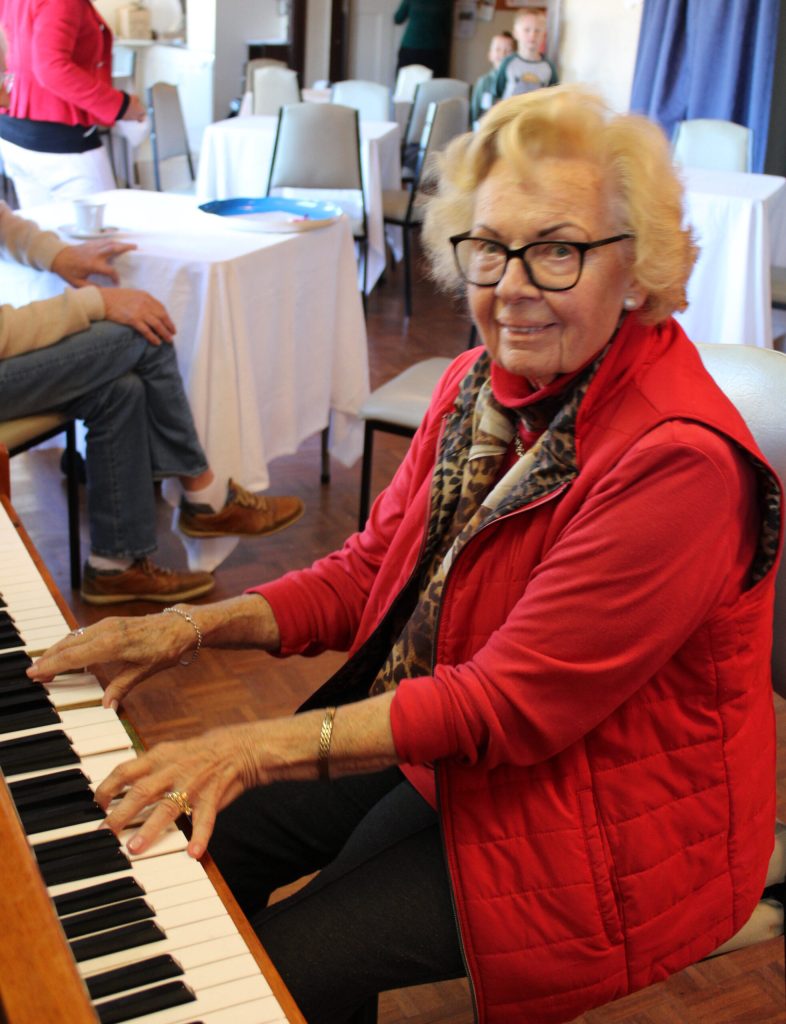
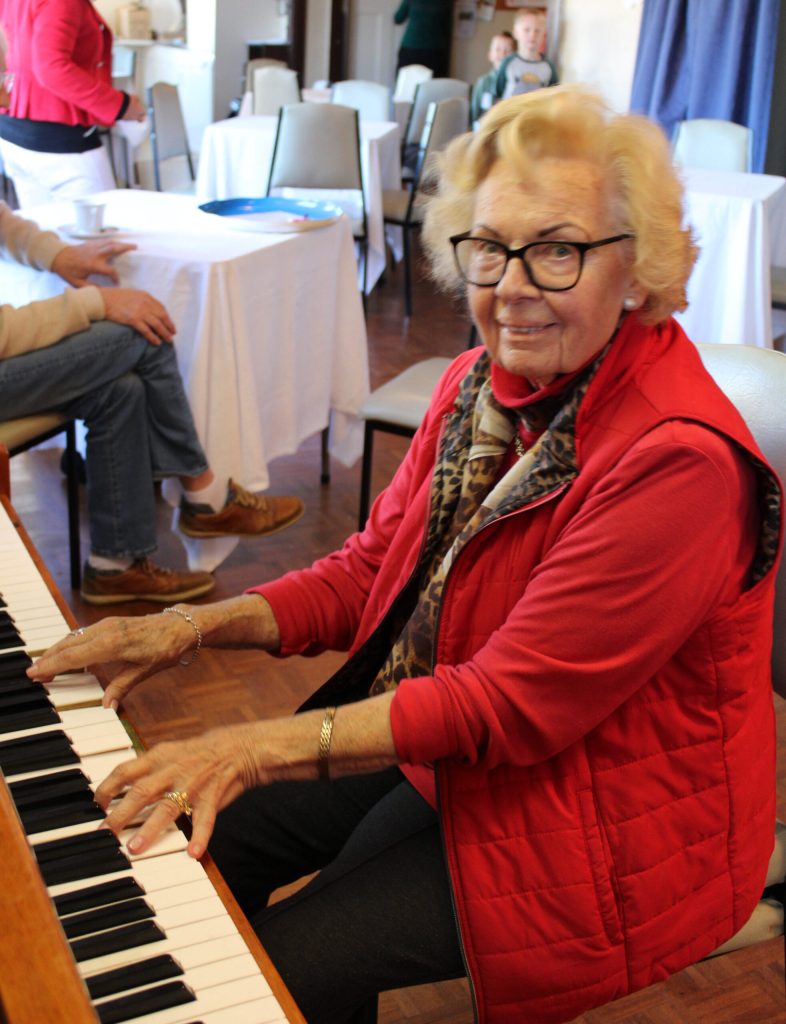
To finish this fun event off – some of the younger children, clearly future famous pianists among us, played impromptu piano music. This became a friendly competition when the older generation joined in and played. It was an enjoyable event for all generations.

Everything you need to know about  Eurovision’s “(nendest) narkootikumidest ei tea me (küll) midagi” by 5MIINUST & Puuluup

0

Eurovision Song Competition (ESC) 2024 is around the corner. If you haven’t already, it’s time to get to know Estonia’s entry: “(nendest) narkootikumidest ei tea me (küll) midagi” by 5MIINUST & Puuluup.

5MIINUST (or viis-miinust, if you want the spelling) and Puuluup presents a dance-off between a rapper and a talharpa-wielding anthropologist in this ultimate battle denying the use of narcotics.

Does it check the boxes?
✅ Sung in the national language
✅ Features a national instrument
✅ Boasts a signature dance move
✅ Includes a chanting moment
✅ Is an undeniable banger

A 40 second introductory clip with 5MIINUST and Puuluup via Eurovision. Here you see three things “you should know about us”.

Much like Vegemite, this song tends to evoke strong reactions—either love or hate, with little room for middle ground.

Dive into this comprehensive post to uncover everything you need to know about the song, the artists, and some intriguing trivia tidbits. Our exploration wouldn’t have been possible without the wealth of Eurovision Reddit posts, videos, interviews, and articles dedicated to these talented performers – links throughout and at the end. Don’t hesitate to reach out if you feel there’s something missing. Simply drop us a line at media [a] eesti.org.au.

It’s the longest song title in Eurovision history

Estonia’s entry has made Eurovision history with its title. ‘(Nendest) narkootikumidest ei tea me (küll) midagi’ is the first song in over a decade that Estonia has sent in our native language, and now holds the record for the longest song title ever to grace the Eurovision stage* with 55 characters. 

This record-breaking title surpasses the previous holder, San Marino’s “The Social Network Song (OH OH – Uh – OH OH),” from ESC 2012, which had 44 characters. Other notable contenders include Germany’s “Man gewöhnt sich so schnell an das Schöne” (1964) and France’s “C’est le dernier qui a parlé qui a raison” (1991), both with 41 characters.

*The longest Eurovision song title could technically go to Spain’s “Que Me Quiten Lo Bailao – They Can’t Take The Fun Away From Me” (2011). But since the title is just a repetition by translation, most say it does not qualify. It is generally accepted that Estonia have broken the record this year.

The birth of e-pop?

Estonia’s 2024 ESC entry has sparked discussions about the potential rise of “e-pop”, or the “k-popification of Estonia”.

K-pop, short for Korean pop music, has become a global cultural sensation in recent years, captivating audiences far beyond its country of origin. Typically characterised by its catchy melodies, stylish visuals, and well choreographed dance routines, k-pop represents more than just a music genre: it’s a multifaceted cultural phenomenon, encompassing K-dramas, films, fashion, cuisine, and language. Could e-pop, representing Estonian pop culture, be the next trend to captivate international audiences?

“Imagine in a parallel universe we get e-pop, not k-pop, and everyone is learning Estonian and doing the Veisson dance flash mobs.”

Timely-Temporary-979
e-pop fanart of 5Miinust and Puuluup by Mxgentx
Estoners logo via reddit

At the heart of K-pop’s global success lies its dedicated fan base, known as “K-pop stans”. These fans are incredibly passionate and active on social media platforms, tirelessly promoting their favorite groups. 5MIINUST and Puuluup’s Eurovision entry has galvanized a new wave of fans – or e-pop stans? – from different corners of the globe. Could we be the “next big thing”?

Affectionately dubbed “Estoners”, this fanbase have even created a logo (image on left). Estoners have showcased their creativity through fanart (see here, here, here – sprinkled throughout this post), memes, stickers, valentine’s day cards (below), photocards, fanchants, a design for a light stick (below), colour-coded lyric videos (see Lyrics) and many other appreciation posts. Their enthusiasm underscore the potential of e-pop to captivate audiences beyond Estonia’s borders.

What does Estonia’s ESC song title mean?

To translate “(nendest) narkootikumidest ei tea me (küll) midagi” to English is not exactly the easiest task. But people have tried:

  • (Of those) narcotics we (certainly) don’t know anything.
  • We (really) don’t know anything about (these) narcotics.
  • We don’t know (anything) about (these particular) drugs.
  • We (do) know nothing about (those) drugs.
  • We (sure) know nothing about (these) drugs.

My favourite translation of “(nendest) narkootikumidest ei tea me (küll) midagi” is probably “we (sure) know nothing about (these) drugs”, but most translate it as “We (really) don’t know anything about (these) drugs”.

In essence, the song title is a denial of knowing about these/those drugs. Is it a tongue-in-cheek answer, like *wink* I don’t know anything *wink wink*, or an earnest rejection? I’ll leave that for you to decide as you read on.

I can’t wait for the commentators to announce this song. Already now, many have given up and call it “The Drug Song”, or “Nendest Something Something”, or simply “Nendest…”.

One fan shortened the title into an acronym and found a (coincidental or deliberate?) easter egg: NNETMKM. Net (нет) is “no” in Russian and mkm is a way to say “no” in Estonian. Even the acronym is a way to deny knowing anything about those drugs!

Who are the performers, 5MIINUST & Puuluup?

The song is performed by two separate groups who have come together for Eurovision: 5MIINUST and Puuluup (or 5MxP).

5MIINUST x Puuluup told us that if there’s ever a movie of their lives, Brad Pitt would play all 6 of them: “2 with underwear, 4 without.” The first rule of lyre club: you do not talk about lyre club.

Eurovision.tv

5MIINUST (Estonian for ‘five minuses’) is one of the most successful Estonian music acts of the last ten years, dominating local radio waves and streaming platforms since their start in 2016. Despite Estonia’s one-million population, they’ve got nearly 200k monthly listeners on Spotify alone, solidifying their reputation for delivering catchy, high-energy tracks.

The group currently has four members: Kristjan Jakobson (“Estoni Kohver”), Priit Tomson (“Lancelot”), Mihkel Tamm (“Päevakoer”), and Karl Kivastik (“Põhja Korea”). Their original fifth member, Pavel Botšarov (“Venelane”), left the group in 2023 to start a solo career under the pseudonym “Gameboy Tetris”.

Often labeled as “rappers” or a “hip-hop group,” their discography mostly showcases bouncy party tunes or raunchy rap/dance tracks. Renowned for their rebellious spirit, 5MIINUST catapulted to fame with explicit hits like aluspükse (“underwear”) and erootikapood (“erotic shop”). As their fanbase expanded, however, 5MIINUST have started transitioning towards more radio-friendly and family-oriented lyrics – though I’m unsure whether Nendest qualifies here.

e-pop fanart of Estoni Kohver by LittleVIC

Puuluup are a duo: Ramo Teder and Marko Veisson. Ramo has the blonde hair and sings/raps on the bridge of “Nendest…” and Marko, a cultural anthropologist and lecturer at the Estonian Academy of Arts, has the deep voice in the chorus. They’ve been performing together for about a decade, across 24 countries.

The name Puuluup combines Puu, Estonian for “wood” or “tree”, with Luup, referring to the looper they use in their production process. Embracing the title Zombie Folk, they describe their music as “A pinch of surrealism, modern folklore, and talharpa revival!”.

The talharpa (“tail-hair harp” or hiiu kannel in Estonian) is the string instrument prominently featured in the performance. Historically played in Western Estonia, this ancient instrument was on the brink of extinction until Puuluup breathed new life into it – hence inspiring the genre name zombie folk. Marko and Ramo proudly claim that they are two of only three people in the world earning a living by playing the Talharpa.

e-pop fanart of Puuluup by Mxgentx
An (obviously) professionally edited image of Marko Veisson (left) and Michael Stevens (right). Screen grabs from eurovision and Vsauce videos.

Fans have also quickly noticed the uncanny resemblance between famous YouTuber Michael Stevens from Vsauce and Puuluup’s Marko Veisson – a comparison not unnoticed by the group. The twinning has given rise to loads of memes:

  • “Hi Vsauce, Michael here. Or am I?”
  • “I didn’t know that Vsauce could sing in Estonian…”
  • “Hello Viisauce, Marko here! Where are your drugs?”
  • “So, the V in Vsauce stands for ‘Viis’. We finally found out!”

An unlikely collaboration… or is it?

“These folk punkers sing in their own language and dart around the stage like agents of chaos. It’s madness, but is there a method to their madness?”

Boris Meersman

Both bands have been making music for around a decade, but their sounds are very different. YouTube channel “Overthinking It” figures that: “You have a folk group that’s not mainstream enough to make it to Eurovision on their own, you have a rap group that’s not ethnic enough to make it to Eurovision on their own. They need each other.” Although an unlikely match, it looks like these opposites really do attract, spawning an inter-generational, cross-genre friendship.

In an interview by Eurovision World, 5Miinust and Puuluup explained that the bands met through the Estonian Music Awards and thought it would be fun to collaborate. They just didn’t realise it would become “such a deep collaboration”.

The groups enjoyed each other’s company so much so, that they went on a band camp in Vormsi (a small island in West Estonia) to come up with new music – which is where the song “(nendest) narkootikumidest ei tea me (küll) midagi” was born.

“Eventually, we started looking for ways of playing into each other’s songs and create like a mash-up of our music. It worked so well and we enjoyed the energy and vibe so much that when it looked like it was over, we didn’t want it to end. In fact, the reason we went to a band camp to come up with this song was precisely because we wanted to hang out more. We really developed a good friendship. We have the same humor, same likes… it made sense.”

Puuluup and 5Miinust, via Eurovision World

It was in just one day that they had the idea and agreed to compete in Eesti Laul.

“We felt like there were folk vibes, the Estonian language, and a catchy song that could do well in Europe.”

Puuluup and 5Miinust, via Eurovision World

In Eesti Laul, they were runaway favourites among fans from the second the song dropped. They ended up winning Eesti Laul in a televote landslide, despite coming third with the juries due to 2 jurors (including ESC-alumni Anna Sahlene) ranking them last. In Estonia, the top 3 performing songs are taken through to a Superfinal, which is televote only.

So it seems: combining these two artists led to the perfect storm for a truly unforgettable Eurovision entry. 5MIINUST brings the fire power and bass, while Puuluup brings a rare Scandi-Estonian instrument that introduces the world to a whole new soundscape. And if that’s not enough, 5MIINUST and Puuluup just released a whole album together, kannatused ehk külakiigel pole stopperit (“Suffering, or the village swing, has no stopwatch”), under Universal Music Estonia.

No one can argue that this record is not the third most Estonian thing possible, after kama and a bog hike. Popmuusika “Rehepapp”, noh.

Kaspar Villup via ERR

STREAM ON:

What is “(nendest) narkootikumidest ei tea me (küll) midagi” about?

Overthinking It said it best: “Lyrically, Nendest… is mostly about band members loudly telling us that they haven’t done any drugs, and they don’t even know what drugs are, and how dare you imply otherwise!”

The song opens with the subtlety of a sledgehammer as the group emphatically set the record straight, “We’re not junkies”.

From the outset, we’re thrust into the middle of a scenario where accusations have already been flung their way, setting the tone for the unfolding drama. Each verse reinforces their assertion of innocence, which poet Joonas Veelmaa described as something like “an explanatory letter, manifesto, or interview with a journalist, attempting to debunk some myth”.

We learn that the criminal TV-reality show Politseikroonika is on the scene and uniformed police are turning their summer house upside down – but they’re convincing themselves (and us) that everything will be just fine. Because really, what could go wrong when they only have a humble bag of chips on the table, not a bag of… anything else?

Admist the chaos, the group pleads ignorance, claiming they wouldn’t be able to differentiate between vitamins and speed if their lives depended on it. All they know is lemonade and cider. What’s that about mushrooms? Check the kitchen to find culinary variants like russalas and champignons (certainly not any illicit type).

And anyway, how could they possibly be addicts? Drugs are a vice reserved for the rich, not for them. They’re as clean as a whistle, even if their ragtag wardrobe was scrounged during a dumpster dive.

(Further on in the post, we’ll break down the lyrics some more.)

Each verse adds to the comedic narrative. Despite the eyebrow-raising circumstances, nobody knows whose drugs those are. Nendest… revels in absurdities and the lengths some go to defend their innocence, all while compelling us to join in the dance. But are the characters actually innocent victims of harassment or guilty as charged?

Innocent or Guilty?

So, are 5MIINUST and Puuluup innocent victims of circumstance, or are they just good at spinning a tall tale?

Not unlike the title, the meaning of “(nendest) narkootikumidest ei tea me (küll) midagi” has also been open to translation. Is the song blatantly about drugs or is there more to it? Are they good guys or bad guys?

Making it all the more difficult to interpret, both groups are known for their “trolling”. For example, in one of the Eesti Laul interviews, they talked about how the TV building is the illuminati HQ and ERR’s head of entertainment shows is controlled by external forces. In another interview with Puuluup, they explain the meaning for their song “Chika Pua”. Ramo is speaking in Estonian and Marko translates into English. Of course, Marko’s translation is completely different to what Ramo is actually saying. Worse still (?), each time they discuss “the song”Chika Pua” in a live show, Puuluup tell a different, very detailed, story of what this song means. You almost actually believe them every time – but you probably shouldn’t.

When it comes to interpreting Nendest…, there are two main camps: (1) They’re guilty, or (2) They’re being unduly harassed.

Camp One: Guilty

People in the Guilty camp think they’ve been caught red-handed and are trying to talk themselves out of trouble.

Literary critic Saara Liis Jõerand concluded that it’s a story of digging oneself into a hole: “Just the fact that something is denied at the beginning makes you a little doubtful. If I were to say, for example, that ‘I don’t live in Pärnu’, then you might start to wonder whether I actually do. And if I say again that ‘I don’t live in Pärnu, where the sea is’, it gets progressively worse,” Jõerand explains to ERR.

Overthinking It questions how the group have a “suvila” (summer house) and why they would wear “kleidid” (dresses) from the trash. He posits that the group are in fact drug makers, wearing trash “dresses” like disposable scrubs and using drug-money to purchase the summer house. Comments, however, disagree with this take, pointing out that “suvilas” are quite normal in Estonia (not necessarily denoting wealth) and that he’s missed a cultural reference about the “dresses”. (Read more below.)

5MIINUST and Puuluup’s Politseikroonika reference “prügikasti leid”. Screengrab via “Siberi rahaboss” episode.

Although Overthinking It may have missed the mark with the “dresses”, that doesn’t mean this line doesn’t support the Guilty Camp.

This line references an infamous clip of Politseikroonika known as “Siberi rahaboss” (“Siberian money boss”). The host, Peter Võsu, visits three (apparently) drunken people in a small mal-kept apartment. Here, the residents reject the notion that “junkies” live there and justify their hoarder-like abode, explaining that they reclaim goods through dumpster diving. Point-in-note: the dress the worn by the woman was in fact found in the trash. In this context, the line casts doubt on the innocence of the Nendest characters – it sounds more like a guilty denial.

Camp Two: Innocent

On the other hand, some fans argue that the group are being unduly harassed. The theme of trying to catch someone with drugs based on appearances is an old one in hip-hop, as memorably explored in Chamillionaire’s 2005 hit, Riden’. To build this claim, fans point to the numerous references of wealth (or lack thereof):

“The mention of class hints at how wealth can impact the way police perceive people. If they were rich it would be OK for them to have drugs, but because they’re poor, they need to defend themselves and deny everything. Or it could just be a glorious piece of intelligent humour.”

Lucy Percy via Wiwiblogs

In my view, the song doesn’t necessarily imply that “it would be OK for [rich people] to have drugs”, but instead suggests that the Nendest characters simply don’t have the money to fund an addiction. This interpretation is reinforced by references to their class throughout the song. For instance, the line “Ducklings are small, but poppies are so tall” alludes to the Italian song “Papaveri e Papere” (Poppies and Ducklings), which allegorises the rich and the poor. (Read more below.)

The Italian song’s lyrics describe how the poppies (representing the wealthy elite) grow tall and beautiful in their luxurious gardens, while the ducks (representing the working class) quack and waddle around in the dirt. Despite its light-hearted tone, the song critiques the class divide and advocates for greater empathy and understanding towards those who are less fortunate.

Additionally, an intriguing interpretation suggests that 5MIINUST might be portrayed as the police force and Puuluup as the supposed drug dealers, only for it to be revealed that Puuluup is actually organising talharpa classes (with dancing!) in secret. 5MIINUST ultimately joins Puuluup’s Vormsi dance and Hiiu Kannel class. This twist underscores the idea that appearances can be deceiving and suggests that the music itself may be the real “addictive drug.”

What the artists have to say

Eurovision.tv explains that “[5MIINUST and Puuluup’s] Eurovision entry is the first song they’ve made together, and they wanted to make it all about breaking social barriers and overcoming prejudice — they say it marks their opposing reputations, 5MIINUST as ‘wild boys’ and Puuluup as ‘pristine'”. According to Veisson and Korea, inspiration for the song stemmed from a candid conversation while on the road. Veisson elaborates:

“We were driving to the band camp discussing different cultures and we complained to the boys that we knew nothing about drugs even though we work in the music business. I don’t know why but we had this idea that it would be expected of us to know about it because there are so many people within the industry who do it. People assume such just because we’re musicians.

Puuluup via Eurovision world

This conversation sparked the idea for the song. Veisson pointed out that they could sing about that: We don’t know anything about drugs. The concept grew organically.

Its original title contains two extra words in brackets – we (really) don’t know anything about (these) drugs:

“There are double brackets in the song’s title that alludes to our band. If you take the brackets out, then it’s only about Puuluup, as they really don’t know,” 5Miinust laugh. “We have fed this notorious image of ourselves as being crazy guys, so we had to find a middle term between both experiences and create a controversial song.”

When asked whether they are trying to promote the use of drugs with Nendest, much like their song itself, they denied it. The group explains that there are multiple layers to it:

The first one is to have fun, above all as that’s the most important thing and why we did this song in the first place. Another layer is not to judge a book by its cover and remain true to who you are. There’s also references to social and political issues, drug abuse, and even a reference to an old Italian song from Sanremo.

5Miinust and Puuluup via Eurovision world

The Veisson Dance

That little dance, called the Veisson Dance, has become iconic. It’s being danced around the world. Now we’re faced with the all-too-important question: where did it come from? Karl Kermes from Vormsi discussed this on the R2 show “Hommik”.

Karl revealed that it was during 5MIINUST and Puuluup’s band camp in Vormsi last summer that the Veisson “was danced and solidified”.

He described the Veisson as a võimustusi tants – a “power dance”‘ – reminiscent of what a hunter or warrior might perform before a hunt or battle. Echoing traditional Estonian practices, particularly among Viking tribes in Estonia’s west, Kermes believes the Veisson is essentially a Vormsi dance.

“This dance isn’t borrowed from TikTok; it’s been reintroduced there.”

Karl Kermes via R2 show “Hommik”

Vormsi has an old cultural legacy, albeit interrupted by World Wars and Soviet-era deportations. While the modern Vormsi populace had forgotten the ‘Veisson’ dance until now, Puuluup has brought a part of our historical identity back to life.

“What 5MIINUST and Puuluup do is very commendable, because they bring out things from history that would otherwise never reach us. Modernising an old culture is the idea of ​​moving culture forward.”

Karl Kermes via R2 show “Hommik”

“(nendest) narkootikumidest ei tea me (küll) midagi” lyrics — 5Miinust & Puuluup (Estonia Eurovision 2024)

You can also see how Eurovision has translated the song here.

Estonian lyrics

[Intro: päevakoer]
Ey, ey, ey, ey, ey
Me pole narkom—
Ei oota, kes see

[Salm 1: päevakoer]
Me pole narkomaanid pole midagi teind
Kleidid meie seljas on prügikasti leid
Politseikroonika ja suvilas on reid
Ainus kott mis laual on roheline Lay’s*

Me pole narkomaanid pole midagi teind
Kleidid meie seljas on prügikasti leid
Politseikroonika ja suvilas on reid
Vormis mehed külas mul on väga okei

UUUUjEEEE

[Refrään: kohver, Marko Veisson]
Uuu, kuula nüüd seda, saab huugama ära
Meid kuulda on täna, a see kott vii ära
Ma ei tea narkootikume, limpsi tean ja siidrit
Vahet ma ei suudaks teha vitamiinil spiidil

UUUU

Uuu, kuula nüüd seda, saab huugama ära
Meid kuulda on täna, a see kott vii ära
Pilvikud ja šampinjonid – kus on teie niidid?
Käivitate minu keha nagu köögipliidi

[Salm 2: Marko Veisson]
Pardikesed väikesed, kuid moonid on nii pikad
Mõnuaineid väldime, las seda teevad rikkad
Kohal varahommikul ja kirevad kui kikkad
Ära viisid kommid mul need kurva näoga plikad
Viiriana Vikka!

[Salm 3: Põhja Korea]
Mõnuaineid väldime vaid sest me pole rikkad
Tarekese tagatoas on laual ainult IPA-d
Prillid on pupilli–.. eino pulli pärast ikka
Läbi näevad kõigest need, kes jõudnud esiritta

[Sild: lancelot]
(Ole, ole vait, ma pole teind)
Ole vait ja ma pole teind
Kuigi ümber minu aint on see tants vaid siin käind jeaa
Ole vait ja ma pole näind
Kuigi ümber minu aint on see tants vaid siin käind jeaa

[Refrään: kohver, Marko Veisson]
Uuu, kuula nüüd seda, saab huugama ära
Meid kuulda on täna, a see kott vii ära
Ma ei tea narkootikume, limpsi tean ja siidrit
Vahet ma ei suudaks teha vitamiinil spiidil

Kuula nüüd seda, saab huugama ära
Meid kuulda on täna, a see kott vii ära
Pilvikud ja šampinjonid – kus on teie niidid?
Käivitate minu keha nagu köögipliidi

English translation

[Intro: päevakoer]
Ay, ay, ay, ay, ay
We’re not junki—
Wait, who

[Verse 1: päevakoer]
We are not junkies, we haven’t done anything
The dresses that we’re wearing were a dumpster-find
“Police Chronicle” and the summerhouse is raided
The only bag on our table is a green Lay’s*

We are not junkies, we haven’t done anything
The dresses that we’re wearing were a dumpster-find
“Police Chronicle” and the summerhouse is raided
Men in uniforms visiting, I’m totally okay

UUUUyEEAH

[Chorus: kohver, Marko Veisson]
Now listen to this, we’ll get it going
You’ll hear us tonight, but take that bag away
I don’t know drugs, I know soda and cider
I couldn’t tell apart vitamins from speed

UUUU

Now listen to this, we’ll get it going
You’ll hear us tonight, but take that bag away
Russulas and champignons – where are your filaments?
You turn my body on like a kitchen stove

[Verse 2: Marko Veisson]
Ducklings are small, but poppies are so tall
We avoid drugs, let’s leave that for the rich
Here early in the morning and crowing like roosters
My candies were taken by these sad-faced girls
Viiriana Vikka!

[Verse 3: Põhja Korea]
We avoid intoxicating substances ’cause we ain’t rich
On the table in the backroom there are only IPAs
Sunglasses for pupil–… no well, just for fun obviously
Those who made it to the front row see through everything

[Bridge: lancelot]
(Shut, shut up, I haven’t done it)
Shut up, I haven’t done it
Despite this dance only going on around me here, yeah
Shut up, I haven’t seen anything
Despite this dance only going on around me here, yeah

[Chorus: kohver, Marko Veisson]
Now listen to this, we’ll get it going
You’ll hear us tonight, but take that bag away
I don’t know drugs, I know soda and cider
I couldn’t tell apart vitamins from speed

Now listen to this, we’ll get it going
You’ll hear us tonight, but take that bag away
Russulas and champignons – where are your filaments?
You turn my body on like a kitchen stove

*In March 2024, it was announced that, in accordance with Eurovision regulations prohibiting any reference to trademarks, mention of Lay’s chips would be removed from a verse of the song ahead of the contest. The amended lyrics are “ainus kott mis laual täis pandipudeleid” – “the only bag on the table is full of recyclable bottles”.

Breaking down some of the lyrics

Politseikroonika ja suvilas on reid – Police Chronicle and the summerhouse is being raided

Here’s an explicit reference to the TV show “Politseikroonika”. There’s a very famous clip of “Politseikroonika” that’s known as “Siberi rahaboss” (“Siberian money boss”), where the host visits three drunken people in a small, mal-kept, hoarders apartment, one of whom is a guy who keeps repeating how he earned a lot of money in Siberia (hence the name).

In that episode, the woman in the group says “mul ei ole… meil ei ole narkomaane…” which in English means “I don’t have… we don’t have any junkies…[here]”. The first line of the song might actually reference this phrase. Later on the woman mentions how they gather stuff from garbage and says this: “Näete, seesama kleit, mis mul seljas on – see on ka leitud prügikastist” which in English means “You see, the same dress that I’m wearing – this was also found from a garbage can”.

You can watch “Siberi raha boss” here (with English subtitles) or watch it with Andrei Zevakin and Robin Valting reacting (in Estonian) here on Youtube.

Rohelised Lays | Green Lay’s

Per my comment above, this lyric had to be amended to comply with ESC’s rules.

You can find a humorous video about how 5Miinust came up with the new line to replace “Rohelised Lay’s” here.

Saab huugama ära | We’ll get it going

Somewhat of a tricky lyric to translate. Some options include:

  • We’ll get it going
  • We gon’ be done getting turnt

Tarekese tagatoas on laual ainult IPA-d | On the table in the backroom there are only IPAs

IPA’s are beers.

The word tarakese is a diminutive form of “tare,” which translates to “cottage” or “small house” in Estonian (the -ese ending suggests “small”). It could refer to a small cottage or a cozy home.

This lyric suggests a laid-back and intimate setting, where the speaker is describing a scene in a cottage or a small house, where the only items on the table are IPAs (a type of beer). The use of “tarakese” adds a sense of warmth and familiarity to the description, evoking a cozy and comfortable atmosphere.

Prillid on pupilli–.. eino pulli pärast ikka | Sunglasses for pupil–… no well, just for fun obviously

5MIINUST have only ever taken their sunglasses off during a performance once, and that was when they won Eesti Laul. 

Pardikesed väikesed, kuid moonid on nii pikad | Ducklings are small, but poppies are so tall

The line about poppies and ducklings is a reference to the Italian song Papaveri i papere (poppies and ducks), paraphrased from its in Estonian translation Pardike ja mooniõis. In English it’s known with different lyrics as Poppa Piccolino. The original song is an allegory about the rich and the poor, which may relate to the following line about leaving drugs for the wealthy.

Fun fact: The singer of the 1980 duck song was Estonia’s first ever Eurovision representative in 1994, Silvi Vrait.

Viiriana Vikka

Reddit user saiaaiaasjaajaja (great username by the way –”bread garden make-things-happen-er”) suggests that the lyrics “Viiriana Vikka” are probably nonsensical:

“As an Estonian, I don’t think it means anything. Seems like a somewhat nonsense adlib to rhyme with the pikad/ rikkad/ kikkad/ plikad ending verse. Kind of sounds like it could be a girl’s name- it’s capitalized, and comes after the phrase referencing girls.”

There we have it. Viiriana and Vikka took away his candies.

Pilvikud ja šampinjonid – kus on teie niidid? | Russulas and champignons – where are your filaments?

“Niidid” likely refers to the filaments or threads that are present on certain types of mushrooms, particularly when they are still young or developing. These filaments are a characteristic feature of mushrooms and are often seen as small white threads on the surface of the mushroom’s cap or stem.

The lyric seems to be questioning the absence of these filaments, perhaps as a metaphorical way of questioning the authenticity or genuineness of something. Colloquially in English, “mushrooms” also refer to the psychedelic kind – the group is probably referencing this. This line is likely some wordplay, hinting at culinary mushrooms as opposed to the illicit kind.

How to watch Eurovision 2024 in Australia

LIVE from Malmö Wednesday 8 to Sunday 12 May at 5:00am, and the prime time Access All Areas broadcasts from Friday 10 – Sunday 12 May at 7:30pm on SBS and SBS On Demand.

Estonia was drawn to compete in the second semi-final, performing in the second half of the show, in the 13th spot (after Belgium’s Mustii). In Australia, catch the second semi-final on Thursday 9th May, starting at 5AM.

DAYS
HOURS
MINUTES
SECONDS

If all goes well (get your votes in!) the Final is Sunday 12th.

Notes for your Trivia Night

  • (nendest) narkootikumidest ei tea me (küll) midagi is the longest title in Eurovision history, a record that has not been broken for 12 years with ESC San Marino 2012 entry
  • The groups’ combined age is 242 years old
  • Estonia has the lowest note this year, as well as the largest range in vocals (B2-G4)
  • 5miinust and puuluup have got along so well that they are releasing a collaborative album named Kannatused ehk külakiigel pole stopperit on April 26th.
  • 5miinust have released songs with Nublu (UMK 2024) including one with Elina Born (Estonia 2015), as well as Juri Pootsmann (Estonia 2016)
  • Despite sweeping the televote, 5miinust and puuluup came 2nd in both the semi-final and the regular final, only winning in the deciding superfinal vote

Want More?

Here’s a great video:

Here are links to some posts too:

Final Round of Voting for the EstWest new logo

0

EstWest is on the final strech to choose our logo as we had very close results for these three logos.

During the final round we need your help to decide the winner! Vote now for your favorite logo design!

Only one week until we can announce the winner!! 🏆

Voting is open until 10th of May.

Ready, set go!!

Are you interested in learning more about the experiences of post-war Estonian migrants who lived here in Western Australia?

0

This article, dated back in April 21, 1966, highlights the establishment of Eesti Maja (Eesti Tare) here in Perth at that time. Before the influx of Estonian backpackers to Western Australia in 1990’s, there are loads of fascinating and captivating stories just waiting to be discovered from that era.

It is estimated around 10,000 Estonian refugees made their way to Australia after the Second World War and became part of the diaspora teaching their children Estonian culture and the language.

EstWest endeavors to bridge the gap between these generations, forging valuable connections along the way. Through our efforts, we’ve found out the original address of this Eesti Maja, which was situated in Bayswater.

Moreover, we’ve learned that this place housed a library with over 900 Estonian books, which further enriched the cultural and intellectual landscape of the Estonian community in Perth. Additionally, some community members are now collaborating with Eesti Arhiiv to preserve valuable cultural records from this era.

Are you interested in learning more about the experiences of post-war Estonian migrants who lived here in Western Australia?

Our Honorary Consul Anu Van Hattem is also hosting a WA Estonian history workshop on 4th of May in the Estonian Consulate and we would kindly like to spread the word about this event. More information about this event can be found here:

https://www.facebook.com/events/1466376233967948

Would you like to take part of creating history and rebuild Eesti Maja again in Perth?

April in Review (2024)

0

📣 We’re experimenting with a new news format for everything Estonian in Australia! You’ll find a summary of national and local community stories from this past month, as well as events coming up next month. What do you think? We’d love your feedback: contact us.

Have news or thoughts to share? Write to us: news [at] eesti.org.au

Key insights

National News

See more national news →

April in WA

EstWest ran a logo competition for their burgeoning cultural hub. Ten submissions were up for selection; the creators of the top three logos will receive an Estonian themed gift basket. Results will be shared on the 2nd of May 2024.

April in VIC

This month, Milvi Vaikma received a lifetime achievement award from the Melbourne Estonian Society. The Melbourne Estonian Ladies Choir together with conductor Hilja Toom were also recognised for their ongoing commitment.

Award-winning clown from Estonia, Julia Masli, performed in Melbourne Comedy Festival. She was interviewed by Melbourne-Estonian Anthony Noack, for a behind-the-scenes look at Masli’s life and show “Ha ha ha ha ha ha ha.”

April in NSW

Sydney Estonian Lachlan Bell curated the exhibition, One Hand Cannot Clap Alone.

The Sydney choir Kooskõlas will be making a guest appearance at the ticketed event Spirituals and Songs of Freedom in May.

April in QLD

There will be a Consular Mission to Brisbane in May. Book an appointment to apply for or renew your Estonian documents.

The Brisbane Estonian Society have been busy, planning the epic traditional Jaanipäev/ Midsummer event coming up in June.

AEMP in April

The Australian Estonian Media Project (AEMP) have formed the Steering Committee and held their first meeting this April 2024.

The Steering Committee will oversee the activities to improve media and communications, including re-designing the Estonians in Australia website and developing relationships with the various Estonian Australian societies and groups to improve circulation of news, events, and resources. The first meeting discussed the media project’s overall goals (read more here), current status and priorities of each stream (governance, tech, content, marketing, funding), and immediate next steps. Brief project updates can be found on the AEMP Facebook page.

AEMP Steering Committee (as at 24 April 2024):

  • Johanna Rivers – Chair and Content Lead
  • Mark Narustrang – Deputy Chair
  • Kristi Barrow – Tech Lead and Funding Lead
  • Kristel Alla – Content Deputy
  • Nansy Mass – Marketing
  • Manfred Mletsin – Governance

If you want to get involved in the project, write to: media@eesti.org.au

Upcoming Events

See our Events Calendar for everything →

Mothers Day Events

Recurring Events

Folk Dancing

Do you have news or thoughts to share?

Please get in touch by emailing news [at] eesti.org.au

We are striving to improve communications among Estonian communities in Australia so that everybody can have the opportunity to share and hear about news and events.

Ultimately, the community gets what the community gives – we are humbly asking for your support. If there are events or news you know about, or have some thoughts or experiences you’d like to share, please reach out to us. Check out Submission Guidelines here or write to us at media [at] eesti.org.au with your questions or comments.

Follow us here or join our Facebook page for the latest updates on our Media Project.

AESL Conversation #3 – April Wrap Up

0

The AESL‘s informal chat sessions continued in April, on the first Wednesday of the month, and again had people from most states and territories. See last month’s wrap up here: AESL Conversation #2 – March.

This month, the Conversation touched on many topics, including the current state and future of Estonian events, organisations, and projects in Australia, and ESTO 2025. Read below to learn more about what we discussed.

Join AESL’s next session, already this Wednesday 1st May 2024 (click) →

National Folk Festival

Singers from the Kooskõlas choir and the Virmalised dancers had performed at the National Folk Festival in Canberra over
easter. This is a national event, quite expensive, so mainly for Canberrans. They have few acts coming every year, but the pop-up shows seemed to take us to different audiences.

EstWest

Folks in Perth are really getting into the newly-formed EstWest. Their first Sunday Sesh pulled in a solid 200 people, and the next one doubled that to 400! Now, they’re gearing up for round three, set to go down at a local rugby club. 

EstWest also investigated gaining licensing rights to do movie screenings. They want to support Estonian culture in the right way (ie. getting the licence), but have been quoted $500 flat rate per film, no matter how big the audience – quite steep price for a “small” community event. Communities in other cities have bought DVDs etc and hosted movie nights that way. While this has enabled Australian Estonians to watch Estonian movies, it would be ideal to find a middle-way to both support Estonian art/products while being realistic about affordability. 

As EstWest grows, they’re going to need more people on board, no matter how small the job. One challenge they’ve faced is communicating the realities of a volunteer-run association to the public. They’re thinking about opening up their meetings so folks can see what goes on behind the scenes and understand how much volunteers really make things happen, in the after-hours of their everyday life. This sentiment is echoed among other Estonian organisations in Australia – it is often challenging to find people to help. 

Cultural Events

Discussions broadened, turning to the future of Estonian cultural events in Australia. A key issue raised was the gap between the different generations as well as backgrounds – that is, differences between new arrivals from Estonia and multi-generational Estonian Australians.

New arrivals from Estonia may not show much interest in cultural events initially, preferring to connect with home through platforms like YouTube and Skype. The discussion raised questions about tailoring events to different segments of the Estonian community. For example, more casual food-based gatherings in Estonian language for new arrivals, while maintaining formal events in English for Australian Estonians. 

Another comment was about rethinking event strategies overall, such as offering free vodka shots on Independence Day like Canadian Estonians do. EstWest has had success offering the first drink for free on the house. Perhaps we should also develop stronger ties with other Baltic communities in Australia, such as how Jaanituli 2023 in Melbourne was hosted by the Latvians. 

The Kalev Bar in Adelaide also hosts successful bi-weekly events, but interestingly, most attendees are not Estonians. Most patrons learned about the bar and events through their Estonian friends, and regularly attend on their own or with their own friends. Maybe an open-door approach to the broader Australian public is worth pursuing elsewhere too. 

Estonian Houses

Concerns were voiced about the future of Estonian houses, with Melbourne selling soon and Adelaide monitoring the situation. Suggestions included repurposing spaces for backpacker accommodations, although tax issues need addressing.

Australian Estonian Media Project (AEMP)

Recruitment efforts are underway, with plans for the first team meeting to outline specific tasks around mid April. Funding applications have been submitted and are awaiting feedback. Anyone who wants to contribute to the AEMP goals are invited to contact: media@eesti.org.au

ESTO 2025

Preparations are in progress for ESTO 2025, scheduled to precede Laulupidu in Stockholm, Narva, and Tallinn at end of June 2025. Two people were elected to head the organisation of this event and committee applications are open. Challenges remain in encouraging attendance due to time constraints – it is difficult for many to get enough time off. The meaning and future of ESTO 2025 was also discussed: will Australia ever host one again? What is its purpose in the modern day? 

Eesti Päevad 2024 – Adelaide

Advertising is pending, awaiting further details on performances and volunteer engagement. As discussed earlier, volunteers are few, making progress slower than hoped, but the EP2024 Committee are working the best they can.

Several artists have been contacted and discussions are underway, but it has been challenging to balance desires with financial and practical concerns. The Committee is waiting on details from the hearing impaired folk group from Eesti, and are weighing whether the Estonian Theatre group would garner a large enough audience in Australia. 

Snapshot

Next Session

That wrapped up April’s Conversation session! Join AESL for their next meet up on May 1st at 7:30pm AEST.

Next session – Join Zoom Meeting
https://us02web.zoom.us/j/82892184859