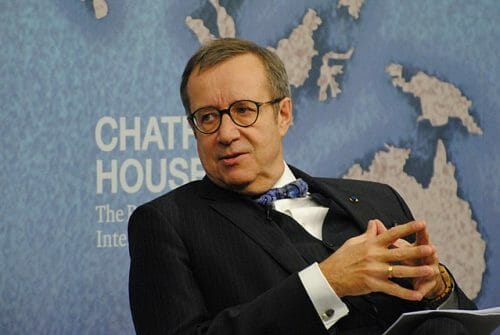
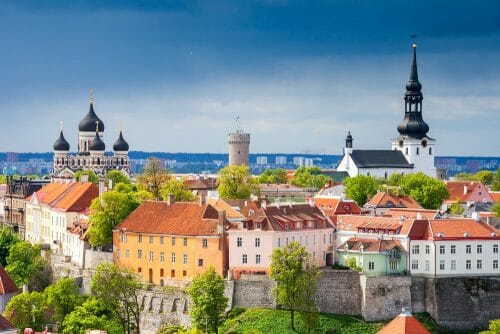
Lifehacker has a great article on the work day of former Estonian President Toomas Hendrik Ilves…

Read the whole article here: I’m Former Estonian President Toomas Hendrik Ilves, And This Is How I Work
Lifehacker has a great article on the work day of former Estonian President Toomas Hendrik Ilves…

Read the whole article here: I’m Former Estonian President Toomas Hendrik Ilves, And This Is How I Work
If you missed the cinema screenings last year, you can now watch the Estonian movie, “The Fencer” anytime. “The Fencer” is streaming on SBS on demand.
Watch the preview below
It is that time of year again when ERC (Estonian Relief Committee Ltd) / EAK (Eesti Abistamise Komittee) Ltd needs to hold its Annual General Meeting.
This will be held on Sunday 27 October 2019 at Taara Gardens Hall in Thirlmere, starting at 11 :00 a.m.
All the papers for the meeting can be found on the ERC website at: http://erclimited.com.au/annual-general-meetings
If you could let us know if you intend to attend, we will see to organise a luncheon after the meeting (RSVP to this email).
There are no elections due for this year, but we would like to discuss some changes to our name and organisation with you.
Also, to be eligible to speak at the meeting and to vote (or to nominate a proxy), we need everyone to again pay their membership fees. These are quite small, compared to other groups.
However, as always, we will be collecting forms and money at the door half an hour prior to the meeting.
Looking forward to seeing you there
ERC Board

Kooskõlas is a mixed voice choir, established by the Estonian community in Australia, that seeks to engage with people interested in learning, singing and performing songs from the extensive and beautiful repertoire of Estonian choral music.
The choir’s most recent project conducted over a two-year period, resulted in a successful audition for and participation in the United Nations-listed song celebration, Laulupidu, held in Tallinn, Estonia in July of this year, 2019.
The choir must now decide whether there is sufficient interest from the broader Estonian and Australian community to continue to learn, sing and perform Estonian repertoire into the future.
To that end, we are seeking expressions of interest from individuals who wish to participate in this endeavour, initially for the coming year 2020. The major goal for the choir in 2020 will be to participate in the XXVIII Estonian Festival to be held in Melbourne, 27th-31st December 2020, to which we have already been invited to perform.
It is also hoped that, should there be sufficient interest, Kooskõlas will, in addition to our current one-year plan, develop a three- and a five-year plan, to audition to participate in the XXVIII Laulupidu in 2024. In short, the hope is to maintain, grow and showcase the interest in and enthusiasm for, Estonian choral music within the Australian community at every opportunity. However, for the long term goals to be realised, the short term goals need to be nourished and navigated. Consequently, this EOI relates to participation in Kooskõlas until December 31, 2020.
The commitment:
It is difficult to be precise about the commitment that will be required until we know what Kooskõlas 2020 will look like. But our experience over the last two years has taught us that for an adventure like this to be viable and successful, all choir members must commit to a number of things.
First, and most importantly we need to enjoy the process and the connection with community and culture that participation brings. The choir is as successful as its membership wants it to be.
The time commitment required will vary between individuals, depending on their choral skill, their experience with Estonian repertoire and the difficulty of any new repertoire. That said, it will be necessary for singers to commit sufficient time to ensure that they attend rehearsals and that they learn the songs. This is made easier by using the audio files that are made available to all choir members for use at home, in the car, wherever works for you. As an aside, I have not met anyone who does not have a busy life, yet Kooskõlas 2019 worked because people found ways to include it in their lives.
Next we need to agree that costs associated with choir rehearsals and performances will be met. These include meeting the fixed costs associated with running the choir such as the expenses of a choir director, costs associated with hall hire, cost of obtaining copyright permissions for music where necessary and rehearsal and performance-related insurances. As a guide, the recurrent fixed costs of Kooskõlas over the last two years have been approximately $22 per person per month. The general administration of the choir is done on a voluntary basis and so will not incur a fee.
Costs associated with travel to and from state-based and National rehearsals and performance venues and costs associated with purchase of the choir’s performance costume also need to be met individually. These costs are difficult to predict into the future, because the structure of our rehearsal schedule will be determined by the makeup of the choir and the size of our performance schedule is not currently known. As a guide, Kooskõlas 2019 had 70 members, over half of whom were resident in NSW. National rehearsals (one per quarter) were thus located in Sydney. The travel for interstate choir members was subsidised as far as possible from choir funds ($150 per rehearsal).
Kooskõlas currently has some funds as a result of fundraising efforts for 2019. The proposition is that, should there be sufficient interest in continuing the choir, these funds will be used to assist in funding fixed costs into the future. Should there be insufficient interest in maintaining a viable choir following this EOI, these funds will be returned to Kooskõlas 2019 choir members and the choir will be disbanded.
It is important to note that responding to this EOI does not commit you to membership of the choir. This call is simply for us to determine what level of interest there is in keeping Kooskõlas and the associated dreams alive. Nonetheless, the information you provide will be used to plan for the future, so please consider your response carefully. Once we know the level of interest we will get back to you with a more detailed plan for you to consider.
So how to respond………..
If you are interested in being a part of Kooskõlas 2020, please send an email to kooskolas@gmail.com with the following information by Monday 7th October.
For K2019 members, we have your information already, but it is very important that you let us know by return email if you want to participate in K2020, as this will affect decisions about whether and if so, how, Kooskõlas will continue.
Should we continue, this information will be used as a point of contact and for planning purposes. If not, the information will be destroyed.
I think your current committee is excited at the possibility that Kooskõlas will continue. I hope that you are too.
Kind regards,
Kieran Scott
On behalf of the Kooskõlas Committee
kooskolas@gmail.com

Kevadpidu – the annual Spring Fair will be celebrated on Saturday, 12 October 2019.
Doors open at 1pm and the concert program will commence at 2pm.

Sõrve Children’s Summer Camp’s Annual Trivia Night is back and this year we’ve turned the heat up!
When: Join us on Friday, 25 October from 6pm for a chance to take home the crown (ahem… sombrero)!
Where: Sydney Estonian House, 141 Campbell Street, Surry Hills
Entry is free!
Food and drinks available on the night, as well as games, prizes and activities for amigos of all ages.
Details to follow but alert the authorities (or just your smartest friends) – we can’t wait to see you there!
When: Friday, 27 September 2019, feasting and games from 6pm
Where: Sydney Estonian House, 141 Campbell Street, Surry Hills
Entry: $30 (includes a five-course feast)
The year was 1918. A new country is born in Europe.
But freedom has its price.
The war drama based on the novel “Names in Marble” (2002) by Albert Kivikas has broken all-time box-office record in Estonia, telling the story about schoolboys who have become voluntary soldiers fighting for the freedom of their homeland.
It is a catching story about becoming a man, about the first love and the high price of freedom.
Will they be awarded with love and fatherland, or will they become just names engraved in marble?
The film is in Estonian with English subtitles.
1h 30m | War drama
The lights go out and the film starts at Sydney Estonian House (141 Campbell Street, Surry Hills) on Sunday, 1st September at 5 pm.
Tickets $8.
In Estonian:
Tule tähista koos meiega Balti Keti 30.ndat aastapäeva ja Eesti Vabariigi Taasiseseisvumispäeva!
Kuupäev: laupäev, 17. august
Ürituse asukoht: Eesti Maja
Aadress: 141 Campbell St, Surry Hills, Sydney
Pilet: Tasuta
14.00: Esineb Sydney Eesti Maja koor “Lõke” repertuaariga laulva revolutsiooni ajastust, arhiivimuusika ja videod. On kooki ja müügil ka must leib.
16.00: Näitame filmi “Laulev revolutsioon”
18:00: Eesti Maja pubiõhtu, pakume hundijalavett
In English:
Come celebrate the 30th anniversary of the Baltic Chain and Restoration of Estonian Independence with us!
Date: Saturday, 17 August
Venue: Sydney Estonian House
Address: 141 Campbell St, Sydney
Entry: Free
2pm: Opening, followed by singing by Sydney Estonian House choir “Lõke”, archival music and videos. There will be cake as well as black bread for sale.
4pm: Film screening of “The Singing Revolution”
6pm: Estonian Pub Night! We will have the firewater ready.
Check out the Facebook event here!
Many Australian Estonians visit Estonias in the summertime. The Vabamu Museum of Occupations and Freedom welcomes you to their new permanent exhibition “Freedom Without Borders”
***
PRESS RELEASE
Vabamu Museum of Occupations and Freedom
20.06.2019
Vabamu Museum of Occupations and Freedom welcomes you home!

Vabamu Museum of Occupations and Freedom welcomes all the Estonians living abroad who are visiting their homeland this summer to the new permanent exhibition ‘Freedom Without Borders’.
For this occasion, Vabamu offers tours about Estonians in exile, talking about their lives across the border. The exhibition speaks of the path from occupations to freedom and consists of five parts: crimes against humanity, Estonians in the free world, life in Soviet Estonia, the restoration of independence, and freedom. Exile highlights the history of Estonians abroad by telling the story of Estonians fleeing the foreign powers. The main exhibits are the boat that was used while fleeing to Sweden in the Autumn of 1944 and the original film shown in public for the first time that recorded the journey of motor sailboat Triina.
The tours take place on 2nd and 3rd of July in both Estonian and English at Vabamu museum (Toompea 8, Tallinn). It is possible to hear stories about resilience, and survival, hope, and faith in freedom.
After the tours, the museum offers cake and coffee and invites the participants to think about thought-provoking moments of our recent history. The museum is also interested in the visitor’s own stories of exile and hopes to include those stories to our collection. Every donated story or a photograph/item is relevant to the museum’s aim to preserve memories.
One-tenth of Estonians today live abroad. “It is important for us as a nation to remember the stories of those whose lives have led them to live in other countries,” told Vabamu’s Executive Director Keiu Telve. “This summer we invite all Estonians around the world to visit Vabamu Museum of Occupations and Freedom to think together with us how to tell the story of Estonia through our museum. We want to give a home to each Estonian abroad inside this museum, which could become a place to meet, to commemorate and to remember,” added Telve.
On the 2nd and 3rd of July, throughout both of the days (from 10 a.m. until 8 p.m.) the team of Estonian Institute of Historical Memory’s oral history portal Kogu Me Lugu (translates into Collect Our Story, We’re Collecting The Story, also Our Entire Story) is present at Vabamu to screen video interviews they have conducted with Estonians abroad and to create new contacts. Kogu Me Lugu’s (kogumelugu.ee) mission is to collect and preserve memories of people who were repressed by the Soviet or Nazi regimes, people who escaped Estonia during the occupations of said regimes or arrived in Estonia as a result of the occupations.
Vabamu Museum of Occupations and Freedom is the largest museum in Estonia founded on private initiative. The task of the museum is to collect, preserve, research, and introduce the recent history of Estonian. The museum was founded with the help of donations from Mrs. Olga Kistler-Ritso and opened its doors on the 1st of July 2003.
To celebrate the Jubilee Year of Estonian Song and Dance Festival and The XII Global Estonian Cultural Festival, ESTO, Vabamu Museum of Occupations and Freedom is opened longer than usual – from 30th of June until 4th of July, and from 6th of July until 7th of July the museum is opened from 10 a.m. until 8 p.m. On 5th of July, the museum is exceptionally closed.
Registration to the tours is opened HERE until 30th of June.
Additional information:
Liis Meriküll
Marketing and Communications Manager
Vabamu Museum of Occupations and Freedom
Phone: +372 5656 6640
E-mail: liis@vabamu.ee
www.vabamu.ee
***
PRESSITEADE
Okupatsioonide ja vabaduse muuseum Vabamu
20.06.2019
Okupatsioonide ja vabaduse muuseum Vabamu kutsub koju!
Okupatsioonide ja vabaduse muuseum Vabamu kutsub kõiki väliseestlasi, kes külastavad sel suvel oma kodumaad, tutvuma muuseumi uue püsinäitusega „Vabadusel ei ole piire“.
Vabamu pakub võimalust osa võtta väliseestlusest jutustavast ringkäigust, mille vältel räägitakse muu hulgas piiri taga elavate eestlaste lugu. Näitus kujutab teekonda okupatsioonidest vabaduseni. Näitus koosneb viiest osast: „Ebainimlikkus“, „Eksiilis“, „Nõukogude Eesti“, „Taastamine“, „Vabadus“. Näituse see osa, mis jutustab võõrvõimu eest põgenemisest, toob esile väliseesti ajaloo. Kesksel kohal on 1944. aasta sügisel Rootsi põgenemiseks kasutatud paat ning esmakordselt avalikkusele eksponeeritavad originaalkaadrid mootorpurjeka Triina teekonnast.
Ringkäigud väliseestlusest toimuvad 2. ja 3. juulil eesti ja inglise keeles okupatsioonide ja vabaduse muuseumis Vabamu aadressil Toompea 8, Tallinn. Kuulda saab liigutavaid lugusid eestlaste hakkamasaamisest ja ellujäämisest, lootusest ja usust vabadusse.
Pärast näitusega tutvumist pakub muuseum kooki ja kohvi, et meenutada üheskoos mõtlemapanevaid hetki meie lähiminevikust. Ühtlasi kuulab muuseum huviga külastajate lugusid eksiilist, et talletada need kollektsiooni. Iga annetatud lugu või sellega kaasas käiv foto või ese on muuseumile oluline, et säilitada mälestused.
Üks kümnendik eestlastest elab praegusel ajal välismaal. „Meile on rahvana tähtis mäletada ka nende eestimaalaste lugu, kelle elu on viinud teise riiki elama,” rääkis Vabamu tegevjuht Keiu Telve. „Kutsume sellel suvel kõiki eestlasi üle maailma koju okupatsioonide ja vabaduse muuseumisse Vabamu, et üheskoos mõtiskleda, kuidas rääkida kõigi Eesti lugu. Tahame muuseumis pakkuda igale maailma eestlasele Eesti kodu, mis oleks kokkusaamiskoht ning meenutamise ja mäletamise paik,” lisas Telve.
2.ja 3. juulil ootab teid Vabamuskogu päeva jooksul (kl 10–20) ka Eesti Mälu Instituudi suulise ajaloo portaali Kogu Me Lugu (kogumelugu.ee) meeskond, et tutvustada seni tehtud videointervjuusid väliseestlastega ja luua uusi kontakte. Portaali Kogu Me Lugu eesmärk on jäädvustada Nõukogude või Saksa okupatsiooni ajal Eestis elanud, nimetatud võimude eest Eestist põgenenud või nende tegevuse tõttu Eestisse sattunud inimeste mälestusi.
Okupatsioonide ja vabaduse muuseum Vabamu on suurim kodanike algatusel loodud muuseum Eestis, mille ülesanne on koguda, talletada, uurida ning tutvustada Eesti lähiajalugu. Muuseum rajati Eestist Ameerikasse põgenenud proua Olga Kistler-Ritso annetuse toel ning avati külastajatele 1. juulil 2003. aastal.
Eesti laulu- ja tantsupeo juubeliaasta ning XII ülemaailmsete eesti kultuuripäevade ehk ESTO 2019 raames on okupatsioonide ja vabaduse muuseum Vabamu avatud 30. juunist – 4. juulini ning 6. juulist – 7. juulini kell 10–20. 5. juulil on muuseum erandkorras suletud.
Püsinäituse „Vabadusel ei ole piire“ ringkäikudele saab registreeruda kuni 30. juunini SIIN.
Teate edastas:
Liis Meriküll
Turundus- ja kommunikatsioonijuht
Okupatsioonide ja vabaduse muuseum Vabamu
Telefon: 5656 6640
E-post: liis@vabamu.ee
We are here to commemorate the victims of a particular event.
An event that has been largely lost in the sweep of history: lost in time; lost in the mix of other, possibly more horrid and vivid events that have taken place since 14 June 1941.
In the early hours of that morning over 50,000 civilians in Estonia, Latvia and Lithuania were awoken by armed people pounding on their doors.
These civilians, shouted at and shoved, beaten with the butts of rifles, were arrested or detained and taken to be deported.
Deported by the design of an occupying force, the Soviet Union.
Seized by a hostile, immoral and repressive foreign government that, until its very end in 1991, never admitted culpability or regret for its actions, and whose political beneficiaries have similarly refused to acknowledge the murderous enterprise for which they were responsible.
Men, women and children were taken on that night.
Across the generations: some babies, some infirmed and in the final phases of their lives.
Ripped from their homes.
Herded into railway trucks that had been classified, by hand-painted letters of the alphabet on their wooden sides for the human cargo assigned to them, to be taken east into a foreign land.
Very few survived.
The goal of the deportations was to remove so-called political opponents of the occupying Soviet government.
Those targeted were the political and social elite of the Baltic countries; at least, those who had not already been deported or murdered by this time – political leaders, intellectuals, professionals, bureaucrats, journalists, artists, business and religious leaders.
Free thinkers, democratically minded, high achieving people of high principle.
And their families.
Some 10,000 Estonians were arrested and deported on this early summer morning, one per cent of the total population of the country.
5,100 of these were men; most ended up in Siberia, and only around 100 returned alive.
When I first came to these solemn commemorations, in this same place and over 50 years ago, there were people here who were victims of that evening’s events.
A very few were themselves deportees.
Others were family members or ordinary folk who saw their loved ones, neighbours and friends disappear in motor vehicles into the hazy, indistinct grey of a northern summer’s early morning light to the awaiting trains.
If there are those here today who remember the events of that evening, I extend to you my heartfelt sympathies and acknowledge that your pain is something I cannot even imagine.
The events of the morning of 14 June 1941 were only one of a series of horrific events that were suffered by the people of Latvia, Lithuania and Estonia in the 1940s and early 1950s.
These countries, which had fought for an independence that barely lasted for twenty precious years, were to be ravaged by the war of others.
They were to be occupied, in turn and in return, by two of the most horrific, amoral, repressive and murderous regimes the world has ever seen.
The German occupation saw 187,000 people exterminated in Lithuania, Latvia and Estonia, amongst millions of others throughout Europe and beyond.
In Lithuania, 100,000 of its Jewish population was killed in Nazi concentration camps.
Only 20,000 of Lithuania’s 150,000 pre-war Jewish citizens survived the Second World War.
These acts have rightly and properly been cast by history and by international law as an act of genocide.The regime responsible, and many of the perpetrators, were held to immediate account.
It is estimated that by the time of Stalin’s death in 1953, around 15 per cent of the population of the Baltic States had been arrested, deported or executed by the organs of state of the Soviet Union and people acting on their behalf.
This included 33,000 Estonian men forcibly conscripted into the Soviet army in July 1941 and 25,000 Lithuanian forest brethren killed over many years fighting the occupying Soviet forces.
In Latvia, it is estimated that under Stalin, 139,700 people were deported, 51,973 arrested and at least 1,986 were executed.
In 1940 and 1941, the victims had been largely political, military, community leaders and high profile nationalists.
By the time of the mass deportations of 1949, the victims were small land holders, people whom local party officials had taken a set against, and those seen to be supporters or suspected to members of the armed resistance movement known as the forest brethren.
The new enemies of the Soviet state were often farmers and woodsmen.
And their families.
Taken together, these were terrible times, abnormal times that touched ordinary people.
Many, like my family, saw arrests, interrogations, deportations, forcible conscription, betrayal and murder among their number.
Bodies in the mud or trussed into chairs in their own homes.
History and time has largely robbed us of the opportunity to hold to account the regime and people responsible for these outrages, in the way that the Nazi regime and those acting in its name were held to account for their acts.
Shockingly and surprisingly, there is still an unresolved legal debate about whether the crimes of the Soviet Union, under Stalin, against Baltic civilians, are also a genocide like the crimes of Hitler.
Or whether, as a widespread and systematic attack against a civilian population, they are properly characterised a crime against humanity.
Or, indeed, whether they are even a matter appropriate for international law, as they occurred within a, purportedly, single Soviet state.
I acknowledge that this is a question of jurisprudential significant, but it is also somewhat irrelevant.
For the actions of murder; of forcible deportation, imprisonment and starvation; of press ganging civilians into a foreign uniform to fight a war on the side of the unrighteous, of destroying families and communities; of diminishing people and crushing their aspirations and dreams: these actions in their common understanding, in their doing and consequence are criminal actions, no matter what other legal rubric is cast around them.
These actions speak of a profound lack of integrity, human values and basic morality on the part of the Soviet state, and of the people who acted in its name.
They are, put simply, morally repugnant and symptomatic of a sick society.
Since the Baltic States regained their independence in 1991, there have been a small number of court cases in each of these countries that have held some of the participating individuals to personal account for their actions at the time.
But the state responsible for the crimes has escaped any real consequence.
Not for want of evidence – for there are copies of decisions taken by the Politburo of the Communist Party of the Soviet Union, the Council of Ministers of the Soviet Union, organs of state like the MGB and MVD, and officials at the local level – but largely because the Soviet Union, as the responsible state has ceased to exist.
And, disturbingly, its inheritor state, Russia, has no interest in engaging with historical truth, let alone acknowledging any responsibility or culpability.
So what can we do, those of the many of us who are here today as a consequence of this time; whose forebears fled the oncoming onslaught of a reoccupying Red Army in 1944 – some by foot, many by sea, all in fear of what they had lived through and seen – what can we do to ensure that the suffering of the Baltic peoples was not in vain?
My proposition is that we talk of these times, tell our personal stories, the story of our community and the nations of our forebears, so that they are not lost, so that are not eclipsed by more recent horrible or vivid events.
This is our history, and if that history is diminished or forgotten, then so are we as individuals.
If we tell the stories of what took place, and how they impacted on us, then we have some basis for drawing out our own views and beliefs, and explaining them to others.
I accept that these views and beliefs can be as varied as the number of people in this room, but let me share with you how these events speak to me, as one who has reflected on them, in terms of what I hold true.
Without appropriate accountability, without a strong, empowered and free civil society, state structures can behave with arrogance and impunity.
The Soviet State had none of these countervailing balances, and it behaved accordingly.
Arrogant, totalitarian regimes that behave with impunity can call into the service of the state amoral people who act with self-seeking interest and criminal alacrity.
These individuals are rarely held to account, or are held to account with difficulty.
So it was in Soviet times.
The tragic events in the Baltic States could not have unfolded except for the collaboration of individuals.
One way of tempering the risk of the repetition of such events is to ensure that civil society across the world is empowered and emboldened, and individuals everywhere are equipped and supported to stand against repressive, non-democratic states.
While we may not be able to rectify the past, we can at least ensure that the mistakes of the past are not repeated into the future.
We can act as good citizens, hold true to good and decent values, and hold to account those who do not share these values.
We can do this in our own community, in our own country, and, by joining up globally, in support of other communities in other countries.
This is a proper way to mark the legacy of those who disappeared into the hazy grey of the early morning of 14 June 1941.
For they were earmarked as victims of an unjust, repressive, immoral state in large part because they were they were just, democratic and moral individuals.
Their very presence in Estonian, Latvian and Lithuanian societies was a challenge to Soviet arrogance and hegemony, and, in Soviet eyes, they needed to be eliminated.
In early 1990, in Vilnius, I found myself in the Lithuanian parliament building which was blockaded by Soviet tanks.
With a colleague, I had meetings with Vytautas Landsburgis, who, as the Chairman of the Supreme Council of Lithuania, had presided over a session of the newly elected body that had unilaterally declared independence from the Soviet Union.
I also met with senior members of Sajudis, the political movement that Landsbergis led.
These were men of intellect – philosophers, poets, Landsbergis himself was an ethnomusicologist – who had found themselves at the forefront of political events they had barely conceived.
They were Lithuanian patriots, not professional politicians.
On 14 June 1941, they would have been on the list of deportees.
In our discussion with them, we focussed the challenges of re-establishing a free Lithuanian state in the face of the requirements of international law and reflected on the unpredictability of Mihhail Gorbachev and the Soviet state.
One of our interlocutors, an older, grey haired man with the hands of a pianist, waved us into silence.
Re-establishing a Lithuanian state was a minor problem, he said.
Reclaiming the integrity of a free Lithuanian spirit from within the moral squalor of Soviet man was an altogether more complex problem.
He was right.
Nation states are only as good as the values of the people who inhabit them.
Bad nation states can create and succour bad people.
Eliminate good people, and the quality of society diminishes.
It disappears into the early morning mist for future generations to mourn.
Dear Estonians in Australia,
If you haven’t heard, the Council of Estonian Societies in Australia offers a rewarding opportunity for every Estonian individual and every member of the Estonian community here in Australia. By donating to the organisation you help us ensure Estonian language and culture keeps thriving in Australia and gets passed on from the older generation to the newest generation as well as supports Estonians who have recently arrived in Australia.
We support Estonian Activities in Australia and wish to do so in the coming years. We exist with the help of a volunteer committee and are a non-profit organisation. WE are going through the process of incorporation as we speak after existing for over 60 years. We have a goal, a plan and are willing to elevate the support for Estonian culture in Australia by providing financial and administrative assistance to over 20 groups who work within the Estonian community. We support music and dance groups, language learning and publications, and many other activities with Estonian culture at their core.
All the names of the ones who have contributed will be acknowledgesd on the estonia.org.au/aesl website. We warmly welcome donations of any amount.
Thank you to the people who have already donated and to the ones that plan to.
Bank Commonwealth Bank
Account Name Council of Estonian Societies in Australia
BSB 062 233
Account Number 10062870
Reference Your Name
Payable to:
Council of Estonian Societies in Australia
Evelin Erm, PO Box 6286,
South Yarra, Vic 3141

***
Kallis Eestlane Austraalias
Ehk sa pole veel kuulnud, et Austraalia Eesti Seltside Liit (AESL) pakub võimal- ust igale eestlasele Austraalias teha midagi head kohalikule eesti kogukon- nale. Annetades AESL-le aitad sa eesti keele ja kultuuri jätkusuutlikust ja tead- miste edasikandmist vanemalt generatsioonilt uuemale ning samuti toetad uusi eestlastest saabujaid Austraaliasse.
AESL toetab eesti tegevusi Austraalias ja soovime sellega jätkata ka tulevatel aastatel. AESL koosneb vabatahtlikest ja on mittetulundusorganisatsioon. Nüüd, pärast 60 aastat, töötame selle nimel, et saada Austraalias registreeritud organisatsiooniks. Meil on eesmärk ja plaan ning oleme valmis tõstma panuseid Eesti kultuuri toetamiseks Austraalias, pakkudes rahalist ja adminis tratiivset toetust eesti seltsidele ja tegevustele. Me toetame muusika- ja tantsu gruppe, keeleõpet, väljaandeid ja paljusid teisi tegevusi, mille keskmeks on eesti kultuur.
Igaüks, kes annetab, saab mainitud estonia.org.au/aesl kodulehel. Iga annetatud summa, suur või väike, on oluline.
Tänud neile, kes on juba annetanud ja neile, kes plaanivad annetada.