Wednesday, May 27, 2026
10.8 C
Canberra
10.1 C
Tallinn

In Memoriam – Indrek Porm

0
Indrek Porm
Indrek Porm 1944 - 2020

Vale Uno ‘Indrek’ Porm 

It is with great sadness that we share news that Uno ‘Indrek’ Porm passed away in Melbourne on 13 August 2020, age 76.

In light of current restrictions, the family will come together at 11am on Friday 28 August for a closed funeral service. We would be honoured if his friends could join us remotely to celebrate his memory (using the below link).

‘Indrek’ Porm Memoriam Service
11am
Friday 28 August
Online via Microsoft Teams Video link

An online condolences book is also available and we encourage Indrek’s friends to share their memories.

Dad was a proud Australia-Estonian with a big personality. He loved all the good things in life: family, travel, wine and sport. He will be remembered by all those who knew him.

With thanks,

The Porm family

Kooskõlas online Sing-a-Long – Sunday August 30

0
kooskolas

Hello one and all,

We are all experiencing lockdown, social distancing and generally a change of lifestyles in these current times.  In particular, our Victorians are really feeling it harder than most and have experienced extraordinary hardship in the past few weeks, with a number of weeks yet to come.

In recognition of our fellow Victorians, Kooskõlas have created a fun online event on Sunday 30 August 2.30 PM.  This is an informal gathering, for around 90 minutes, in which we will be singing songs and sharing stories. At this stage we have not decided on which songs and we are happy for any suggestions to be put forward.  We will probably sing about 3 songs and we will be providing the song sheets and / or lyrics prior to the event.

To assist with the management of resources, this event is ticketed – but will be FREE!!!!

You will also need to download ZOOM, which is available for free on your Apple or Android device. It is also available as an App. Then you will be able to click on the link to be able to join on the day.  The link will be sent 24 hours prior to the event.

Remember it’s FREE!!!!

But I will need your email address to be able to send you the songs, hence the requirement for tickets to make it easier to record the details of attendees.

To help you with the singalong, the committee will be based in Eesti Maja Sydney to assist with singing any parts.  Or you can just sing melody. Whatever makes you feel comfortable.

If you like, wear something Estonian. Please feel free to share this among your friends.

Any comments or suggestions can be sent to Kooskolas@gmail.com.

Kind Regards

Pille Püvendi, Choir Liaison

On the 20th of August we celebrate Estonian Restoration of Independence

0

On the 20th of August we, Estonians, celebrate.

Estonian Restoration of Independence (juridically defined as the Restoration of the Republic of Estonia, first proclaimed in 1918) is celebrated on 20 August as in 1991 at 11:02 pm local time, the Estonian Supreme Soviet, in agreement with the Estonian Committee, proclaimed Estonian independence from the Soviet Union.

There was a road to restore the independence, there were key moments on the road to the independence, and there is a deeper meaning to the road taken.

Between 1987 and 1991, we restored the historical justice and human dignity that were severely violated. We did not fear an enemy who was much bigger and stronger than us. Barricades were built – but more importantly, there was strength in our unity, in our songs and in our joined hands. This is the deeper meaning.

These were the key moments as follows.

February 1987 – Phosphorite War
Phosphorite war was an environmental campaign in the then-Estonian Soviet Socialist Republic, against the opening of large phosphorite mines in Estonia, Virumaa region, as per Moscow’s plans. The nationalist movement is regarded as a catalyst that led to the destabilization and dissolution of the Soviet regime.

August 1987 – Deer Park Rally
Nearly 2,000 people took part in the first political demonstration demanding of the publication of the secret protocols of the Molotov-Ribbentrop Pact between Russia and Germany in 1939.

September 1987 – IME
Estonian economic/political leaders published in Tartu newspaper the Programme for Economic Independence of Estonia (IME). The view of the Soviet Union that the Federal Republics cannot take care of their economy alone was refuted.

December 1987 – Heritage Society
The Estonian Heritage Society started its activities, which involved a study of Estonia’s history in political way.

April 1988 – Popular Front
TV show Let’s Think Some More initiated an idea of a democratic, peaceful people’s movement – popular front. Many events followed and later culminated in the Baltic Chain.

February 1989 – Citizens’ Committees
Estonian Citizens’ Committee published an article how to restore the republic of Estonia by peaceful means on the basis of legal continuity.

1989 – Singing Revolution
The greatest event under this popular movement was gathering for Estonian Song, attended by 300,000 people, and the “Five Awakening Time Songs” were born.

1989 – Baltic Chain
Two million people joined their hands and formed a 600-kilometer long human chain that stretched from Tallinn to Vilnius, on the 50th anniversary of the Molotov-Ribbentrop Pact.

1991 – Property reform
Estonia was still under the soviet-rule but passed a law under which people whose ancestral home had been taken from them could reclaim it.

1991 – August coup
On August 20, 1991, there was an attempted coup in Moscow in which the old leaders of the Soviet Union tried to seize power. In the process, soviet troops were sent to take over strategic points in Estonia. On the afternoon of August 21st, the failure of the coup in the USSR was clear, the confusion of that situation was enough to win some time and give the Estonian Supreme Soviet the opportunity to take a decision on Estonia’s national independence.

August 1991 – Recognition of Estonian independence
Iceland was the first to recognise Estonia’s independence. Lithuania, Latvia and followed by Russia, recognised Estonia’s independence by the 24th of August. In a short time, about a hundred countries recognised independent Estonia.

1992 – Money reform
Between 20.-22. June, every Estonian person was invited to exchange soviet money to Estonian kroons, and after that the only means of payment was kroon. More than one million Estonian residents exchanged money. The exchange rate of the Estonian kroon was tied to the German mark – 1 DEM = 8 EEK.

1992 – Constitution
On 28 June 1992, the fourth Constitution of the Republic of Estonia was adopted as a result of referendum. The 1992 Constitution incorporates many elements of the earlier Constitutions. It declares the legal identity of the Estonian state, and its continuity with the state which was annexed by the Soviet Union in 1940.

1994 – Soviet troops
In July 1994, Estonian President Lennart Meri and Russian President Boris Yeltsin agreed to remove Russian troops from Estonia. The Russian military left Estonia by 31 August 1994, and with this, the last tangible sign of Soviet rule in Estonia had disappeared.
.
Wishing to all Australian Estonians happy celebrations on the 20th of August.

May the sense and the strength of unity be part of our life, as in the past so in the future, as in Estonia, so in Australia.


May the milestones of this clever, peaceful and successful road one day be woven into the fabric of a legend! A legend, that captures the thought – it is the spirit only that can’t be conquered.

Happy Independence Day to all Estonians,
Sirje Jogi Rivers,
On behalf of AESL

The story behind the Estonian Archives in Australia Rebrand

0
New Estonian Archives in Australia Logo

by Lachlan Bell

The EAA was looking to ‘rebrand’ to help increase their awareness in the community, especially with the younger generation who are less aware of its purposes. The logo and website had not been updated since the early 2000s and required a cohesive visual identity and a modern approach. Initial research into cultural organisations such as the Museum of Applied Arts and Sciences, Eesti Rahva Muuseum, Sydney Jewish Museum and Blue Shield International informed the design approach.

EAA previous logo
The previous EAA logo.

Inspired to stay true to the original logo, additional text in both English and Estonian was incorporated as one of the main drawbacks of the original logo was the unexplained EAA acronym. The letter ’E’ was stylised in the form of a traditional sõlg (brooch) which is a common item worn by individuals as a symbol of protection.

The inspiration behind the form was drawn from vööd (folk-dancing belts) and the interweaving of histories, with a single arrow arriving from present, back to past and towards our future, symbolising the nature and purpose of Archives in helping us understand who we are and where we came from.

The inclusion of the Southern Cross aimed to provide a culturally-resonant motif and assist in creating a distinctive Australian design to set it apart from its Estonian and diasporic counterparts around the world.

Whilst this project began as a University project, I chose the Archives as it felt like a purposeful and appropriate use of my time in applying my theory to a real-life scenario. Becoming increasingly involved within the Sydney Estonian community has allowed me to work on projects with real-life clients and work on often challenging briefs (even more so for individuals approaching from outside the community).

Having previously worked on briefs for Eeski Ski Lodge, Virmalised, Sõrve Summer Camp, the ECFA and Kooskõlas I find these projects particularly satisfying and gratifying and hope to continue further encourage young and emerging designers/artists to make the most of the opportunities we are provided being a part of such a community.

Successful applications announced for Estonian Cultural Foundation in Australia (ECFA) funding

0

The Estonian Cultural Foundation in Australia (ECFA) Ltd is pleased to announce the successful applicants for this year’s funding. 6 organisations were successful in sharing in the $20,000 funding, having met the criteria to satisfy the objectives of the ECFA.

These objectives include:

  • The promotion of Estonian history and culture in Australia;
  • The teaching and promotion of literature, design, crafts, performing arts, radio, TV, moveable cultural heritage, music, community arts, video, visual arts, film, etc which is of Estonian origin;
  • The preservation and promotion of Estonian language skills;
  • The promotion and development of cultural relationships between Estonia and subsequent generations of Estonian descent born in Australia;
  • To facilitate cultural exchanges between groups with similar objectives from Australia and Estonia; and
  • To consolidate and coordinate with like Australian organisations with cultural ties to Estonia.

Sydney Estonian Handicraft Association

Estonian Folk Costume Preservation Project: A Digital Archive of Estonian Folk Costumes in Australia
The Sydney Estonian Handicraft Association would like to develop a digital archive to display the Estonian folk costumes that have been worn by people with Estonian heritage in Australia.

Estonian Archives in Australia

Digitisation and conversion to a text document of the manuscript of “The Mahatma of the Baltics” by Friedrich Lustig
The manuscript is entitled “The Mahatma of the Baltics. The memorable life of the Most Rev. Karlis A. M. Tennisons, the Buddist Archbishop of Latvia.” By The Most Rev. Friedrich Lustig.

Most Rev. Karlis A. M. Tennisons, the Buddist Archbishop of Latvia and The Most Rev. Friedrich Lustig.
Most Rev. Karlis A. M.  Tennisons and the Most Rev. Friedrich Lustig

The manuscript is over 600 foolscap pages long and fragile. Making it available in a digital form will save the manuscript and give better access to researchers from all over the world.

Sydney Estonian House Co-operative Society Limited

Development Application for the Renovation of Sydney Estonian House
The Sydney Estonian House Co-op applied for funding from the ECFA to assist in the cost of preparation and lodgement of these DA plans with SCC.

Sydney Estonian House | Eesti Maja
Sydney Estonian House

Sydney Estonian Parents’ and Friends’ Association – Sõrve Sõbrad

Sõrve Summer Camp
Sõrve Summer Camp

Sõrve has applied for funding which will directly assist their National Estonian Summer Camp. Strengthening the bonds within the Australian-Estonian community will be achieved through camp activities including:

  • Australian-Estonian language teachers involved in the kindergarten groups around Australia
  • Music including singing to show an insight to the Estonian Song Festivals
  • Dancing to showcase and promote participation in the Estonian Dance groups in Australia
  • Participation in creation of traditional Estonian Art and Craft.

Virmalised – Sydney Dancers

Pastlad for Virmalised
Virmalised would like to purchase pastlad for the Virmalised dance group, which can be lent out to members for performances.    

Estonian Pastlad

Pastlad are traditional, lightweight and flat (heel-less) Estonian footwear made of tan leather and fastened with leather laces. They are worn with pride by many dance groups in Estonia.

Hans Ots Award

Hans Ots Award support for young people to attend Sõrve
The Hans Ots Annual Grant enables the offer of financial assistance. This applies to helping all kids in Australia, with particular attention to children from interstate and country NSW, who have a keen interest in Estonian culture and participating in the Sõrve Summer Camp.

On Victory Day 2020

0

Dear Estonians in Australia,

Life has delivered many bitter battles in the way of Estonians.

Estonians know the meaning of freedom, and we know what it’s like to lose it.

We honour those brave men and women who have fought and lost their lives fighting for the free and independent Estonia that we have today.

We have also learned through our history that winning does not just happen, but that victory requires determined performance and sacrifice.

The thoughts we have of freedom and victory today are expressed by lighting the symbolic fire in honour of winning the battle in Vonnu over 100 years ago.

Estonians’ Victory Day speeches often emphasise – Freedom is won when people are willing to do something bigger than what is needed for their personal well-being, without knowing where they will end up.

***

Dear fellow Estonians in Australia.

The concept of freedom echoes at all times, and it echoes once again today during this time of crisis. Today we are facing different challenges, but victory has the same attributes.

In times of crisis we are expected more of, we have to do, give, apply more, and this means that we have to change. Change is never easy.

What we carry in our mind, we carry into our everyday life. But we may not think deeply enough about these things at ordinary times. It is the extraordinary times that make our life as we know it – pause, and listen to our way of thinking, our approach, our attitude. Change means breaking our existing behaviour patterns, and that takes a significant amount of dedication, conscious effort, and discomfort.

Every once in a while, something extraordinary forces a change to take place that we weren’t asking for, and we weren’t ready to deal with. Events can occur that force us to deal with change, evoking resistance, even emotions of fear, denial, anger, depression.

And yet, dramatic events can turn into blessing.

If we CHOOSE to see the hard events as an opportunity to break the chains, then something good has come out of the hard times.

Freedom is won when people are willing to do something bigger than themselves. It starts with personal realisation, personal attitude. When amplified, a different country will emerge from hard times.

One of the most valuable assets for the country is teamwork. Seeing the bigger picture rather than individual perspective, collaboration is what shines through in times like this.

Here in Australia, the current times have seen willingness to implement the new by volunteers, companies, politicians.

Funding is provided to focus on solving problems connected to moving beyond the coronavirus crisis.

Foundations are established to detect and implement initiatives, innovations that burst to life by state of mind, by freedom of thinking, by courage of action.

The business community has been able to make big decisions about how to move forward in the absence of physical workplaces and meetings.

Cross-industry collaboration has risen to a new level and we are ready to face challenges brought by the crisis.

New working practices and passion for technology are the two norms that are playing out well during the current corona crisis.

Estonia emerged from nothing, by putting a massive effort into IT as their future. “Voting online, since ninety nine”, Estonians say. They have made it proudly rhyme, and so they should.

Estonia and other European countries already work online from home at least some of the time – meaning, a change of thinking from the old world to the new has already happened. These countries already have a history in innovation.

Remote working is a result of a flexible mind,

and can lead to a more balanced lifestyle and greater quality of life. For example, don’t we yearn for a lifestyle where nobody bats an eyelid if a parent clocks off in the early afternoon to collect a child from nursery, and is trusted to catch up with their workload later? This sounds like a balanced life, does it not?

Dear Estonians in Australia.

The current crisis has been called a war of our time. 

How so? War is a situation where nobody wins, many will not return, yet something new and better will come out of it. How do we win this war, how do we celebrate victory day 2020?

What would victory be like?

I see victory as this – Victory is winning over ourselves when we say that we are MORE than what we have been taught at schools, or by life so far. Our attitude is innovative and collaborative. We have a freedom of mind.

The first level of interaction is based on humanity. This saw the volunteers rise. In that regard we, Australia, are the greatest of countries – no doubt.

Next step is the social change. Coming out of the existing (social) box can be scary to many.

Moving from ground level up not slowly, not over time, but as a “forced transformation”. When life forces a change, then this is an opportunity. But it has also been emphasised  – many of us, or businesses, will never come back again. The change may cost everything we ever had. But it may give back infinitely more in return. Fight or freeze. Be aware and Implement today.

Dreams don’t cost anything, so dream BIG and BOLD. Go for it. Action creates momentum, momentum creates reinforcement and new habits create lasting transformation.

There is a bigger and better world at the end of it.

On this Victory Day, we celebrate the victory over ourselves. This may be the biggest of battles yet. SEE WHERE IT TAKES YOU. Happy Victory Day 2020 to all.

Sirje Jogi, AESL

Estonian Archives in Australia EOFY Appeal

0
Estonian Archives in Australia - EOFY Appeal

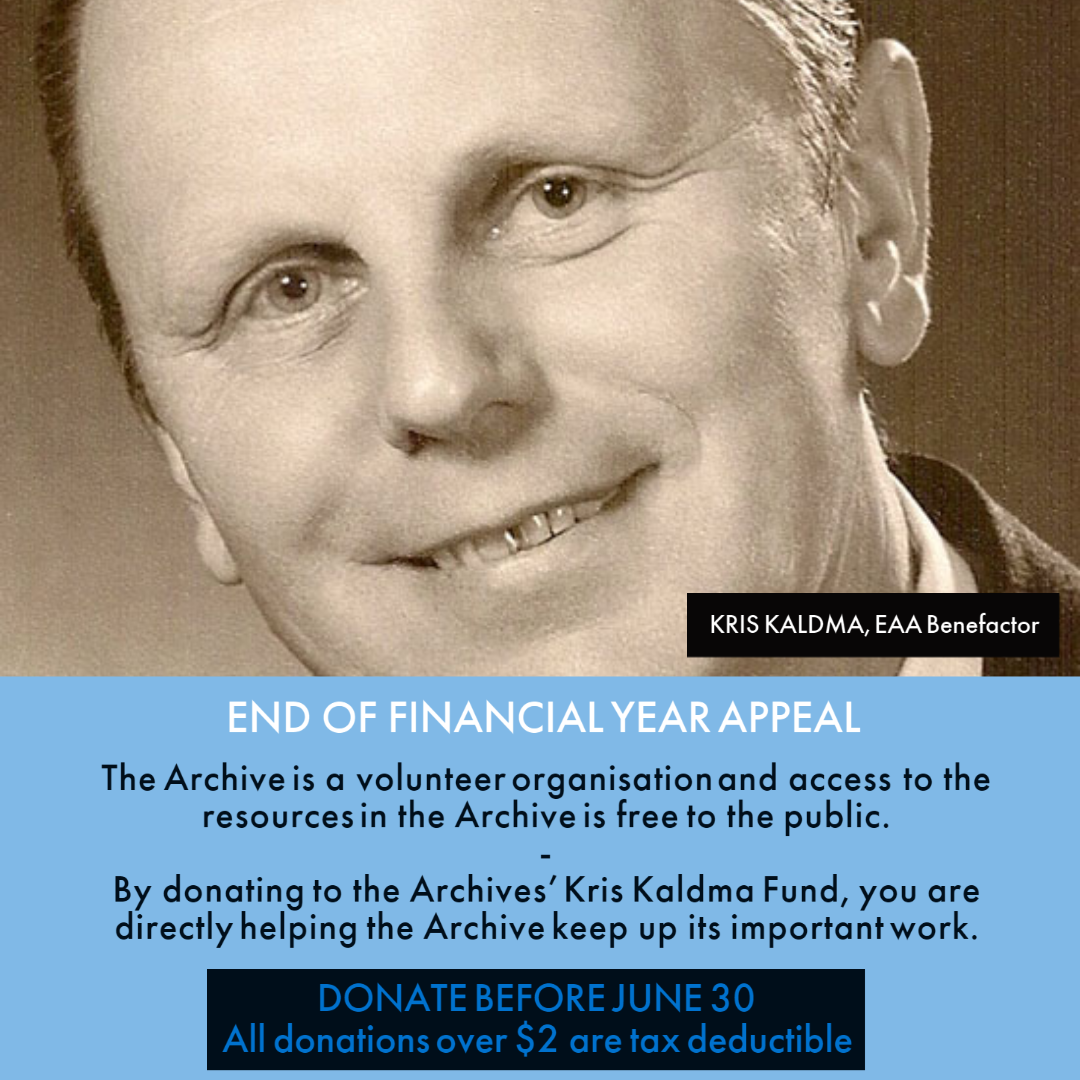
There is only week left before the end of the financial year! Can you help the Archives with a small donation before the end of the financial year?

🇦🇺 🇪🇪 
Want to find Estonian relatives in Australia or your family’s history here or research some aspect of Estonian life in Australia?
🇦🇺 🇪🇪 

The Estonian Archives in Australia holds documents, photos, audio recordings, books and other materials which can assist.

Access is FREE! 😀

We are a fully volunteer run organisation. The Archive relies on grants and donations. We appreciate all donations to help us continue our important work.

The Archives’ Kris Kaldma Fund is the only Estonian charity in Australia which the Government has recognised with Deductible Gift Recipient status: donations of $2 or more are tax-deductible.

Visit: https://archives.eesti.org.au/donate

Virmalised weekly online practice – Monday’s 7.30pm

0
Virmalised Folk Dancers

Tere kõigile! Virmalised – Sydney Estonian Folk Dancers would like to invite you to join in our weekly e-rahvatants practice rehearsals via Zoom, from the comfort of your own home!

Our session starts at 7:30pm (AEST) every Monday night, however, you are welcome to join us whenever it comfortable and works best for you.

Our sessions are casual and open to all levels of experience, and we encourage everyone to join in.


We will be revising the basics of dance and polishing the basic steps of Estonian folk dance, including the gallop, reilender, polka, voorvalss (a type of waltz) and labajalg (flat-footed waltz).

While everyone’s regular schedule continue to be disrupted, us Estonians know how to manage in difficult times and we welcome you all to join us in some digital dancing from abroad.

We also thank the generosity of the Sydney Eesti Selts in allowing Sydney Virmalised in the use of their Zoom
account.

Please contact sydney.virmalised@gmail.com or their facebook group Virmalised – Sydney Estonian Folk Dancers for details of the Zoom meeting.

Näeme varsti!

“A Year Full of Drama” – now streaming until June 21

0
Year Full of Drama

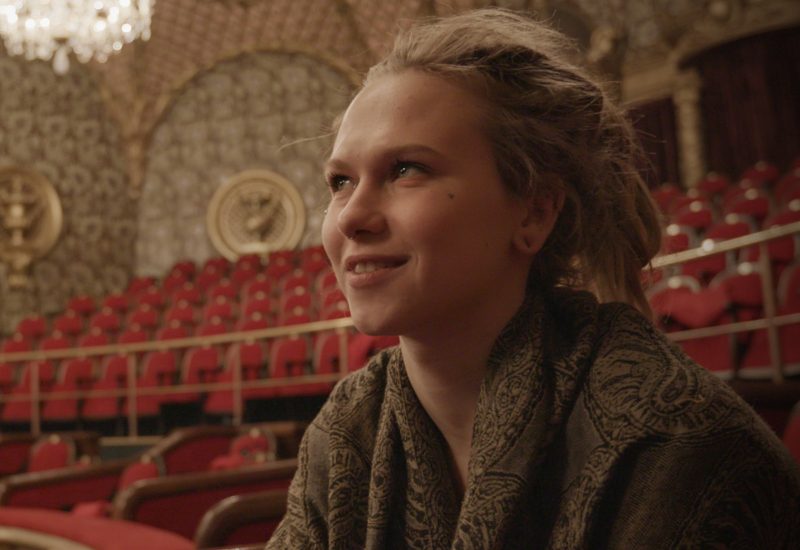
The Sydney Film Festival is online this year and is featuring the Estonian film “A Year Full of Drama”.

The film is available to stream now until the end of the Festival at midnight on 21st of June. You can watch the movie for $14, or buy various bundles to view multiple films. There are movies from other European countries such as Finland, Germany, Denmark and Poland

More information available here https://ondemand.sff.org.au/film/a-year-full-of-drama/

Film Synopsis

A job advert with a difference: seeking someone who’s never been to the theatre to watch every production in one small country for a whole year. 224 Estonian productions later…The successful candidate is a small-town girl from a Russian-speaking family (a fact that puts her on the periphery of Estonian society). Alissija hasn’t been to the theatre since she was a small child, so she’s about to immerse herself in and document a world she knows nothing about. It’s not just the performing arts that are new to Alissija; she’ll also be moving to Estonia’s capital, Tallinn, and living away from family. As the months pass, she experiences everything from farce to the classics, and ends up questioning theatre’s place in the world, as well as her unique role. Alissija’s curious and courageous theatrical journey – 224 shows in 365 days (matinees included) – turns out to be a life-changing and true coming-of-age story.  

“A Year Full of Drama” Trailer

About the Film Maker

Marta Pulk (born 1988) earned her Master’s degree in filmmaking from the Baltic Film and Media School. Her short films have screened at numerous film festivals worldwide. 

An Event to Commemorate the Mass Deportations of the Peoples of the Baltic States

0

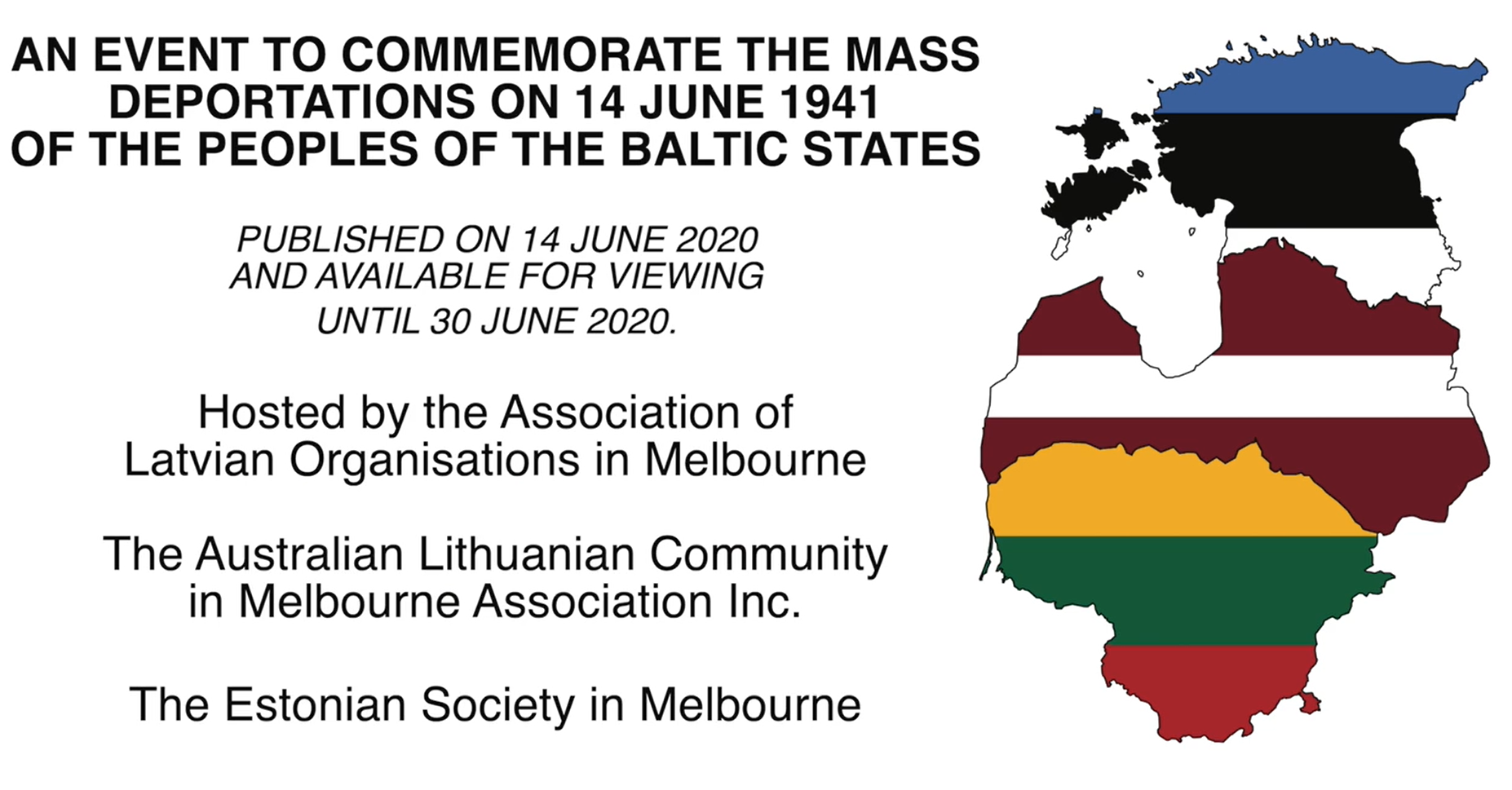
As Covid-19 has prevented the annual 14th of June commemoration concert, the Latvian communities of Melbourne and Sydney have instead jointly prepared a video to mark this event, which is so significant in our Baltic nations histories.

The video is 56 minutes in length and includes brief addresses (all in English) by:

  • Latvian organizer Anita Anderson,
  • Victorian honorary consuls for Estonia, Latvia and Lithuania,
  • President of Latvia, Egīls Levits
  • former president of Latvia, Vaira Vīķe-Freiberga
  • national anthems of Estonia, Latvia and Lithuania
  • several musical items by each Baltic community.

This video is a valuable resource for informing the younger members of our communities, as well other groups about the events of the 14th of June 1941.

https://vimeo.com/428761270

Estonian Archives in Australia launches brand new website

0

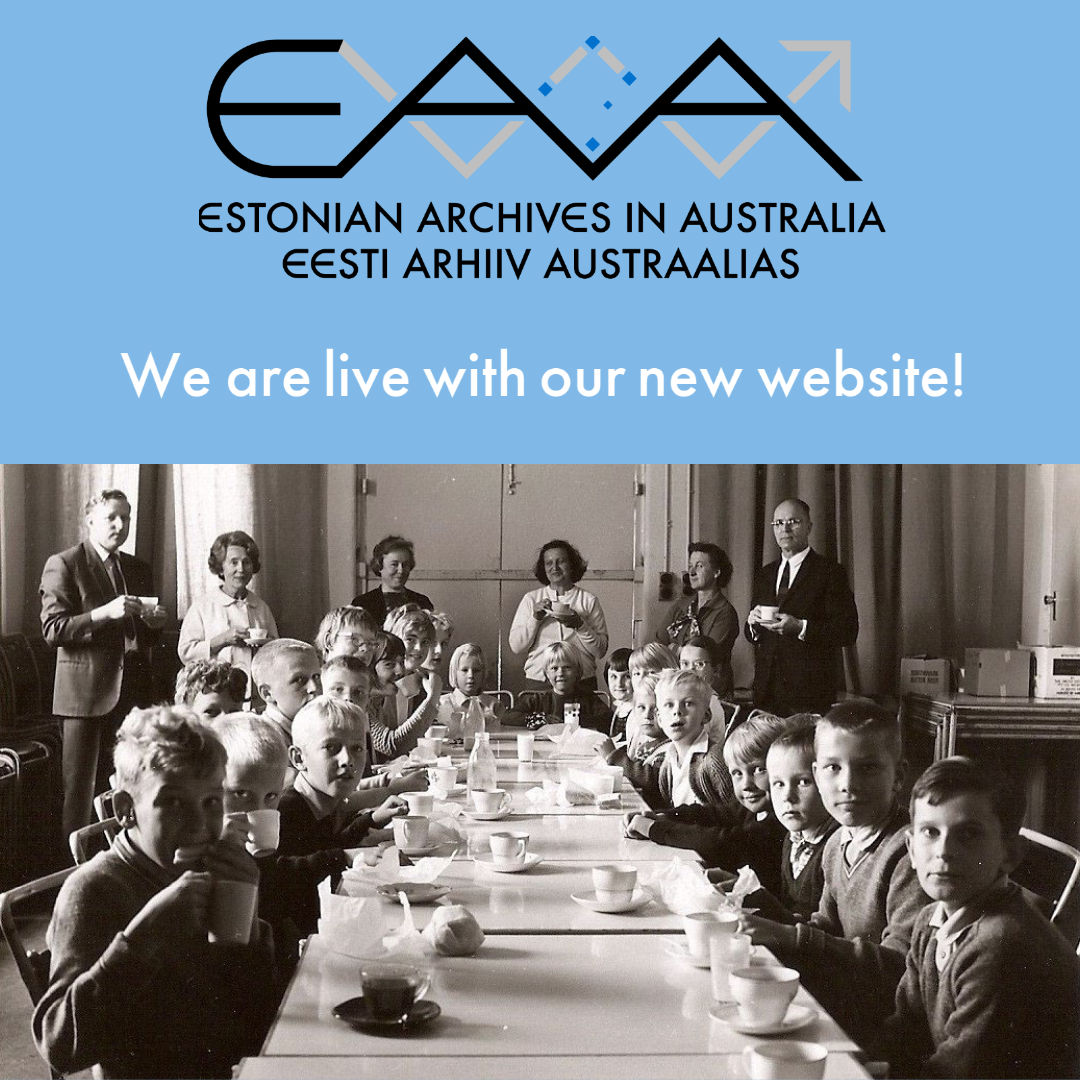
We are very happy to announce our new Estonian Archives in Australia website at https://archives.eesti.org.au/

While we are always happy to have visitors we realise that not everyone can visit the Archive in person. We are happy to be able to share our treasures with you online.

We have not updated our old site much since it was originally launched back in 2001 and a great deal has changed over the last 20 years! We have a brand new logo thanks to Lachlan Bell and a new website courtesy of Kristi Barrow.

Catalogues of Personal Papers and the In Memoriam notices are currently online.

Meet the Team introduces the people who make all this possible, devoting one day a week to sorting, arranging and describing the collected material and finally preparing the catalogues which make access to the collections easier.

We start with our current exhibition The Great Escape 1944 but plan to add more of our past exhibitions so that we can all share the history and culture of the Estonian community.

Maie Barrow
Archivist

Deportation Commemoration 2020

0

DEPORTATION COMMEMORATION 2020
Sirje Jogi, AESL

Each year in June we commemorate series of mass deportations by the Soviet Union. Deportations were carried through between 1941 – 1951 in three Baltic States.

The first repressions in Estonia started as early as 1940 and affected Estonia’s national elite.

On 17 July 1940,  Commander in Chief  of the  Armed Forces  Johan Laidoner , and on 30 July 1940,  President   Konstantin Päts  and his family were deported to  Penza and  Ufa where they died thereafter, Johan Laidoner in 1953 at Vladimir prison, president Pats in 1956 at Kalinin Oblast.

The country’s political and military leadership was deported almost entirely, including 10 of 11 ministers and 68 of 120 members of  parliament. About sixty were either shot or died in the camps.
No figures exist for how many family members – spouses and children – were deported along with their loved ones.

The two largest waves of mass deportations occurred in  June 1941 and  March 1949 simultaneously in all three Baltic States. The deportations targeted various categories of anti-Soviet elements like: nationalists, political elite, military, police,  Forest Brothers , and so called kulaks.

On 14 June 1941, and the following two days, between 9 and 11 thousand Estonian people were deported, mostly to  Kirov Oblast ,  Novosibirsk Oblast  or prisons.

June deportation led to two significant developments in Estonia:

  • It motivated a major wave of refugees to leave Estonia, mostly by ships over the  Baltic Sea in 1944. Some 70,000 people are known to have arrived in their destination; an unknown number perished due to the autumn storms and naval warfare.
  • Second, many Estonians, who had previously been sceptical about joining the German army decided to join the recently created foreign legions of  Waffen-SS, to try to keep the Red Army off Estonian soil and to avoid a new Soviet occupation. Many young men fled to Finland – about 4000 people, over half of the men below 24 years old, to join the 20th Waffen Grenadier Division of the SS -1st Estonian

My grandfather Jonas was one of them, living his life thereafter in Sweden, Goteborg, never to see independent Estonia again. Not seeing his son again, my dad, since he was 4 years old. Not ever getting to know me, not knowing that 40 years after his escape, his granddaughter, myself, will be asked to leave Estonia or be deported for political reasons all over again.

These of Estonian descendants born in Australia are living here as a result of their parents or grandparents being able to escape after the June 1941 deportations had passed them.

As we think of the horror stories that happened to people left behind, we also thank all those governments of other countries, that allowed us to enter and who gave our refugees asylum.

Estonia has an amazing asylum story to tell.

Altogether at least eighty-five Estonian diplomats remained or fled abroad. The Foreign Ministry is the sole institution of the Republic of Estonia, which throughout the Soviet occupation maintained not only de jure or legal continuity, but in fact maintained de facto continuity. The Estonian Foreign Ministry has worked without interruption.

When it became impossible to continue on the territory of Estonia, the foreign service worked on, defending the interests of the country, whilst residing abroad. Diplomats such as August Torma, Johannes Kaiv, Aksel Linkhorst and Ernst Jaakson continued their work in Estonian representations abroad until their deaths. Ernst Jaakson was the lucky one, who saw the restoration of Estonia statehood and independence.

The second huge wave of deportation was called Operation Priboi ( “Coastal Surf”), it was the code name for the  Soviet mass deportation  from the  Baltic states  on 25–28 March 1949.

More than 90,000  Estonians,  Latvians  and  Lithuanians, labelled as  enemies of the people, were deported to forced settlements in inhospitable areas of the Soviet Union. The deportees were exiled “for eternity” and no right of return to their home.

This deportation was run like a campaign to speed up the soviet collectivisation in Baltic States. The deportation fulfilled its purposes: by the end of 1949, 93% and 80% of the farms were collectivised in Latvia and Estonia. In Lithuania, the progress was slower and the Soviets organised another large deportation known as Operation Osen  in late 1951.

This soviet nightmare did not just happen, it was thoroughly premeditated and planned, systematic extermination. There were specific responsibilities of each Soviet ministry: the  Ministry of State Security  (MGB) was responsible for gathering the deportees and transporting them to the designated railway stations; the  Ministry of Internal Affairs  (MVD) was responsible for the transportation to the  forced settlements , and continued surveillance and administration;  Ministry of Finance  was to allocate sufficient funds;  Ministry of Communications  was to provide the necessary railway cars;  Ministries of Trade  and  Health  were to provide food and health care en route to the destination, etc. The soviet machine was so systematic.

Today we celebrate, that regime that murdered millions and decimated tens of nations, destroyed and deformed so many lives – that this regime collapsed in 1991.

We come together to express our faith that what was done to our people and to our countries will never happen again.

We wish our feelings today would be easier and clearer, we wish we could say in confidence that all of this is in the past.

However, the past has not entirely passed. There is a debate if the crimes of Soviet Union against Baltic States civilians are genocide the same way as the crimes of Hitler, since it all happened within the country of Soviet Union – so the crime has escaped the real consequence.

We come together today to honour independent Estonia’s governments, nationalists, ordinary people, who were forced to suffer unspeakable horrors.

We commemorate and pay homage, and we will not forget the suffering of our people before us.

We come together today and the year thereafter, as we are aware what happened, we know the story, we share the story. We still feel hurt.

Sirje Jogi, AESL