Wednesday, May 6, 2026
5.5 C
Canberra
6.1 C
Tallinn

Estonian Programming at Fantastic Film Festival April 2021 – Sydney 19th, Melbourne 22nd & 24th

0
Old Man Movie - Estonia

A home for mind-breakers, trend-setters, trailblazers, and envelope-pushers, Fantastic Film Festival Australia returns with a program of weird and wonderful cinema to challenge and delight audiences from April 16th at the Lido Cinemas in Hawthorn and Ritz Cinemas in Randwick.

A highlight of the festival is Estonian animated feature

The Old Man Movie

This zany, animated film follows a small town and the chaos that ensues when their prized cow goes missing.  A stop-motion, crazed Shaun the Sheep-style spirit fuels the absurdity that directors Oskar Lehemaa and Mikk Mägi have been refining for the last decade. This is their epic first feature, and its lowbrow surrealism takes animated comedy on a wonderfully insane journey: jump on board for a laugh-filled ride and jaw-dropping madness.

Sessions

Monday, 19th April 6.30pm @ RITZ CINEMA, RANDWICK

Thursday, 22nd April 8.40pm @ LIDO CINEMAS, HAWTHORN

Saturday, 24th April 8.45pm @ LIDO CINEMAS, HAWTHORN

Trailer

Full Program

For tickets and the full program head to https://www.fantasticfilmfestival.com.au/

Virtual forum for global Estonians – April 14 Early Morning

0
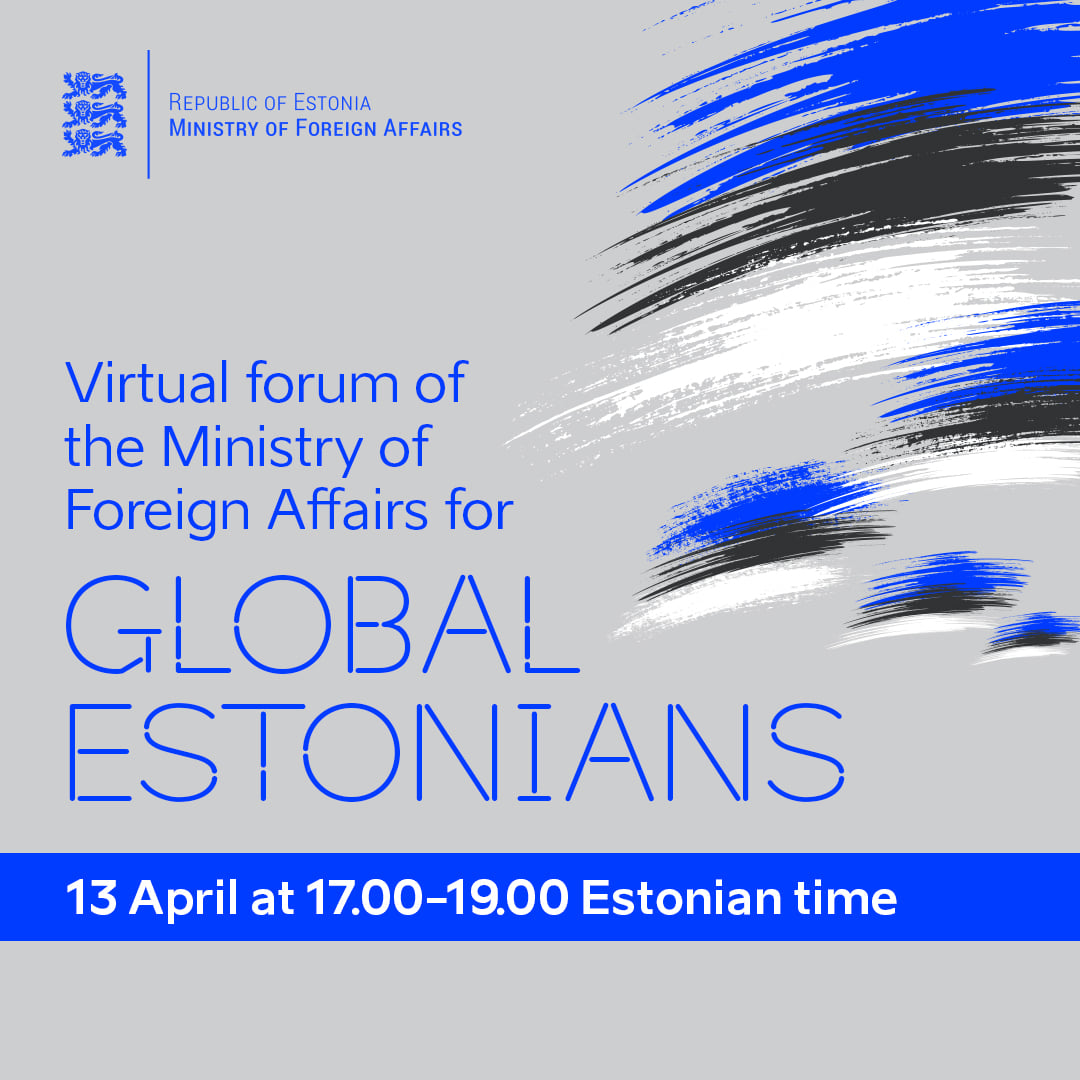
Virtual Forum Global Estonians

From the Ministry of Foreign Affairs

On 13 April, the very first virtual forum for Estonians around the world will be held, where the Ministry of Foreign Affairs will present its activities and plans concerning the diaspora. Hille Hanso and Ellen Valter, Estonians living abroad, will also speak at the forum, talking about how global Estonians could participate in Estonia’s development.

The virtual forum for global Estonians is a continuation of the survey conducted by the Ministry of Foreign Affairs among the diaspora last year and is the next step in strengthening co-operation between Estonia and Estonians living abroad.

The Ministry of Foreign Affairs will present its current activities and plans concerning the global Estonian community at the virtual forum and will reveal in more detail the results of the survey conducted last year among Estonians living abroad. The forum will also discuss how the new focus topics of the Ministry of Foreign Affairs, business and cyber diplomacy, help to shape Estonia’s reputation in the world. Consular services and news for Estonians living abroad will also be introduced.

The virtual forum will be attended by Hille Hanso, a political scientist and journalist living in Turkey, and Ellen Valter, a lawyer living in Canada.

The virtual forum will take place on Tuesday, 13 April from 5 p.m. to 7 p.m. in the Worksup: https://worksup.com/app#id=DIASPORAA2021

Australia Times (not so friendly!)

  • Sydney – 3am, Wednesday 14th April
  • Adelaide – 2.30am, Wednesday 14th April
  • Perth – 1am, Wednesday 14th April

More Information

For the official announcement see The Ministry of Foreign Affairs is organising a virtual forum for global Estonians

Virtual ceremony held to inscribe Estonian Oral Histories

0

The Estonian Archives in Australia oral history collection was inscribed into the Australian Memory of the World Register on February 26th, 2021

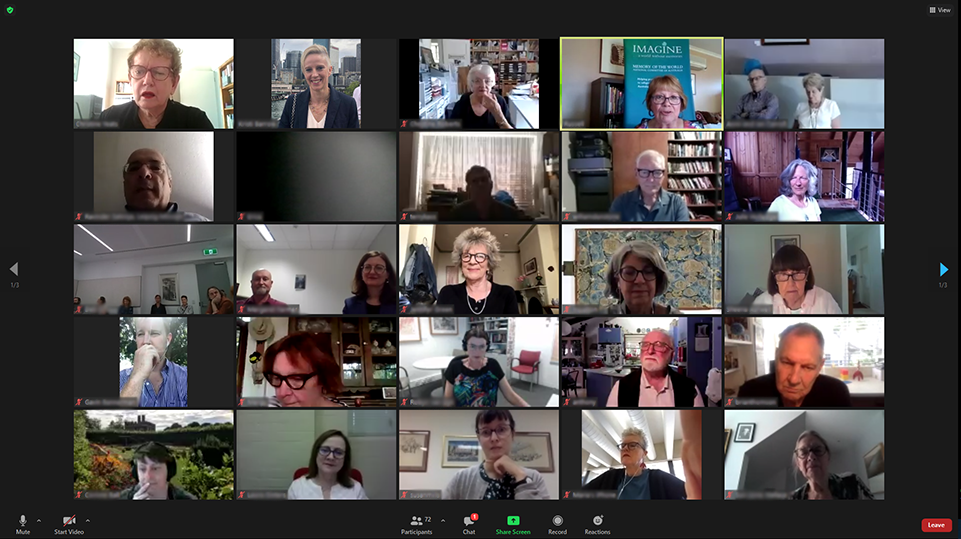
A virtual ceremony held online with over 80 participants witnessed the inscription of 10 groups of records on the Australian Memory of the World register on Friday, 26 February 2021.

The Memory of the World Register is maintained by UNESCO as a record of documents, books and other records of enduring worth for the world. It is a parallel register to the World Heritage Register of Places. The Estonian oral history collection was one group of records added at that event. 

27th Estonian Festival to be held in Melbourne, Easter 2022

0
Australian Estonian Festival Logo

XXVIII Eesti Päevad will be held in Melbourne over 4 days at Easter 2022

eesti-paevad-melbourne-2022

The next Estonian Festival has officially been announced! Please follow our Facebook Group to keep up-to-date: Eesti Päevad 2022 Facebook.

103rd ANNIVERSARY OF ESTONIAN INDEPENDENCE official speech of The Honorary Consul of Estonia, Mr Sulev Kalamäe

0
Sulev Kalamäe, Honorary Consul of Estonia

103rd ANNIVERSARY OF ESTONIAN INDEPENDENCE
Commemoration Speech by Sulev Kalamäe, Honorary Consul of Estonia
27 February 2021, at Sydney Estonian House,141 Campbell Street, Surry Hills NSW

I pay my respects to the Gadigal people of the Eora Nation on whose land this Estonian House stands, and to their elders past, present and future.
Her Excellency the Estonian Ambassador to Australia – Kersti Eesmaa, President of the Estonian Society of Sydney – Tiina Tamm, Distinguished guests, Ladies and Gentlemen!

Whilst it is important to honour Estonia by speaking it’s language, I do recognise that here in Australia many of our younger generation genuinely struggle with Estonian, and so as not to alienate them, and to help them better understand their ancestry, I will give my speech in English.
Today we recognise the 103rd Anniversary of the Declaration of Independence of Estonia, which was proclaimed on the eve of February 24, 1918.

Today we also remember those who fought and gave their lives for Estonia’s freedom in the War of Independence, which began 9 months later on November 28, 1918. We respect those young men, women, students, farmers, workers – who all responded to the needs of the situation – and risked their lives to turn a long-held dream into reality.
Last year I gave an overview of the events leading up to the end of the War of Independence and the signing of the Tartu Peace Treaty, which came into effect in February 1920.

If you will indulge me, today I would like to give an overview of the subsequent political developments in that first phase of Estonian independence during the 1920’s and 1930’s.
Having now won the war, the new challenge facing the Estonian people in early 1920 was how to win the peace, so to speak. They had a nation to build.

The manifesto of independence of February 1918 simply declared that Estonia would be a democratic republic. But there was no detailed instruction book available on how to construct a democratic republic. Each country needed to develop it’s own path.

At this stage I would like to bring into the picture Konstatin Päts. He is a figure that looms large in the political history of Estonia. Päts was one of the three original members of the Estonian Salvation Committee that wrote and issued the Estonian Declaration of Independence. Konstantin Päts also headed the Estonian Provisional Government that operated between 1918–1919.

Despite the ongoing War of Independence, Päts and the Provisional Government still managed to organise a general national election and on 23 April 1919 the newly elected Constituent Assembly took over running the country. Because Estonian society at that stage was generally left-leaning, the biggest group in the Constituent Assembly consisted of socialists, who then in turn chose the first chairman of the Assembly – August Rei.

The first main task of the new Assembly was to write the Constitution of the Republic, a task which was finally completed some four months after the end of the war, in June 1920. The constitution was considered one of the most democratic of the time, guaranteeing fundamental rights and complete equality of all citizens.

However, in practice the nation was still under martial law in many parts of the country, especially near the eastern border with the Soviet Union, and people’s rights were generally restricted.

As the new Constitution was shaped by the views of the leftist parties, the interesting result was that there was no President or Head of State. There were just too many bad memories of past Kings or past Csars! Instead the duties and functions of a President were carried out by the head of the government (called a riigivanem or State Elder) – who was basically a Prime Minister – but unlike a President – would have to resign & leave office whenever the government changed.

Under the Constitution the Riigikogu (or State Assembly, or parliament) could dismiss a government at any time, without incurring sanctions. Consequently a problem for the new nation was that there were far too many political parties on the scene – 14 different parties were elected into the first parliament of 1923.

These many political parties specialised in representing the views of farm owners, tenant farmers, landlords, former soldiers and so on. They typically formed short-term alliances with one or another, resulting in factionalism and ultimately much political instability. As a result from 1924 to 1934 – there were a total of 16 different governments in power in Estonia, each lasting no more than 10 months on average.
In that respect the early Estonian Republic was not necessarily that different from the current Estonian Republic – since re-independence in 1991, some 23 different governments have held power. Just recently the coalition government of Jüri Ratas resigned and a new coalition led by prime minister Kaja Kallas has taken charge.

(I am reminded by all this of the old saying, that if you put two Estonians together in a room, you are guaranteed that within the hour they will have formed three political parties!)

However back in 1924 the nation’s biggest political challenge soon came in the shape of an attempted communist coup in Tallinn, on the night of 1 December. In the depths of the post-war economic gloom that affected the young nation, the leaders of the Estonian Communist Party – with support and instructions from their leaders in Moscow – believed the time was ripe for a worker’s revolution. The coup attempt failed, and society having previously been somewhat tolerant towards Communists, now turned it’s back on these agents of Moscow who had exposed their true intentions.

By the early 1930s Estonia was hit hard by the Great Depression, which rapidly lowered living standards and caused much dissatisfaction in society. Many blamed the constantly quarrelling politicians and the parties for their predicament, and thus support for the Riigikogu and the Government fell to unprecedented levels. This unrest eventually led to the birth of new political forces in Estonia, particularly the proto-fascist League of Veterans of the War of Independence (or otherwise known as the Vaps Movement). Amongst many desired social changes, this group wanted to rewrite the Constitution, create the post of President and cut back the powers of the Riigikogu which in their eyes had demonstrated itself to be unworthy of rule.

In these feelings they were not alone. In the referendum of October 1933, 73% of the Estonian population –including your possibly grandparents or great-grandparents – supported the adoption of a new draft constitution that had been proposed by the Vapsid, and indeed it was widely expected the Vapsid (led by retired General Andres Larka) may win the forthcoming Presidential election, scheduled to be held in April 1934.

Now greatly alarmed by the prospect of the right-wing Vapsid coming into power, the State Elder (Konstantin Päts) together with two of the other candidates for President (being former General Johan Laidoner & the socialist August Rei) agreed to stage a pre-emptive coup – on 12 March 1934. The main objective was to eliminate the Vaps Movement. Martial law was declared for six months, later extended to 12 months. The League of Veterans as a political organisation was banned and hundreds of their active members arrested. Päts also suspended the Riigikogu and all other political parties. In concert with the army, Päts as acting State Elder began a rule by decree that endured, virtually without interruption until 1940.
This period (commonly known as the ‘Era of Silence’) was initially generally supported by the Estonian society. The people wanted stability and a return to normality. After the threat from the Vapsid was neutralised, however, calls for a return to parliamentary democracy gradually resurfaced. By 1936 Päts had allowed the election of a new National Assembly and the adoption of a new Constitution, which came into effect on 1 January 1938.

On 24 April 1938 the new parliament elected Päts as the first President of Estonia.

However Estonia had only limited time to try out this new form of governance, as within the next two years Estonia had been occupied and annexed by the Soviet Union, Riigikogu closed down (replaced by a new People’s Assembly) and President Konstantin Päts arrested and sent to exile in Russia. He was later placed in a mental asylum (on account he still insisted he was the President of Estonia), and where he died in early 1956. Sadly so ended the life of the man who helped write the Declaration of Independence back in 1918.

Riigikogu and the office of President of Estonia would not be reconstituted until 1992 when Lennart Meri became the next President, 52 years after Päts had been arrested by the Russians.

So whilst this time 100 years back, in 1921, the newly independent Estonia was finally able to see the dream nationhood come to reality, the Estonian people soon discovered, that reality does not necessarily turn out exactly the way they dreamt. In fact, they could never have anticipated the horrendous sequence of events that transpired after 1939.

But that is the hard lesson of life learnt by all young nations. And that experience gives nations a stronger purpose. I do think Estonia has now rightfully earned it’s place amongst the European and world community, and today we are fully entitled to celebrate the 103rd anniversary of it’s achievement of nationhood.

Long Live the Estonian people! Long Live the Estonian Republic!


Sulev Kalamäe

Honorary Consul of Estonia,

Independence Day Greeting 2021

0
Kaarel Mikkin

Australia is far from our homeland Estonia, and far from the other Estonians around the world. 

Image: Visit Estonia Kaarel Mikkin

The majority of Estonians who landed in Australia arrived after the second world war– timewise, the Estonian connection is also slipping further and further away.

But somehow we always knew, where ever we were around the world, that keeping Estonian nationality and culture alive where Estonians established their homes is extremely important – every Estonian is worth it, Estonian culture is worth it!

We always knew in Australia – Activities that we do together ensure our greater purpose – to keep and constantly recreate a strong and lasting bond between Estonian background people. 

We have people in Australia who live and promote Estonian culture for all their lives. 

Today we celebrate and recognise just a few, as we the AESL give our thanks to some of our outstanding Estonians every year on Independence Day. This year’s thank you goes to – Imbi Semmelweis, Siiri Iismaa, Hilja Toom, Kadri Auväärt, Peeter Kruup, for their many years of contribution to Estonian life in Australia. 

We have a complicated year behind us. But also an interesting thing happened in 2020 – the effects of the corona pandemic brought us closer together.

Both, the new generations of Estonians in Australia, and the Estonians around the world – we connected in new ways. 

On world level, 2020 saw the launch of the Global Estonian Programme. 

The Global Estonian Programme kicked off by developing a common field of information. 

We have two groups of Estonians – people with Estonian roots who live permanently abroad, and people who will eventually return to homeland.

There will be a database for young people who are Estonian students studying abroad. There will be database for Estonians currently working abroad. This database will promote and support career prospects for returning to Estonia, to find a professional job and to create connections with potential employers.  The database will work for both – for Estonian background people born elsewhere who want the “Estonian experience” and for those temporarily abroad to come back home.

There will be a platform to keep contact and share events between people who are involved in cultural activities and wish to promote Estonian life abroad.  

In 2020 we started celebrating events and Estonia’s anniversaries together, in unison, all around the world – in real time or by various digital solutions. 

In Australia we had zoom folk dance events, we had links to singing events and exhibitions, where all Estonians could virtually come together regardless if born here or in Estonia or elsewhere in the world. This created a major excitement that we only have had at Eesti Paevad Festivals. We absolutely need the enthusiastic , inspired and inspiring Estonians to take this fantastic pathway into the future.

In August 2021 we celebrate the 30 years of restoration of the Republic of Estonia’s independence.

It is important that all will gather to celebrate, home or away, since all Estonians, including foreign communities, played an important role in restoring Estonia’s independence and building the country. 

Dear Estonians in Australia, AESL wish you a joyful Independence Day celebrations and success in enterprises that take will take us to the future.

Happy Independence Day!

Long live Estonia! Elagu Eesti! 

24.02.2021

Sirje Jogi

Estonian Oral Histories to be inscribed on Australian Memory of the World Register – Live Event 26th Feb

0
Estonian Oral Histories to be inscribed on Australian Memory of the World Register

The Estonian Archives in Australia oral history collection has been accepted as part of ‘Migration Voices’. The Estonian oral history collection will be formally inscribed on the Register at an online Zoom ceremony, open to all.

Estonian Oral Histories to be inscribed on Australian Memory of the World Register
UNESCO

Memory of the World Register Ceremony

Viewers can access the ceremony at
3pm, Friday February 26th, 2021

Chairman of the Estonian Archives in Australia , Terry Kass wrote:

The Memory of the World Register is maintained by UNESCO as a record of documents, books and other records of enduring worth for the world. It is a parallel register to the World Heritage Register of Places.

The Australian section of the Register includes records such as the convict records held in the NSW, West Australian and Tasmanian Archives, the Endeavour journal of Captain James Cook, and the First Fleet journals.

A major entry on the Register is ‘Migration Voices’, recognising migrant oral histories held in archives and libraries such as the Victorian State Library, the Mitchell Library in NSW and the Migration Museum, South Australia. The Estonian Archives in Australia was invited to submit its oral history collection for consideration as an addition to ‘Migration Voices’.

The collection has now been accepted becoming the first ethnic community oral history collection held outside a major national library or archive added to the Australian Register.

The Estonian Archives in Australia is currently investigating digitisation of its oral history collection.

In Memoriam – Valdemar Vilder

0
Valdemar Vilder

Valdemar Alexander Vilder passed away on 17 Feb 2021. He was 94.

Born Tallinn, Estonia on 8 . 1 . 1927

Survived by his sons, Andres and Toomas Vilder and grand-daughters, Emeisha , Imogen and Yasmin Vilder.

Brother Eugen Vilder.

His funeral will be held in Sydney at

Rookwood Crematorium,
West Chapel,
on Wed 24 Feb 2021 commencing at 11am.

AESL 2021 Donation Drive

0

Let’s kick off the Donation Drive for this Independence Day, 2021

AESL has been residing in Melbourne for the past three years. Donations are collected as a result of invitations to donate, written three times per annum. This is the 10th invitation from Melbourne – what can I write differently this time around, what new, inspiring thing can I say to make people consider donating to AESL?

I guess I have covered what AESL is about. That our directions are – promotion of Estonian history and culture in Australia; promotion of Estonian language learning; preservation of our history and Estonian origin documents in Archive; coordinate Estonian organisations’ cooperation/communication/information sharing, bringing Estonians together in Australia-wide events like the Festival Eesti Päevad; cultural relationships with Estonia; etc.

When I tell people about AESL, about the list as above, people still look at me and say – but what do you, AESL, do? What does an umbrella organisation DO?

So here comes my next attempt, a different approach.

This time I present a list of things that were promoted by AESL in 2020. By “promoted” I mean – everyone had the information, hence the chance to join in and be part of the activities.

I present the list in hope that it does get noticed that a considerable amount was offered, and a good variety of Estonian cultural events were made available in 2020:

  • Free online Estonian language classes
  • Various e-courses available from Estonia
  • Grants for Estonian Cultural Activities
  • Grant for translating Estonian literature
  • Links to order free children’s magazines from Estonia for 2021
  • Links to apply for grants for children camps and special educational projects funding
  • Link to register for and participate in various Children’s Camps in Estonia
  • Link to connect with Estonians studying around the world and to read of their experiences
  • Invitation to add your story to the historic collection – Vabamu Museum of Occupations and Freedom
  • Invitation to add your story to ETV2 for films recording the lives of Estonian communities abroad
  • Invitation to add your story of World War II end days, collected for film
  • Book “Eestlased laias maailmas. Ulemaailmse Eesti kesknoukogu Liikmesmaade lugu” available to order
  • AND of course supporting this website!
    Estonians in Australia – www.eesti.org.au

Besides the cultural information shared, we published the President’s, UEKN, and AESL materials on a monthly basis. Next, AESL invited all to join the events –

  • Expatriate Day Celebration – world wide link to Estonians
  • “Boat of tears” Event – zoom link to Freedom square in Tallinn to remember the thousands of people who left their homes behind in 1944
  • Keele kohvik – zoom link to join in Estonian world wide cooking week
  • Kunksmoor – links to the book to participate Estonian world wide reading day
  • Church concert of Arvo Part, Part Uusberg music – participate by zoom
  • Conference for Estonian language teachers – participate by zoom

These world wide Estonian Virtual events had participants from – Ameerika Ühendriigid, Austraalia, Austria, Belgia, Brasiilia, Eesti, Hispaania, Holland, Iirimaa, Iisrael, Itaalia, Kanada, Kreeka, Norra, Prantsusmaa, Rootsi, Saksamaa, Soome, Suurbritannia, Taani, Tšehhi, Ukraina, Ungari, Valgevene, Venemaa, Venezuela, Šotimaa, Šveits.

Australian organisations organised the following zoom events –

Please make sure you are a member of AESL Facebook page. It is all there.

If you find an Estonian event on the AESL Facebook page that you like – please share, please publish. Information has the power, let the information make us bigger and unite.

All in all, it was an active and busy year for AESL. Rather than feeling stuck during covid times in Australia, a fresh energy came from connecting more than ever and joining in with the world wide Being Estonian movement. In 2021 AESL aims to keep the momentum going.

Here is our invitation to you – AESL gives its best to unite, regardless if times are easy or complicated.

Please consider making a donation

Bank details:
Council of Estonian Societies in Australia;
BSB: 062 233;
Account: 10062870
Reference: Your Name/ State

Cheques to:
Ingrid Provan
PO Bo 6606 Melbourne 3004
Payable to – Council of Estonian Societies in Australia

On behalf of AESL,
Sirje Jogi

Eesti Vabariik 103 Celebrations – Sydney Estonian House

0

Celebrating the birth of our nation

ESTONIAN REPUBLIC 103
Saturday, 27th February 2021
2pm – 4pm

Sydney Estonian House
141 Campbell St
Surry Hills NSW 2010


Celebrating the Independence Day of the Republic of Estonia

PROGRAM:
Formal reception with a compulsory herring sandwich and toast, speeches, hoisting of the sini-must-valge flagat the Tall Hermann Tower and more

PRE-BOOKING ESSENTIAL:
Restrictions apply as per NSW Health guidelines

ADMISSION: Estonian Society members enter free, $10 for guests

#Label

Hand Made Estonian Black Bread Available for Pre-order

For assistance with registrations or bread orders, contact us at 0450 084 462

***

Eesti Vabariigi
iseseisvuspäeva aktus

AKTUS:
Ametlik aktus kohustusliku heeringavõileiva ja toostiga, kõned, sini-must-valge lipu heiskamine Pikas Hermannis ja nii mõnigi üllatus veel

EELREGISTREERIMINE KOHUSTUSLIK:
Vastavalt NSW Health reeglitele, registreeru siin

SISSEPÄÄS: Sydney Eesti Seltsi liikmetele tasuta, külalistele $10

Leiva eelmüük

Kui vajad registeerumisel abi, võta meiega ühendust 0450 084 462

“A player’s view of hard lockdown”, Estonian Tennis player Anett Kontaveit

0
Estonian Tennis player Anett Kontaveit

Estonian tennis star Anett Kontaveit is currently in hard lockdown in Melbourne, preparing for the upcoming 2021 Australian Open.

She has written a personal account of her current situation and how she is coping and preparing for the tournament.

On Melbourne views and music

The view from my exercise bike in my room is nice. I overlook the city and play music really loudly to get me through the sessions, mainly Avicii songs.

On her drivers

Every time I have been in Melbourne there’s drivers who take us from the hotel to the courts, and they hear I come from Estonia, and so many of them have visited, which has surprised me.

On Greek fans out numbering Estonians 😂😂😂

At every tournament I have been to there’s always at least one or two Estonians in the crowd but not as many as the Greeks have.

Read the article on The Age here: A player’s view of hard lockdown

Virmalised – Sydney Estonian Folk Dancers Virtual Suvesimman – 28th Dec

0
Virmalised - Sydney Estonian Folk Dancers

2:00-3:30 pm (AEST) on Monday, 28th December 2020 (Boxing Day in lieu)

Virmalised – Sydney Estonian Folk Dancers are hosting a virtual suvesimman (summer village party)! Groups from the Australian-Estonian community and a guest group from Estonia have been working hard to create and film performances to share with you. You can watch the live stream on our YouTube channel at 2 pm on 28th December.

Performers include:

  • “Friends of Keterlyn” (ensemble)
  • “Kiili Kirjud” (folk dance group from Estonia)
  • “Kooskõlas” (Aus national choir)
  • “Lõke” (NSW vocal ensemble)
  • “Rebased” (NSW children’s folk dance group)
  • “Rukkililled” (NSW ladies’ folk dance group)
  • “Salmiakki Pelimannit” (Scandinavian dance band)
  • “Virmalised” (NSW mixed folk dance group)
  • Art, handicrafts and ethnography group (NSW)
  • Children’s playgroup (NSW)
  • Stevie of Sydney

Watching at home anywhere in the world!

Watch Live and engage with the performances in real-time via the chat function!
https://www.youtube.com/channel/UCKveHhzcSYY01rcXh7_TI1w

***

Meie, Sydney-Eesti rahvatantsurühm Virmalised, korraldame virtuaalset suvesimmanit! Rühmad Austraalia-Eesti kogukonnast ning külalisrühm Eestist on teinud hoolega trenni ja käinud proovis, et ette valmistada ja filmida esinemisi Teiega jagamiseks. Otseülekannet saate vaadata meie YouTube’i kanalil 28. detsembril kell 14:00 AEST.

Üritusel esinevad:

  • “Friends of Keterlyn” (ansambel)
  • “Kiili Kirjud” (tantsurühm Eestist)
  • “Kooskõlas” (Austraalia-Eesti laulukoor)
  • “Lõke” (Sydney Eesti Seltsi vokaalansambel)
  • “Rebased” (Sydney Eesti Seltsi rahvatantsijad, lasterühm)
  • “Rukkililled” (Sydney Eesti Seltsi rahvatantsijad, naisrühm)
  • “Salmiakki Pelimannit” (skandinaavia tantsubänd)
  • “Virmalised” (Sydney Eesti Seltsi rahvatantsijad, segarühm)
  • Kunsti-, käsitöö ja etnograafiaring (Uus-Lõuna-Walesist)
  • Mudilasring (Uus-Lõuna-Walesist)
  • Stevie Sydneyst

Klõpsake järgnevale lingile: https://www.youtube.com/channel/UCKveHhzcSYY01rcXh7_TI1w

Elagem etendusele kaasa reaalajas ja osaledes “chat” funktsiooni vahendusel!

Videot saab YouTube’ist vaadata ka pärast esilinastust, siis saate ikka suvesimmanit nautida isegi, kui Teil ei ole võimalik olla arvutis kell 14:00

Ootame teid suvesimmanile!